Chaetodon ocellatus
Spot the Spotfin Butterflyfish on reefs across the Yucatán Peninsula and Florida year-round. Comfortable at 24-29 °C, it's an uncommon but reliable find.
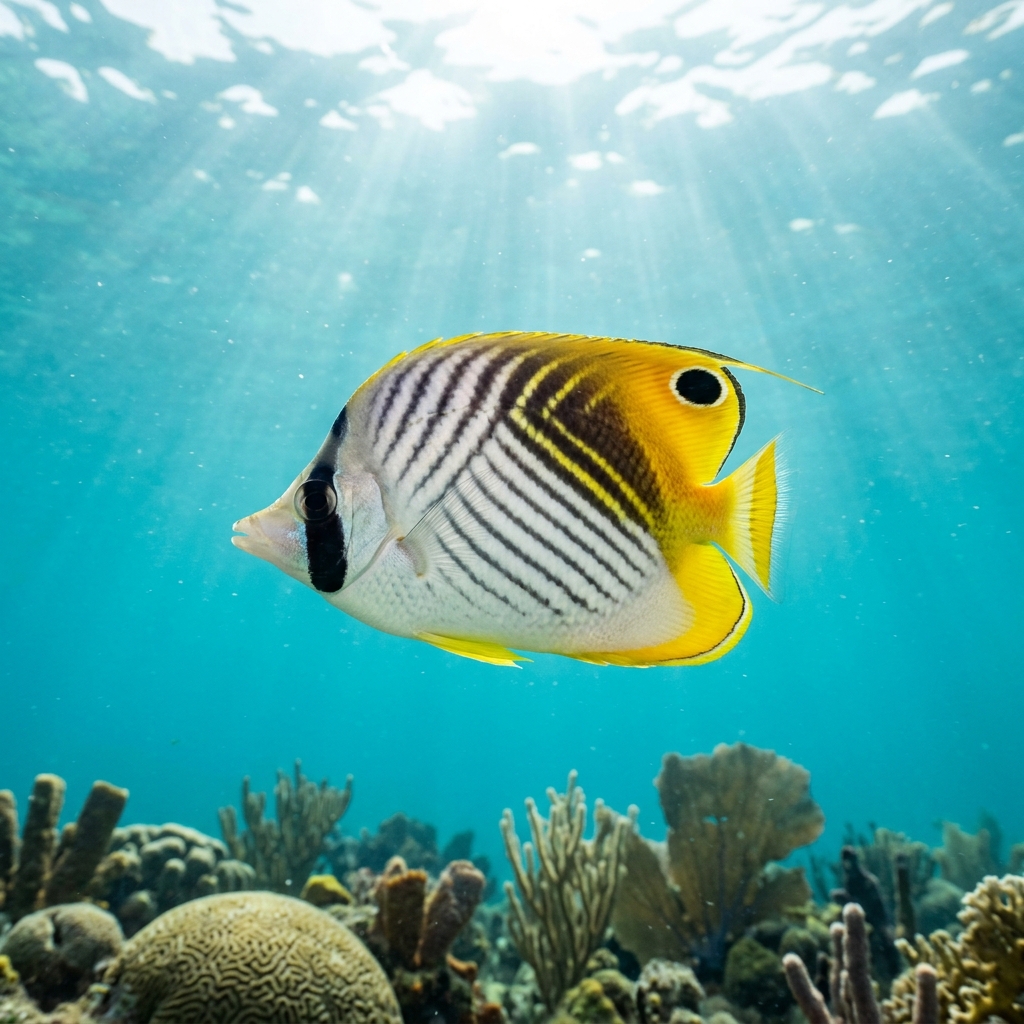
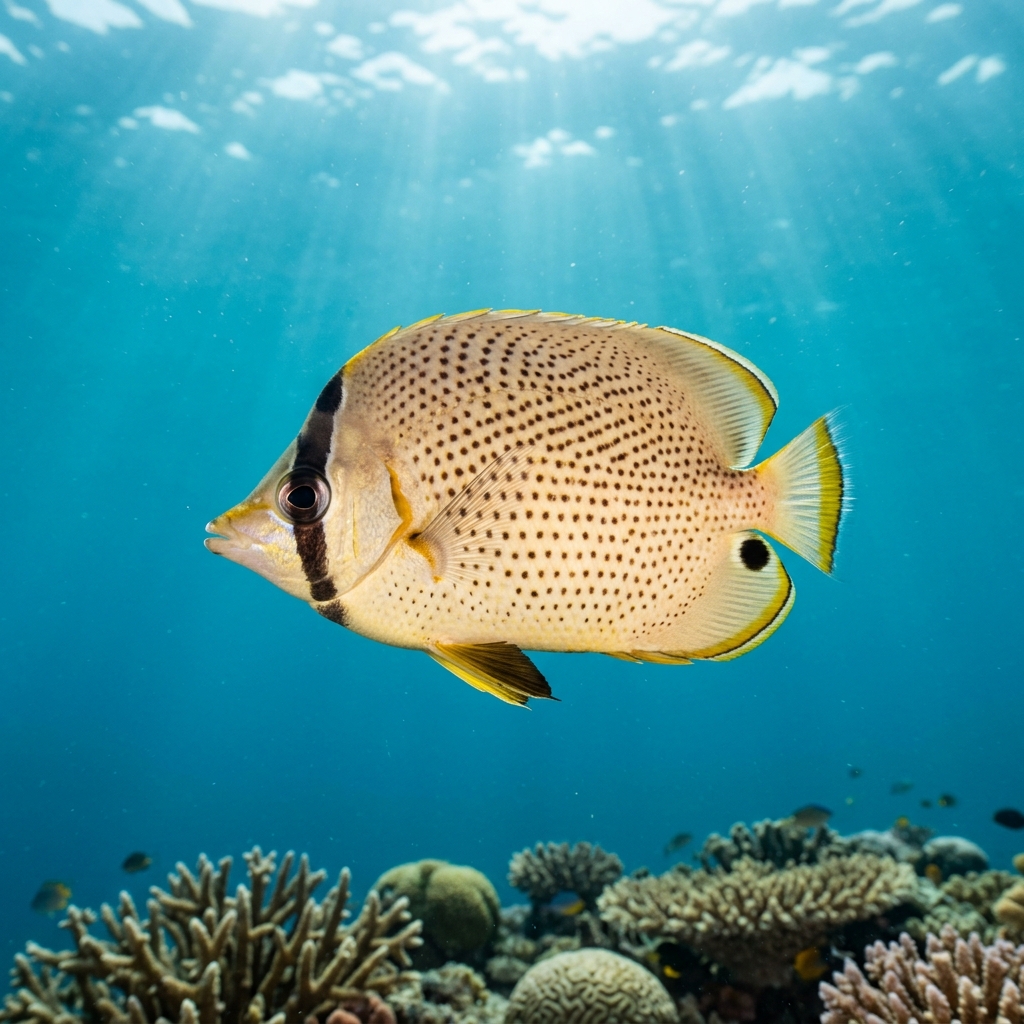
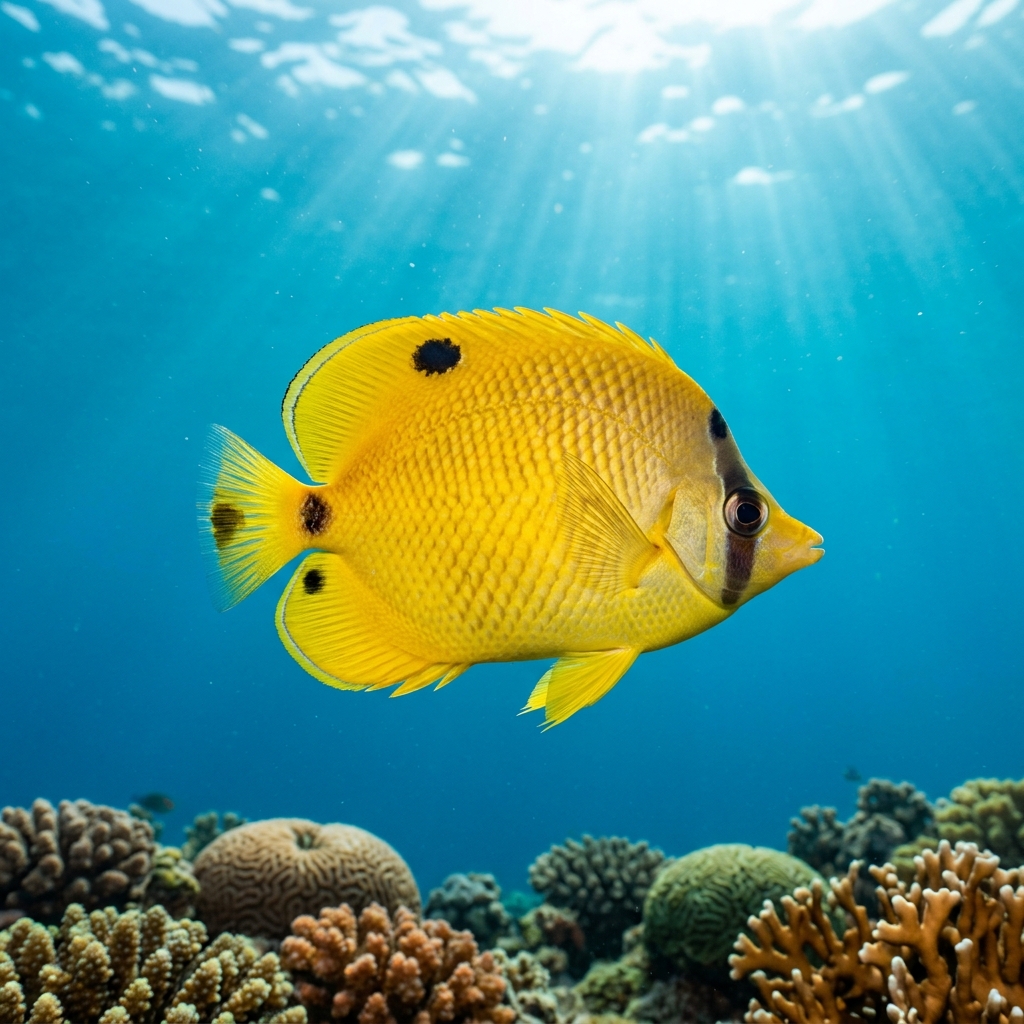
A round, disc-shaped butterflyfish that appears mostly white with vivid yellow margins on the dorsal, anal, and caudal fins. The key field mark is a single black spot (ocellus) at the base of the soft dorsal fin, near the tail, which gives the species its name. A thin dark bar runs through the eye, but unlike many relatives there is no bold body stripe or banding. Adults can reach around 20 cm, making them one of the larger butterflyfish you will encounter on Atlantic and Caribbean reefs.
Typically encountered alone or in pairs moving slowly along coral and rocky reefs, picking at invertebrates and coral polyps with a pointed snout. It tends to hold its ground rather than bolting when divers approach, though it rarely lets you get very close before drifting away behind coral. Most sightings come from shallow to mid-depth reef zones during daylight dives.
Like several butterflyfish, spotfins are thought to form long-term monogamous pairs, and seeing two together on the same patch of reef is common enough that a lone individual is actually the more unusual encounter.
In the Northern Hemisphere it is present year-round with no concentrated season, which aligns with its preference for warm tropical reef temperatures of roughly 25 to 29 °C. In the Southern Hemisphere, sightings concentrate between September and January.
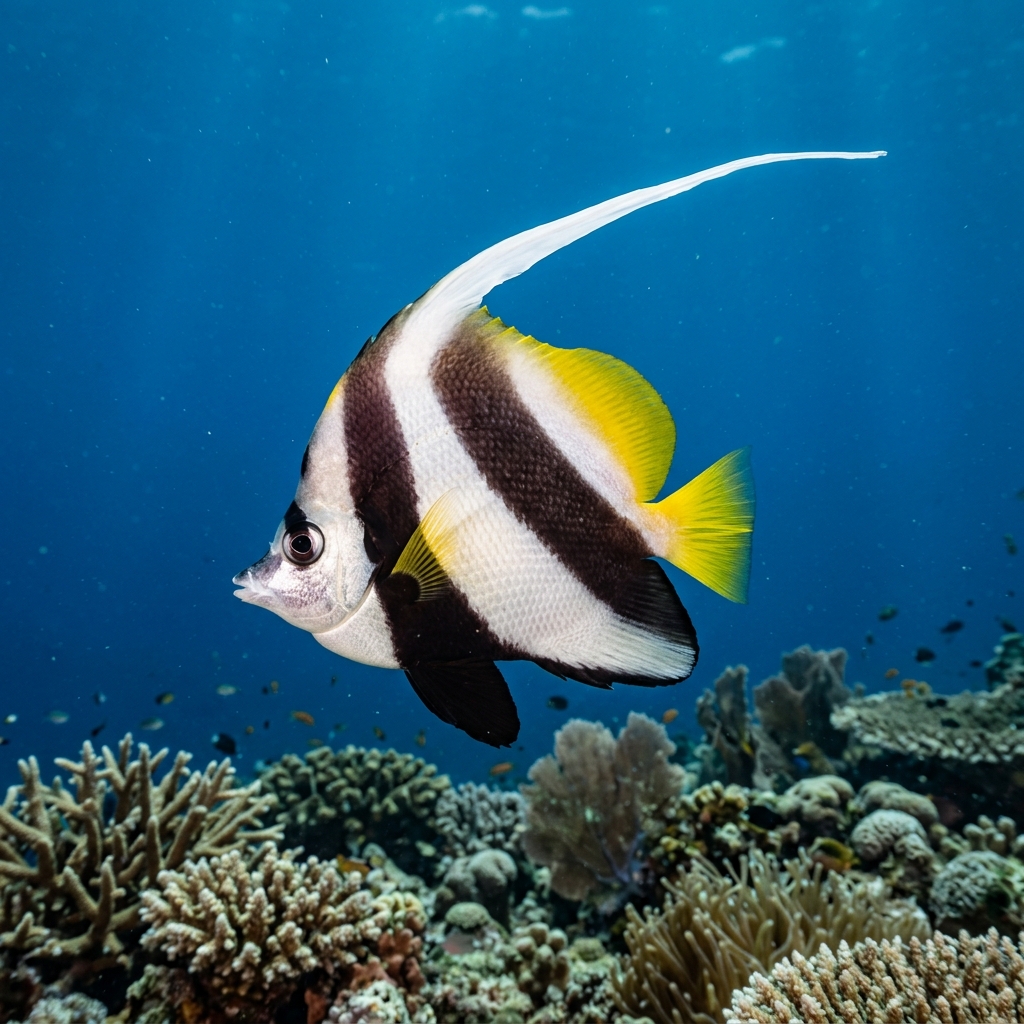
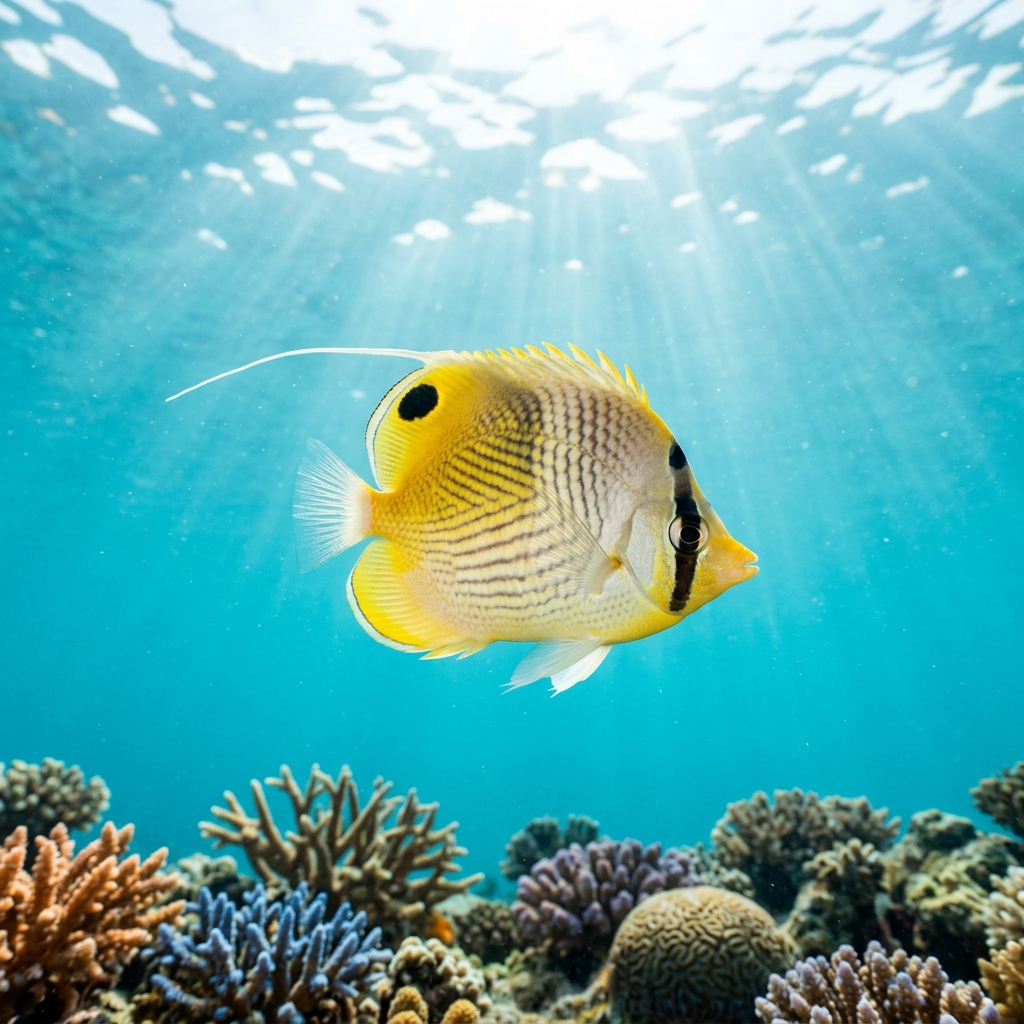
Reef neighbours a diver could mistake it for. Use the identification notes above to tell them apart.
Most logged across Mexico, particularly the Yucatán Peninsula, and throughout Florida and the US Southeast, where sighting records are especially dense. Strong populations are also recorded around Roatán in Honduras and in the Cayman Islands, Grand Cayman in particular. Outside the Atlantic, divers also log it in the Philippines, Indonesia, Colombia, and Taiwan.
Mapping where Spotfin Butterflyfish is logged…
The Yucatán Peninsula in Mexico and Florida in the United States are the strongest hotspots for this species, with additional reliable sightings around Roatán, Honduras, Grand Cayman, and Colombia. It is primarily an Atlantic and Caribbean species, though divers also report it in parts of the Indo-Pacific including the Philippines and Indonesia.
In the Caribbean and Florida it is present year-round, so there is no single best season. In the Southern Hemisphere, sightings tend to concentrate between September and January. The species favours warm water around 25 to 29 °C, so any time reef temperatures sit in that range is a good bet.
Look for a large, round, mostly white butterflyfish with yellow-edged fins and a single black spot near the base of the rear dorsal fin. The lack of bold body bars is a useful clue on Atlantic reefs where banded relatives are common. That lone rear ocellus is the clincher.
Adults typically reach around 20 cm in length, making them one of the larger butterflyfish on Caribbean reefs. In the water they appear noticeably disc-shaped and round, which can make them look bigger than many of their slimmer relatives.
No. The Spotfin Butterflyfish is currently assessed as Least Concern on the IUCN Red List, meaning there is no evidence of population-level decline that would raise conservation concern.
Site and sighting data is aggregated from diver logs, iNaturalist and GBIF. For taxonomy and conservation status: