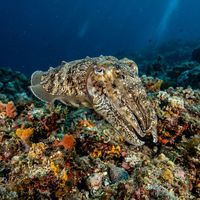
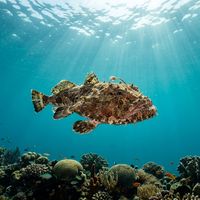
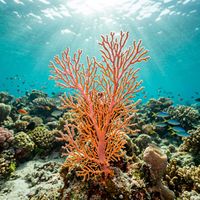
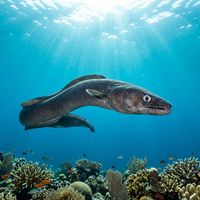
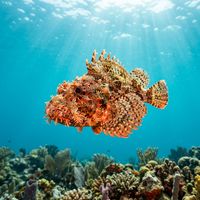
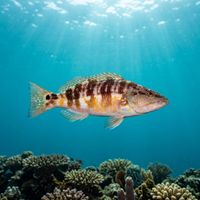
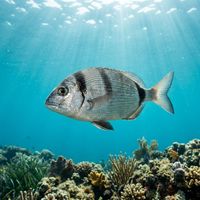
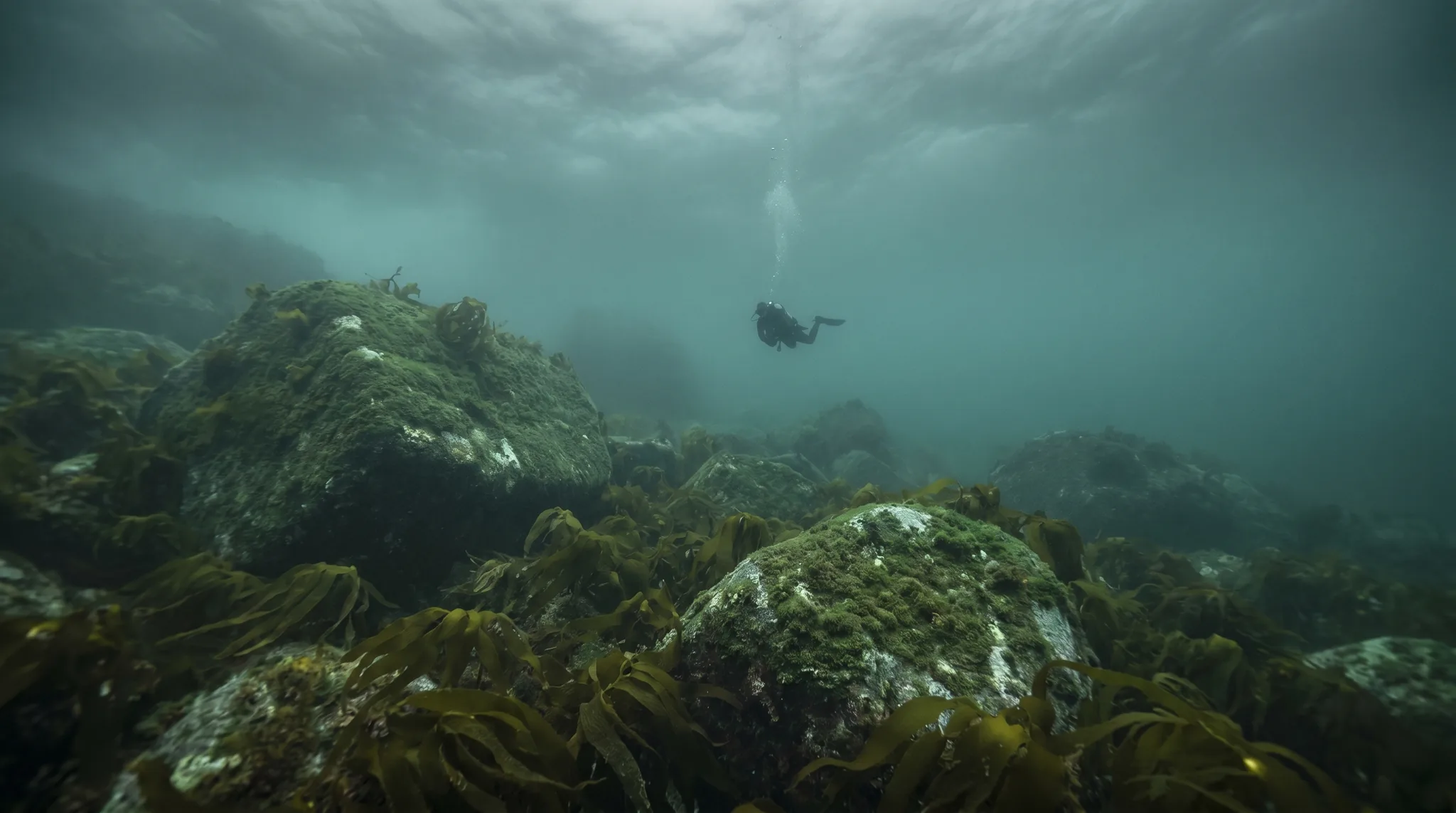
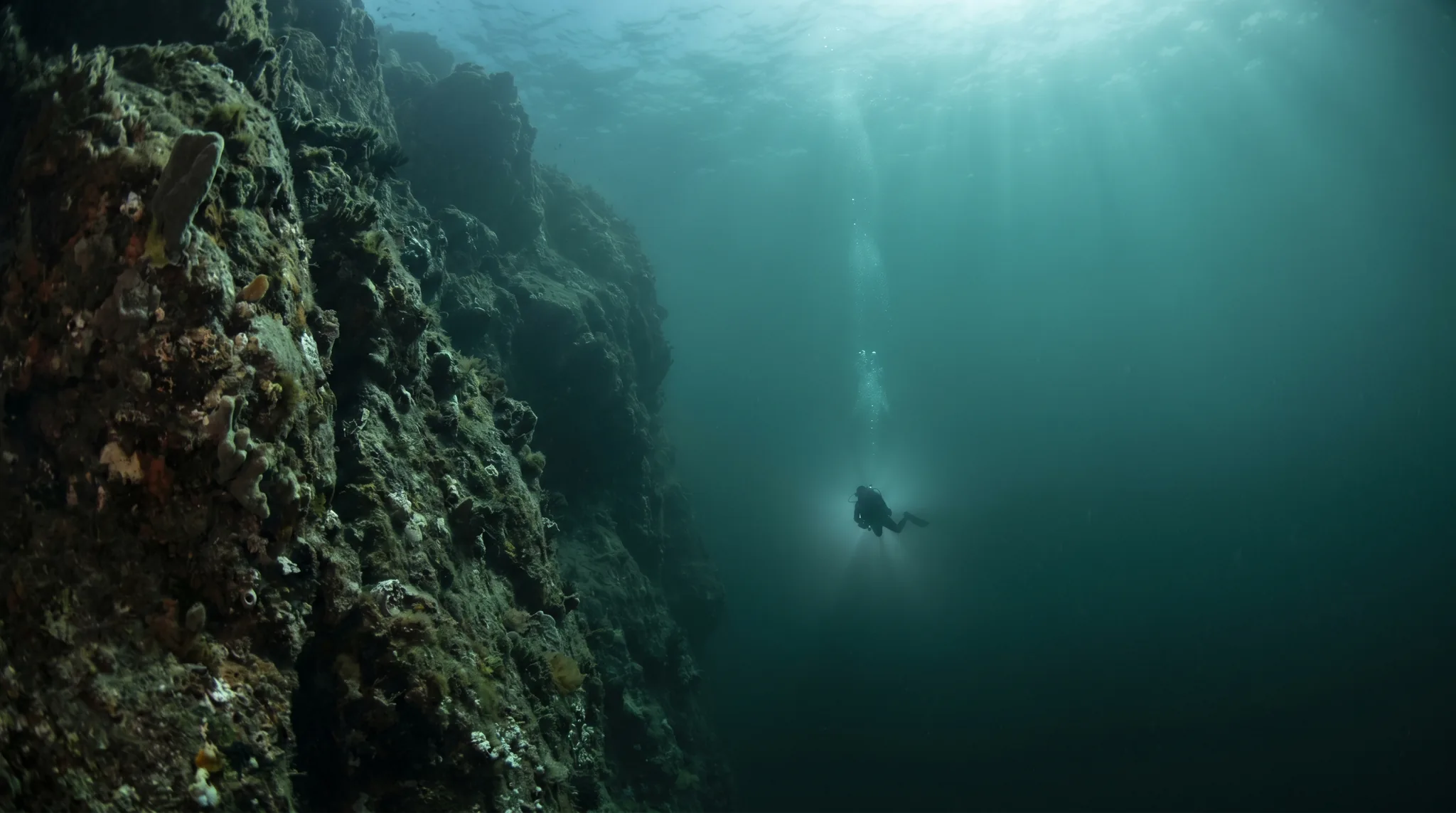
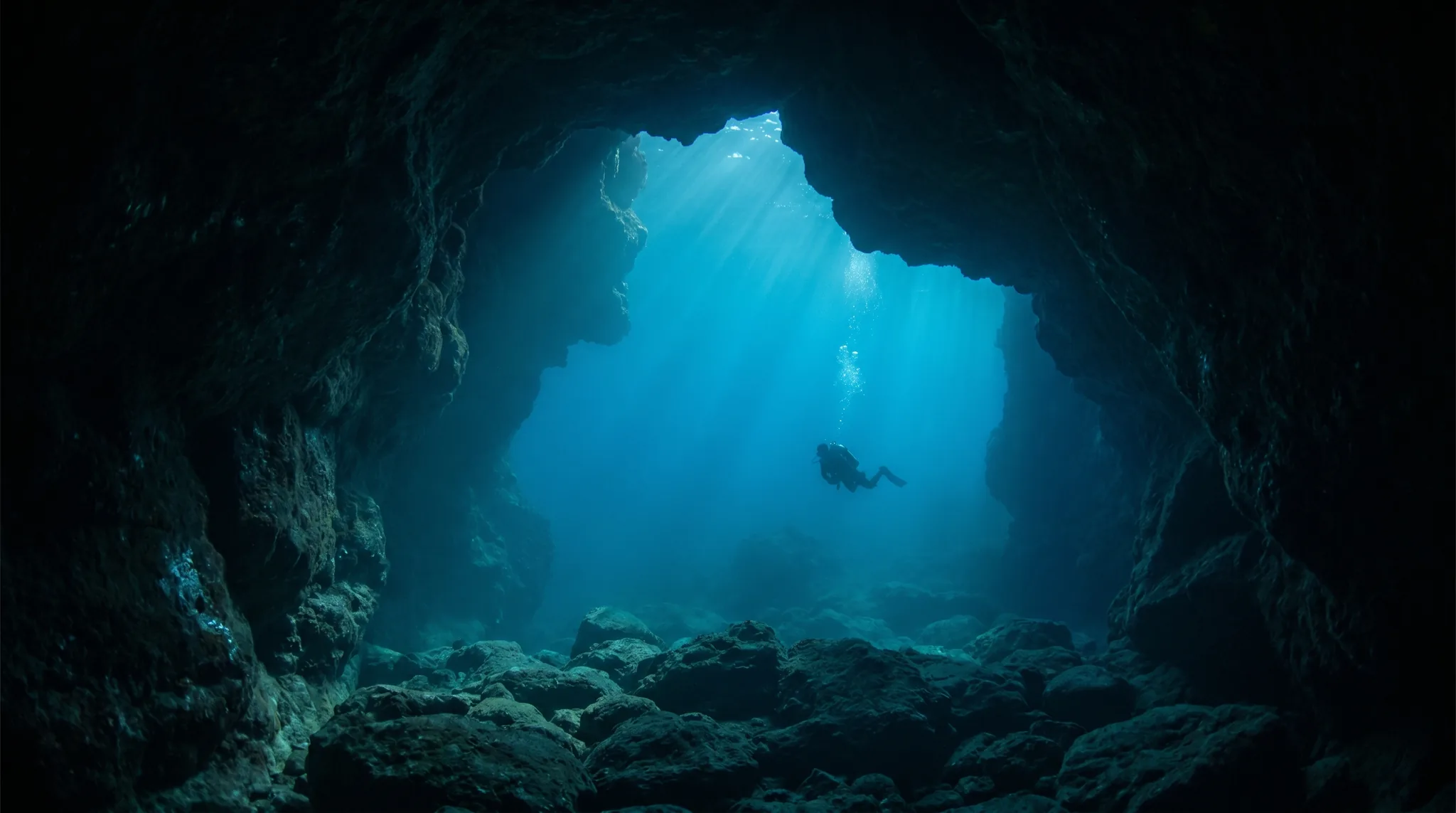
Kornati is defined by dramatic vertical topography: walls, drop-offs, caves and pinnacles spread across a dense collection of boat-access sites. The terrain suits a broad range of experience levels, from shallow reef dives to deep walls demanding advanced skills. Gorgonian, Sponge and European Common Cuttlefish are recorded across virtually every site, while Monkfish, Scorpionfish and Conger Eel reward patient observation along the rockier sections. Wrecks at Magna and Gr Misi West add further variety to an already diverse lineup.
Monthly water temperature across Kornati's sites, from satellite sea-surface data corrected for depth. The band shows the site-to-site spread.
Water temperatures dip to their coolest in late winter and early spring, then climb steadily through summer, remaining at their warmest from late summer well into autumn. The peak diving window runs from late spring through October, when conditions are most settled and visibility typically at its best. Exposed walls can generate noticeable currents, so checking conditions before committing to the deeper sites is advisable.
6 operators
5 more sites to explore
Water temperature around Kornati ranges from about 13°C in March to 17°C in July, based on satellite sea-temperature data for its dive sites.
With water around 13–17°C, a 7mm or semi-dry suit works in Kornati year-round.
Fin maps 17 sites in Kornati (17 scuba diving sites and 1 snorkelling spots, with some suited to both).
Across Kornati's dive sites, May, June, July, August, September and October are most often reported as the best months to visit.
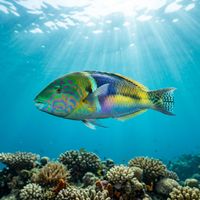
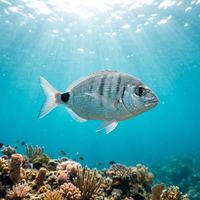
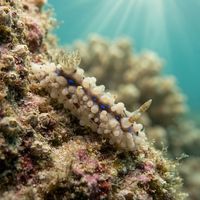
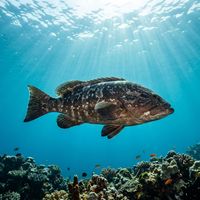
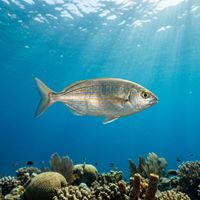
European Common Cuttlefish is the signature species and is observed across the full range of sites. Turkish Wrasse, Two-banded Seabream, Saddled Seabream, Salema Porgy and Combers are all very commonly recorded. Conger Eel, Scorpionfish and Gorgonian are also frequent, with Grouper and Electric Ray appearing at select sites.
Several sites are rated beginner-friendly, including Magna, Piskera, Kamenar, Klobucar and Babuljasi. That said, many of Kornati's most distinctive sites are rated intermediate or advanced, involving deep walls and significant depth ranges. Beginners will find rewarding dives but should be aware that the deeper terrain requires progression in experience.
Almost all dive sites in Kornati are accessed by boat. Kasela is the one exception, offering both boat and shore entry. This means that arranging boat transport is essential for exploring the majority of the archipelago's dive sites.
Kornati's sites cover a wide range of formations: walls, reefs, caves, drop-offs and pinnacles appear throughout the site list. Wrecks feature at Magna and Gr Misi West. The large half-cave structure at Dome and the multi-level ridge system at Kasela stand out as particularly distinctive topographies.