Sarpa salpa
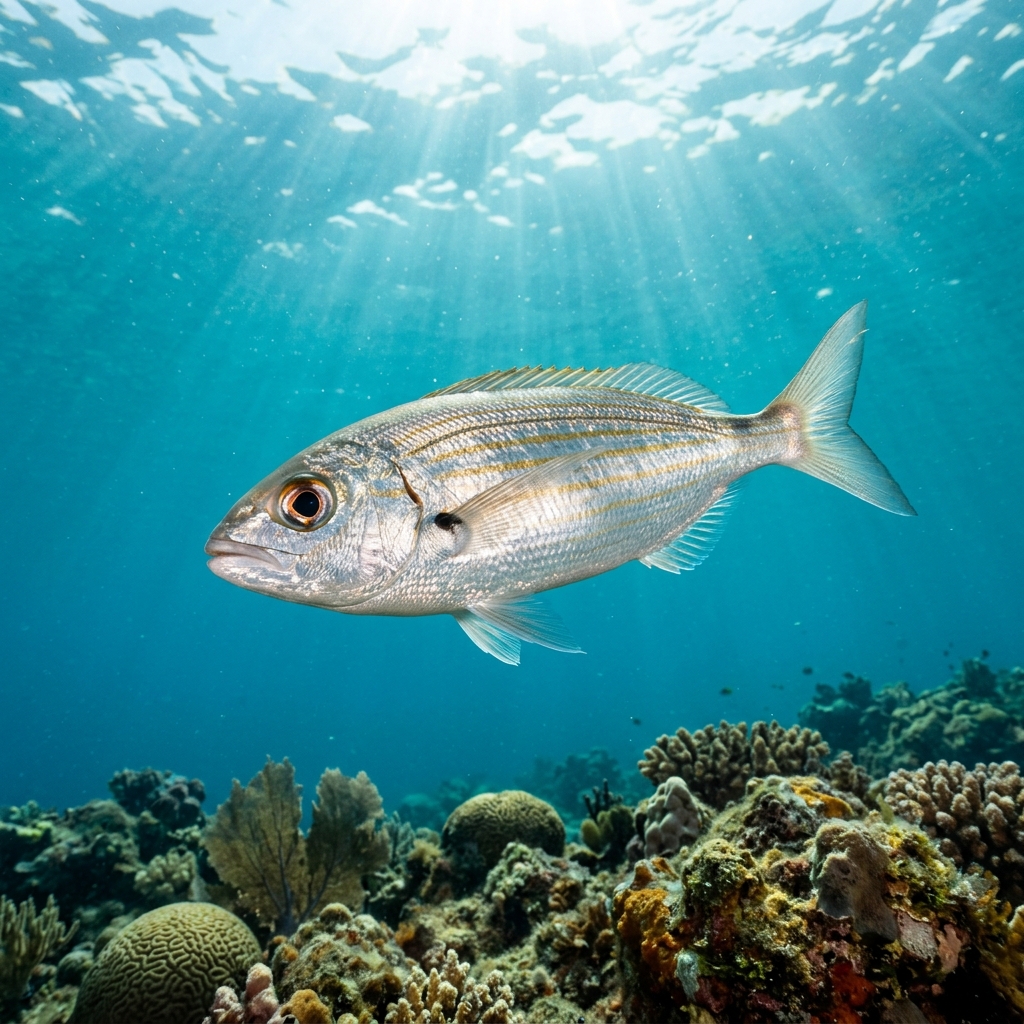
Spot Salema Porgy year-round across the French Riviera, Sardinia and the Balearics. Look for golden horizontal stripes on a silver school at 5-70 m.
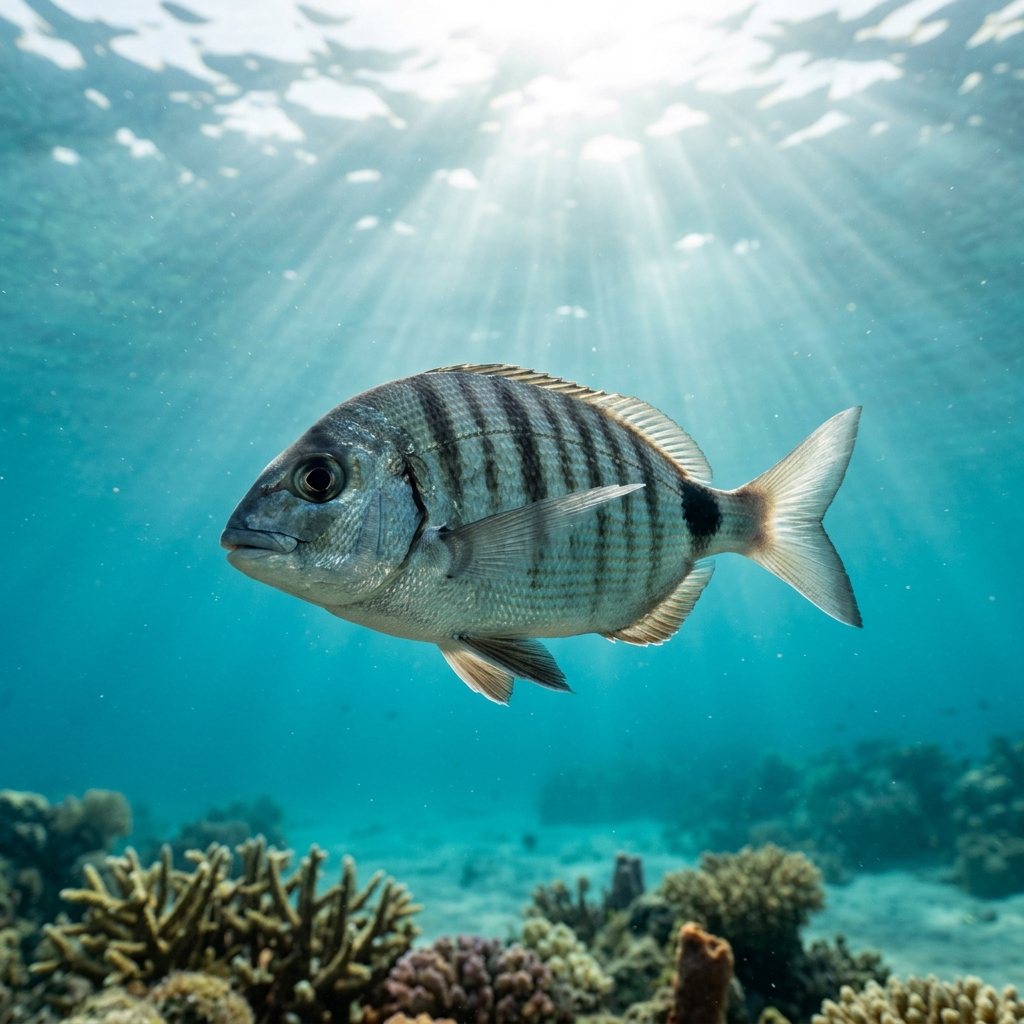
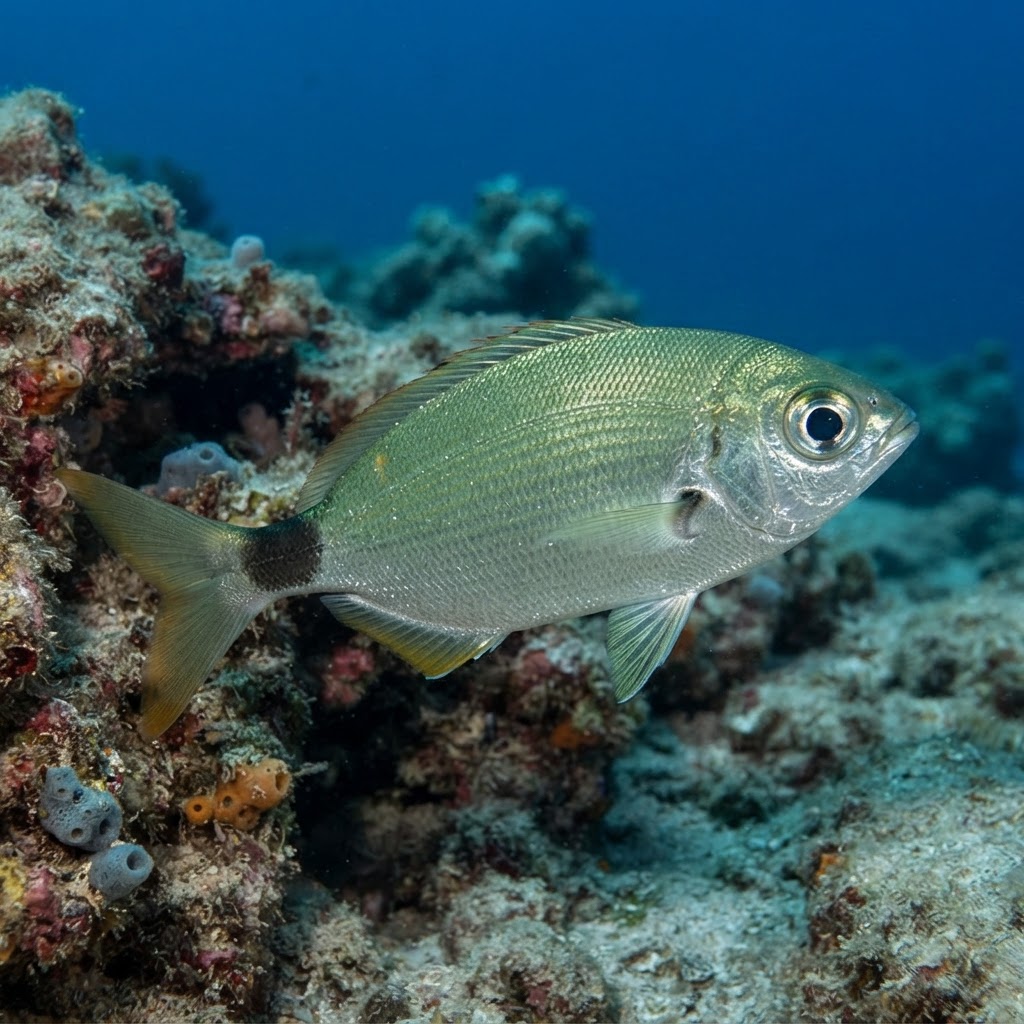
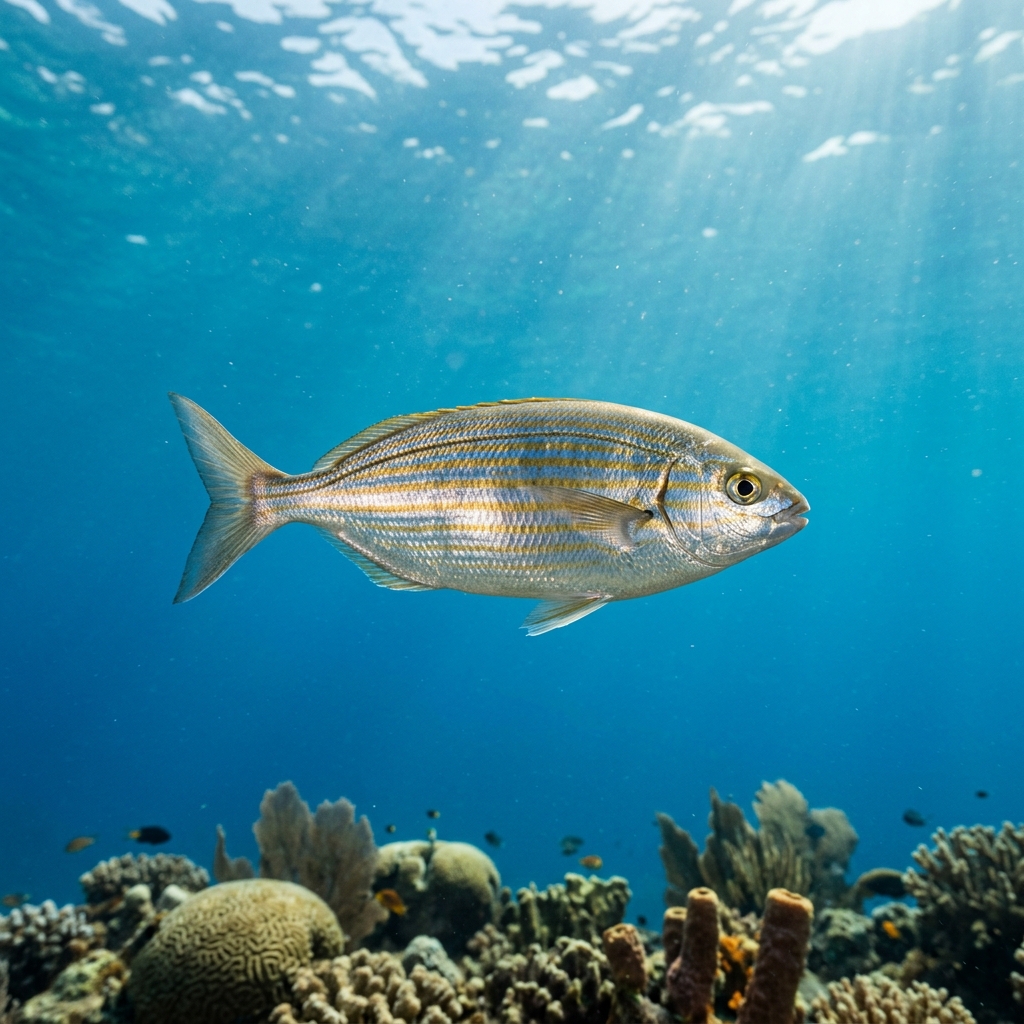
A mid-sized bream around 35 cm long, silvery-white with a distinctive set of thin golden-yellow horizontal stripes running the full length of the body, these stripes are the key field mark underwater. The body is moderately deep and oval, typical of the bream family, with a small terminal mouth suited to grazing vegetation. Often seen in loose to tight schools hovering just above rocky or weedy substrates in shallow to mid-water depths.
You will most often come across Salema Porgy in schools grazing over rocky reefs or seagrass beds, their heads angled downwards as they browse algae and plant material. Schools can range from a handful of fish to dense aggregations, and they tend to drift slowly rather than bolt when approached, making them relatively easy to observe up close. Look for them in the benthopelagic zone (the water column just above the bottom), typically at shallow to moderate depths where light still supports vegetation.
Salema Porgy are well documented as a hallucinogenic fish, consumption of the head or brain can trigger vivid, prolonged hallucinations in humans, a property known since Roman times and linked to the marine algae and phytoplankton that make up their herbivorous diet.
In the Northern Hemisphere it is present year-round with no concentrated season, reflecting its tolerance of water temperatures from around 15 to 24 °C across the Mediterranean and eastern Atlantic. Southern Hemisphere sightings, though far fewer, concentrate between December and April.
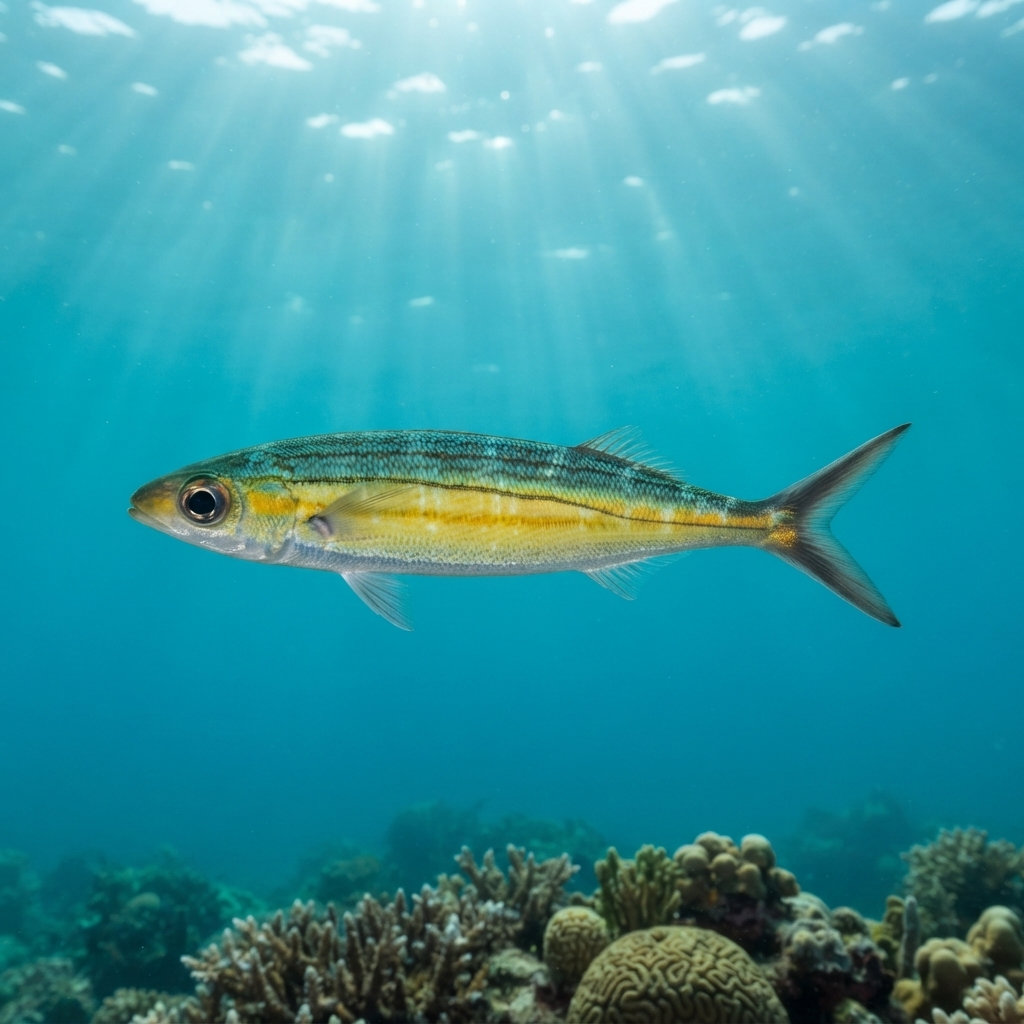
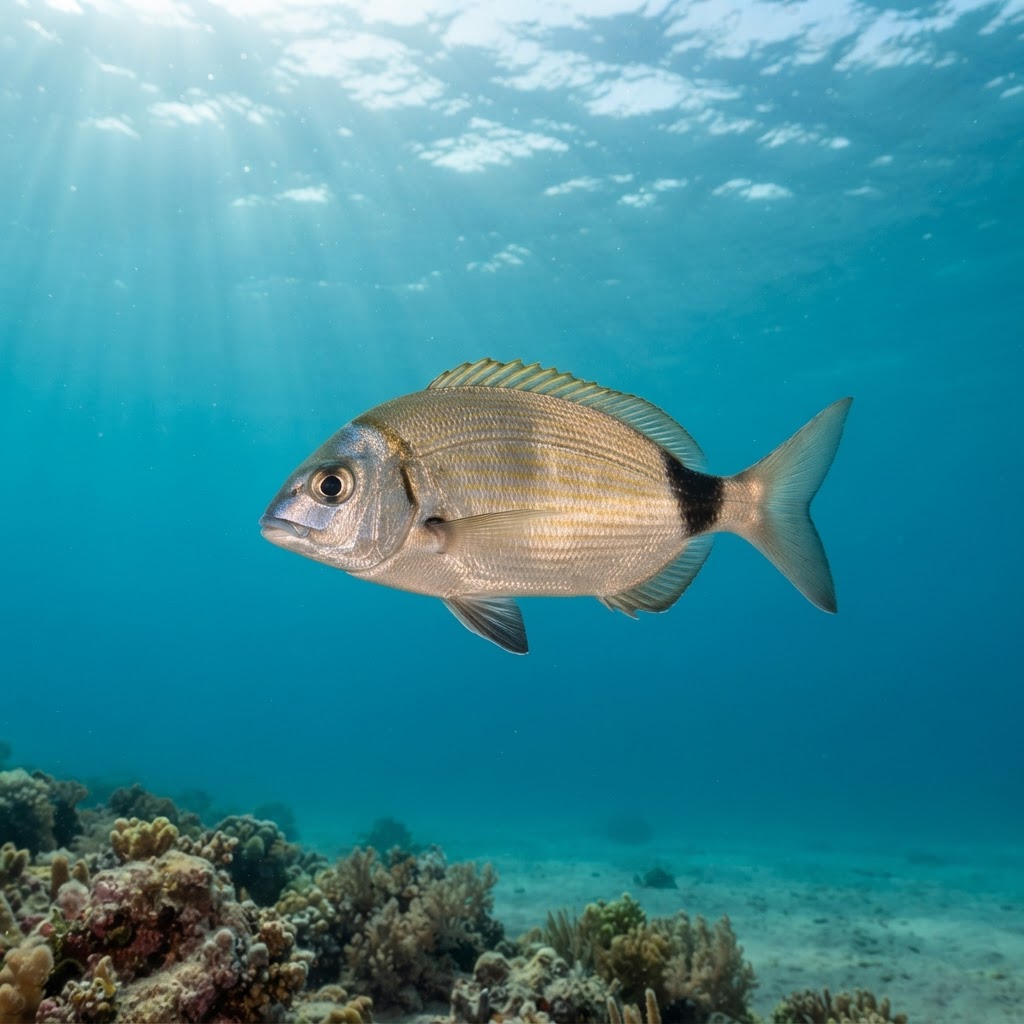
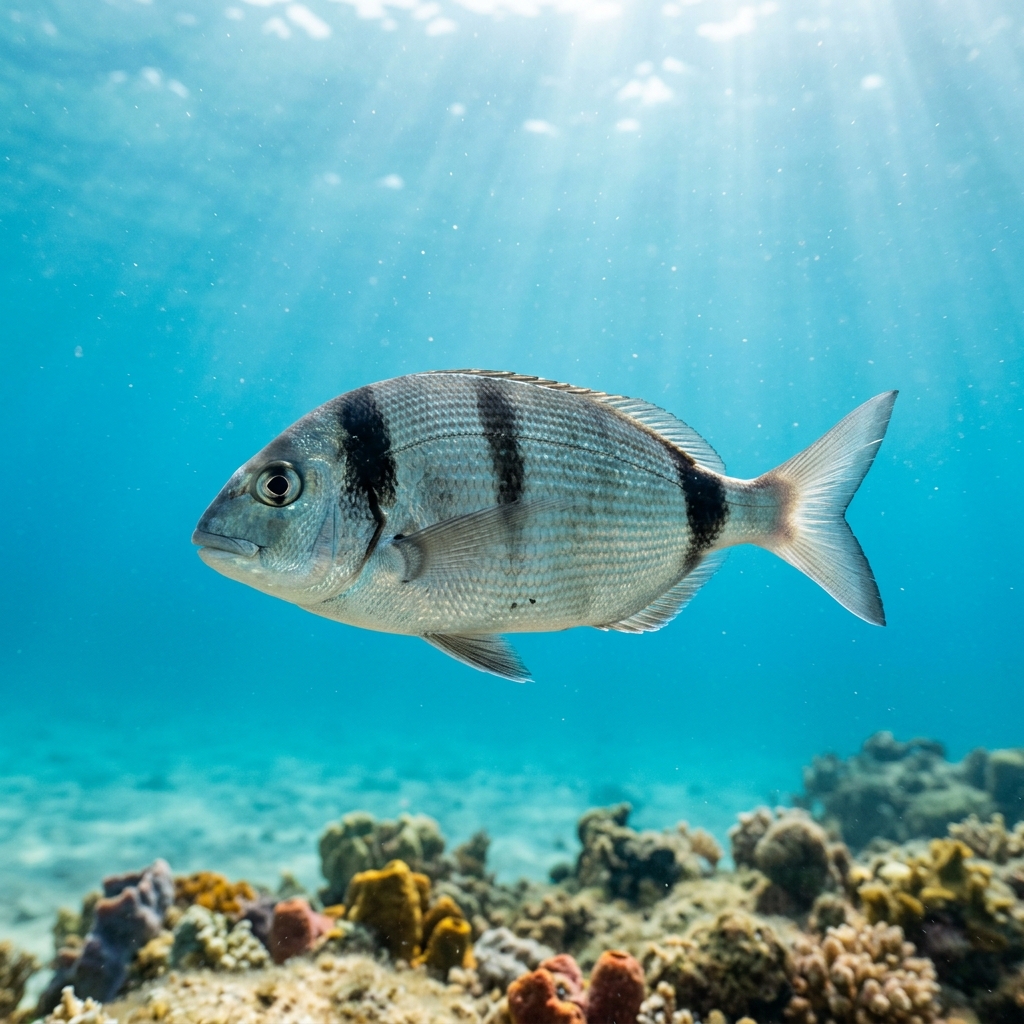
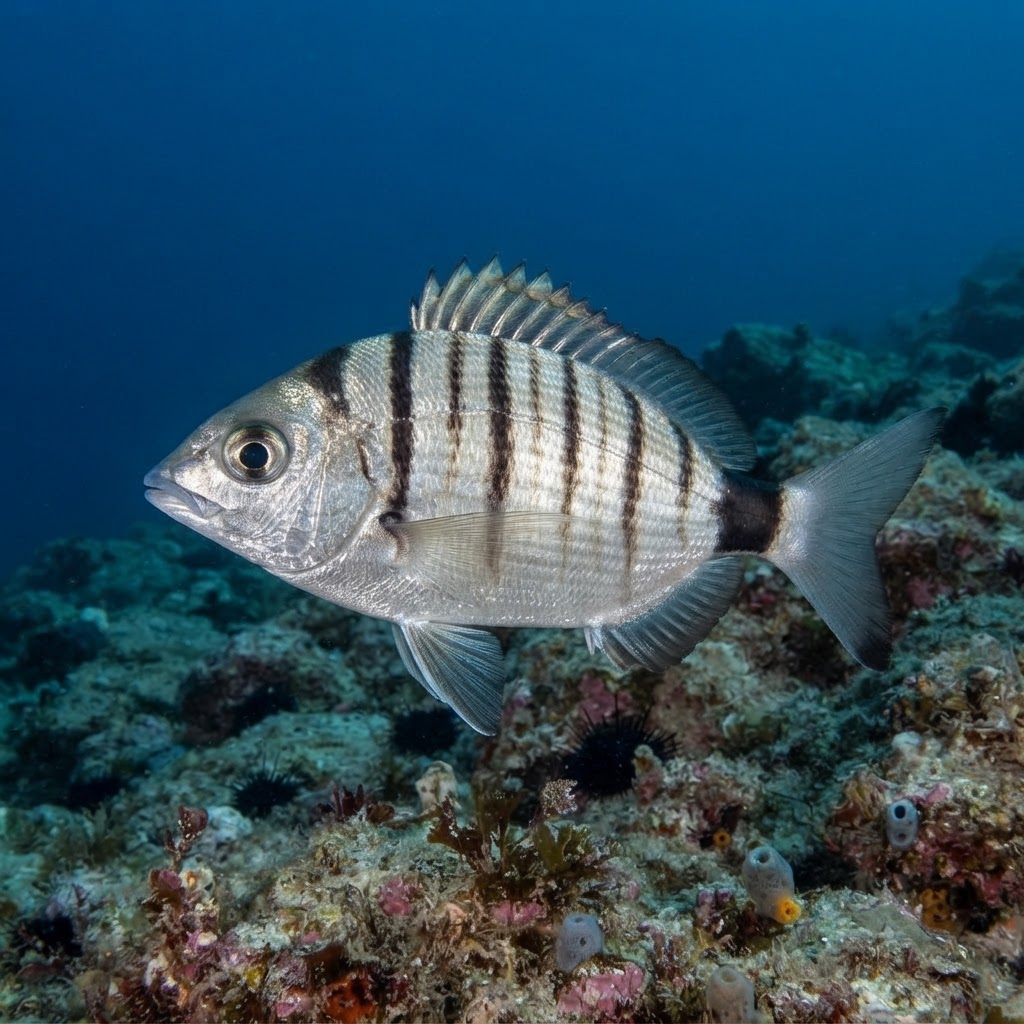
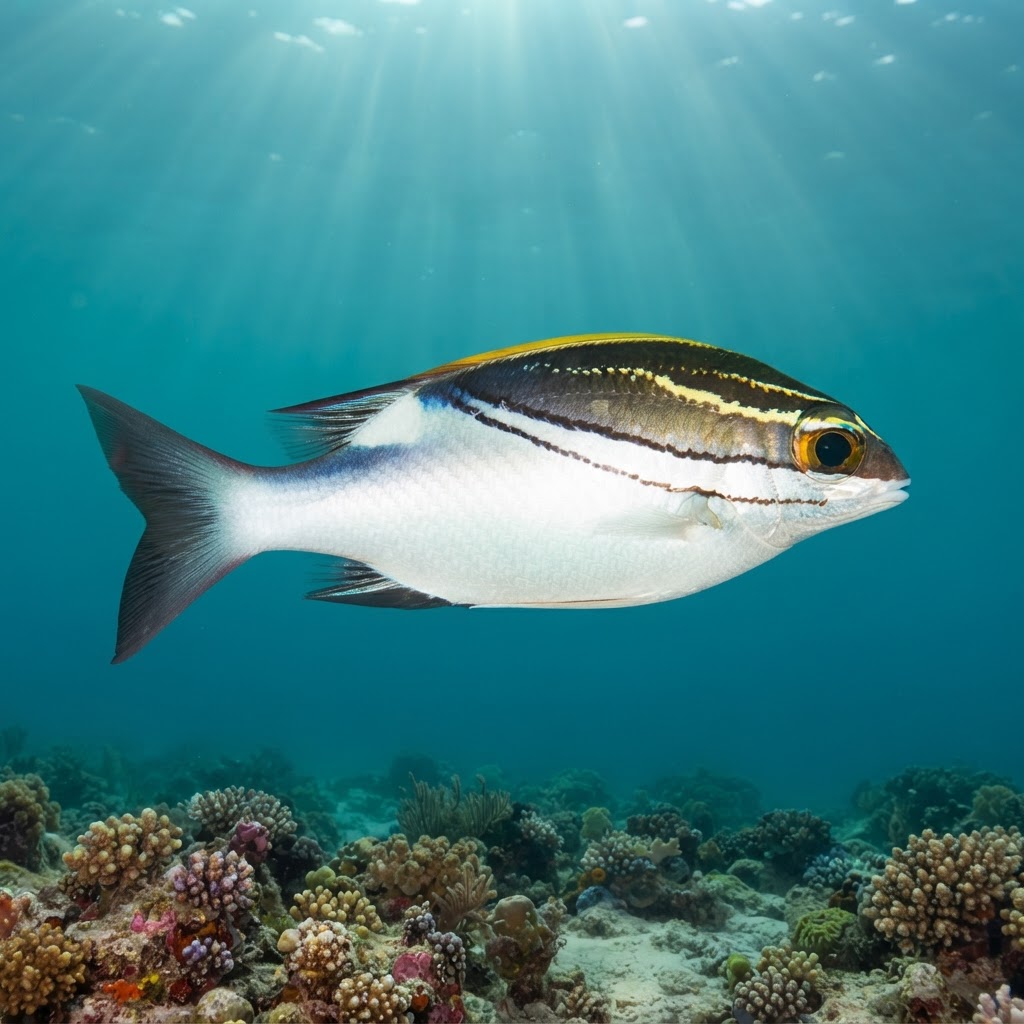
Reef neighbours a diver could mistake it for. Use the identification notes above to tell them apart.
Salema Porgy is most widely logged across the Mediterranean, with the strongest sighting records in Spain, Italy, France, Greece, and Croatia. The French Riviera and Provence, Sardinia and Tuscany, Costa Blanca, Costa Brava, and the Balearic Islands all stand out as particularly well-represented regions. The Canary Islands and Portugal extend its Atlantic range, and it turns up reliably right across the Croatian Adriatic as well.
Mapping where Salema Porgy is logged…
The best places to find them are across the Mediterranean and eastern Atlantic. Spain, Italy, France, Greece, and Croatia top the records, with particularly strong sightings along the French Riviera, around Sardinia, the Costa Brava, and the Balearic Islands. The Canary Islands and Portugal are also reliable Atlantic spots.
In the Mediterranean and eastern Atlantic they are present year-round, so there is no single best season. Their comfortable temperature range of roughly 15 to 24 °C means cooler winter months are no barrier. In the Southern Hemisphere, sightings concentrate from December through April.
Look for a silvery oval-bodied bream around 35 cm long with several thin golden-yellow horizontal stripes running from head to tail. No other common Mediterranean bream shares that full set of longitudinal gold lines. They typically school, which helps narrow it down quickly.
Typical adults reach around 35 cm in length, which is roughly the size of a large hand span. They are a medium-sized bream and look noticeably stockier than similarly schooling species like Boga.
Eating the head or brain of a Salema Porgy can cause intense hallucinations in humans, an effect recorded as far back as ancient Rome. It is thought to result from compounds derived from the algae and phytoplankton the fish graze on. The fish pose no risk to divers who simply observe them.
Site and sighting data is aggregated from diver logs, iNaturalist and GBIF. For taxonomy and conservation status:
Bogue
2,853 sites