Lophiidae spp.
Monkfish lurk in cold Atlantic waters from Brittany to Nova Scotia. Best spotted Jan, May in 6-19 °C. Here's where divers actually find them.
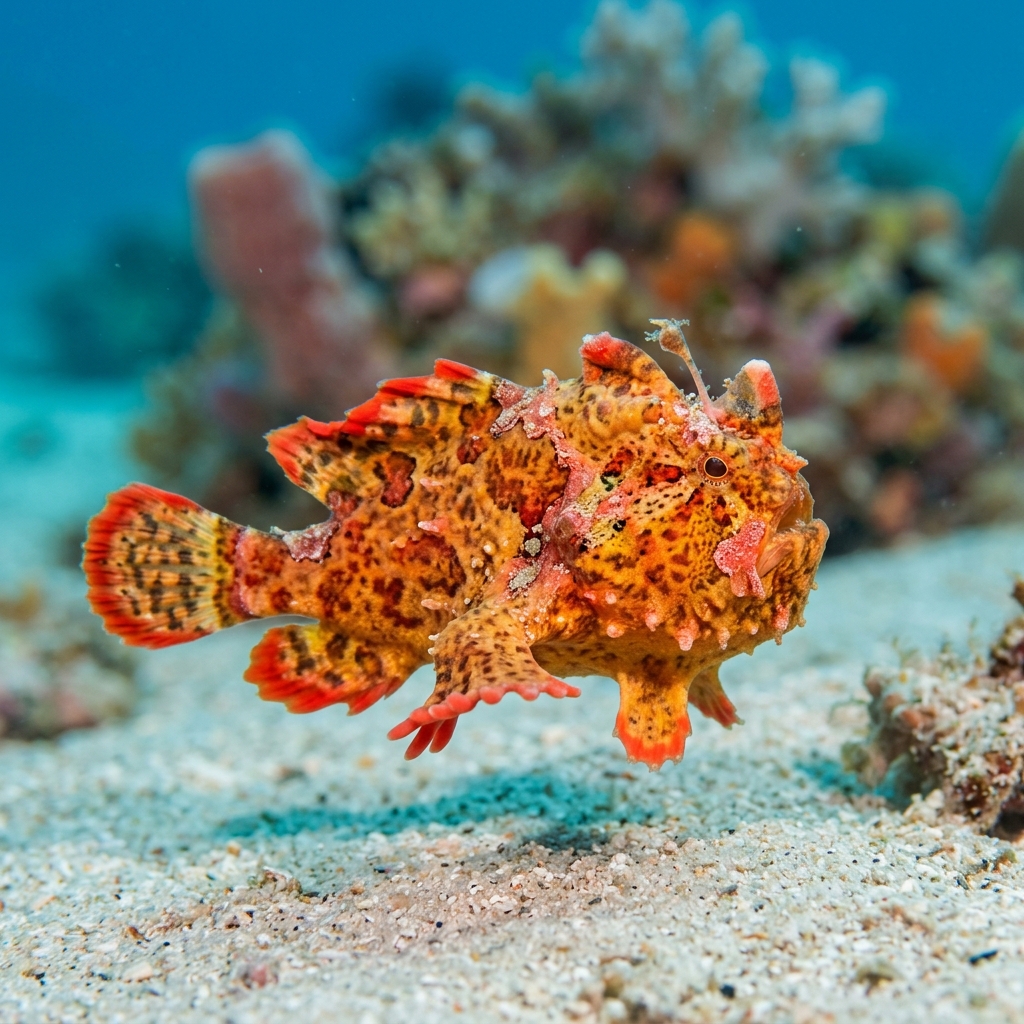
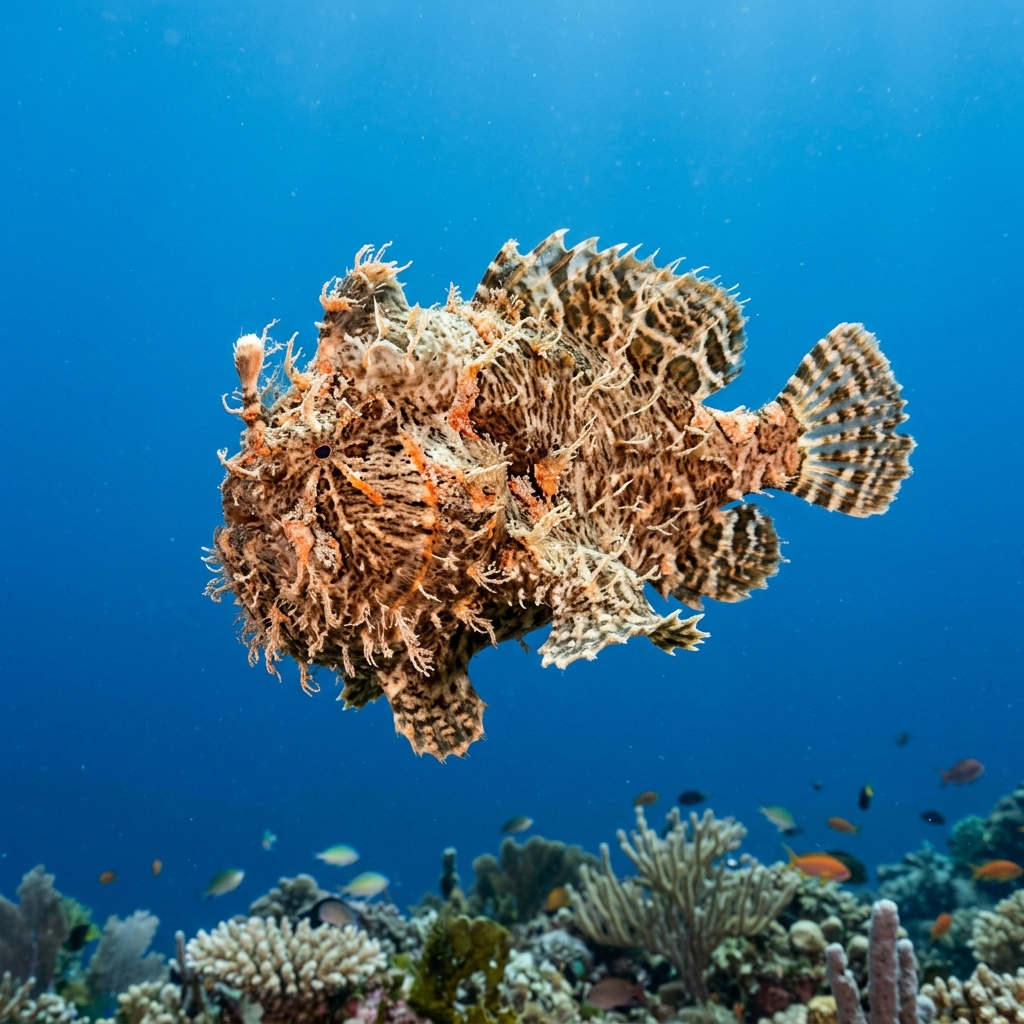
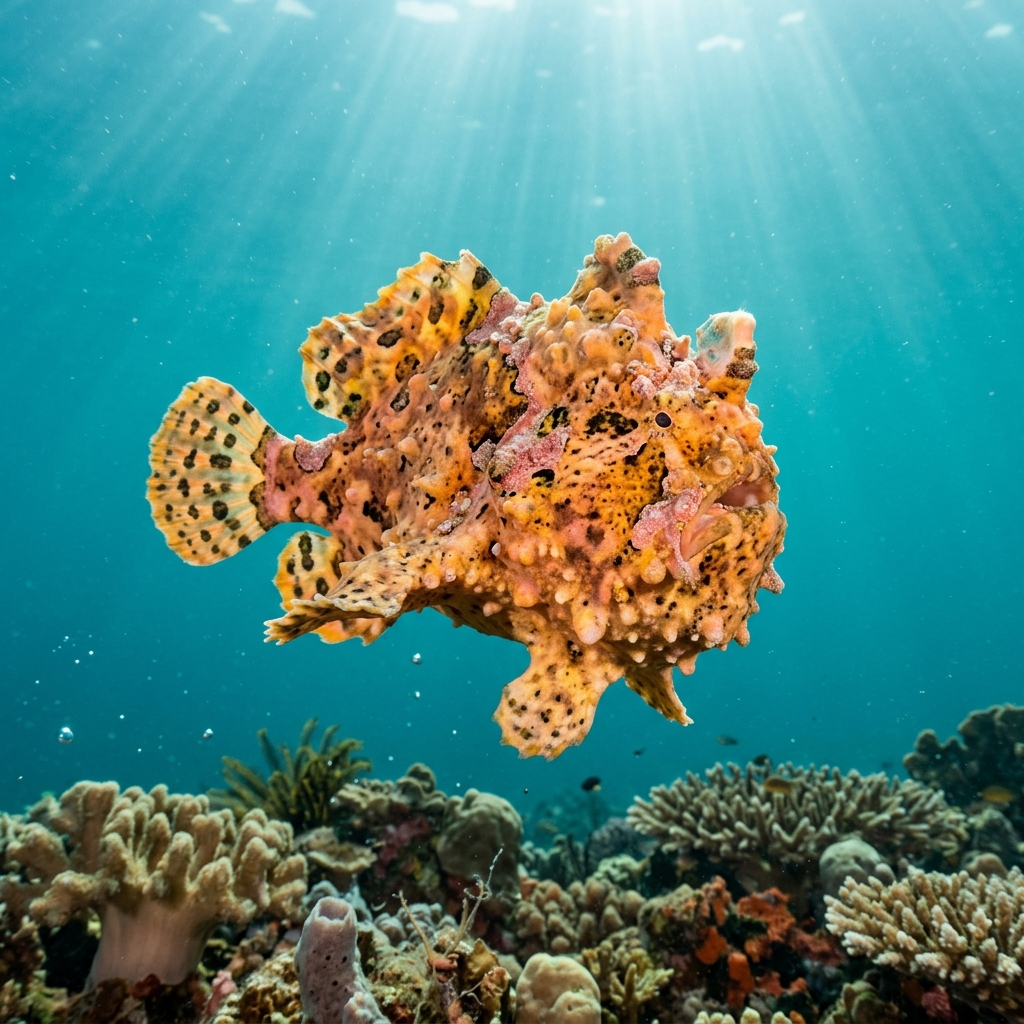
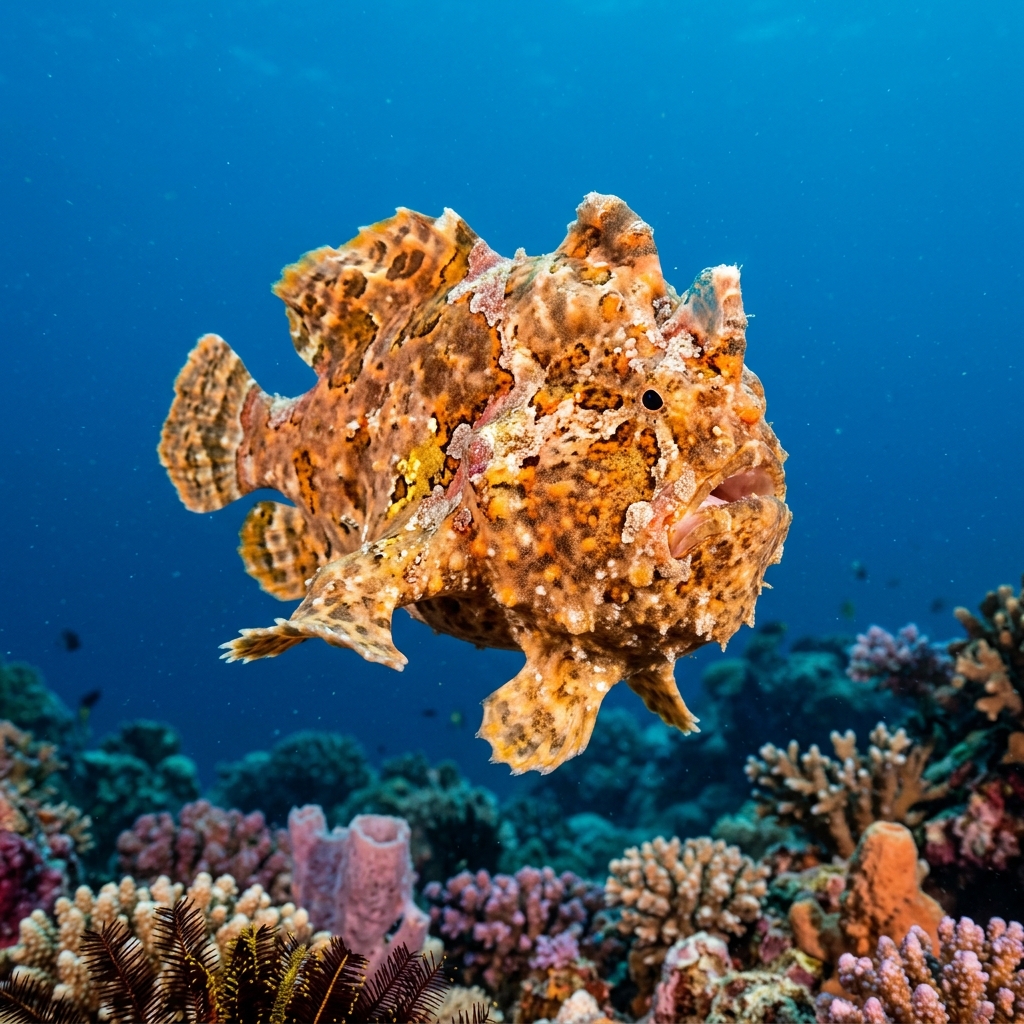
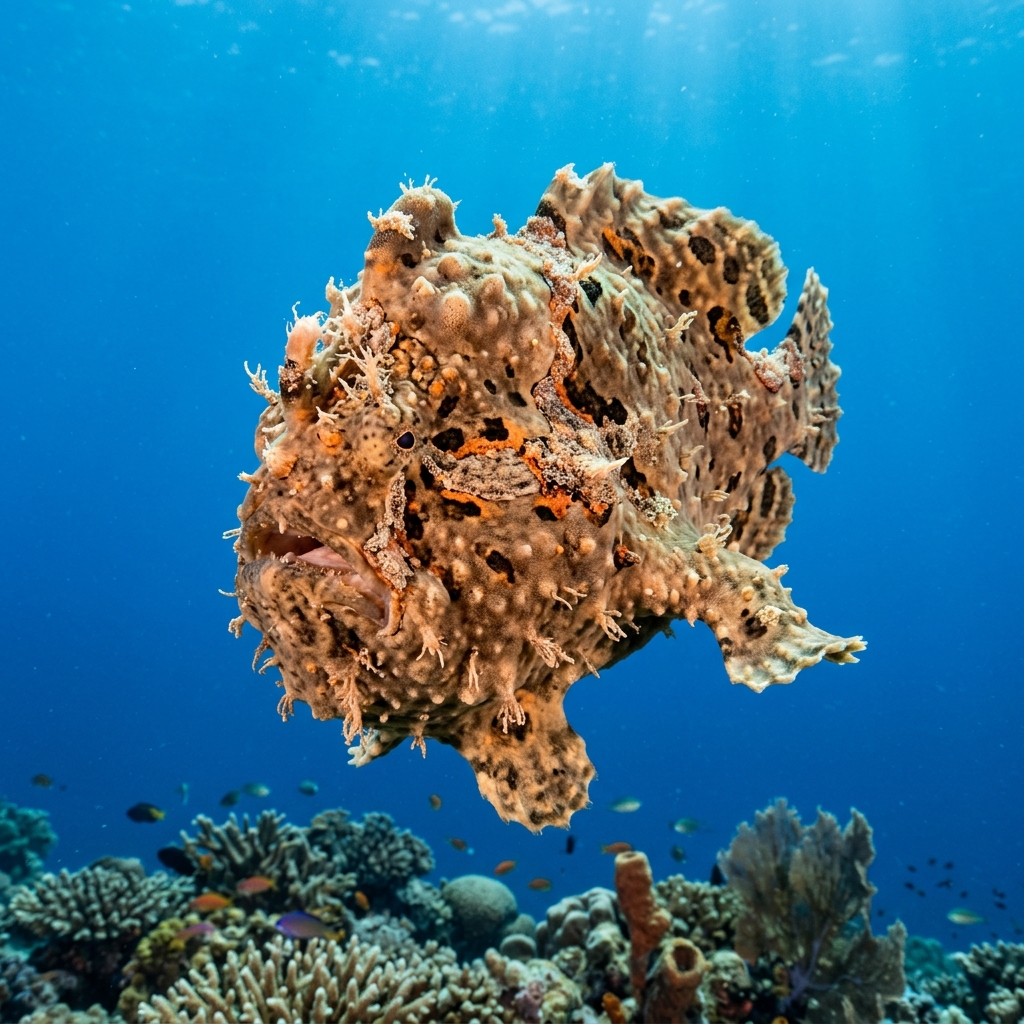
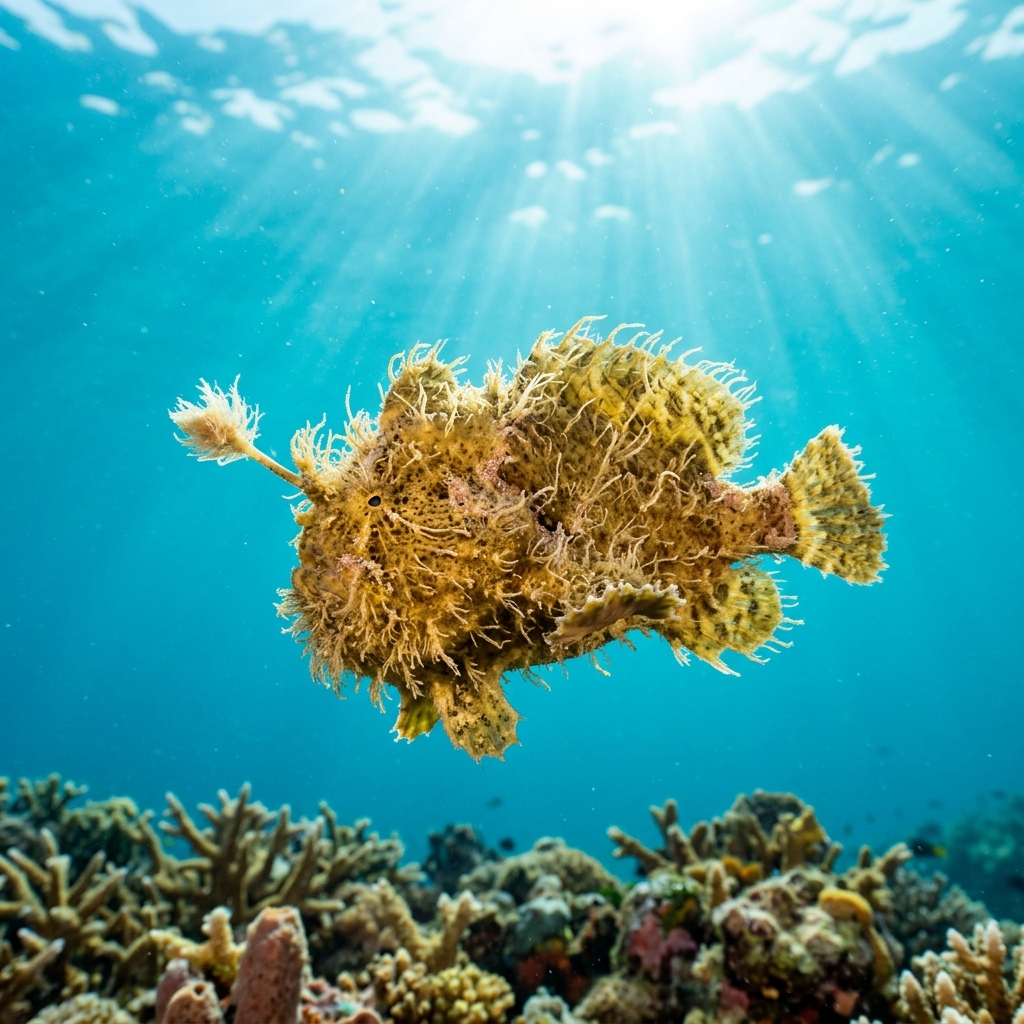
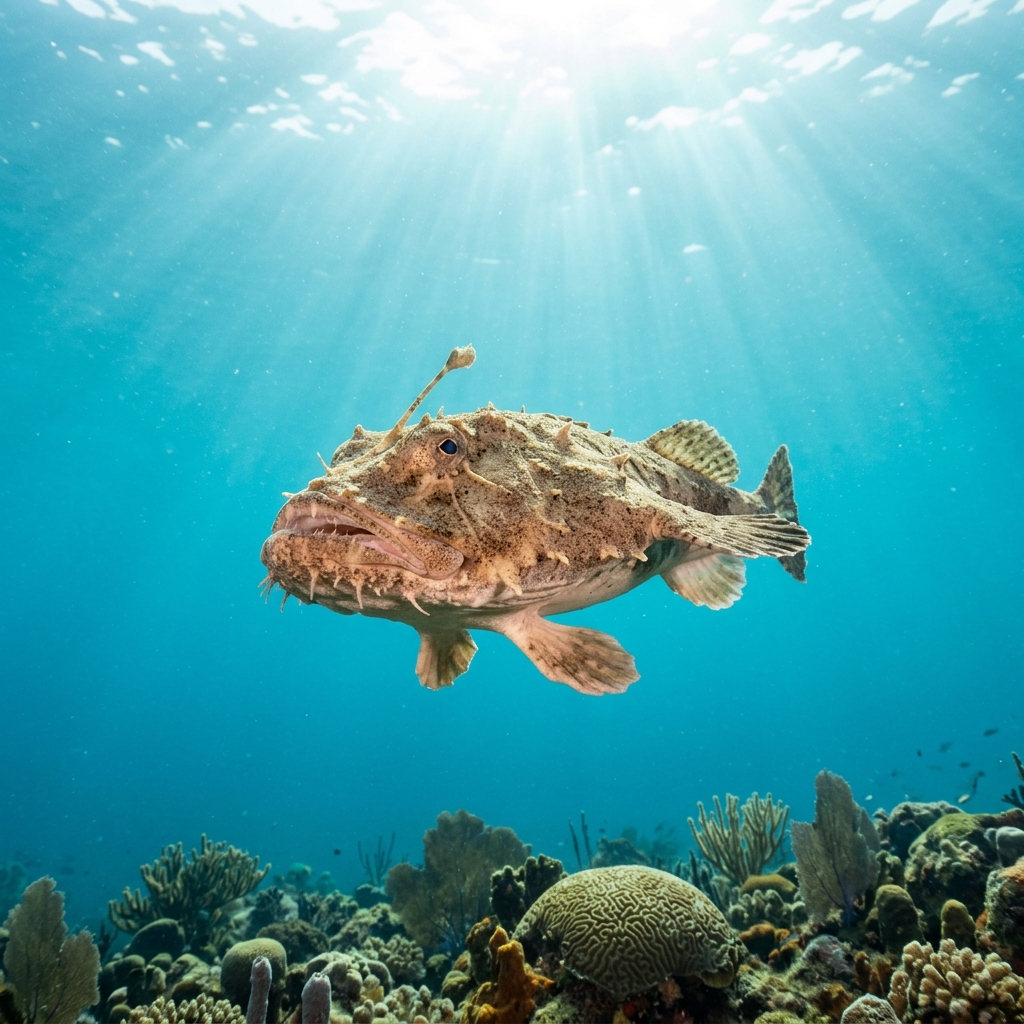
A flattened, almost comically wide head takes up nearly half the body, with a cavernous upward-facing mouth fringed with ragged skin flaps that break up its outline against the seabed. The body tapers sharply behind the head, giving a tadpole silhouette unlike any other fish you will encounter in cold temperate waters. Mottled brown, grey, and ochre colouring shifts with the surrounding sediment, making it look less like a fish and more like a patch of rubble. The tell-tale feature is the modified first dorsal spine (the illicium, or fishing rod), which projects forward over the mouth and may be flicked to lure prey.
Monkfish spend almost all their time motionless on soft sediment or mixed ground, relying entirely on camouflage rather than flight when a diver approaches, which is why you can hover close without spooking them once found. They actively hunt by waggling the illicium above the mouth to draw curious fish and crustaceans within strike range, then inhale prey with a single explosive gulp. The best chance of spotting one is scanning the sandy or muddy margins of rocky reefs methodically, at any time of day.
Members of the Lophiidae family can engulf prey almost as large as themselves in a single strike, thanks to a hinged skull that allows the mouth to open to a near-perfect right angle.
Northern Hemisphere sightings concentrate between January and May, suggesting divers encounter monkfish most reliably through winter and early spring when cooler bottom temperatures suit them best.
Reef neighbours a diver could mistake it for. Use the identification notes above to tell them apart.
Most commonly logged across the northeastern Atlantic, with the strongest site coverage in France, the United Kingdom, Spain, and Italy. Brittany and Normandy lead the regional counts, closely followed by Nova Scotia and the Bay of Fundy in Canada, and the South Coast of England. The species also turns up across the northern Mediterranean and along North America's eastern seaboard.
Mapping where Monkfish is logged…
The strongest concentrations are logged in the northeastern Atlantic, particularly around Brittany and Normandy in France, the South Coast of England, and Nova Scotia and the Bay of Fundy in Canada. The Mediterranean coasts of Spain, Italy, and Greece also feature regularly in diver reports.
Diver sightings in the Northern Hemisphere peak between January and May. Monkfish are observed in water temperatures as low as 6.7 °C and up to around 19 °C, so cooler months align well with the conditions they prefer.
Look for an extraordinarily wide, flattened head with an upward-facing mouth and ragged skin frills, sitting completely still on sandy or muddy seabed. The body narrows dramatically toward the tail, and the forward-projecting lure above the mouth is unique. Mottled brown and grey colouring makes them very easy to overlook.
No. Monkfish are not considered dangerous to divers. They rely on camouflage and stillness rather than aggression, and will typically remain motionless even when approached closely.
The first dorsal spine has evolved into a flexible rod tipped with a fleshy bait-like appendage called an esca. The fish twitches this lure just above its open mouth to mimic a small creature, drawing prey close enough to be swallowed whole in a single explosive strike.
Site and sighting data is aggregated from diver logs, iNaturalist and GBIF. For taxonomy and conservation status:
Hairy Frogfish
987 sites