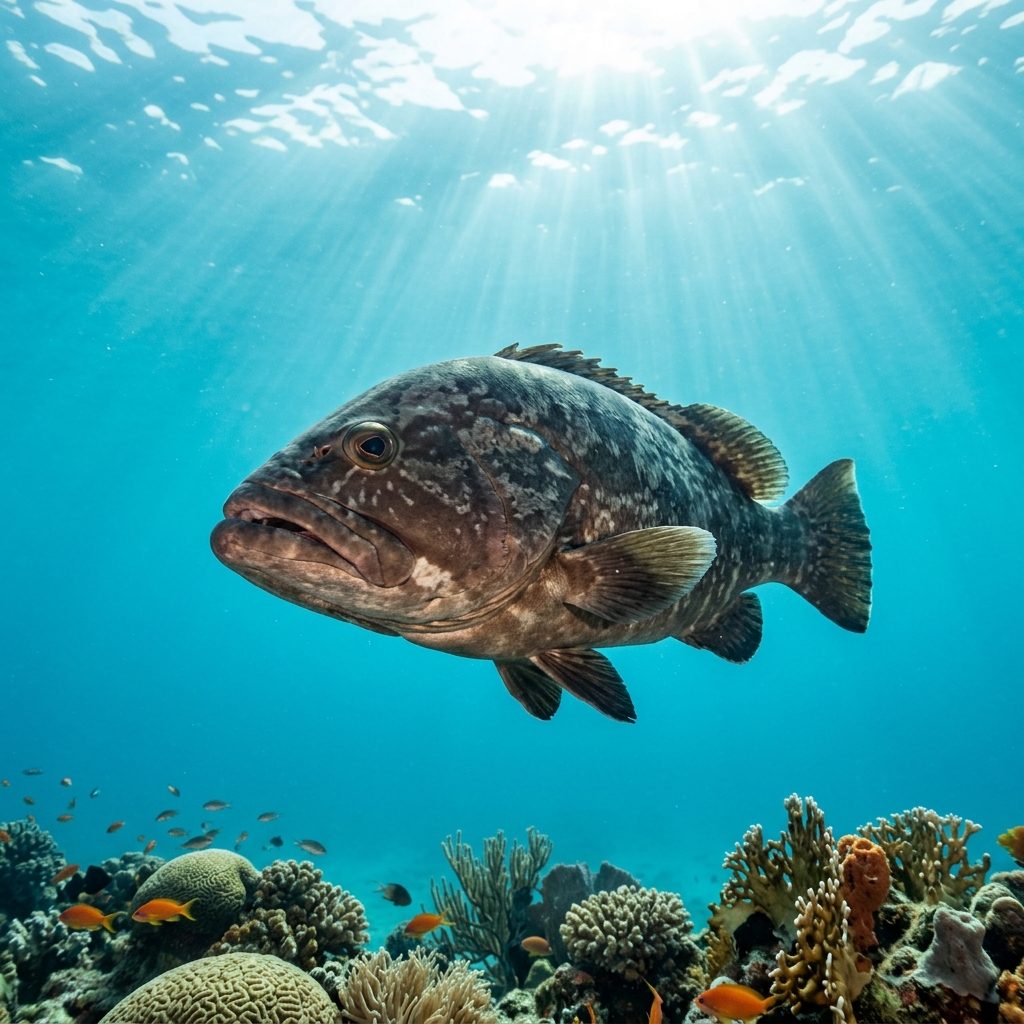
Serranus spp.
Spot combers across the Mediterranean, Canary Islands and Florida in waters from 17.5 to 29 °C. Here's where divers most reliably find them.
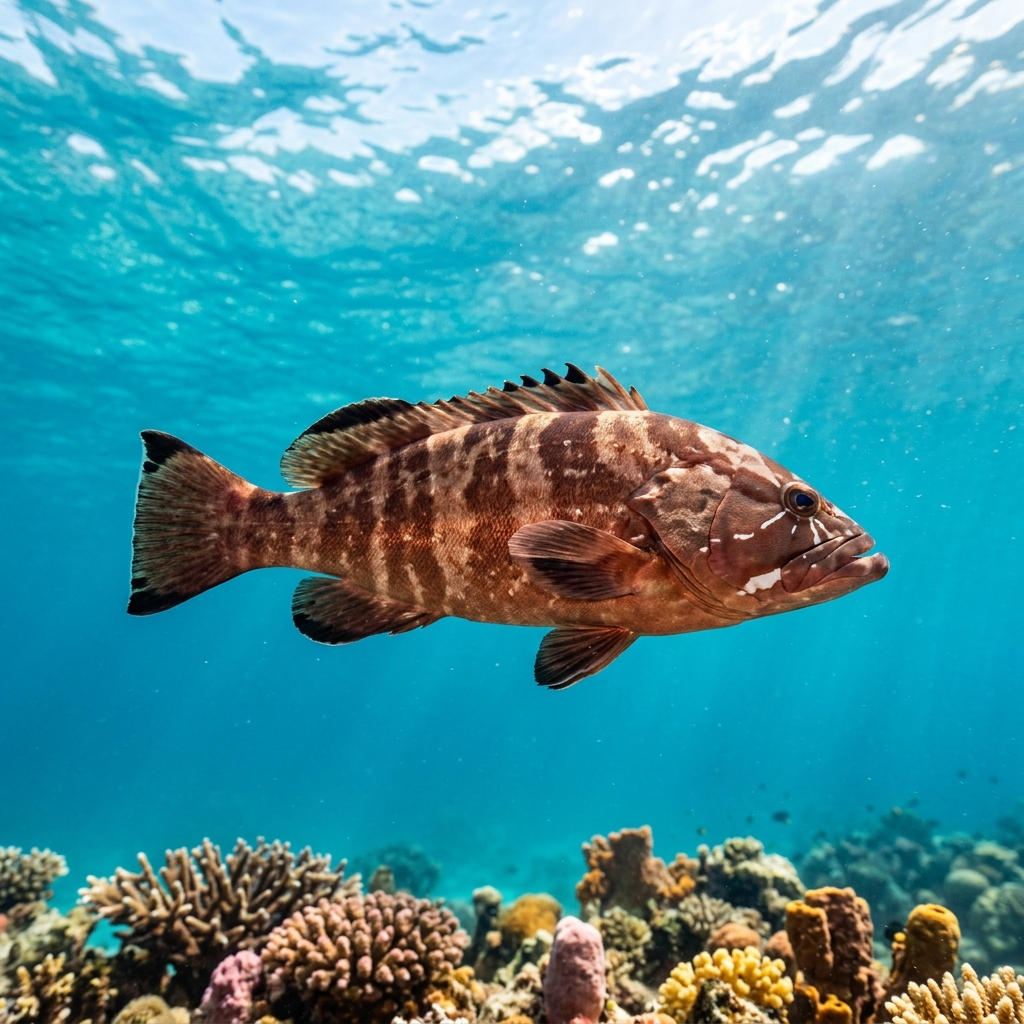
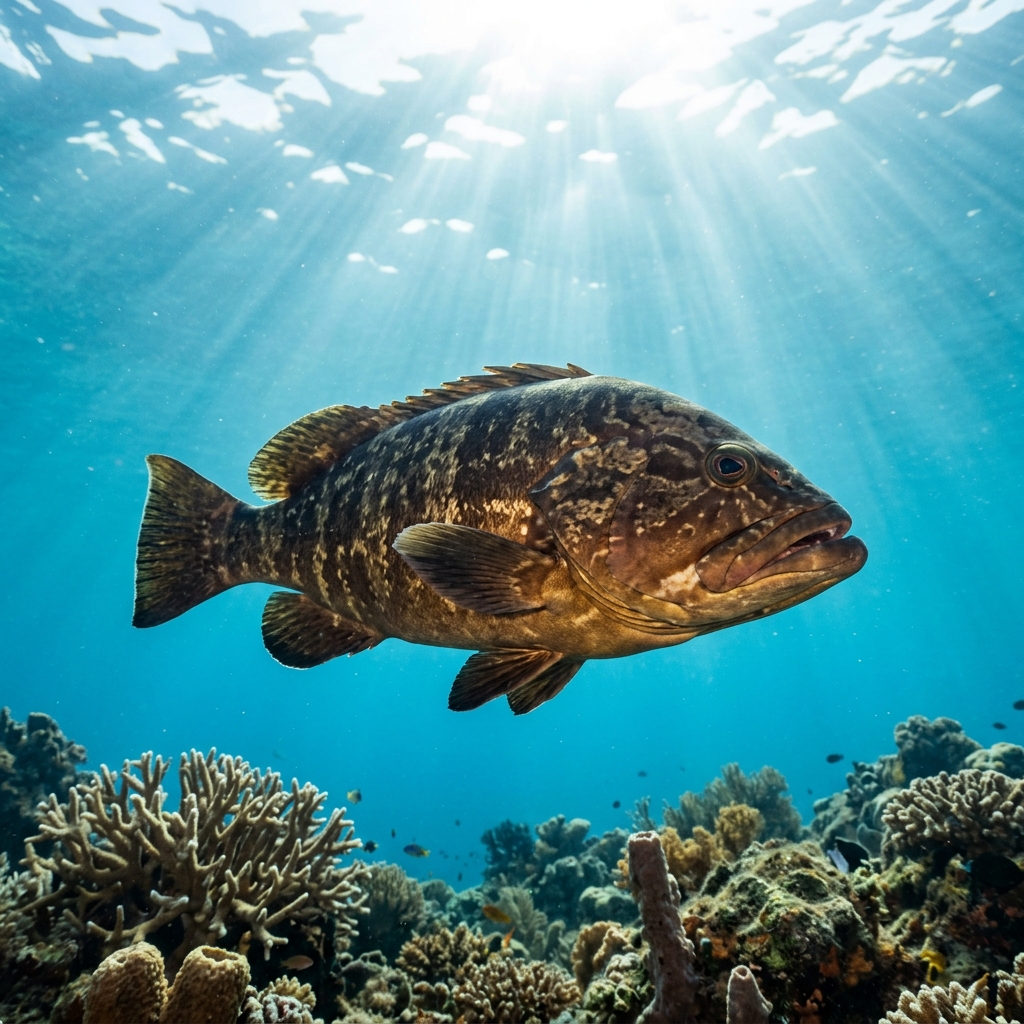
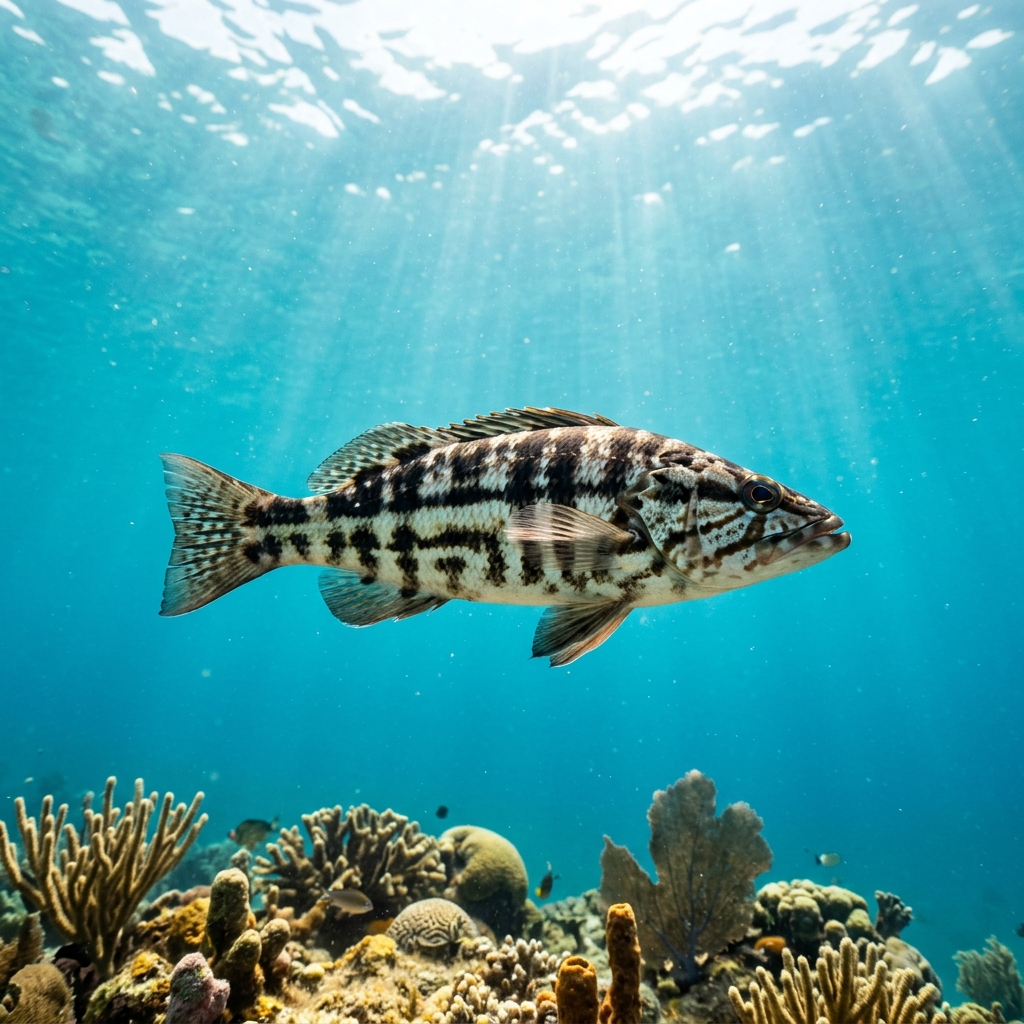
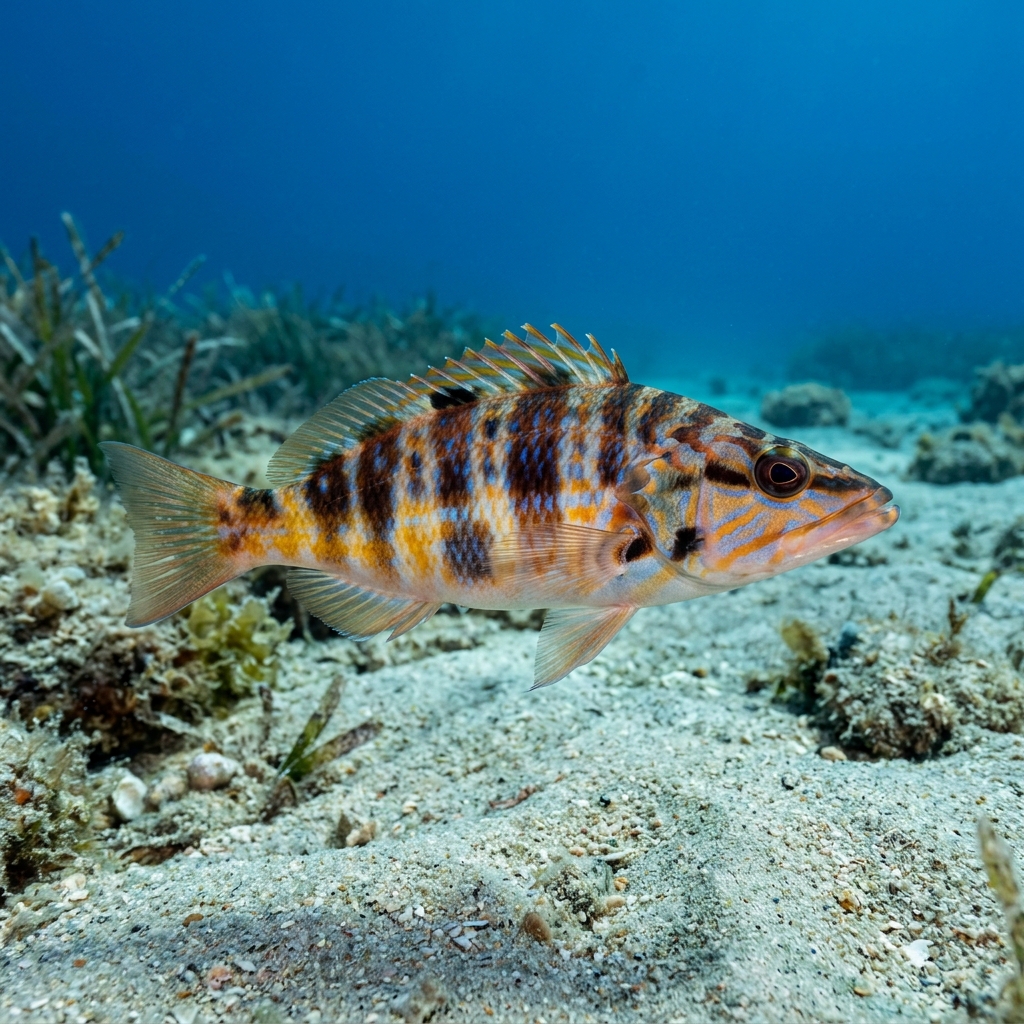
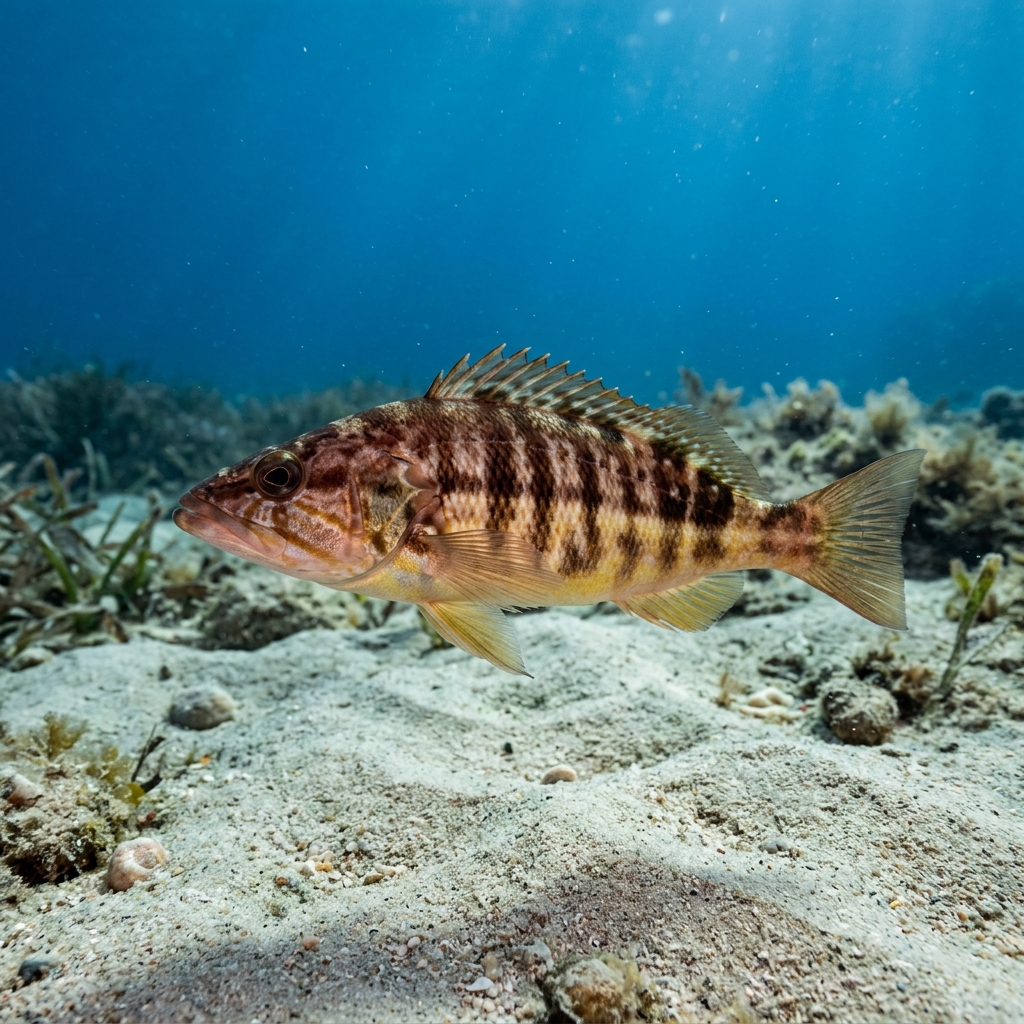
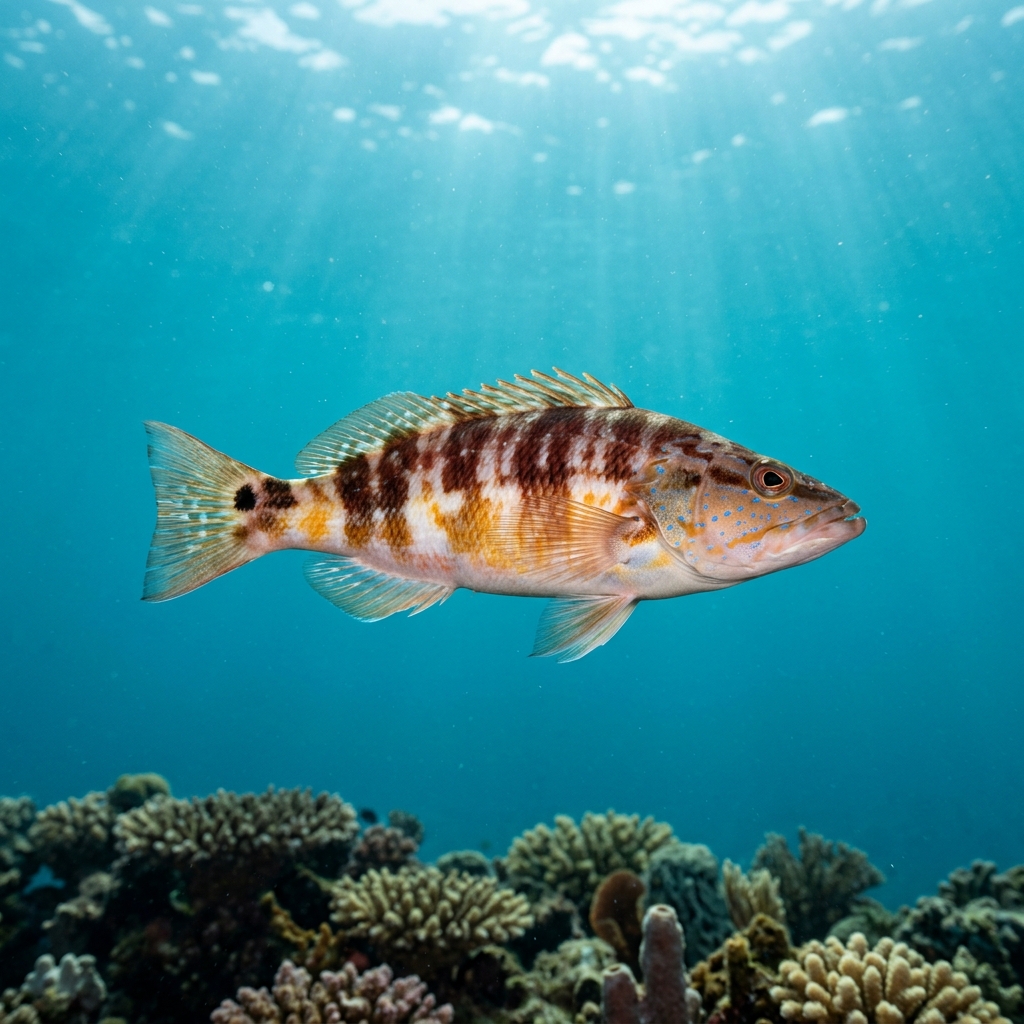
Combers are small, elongated members of the grouper family, typically compact enough to sit comfortably in a rock crevice. Most species share a pattern of reddish, orange-brown or tawny flanks broken by vertical bars or pale blotches, with a distinctively large mouth for their body size. The dorsal fin runs long and continuous, a useful clue when they are resting motionless against the substrate. Because this is a genus of several species, colour and patterning vary, but the combination of small size, banded or mottled flanks and a reef-hugging posture is the consistent ID shortcut.
You will most often find combers perched on or hovering just above a rocky or rubble-strewn reef, rarely straying far from a convenient retreat. They tend to hold their position as a diver approaches, relying on camouflage rather than flight, which makes close observation straightforward if you move slowly. Active hunters, they will dart suddenly at small fish or invertebrates, so watching a stationary comber for a minute or two is often rewarded with a strike.
Most combers are simultaneous hermaphrodites, meaning each individual carries both functional male and female reproductive tissue at the same time and can self-fertilise, a rare trait among vertebrates.
Northern hemisphere sighting data concentrates from May through March, suggesting a broad active season that largely avoids the height of summer in some areas. Their tolerance of water temperatures from 17.5 to 29 °C means they remain present year-round in the Mediterranean and Canary Islands, where cooler winters still keep conditions within their range.
Reef neighbours a diver could mistake it for. Use the identification notes above to tell them apart.
Combers are most widely logged across the Mediterranean basin, with particularly strong representation in Italy, Greece, Spain, and the Canary Islands, especially Tenerife and Lanzarote. The western Atlantic also produces regular sightings, from Florida and the Yucatán Peninsula down through Roatán and the coast of Brazil around Rio de Janeiro and São Paulo. Outside these hotspots, the range model places them across a broad spread of tropical and warm-temperate coastal waters in more than 100 countries.
Mapping where Combers is logged…
Combers are most reliably found in the Mediterranean, with Italy, Greece, Spain, and the Canary Islands among the top destinations. The western Atlantic also delivers regular sightings, particularly in Florida, the Yucatán Peninsula, Roatán, and along the Brazilian coast around Rio de Janeiro.
Northern hemisphere sighting data suggests they are observed across a long season running from May through to March. In the Mediterranean and Canary Islands their broad temperature tolerance keeps them present year-round, so there is rarely a bad month to look.
Look for a small, elongated grouper-shaped fish with reddish-brown or tawny flanks marked by vertical bars or pale blotches, a long continuous dorsal fin, and a notably large mouth. They typically rest motionless on rocky reef, relying on camouflage, which makes a careful search of rubble and crevices worthwhile.
Size varies across the several species in the Serranus genus, but most combers are modest reef fish, generally small enough to fit within a rock crevice. They are considerably smaller than the large groupers they are related to, which itself helps with identification.
No. Combers pose no threat to divers. They tend to hold their ground rather than flee, but this is camouflage behaviour, not aggression. A slow, calm approach will usually allow very close observation.
Combers are simultaneous hermaphrodites, each fish carrying both functional male and female reproductive organs at the same time. This allows them to self-fertilise, which is exceptionally rare among vertebrates and makes them a favourite subject in reproductive biology research.
Site and sighting data is aggregated from diver logs, iNaturalist and GBIF. For taxonomy and conservation status:
Groupers
2,234 sites