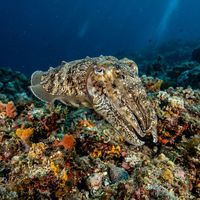
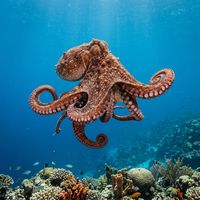
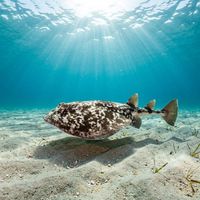
Costa Teguise and Arrecife is defined by volcanic geology: lava tubes, caverns, canyons and walls shape nearly every dive here. Beginner-friendly reef dives at Playa del Jablillo and Veril Chico sit alongside expert-level overhead environments such as Atlantis Tunnel. The marine life leans heavily toward cephalopods and rays, with European Common Cuttlefish and Common Octopus observed across almost all sites, and Common Stingray and Marbled Electric Ray appearing regularly. Shore access dominates, making independent diving straightforward.

Monthly water temperature across Costa Teguise & Arrecife's sites, from satellite sea-surface data corrected for depth. The band shows the site-to-site spread.
Water temperature remains remarkably stable throughout the year, staying warm in winter and reaching its peak in autumn. The warmer months from late spring through October draw the most diving activity, coinciding with calmer surface conditions. Sites such as La Pared can carry strong currents, so divers should check local conditions, particularly at exposed shore entries.
14 operators
Canary Islands
Canary Islands
Canary Islands
Canary Islands

Canary Islands
6 more sites to explore
Water temperature around Costa Teguise & Arrecife ranges from about 19°C in January to 22°C in September, based on satellite sea-temperature data for its dive sites.
In the warm season (about 22°C) a 3mm full suit is comfortable in Costa Teguise & Arrecife; in the coldest months (about 19°C) step up to a 5mm suit.
Fin maps 18 sites in Costa Teguise & Arrecife (18 scuba diving sites and 4 snorkelling spots, with some suited to both).
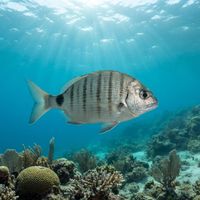
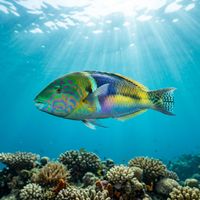
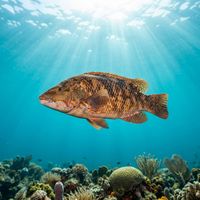
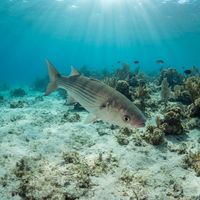
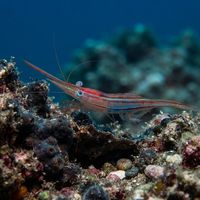
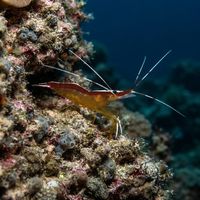
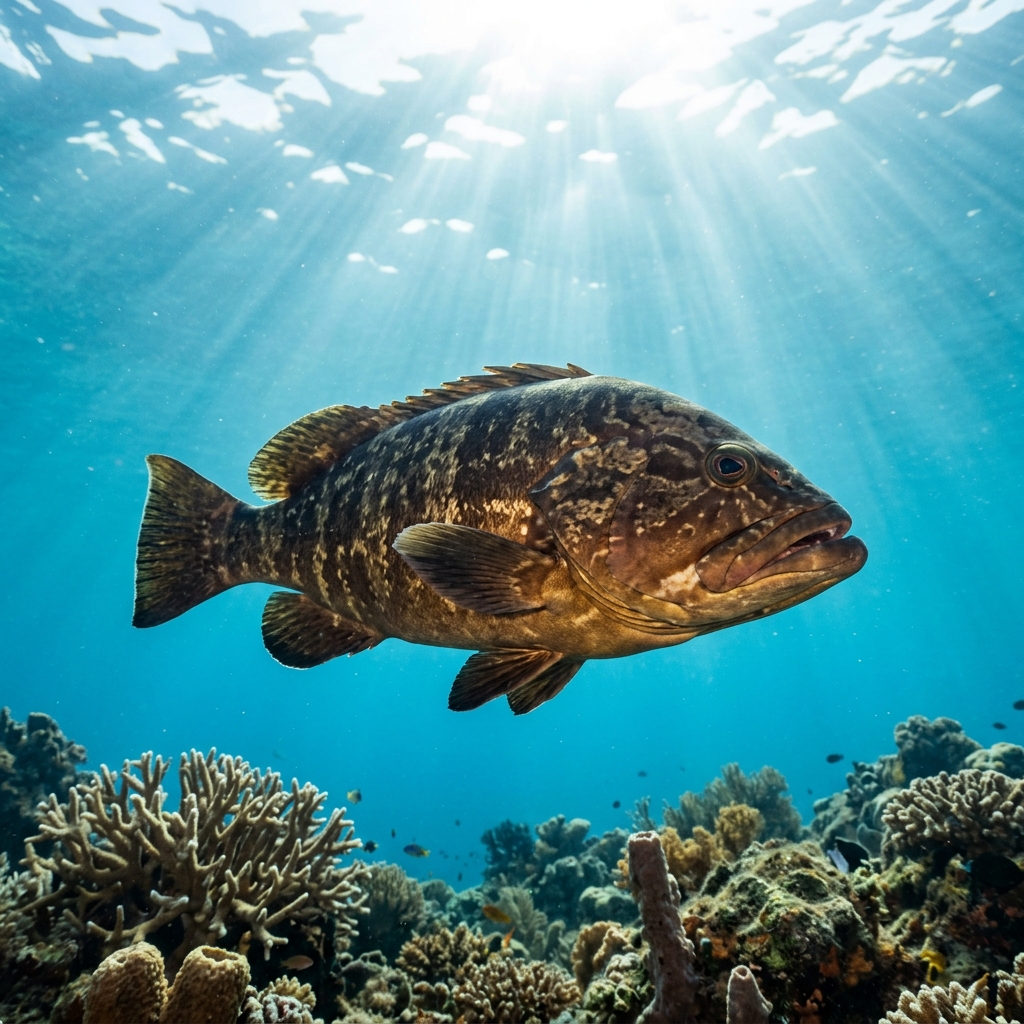
European Common Cuttlefish and Common Octopus are observed across nearly every site in the region. Common Stingray and Marbled Electric Ray are regularly encountered, while occasional sightings include Eagle Ray, Great Barracuda and Dusky Grouper. Reef fish such as Canary Damsel, Bream and Turkish Wrasse are present throughout.
Several sites are well suited to those new to diving. Playa del Jablillo offers a sheltered artificial bay with shallow reef structures, Veril Chico provides accessible reef and wall diving from shore, and Punta Mujeres Ramp features a concrete entry point with consistent shallow depths. More advanced sites such as Atlantis Tunnel and Puerto Moro are reserved for experienced and expert divers.
Shore entry is the dominant access method across the region, covering the majority of listed sites. Boat access is available for certain sites, including El Ascensor. The prevalence of shore diving means many dives can be arranged independently, though local operators such as Native Diving, Northdiving and Aquatis Dive Center are available to guide unfamiliar visitors.
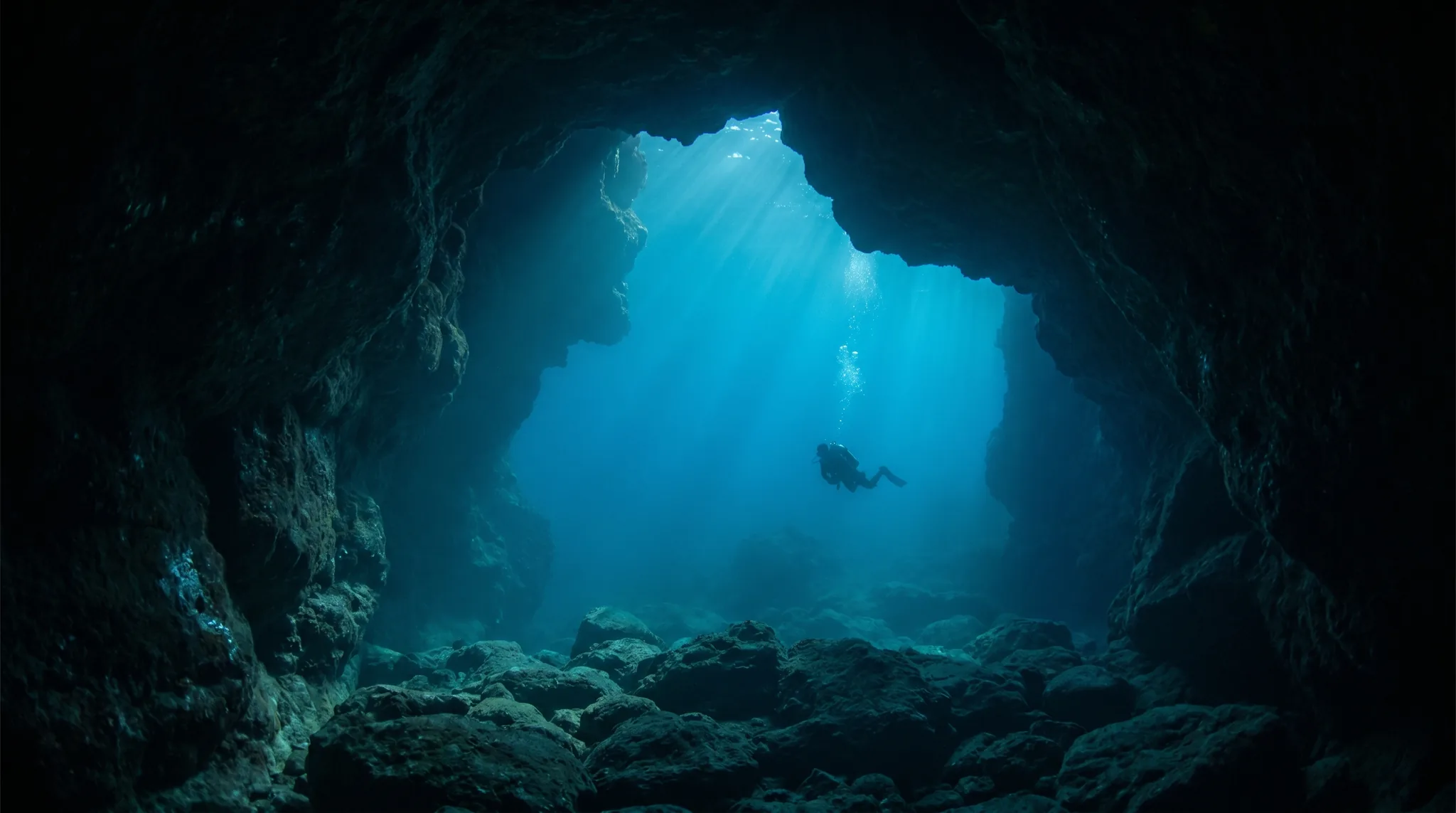
The region's volcanic origin shapes its underwater landscape almost entirely. Lava tubes and caverns appear at sites including Atlantis Tunnel, El Ascensor and Cueva de los Lagos, while canyon formations feature at La Pared and The Cannyon. Wall dives and reef structures round out the mix, giving the area a distinctly geological character compared to purely coral-based destinations.