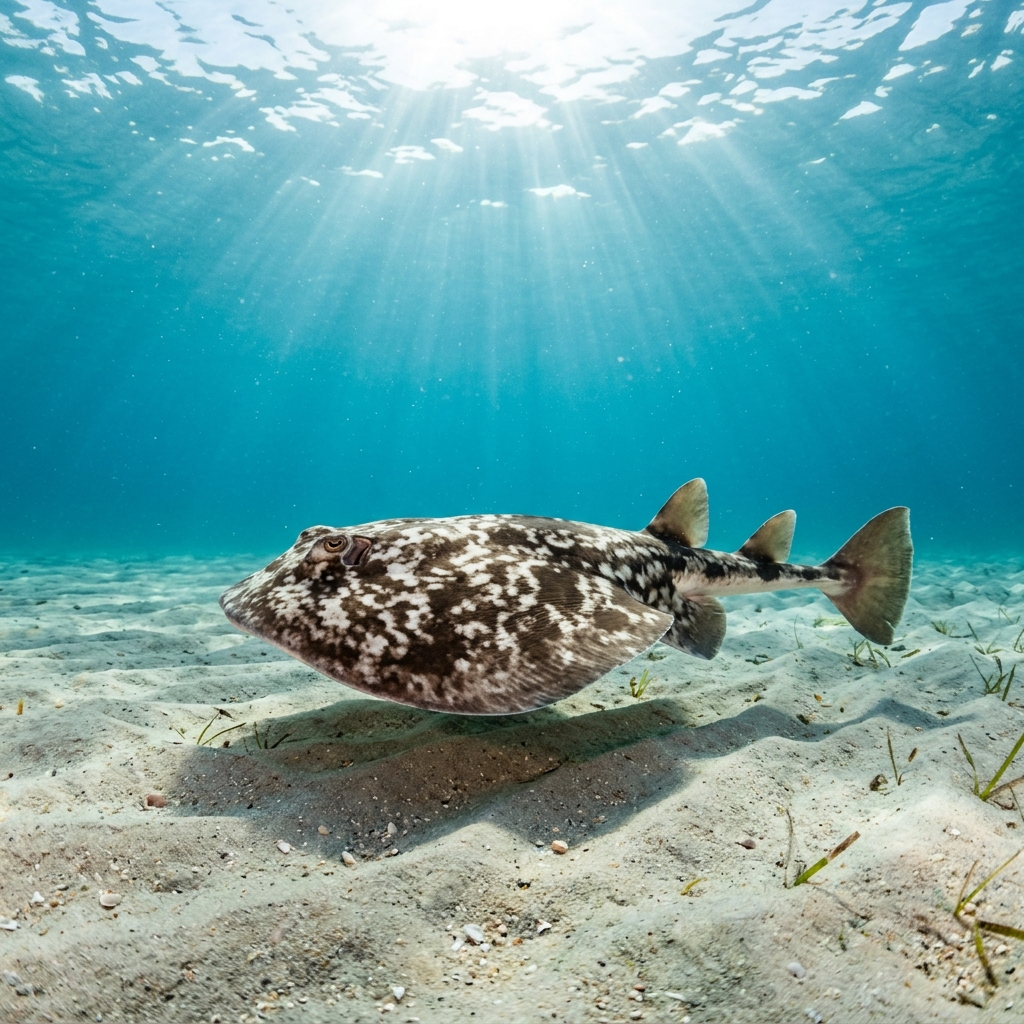
Torpedo marmorata
Spot the Marbled Electric Ray in Brittany, the Canary Islands or along Spain's coast. Sightings peak Oct, Nov in cool 10-19°C waters.
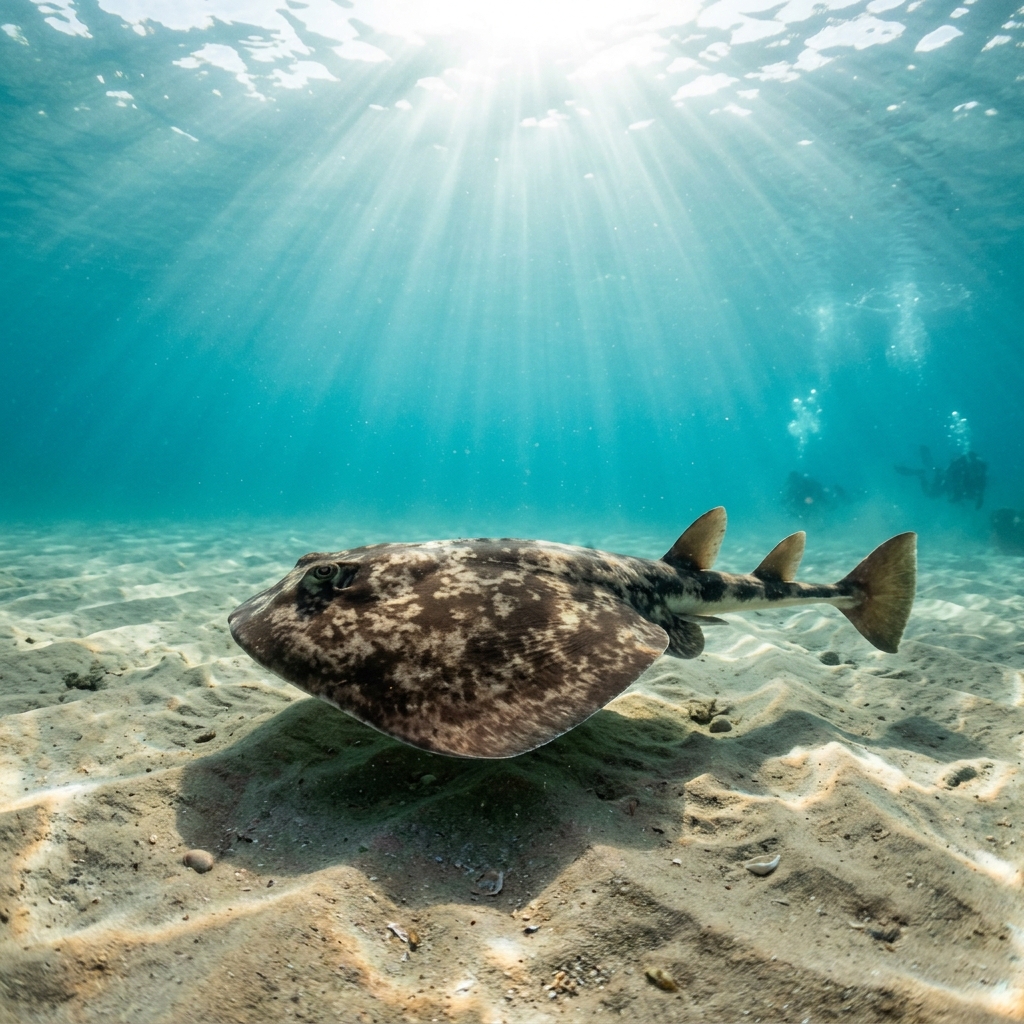
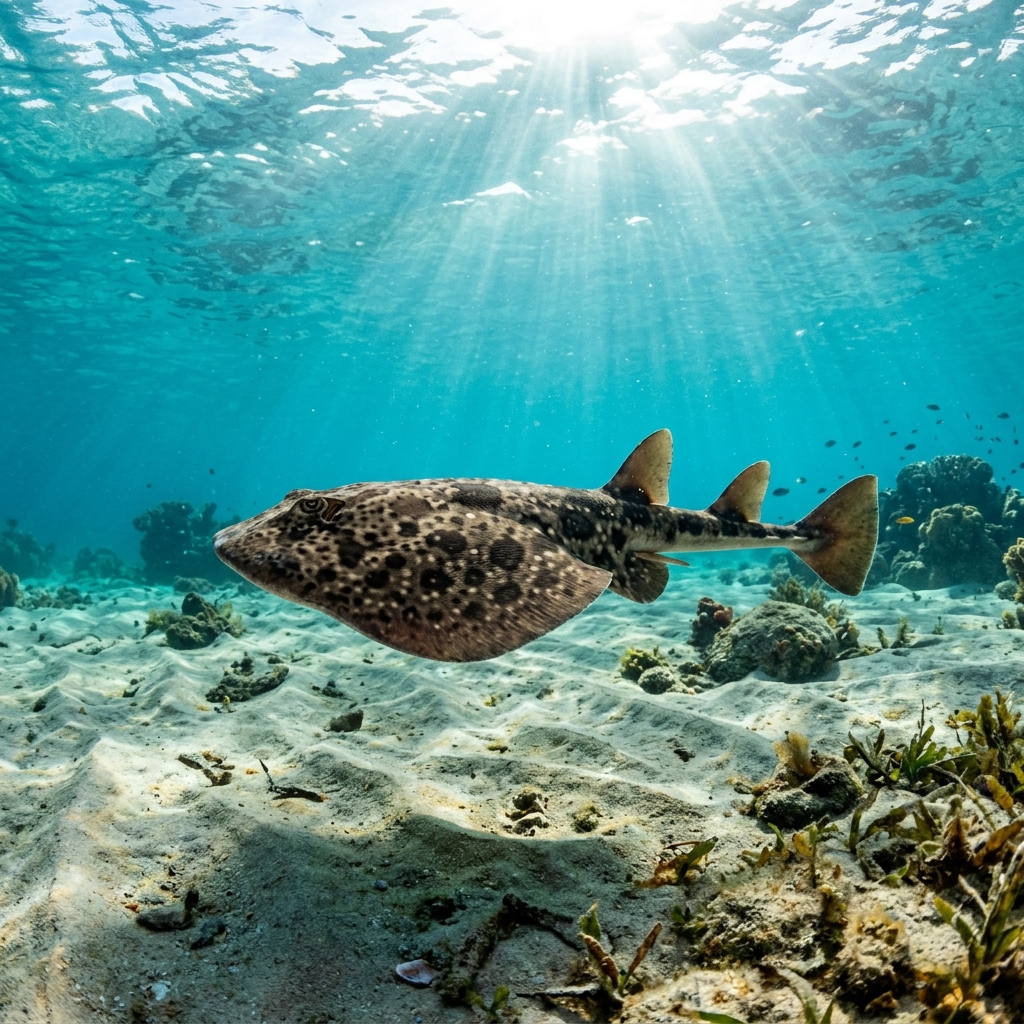
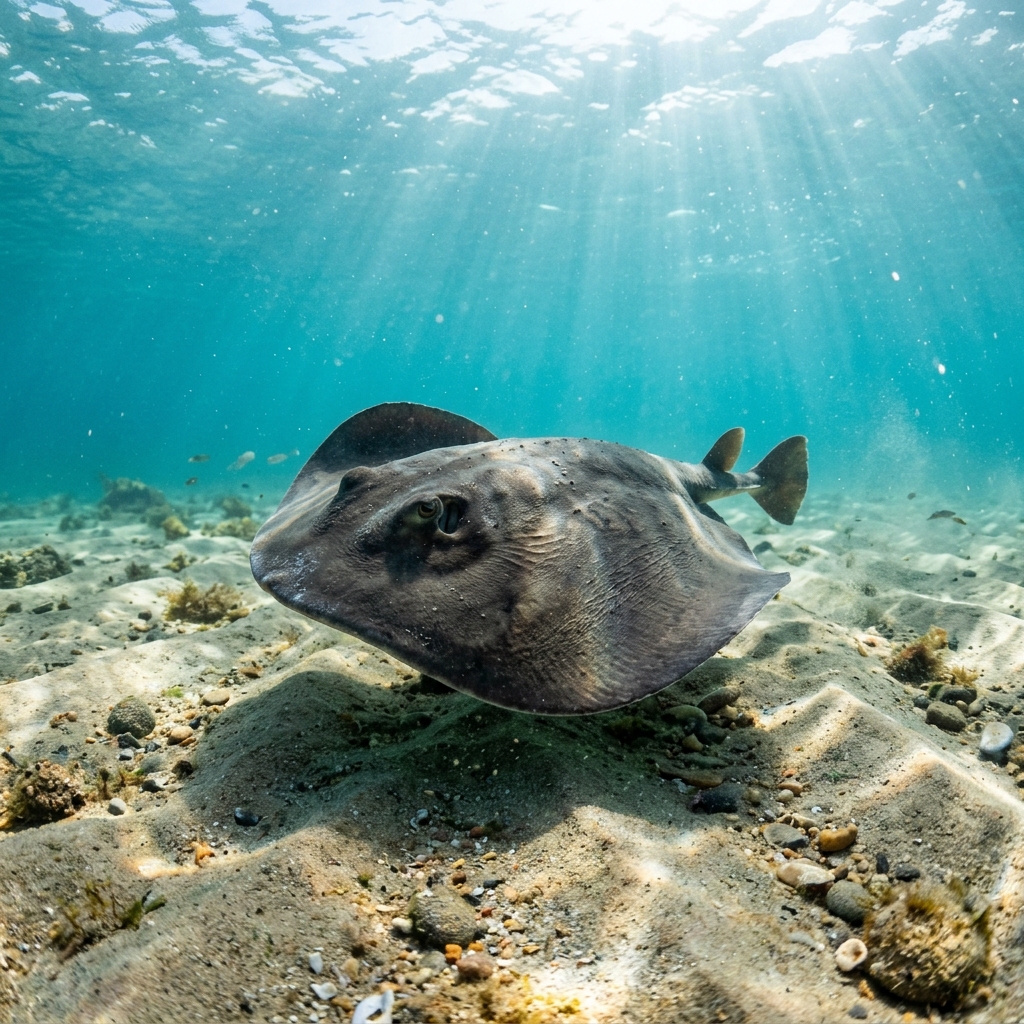
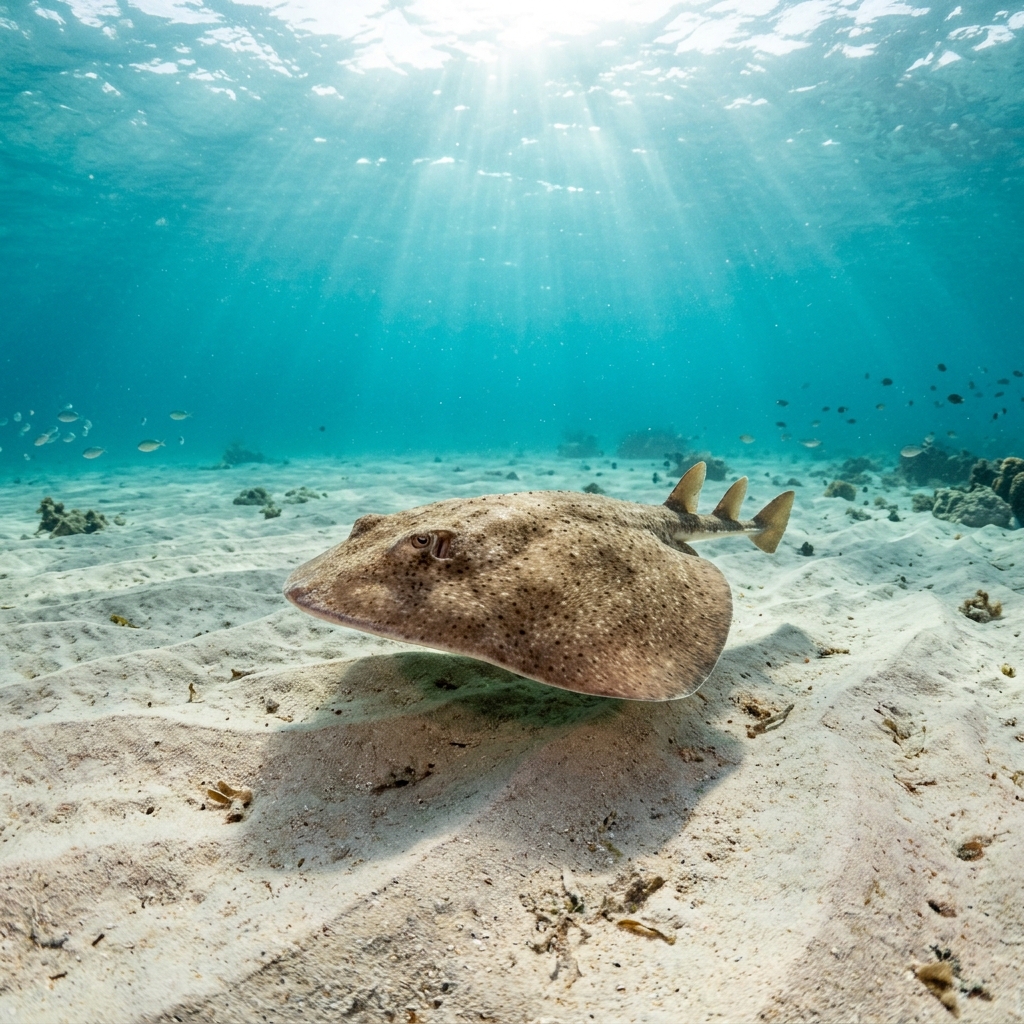
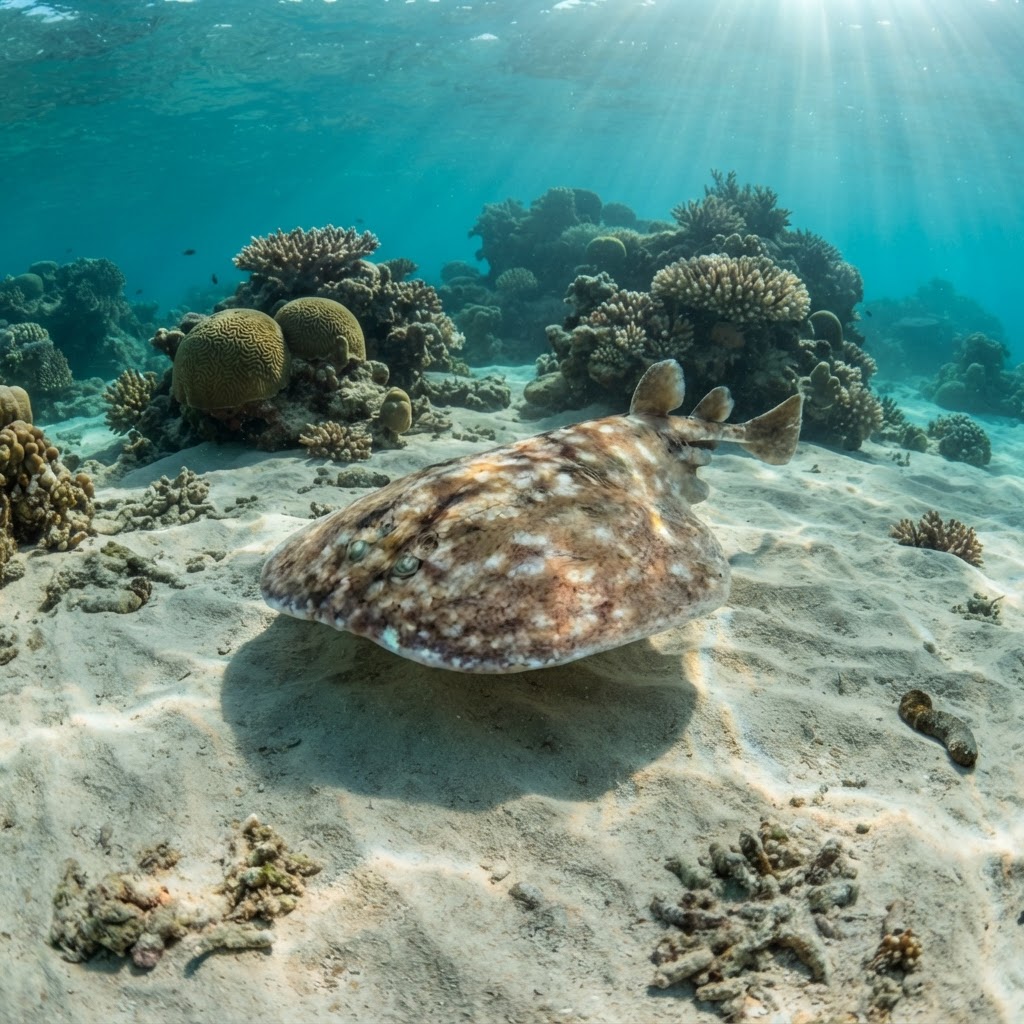
A thick, almost perfectly circular disc sets this ray apart from most others at a glance, it looks more like a flattened oval cushion than a classic flat diamond. The dorsal surface is brown to grey with a distinctive marbled or blotchy pattern, giving the species its name, and the underside is pale or whitish. Two rounded dorsal fins sit close together near the tail, which is short and chunky rather than whip-like. At rest on a sandy or rocky bottom it can be easy to miss until it moves.
Marbled electric rays are most often encountered resting motionless on sandy or gravelly bottoms, where their marbled pattern provides camouflage. They are not particularly reactive to divers on approach, but can move off quickly with an undulating body motion if disturbed. Like all electric rays, they are capable of generating a significant electric discharge as a defence and to stun prey, so the standard advice is to observe without touching.
Electric rays produce electricity using a pair of kidney-shaped electric organs that make up a large portion of the disc, a feature unique to this family among rays. Discharges are used both to subdue prey and as a defence, and a full-strength shock from a large individual is noticeable even to a diver in a wetsuit.
In the Northern Hemisphere, sightings concentrate in October and November, likely reflecting both seasonal movement into shallower waters and increased diver activity during autumn. This aligns with the species' preference for cool water between roughly 10 and 19°C.
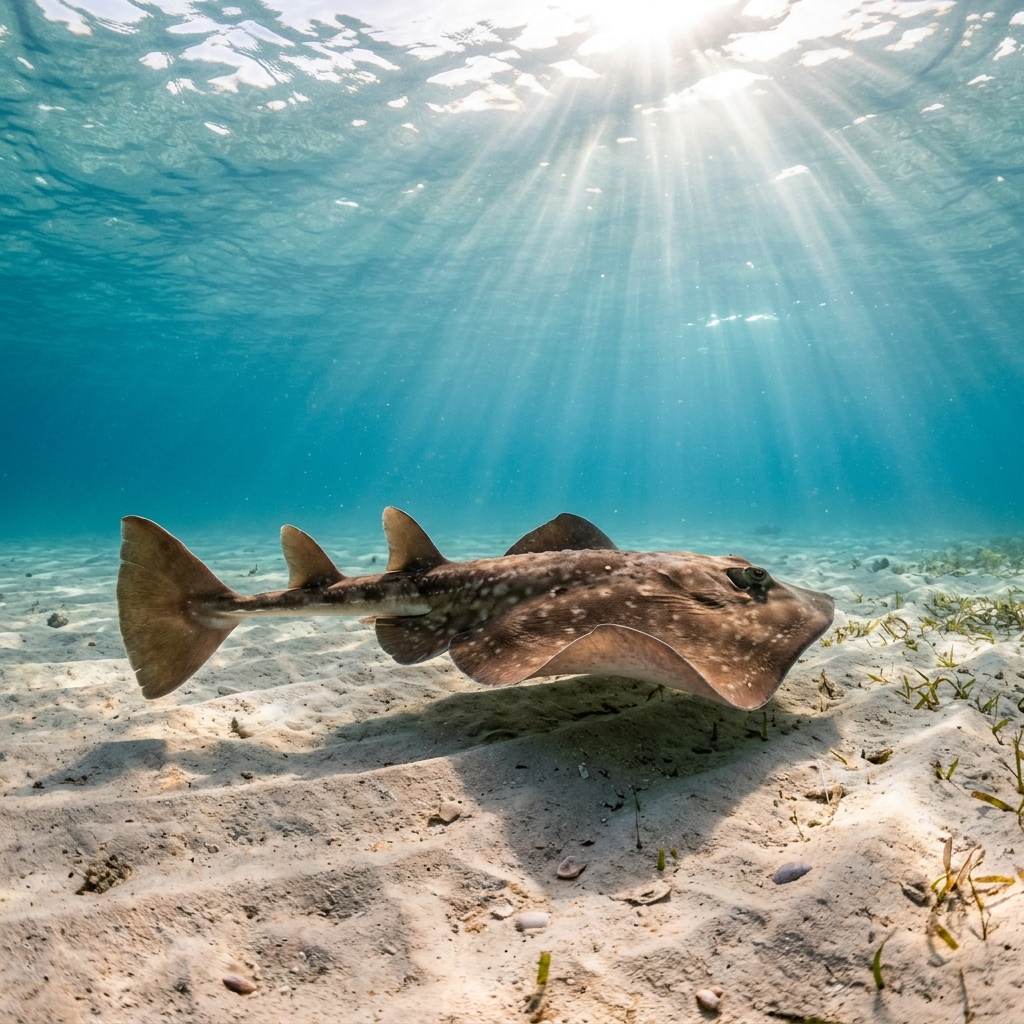
Reef neighbours a diver could mistake it for. Use the identification notes above to tell them apart.
Most consistently logged across the northeastern Atlantic and Mediterranean, with the strongest site coverage in Spain, France, and the United Kingdom. Brittany and Normandy in France stand out as particularly productive stretches, along with Spain's Costa Blanca and Andalusia. The Canary Islands, Croatia, Greece, and Sardinia also feature meaningfully in the records, making the broader Mediterranean and eastern Atlantic coast the core range for a planned encounter.
Mapping where Marbled Electric Ray is logged…
The best-documented sites are in Spain, France, the United Kingdom, and Italy, with Brittany and Normandy, Costa Blanca, and Andalusia standing out as reliable areas. The Canary Islands, Croatia, and Sardinia also feature in diver records. Overall it is a northeastern Atlantic and Mediterranean species, comfortable in temperate coastal waters.
Diver sightings in the Northern Hemisphere concentrate in October and November. This autumn window corresponds with the species' preference for cool water, roughly 10 to 19°C, as surface temperatures drop and the rays may move into shallower, more accessible depths.
Look for a thick, nearly circular body disc, much rounder and more cushion-like than most rays, with a mottled brown or grey marbled pattern on top and a pale underside. The tail is short and stout, with two rounded dorsal fins close together. That combination of circular disc, chunky tail, and marbled colouring is distinctive.
They are not aggressive, but they can deliver a strong electric shock if touched or cornered, the same organs they use to stun prey. The sensible approach is to observe from a short distance without making contact. A diver who keeps their hands to themselves has nothing to worry about.
Adults typically reach around 60 cm in disc width, though larger individuals can approach 1 metre. Their thick, rounded body makes them look quite bulky in the water compared with slimmer ray species of similar disc size.
Yes, they are listed as Vulnerable on the IUCN Red List. The main threats are accidental capture in fishing gear and coastal habitat disturbance. Logging your sightings and avoiding any physical contact in the water are the most practical ways divers can contribute to their conservation.
The Marbled Electric Ray is listed as vulnerable by the IUCN. Observe from a distance, avoid touching or feeding it, and report sightings to local marine research organisations.
Listed as Vulnerable on the IUCN Red List, this species faces pressure from bycatch and habitat disturbance across its range. Divers can help by logging sightings accurately on platforms like iNaturalist, and by never handling or harassing individuals in the water.
Site and sighting data is aggregated from diver logs, iNaturalist and GBIF. For taxonomy and conservation status:
Coffin Ray
61 sites