Chelon labrosus
Silvery schooling fish common in the Canary Islands and French Riviera, comfortable from 9 to 20C, seen year-round in shallow water.
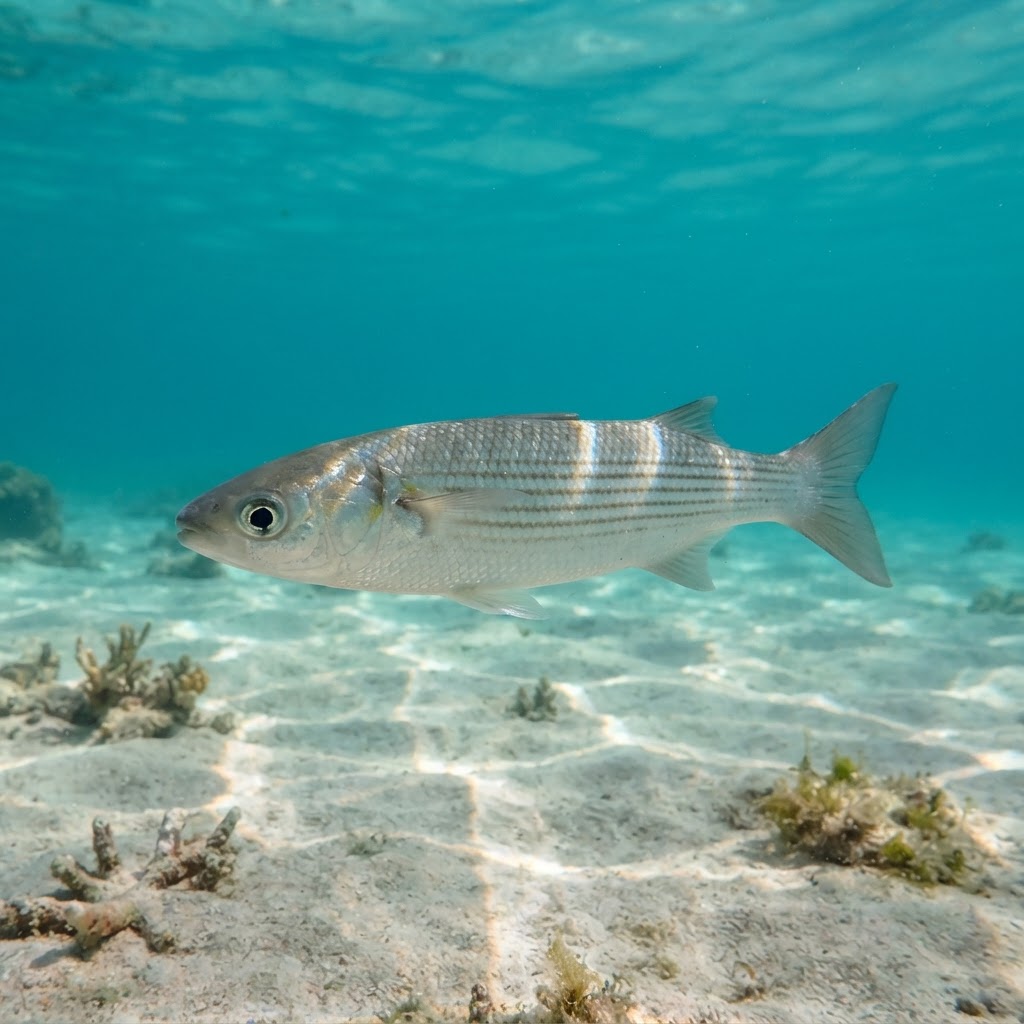
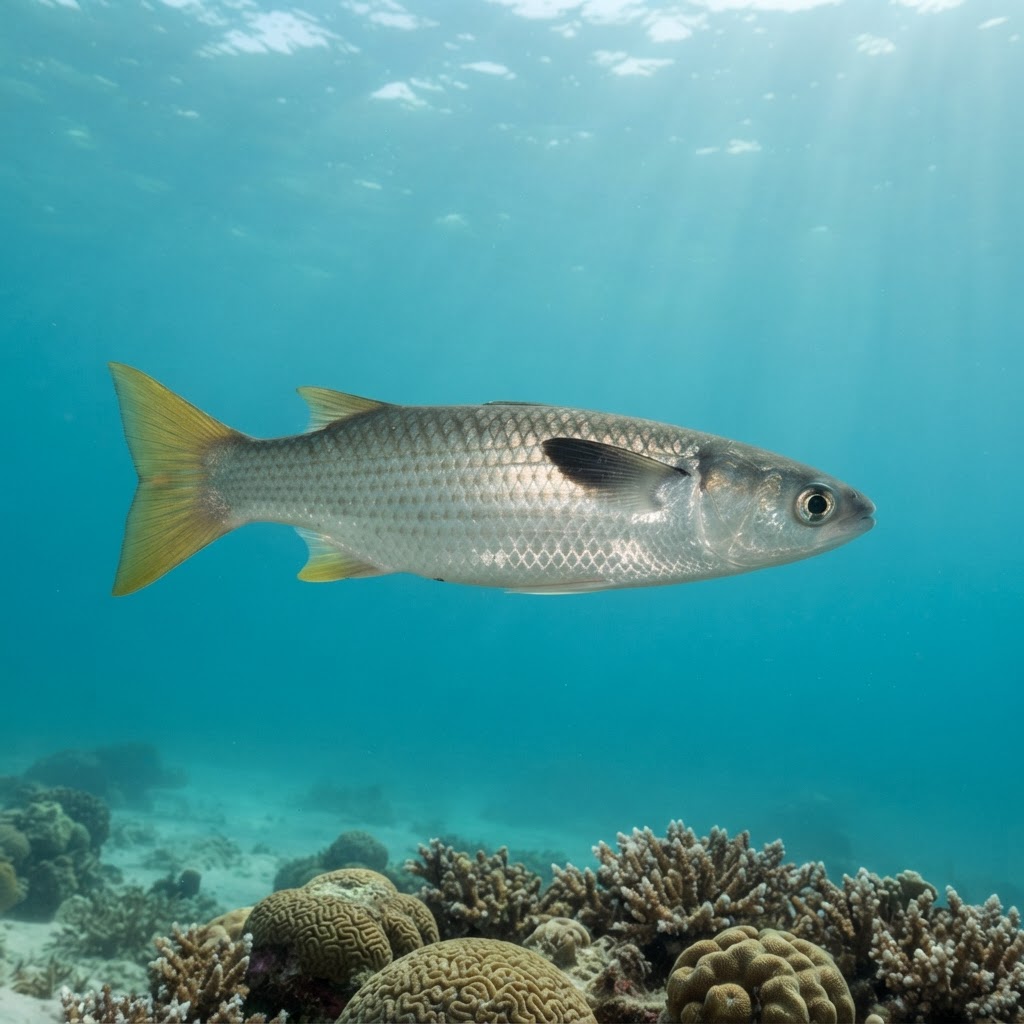
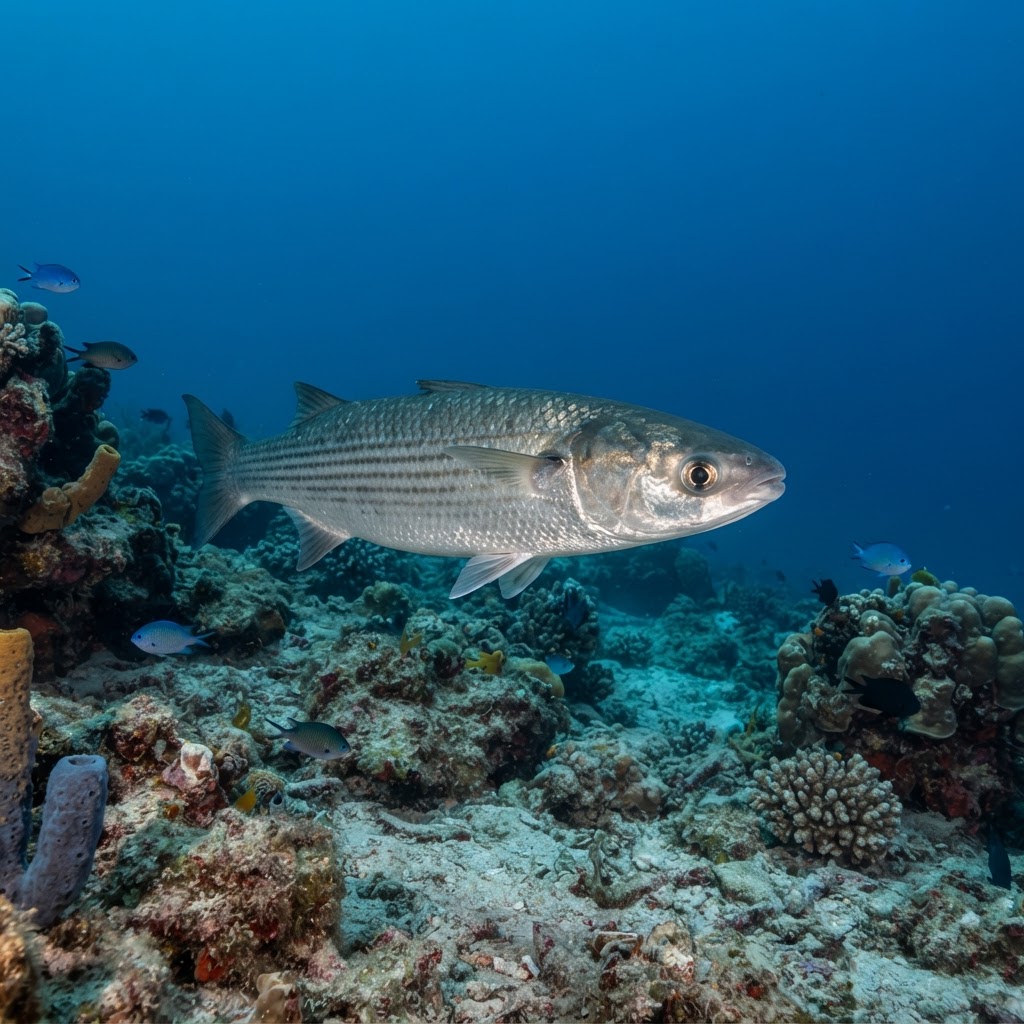
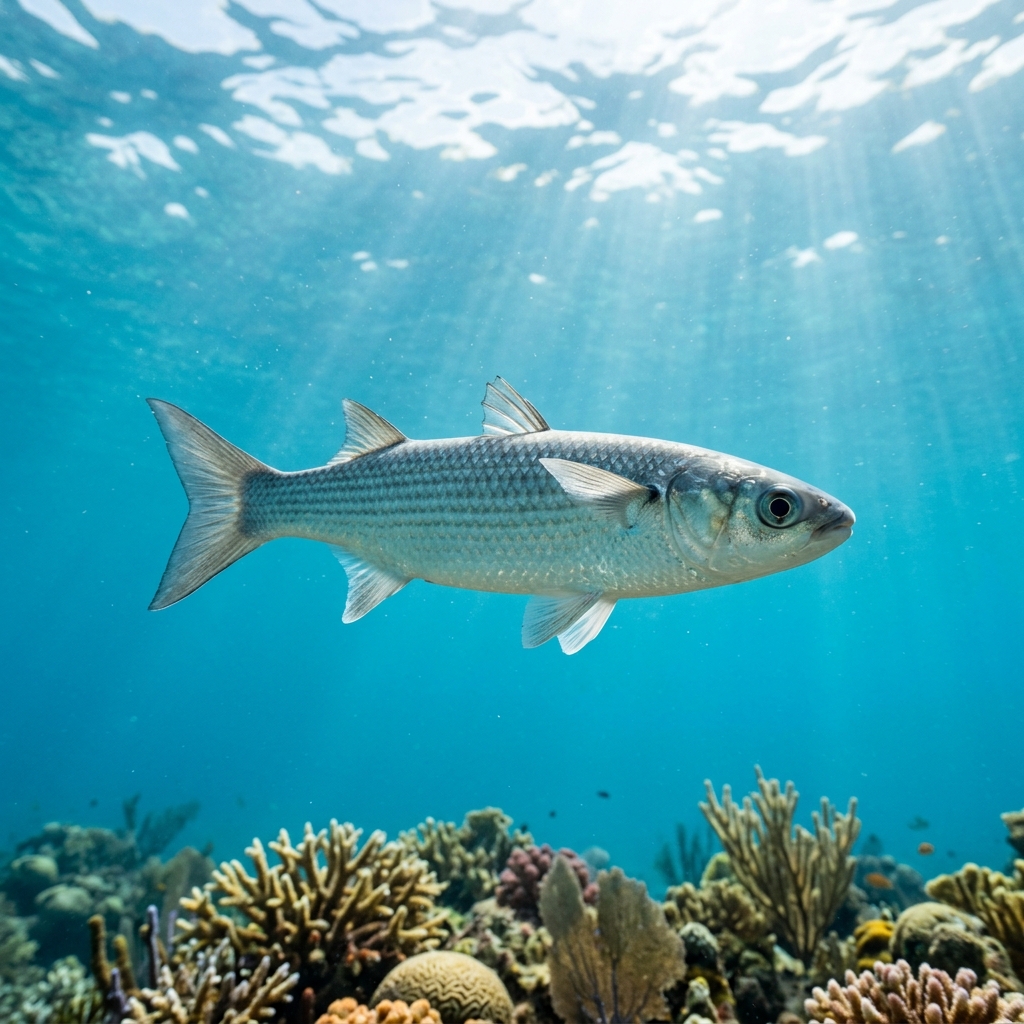
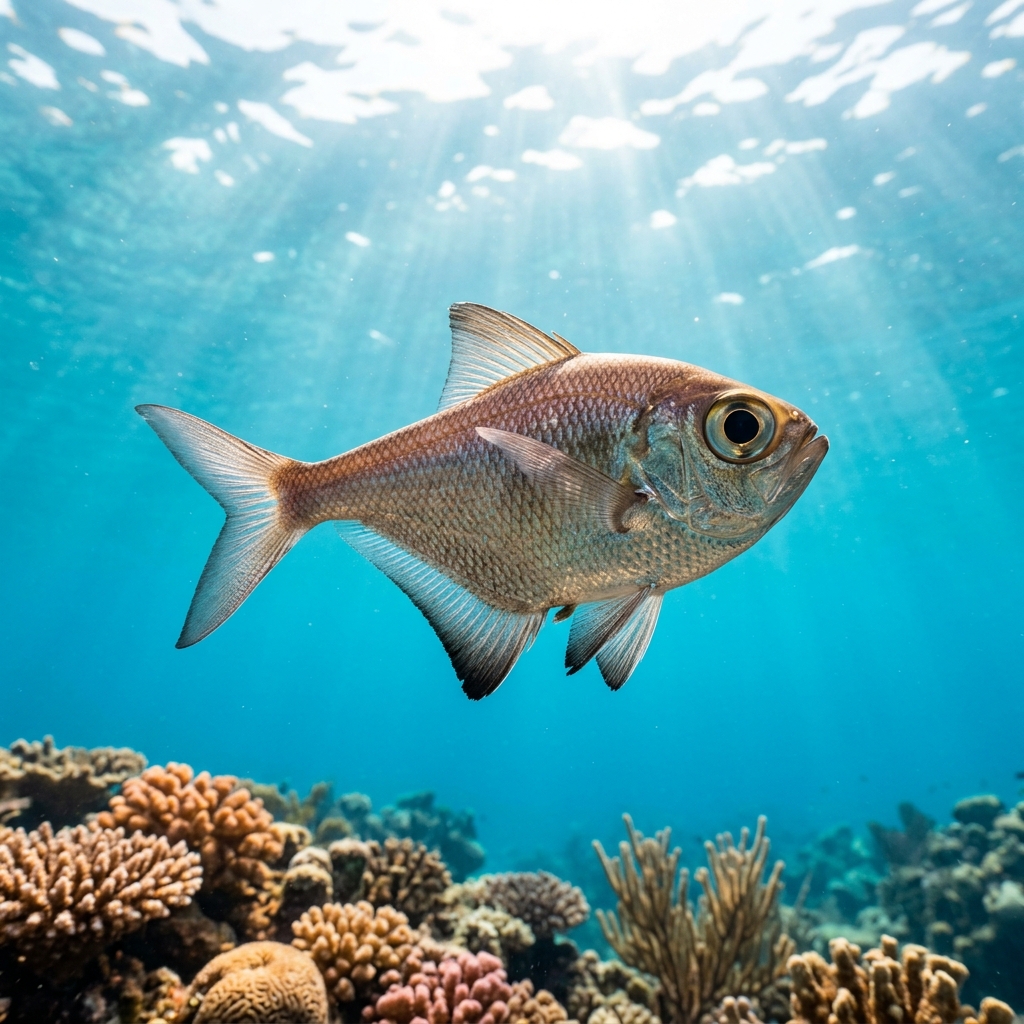
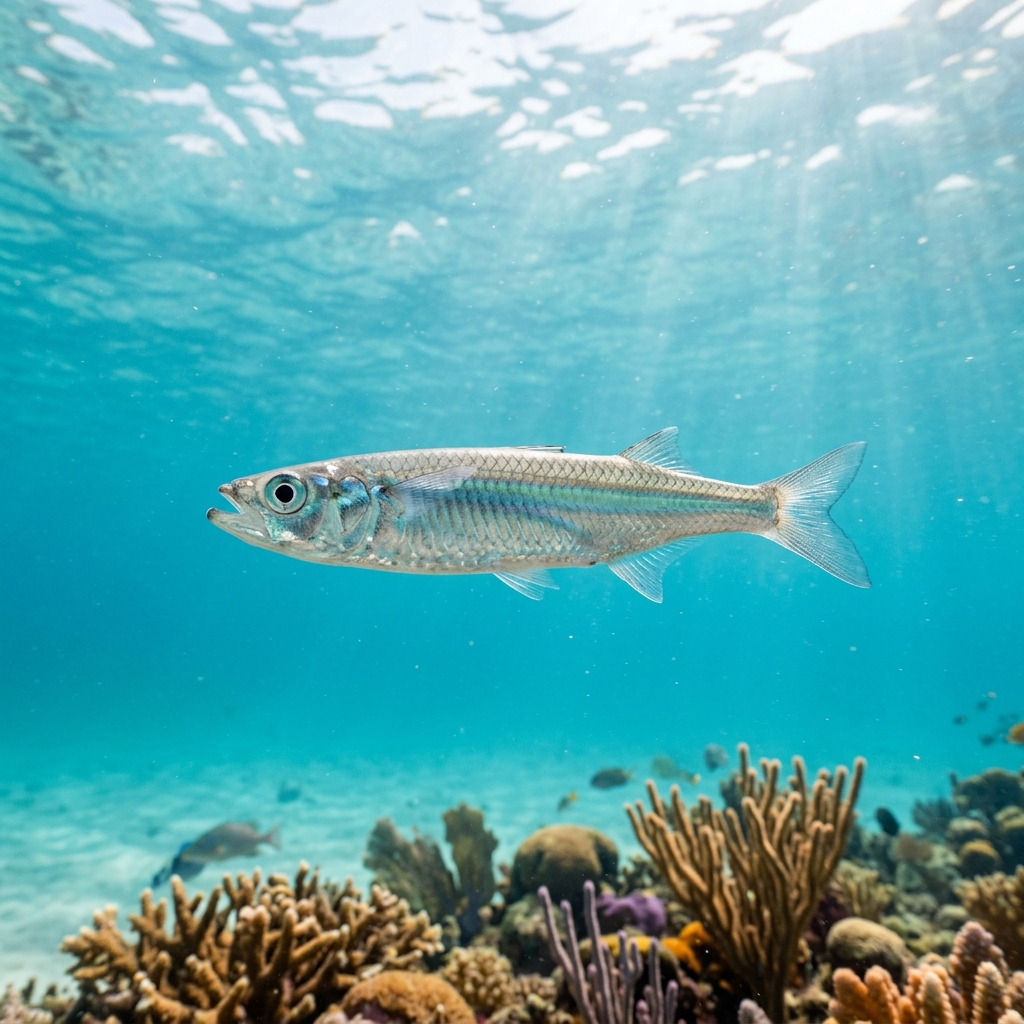
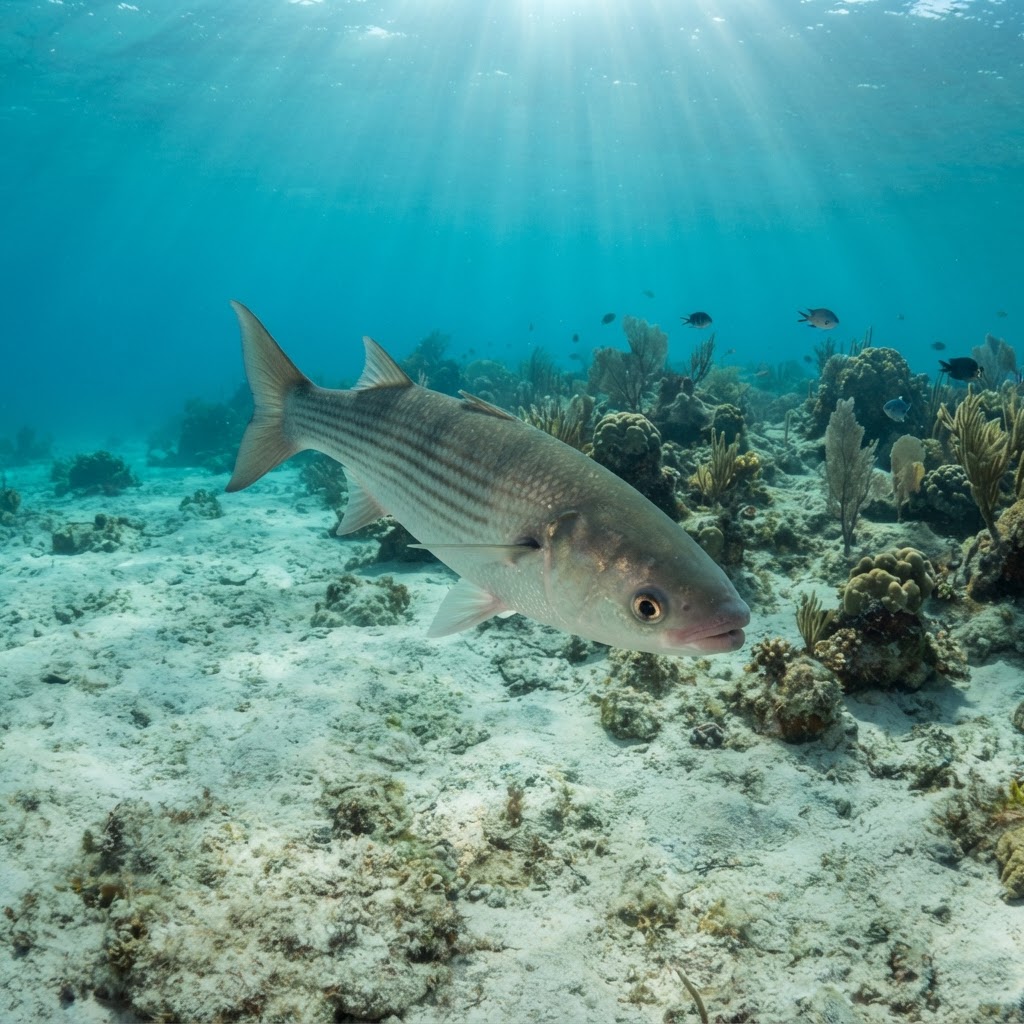
Look for a stocky, silvery-grey fish around half a metre long, with a blunt head and noticeably thick, fleshy lips that give the species its name. It has faint dark horizontal stripes along the flanks and a forked tail, and usually turns up moving in loose schools over sand, rock or harbour walls rather than sitting still. Scales are large and give it a slightly armoured look compared to smaller baitfish.
Divers most often see thicklip grey mullet cruising in loose, unhurried schools over shallow sand, rock or harbour structure, grazing algae and organic material off surfaces rather than chasing prey. They tend to keep a comfortable distance from divers but are not especially flighty, often circling back past the same patch of reef or wall. Look for them in the shallower part of a dive, from the surface down to around 15 metres.
As omnivorous grazers, thicklip grey mullet spend much of their time rasping algae and detritus from rocks and harbour walls, making them one of the few schooling fish on this list doing reef cleanup rather than hunting.
Sightings are logged across the year with no strong seasonal pattern, matching a wide comfort range of roughly 9 to 20C that lets it stay in shallow coastal water through most conditions. Plan around good general diving conditions at your chosen site rather than a particular month.
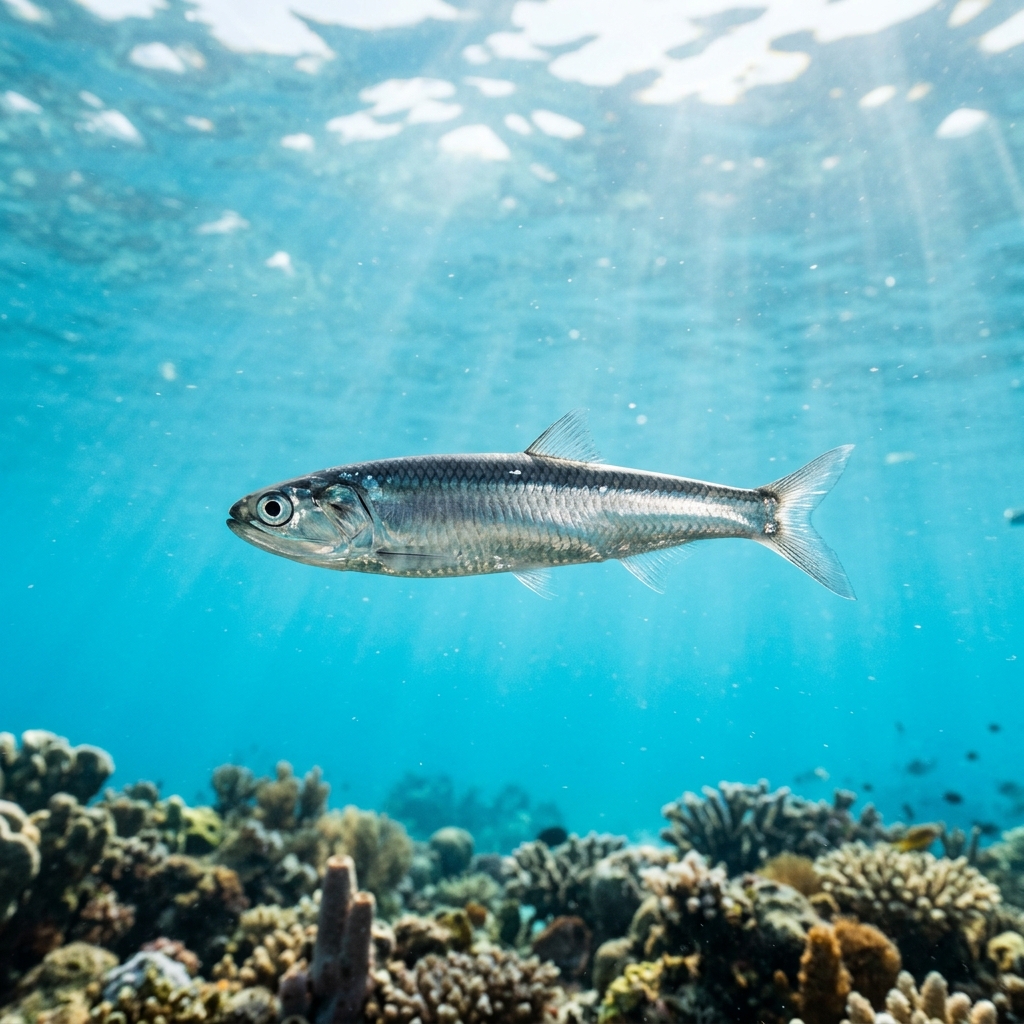
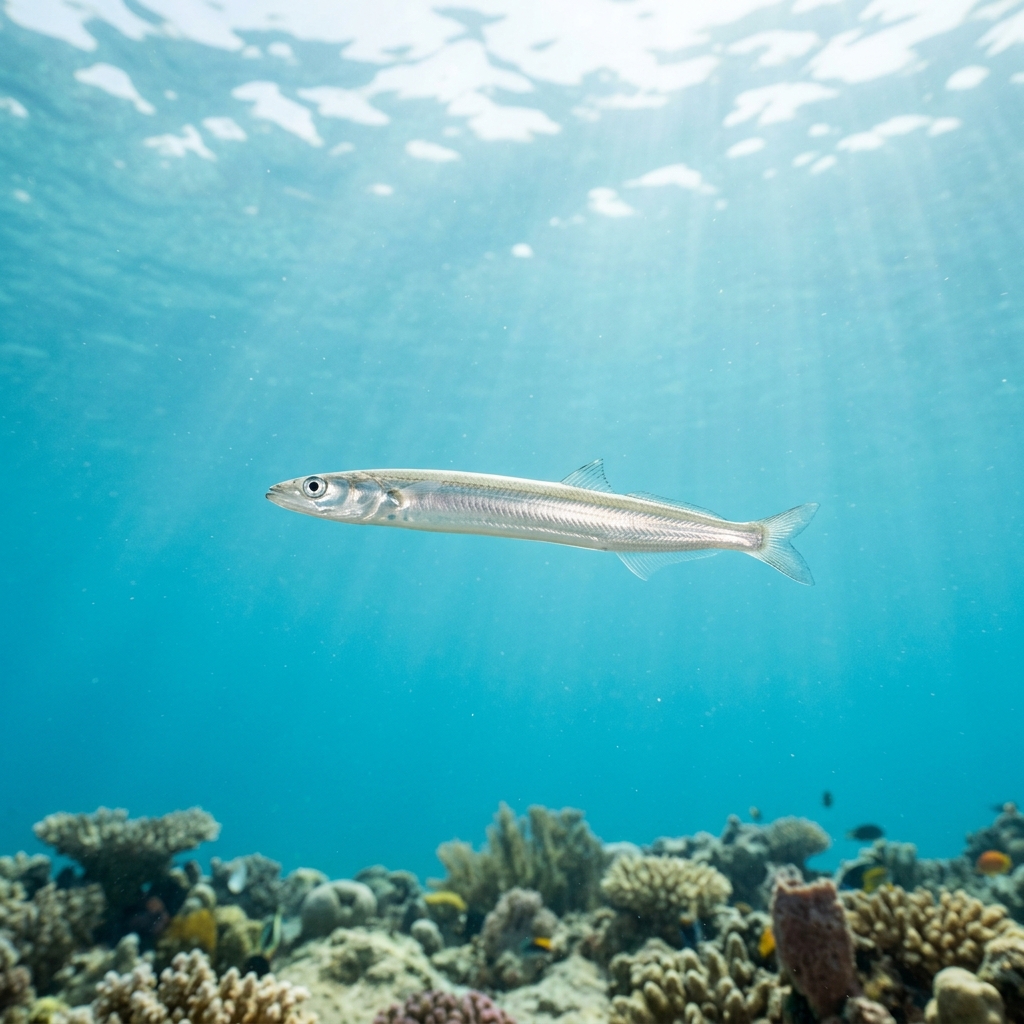
Reef neighbours a diver could mistake it for. Use the identification notes above to tell them apart.
This is a strong sighting across the Canary Islands, especially Tenerife, Gran Canaria, Fuerteventura and Lanzarote, and it also shows up reliably along the French Riviera and Provence coast. Portugal's Algarve and Lisbon Coast, plus the Azores around Sao Miguel and Santa Maria, are other dependable spots, with further sightings logged in Italy, Spain, Greece and Madeira.
Mapping where Thicklip Grey Mullet is logged…
The Canary Islands, particularly Tenerife, Gran Canaria, Fuerteventura and Lanzarote, are the most reliable places, alongside the French Riviera and Provence. The Algarve and Lisbon Coast in Portugal and Sao Miguel in the Azores are other good options.
There is no strong season logged for this species, so it is treated as a year-round sighting. Its wide temperature tolerance, from around 9 to 20C, keeps it present in shallow coastal water through most of the year.
Look for a stocky silvery-grey fish about half a metre long with thick, fleshy lips, a blunt head and faint dark stripes along its sides. It usually appears in loose schools moving unhurriedly over sand, rock or harbour walls in shallow water.
They typically reach around 52 centimetres in length, making them one of the larger schooling fish a diver will encounter in shallow European and Macaronesian waters.
No, they pose no threat to divers. They are calm, grazing fish that keep their distance and show no aggressive behaviour.
Site and sighting data is aggregated from diver logs, iNaturalist and GBIF. For taxonomy and conservation status:
Anchovy
2,433 sites