Diplodus cadenati
Silvery reef regular of the Canary Islands and the Algarve, often cruising rocky reef at 16 to 22C year-round.
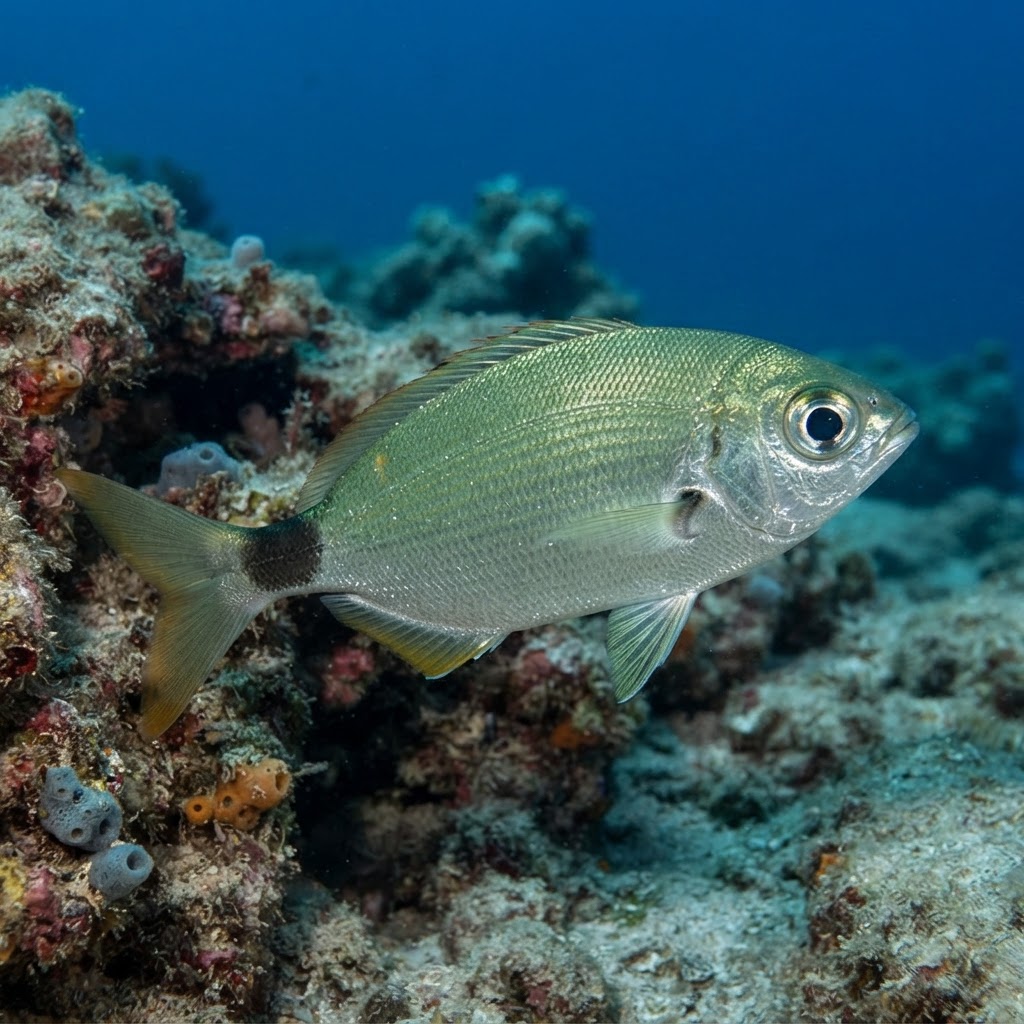
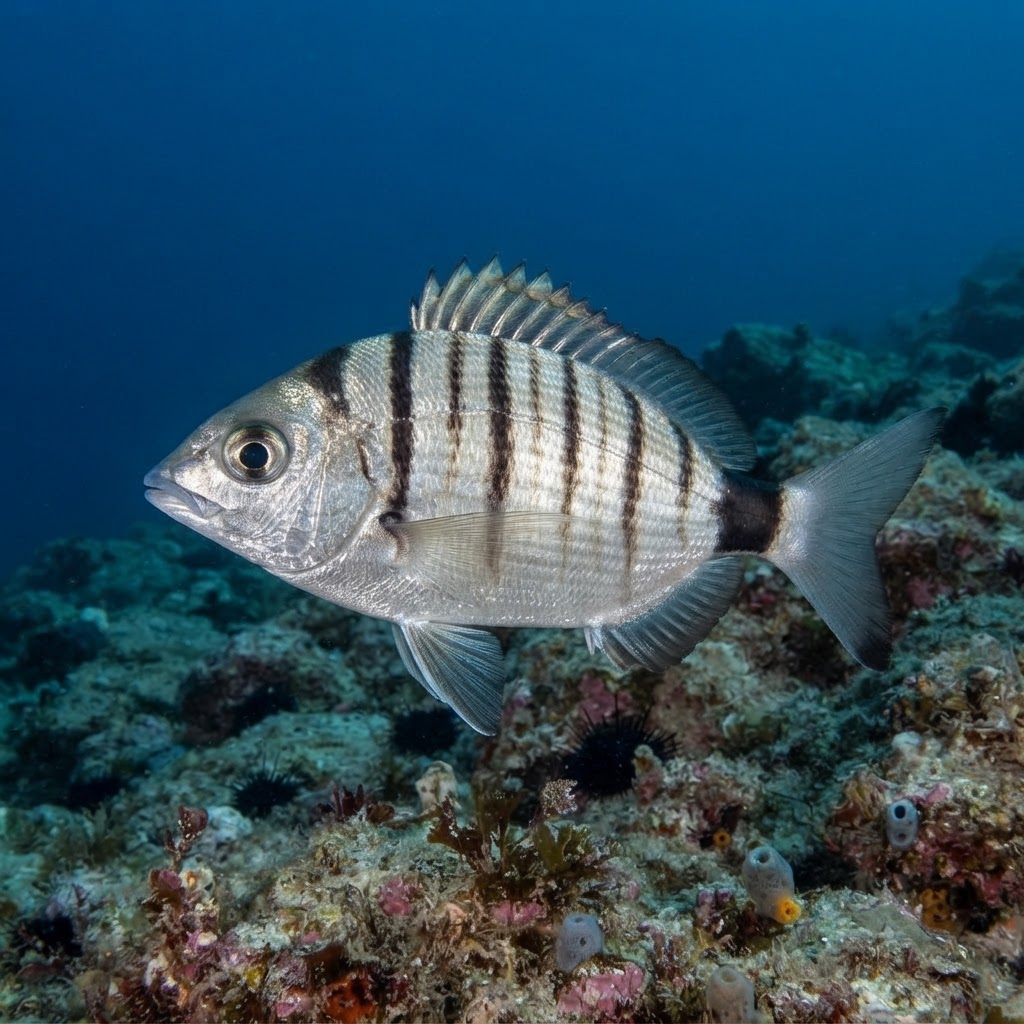
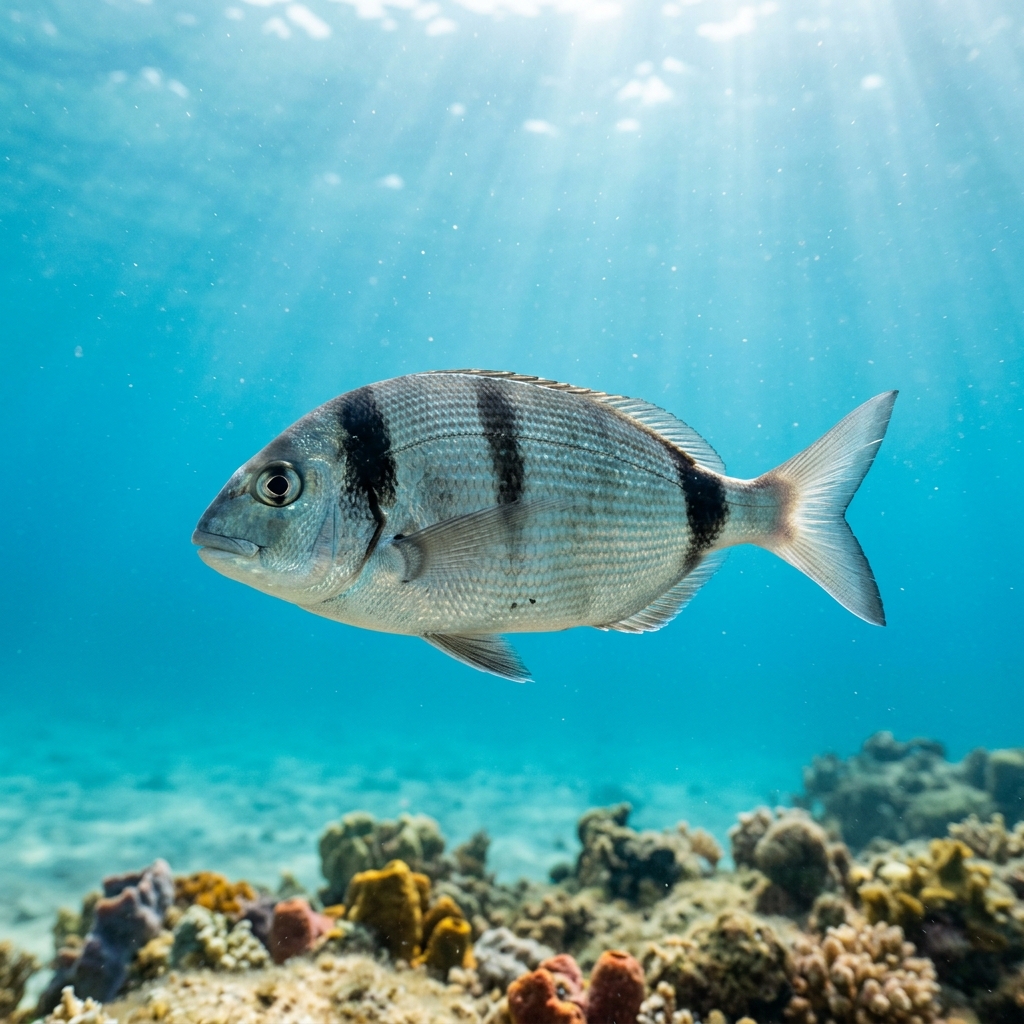
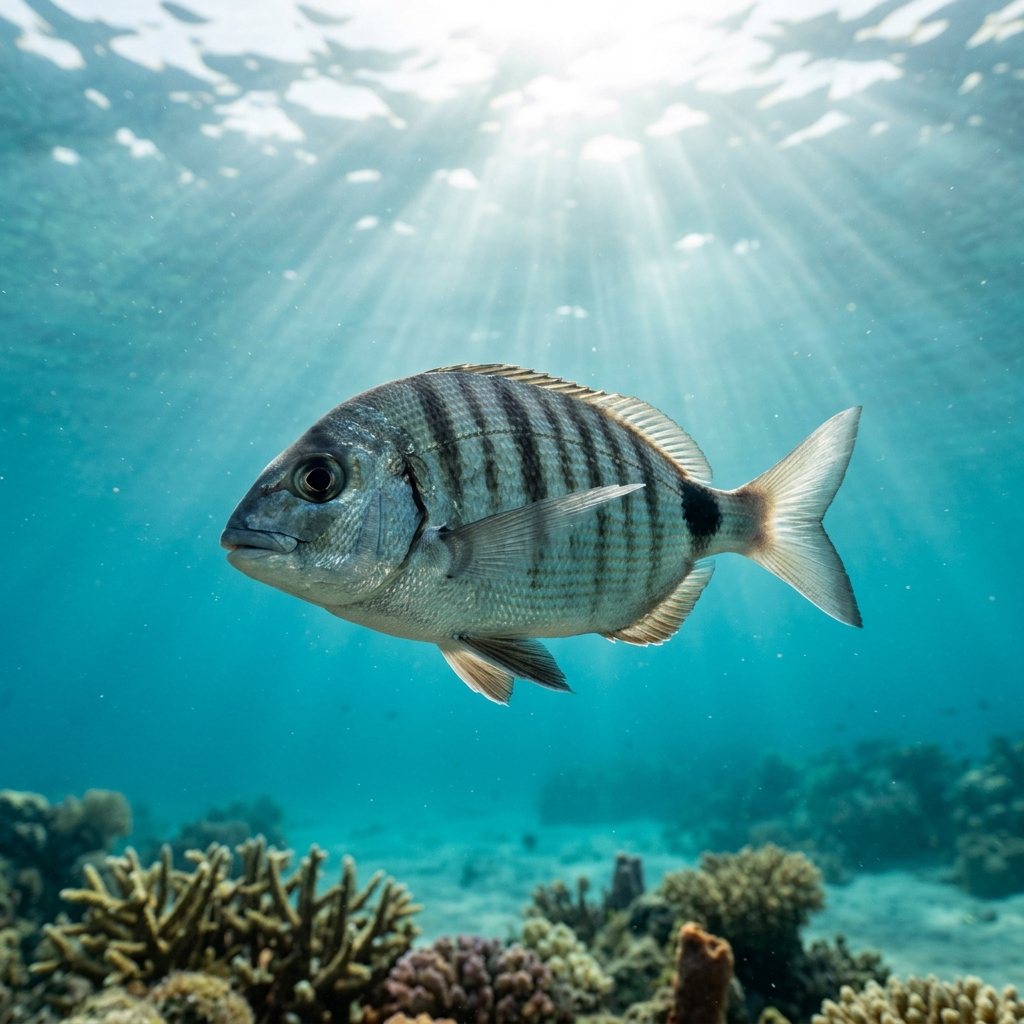
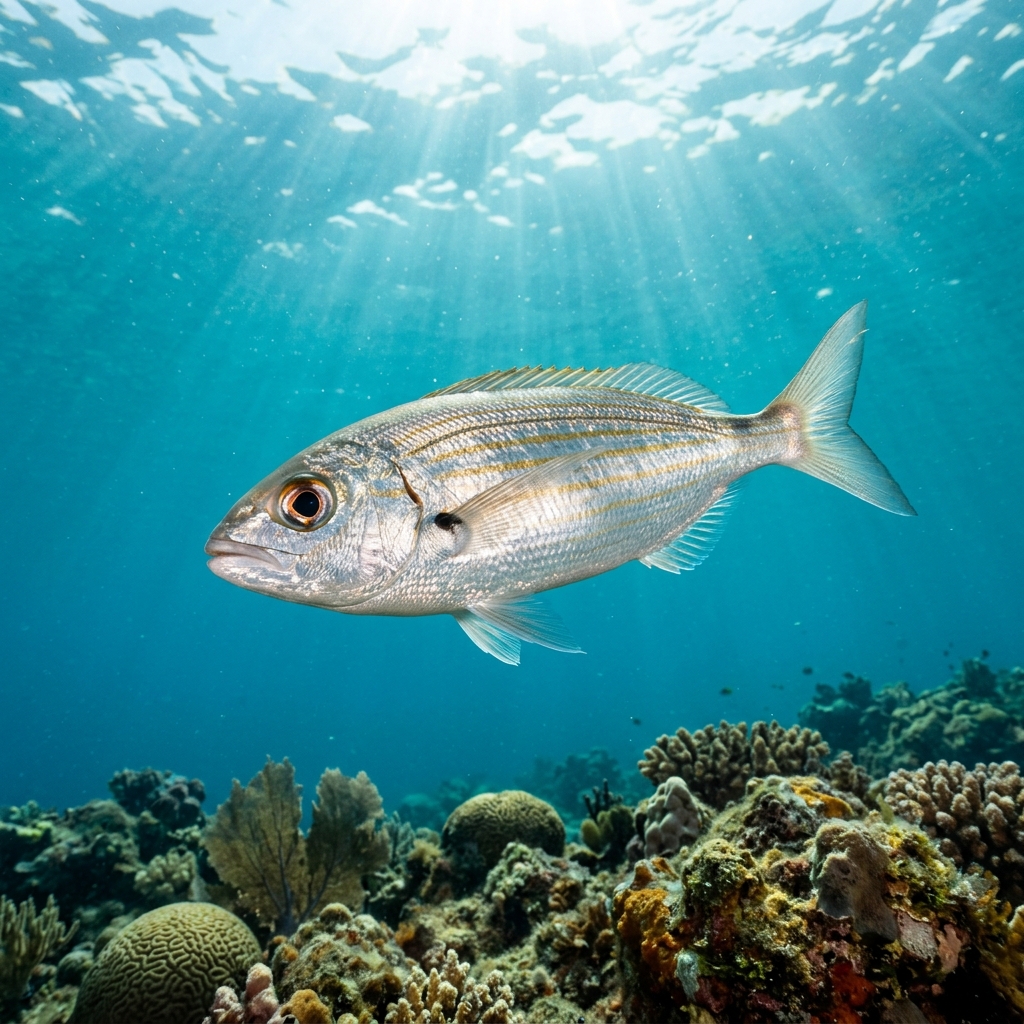
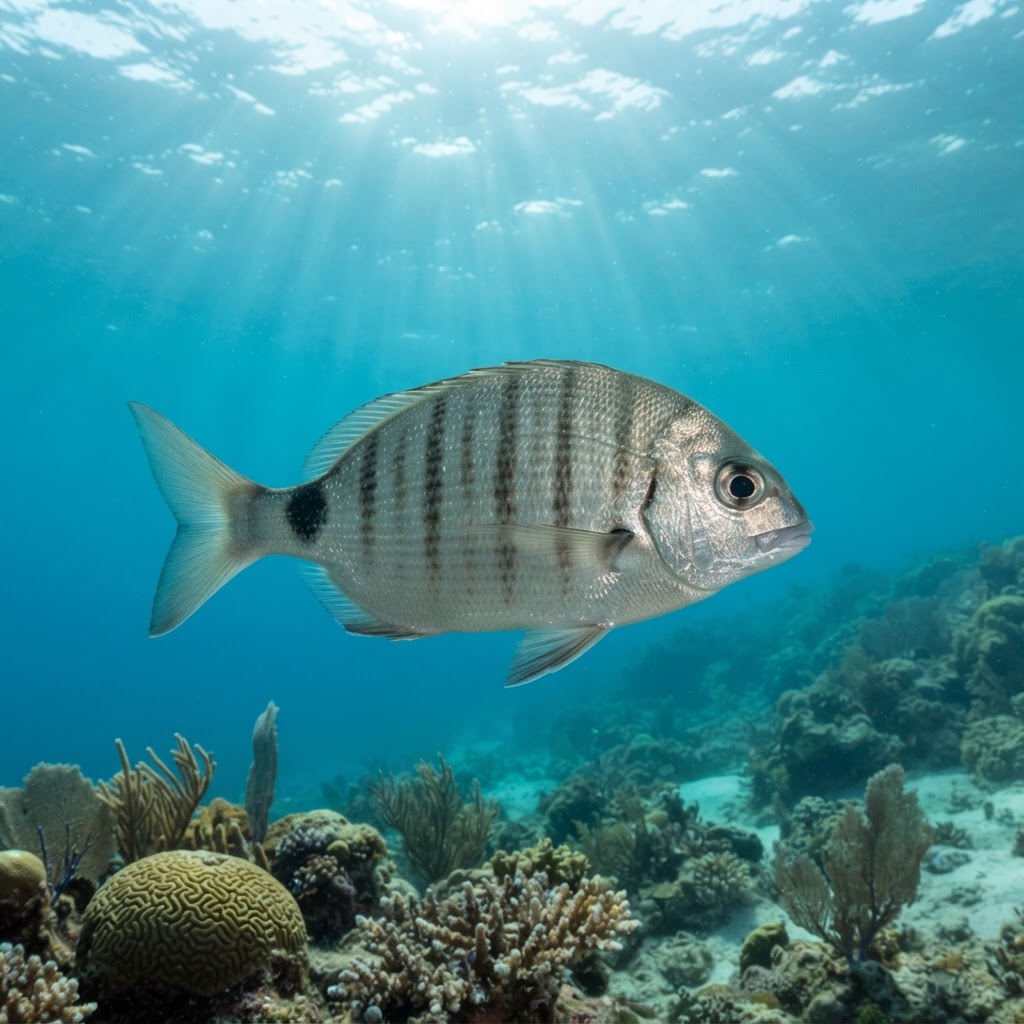
Oval, deep-bodied fish around 31 cm with a silvery-grey flank that flashes pale in the light. Look for a dark saddle mark at the base of the tail and faint vertical bars that fade and sharpen depending on mood and light. The head is blunt with a small mouth suited to picking at rock and rubble, and the dorsal fin runs low and long along the back.
Usually seen cruising alone or in loose groups over rocky reef and boulder fields, picking at crevices and rubble for small invertebrates. It tends to hold a comfortable distance from divers rather than bolting, and often hangs around the same patch of reef across multiple dives if you know where to look. Most sightings come from open rock and reef edges rather than deep cover.
It's most often logged as "uncommon" rather than rare or abundant, meaning it's a fish you'll spot on a good portion of Atlantic reef dives without ever being guaranteed a crowd of them.
No clear seasonal pattern shows up in sightings, and the observed 15.7 to 22.3C range covers most of the year across these regions, so it's a fair bet on any reef dive whenever you go.
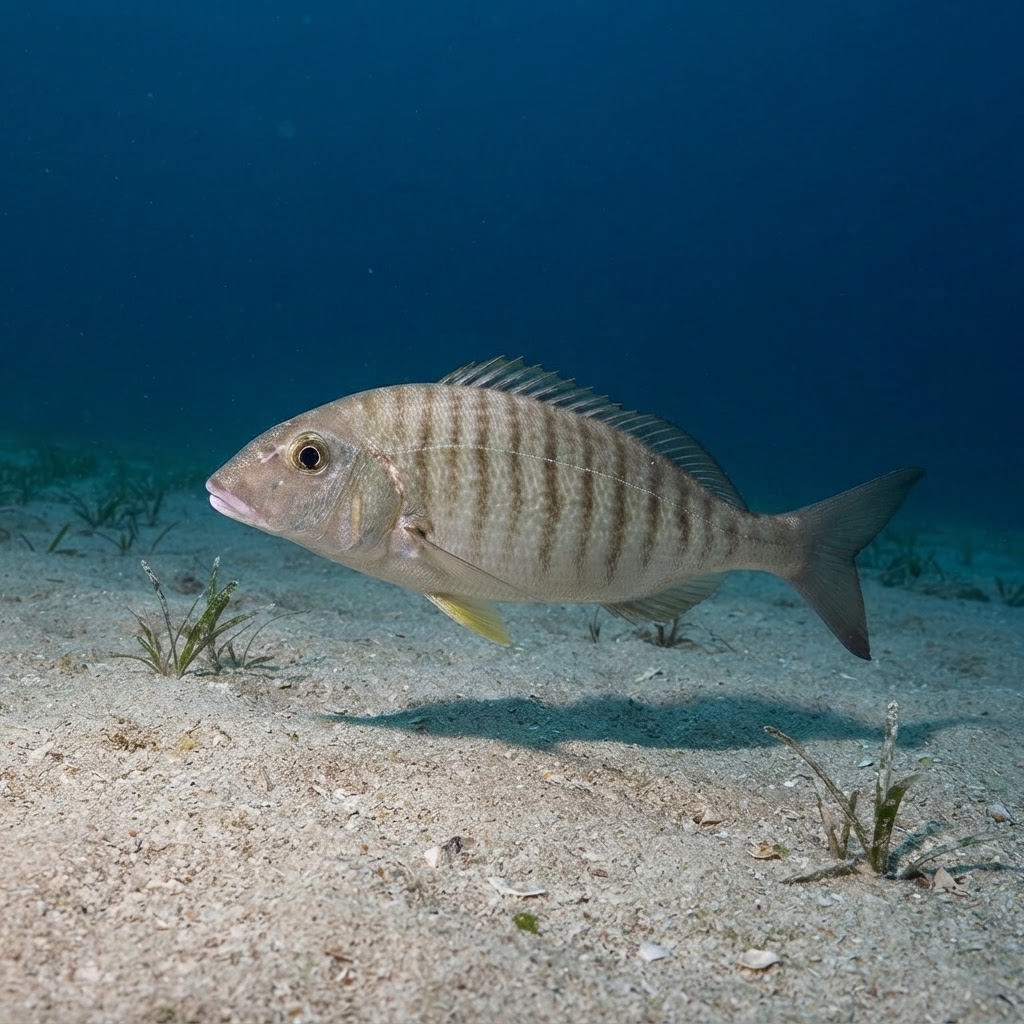
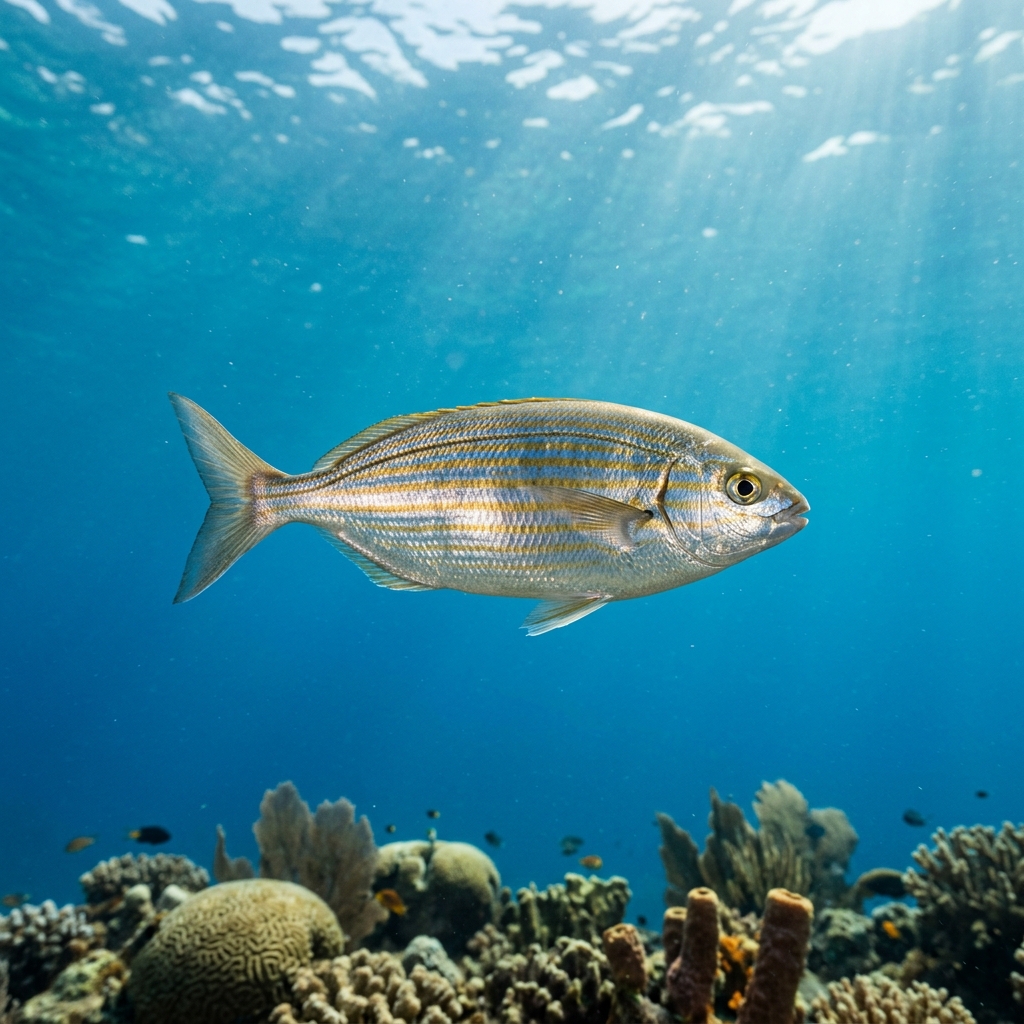
Reef neighbours a diver could mistake it for. Use the identification notes above to tell them apart.
Most reliably logged across the Canary Islands, especially Tenerife, Gran Canaria, Fuerteventura and Lanzarote, and a strong presence along Portugal's Algarve and Lisbon Coast. Also turns up on reef dives in the Azores (particularly Sao Miguel and Santa Maria), Madeira, mainland Spain and southern France.
Mapping where Moroccan White Seabream is logged…
The Canary Islands are the strongholdTenerife, Gran Canaria, Fuerteventura and Lanzarote all log it regularly. It's also a common find on Portugal's Algarve and Lisbon Coast, plus the Azores and Madeira.
There's no strong season in the sighting data, and water temperatures where it's found range from about 16 to 22C, so it's seen on reef dives throughout the year in these regions.
Look for a silvery, oval-bodied fish around 31 cm with a dark saddle patch near the tail base and faint vertical bars along the flank. It has a blunt head and a small mouth for picking food off rock.
They typically reach around 31 cm in length, making them a mid-sized reef fish, noticeable but not the largest thing cruising the rocks.
No, they pose no threat to divers. They're calm reef fish that keep their distance and have no venom or aggressive behaviour to worry about.
Site and sighting data is aggregated from diver logs, iNaturalist and GBIF. For taxonomy and conservation status:
Saddled Bream
3,846 sites