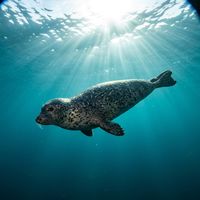
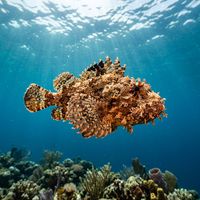
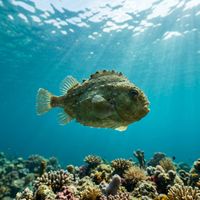
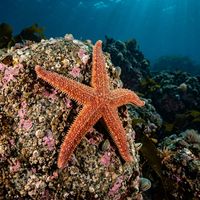
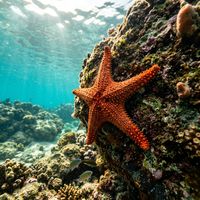
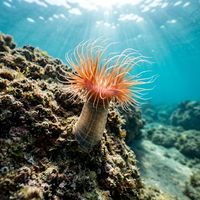
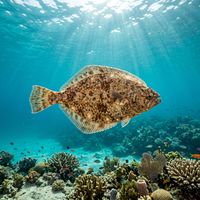
The Bay of Fundy delivers cold-water diving and snorkelling shaped by powerful tidal forces and a rocky coastline. Harbor Seal is the signature encounter, observed across nearly every site. Expect Common Sea Star, Sea Squirt, and European Green Crab blanketing the substrate, alongside Sea Raven, Lumpfish, Sculpin, and the occasional Common Lobster tucked into crevices. Shore access is common, and sites like Smugglers Cove suit beginners well. Summer brings the warmest water and the most favourable conditions.
Monthly water temperature across Bay of Fundy's sites, from satellite sea-surface data corrected for depth. The band shows the site-to-site spread.
Water temperature climbs from its coldest in late winter through spring, peaking in late summer before dropping steadily into autumn. The warmest months draw the most divers and offer the most comfortable conditions, though a drysuit or thick wetsuit is wise throughout the year. Tidal influence shapes visibility and current strength, so timing dives around slack water is advisable.
5 operators
Saint John, Canada
Oromocto, Canada
19 more sites to explore
Water temperature around Bay of Fundy ranges from about 4°C in March to 14°C in August, based on satellite sea-temperature data for its dive sites.
In the warm season (about 14°C) a 7mm or semi-dry suit is comfortable in Bay of Fundy; in the coldest months (about 4°C) step up to a drysuit.
Fin maps 20 sites in Bay of Fundy (9 scuba diving sites and 13 snorkelling spots, with some suited to both).
Across Bay of Fundy's dive sites, June, July, August and September are most often reported as the best months to visit.
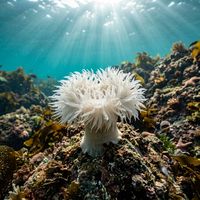
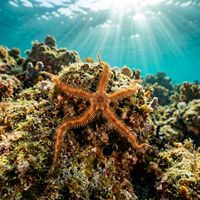
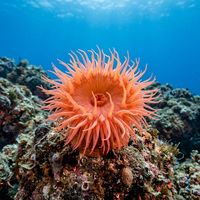
Harbor Seal is the standout encounter and is observed across almost every site in the region. Bottom life is varied and dense: Common Sea Star, Brittle Star, Sea Anemone, Cerianthus, and Sea Squirt cover the reef, while Sea Raven, Lumpfish, Sculpin, and Righteye Flounder hide among the rocks. Common Lobster and Rock Crab appear occasionally, and Humpback Whale, Common Minke Whale, and Fin Whale have been recorded in the area.
Yes, several sites are rated for beginners, including the shore dive at Smugglers Cove. Shore access is common throughout the region, removing the need for boat experience. Cold water and potential tidal currents mean beginners should still dive with a guide and plan dives around slack water.
Shore entry is the dominant access style across the region, making it straightforward to explore without chartering a boat. Four local operators serve the area: Surfn Scuba, Dive Shack, COJO Diving, and Derek's Dive Academy. Guided dives are a practical way to navigate tidal timing and find the best sites.
Rocky reefs are the backbone of most sites, offering shelter for invertebrates and fish in equal measure. Smugglers Cove adds a cave element to its reef, giving it a distinct character for those who enjoy overhead environments. The tidal character of the bay means the reef is constantly washed with nutrients, which supports the dense invertebrate life found here.