Ceriantharia
Spot tube anemones in Brittany, Nova Scotia, and along UK coasts. Find out what sets Cerianthus apart from true anemones underwater.
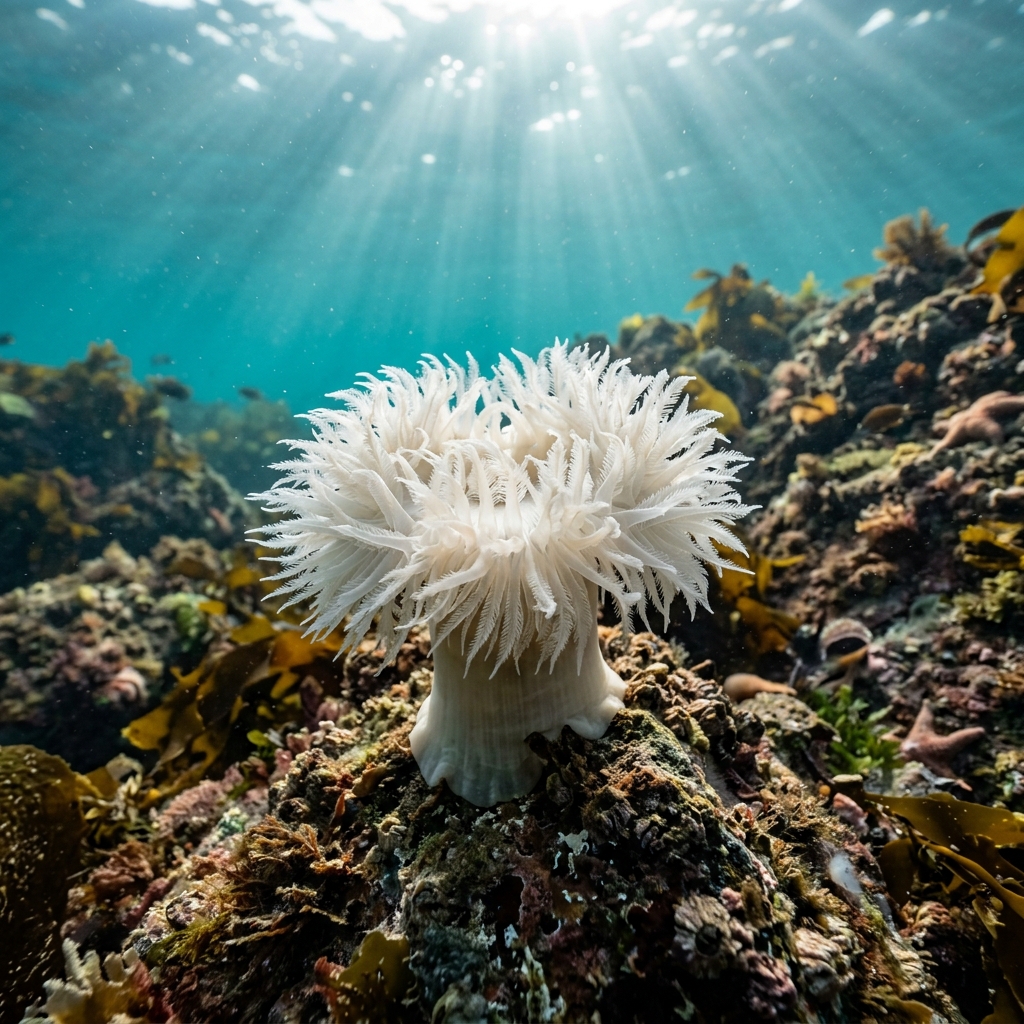
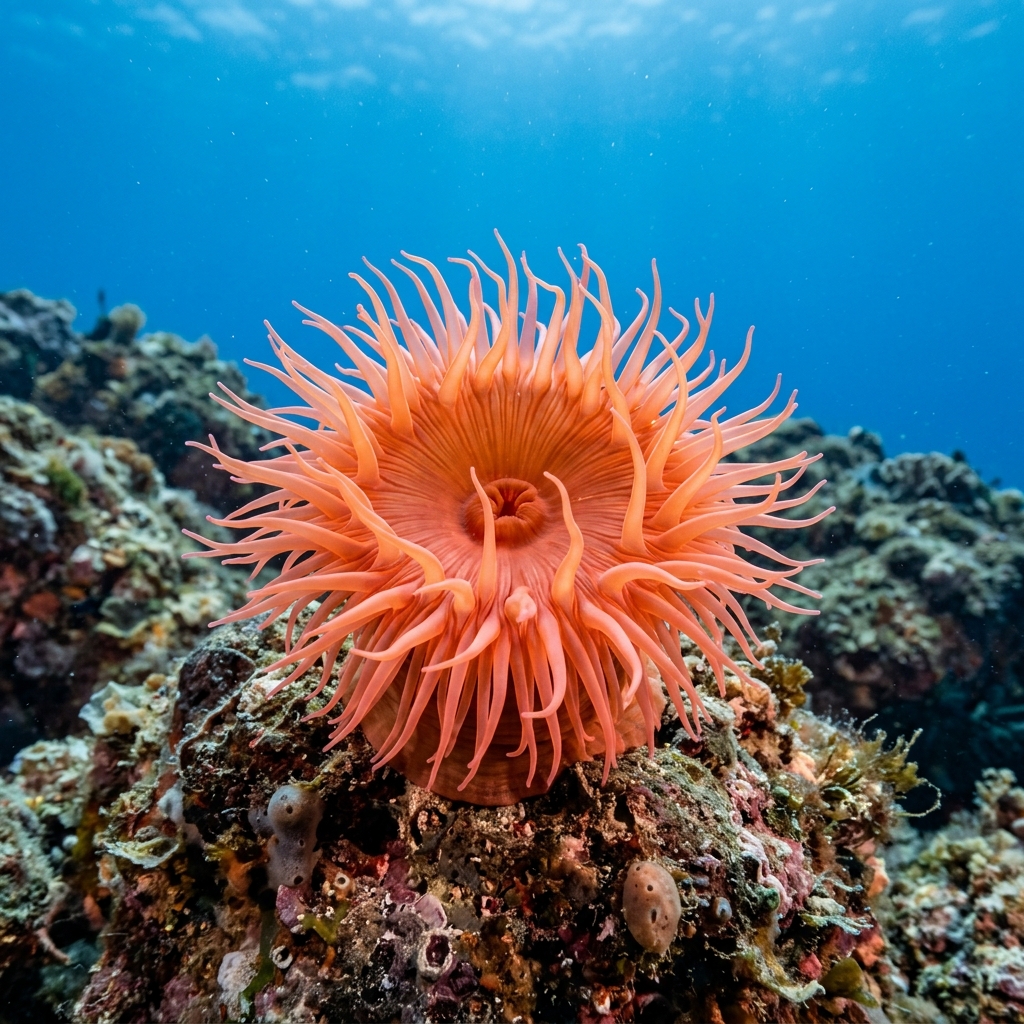
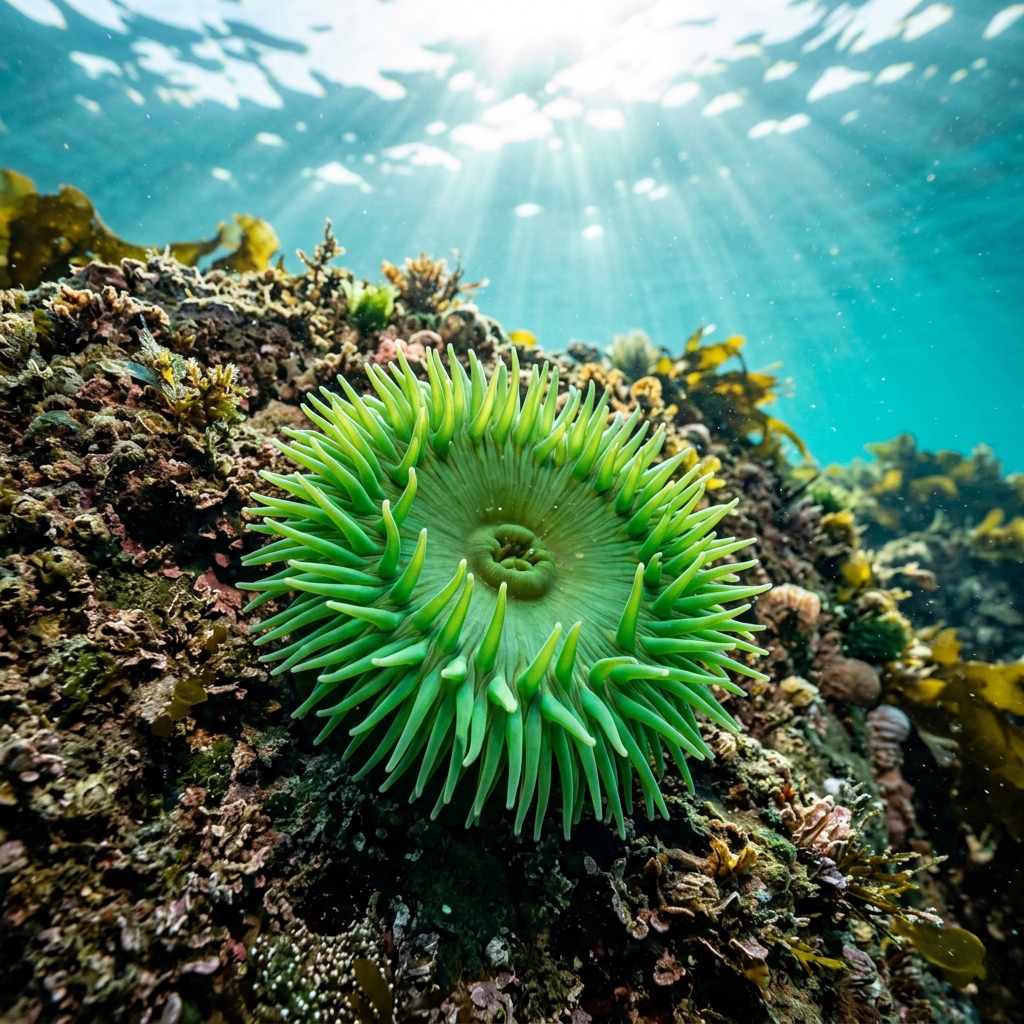
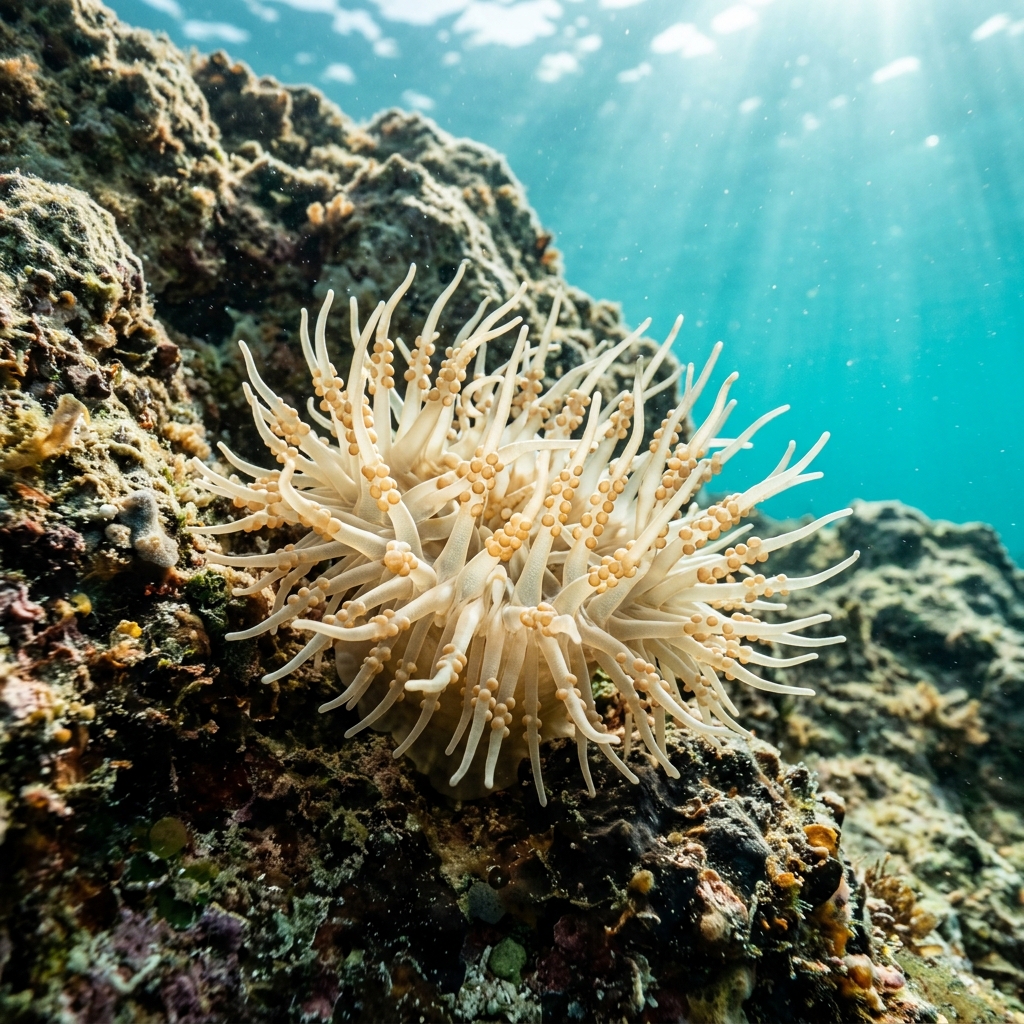
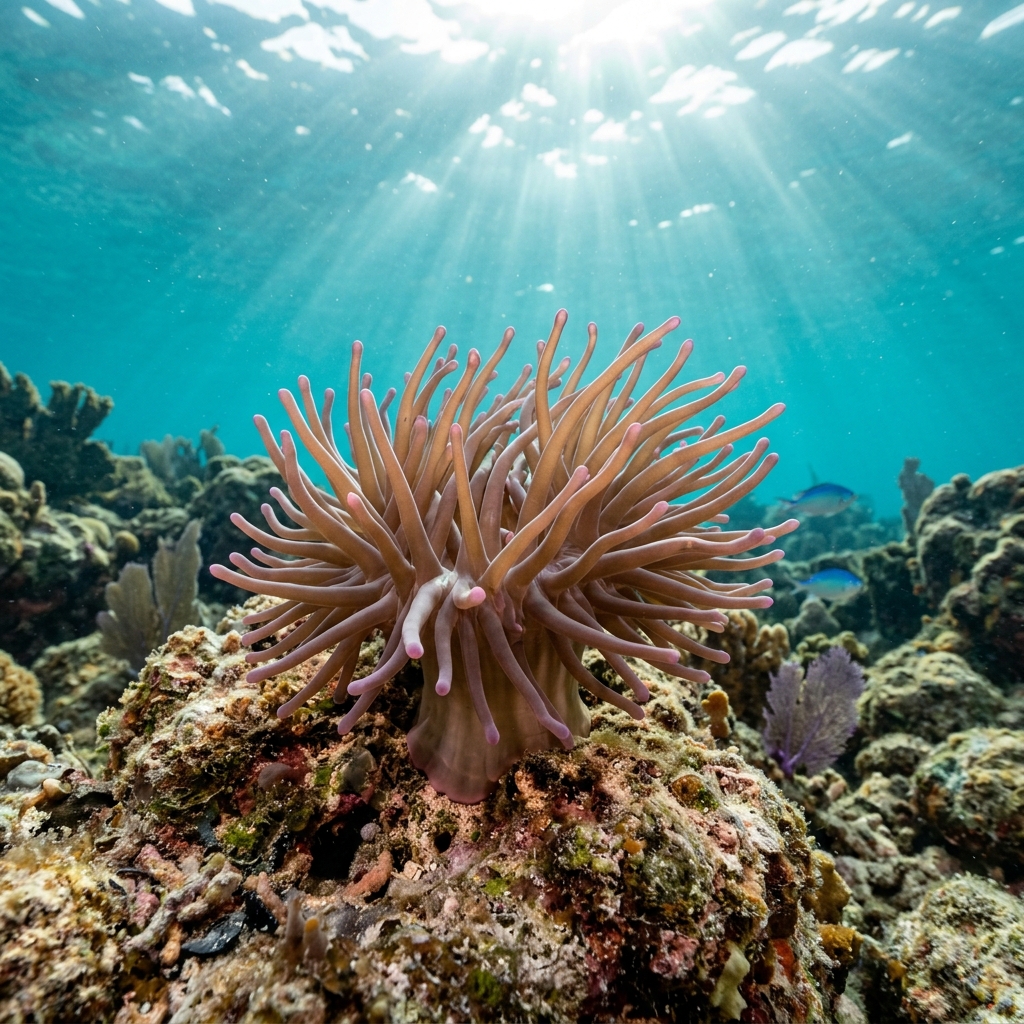
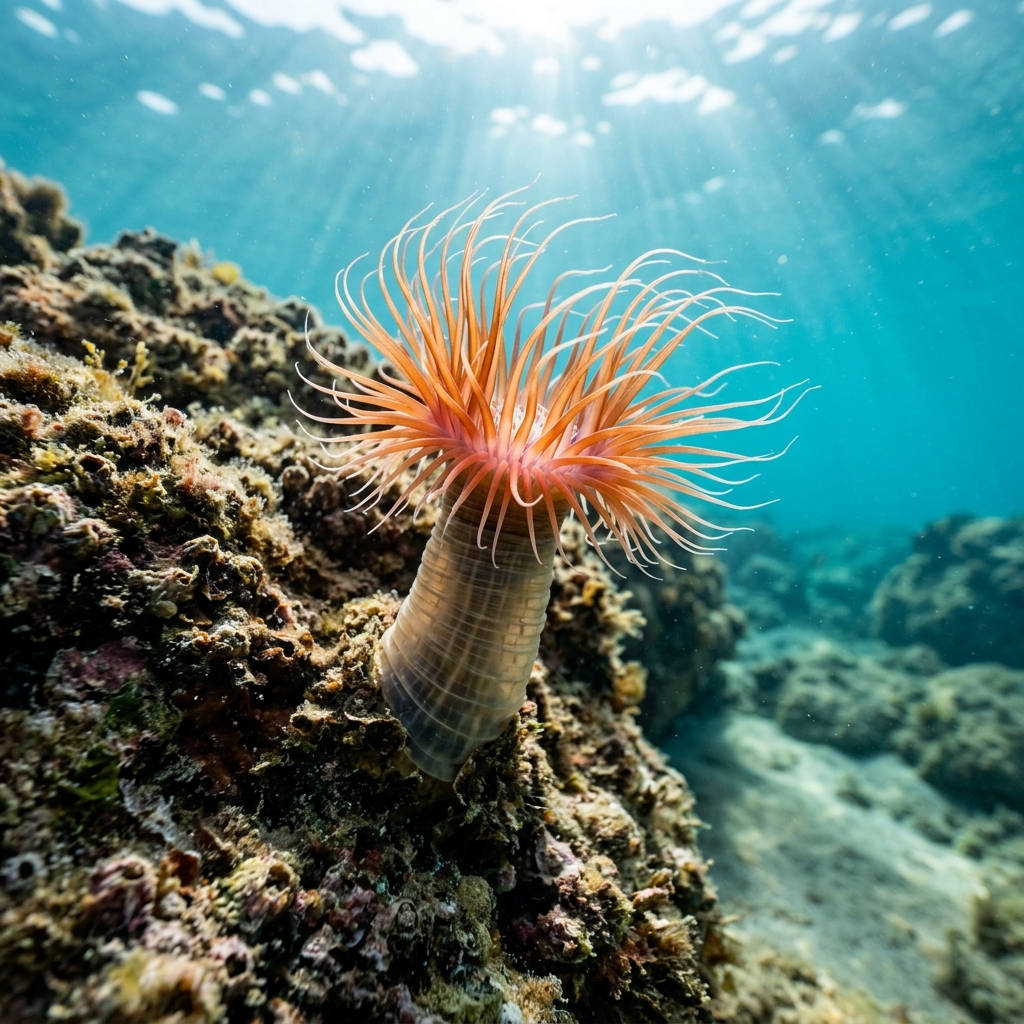
Tube anemones look broadly similar to true anemones but give themselves away by their two distinct rings of tentacles: a long, wispy outer ring for catching food and a shorter inner ring surrounding the mouth. They sit anchored in a soft, parchment-like tube buried in sediment, often with only the crown of tentacles visible above the bottom. Colours run from white and cream through lavender, brown, and deep purple depending on the species. Unlike true anemones, the body is never attached directly to hard rock.
Tube anemones spend their lives anchored vertically in muddy or sandy substrate, extending their crown of tentacles into the water column to feed on passing zooplankton. When disturbed they retract rapidly and completely into the buried tube, sometimes disappearing in under a second, so slow, controlled approaches without stirring up sediment give the best views. They are most fully extended when currents are gentle and light levels are low, making them a rewarding find on slack-water dives or in deeper, dimmer conditions.
Unlike true anemones, tube anemones cannot regenerate from a fragment or move to a new location; the tube they secrete from mucus and sediment is a permanent home they simply extend deeper over time, sometimes reaching well over half a metre in length underground.
No strong seasonal pattern emerges from the available data, so tube anemones can be treated as a year-round target. Their observed temperature range of roughly 7.5 to 16.6 °C reflects the cool temperate waters they favour, so they are present whenever those conditions hold.
Reef neighbours a diver could mistake it for. Use the identification notes above to tell them apart.
Tube anemones are most consistently logged across temperate North Atlantic waters, with the strongest site coverage in the United Kingdom, Canada, France, and Norway. The top diving hotspots by region are Brittany and Normandy in France, Nova Scotia and the Bay of Fundy in Canada, and the South Coast of England, where cool, nutrient-rich waters support thriving populations. Ireland's Southwest Coast and Northern Germany also return solid records.
Mapping where Cerianthus is logged…
Tube anemones are reliably found across temperate North Atlantic destinations. The UK, France (especially Brittany and Normandy), Canada (Nova Scotia and the Bay of Fundy), Norway, Ireland, and Sweden are among the top countries where divers log them. They favour sheltered bays and slopes with sandy or muddy bottoms in cool water.
The clearest clue is position: tube anemones always emerge from a buried tube in soft sediment and are never attached to bare rock. They also show two clear rings of tentacles, with long outer tentacles and shorter inner ones around the mouth. True anemones like the plumose anemone typically have a single uniform crown of tentacles and attach directly to hard surfaces.
No concentrated season has been recorded, so they can be encountered year-round in their temperate range. They are most fully extended during calm, low-light conditions, so slack water at the turn of the tide or dives in deeper, shaded areas give the best chance of seeing them with their tentacles out.
No. Tube anemones pose no risk to divers. Like other cnidarians they carry stinging cells, but these are far too weak to penetrate human skin. The main thing to protect is the animal itself: touching it causes an immediate retraction into the tube and disturbs surrounding sediment.
Tube anemones are not true anemones at all. They belong to the order Ceriantharia, a distinct lineage that diverged from other anemones hundreds of millions of years ago. Their tube is made from secreted mucus bound with discharged stinging threads, and it extends deep into the sediment. They cannot move to a new spot once settled.
Site and sighting data is aggregated from diver logs, iNaturalist and GBIF. For taxonomy and conservation status:
Plumose Anemone
2,032 sites