Doryteuthis spp.
Cold-water squid logged across Nova Scotia and New Brunswick in water as chilly as 5 to 9 C, usually spotted alone or in small groups.
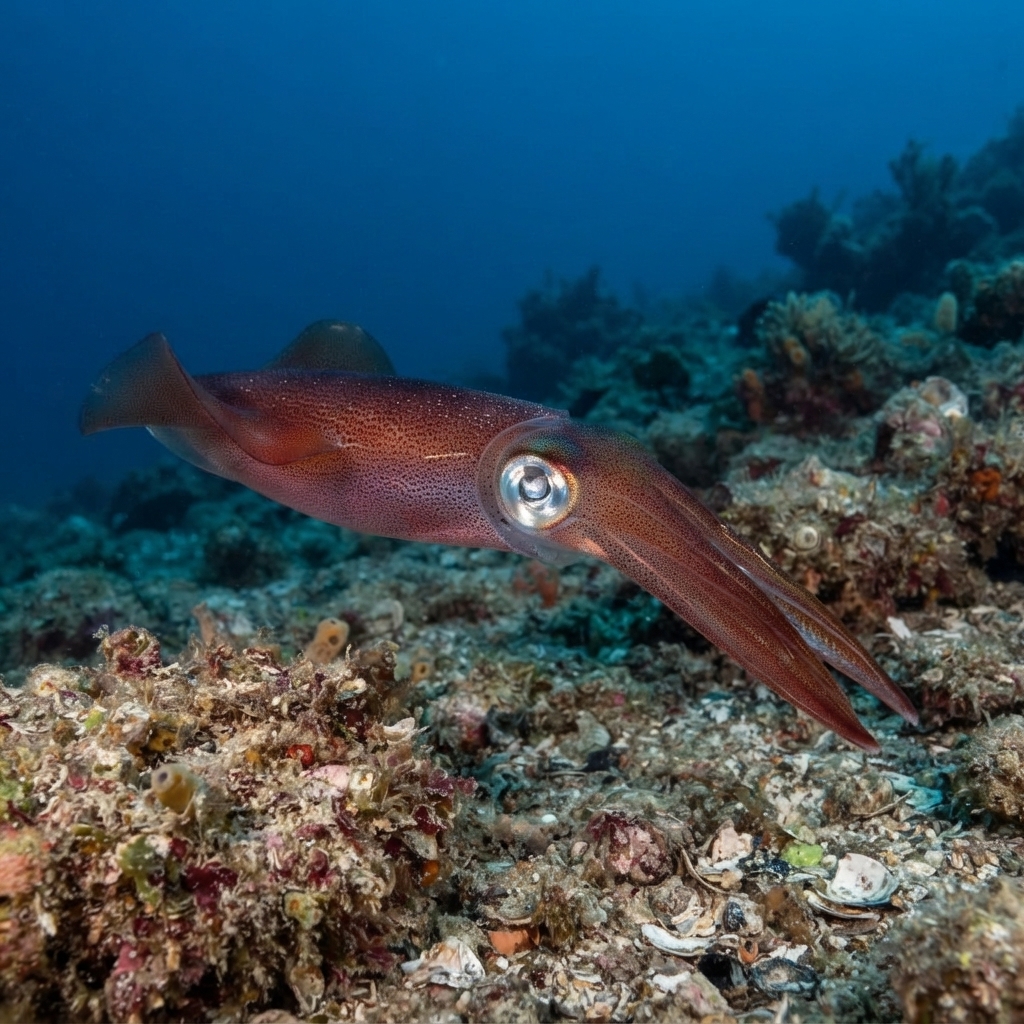
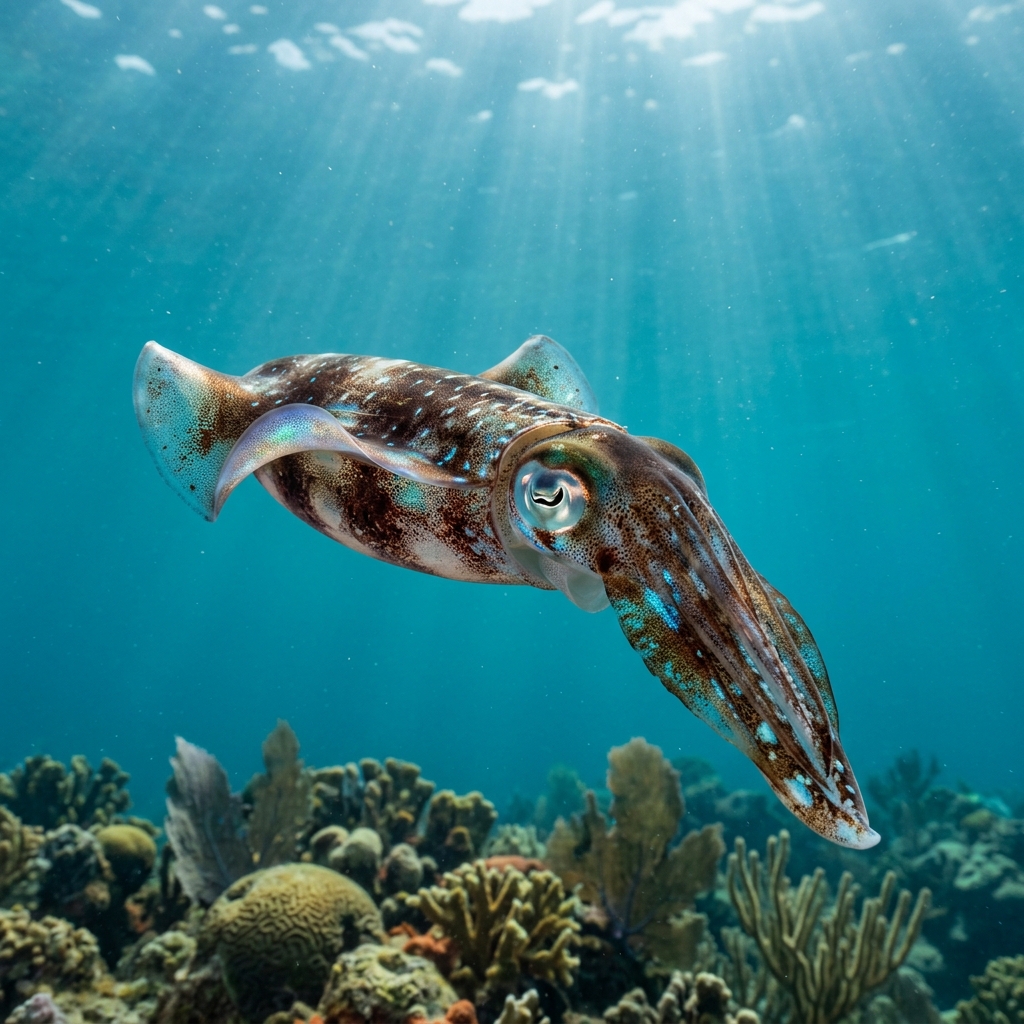
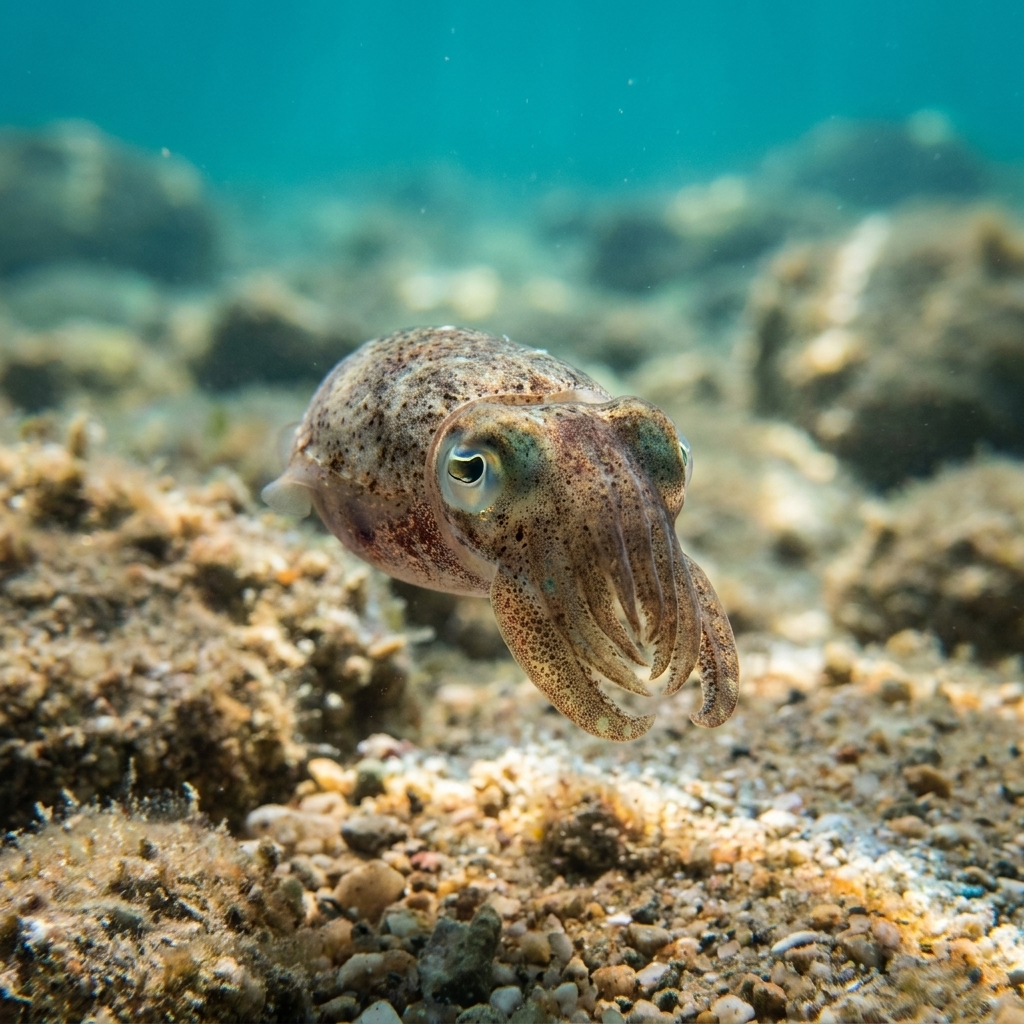
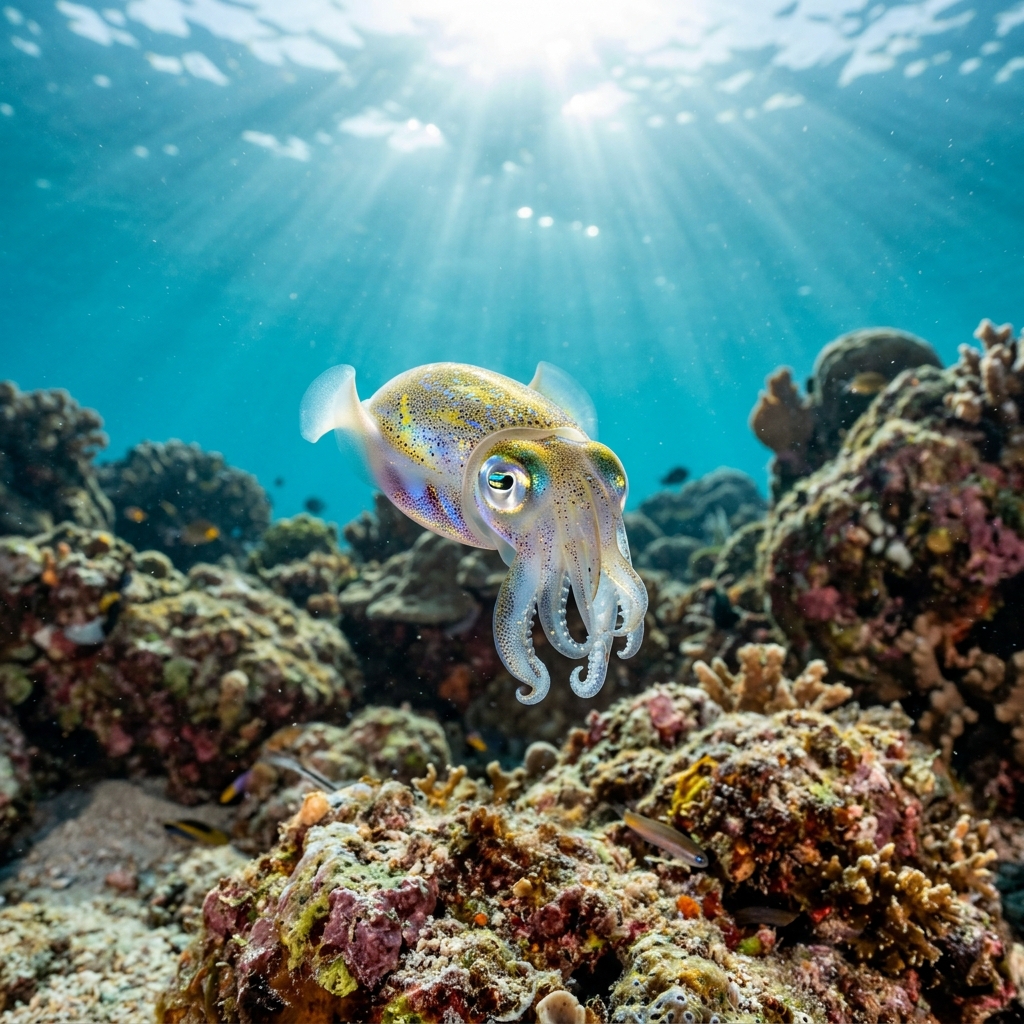
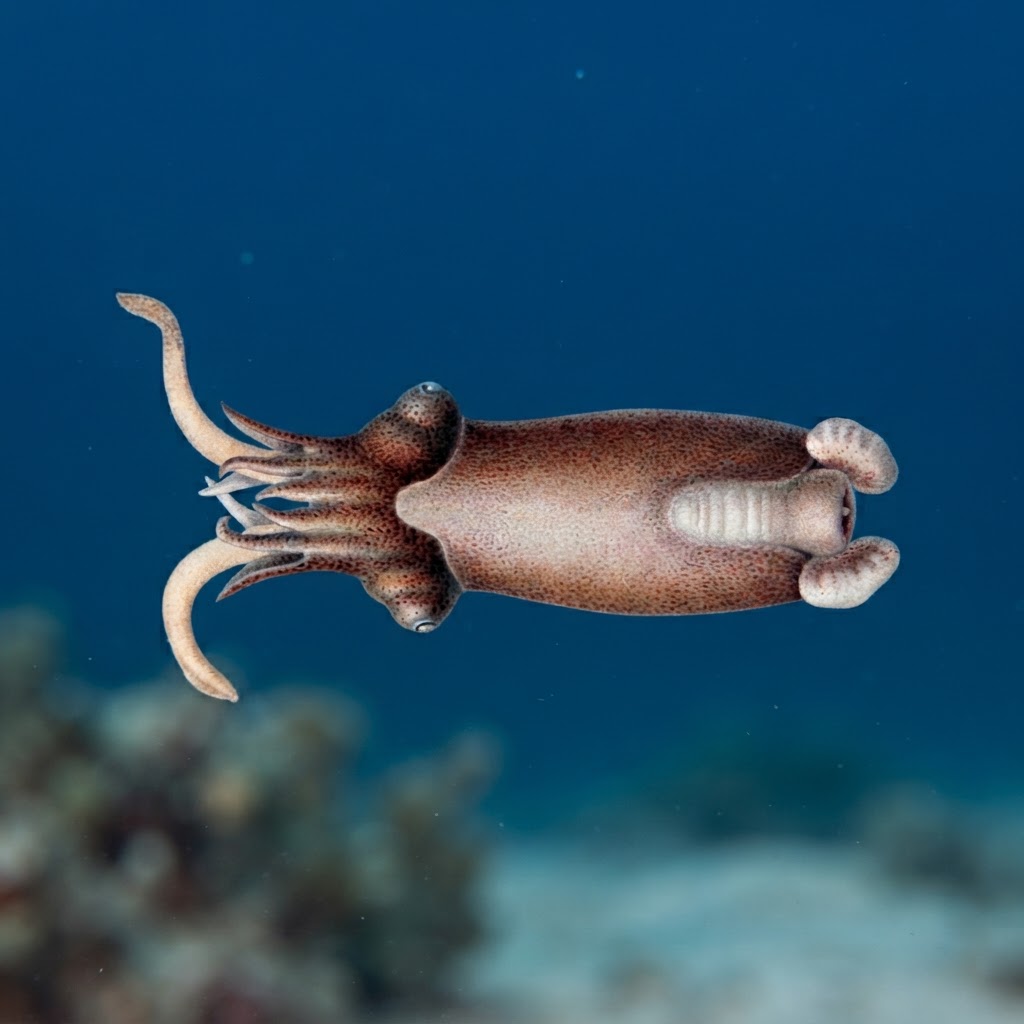
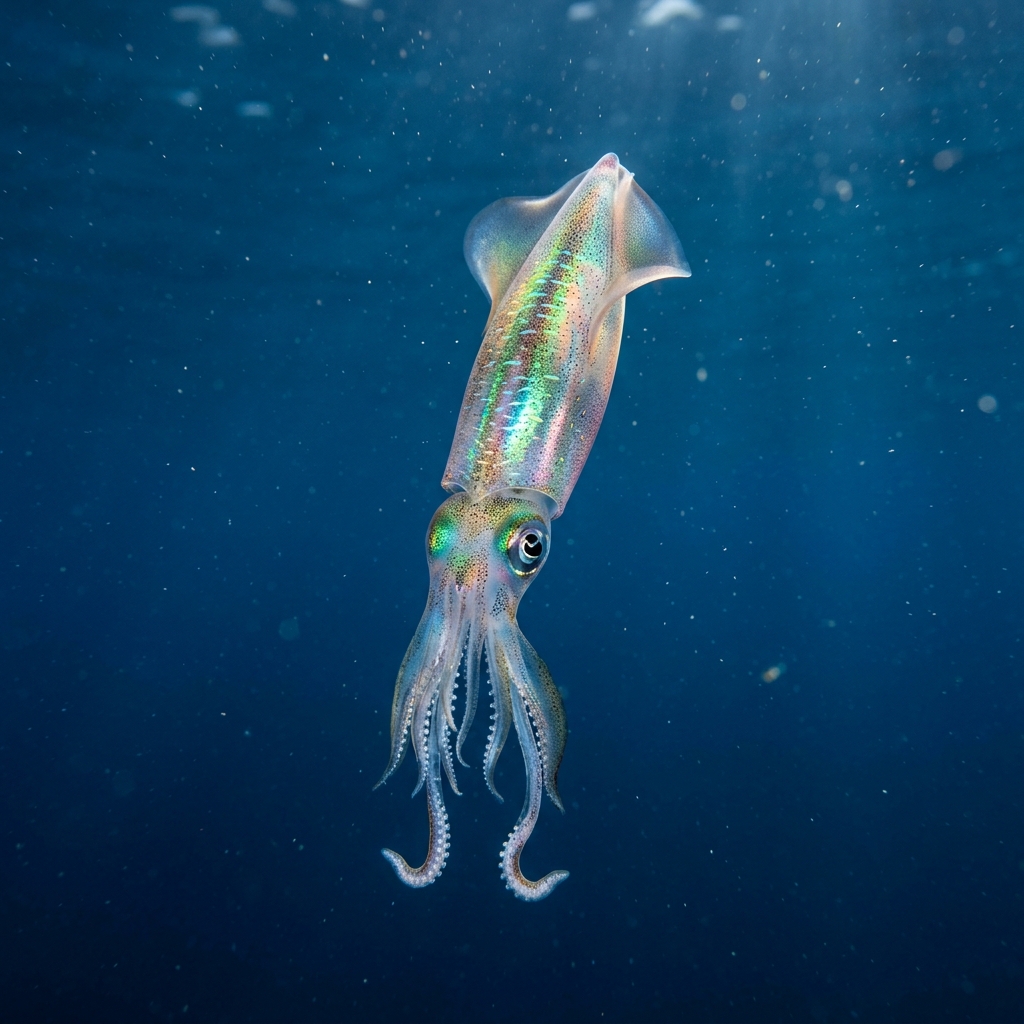
Look for a slender, torpedo-shaped body with a translucent to mottled brown skin that flickers with shifting speckled patterns as the animal reacts to light and movement. Two large, lidless eyes sit forward on the head, and a pair of fins runs along much of the body length, rippling constantly to hold position in current. Most sightings are of solitary animals or loose small groups hanging just off the bottom or mid-water rather than in tight schools.
Divers most often log these squid hovering alone or in small loose groups just above rocky or sandy bottoms, using their fins in a slow, controlled ripple to hold station rather than darting about. They tend to be wary rather than bold, often keeping a body length or two of distance and flushing colour patterns across their skin as they watch a diver approach. Most reports describe them as uncommon to rare at any given site, so a sighting feels like a real find rather than a guaranteed encounter.
Inshore squid can shift their skin colour and pattern almost instantly using pigment-filled cells called chromatophores, flashing from pale and translucent to mottled brown in a fraction of a second, both to blend into the seabed and to signal to other squid nearby.
There is no clear seasonal pattern in the sighting data, so treat this as a year-round possibility wherever water stays in its comfortable 5.3 to 9.2 C range. In practice that means cold Atlantic Canadian sites are a reasonable bet on almost any dive, not just a particular month.
Reef neighbours a diver could mistake it for. Use the identification notes above to tell them apart.
Canada is by far the strongest bet, with sites concentrated in Nova Scotia, New Brunswick, Quebec, and Prince Edward Island. Divers in the United States pick them up too, particularly in the Northeast and in Alaska, with scattered records further south into Brazil's Santa Catarina coast, Mexico, Colombia, and Argentina.
Mapping where Inshore Squid is logged…
The strongest sightings come from Atlantic Canada, especially Nova Scotia, New Brunswick, Quebec, and Prince Edward Island, with additional records from the Northeast United States and Alaska.
There is no clear season in the sighting data, so they are best treated as a year-round possibility in cold water sites, particularly where temperatures sit between roughly 5 and 9 C.
Look for a slim, torpedo-shaped body with translucent to mottled brown skin, large forward-set eyes, and fins that ripple continuously along the body as the animal holds its position in current.
No, they pose no danger to divers and will typically keep a cautious distance rather than approach.
They can change their skin colour and pattern almost instantly using pigment cells called chromatophores, flashing from pale to mottled brown to blend in or communicate with other squid nearby.
Site and sighting data is aggregated from diver logs, iNaturalist and GBIF. For taxonomy and conservation status:
Ram's Horn Squid
184 sites