Homarus americanus
Uncommon but rewarding: spot American Lobster tucked in rocky crevices off Nova Scotia and Scotland in cold, clear water year-round.
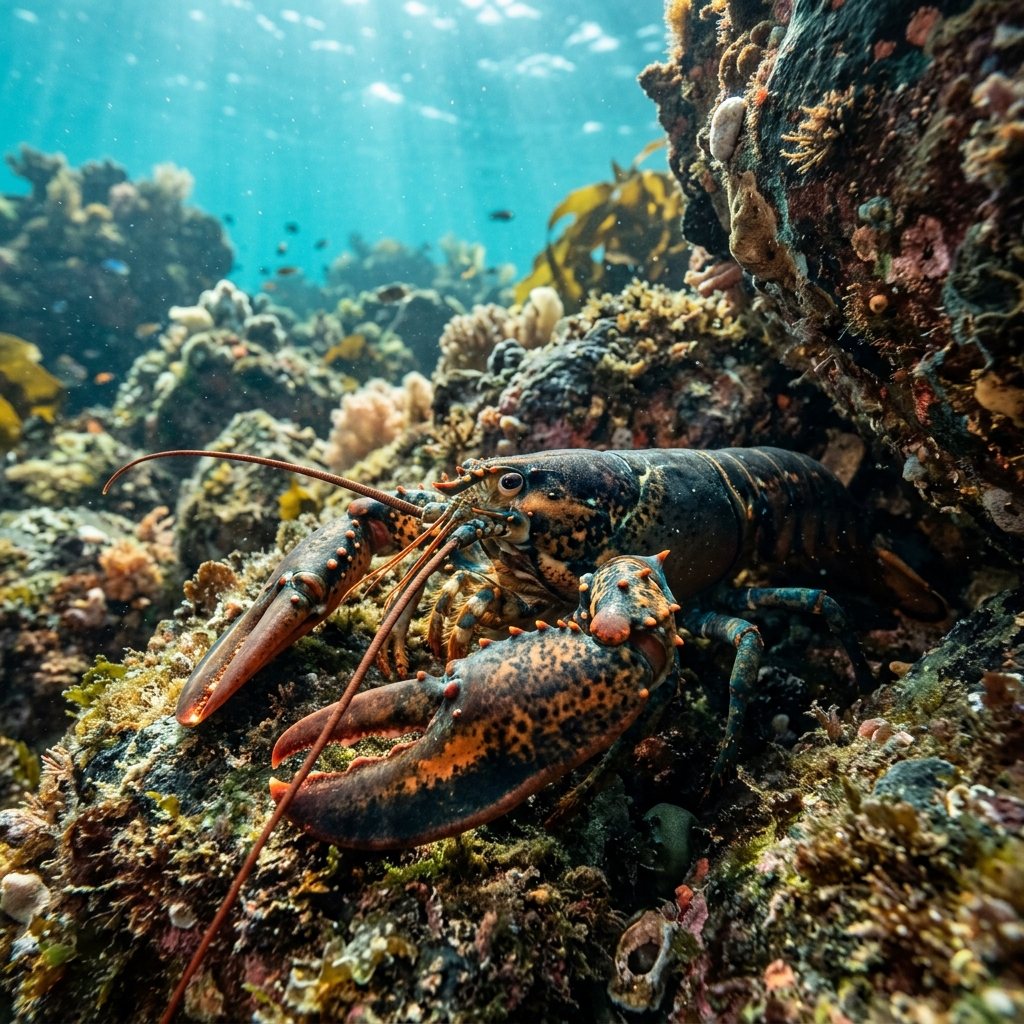
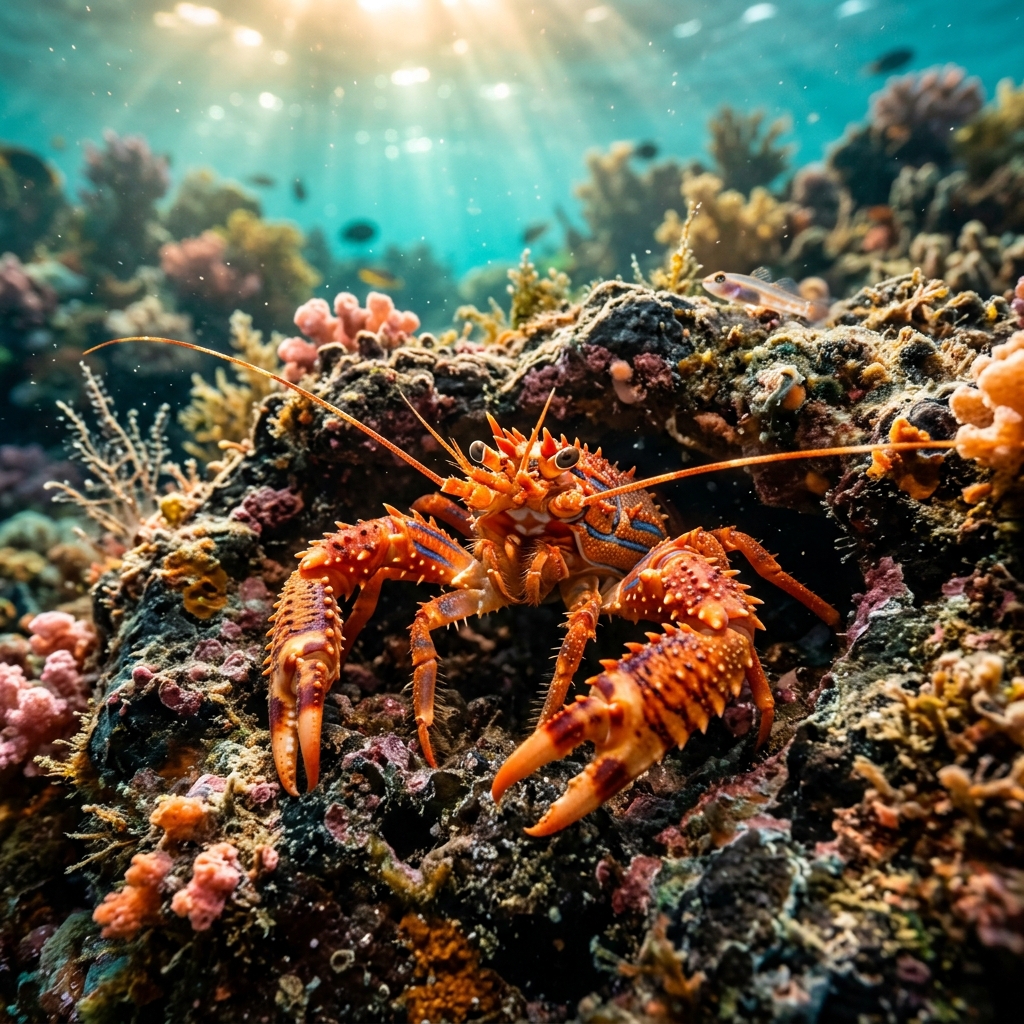
Look for a heavy-bodied crustacean up to about 79 cm long, dark reddish-brown to olive-green and mottled overall, with two noticeably unequal claws (one thick crusher, one slimmer cutter). Long, whip-like antennae usually poke out first from under a rock ledge before the rest of it comes into view. Unlike spiny lobsters, it has no obvious spines on the carapace and relies on those oversized claws rather than a smooth spiky shell for ID.
Expect to find it wedged into a crevice, under a boulder or tucked against a wall rather than out in the open, usually with just the antennae and claw tips visible by day. It's a slow, deliberate mover when it does venture out, most active at night or in low light, and generally holds its ground or backs deeper into cover rather than bolting when a diver approaches.
Those two claws aren't just for show: the heavier crusher claw is built to break open shells and prey, while the slimmer cutter claw slices softer food, letting one animal handle a much wider diet than its claw shape might suggest at a glance.
Sightings show no clear seasonal pattern, so treat it as a year-round find. It tolerates a wide temperature range from near freezing up to about 16°C, which is exactly the kind of cold, rocky water it's logged in across its range.
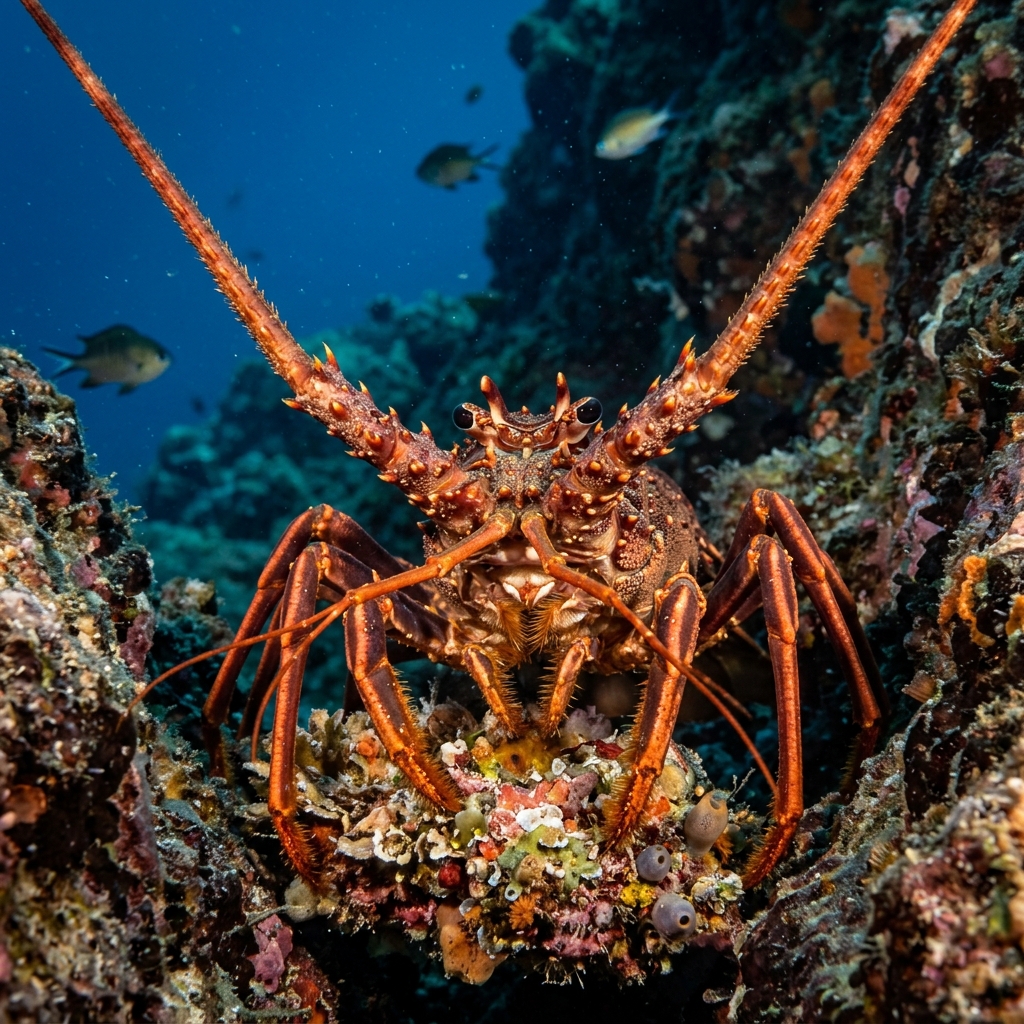
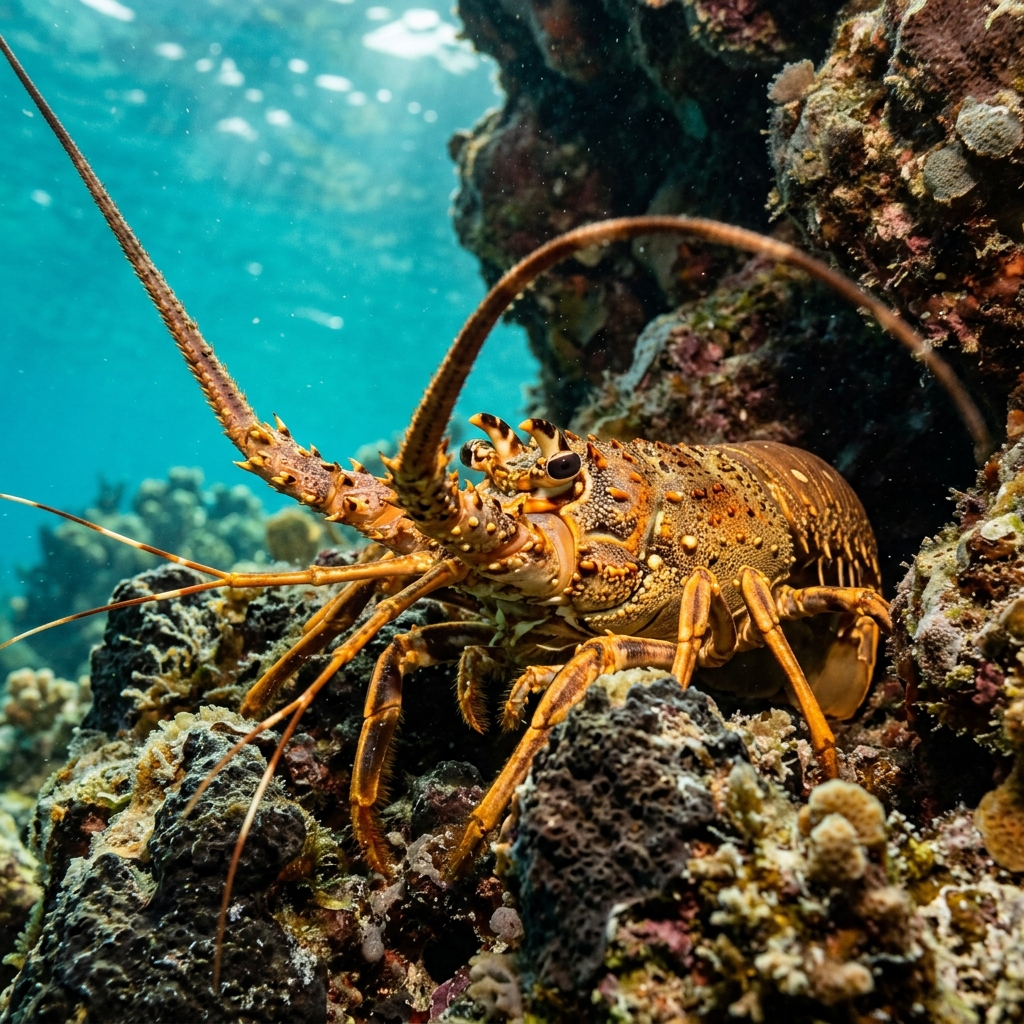
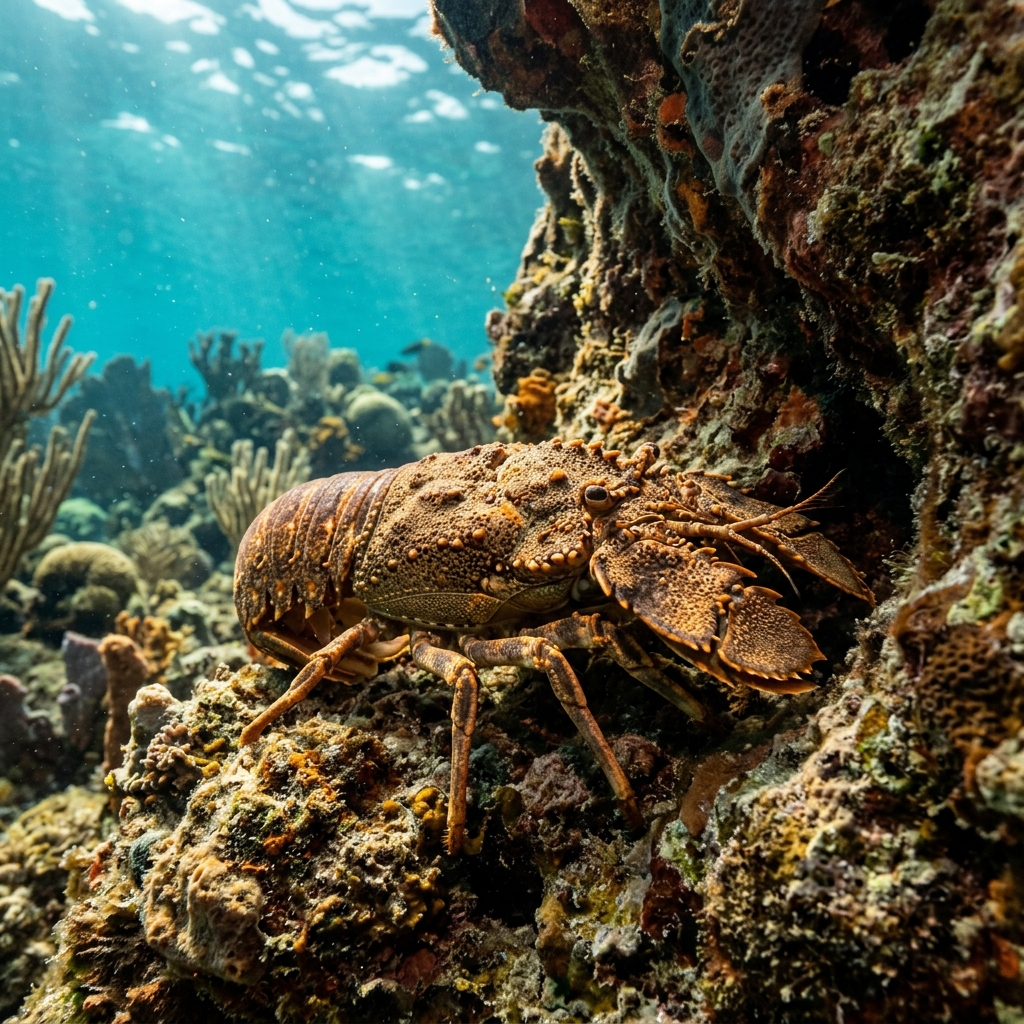
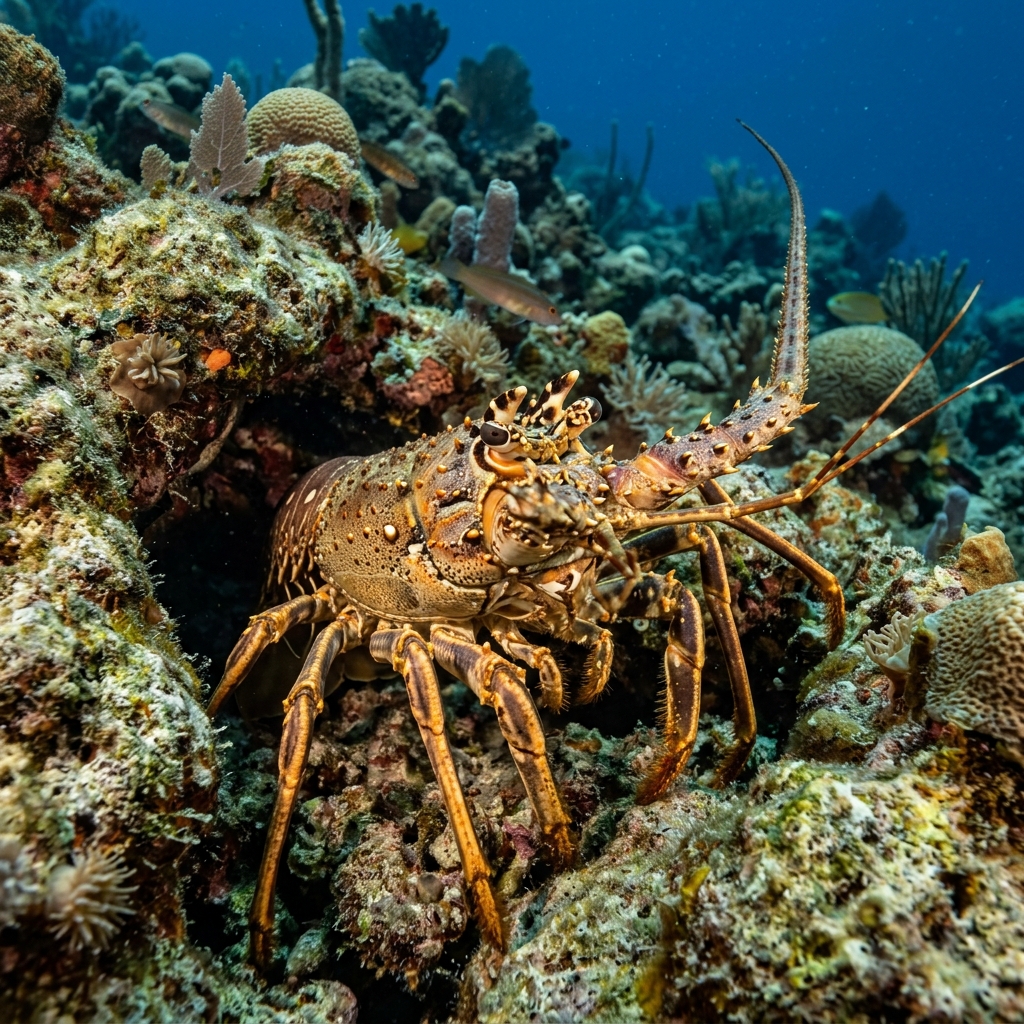
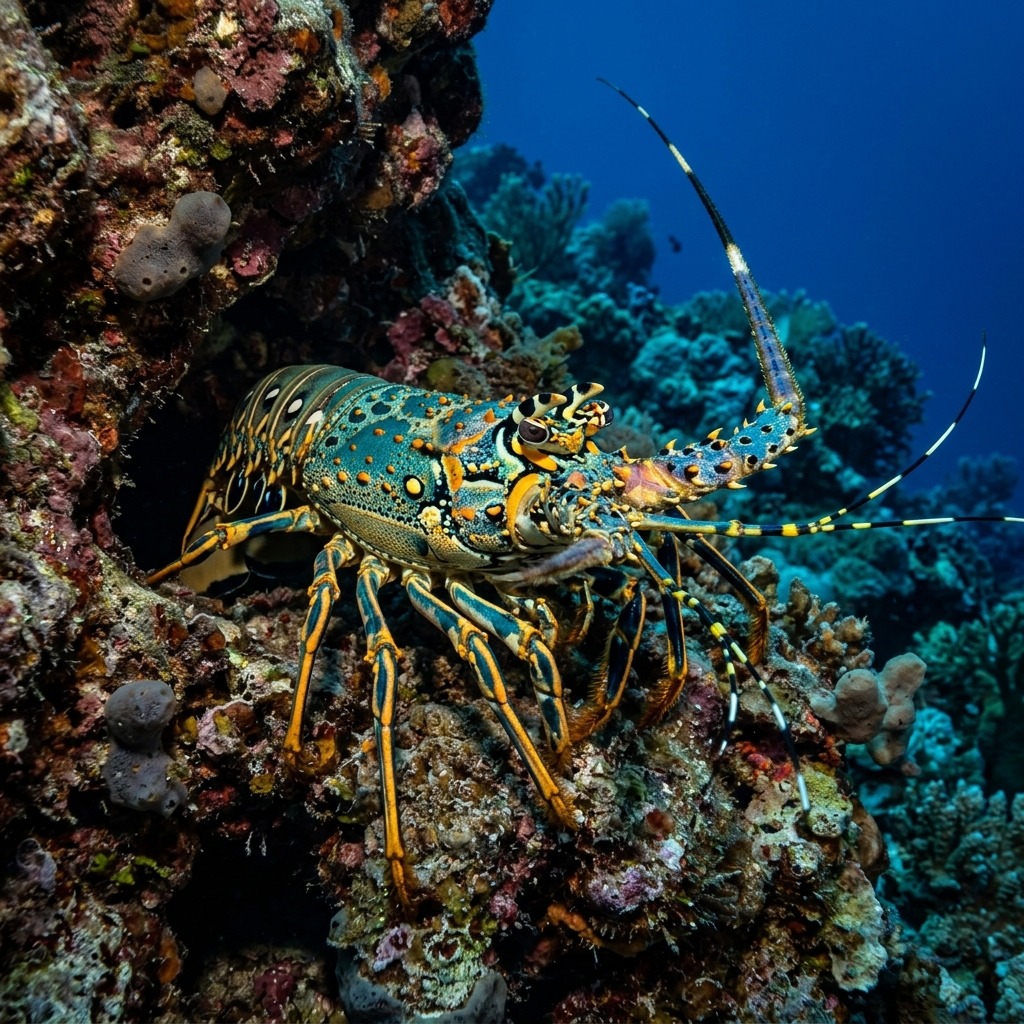
Reef neighbours a diver could mistake it for. Use the identification notes above to tell them apart.
Most reliably logged in Canada, especially Quebec, Nova Scotia, New Brunswick and Prince Edward Island, with strong numbers also out of the Northeast United States. Across the Atlantic it turns up on a good number of sites in the United Kingdom (Scotland and England), Germany's Schleswig-Holstein coast, and Norway, Denmark and Sweden.
Mapping where American Lobster is logged…
Best chances are in Canadian waters, particularly Quebec, Nova Scotia, New Brunswick and Prince Edward Island, plus the Northeast United States. It's also a regular find on rocky dive sites in Scotland, England, Norway, Denmark, Sweden and Germany.
There's no strong seasonal pattern in sightings, so it's considered a year-round animal. Its comfort range of roughly 1 to 16°C means it stays active in cold water most of the year rather than disappearing in winter.
Look for a dark reddish-brown, mottled body up to around 79 cm with two clearly mismatched claws, one thick and heavy, one slimmer. It has no spiny carapace like a spiny lobster, and you'll often spot the long antennae before the rest of the animal emerges from its crevice.
They can reach around 79 cm in length, making them one of the larger lobsters divers encounter. Most individuals seen on a dive will be smaller, since the biggest specimens tend to stay deep in cover.
No, they're not considered dangerous to divers. They'll retreat into a crevice rather than confront you, though those crusher claws are worth respecting if you try to handle one.
Site and sighting data is aggregated from diver logs, iNaturalist and GBIF. For taxonomy and conservation status:
Caribbean Spiny Lobster
2,209 sites