Chaetodon aureofasciatus
Small yellow reef fish with gold stripes, best found on Queensland reefs in 24 to 29 C water, year-round.
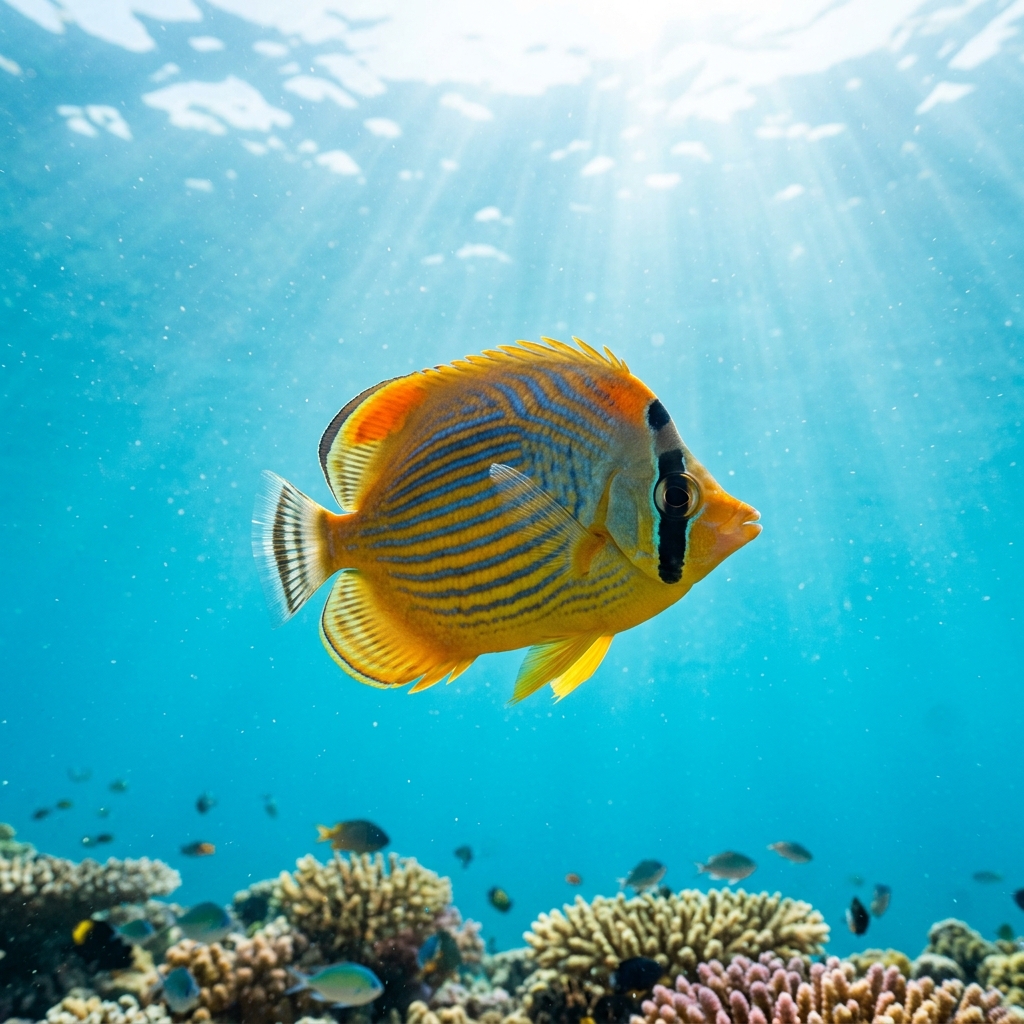
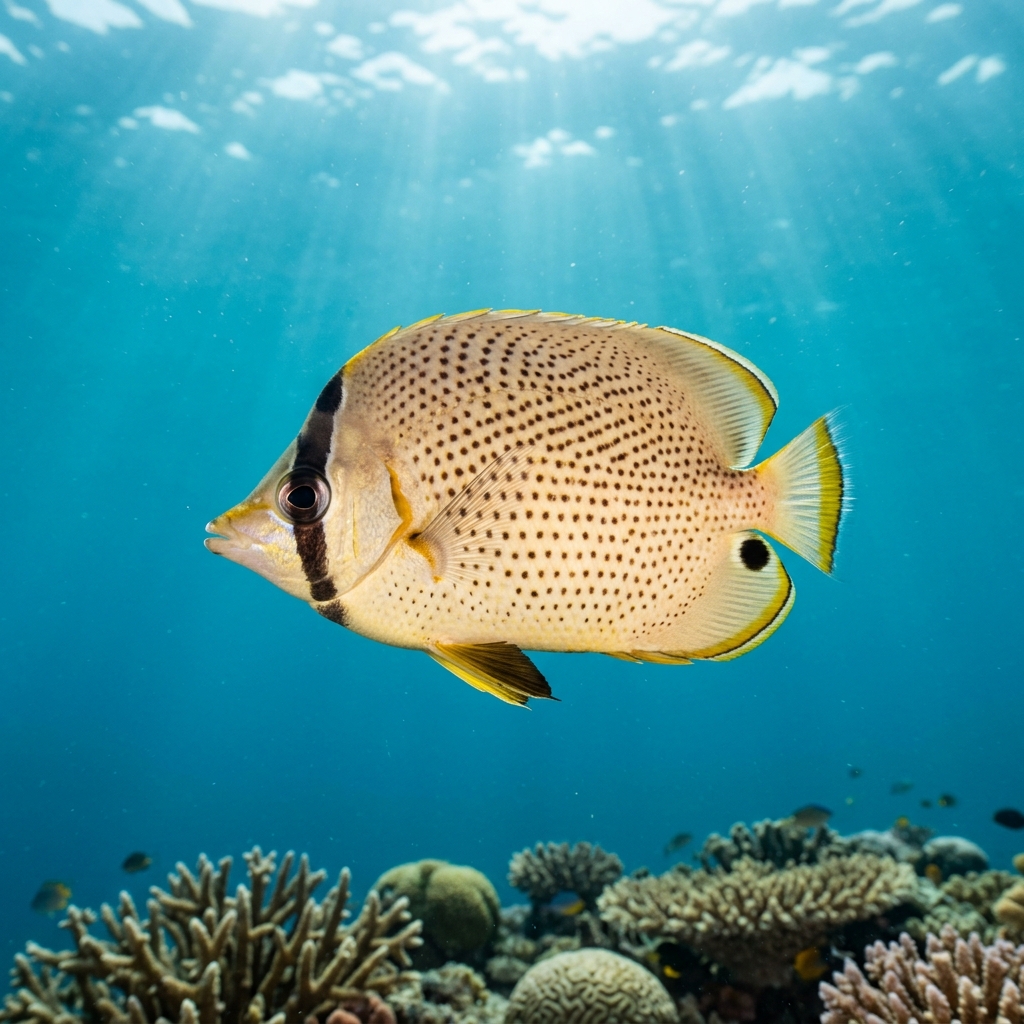
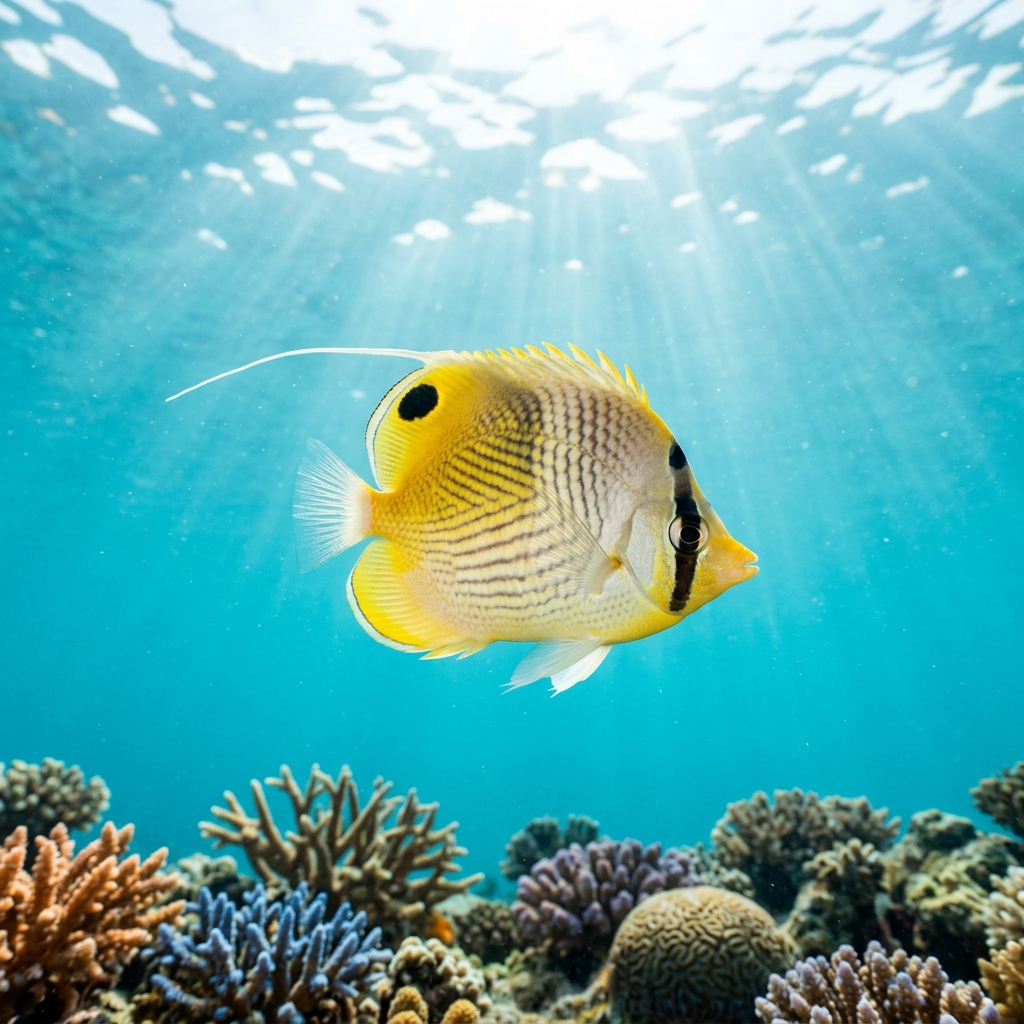
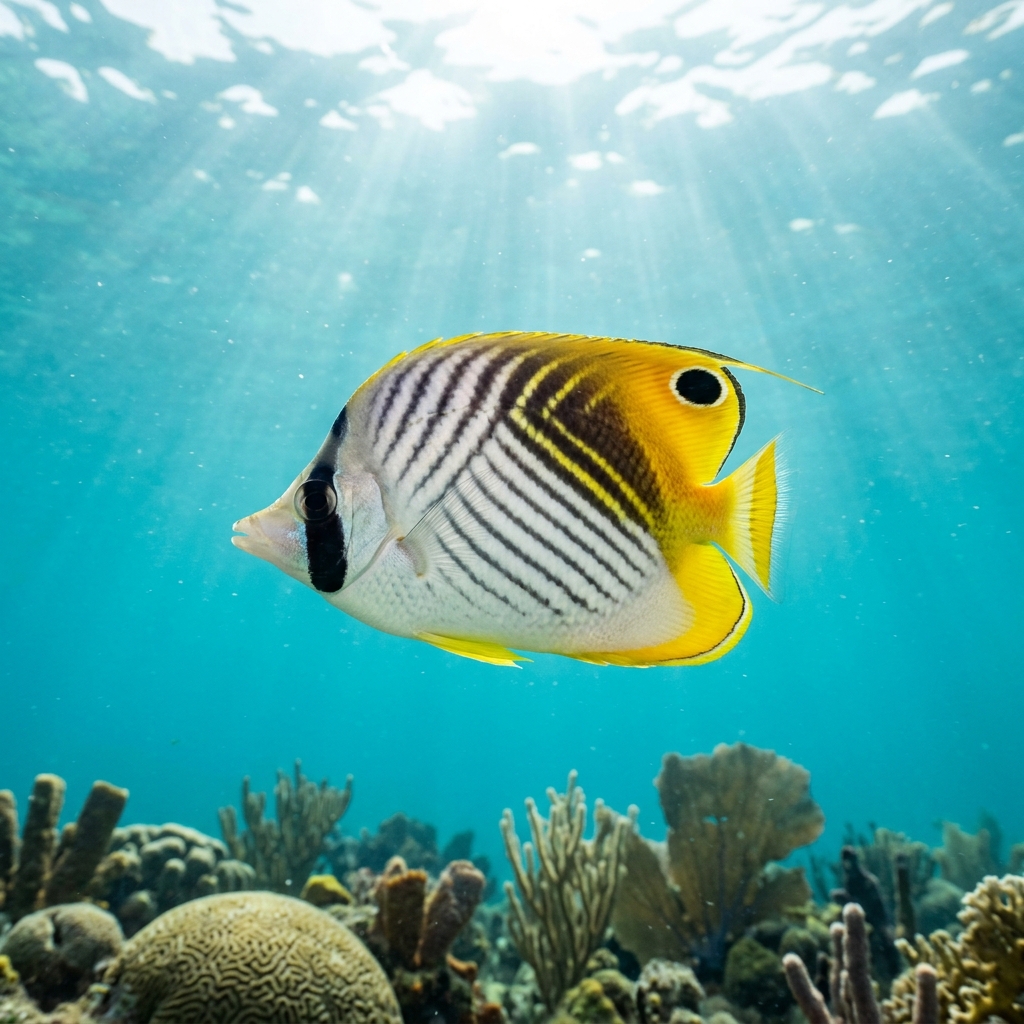
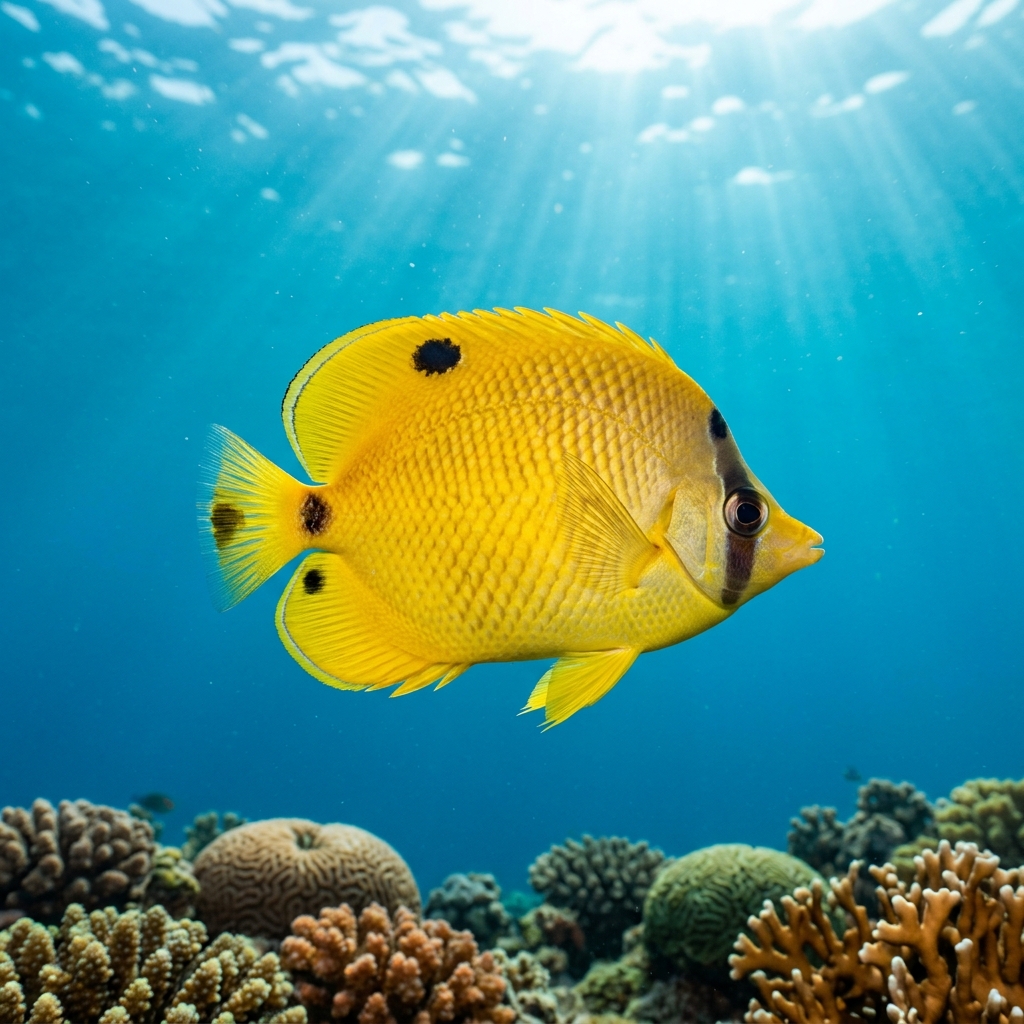
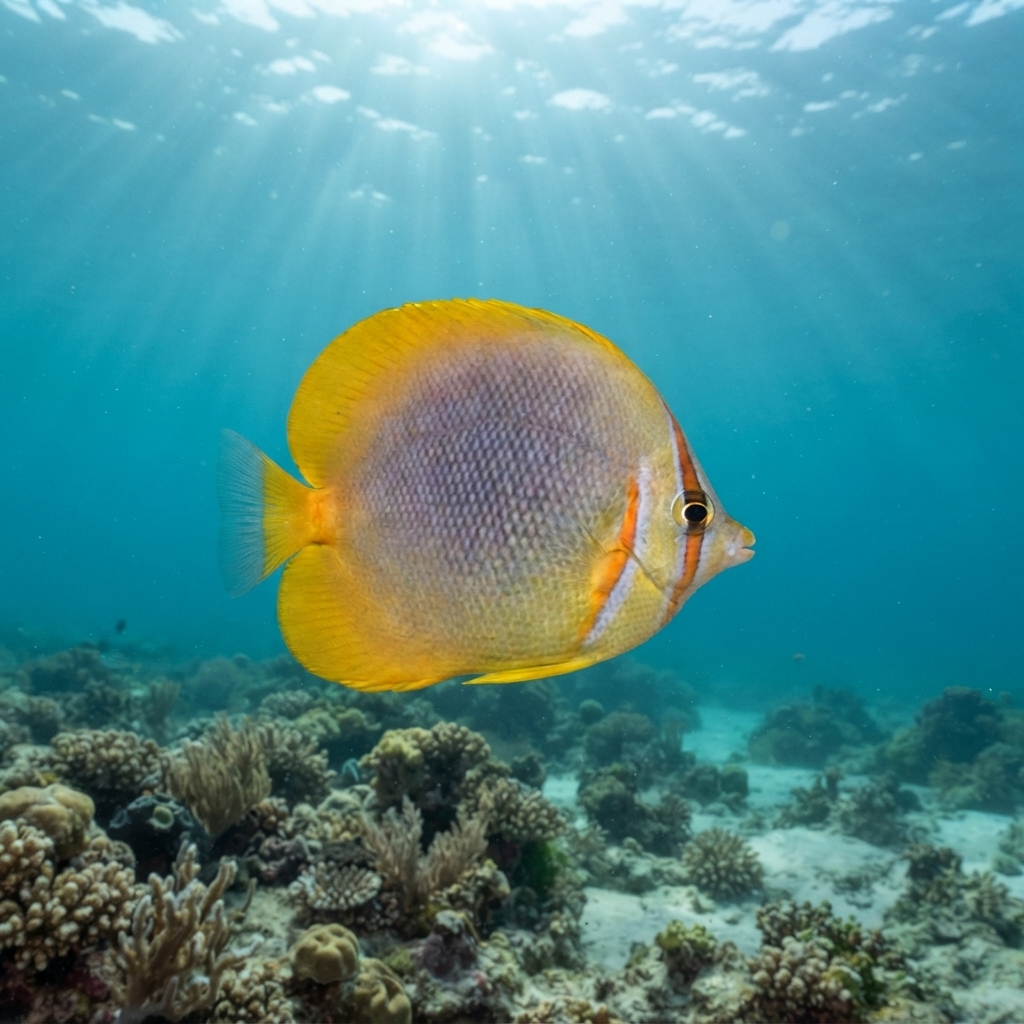
A small, disc-shaped butterflyfish at about 11 cm, pale white to yellow body crossed by three or four diagonal golden-yellow stripes. A dark band runs through the eye, and the rear of the body carries a black-edged yellow patch near the tail. It swims low and close to the reef, often in pairs, which combined with the fine gold striping makes it easy to separate from bulkier or more boldly blotched butterflyfish.
Divers most often log it as an uncommon to common sighting, picking its way over coral rubble and reef flats in shallow water between 5 and 15 metres, usually alone or in a loose pair. It feeds by nipping at coral polyps and algae on the reef surface and tends to keep a cautious distance rather than approach divers, ducking into coral heads if pressed. Look for it during the day over lower-relief reef sections rather than on dramatic drop-offs.
Like other Chaetodon butterflyfish, it feeds heavily on coral polyps, making it a useful visual indicator of reef health where it turns up regularly.
No strong seasonal pattern shows up in the sightings, and with a comfortable range of 24.6 to 29.4 C it is present on these reefs year-round rather than tied to a particular month.
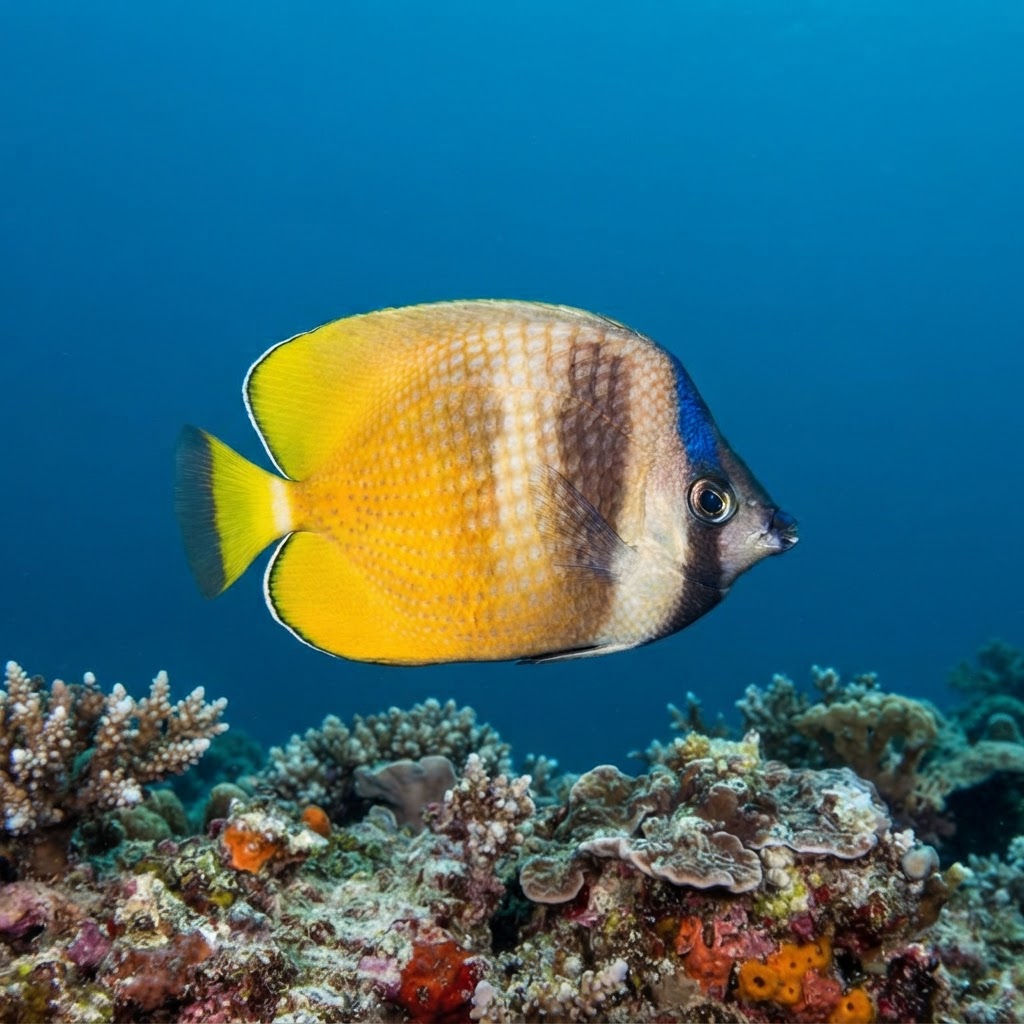
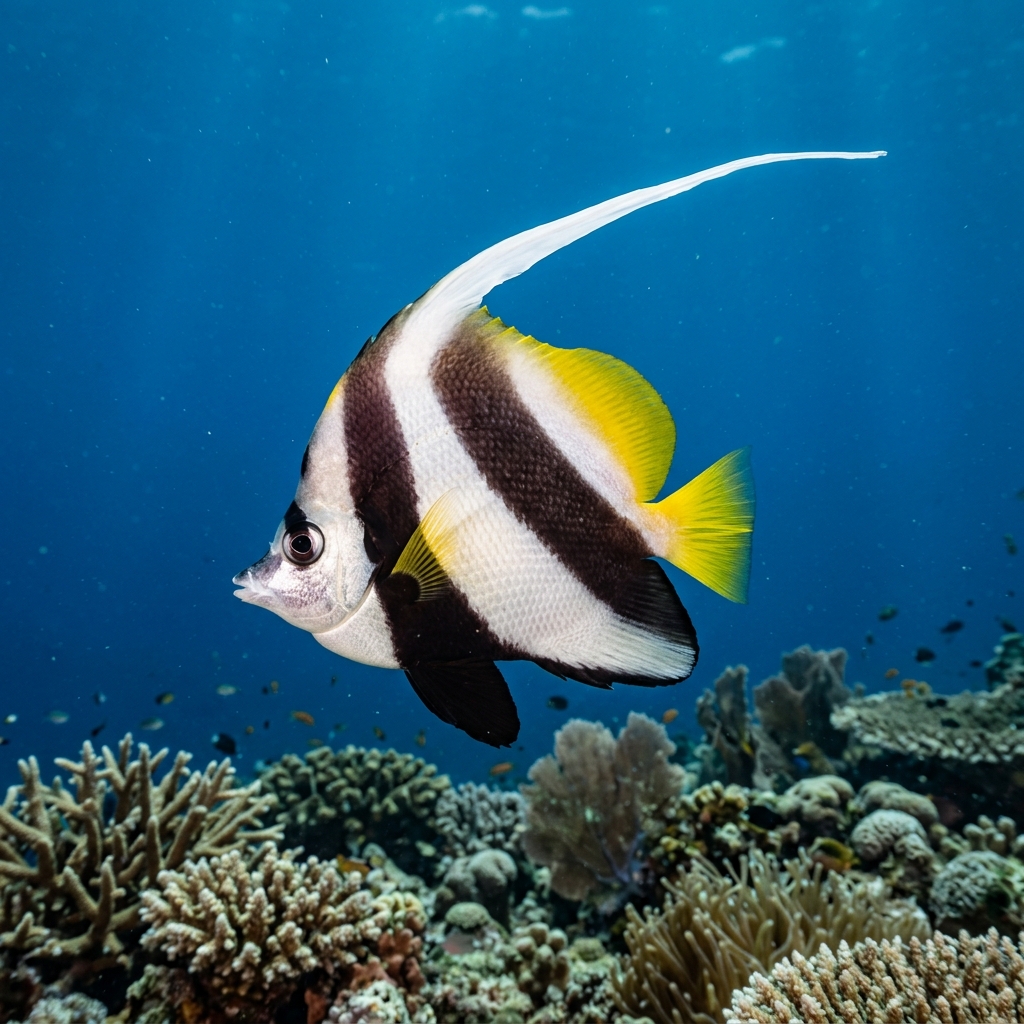
Reef neighbours a diver could mistake it for. Use the identification notes above to tell them apart.
This is very much an Australian reef fish in the logged data, with Queensland the clear stronghold and the Great Barrier Reef region delivering the bulk of sightings. Smaller numbers turn up in Western Australia and the Northern Territory, so it is worth watching for on reefs right along the country's tropical north coast.
Mapping where Golden-striped Butterflyfish is logged…
Queensland is by far the most reliable place, with the Great Barrier Reef region producing the vast majority of logged sightings. Smaller populations are also recorded in Western Australia and the Northern Territory.
There is no clear seasonal peak in the sightings, and it tolerates a wide temperature range of roughly 24.6 to 29.4 C, so it can be seen on these reefs at any time of year.
Look for a small, pale butterflyfish with diagonal gold stripes across the body, a dark eye band, and a black-edged yellow patch near the tail. It stays close to the reef and is usually seen alone or in pairs.
They reach around 11 cm, making them one of the smaller butterflyfish species divers encounter on Australian reefs.
No, they pose no threat to divers. They are small, reef-associated feeders that keep their distance and have no venomous spines or aggressive behaviour to worry about.
Site and sighting data is aggregated from diver logs, iNaturalist and GBIF. For taxonomy and conservation status: