Ascarosepion plangon
Spot the Mourning Cuttlefish in Queensland and New South Wales, Australia. Commonly sighted in warm waters from 19-27 °C. Here's where and how to find one.
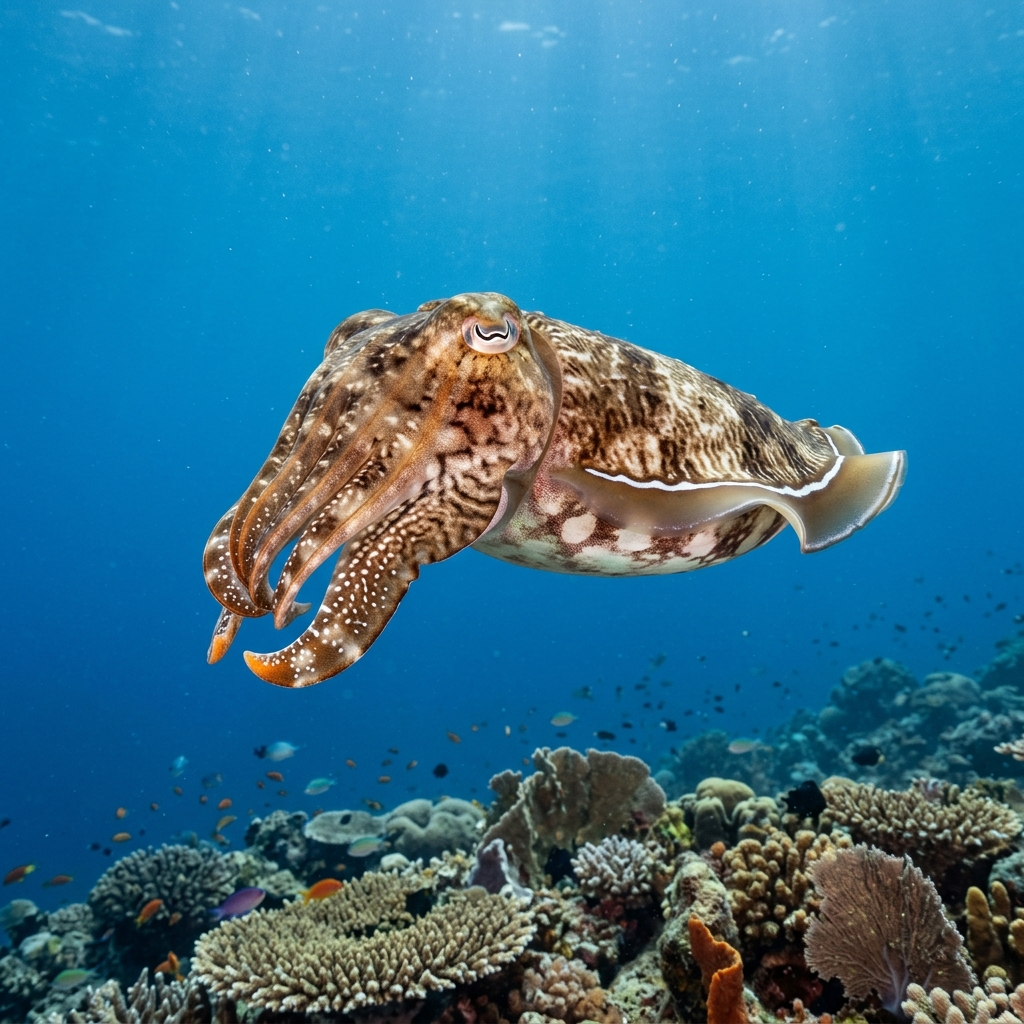
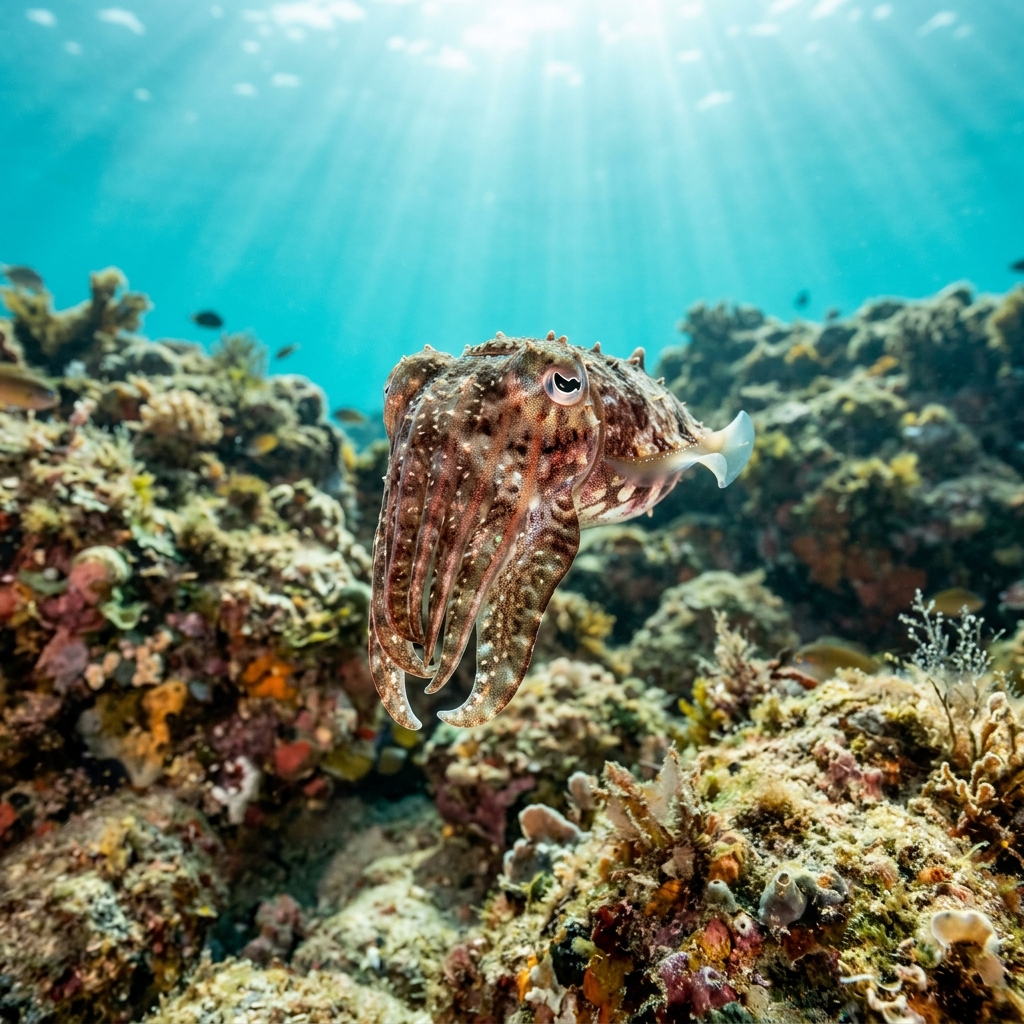
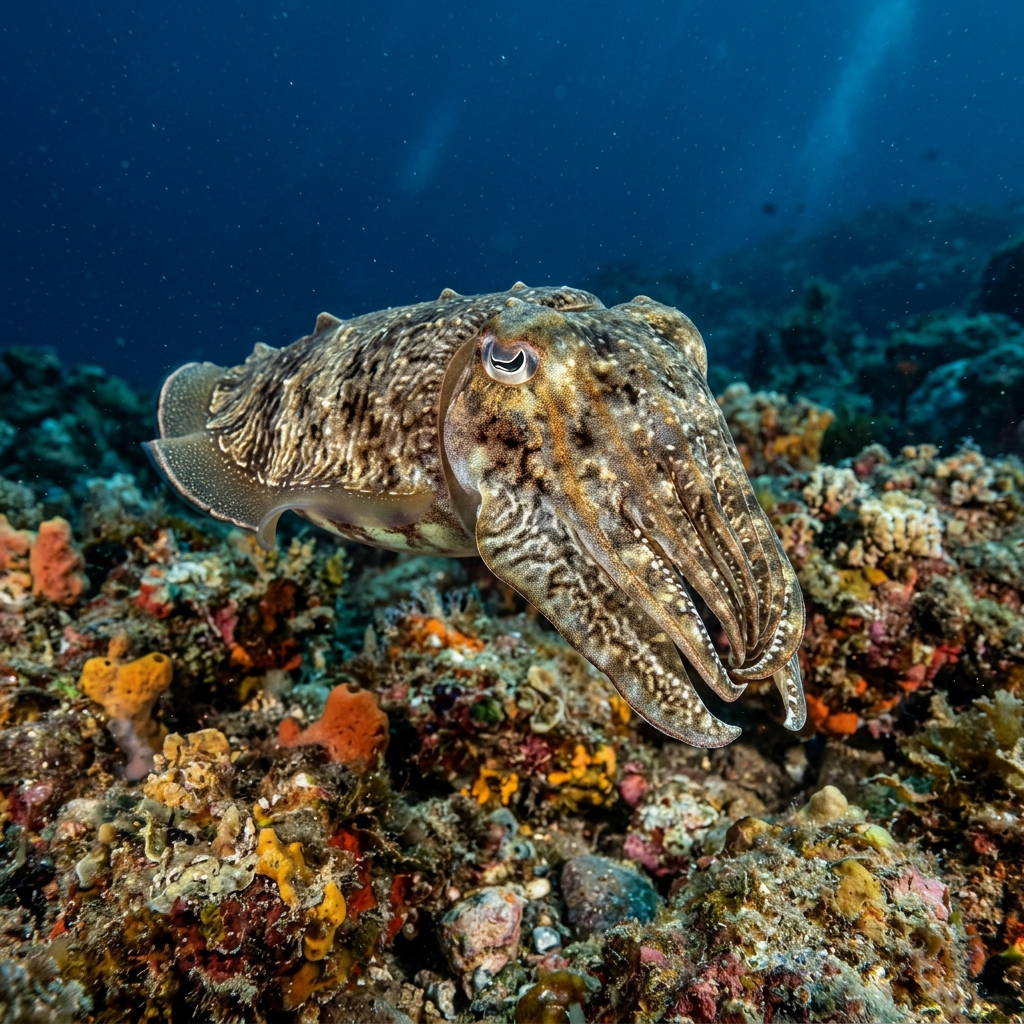
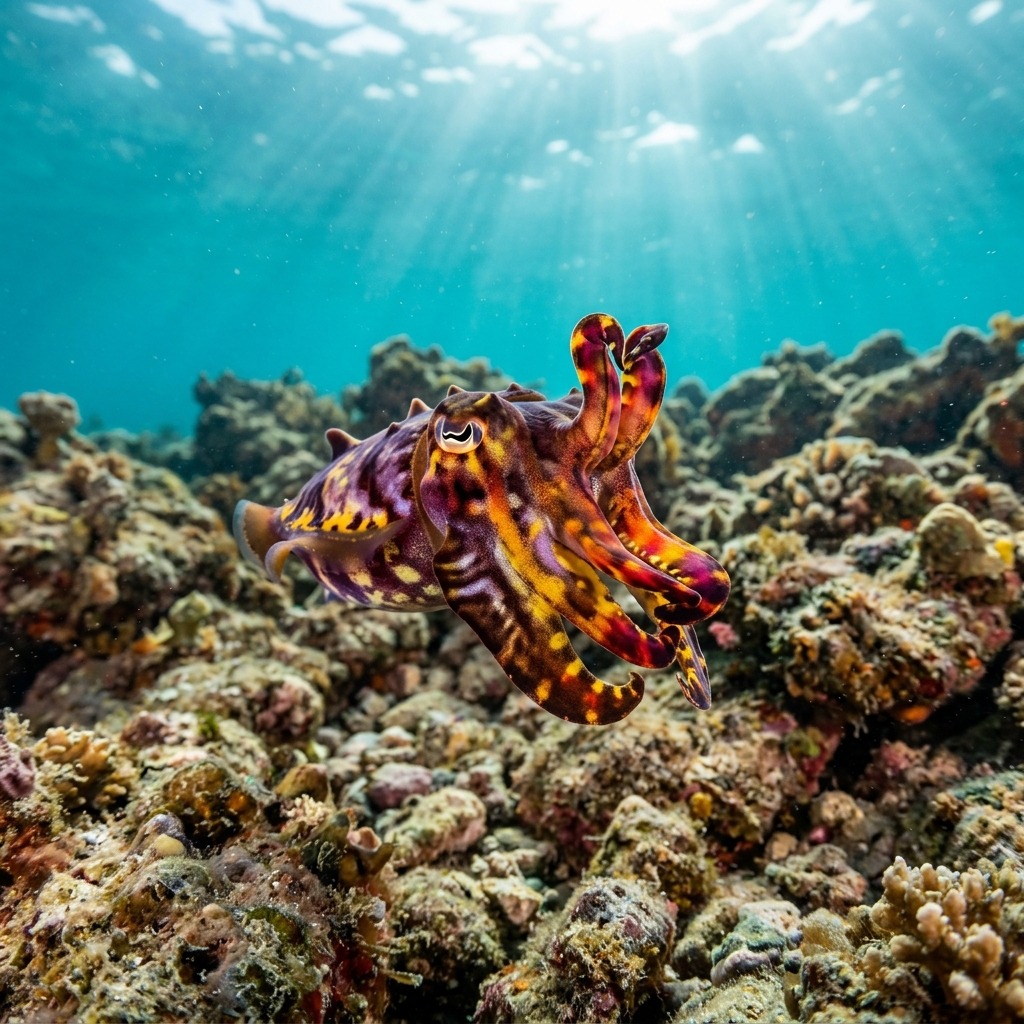
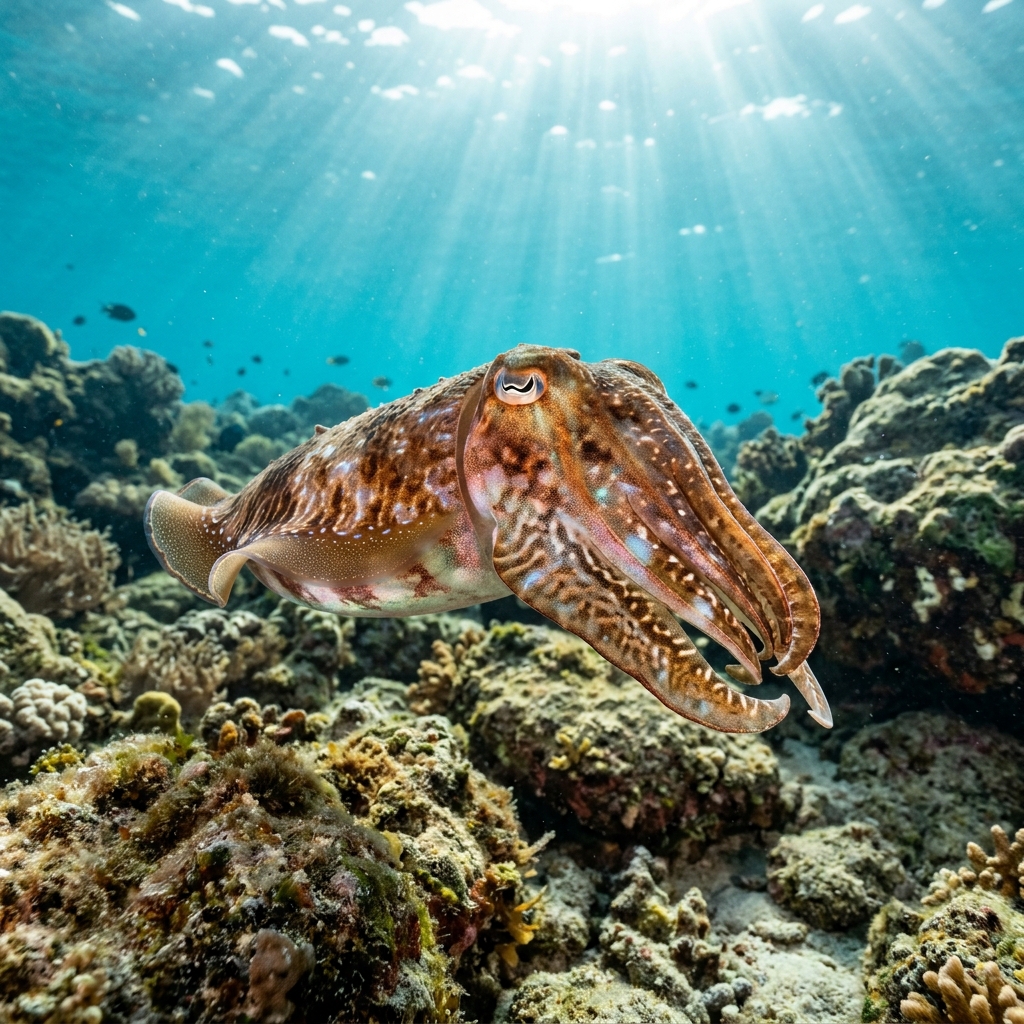
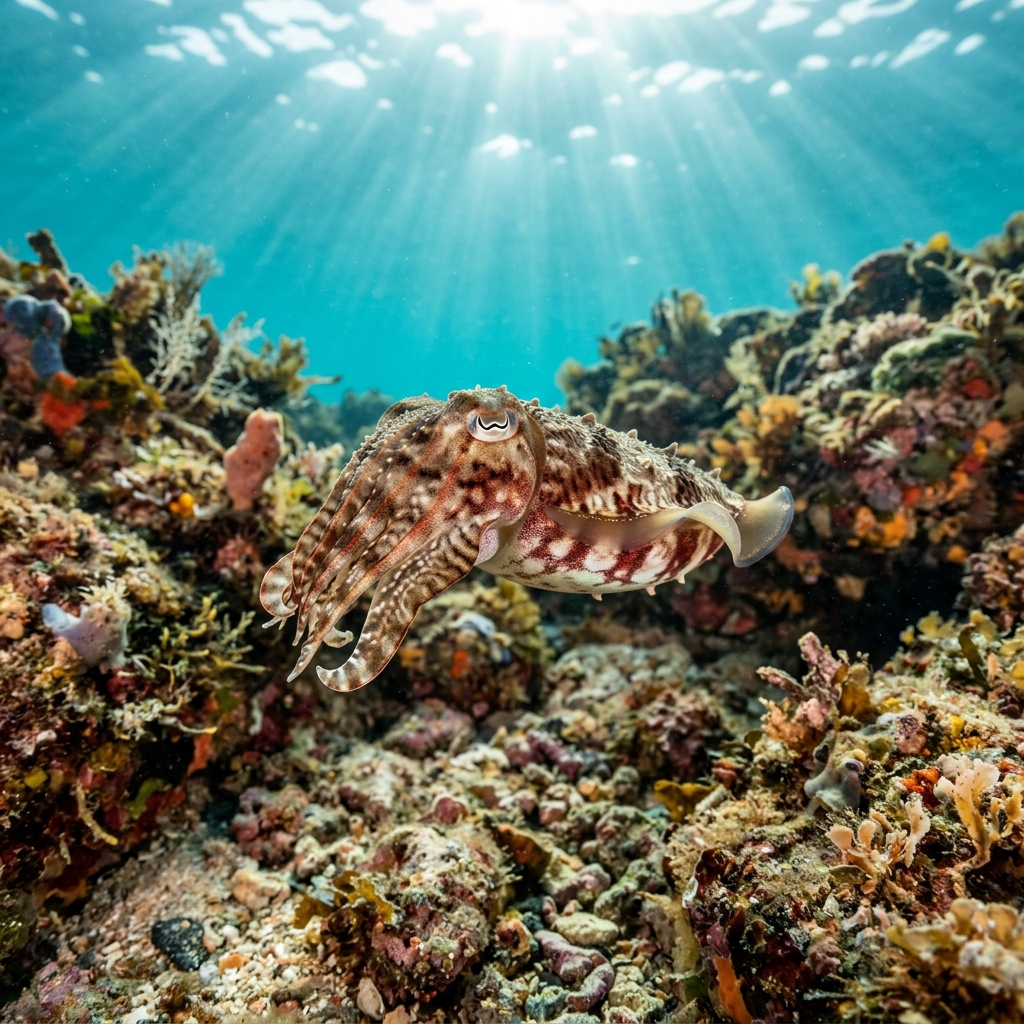
A medium-sized cuttlefish with a broad, flattened mantle and the characteristic undulating fin (the fringe running the full length of the body) that all cuttlefish use for precise hovering. Skin patterning is the real key: look for a bold, broken stripe or 'zebra' pattern of dark brown and pale cream or white bands that can be rippled or frozen at will. Like other cuttlefish, it can shift colour and texture in seconds, so a still animal may look very different from one that is actively signalling. The pale lateral stripe along the mantle edge is often a reliable anchor mark when other patterns are in flux.
When you find one, it is most often hovering just above the substrate or tucked against a reef structure, watching you with those distinctive W-shaped pupils. Approach slowly and keep movements smooth; a startled individual will jet away or flash a rapid warning pattern, but a patient diver can often stay with one long enough to watch it hunt small crustaceans with a lightning-fast strike of its feeding tentacles. Courtship encounters, where rivals run intense colour-wave displays side by side, are among the most rewarding cephalopod sightings on Australian reefs.
Cuttlefish 'see' polarised light, a sense humans lack entirely, and they use it both to detect prey hiding in sand and to send private signals to each other that are invisible to most predators.
There is not enough monthly sighting data to pin down a seasonal peak, so this species is best treated as a year-round resident across its range. Its observed temperature niche of roughly 19 to 27 °C fits the temperate-to-tropical spread of the Australian east coast and the warm reef waters of Fiji and New Caledonia.
Reef neighbours a diver could mistake it for. Use the identification notes above to tell them apart.
The overwhelming majority of sightings come from Australia, particularly along the Queensland coast and in New South Wales, making these two regions the most reliable places to look. Beyond Australia, logged encounters extend into Fiji (especially around Viti Levu and Kadavu) and New Caledonia (Bourail and Nouméa lead there). Occasional records also exist from Tonga and Vanuatu.
Mapping where Mourning Cuttlefish is logged…
Australia is by far the best destination, with strong populations recorded along Queensland and New South Wales. Outside Australia, divers have logged them in Fiji (particularly Viti Levu and Kadavu), New Caledonia (around Bourail and Nouméa), Tonga, and Vanuatu.
There is no clearly defined season in the available data, so encounters appear possible year-round. The species is observed across water temperatures of roughly 19 to 27 °C, which spans both the subtropical Australian east coast and the warmer tropical reefs of Fiji and New Caledonia.
Key in on the bold dark-and-pale zebra banding along the mantle and the pale lateral stripe at the mantle edge. Like all cuttlefish, it hovers on a continuous rippling fin rather than using fin beats or body undulations. The pattern can change rapidly, so catching a still or slowly moving individual gives the clearest look.
No. Like all cuttlefish, they can bite if handled, but they present no meaningful danger to divers who simply observe them. Keep a respectful distance, avoid cornering the animal, and you will have a much better interaction anyway as the cuttlefish is more likely to stay calm and display.
They are active predators of small crustaceans and fish, which they stun and capture using two elongated feeding tentacles that shoot out in a fraction of a second. On a dive you may see the animal stalking slowly with its arms spread, a hunting posture that often precedes a strike.
Site and sighting data is aggregated from diver logs, iNaturalist and GBIF. For taxonomy and conservation status:
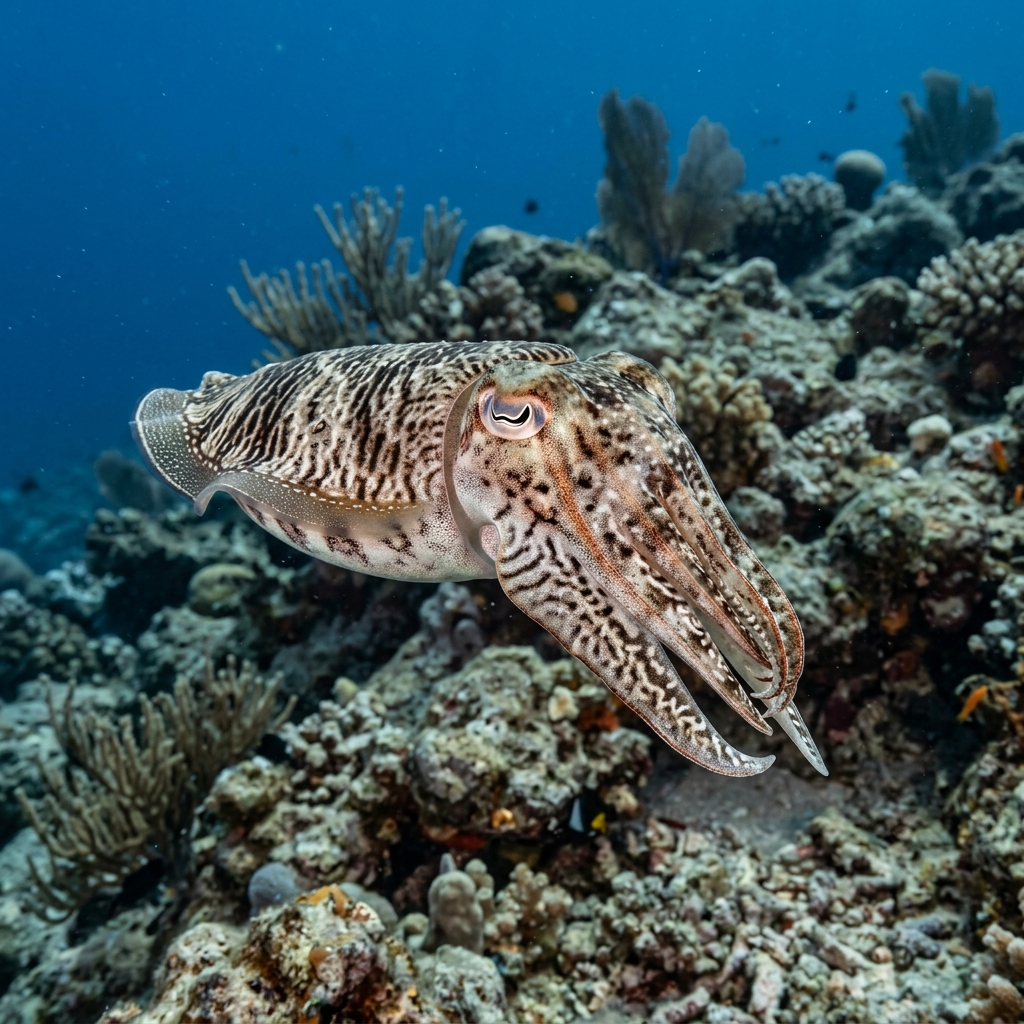
Pharaoh Cuttlefish
925 sites