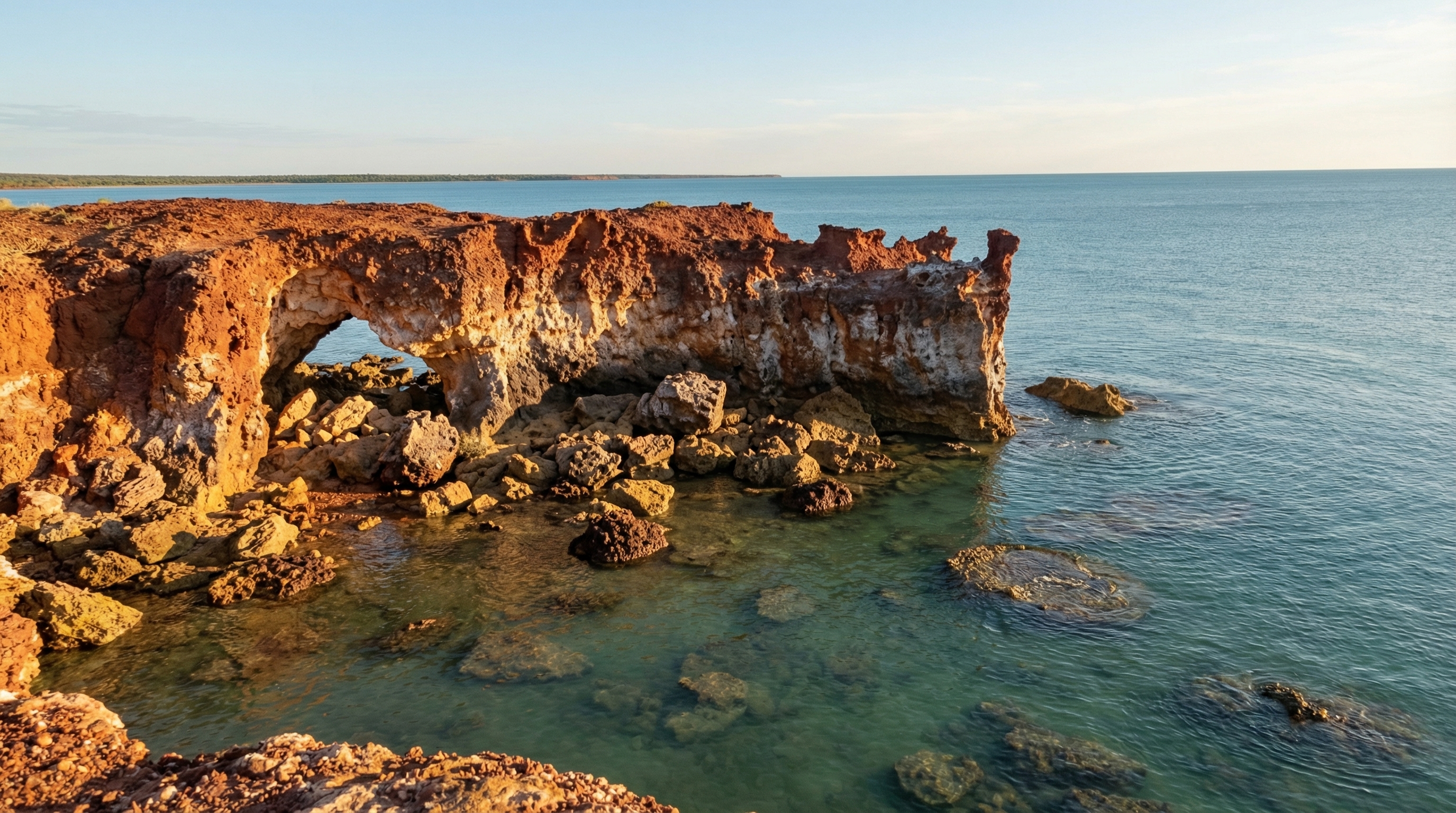
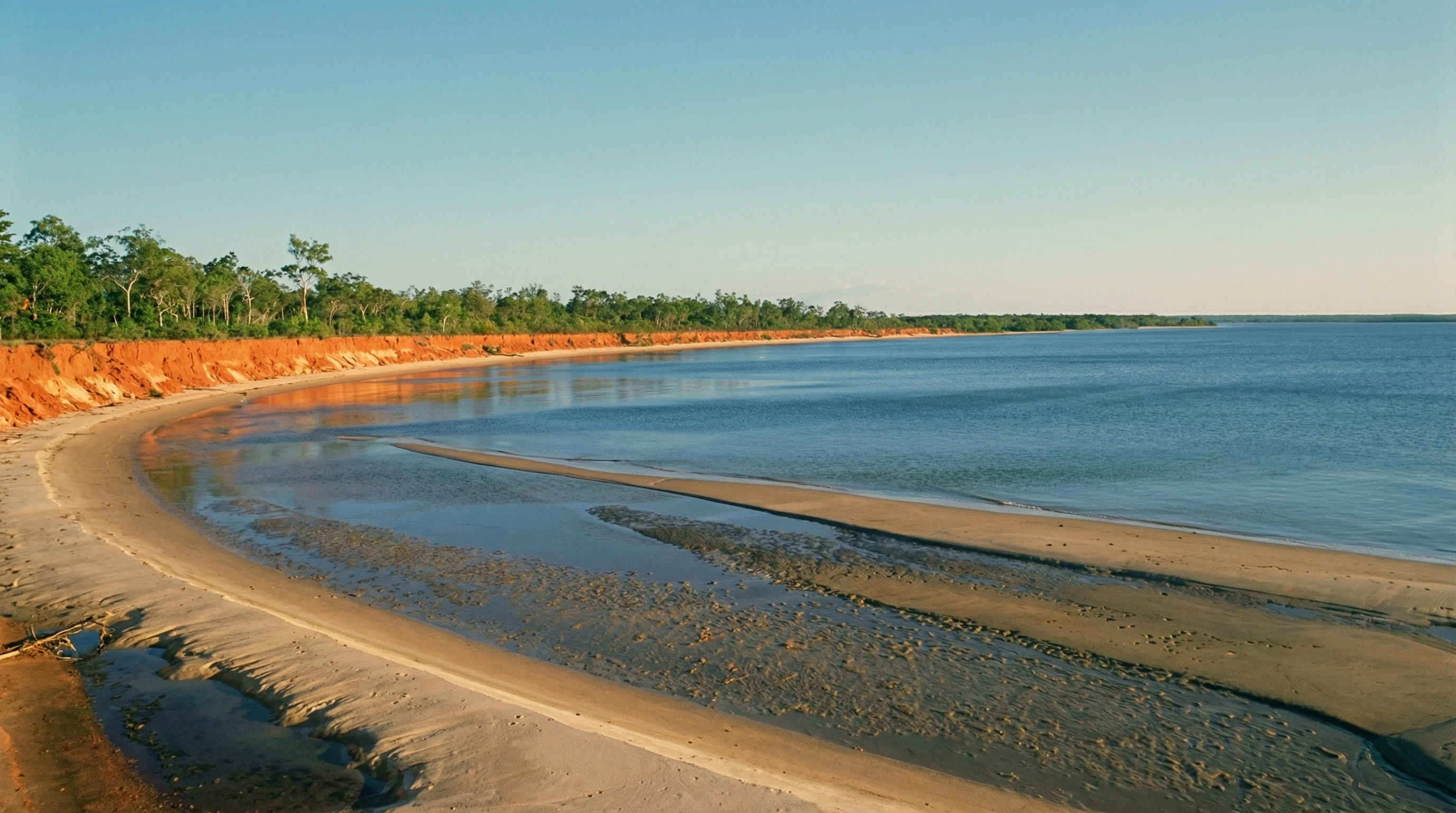
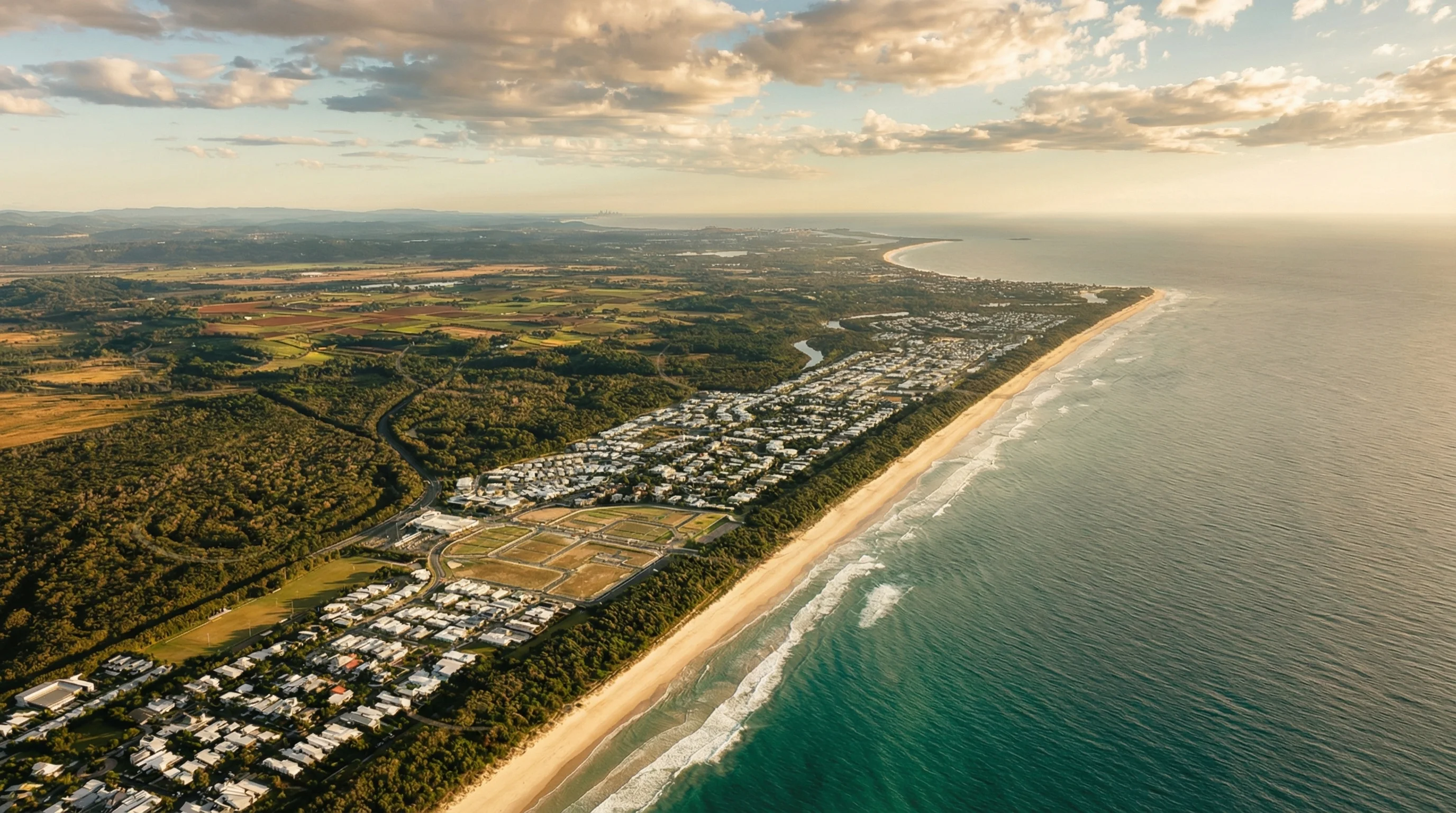
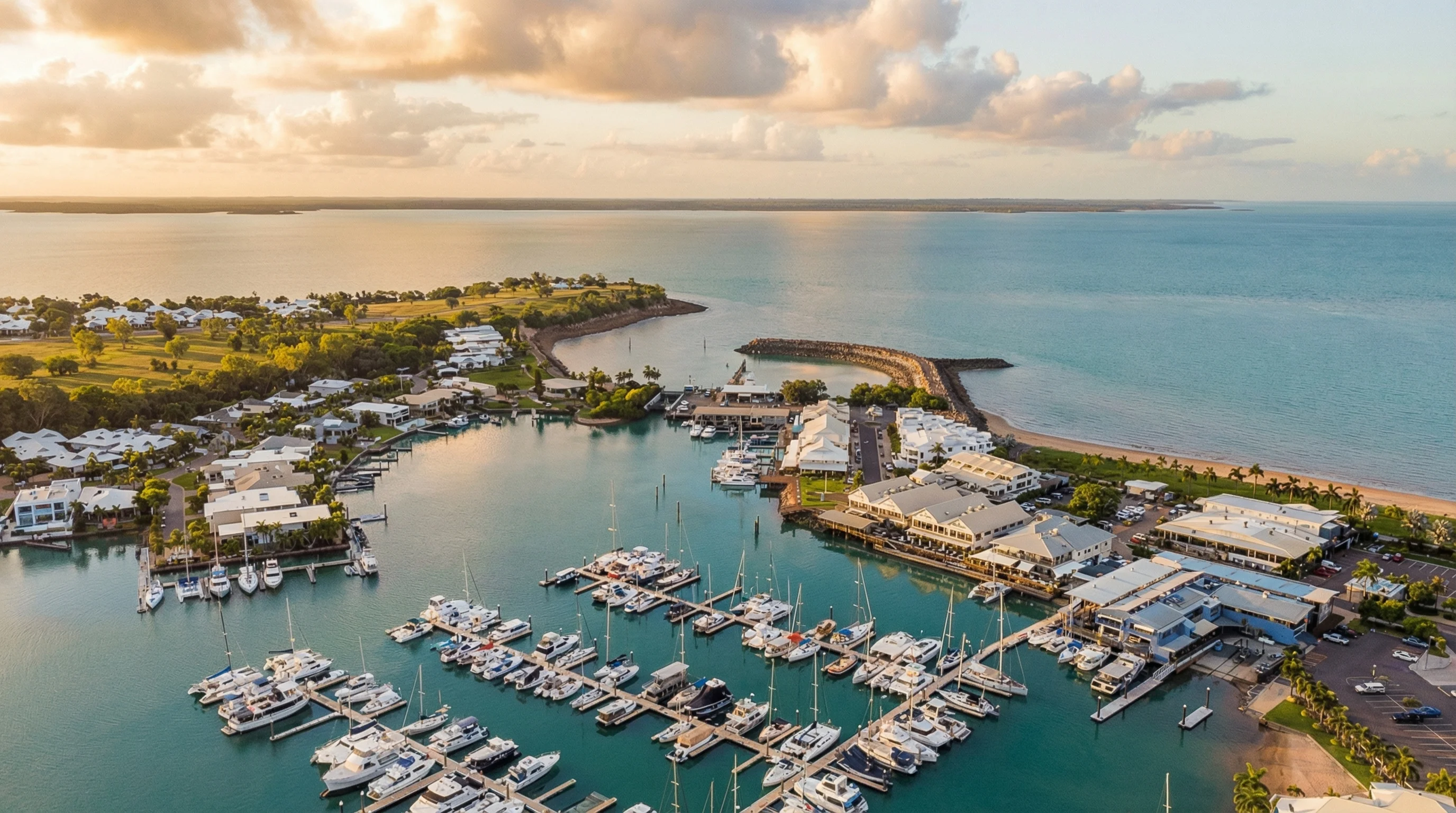
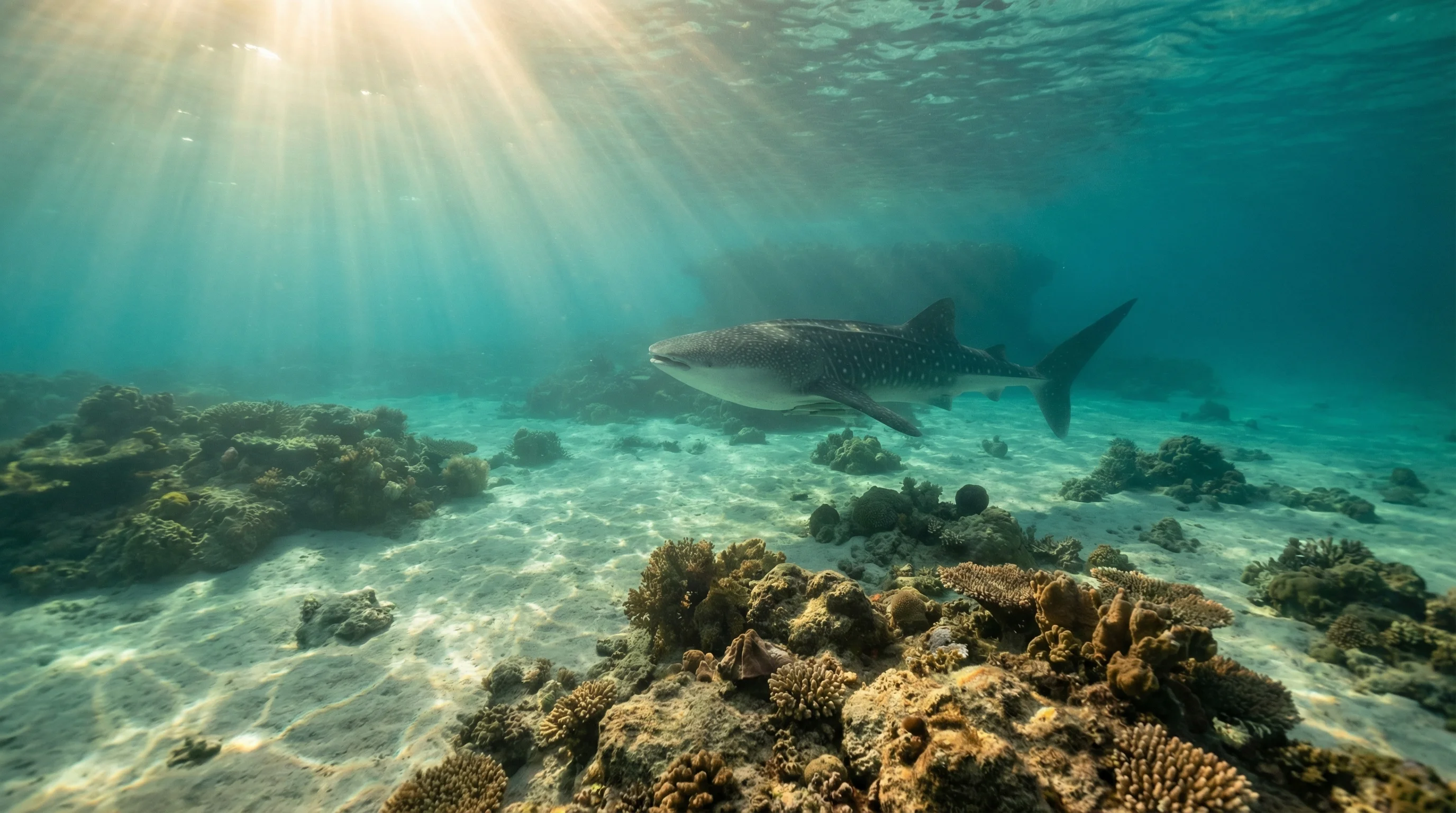
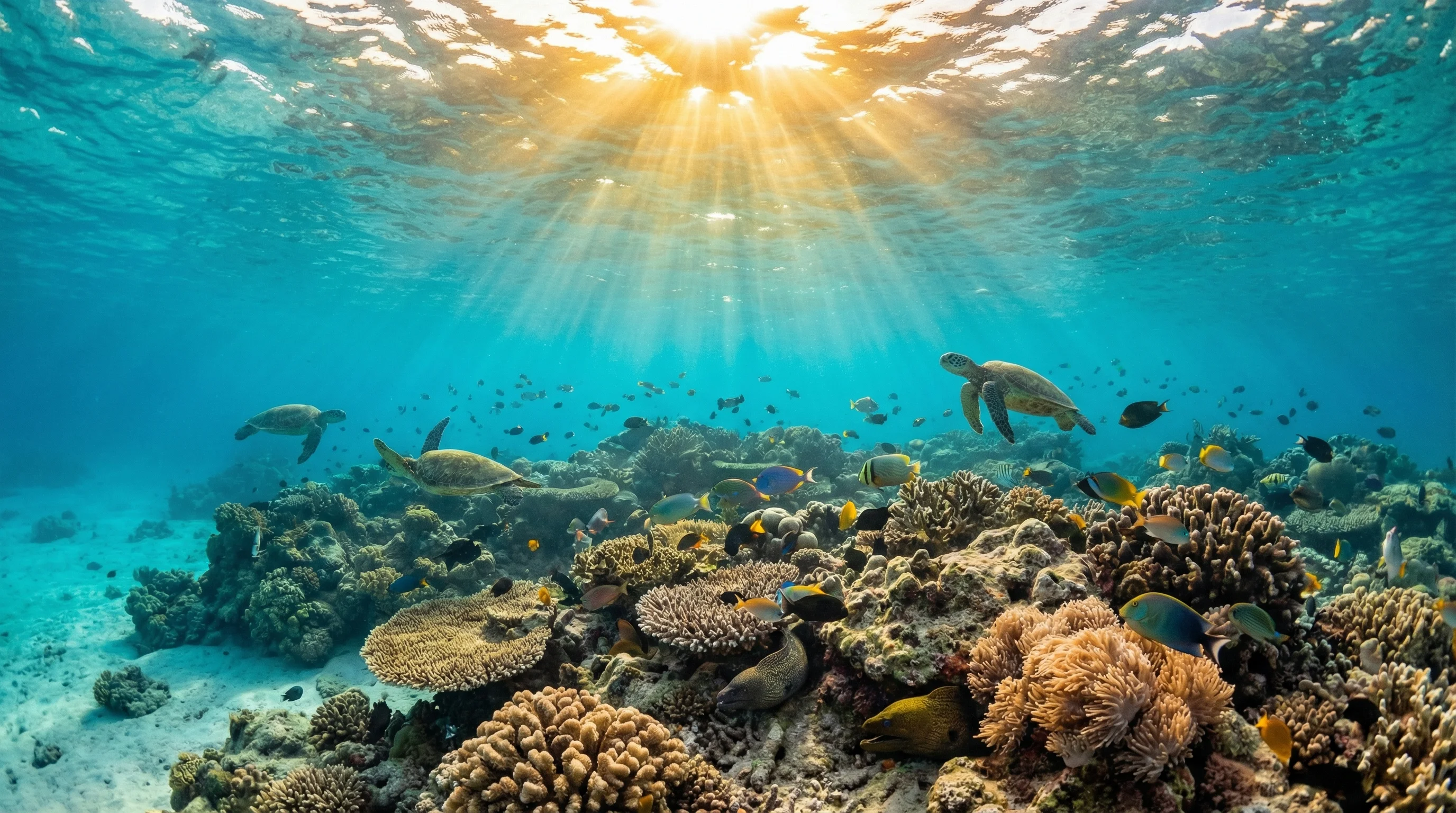
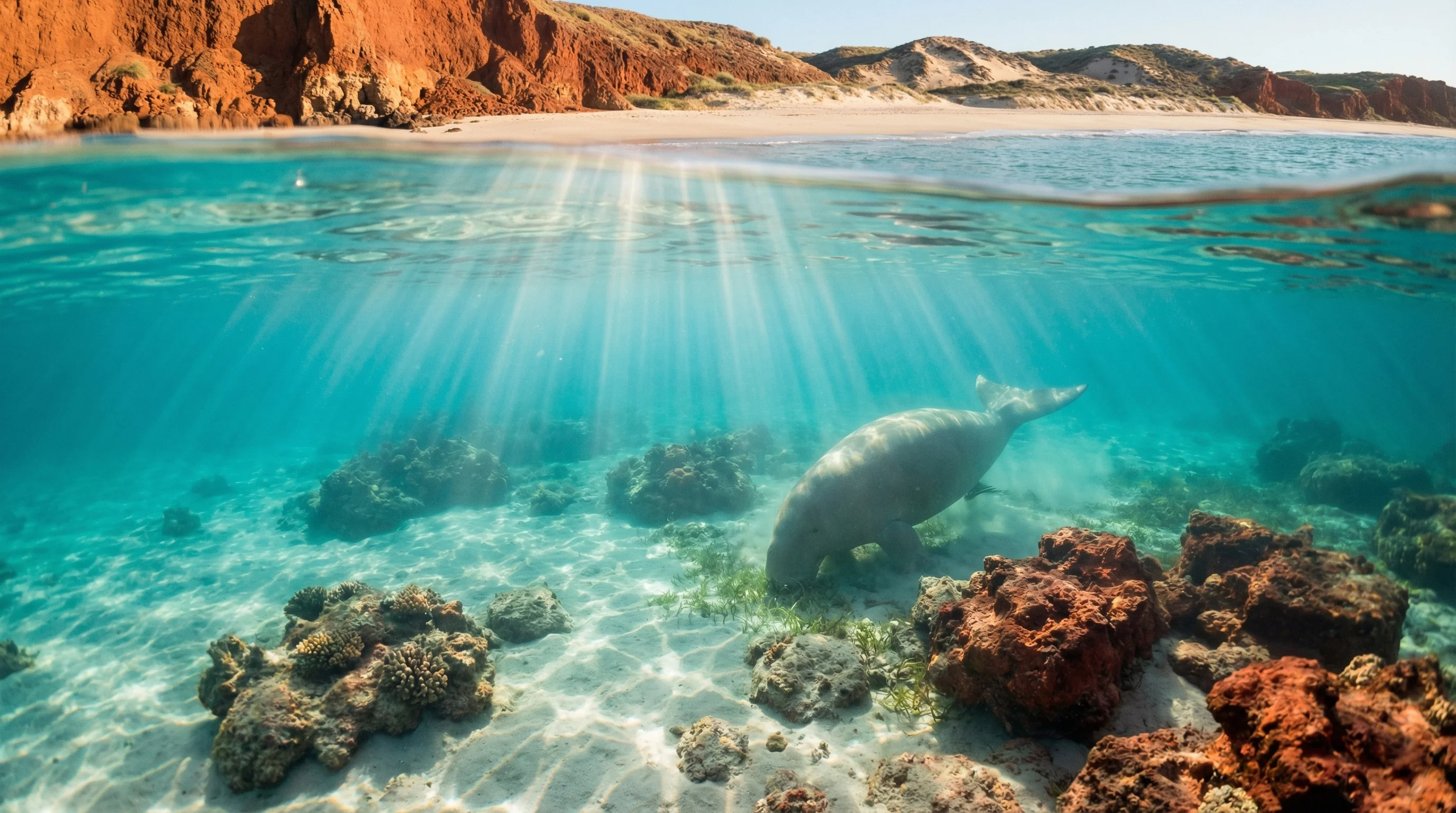
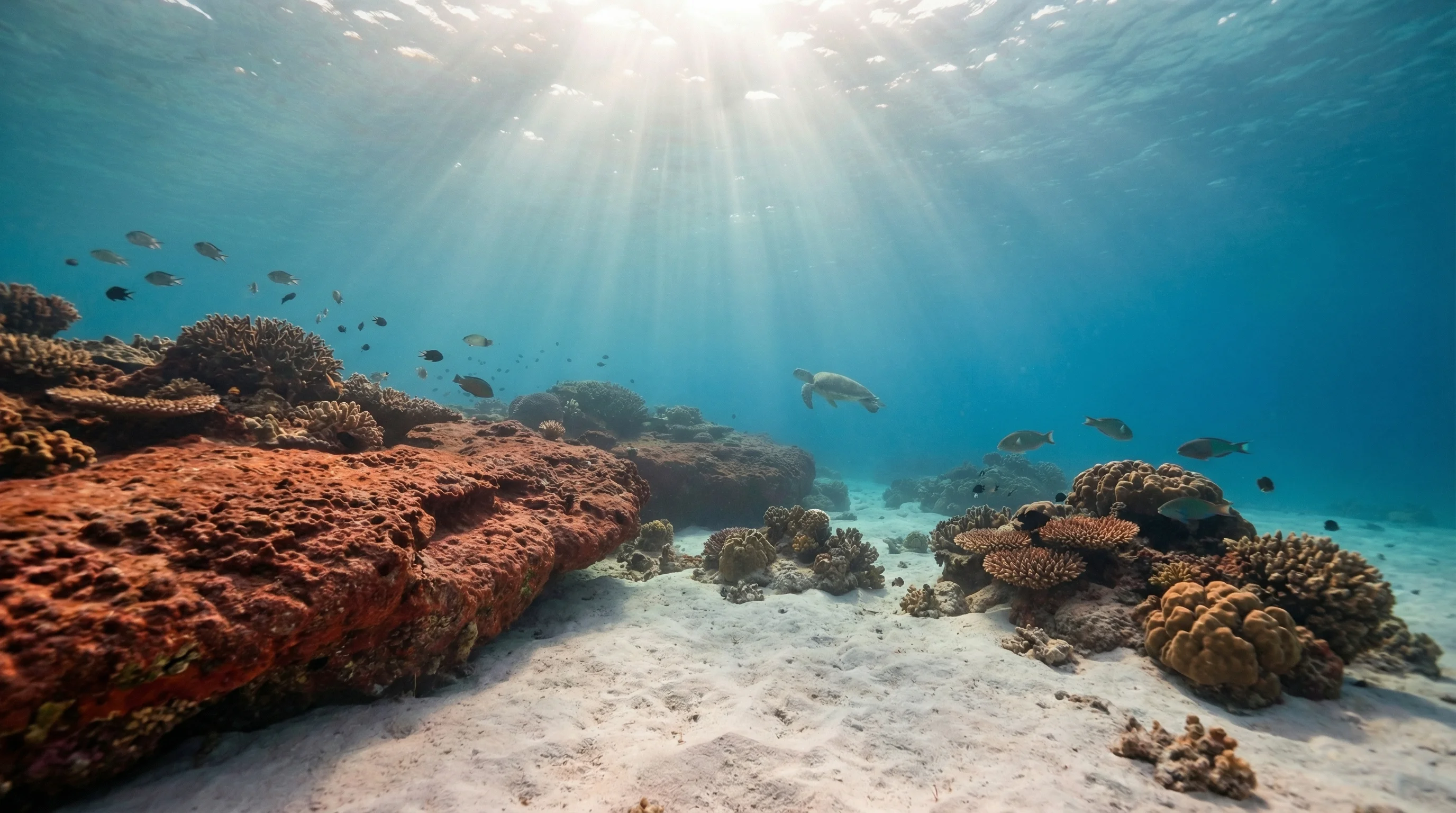
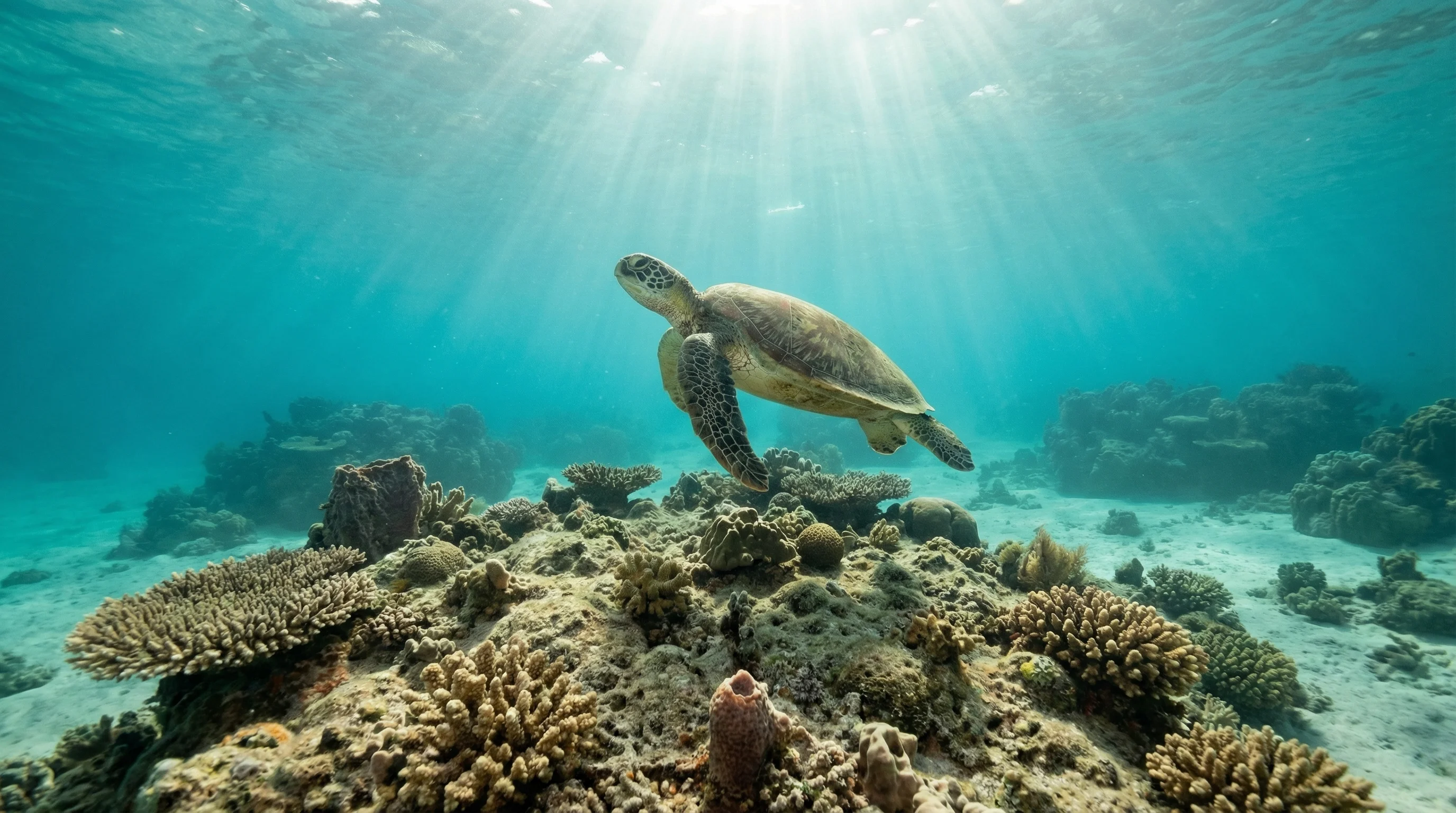
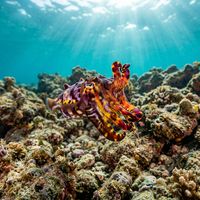
Nhulunbuy sits within Arnhem Land and offers a compact but characterful mix of dive and snorkel sites. The Green Sea Turtle is the signature encounter, observed across the region's waters, while the site list also supports expected sightings of species such as Tasselled Wobbegong, Zebra Shark, Flamboyant Cuttlefish and Knifetooth Sawfish. Conditions are warmest through the wet season and settle into their clearest, calmest window from around April through to October. Two local operators serve the area.
Monthly water temperature across Nhulunbuy's sites, from satellite sea-surface data corrected for depth. The band shows the site-to-site spread.
Water temperatures remain warm throughout the year, peaking in the wet season months and easing slightly in the cooler dry season. The dry season, running roughly from late April through October, draws the strongest diver interest and aligns with calmer sea conditions. This period offers the most consistent conditions for exploring the region's sites.
1 operator
10 more sites to explore
Water temperature around Nhulunbuy ranges from about 26°C in July to 30°C in January, based on satellite sea-temperature data for its dive sites.
In the warm season (about 30°C) a rash guard or 3mm shorty is comfortable in Nhulunbuy; in the coldest months (about 26°C) step up to a 3mm full suit.
Fin maps 10 sites in Nhulunbuy (7 scuba diving sites and 4 snorkelling spots, with some suited to both).
Across Nhulunbuy's dive sites, May, June, July, August, September and October are most often reported as the best months to visit.
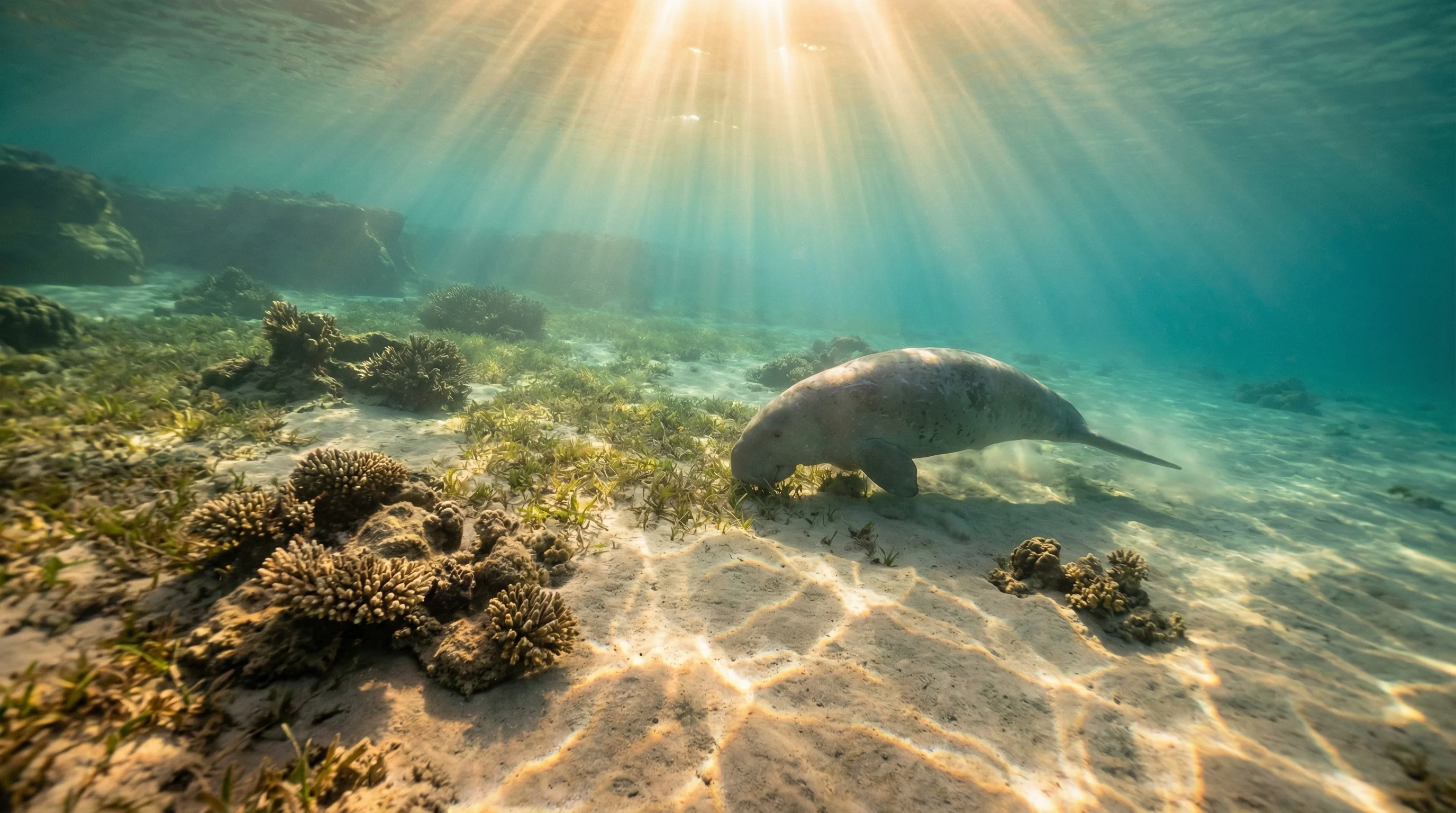
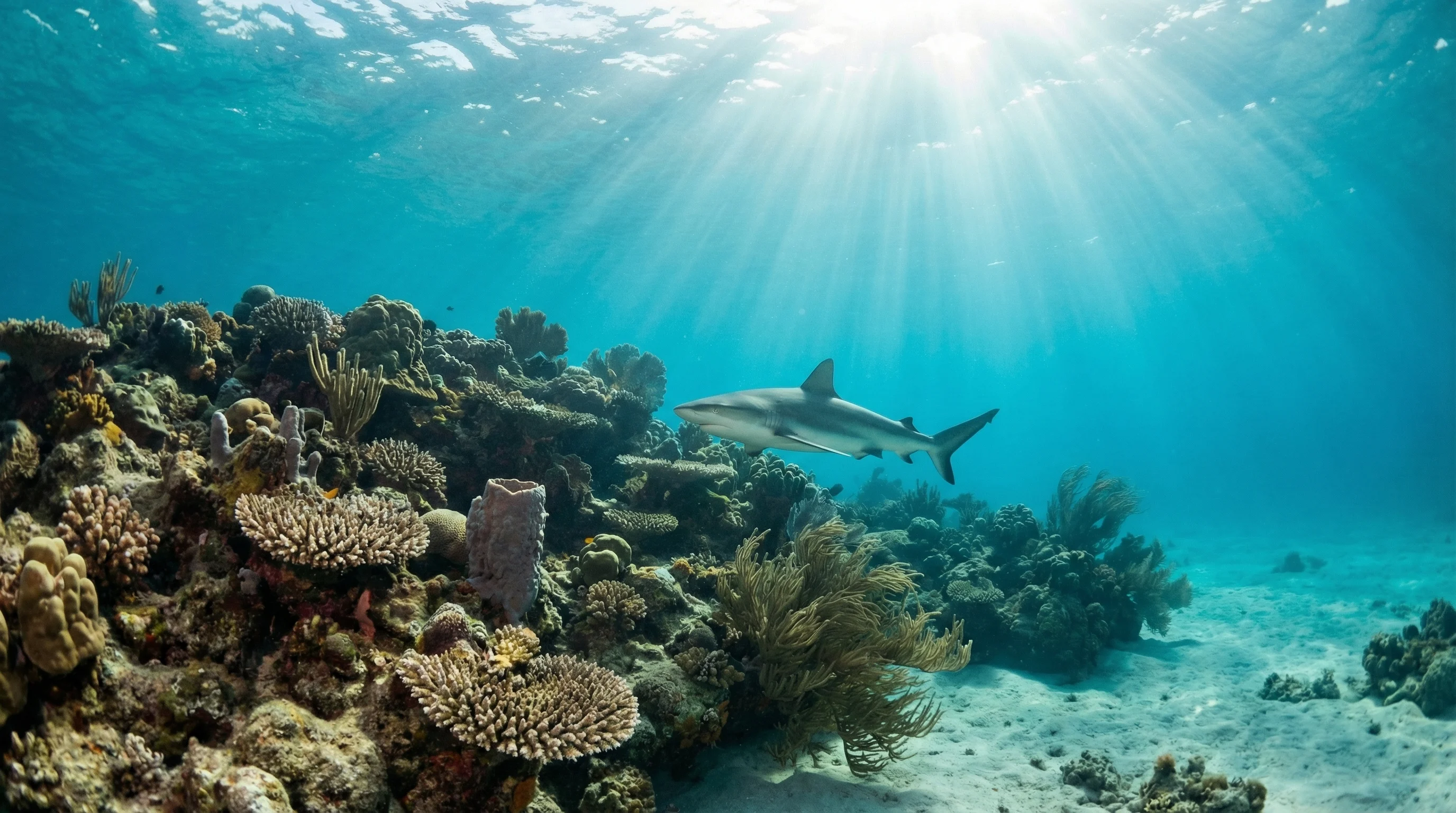
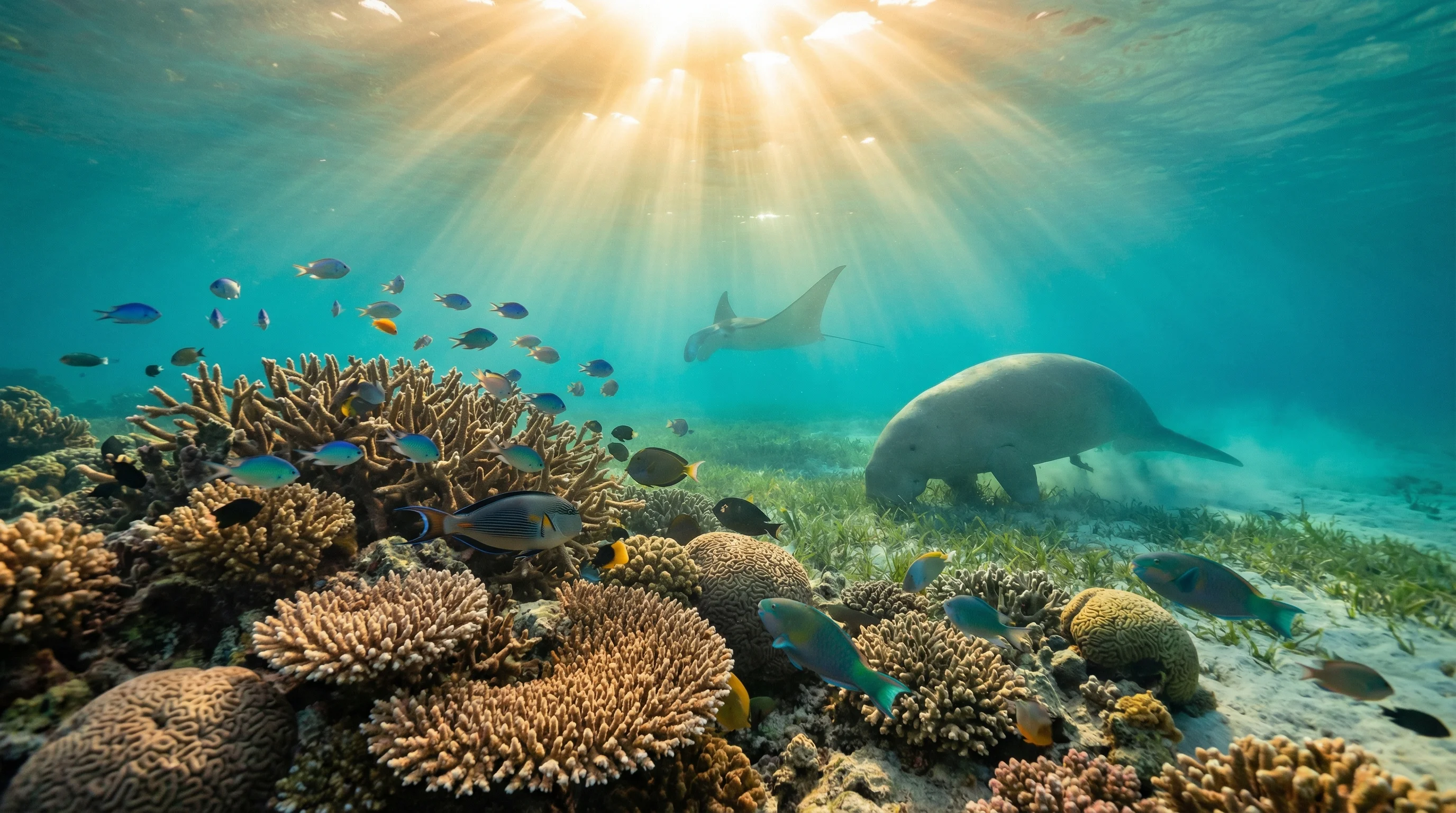
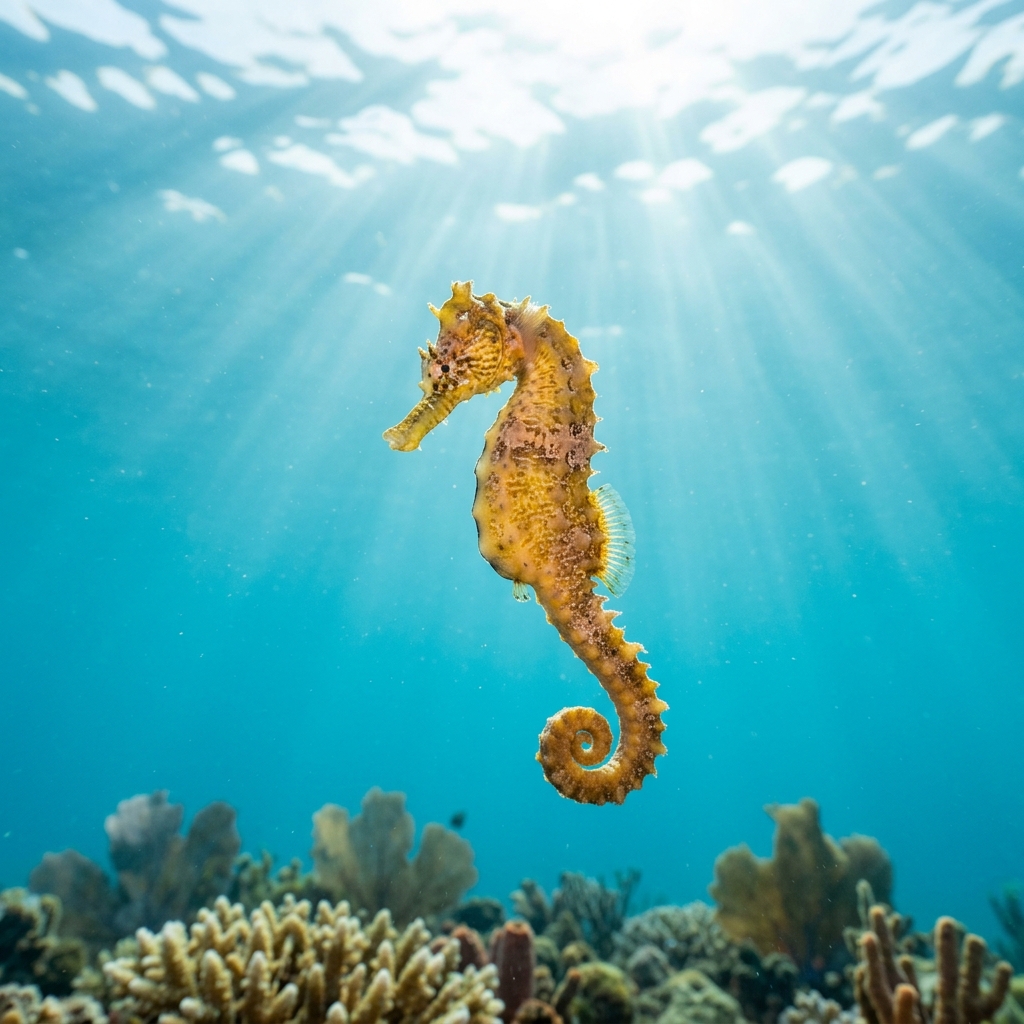
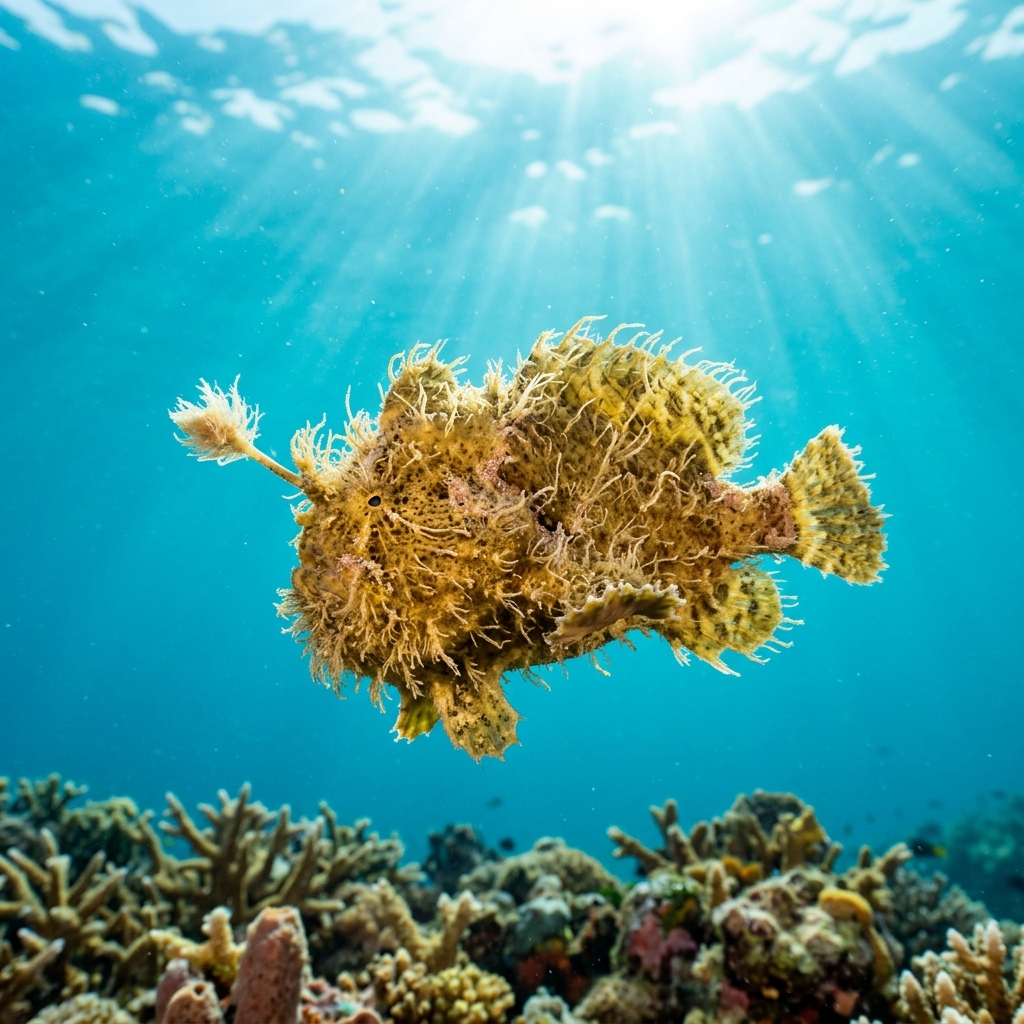
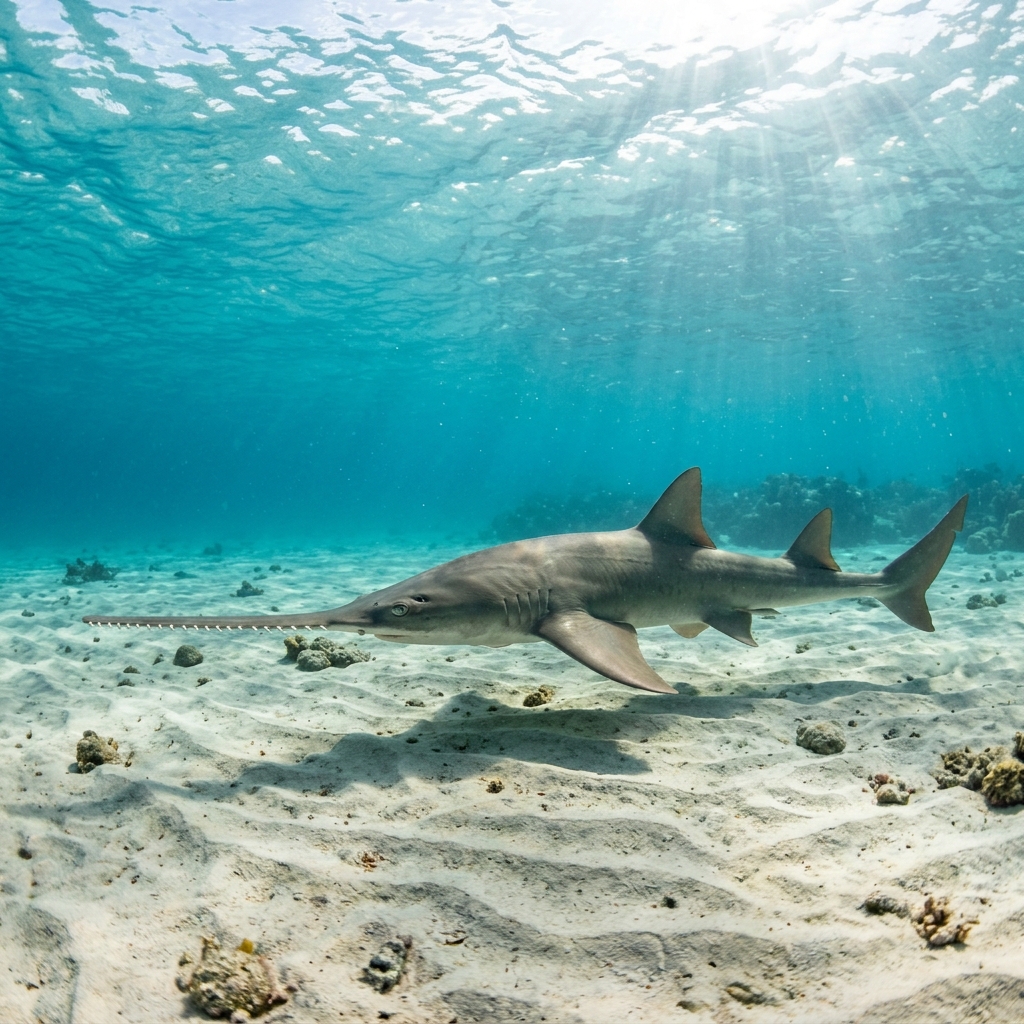
The Green Sea Turtle is the signature species and has been directly observed across the region. The site list also supports expected encounters with Tasselled Wobbegong, Zebra Shark, Queensland Grouper, Flamboyant Cuttlefish, Pharaoh Cuttlefish, Knifetooth Sawfish and Guitarfish, among many others. Macro enthusiasts have strong prospects for Hairy Frogfish, Painted Frogfish, Common Seahorse and Chromodoris Nudibranch.
The region offers a mix of site types that can accommodate a range of experience levels, though the remoteness of Arnhem Land means self-sufficiency matters more here than in heavily serviced destinations. Both local operators, Dhimurru Aboriginal Corporation and Gove Diving and Fishing Charte, can advise on which sites suit newer divers. Checking with operators in advance is strongly recommended.
The site mix includes both shore-accessible and boat-accessed options. Gove Diving and Fishing Charte offers charter services for reaching offshore sites. Shore entry is possible at some locations, but a number of the more interesting sites will require a boat to reach comfortably.
The wet season, roughly November through March, brings the warmest water but also unsettled weather and reduced diver activity. The dry season from around April to October sees conditions stabilise, making it the preferred window for most visiting divers. June, July and September score highest in the best-months data, pointing to mid-dry-season as the sweet spot.