Pristis spp.
Rare, saw-snouted rays logged across Sulawesi, Palawan and Queensland in warm 25 to 30C water, year-round with no clear season.
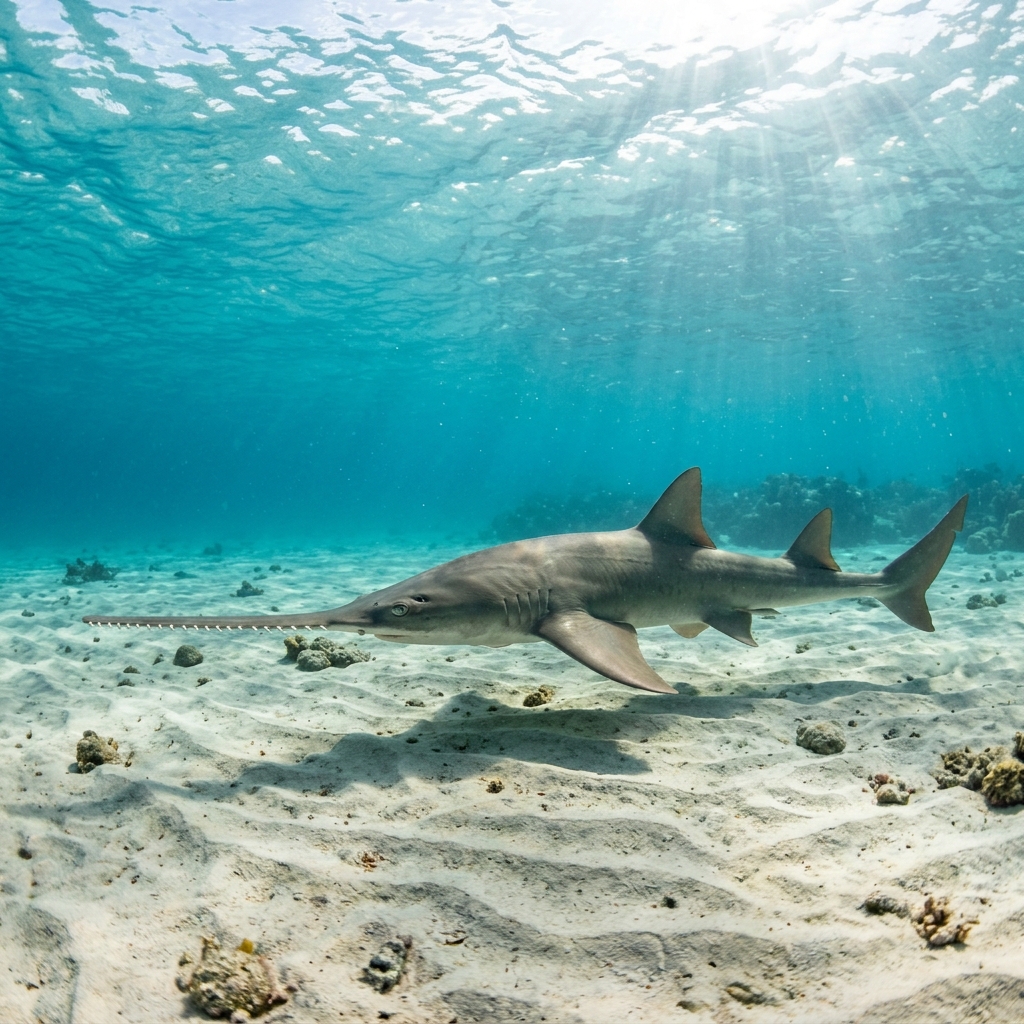
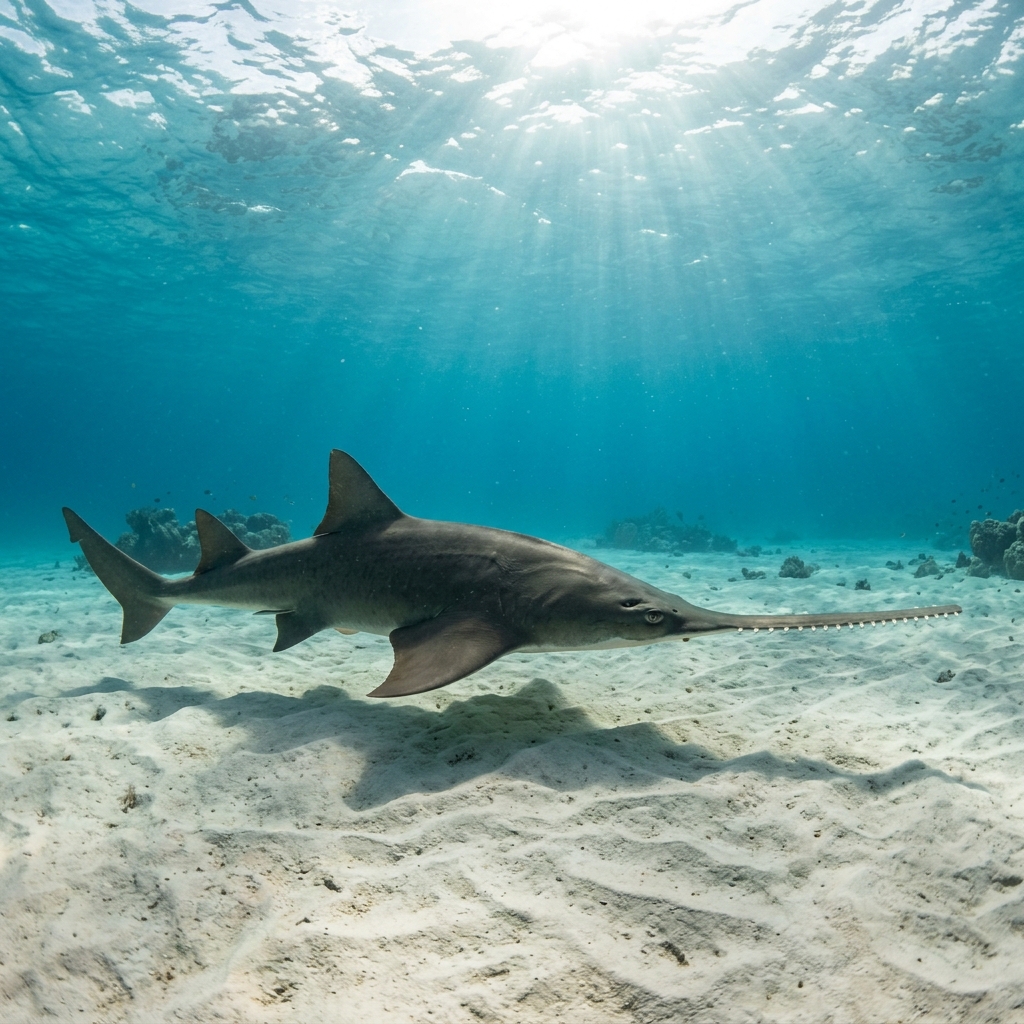
Look for the long, flat snout lined on both edges with a row of tooth-like denticles, unmistakable against anything else on the reef or in the shallows. The body is shark-shaped but flattened, with a ray's underslung mouth and gill slits on the belly rather than the sides. Colour runs grey to olive-brown above and pale underneath, and total length can reach well beyond that of most divers, with the snow-plough snout alone making up a large fraction of it. Different species in the genus vary mainly in snout tooth count and spacing, a detail only worth checking on a clear, close pass.
Sawfish are bottom-huggers, cruising slowly over sand, mud or seagrass with the snout swept side to side, using it to detect and stir up buried prey. They tend to keep a low profile around divers, drifting off into turbid water or under cover rather than approaching, so sightings are usually brief and best had by moving quietly and staying low yourself. Many encounters happen in shallow coastal water, river mouths and mangrove-fringed flats rather than out on open reef.
That saw-like snout, called a rostrum, is packed with electro-sensory pores that let sawfish detect the faint electrical signals of prey buried in sand, and a fast sideways slash of it can stun or impale fish before they're eaten.
Recorded year-round with no detectable seasonal peak, consistent with a genus that sits comfortably in warm water between roughly 25 and 30C on tropical coasts and estuaries. Plan around calm, clear conditions in shallow, sheltered water rather than a specific month.
Reef neighbours a diver could mistake it for. Use the identification notes above to tell them apart.
Most commonly logged across the Philippines, particularly Luzon, Palawan, Mindanao and the Visayas, plus strong site counts through Sulawesi in Indonesia. Australia's Queensland coast, Cuba, and the Caribbean coast of Colombia and Venezuela also show up as reliable areas, with scattered records through Brazil and the wider Red Sea coast.
Mapping where Sawfish is logged…
The Philippines is the strongest area, especially Luzon, Palawan, Mindanao and the Visayas, alongside Sulawesi in Indonesia. Queensland in Australia, Cuba, and the Caribbean coasts of Colombia and Venezuela also produce regular sightings.
There's no clear seasonal pattern in the data, so they're logged year-round. They favour warm water in the roughly 25 to 30C range, which fits tropical coasts and estuaries most of the year.
The giveaway is the long, flat snout edged with tooth-like denticles on both sides, unlike anything else you'll see over sand or mud. The body itself is ray-like and flattened, with a shark-like tail, and it's usually seen cruising low over the bottom.
Exact sizes vary by species within the genus, but sawfish are large animals, with the elongated snout alone accounting for a significant portion of total body length. They're easily one of the biggest things you'll see cruising a shallow sand flat.
Their snout, or rostrum, is lined with electro-sensory pores that detect the electrical signals of prey hidden in sand, and they use a quick sideways swipe of it to stun fish before feeding.
Site and sighting data is aggregated from diver logs, iNaturalist and GBIF. For taxonomy and conservation status: