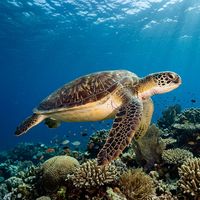
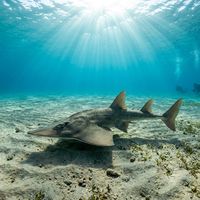
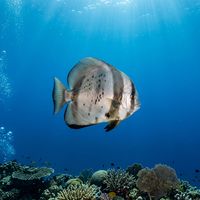
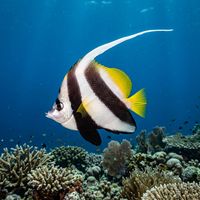
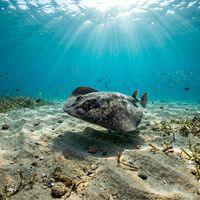
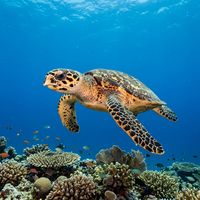
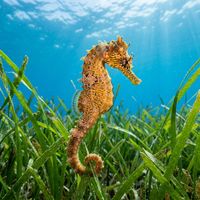
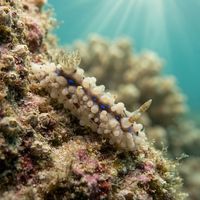
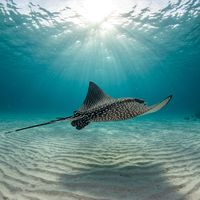
The Arabian Gulf's dive sites span two distinct sub-areas: Dubai, which holds the majority of sites, and Abu Dhabi. The character here is shaped by artificial reefs and wrecks rather than wild reef systems, with structures like the Old Cement Barge and Nemo Training Site drawing marine life in striking numbers. Green Sea Turtle and Guitarfish are encountered very commonly across sites, alongside Batfish, Torpedo Ray, and Longfin Bannerfish. Water is warmest through summer and coolest in the cooler months, with visibility varying by site and season. Conditions suit beginners through to intermediate divers.
2 areas
 17
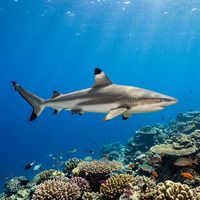
17Artificial reefs host Green Sea Turtle, Guitarfish and Blacktip Reef Shark, making Dubai a compact, accessible destination for reef diving in the Arabian Gulf.
 6
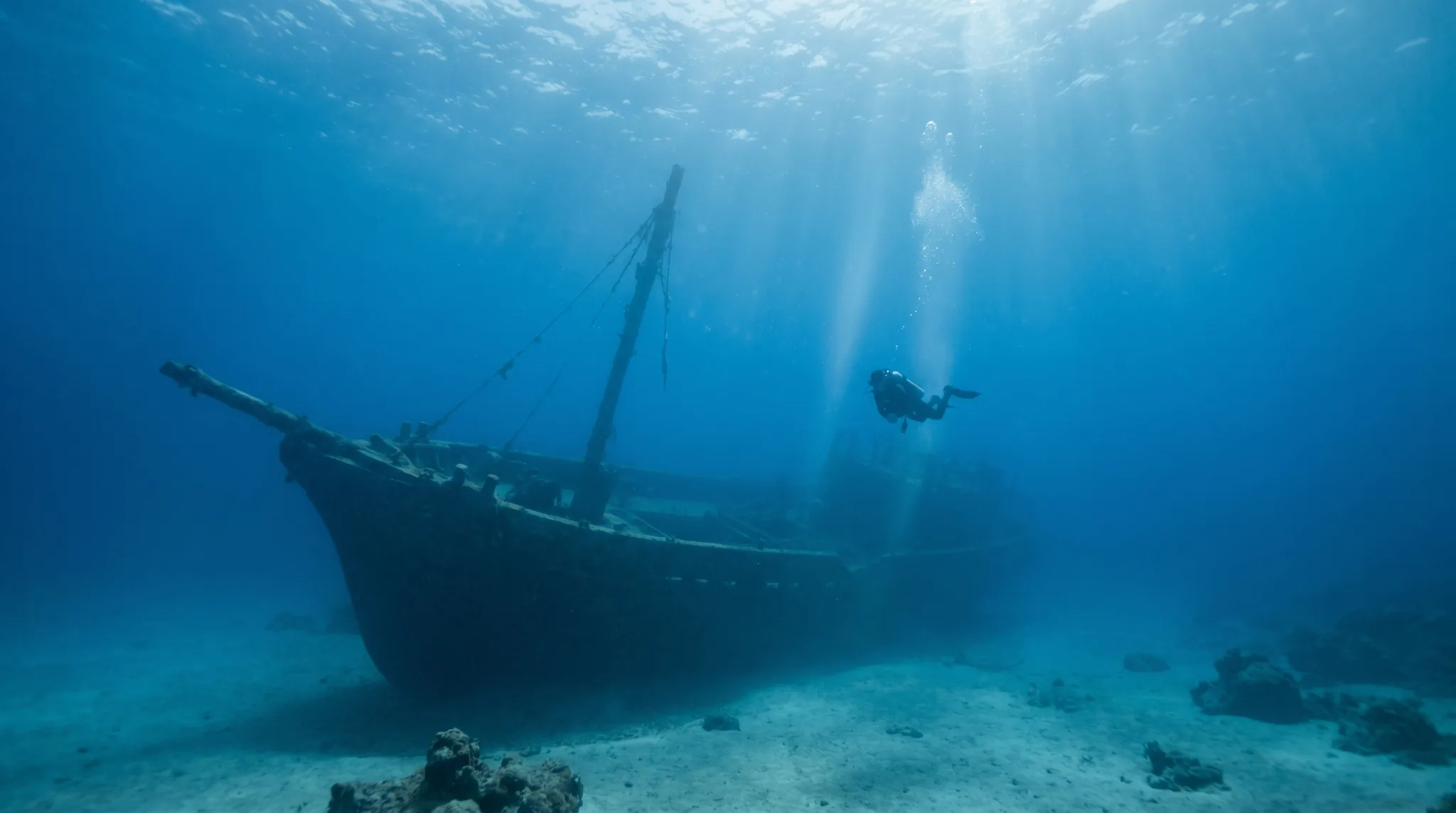
6Persian Gulf diving centred on artificial reefs, wrecks, and natural reefs, with sites suited to beginners and intermediate divers.
Monthly water temperature across Arabian Gulf's sites, from satellite sea-surface data corrected for depth. The band shows the site-to-site spread.
Water temperature rises steadily from the cooler months of January and February through to a summer peak in July and August, then eases off toward year-end. The spring months of March through May and the October shoulder period draw the strongest diver consensus for good conditions, balancing comfortable water with reasonable visibility. Summer diving is possible but the warmest months can bring reduced visibility, so lighter exposure protection and early dives are worth considering.
25 operators

Water temperature around Arabian Gulf ranges from about 22°C in February to 34°C in July, based on satellite sea-temperature data for its dive sites.
In the warm season (about 34°C) a rash guard or 3mm shorty is comfortable in Arabian Gulf; in the coldest months (about 22°C) step up to a 3mm full suit.
Fin maps 23 sites in Arabian Gulf (20 scuba diving sites and 5 snorkelling spots, with some suited to both), organised into 2 areas.
Across Arabian Gulf's dive sites, March, April, May, June, October and November are most often reported as the best months to visit.
Green Sea Turtle and Guitarfish are among the most reliably encountered species across the region's sites. Batfish, Torpedo Ray, and Longfin Bannerfish are also very commonly observed. Divers also report sightings of Blacktip Reef Shark, Spotted Eagle Ray, Giant Moray, Lionfish, Yellowbar Angelfish, and European Common Cuttlefish, among many others.
Several sites are well suited to those new to diving. Sunset Beach offers a shallow, shore-entry environment with natural and artificial reef structure, while Nemo Training Site is specifically designed as a controlled setting for beginner divers. More experienced divers will find wreck sites like the Old Cement Barge in Abu Dhabi a rewarding step up.
Both access types are available depending on the site. Sunset Beach is a shore-entry site, making it straightforward to reach without organising a boat. Other sites, including the Old Cement Barge and Nemo Training Site, require boat access, and several of the region's dive operators offer guided boat trips to these locations.
Dubai holds the larger share of the region's sites and is home to training-focused artificial reefs as well as shallower reef structures suitable for a wide range of divers. Abu Dhabi's sites include the Old Cement Barge, an intermediate-level wreck dive that attracts a good variety of marine life. Both sub-areas are served by established local operators.