Hippocampus spp.
Seahorses are rare but logged across Zeeland, Istria and the Azores. Here's where divers actually find them and when to look.
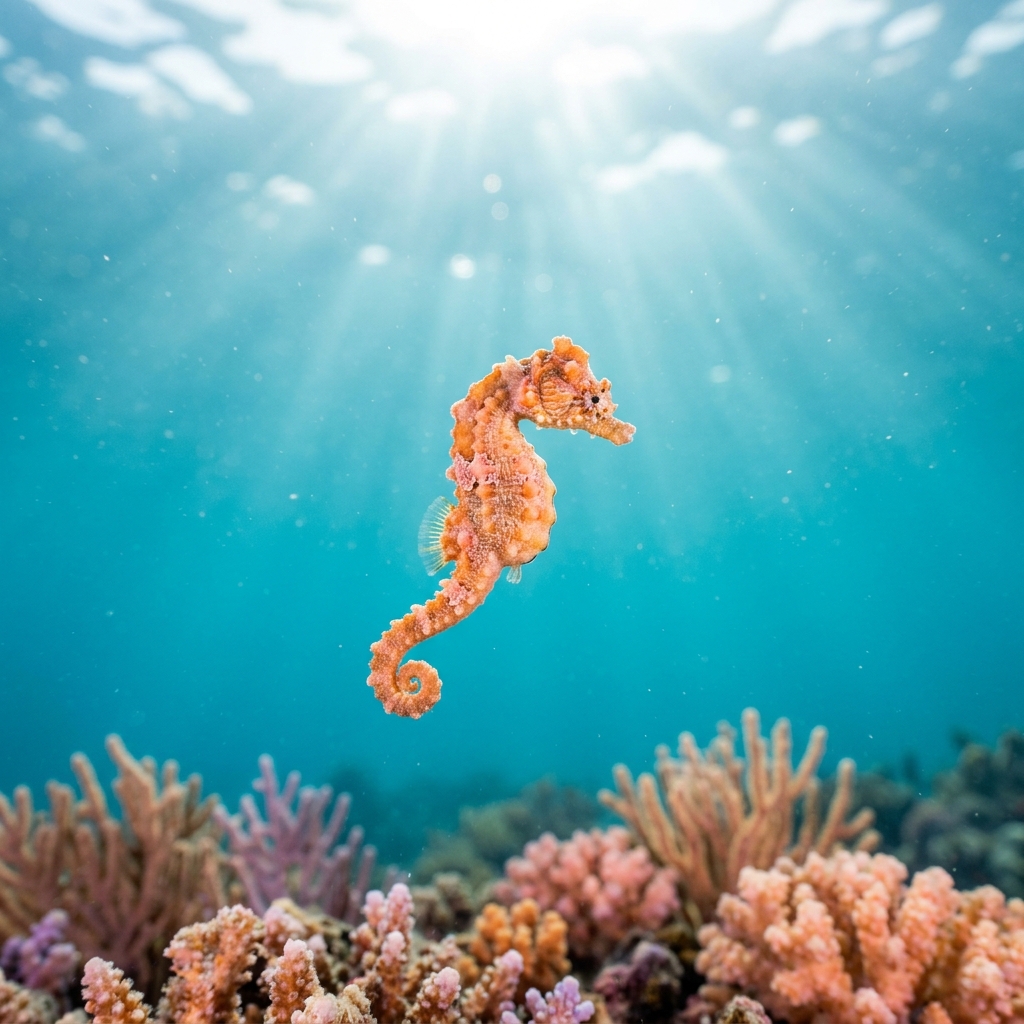
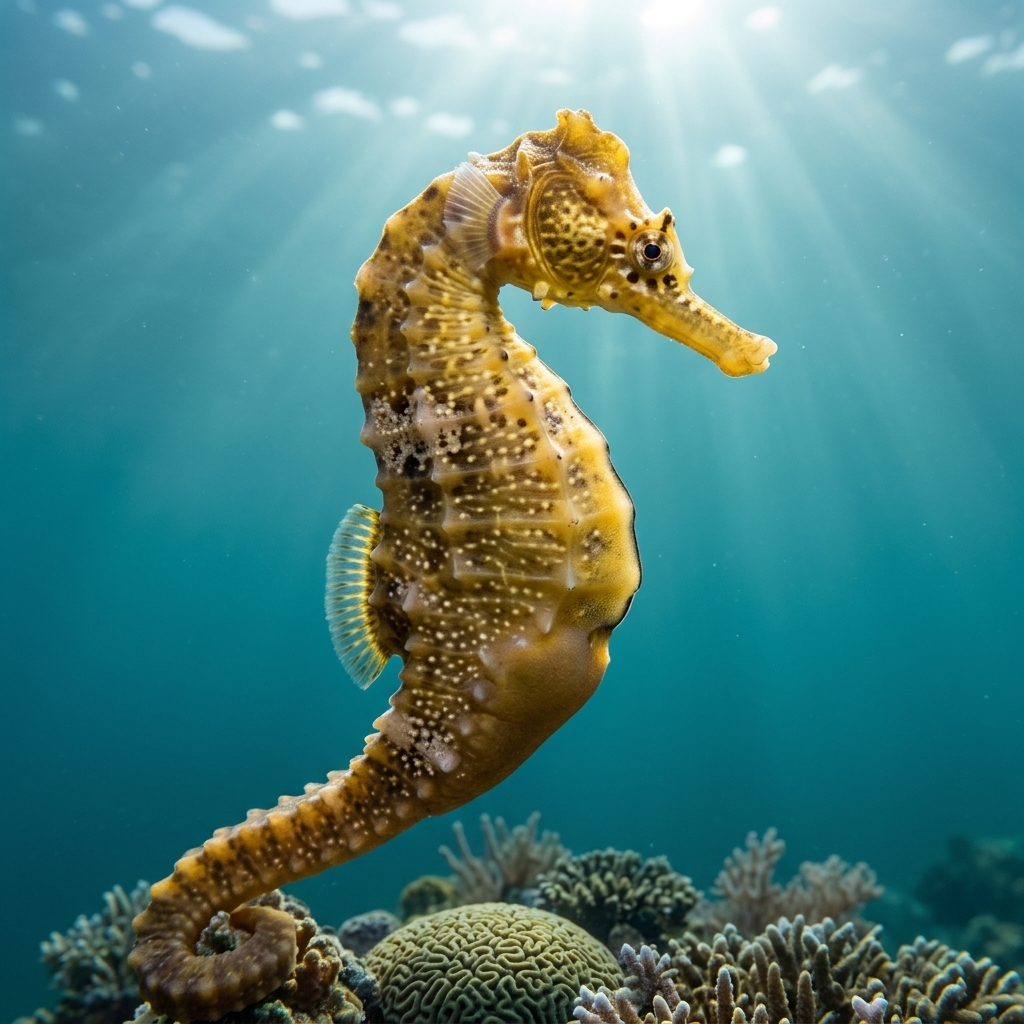
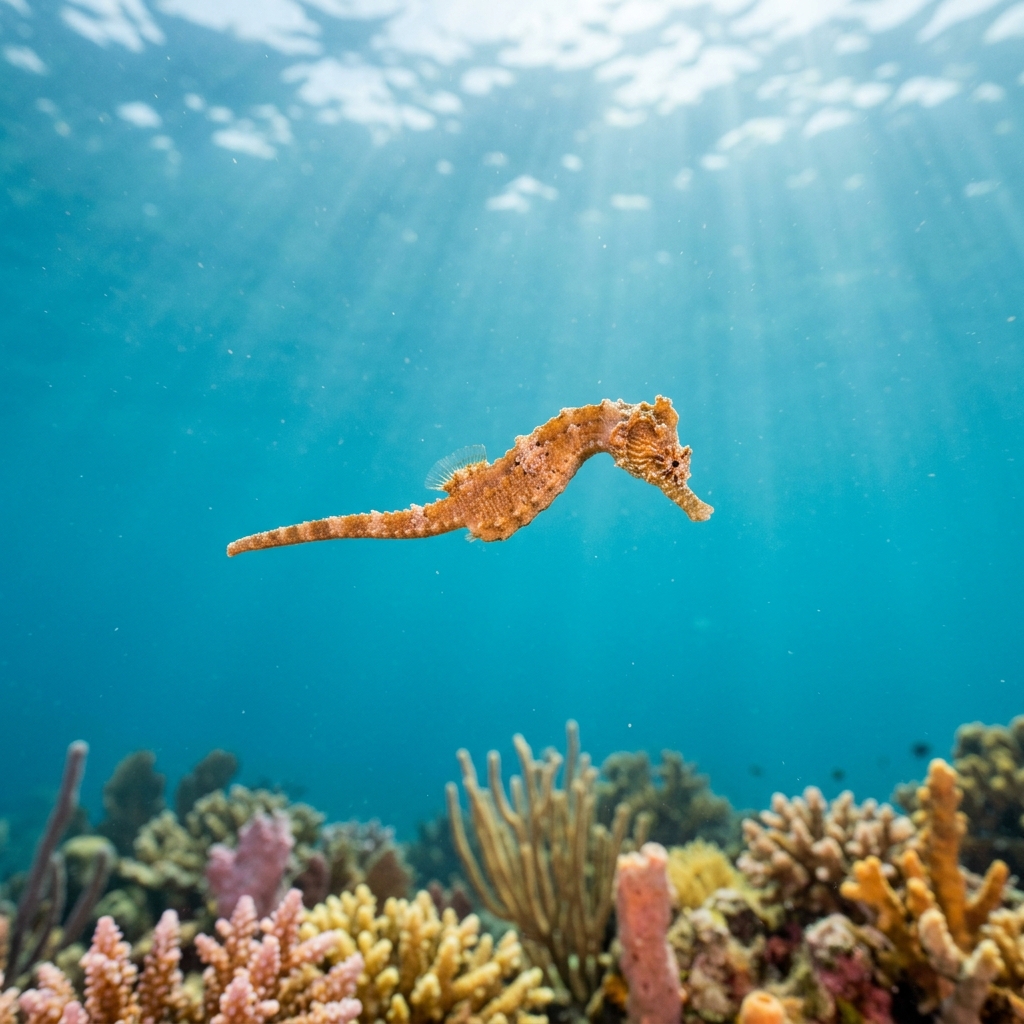
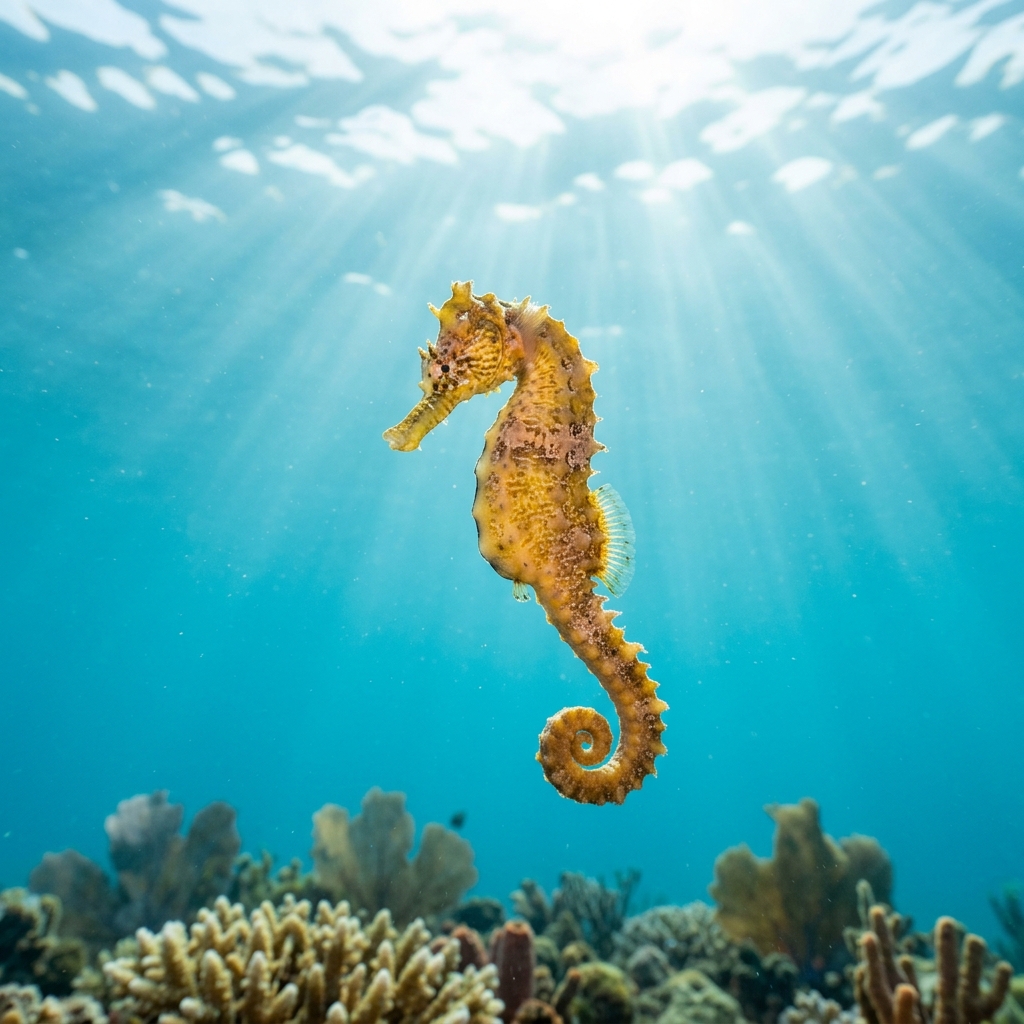
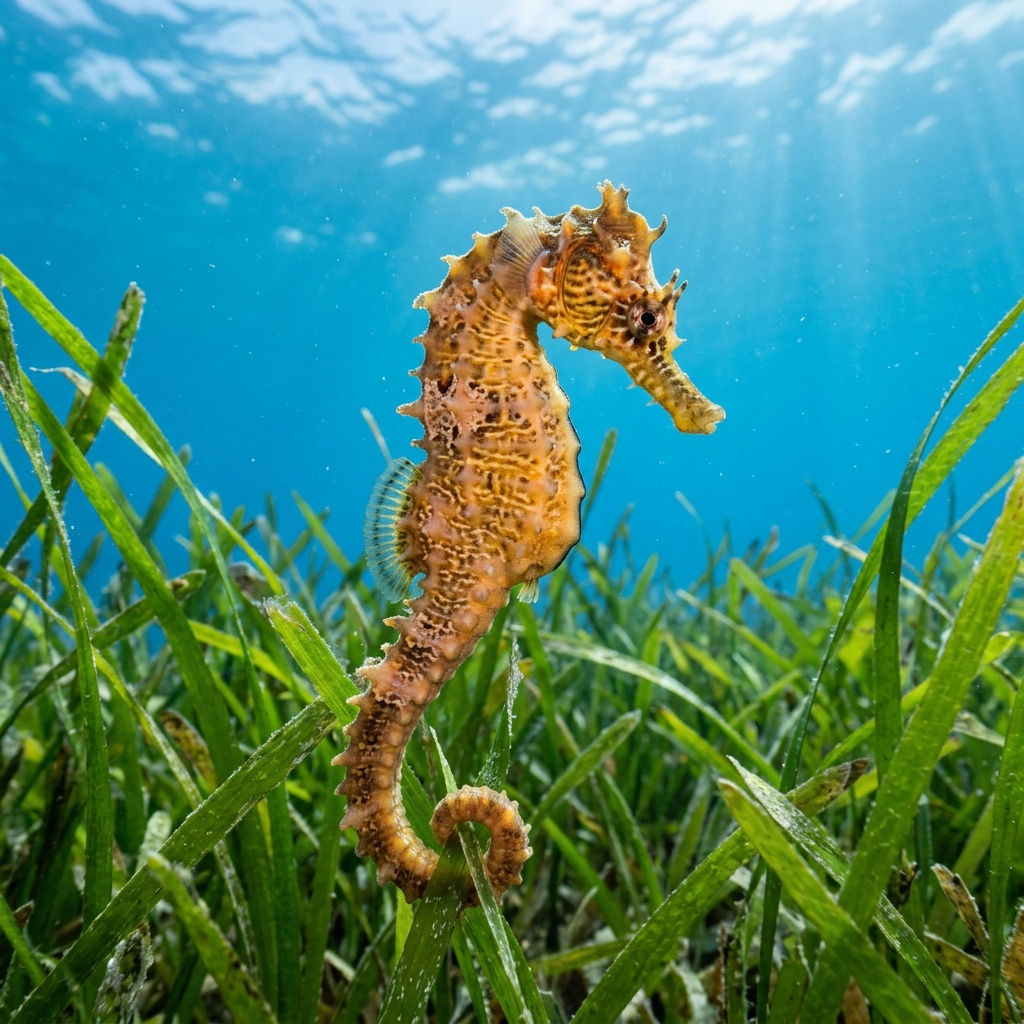
Unmistakable in silhouette: an upright fish body with a horse-like head, a prehensile tail wrapped around a hold-fast, and a tiny dorsal fin that beats rapidly to propel it. Most species sit between 2 cm (pygmy forms) and around 15 cm for the larger coastal types, so apparent size underwater is a useful first clue to which group you are looking at. Colour ranges widely from pale straw and grey through orange and black, often with skin filaments (cirri) that break up the outline against seagrass or coral. Males carry a visibly swollen, smooth brood pouch on the lower abdomen; females have a flat belly.
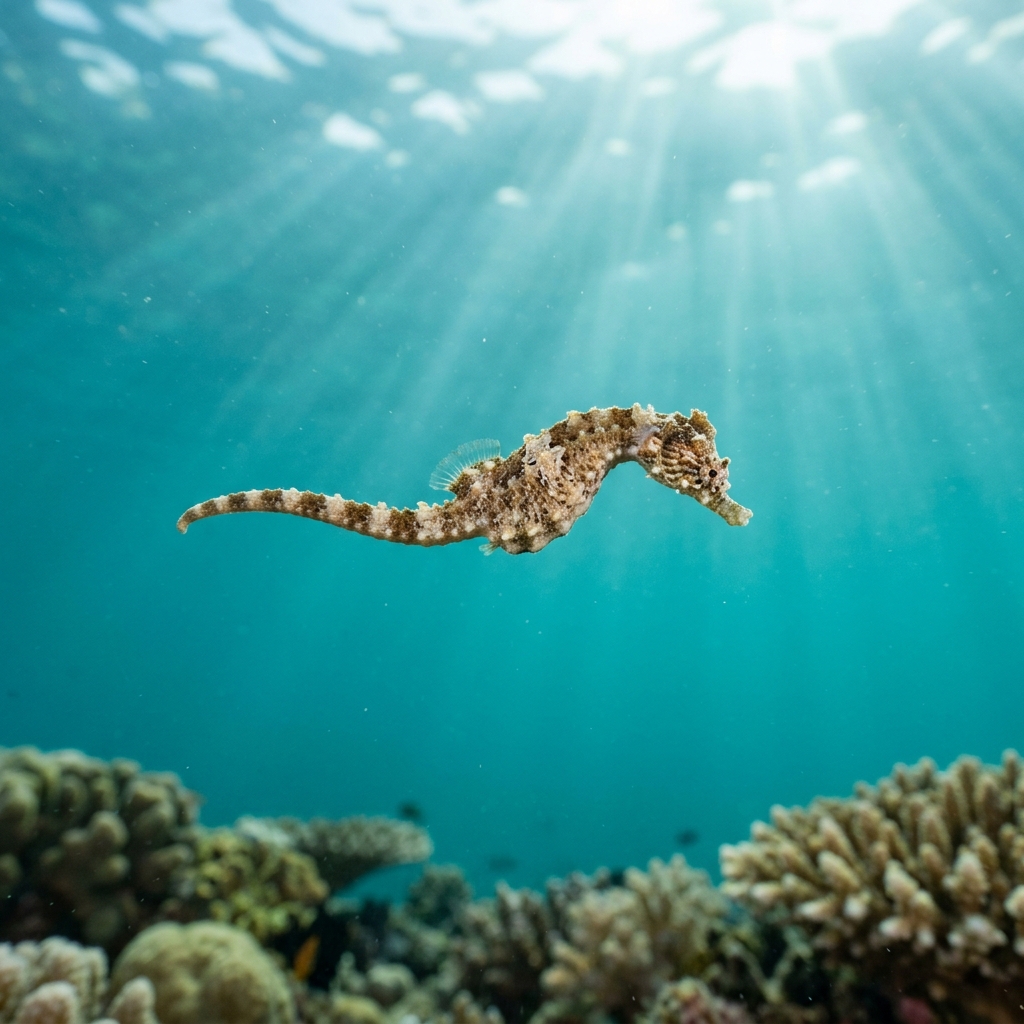
Seahorses rely almost entirely on camouflage, gripping seagrass, coral branches, or algae with their prehensile tail and staying as still as possible, which is exactly why most divers swim straight past them. If you hold position and scan slowly, they will usually tolerate close observation without fleeing. Early morning and late afternoon are worth targeting, as that is when they are most likely to be actively hunting, thrusting their tube-like snout to vacuum up small crustaceans.
Males carry the pregnancy. After a female deposits eggs into the male's brood pouch, he fertilises and gestates them, then gives birth to fully formed miniature seahorses, making them one of the very few animals where the male bears the young.
Northern Hemisphere sightings concentrate in July and August, making midsummer the peak window for Zeeland, Croatia, and the Azores. Southern Hemisphere records cluster from January through July, so Australian encounters are most likely in the austral summer and autumn.
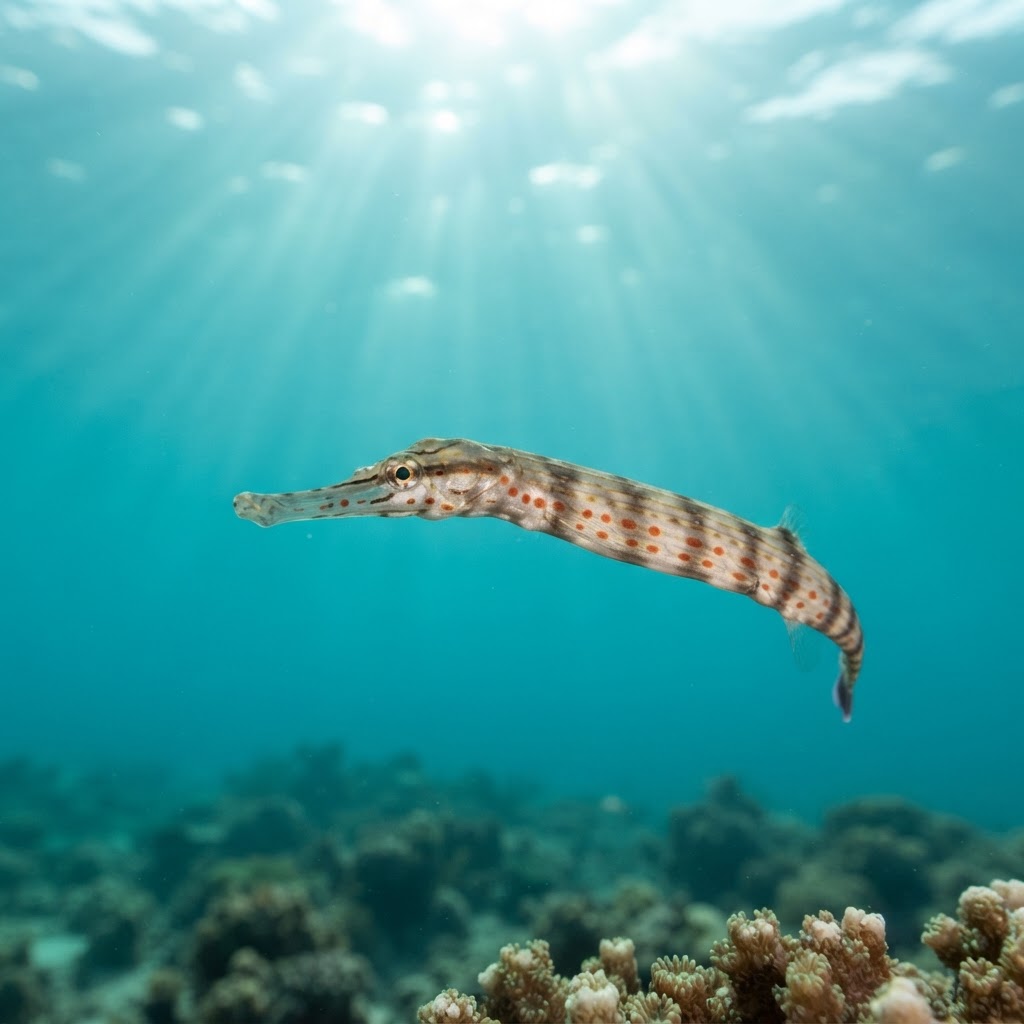
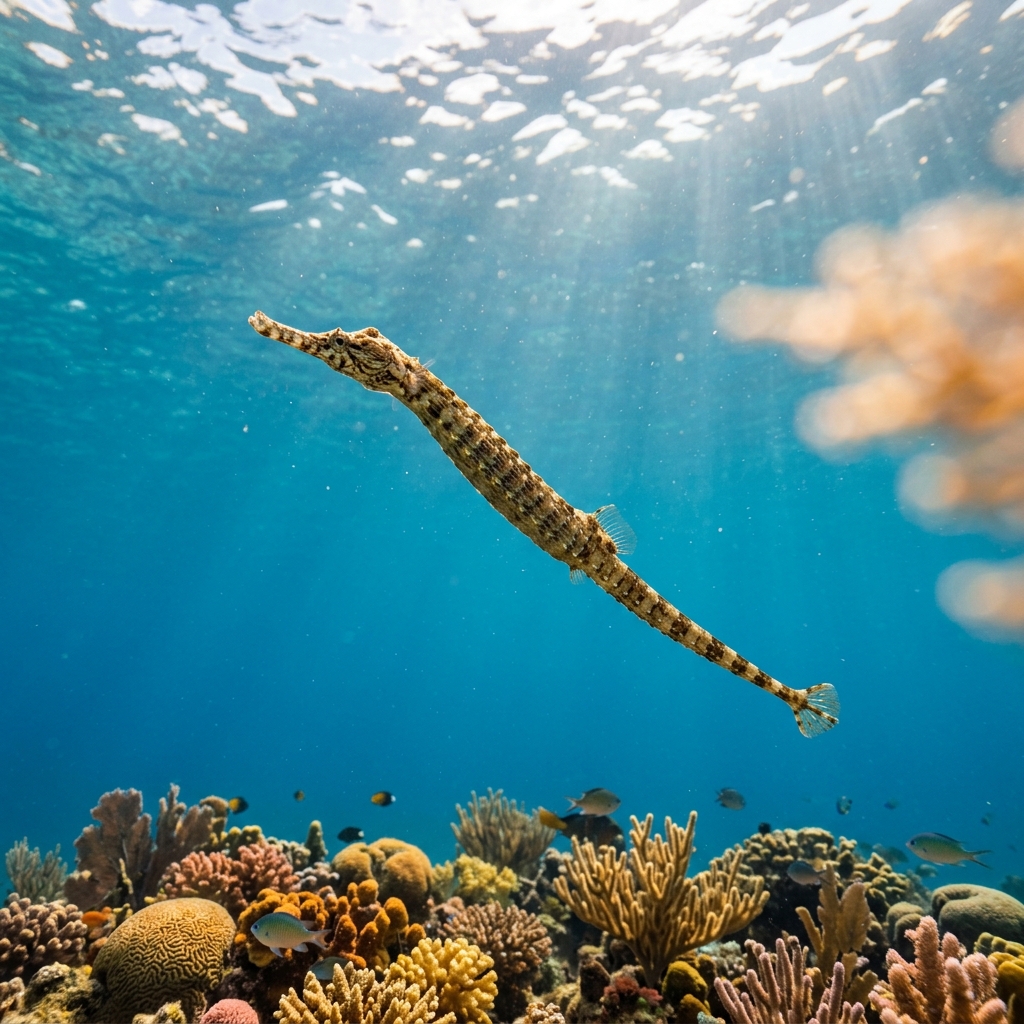
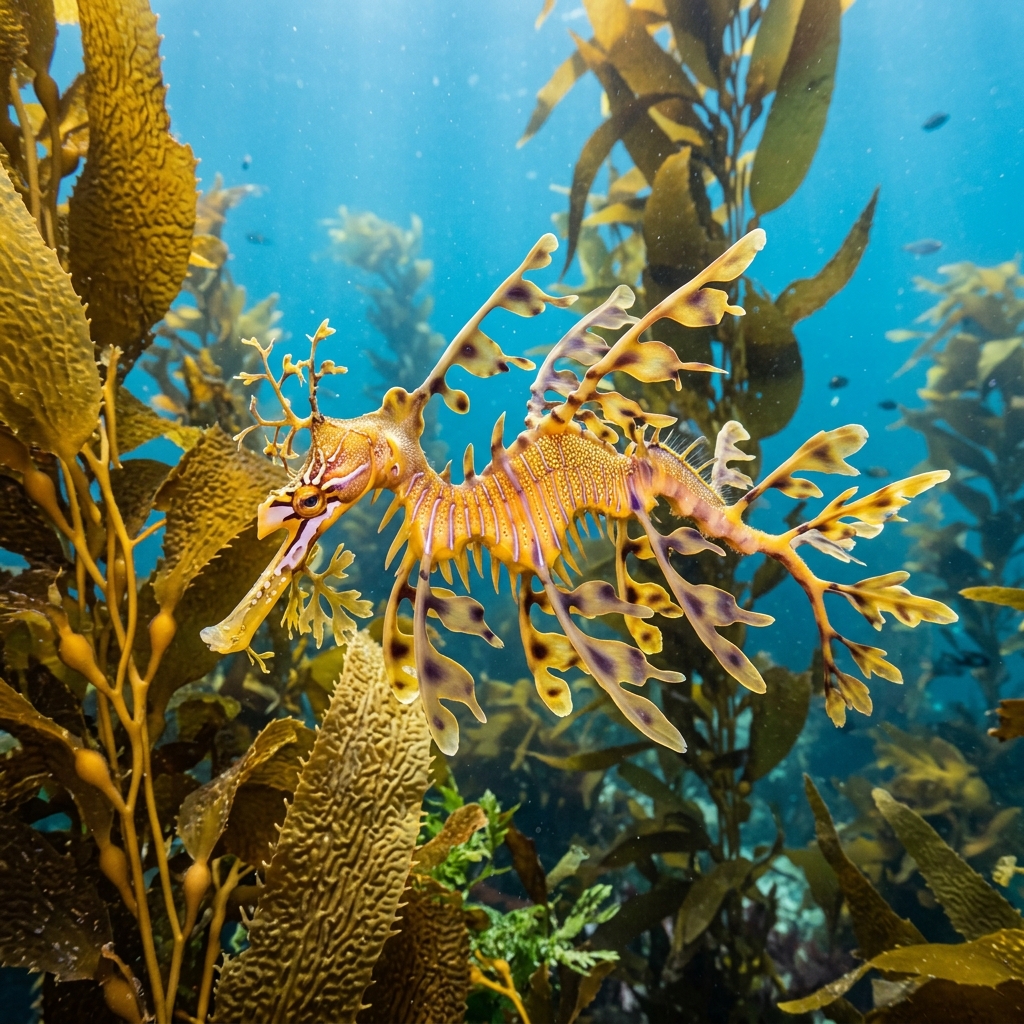
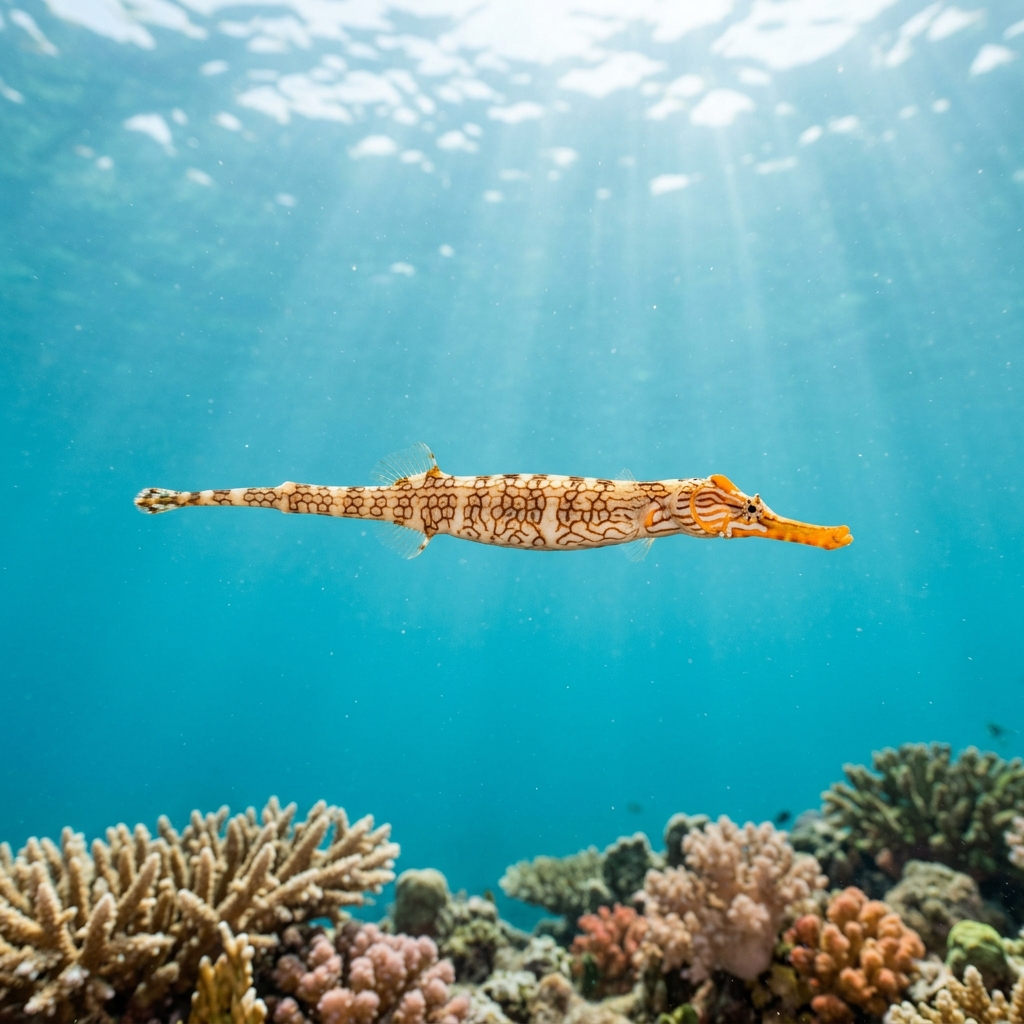
Reef neighbours a diver could mistake it for. Use the identification notes above to tell them apart.
Most logged in the Netherlands (particularly Zeeland), Croatia (Istria and the Kvarner Gulf), and the Azores (São Miguel and Santa Maria), which together account for the large majority of recorded sites. Australia also shows strong populations, especially in Western Australia and Victoria, while the Philippines and Bonaire round out the spread. If you want the highest chance of an encounter, Zeeland and Istria are your most reliable starting points.
Mapping where Seahorse is logged…
Seahorses are most reliably logged in Zeeland in the Netherlands, the Istrian coast of Croatia, and around São Miguel in the Azores. Australia, particularly Western Australia and Victoria, also has strong records, as do the Philippines and Bonaire.
In the Northern Hemisphere, July and August are the peak months, covering the best of the Zeeland, Croatian, and Azores seasons. In the Southern Hemisphere, Australian sightings concentrate from January through July, favouring the austral summer and autumn.
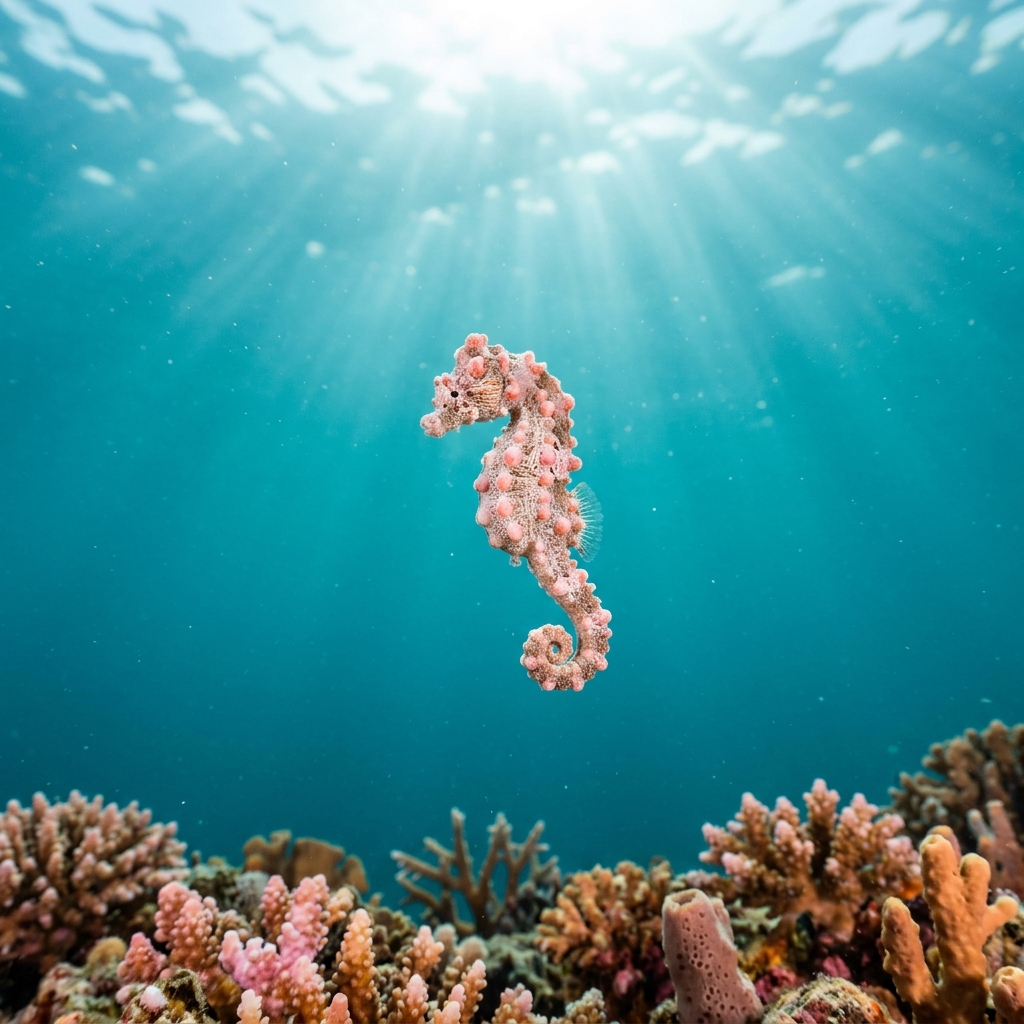
The upright posture, horse-shaped head, and curled prehensile tail gripping a hold-fast make seahorses unmistakable at family level. Size and skin texture help narrow it down further: pygmy species are under 2 cm and fuse with their coral host, while larger coastal species average around 15 cm and sit on seagrass or rubble.
Size varies enormously across the group. Pygmy seahorses can be under 2 cm, small enough to hide inside a single coral polyp. Larger coastal species, such as White's seahorse and the pot-bellied seahorse, typically reach 15 cm or more. Apparent size is one of the most useful clues for grouping species in the field.
The group is assessed as Vulnerable by the IUCN, driven by seagrass and coral habitat loss, incidental bycatch in trawl fisheries, and targeted collection. Population trends are difficult to track because seahorses are naturally cryptic and sparse, which is one reason diver sighting data matters.
Male seahorses carry the pregnancy. The female transfers eggs into the male's brood pouch, where he fertilises and incubates them. He then gives birth to fully developed juveniles, making seahorses one of the only known examples of true male pregnancy in the animal kingdom.
The Seahorse is listed as vulnerable by the IUCN. Observe from a distance, avoid touching or feeding it, and report sightings to local marine research organisations.
Seahorses are listed as Vulnerable on the IUCN Red List, threatened by habitat loss (particularly seagrass degradation), bycatch, and collection. Divers can help by never touching or holding them, keeping fins clear of seagrass beds, and logging sightings to citizen-science platforms to support population monitoring.
Site and sighting data is aggregated from diver logs, iNaturalist and GBIF. For taxonomy and conservation status:
Hippocampus bargibanti
Dwarf Pipehorse
1,191 sites