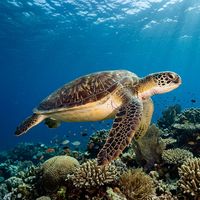
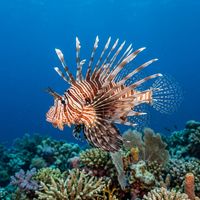
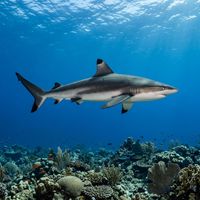
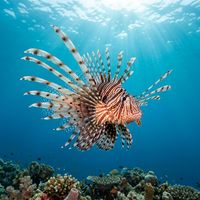
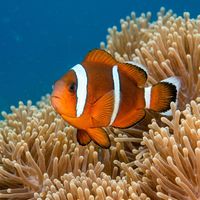
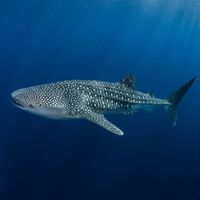
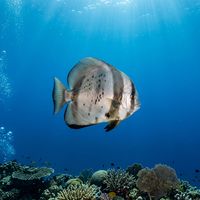
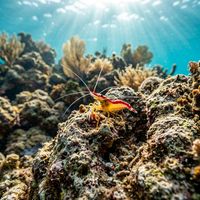
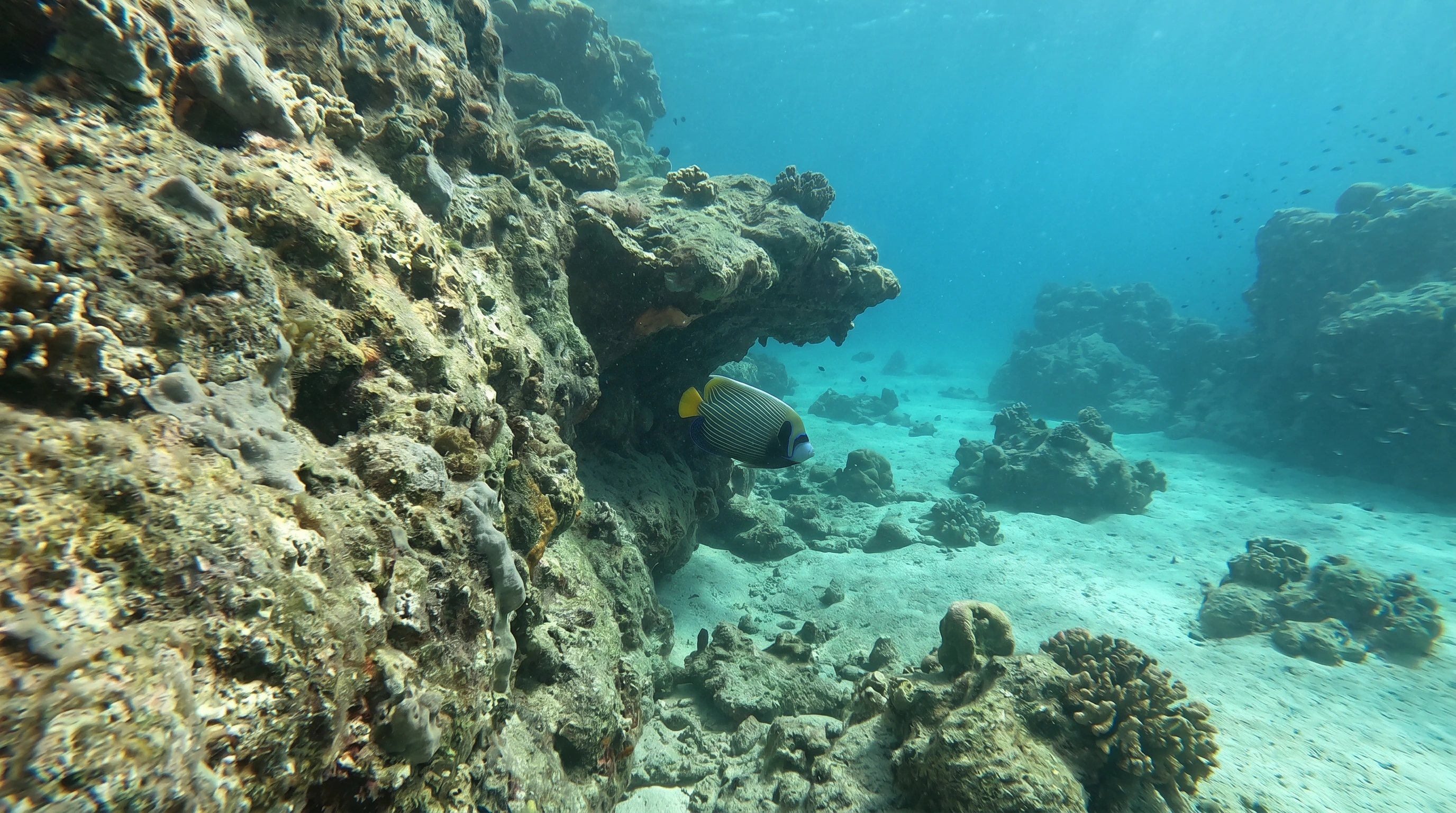
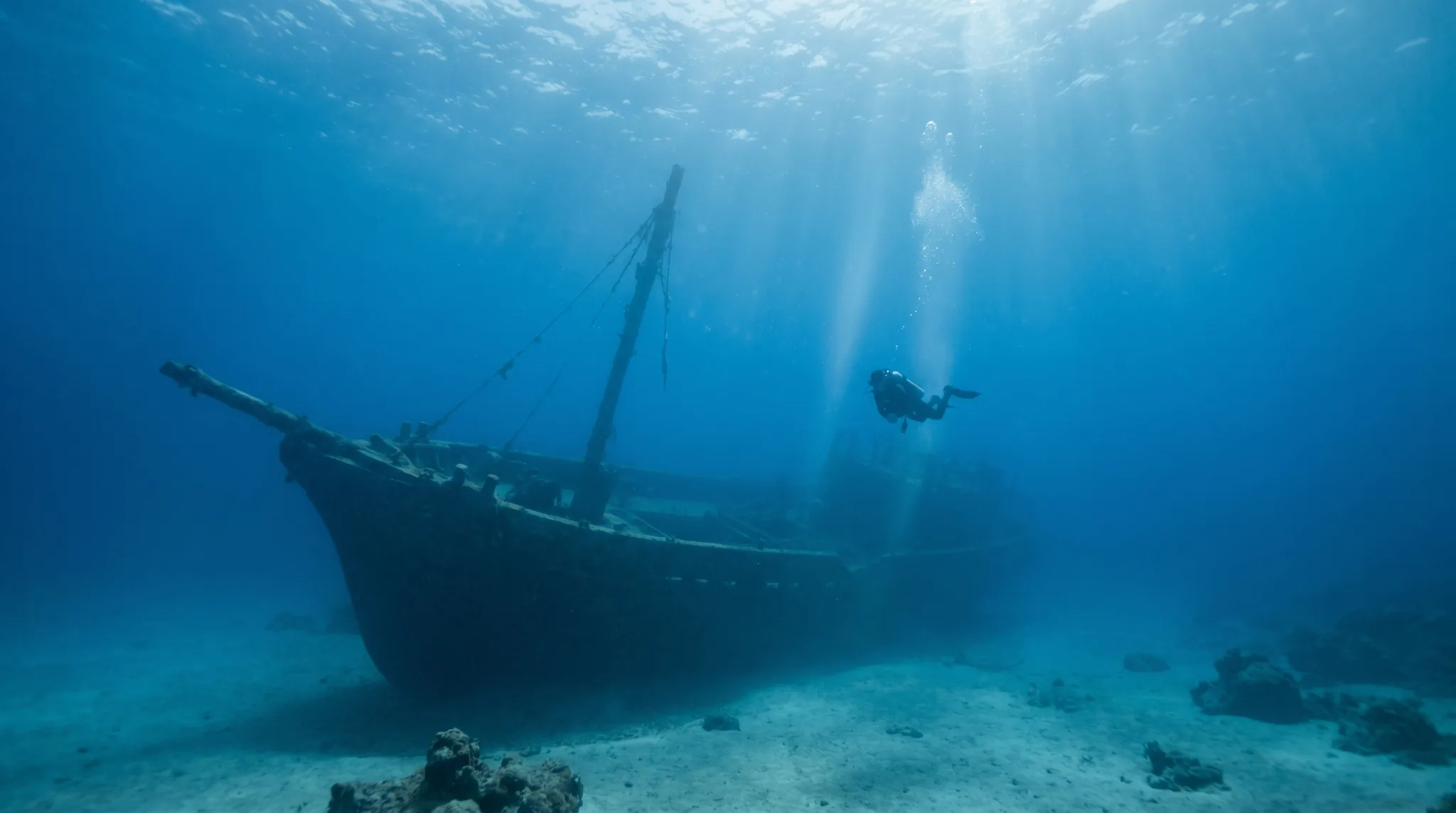
Musandam's diving character is shaped by a mix of reef structures, submerged pinnacles, a cavern system, and a shallow artificial wreck that has developed into a functioning reef. Most sites are boat-accessed, with a handful reachable from shore. The Indian Lionfish and Yellowtail Clownfish are observed across nearly every site, while the Green Sea Turtle, Common Blacktip Shark, and Whale Shark make Musandam notable for larger pelagic encounters. Sites range from very shallow beginner-friendly dives to deeper walls suited to intermediate divers. October through May draws the strongest diver interest according to the data.

Monthly water temperature across Musandam's sites, from satellite sea-surface data corrected for depth. The band shows the site-to-site spread.
Water temperatures sit at their coolest from January through March, then climb steadily toward a summer peak in July and August. The warmest months coincide with reduced diver activity, suggesting that conditions such as currents or visibility may be less favourable mid-summer. October marks the strongest period of diver interest, with the shoulder months of May, November, and March also rating highly.
11 more sites to explore
Water temperature around Musandam ranges from about 24°C in January to 31°C in July, based on satellite sea-temperature data for its dive sites.
In the warm season (about 31°C) a rash guard or 3mm shorty is comfortable in Musandam; in the coldest months (about 24°C) step up to a 3mm full suit.
Fin maps 20 sites in Musandam (20 scuba diving sites and 3 snorkelling spots, with some suited to both).
Across Musandam's dive sites, May, October and November are most often reported as the best months to visit.
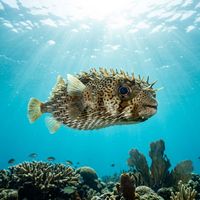
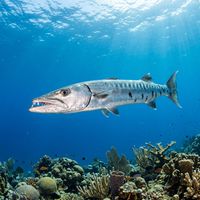
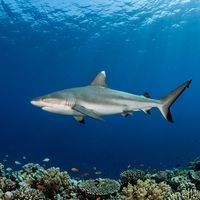
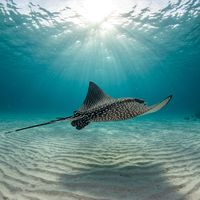
Musandam has observation-backed records of the Green Sea Turtle, Common Blacktip Shark, Grey Reef Shark, Blacktip Reef Shark, and Whale Shark. Spotted Eagle Ray and Eagle Ray have also been recorded at a subset of sites. The Indian Lionfish and Spotfin Lionfish are among the most consistently encountered species across the region.
Several sites in Musandam are rated for beginners, including Ras Sawt, Octopus Rock, The Cave, Las Al Sharea, and the Humsi Wreck. These sites are generally shallow and offer a relaxed pace. Intermediate divers are catered for at deeper wall and reef sites such as Wonder Rock and Zighy Bay.
The majority of dive sites in Musandam are boat-accessed, which is the standard arrangement across the region. Ras Sawt is a notable exception, offering shore entry directly onto the reef. The Humsi Wreck is also boat-accessed and sits in very shallow water, making it straightforward for most divers.
Musandam covers a broad range of underwater terrain. Divers can explore open reef structures, a submerged pinnacle at Octopus Rock, a wall drop at Wonder Rock, a cave and cavern system at The Cave, and the Humsi Wreck, an intentionally sunk dhow that now serves as an artificial reef. This variety means that a multi-day trip can offer meaningfully different dives each day.