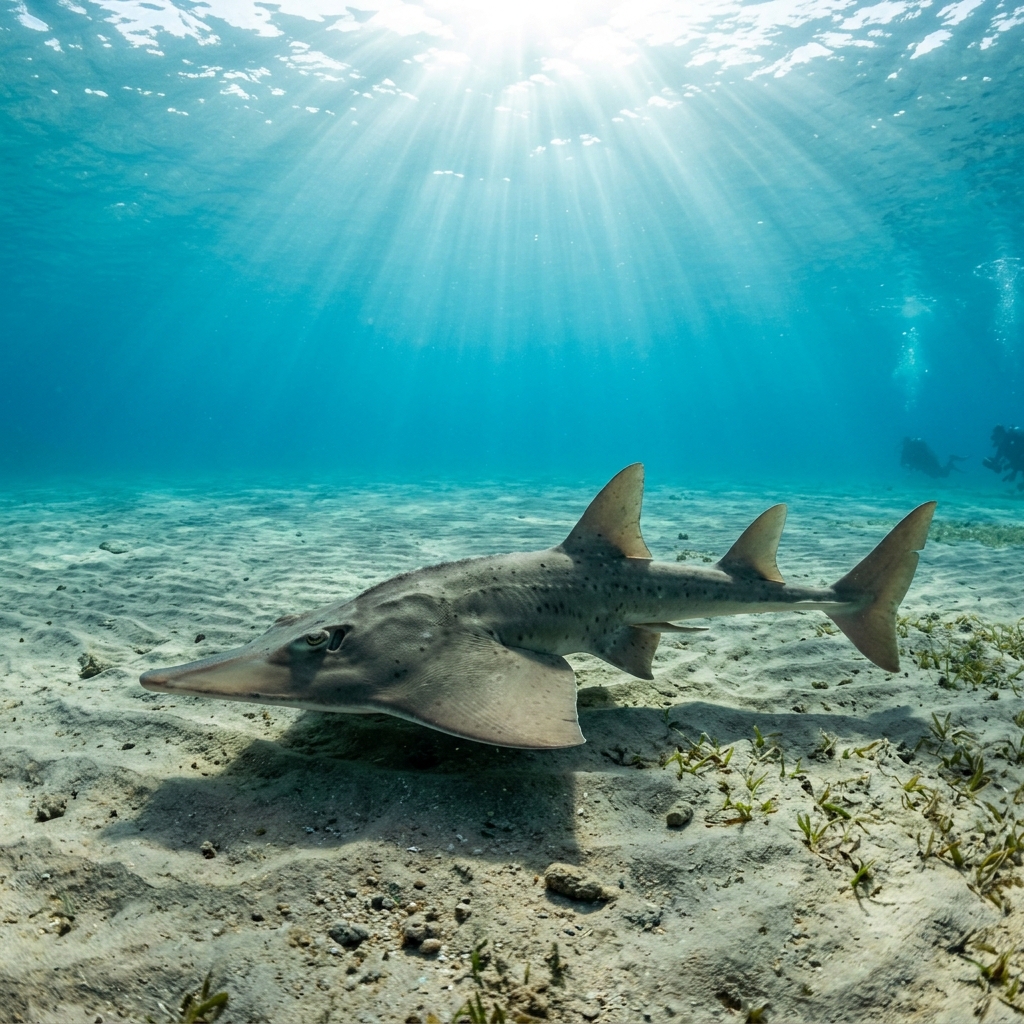
Rhinobatidae spp.
Spot guitarfish across Florida, the Philippines, Greece and beyond. Sightings peak Jun, Oct in the Northern Hemisphere. Here's where and how to find them.
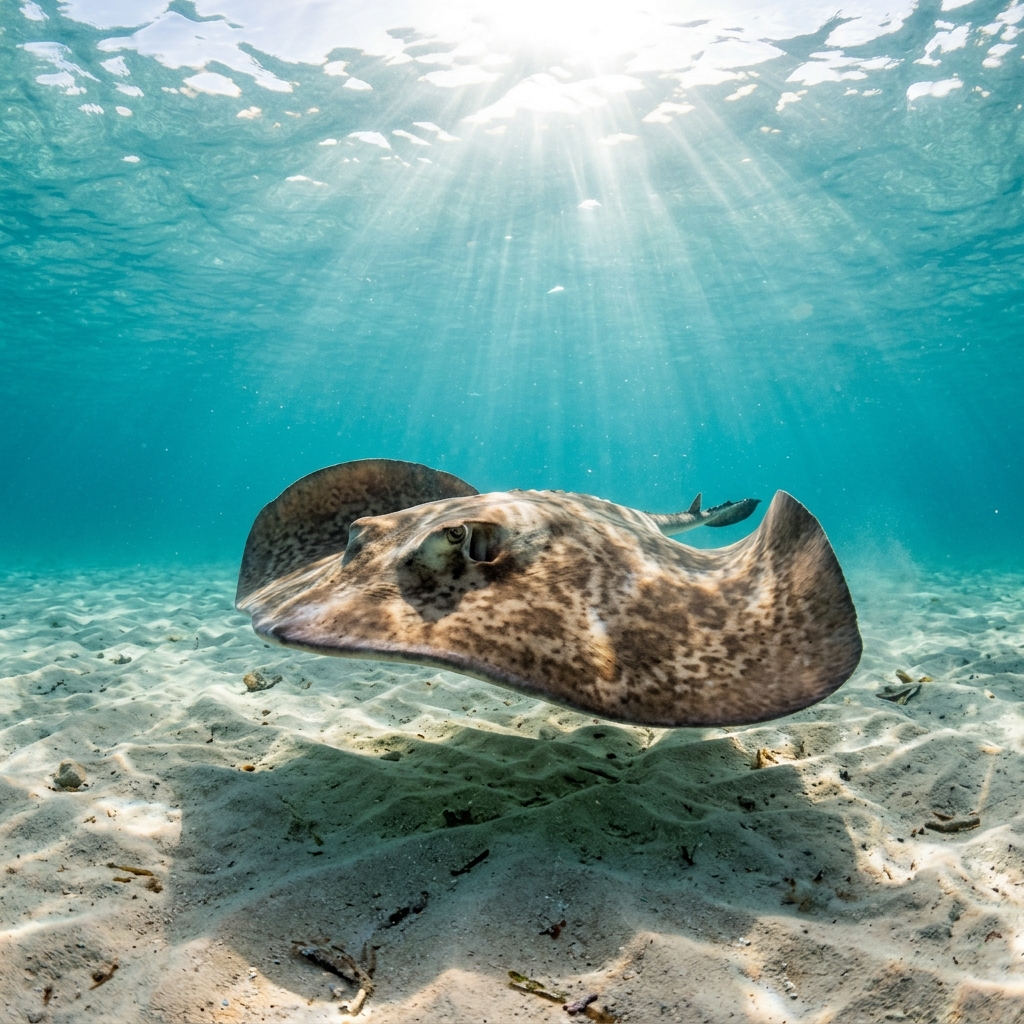
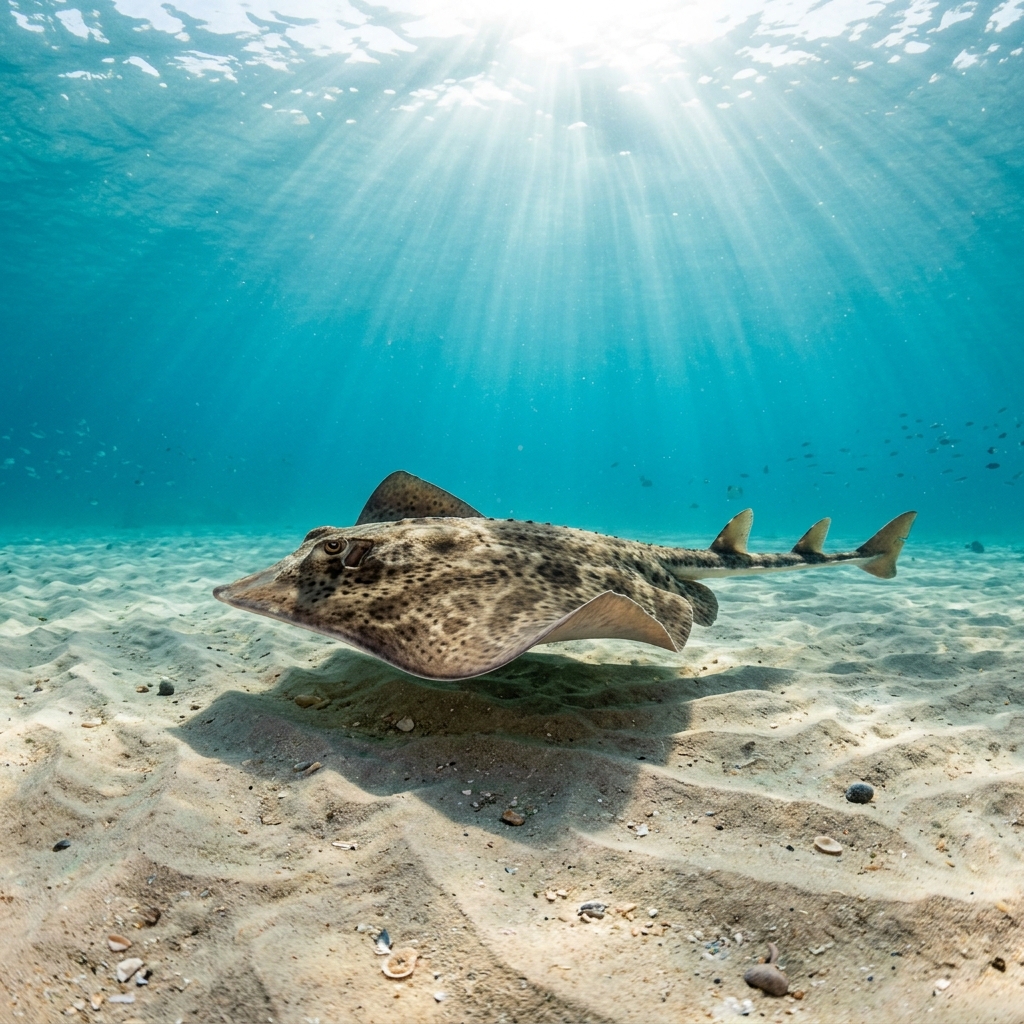
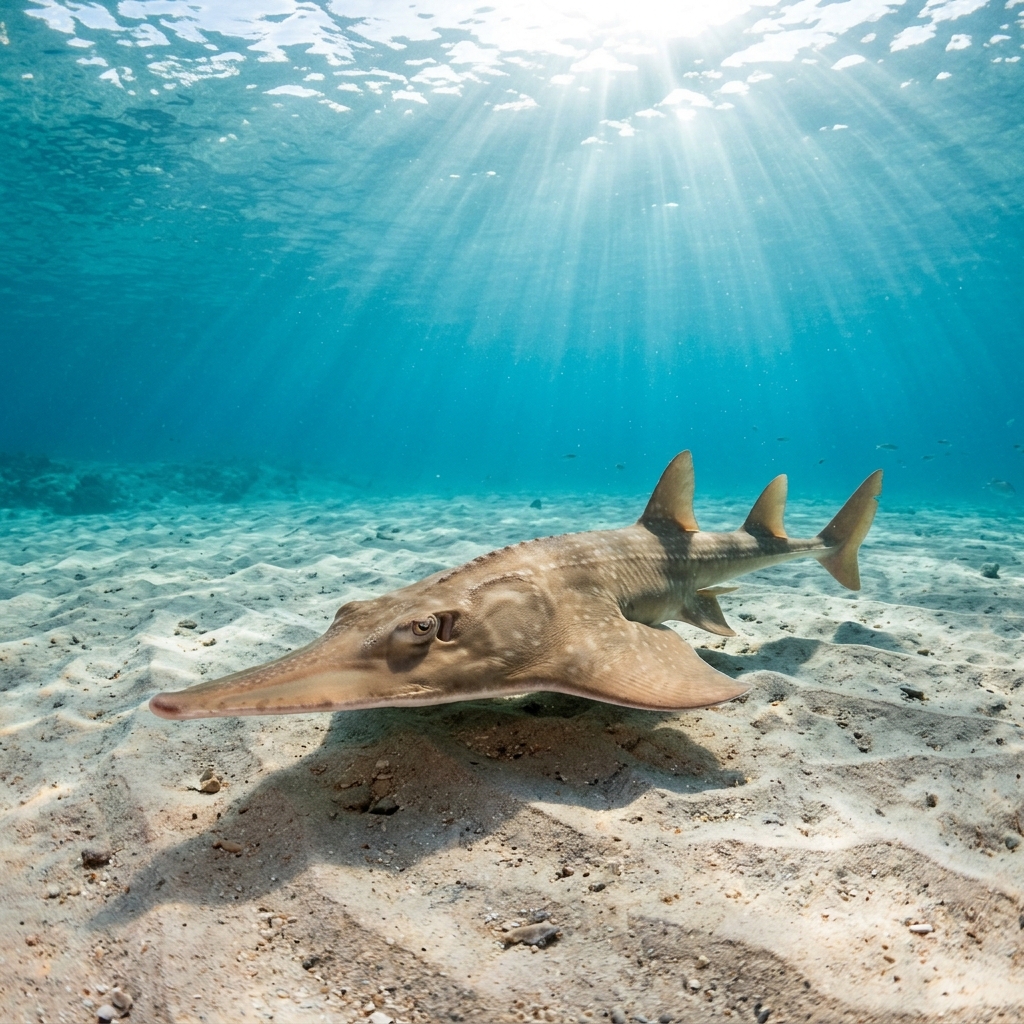
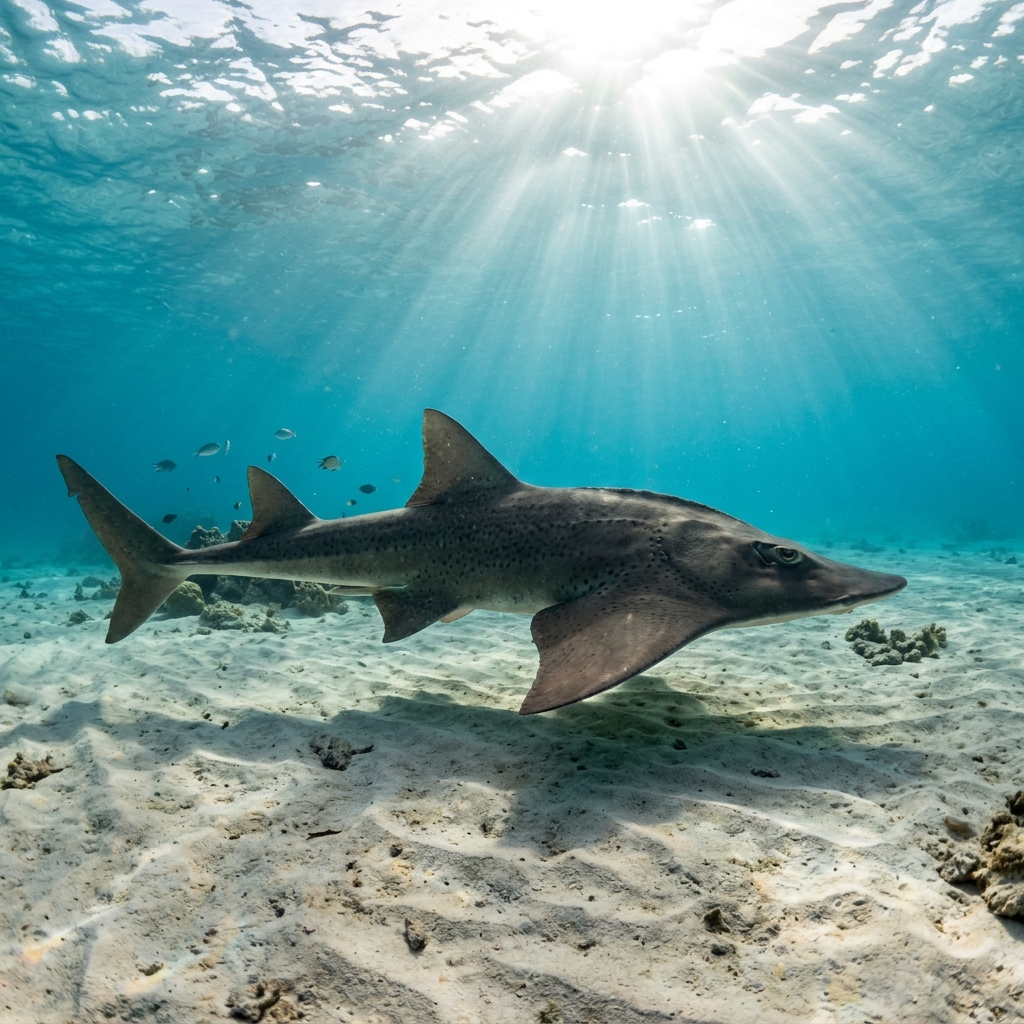
Guitarfish are immediately recognisable by their hybrid shape: a flattened, ray-like disc at the front and a thick, muscular shark-like tail at the rear. The upper body is typically sandy brown or grey, blending well with the seafloor, and the underside is pale white. They are bottom-dwellers, usually seen lying motionless on sand or rubble, which combined with their outline can make them easy to miss at first glance. Size varies by species within the family, but most individuals a diver encounters measure roughly half a metre to well over a metre in length.
When you find one, it is almost always resting flat on the sand, relying on its cryptic colouring to go unnoticed. Guitarfish are generally unbothered by calm divers and will often stay put, giving unhurried opportunities for a close look, though a heavy approach or burst of bubbles can send them sculling away with a surprisingly powerful kick of the tail. They are bottom feeders, and you may catch them shifting position or nudging the substrate in search of buried crustaceans and molluscs.
Despite looking like a ray from above, guitarfish are anatomically intermediate between sharks and rays, their gill slits are on the underside like rays, but their tail and swimming motion are more shark-like, making them one of the clearest living examples of the evolutionary bridge between the two groups.
In Northern Hemisphere destinations, sightings concentrate between June and October, aligning with warmer water temperatures. Guitarfish have been observed in water ranging from around 19 °C to 29 °C, so tropical sites can offer year-round encounters while temperate sites such as the Mediterranean and Japan are most productive through summer.
Reef neighbours a diver could mistake it for. Use the identification notes above to tell them apart.
Guitarfish are logged across a wide spread of countries, with the strongest sighting records in the United States (particularly Florida and the Southeast), the Philippines (Visayas and Palawan), Greece (Attica and the Aegean Coast), Indonesia, Italy (Sicily and Lampedusa), Japan (Izu Peninsula), Brazil (Rio de Janeiro and São Paulo Coast) and Turkey. The Mediterranean, including Greek and Italian waters, holds a notable concentration of sightings, as do the tropical reefs of the Philippines and Indonesia.
Mapping where Guitarfish is logged…
Guitarfish are logged across a wide range of destinations. The strongest records come from Florida and the US Southeast, the Philippines (Visayas, Palawan), Greece (Attica, the Aegean Coast), Indonesia, Italy (Sicily and Lampedusa), Japan's Izu Peninsula, coastal Brazil and Turkey. The Mediterranean and the tropical Indo-Pacific both offer reliable opportunities.
In Northern Hemisphere destinations, sightings peak between June and October. In tropical regions where water stays warm year-round, encounters are possible outside those months too. Guitarfish have been recorded in water temperatures from roughly 19 °C to 29 °C, so following the warm season is a sound strategy in temperate locations like the Mediterranean.
Look for the distinctive body plan: a flattened, rounded disc at the front (like a ray) joined to a thick, muscular tail (like a shark). They rest on sandy or rubble bottoms and their sandy-brown colouring provides excellent camouflage. The elongated snout and torpedo-shaped rear half set them apart from true rays, which have much thinner tails.
Guitarfish pose no meaningful risk to divers. They have no venom, no sting, and no aggressive tendencies. Their usual response to an approaching diver is simply to glide away. Approach slowly and stay low to enjoy a longer, calmer encounter.
Guitarfish as a family (Rhinobatidae) include species with widely varying conservation assessments, some are under pressure from habitat loss and bycatch. The family as a whole is not assigned a single IUCN status, so it is worth checking the species present at your specific dive destination. Reporting sightings via citizen-science platforms contributes useful data to population monitoring.
Site and sighting data is aggregated from diver logs, iNaturalist and GBIF. For taxonomy and conservation status:
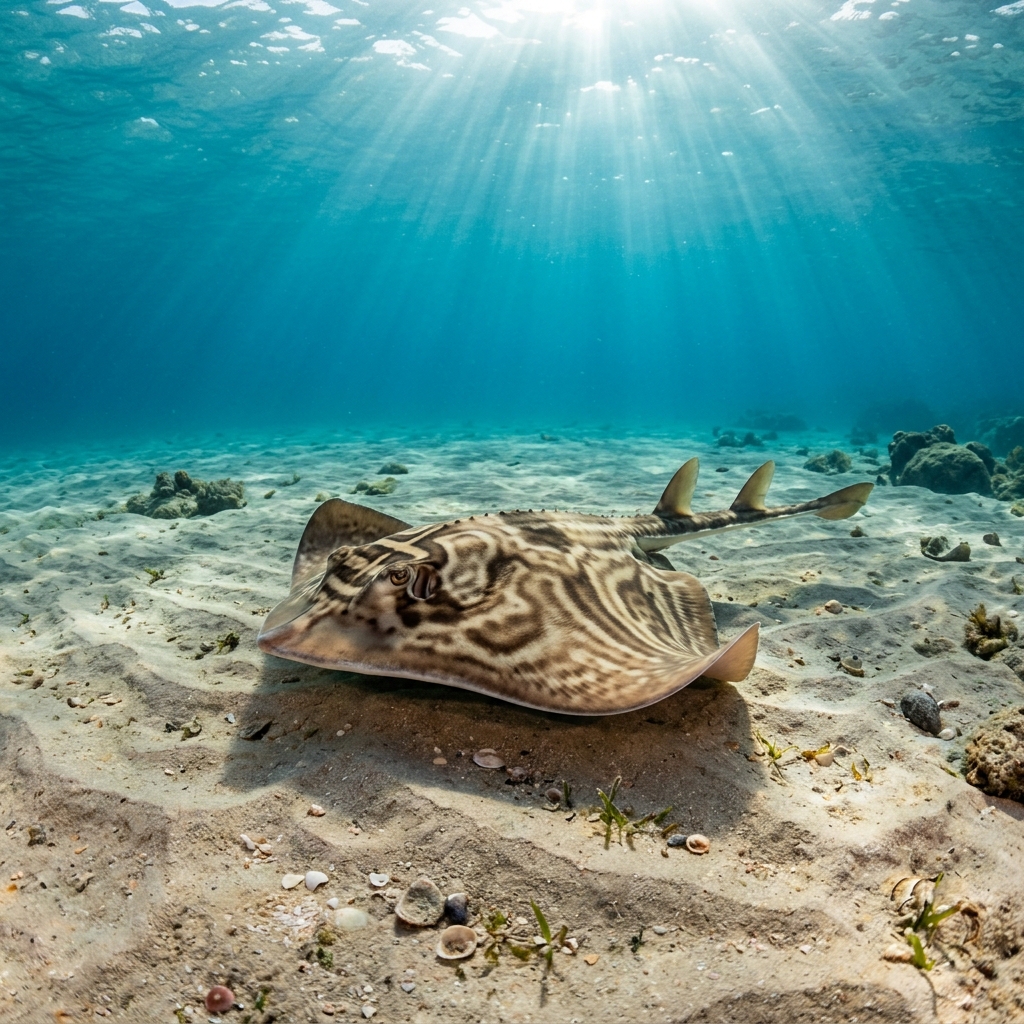
Fiddler Ray
342 sites