Platax
Curious and approachable, batfish are logged year-round across Indo-Pacific reefs from the Maldives to the Visayas. Here's where and how to find them.
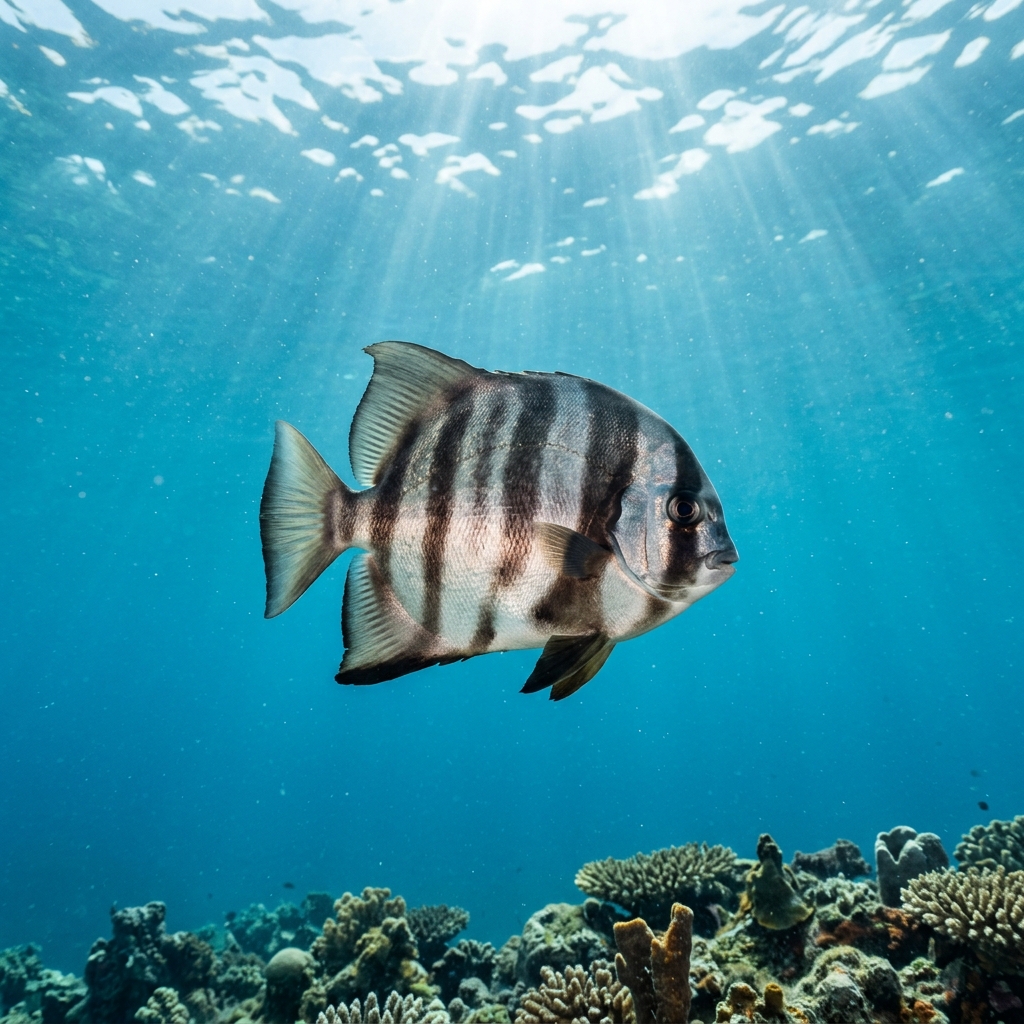
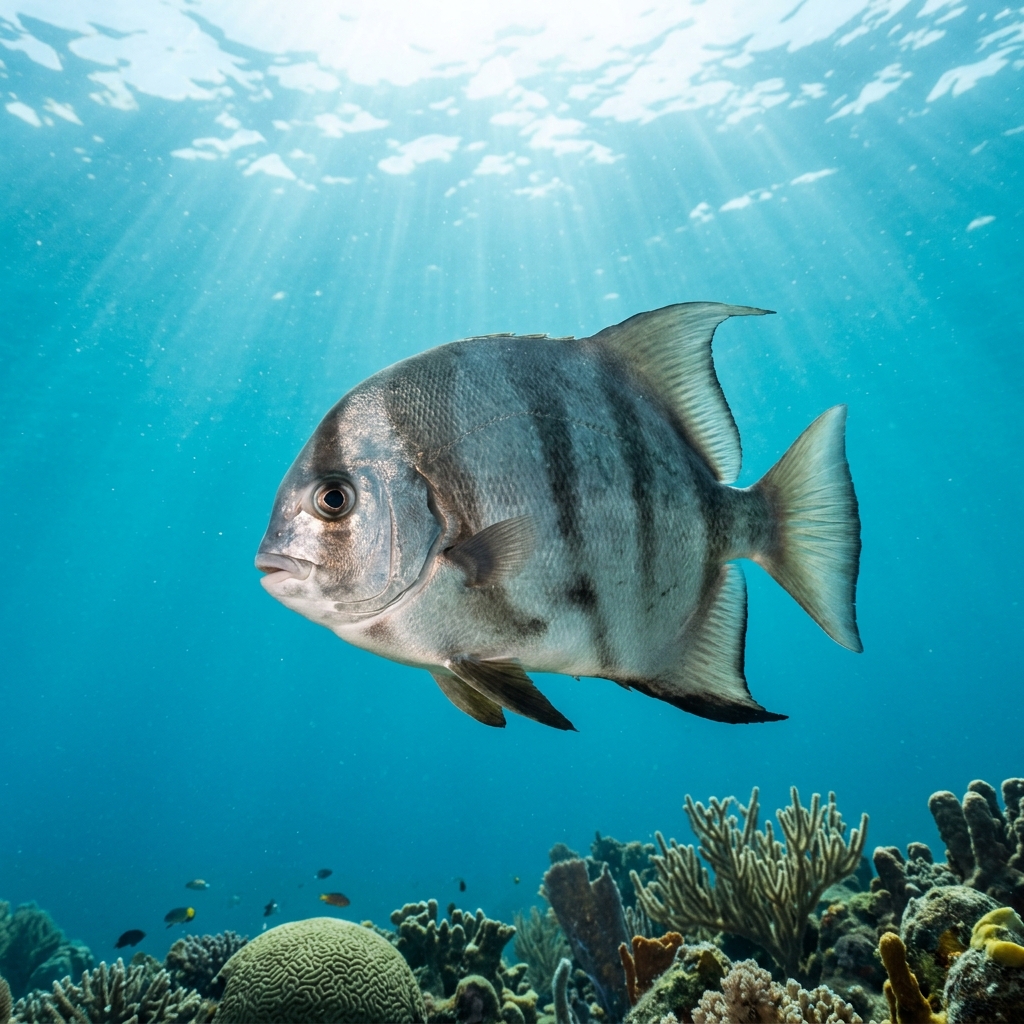
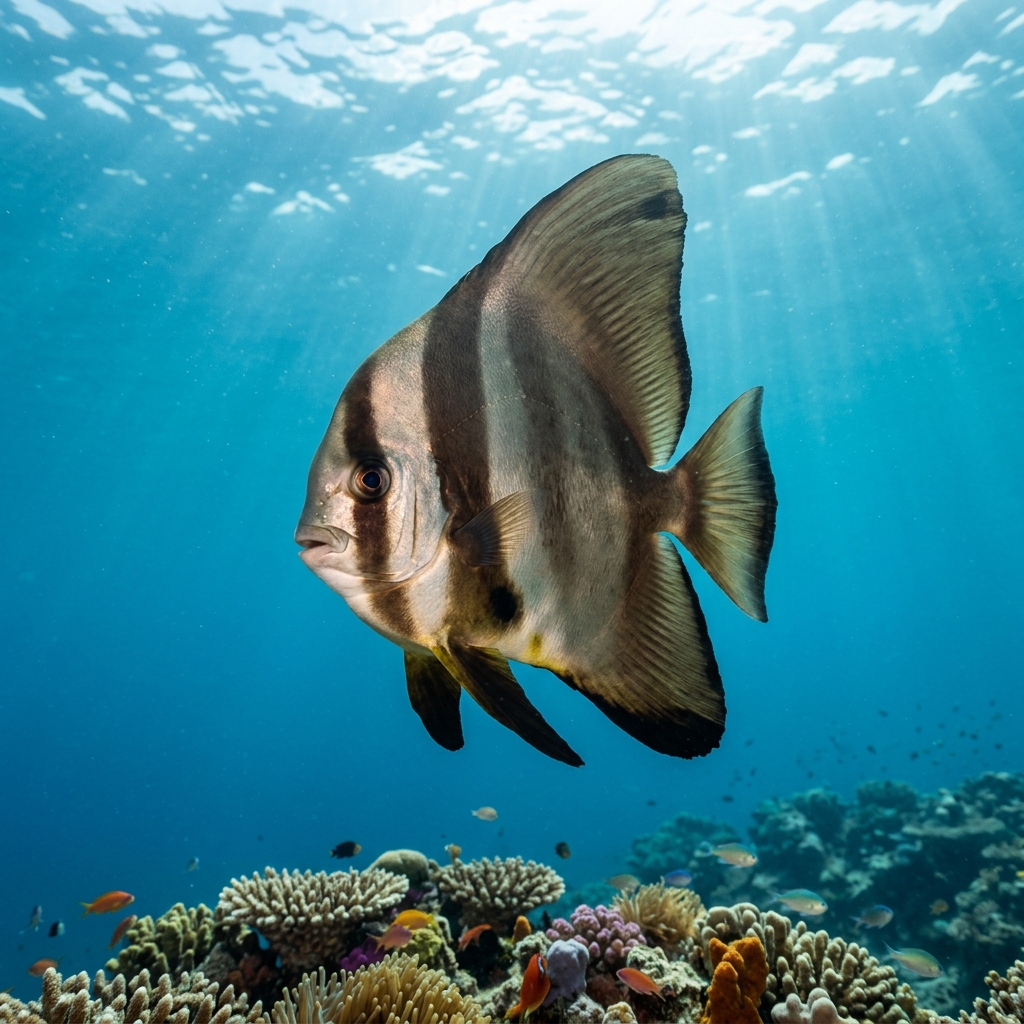
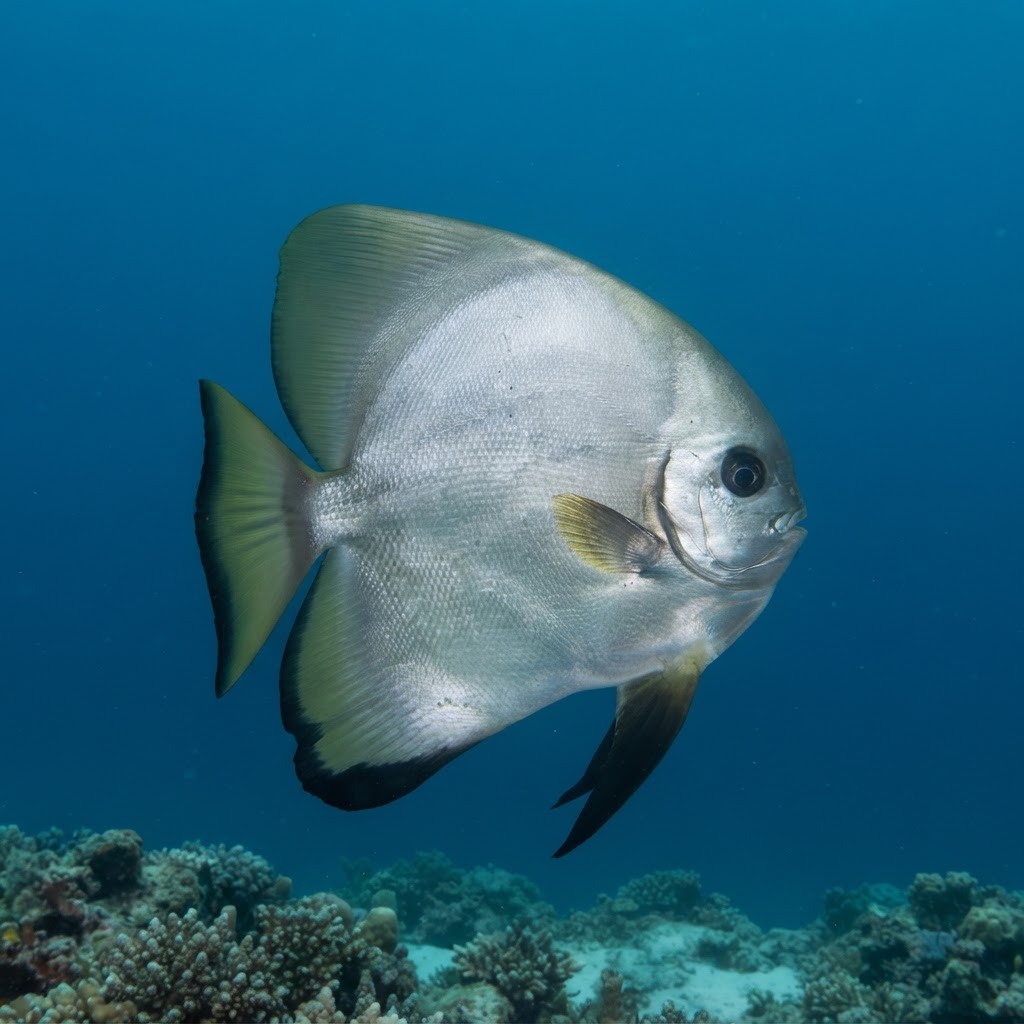
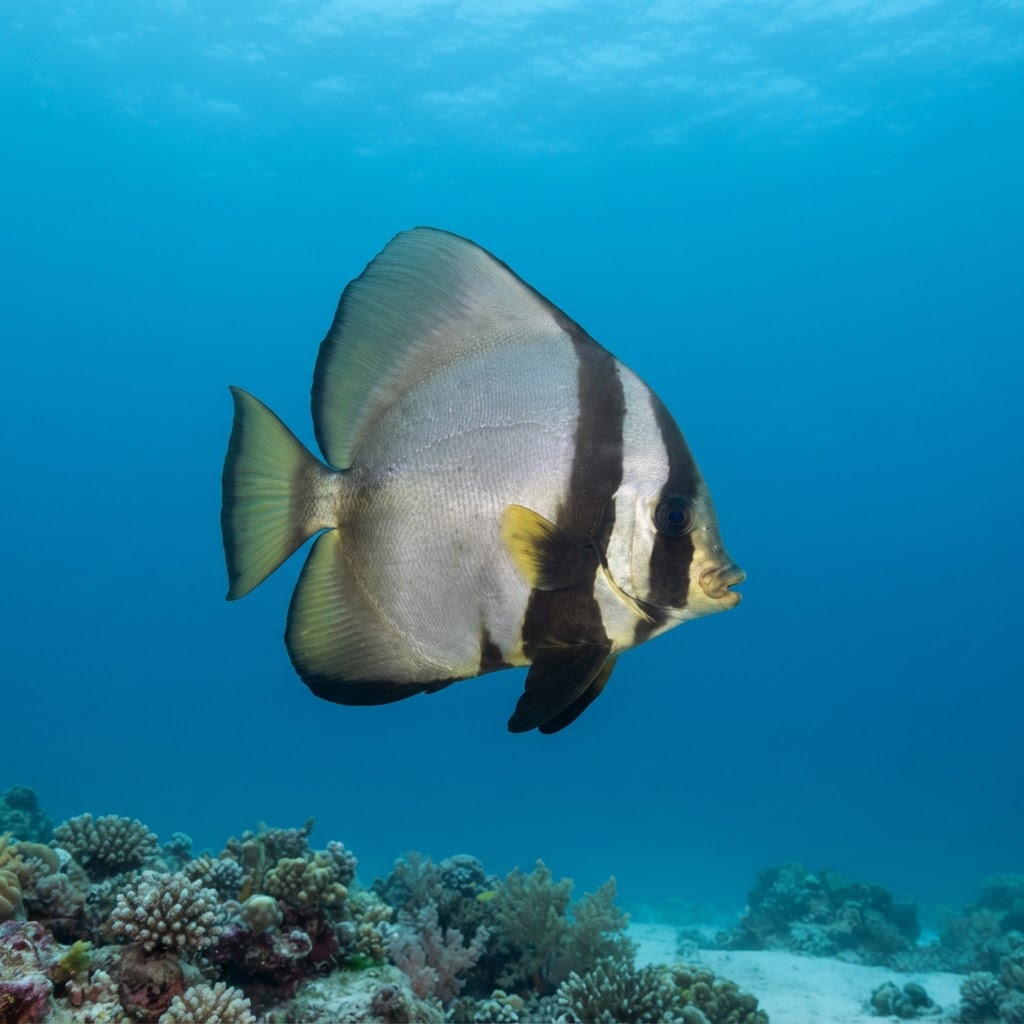
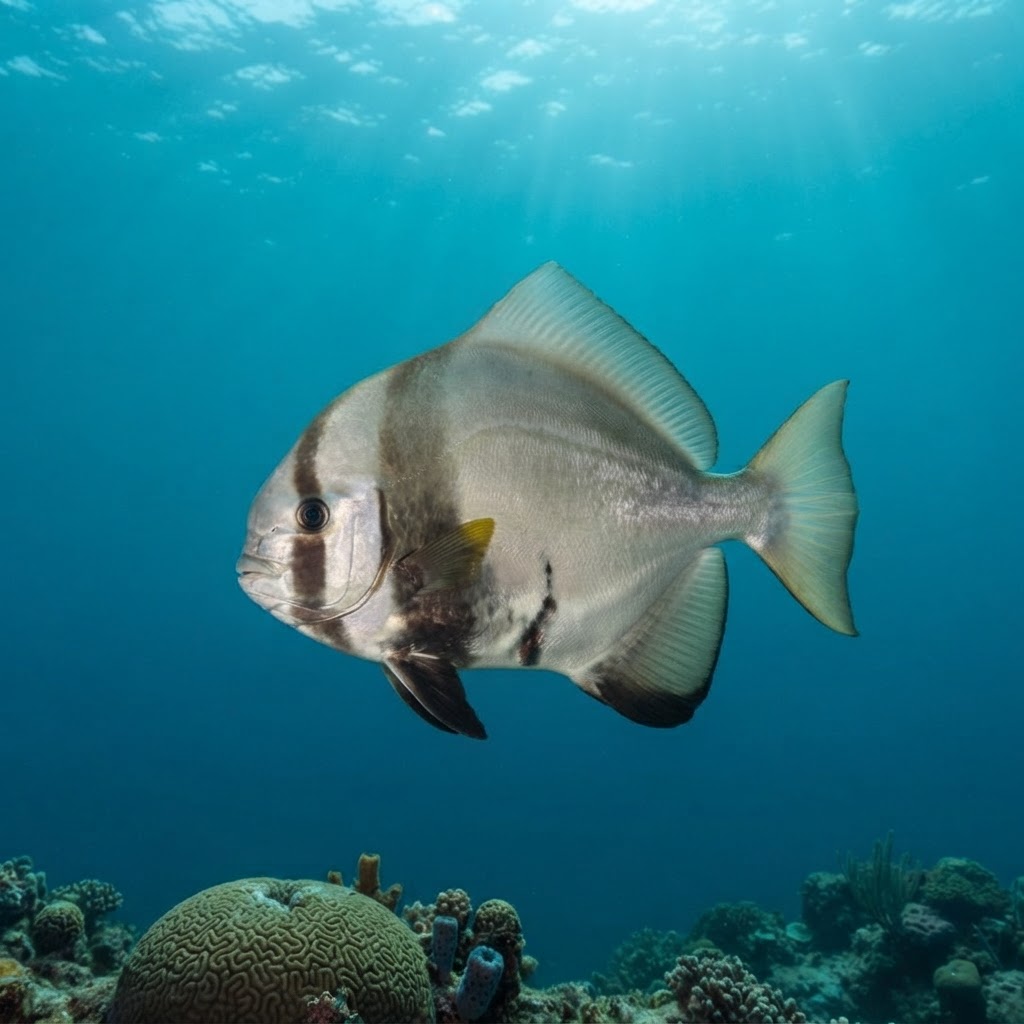
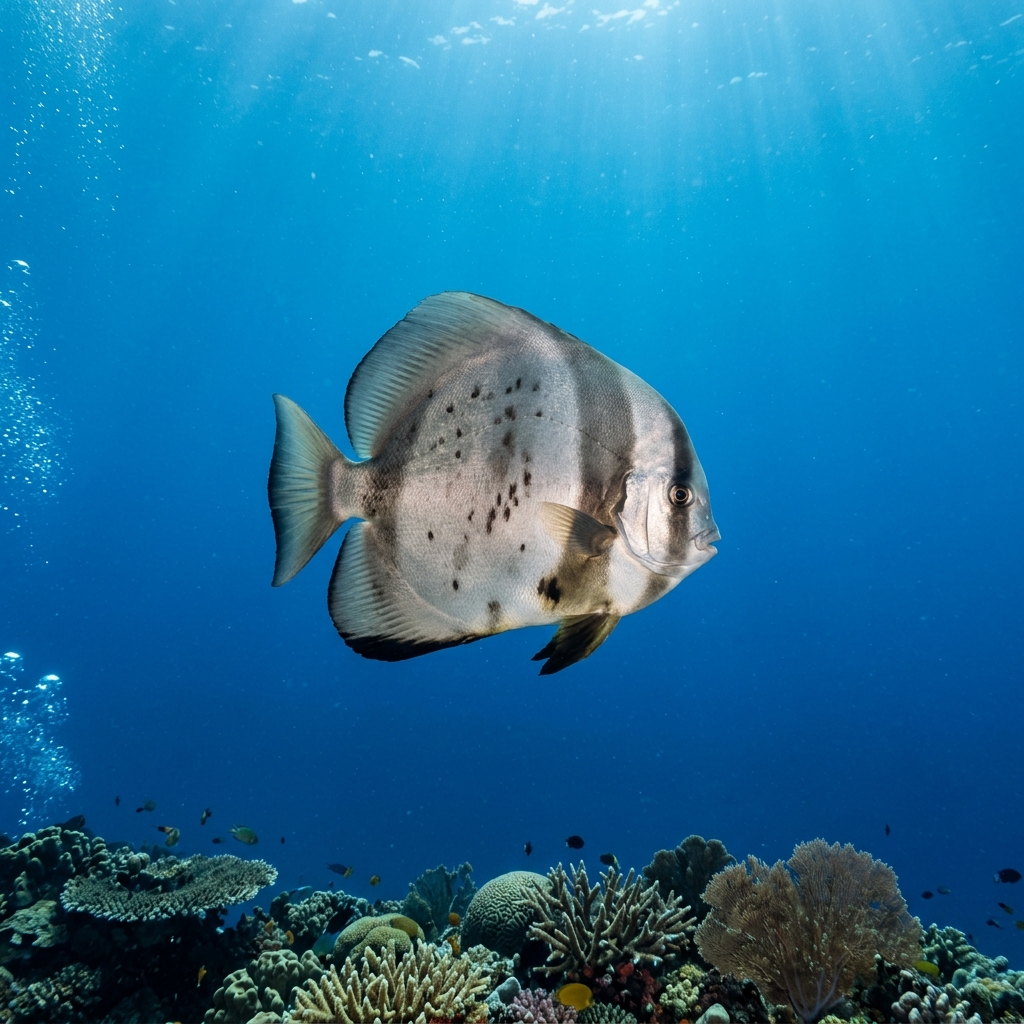
Batfish are hard to miss: a tall, laterally compressed (flattened side-to-side) disc-shaped body, roughly 50 cm across, with dramatically elongated dorsal and anal fins that give the fish its bat-winged silhouette. Colouration is typically silver to pale grey with faint vertical dark bars and a darker band running through the eye. They move slowly and deliberately, often holding their position in the water column rather than hugging the reef floor. Juveniles look completely different, with deep orange-red to dark brown bodies and exaggeratedly long, flowing fins that mimic a drifting dead leaf.
Batfish are among the more approachable fish on the reef, often swimming towards divers out of what looks like plain curiosity and hovering at close range to observe. They turn up alone, in pairs, or in loose small groups, usually in open water just above or beside the reef structure during daylight hours. Move slowly and avoid sudden gestures and they will often linger; rush them and they will simply drift away at their own unhurried pace.
The juvenile leaf-mimicry is one of the more convincing disguises in reef fish life. A young batfish drifts near the surface or in weedy shallows, tilting at an angle and barely moving, almost perfectly replicating a dead floating leaf in both shape, colour, and motion.
No clear seasonal peak has emerged from the data, so batfish are treated as a year-round resident on tropical reefs. Their observed water temperature range of roughly 25 to 29°C aligns with stable tropical conditions across the Indo-Pacific throughout the year.
Reef neighbours a diver could mistake it for. Use the identification notes above to tell them apart.
Batfish are most commonly logged across the Indo-Pacific, with the strongest site coverage in Indonesia, the Philippines, the Maldives, Australia, and Thailand. Top regional hotspots include the North and Central Atolls of the Maldives, Queensland in Australia, and the Visayas and Palawan areas of the Philippines. Sulawesi, Bali, and Sumatra in Indonesia also produce reliable sightings.
Mapping where Batfish is logged…
Batfish are found across a wide stretch of the Indo-Pacific. The most sightings come from Indonesia, the Philippines, the Maldives, Australia, and Thailand. Within those countries, the Maldivian atolls, Queensland reefs, the Philippine Visayas, and Bali are particularly well represented in diver logs.
There is no defined season for batfish based on current sighting data. They appear year-round on tropical Indo-Pacific reefs, which suits their preference for warm water in the 25 to 29°C range. Any time you visit their core range is a reasonable time to look for them.
Look for the tall, disc-shaped silver body with elongated dorsal and anal fins that form a broad, wing-like outline. A dark bar through the eye and faint vertical body bars are common across the genus. They move slowly and tend to hang in open water near the reef rather than darting into coral.
Adults typically reach around 50 cm in body length, making them a reasonably large, conspicuous fish. Their tall body shape means they can appear even bigger in the water than that measurement suggests.
Not at all. Batfish are considered safe and are notable for being calm and curious around divers rather than skittish or aggressive. There is no known risk to divers from encountering them.
Site and sighting data is aggregated from diver logs, iNaturalist and GBIF. For taxonomy and conservation status:
Atlantic Spadefish
417 sites