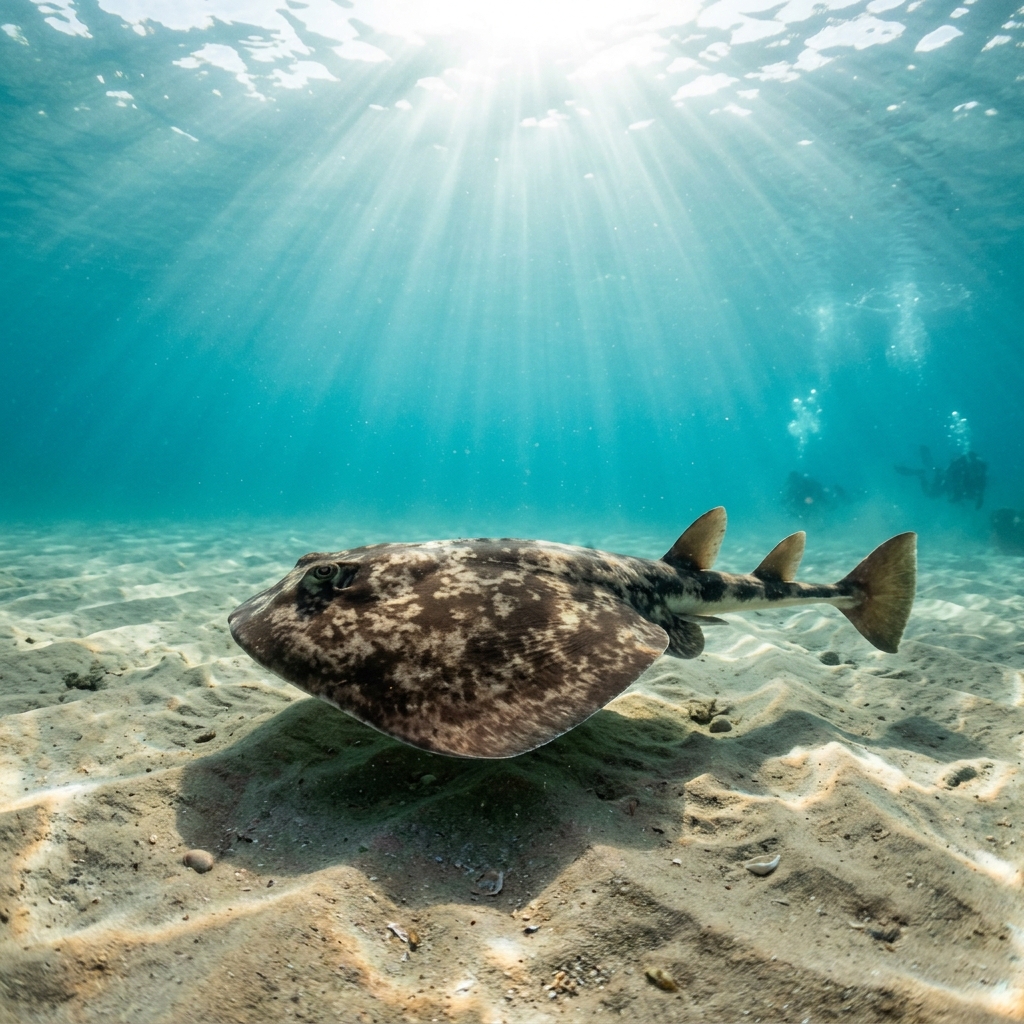
Torpedinidae spp.
Spot torpedo rays from Florida to the Mediterranean, sightings peak Jul, Feb in waters from 13 to 28°C. Here's where divers actually find them.
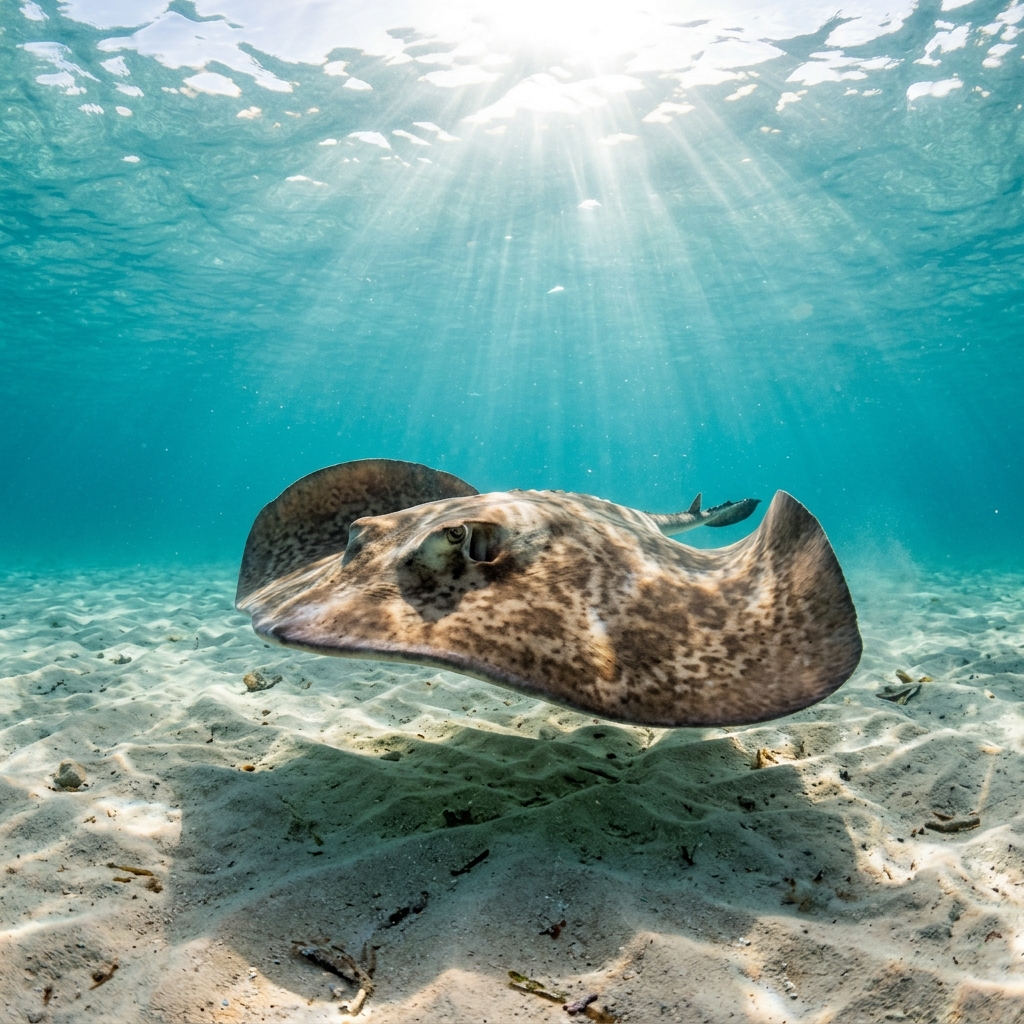
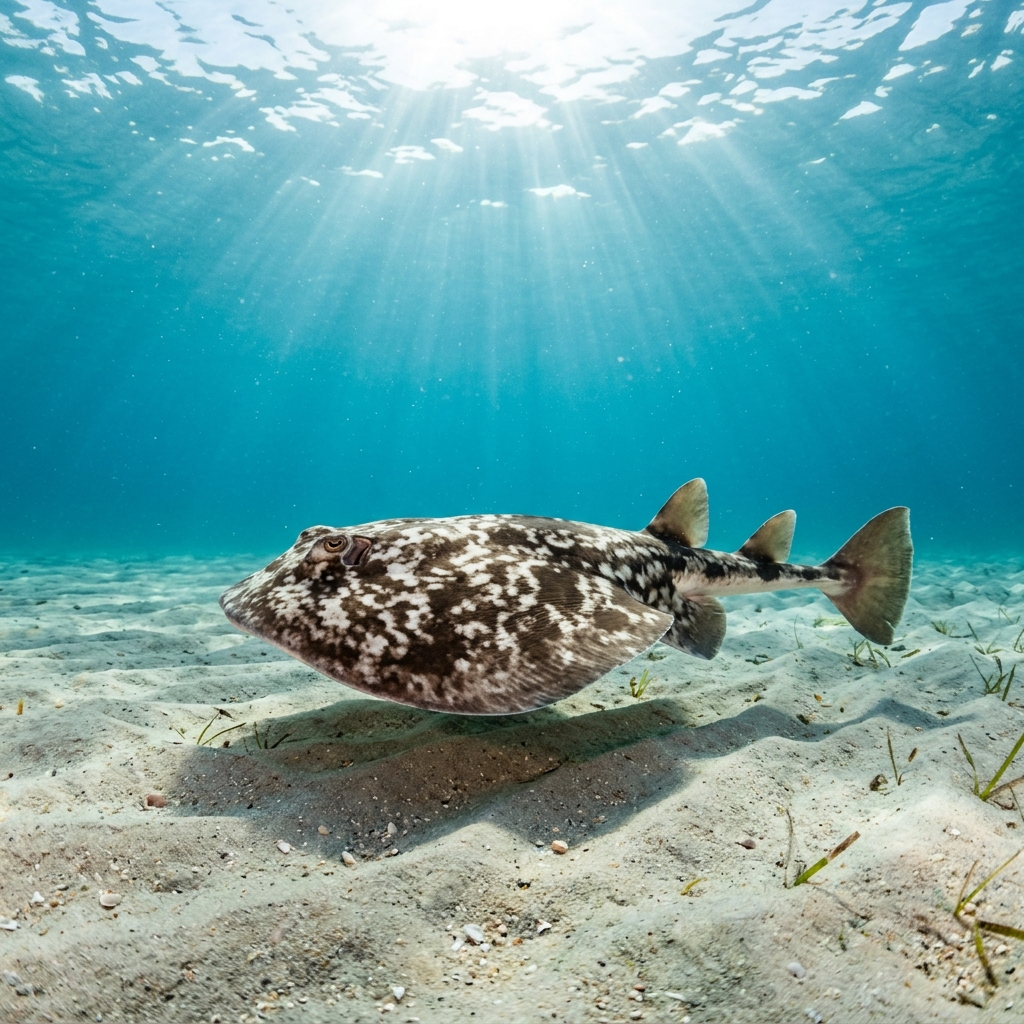
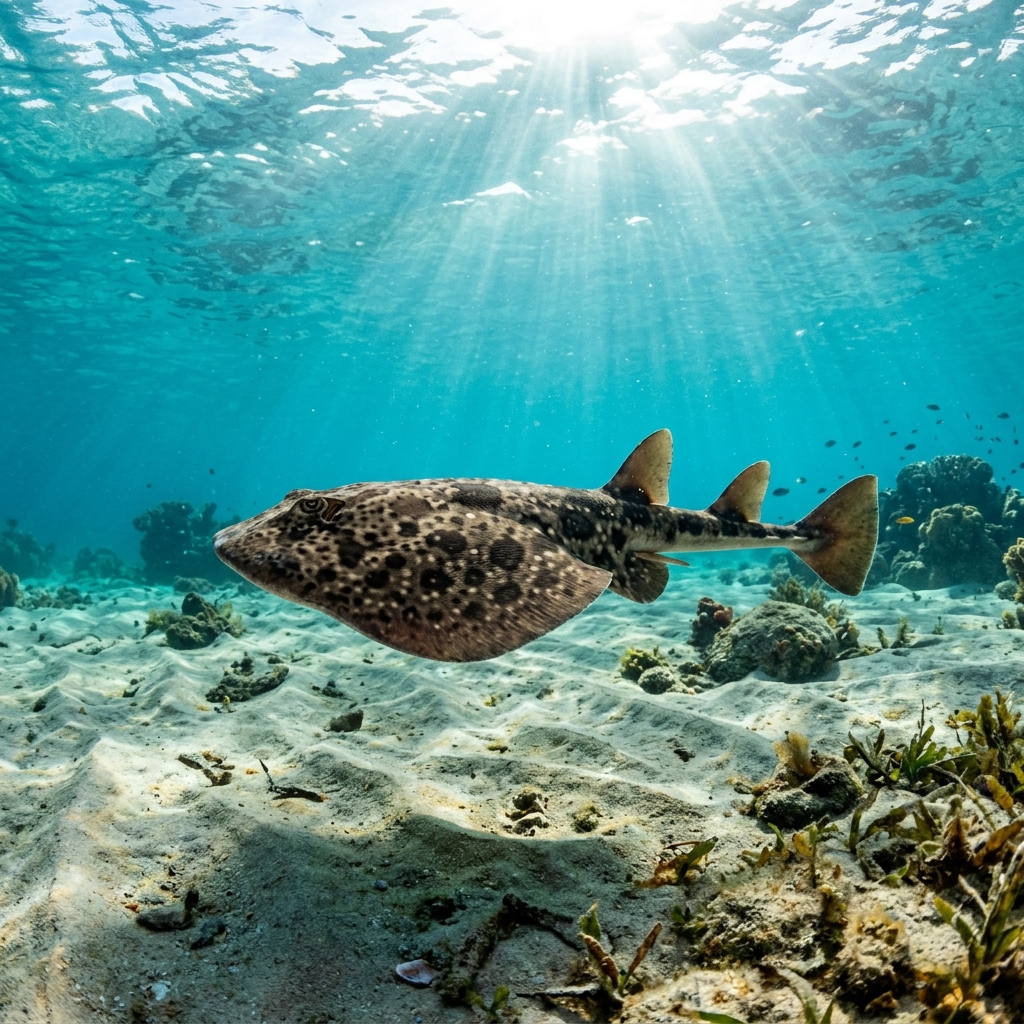
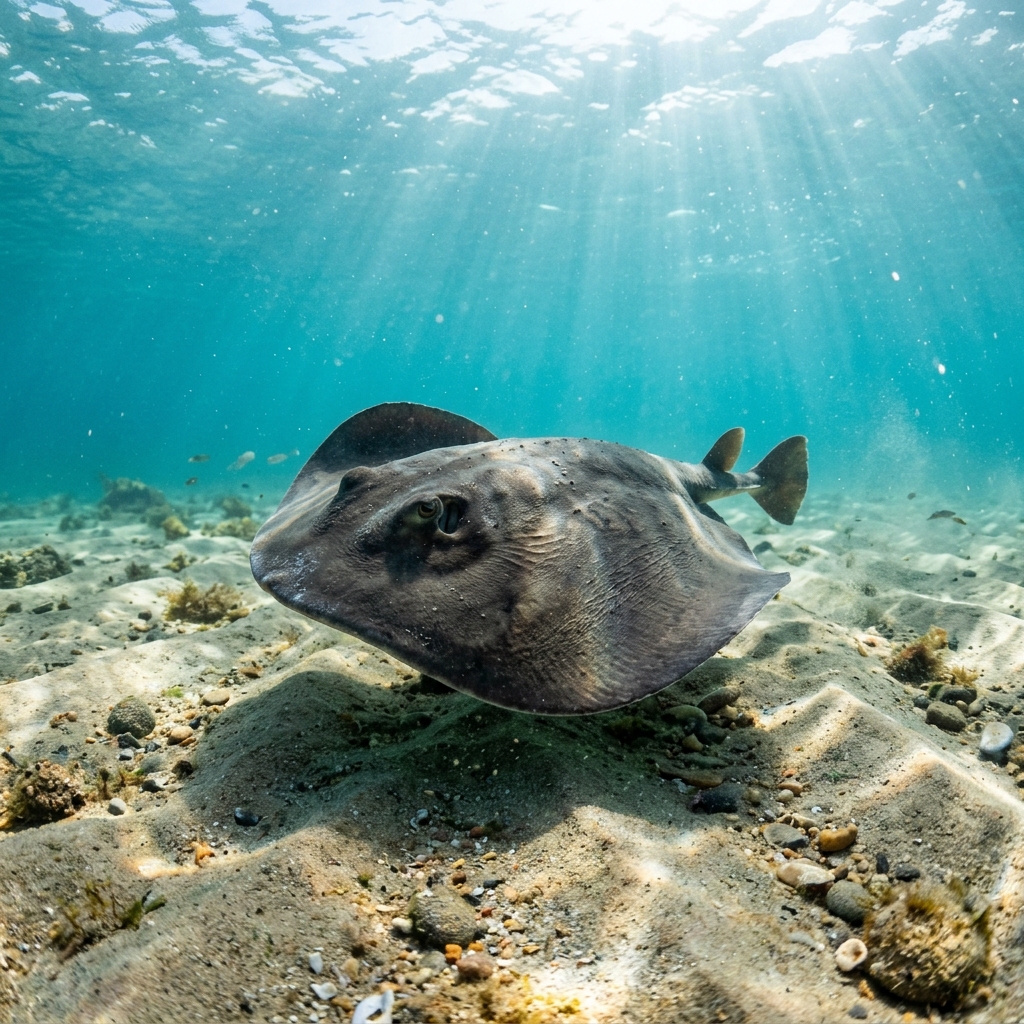
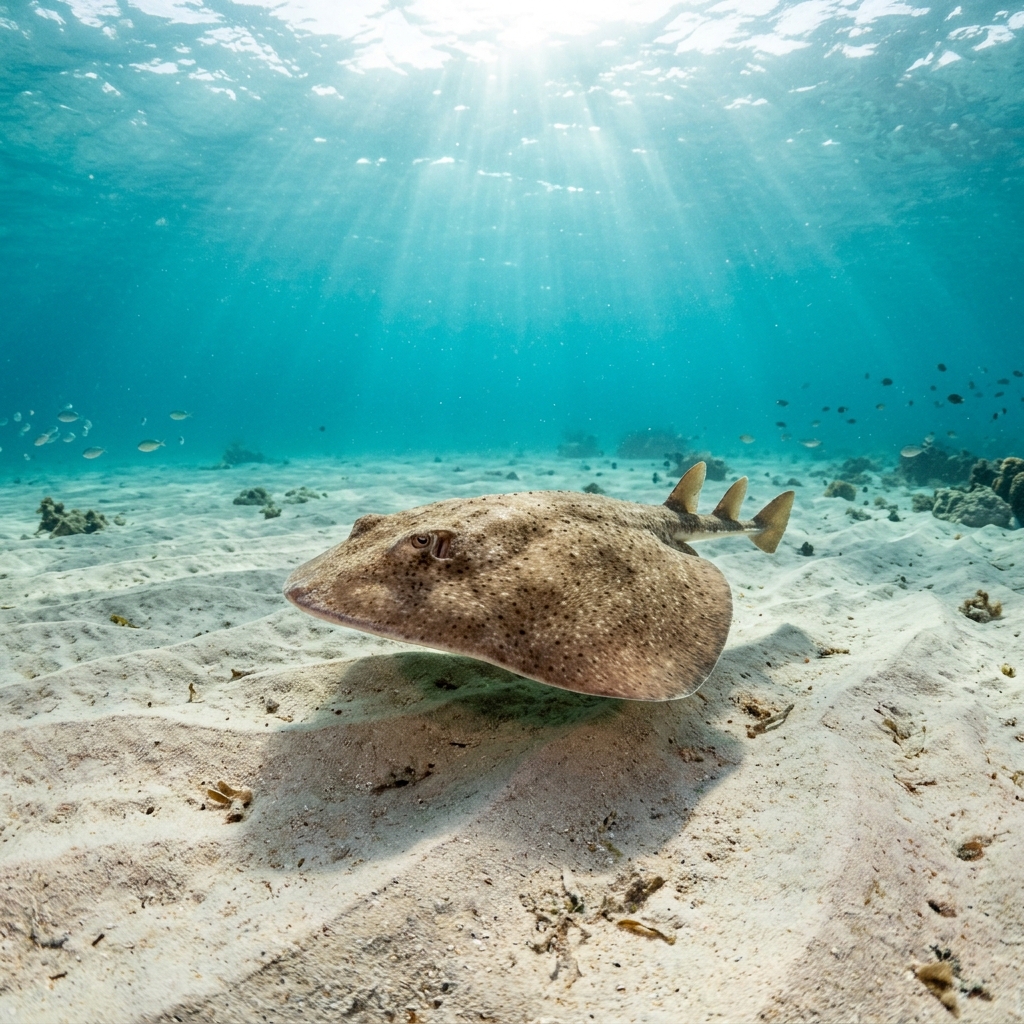
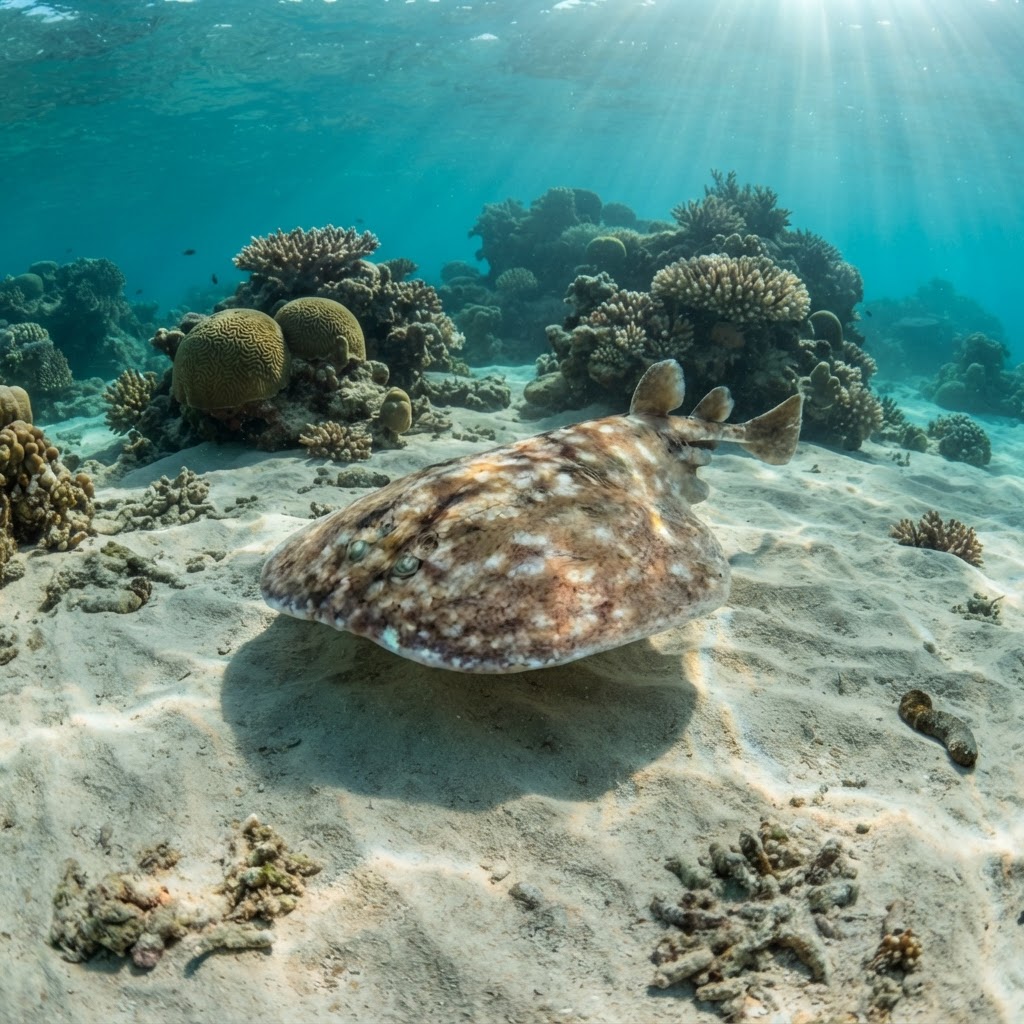
Torpedo rays have a distinctly rounded, almost circular disc, far more symmetrical and compact than a stingray's kite-shaped body, with a thick, fleshy tail that ends in a well-developed caudal fin. The topside is typically smooth and ranges from grey or brown to olive, sometimes with darker blotches depending on the species. Unlike stingrays, there is no spine on the tail. Two kidney-shaped electric organs (the paired structures that generate their defensive charge) are visible as slightly paler, kidney-shaped patches on the underside if you catch a ventral view.
Divers almost always find torpedo rays lying motionless on sand or gravel, partially buried and easy to miss until something disturbs the seabed. When approached calmly they tend to sit tight, but a startled individual will push off with a powerful tail stroke and glide away low across the bottom. They are ambush predators, so sandy patches adjacent to reef edges or rubble are the most productive places to search.
Torpedo rays produce electric discharges of up to 220 volts, one of the strongest outputs of any electric fish, used to stun prey and deter threats. The family gave its name to the naval weapon: 'torpedo' comes from the Latin for numbness or paralysis.
In the Northern Hemisphere, sightings concentrate from July through February, covering both the warm summer months and much of winter, reflecting a family comfortable anywhere from 13°C to 28°C. There is no single narrow peak, so a winter dive in the Mediterranean or a summer trip to Florida both fall within the productive window.
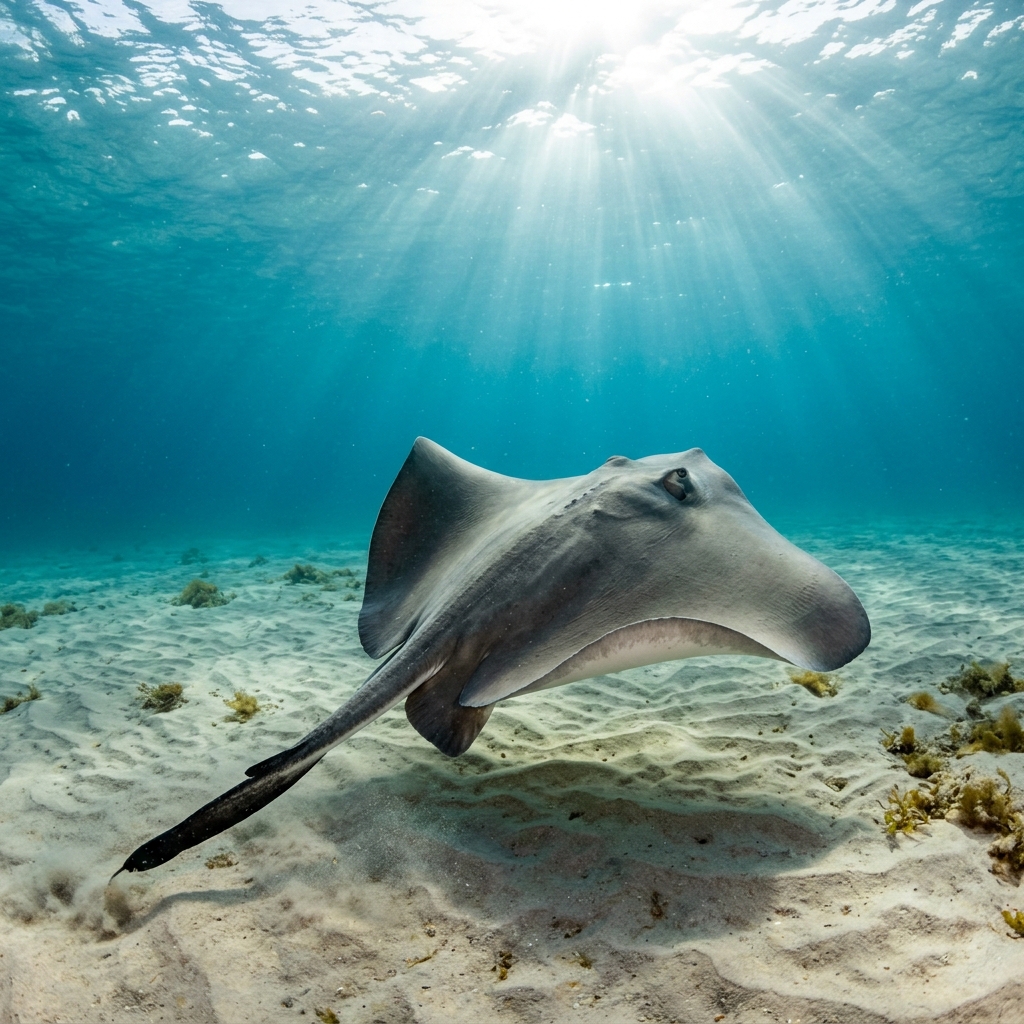
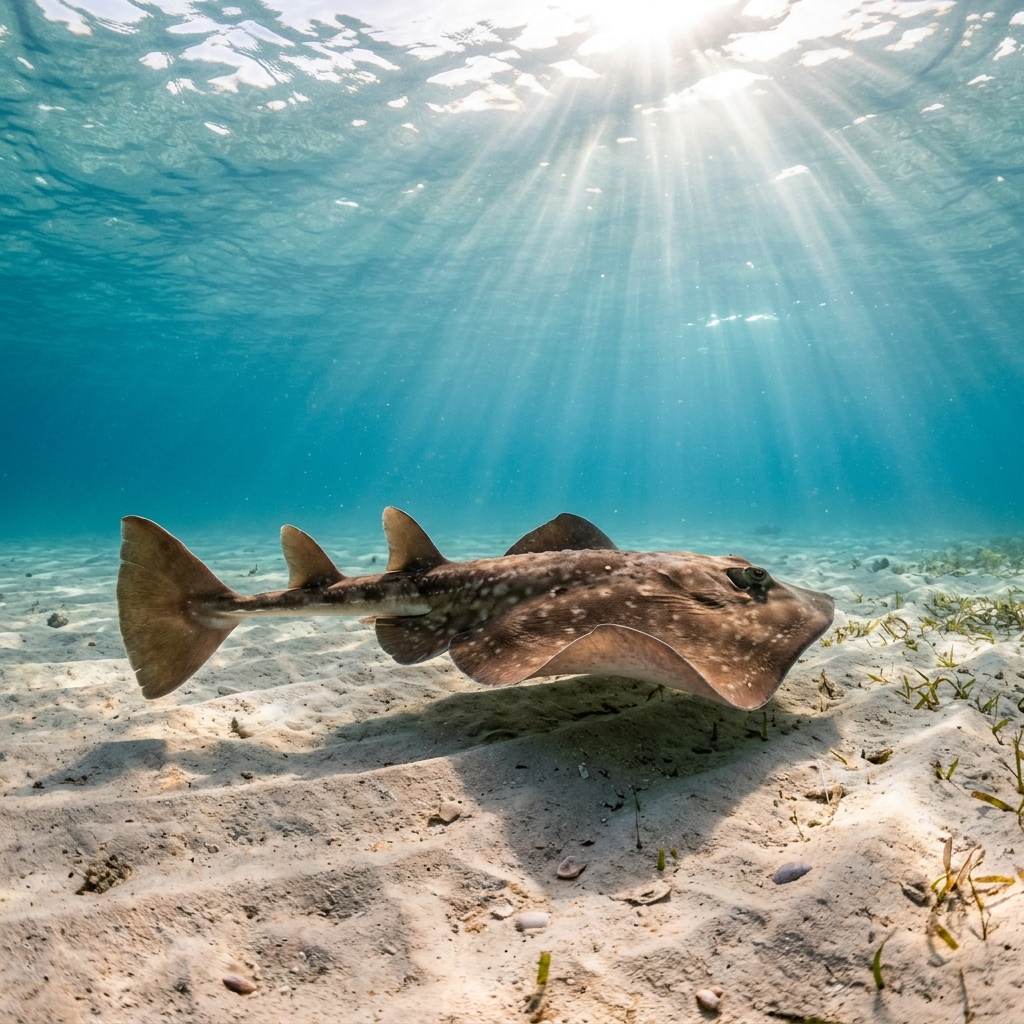
Reef neighbours a diver could mistake it for. Use the identification notes above to tell them apart.
Torpedo rays are most commonly logged in the United States, with Florida and the wider Southeast coast the single strongest region. The Mediterranean is excellent, Italy, Greece, France, Spain, and Turkey all return regular sightings, with the Costa Brava and Attica standing out as notable hotspots. Australia's Western Australia coast, Japan's Izu Peninsula, and Brazil's Rio de Janeiro and São Paulo coast round out the global picture.
Mapping where Torpedo Ray is logged…
The strongest sighting records come from Florida and the US Southeast coast, plus the Mediterranean, particularly Italy, Greece, Spain's Costa Brava, and Turkey. Japan's Izu Peninsula, Western Australia, and Brazil's southeastern coast are also reliable regions. Altogether the family has been logged across a wide spread of tropical and temperate seas worldwide.
Northern Hemisphere sightings concentrate between July and February, so there is no single month to avoid. Summer works well in the Mediterranean and along the US coast; winter and autumn dives in those same regions still fall within the productive season. The family tolerates a broad temperature range, which explains why sightings persist well into cooler months.
Look for the distinctly round, almost circular disc, it looks like a thick dinner plate compared to the diamond or kite shape of most stingrays. The tail is short and muscular with a proper caudal fin, and there is no tail spine. Colouration is typically plain grey, brown, or olive above. If you see a ray on sand that looks unusually round and stubby-tailed, it is almost certainly a torpedo ray.
Size varies across the family, but many species reach 60-180 cm in disc width and can weigh upward of 90 kg in the larger members. Underwater they often look smaller than they are when resting flat on the seabed, so approach slowly, what looks like a modest disc can turn out to be a large animal.
They are not considered dangerous in normal circumstances, but they can deliver a powerful electric shock if handled or stepped on. Some species generate up to 220 volts. The practical rule is simple: observe from a short distance, never touch, and watch where you kneel on sandy patches. A startled ray that discharges against bare skin will leave an unpleasant impression.
The name comes from the Latin 'torpere', meaning to be numb or paralysed, a reference to the electric shock these rays can deliver. When the naval torpedo was invented in the 19th century, engineers borrowed the name from the ray, not the other way around. The electric organs sit as paired kidney-shaped structures on either side of the head and can stun prey fish outright.
Site and sighting data is aggregated from diver logs, iNaturalist and GBIF. For taxonomy and conservation status:
Coffin Ray
61 sites