Heniochus acuminatus
Spot Longfin Bannerfish across the Maldives, Philippines and Red Sea. Know its bold black-and-white stripes and trailing dorsal fin before you dive.
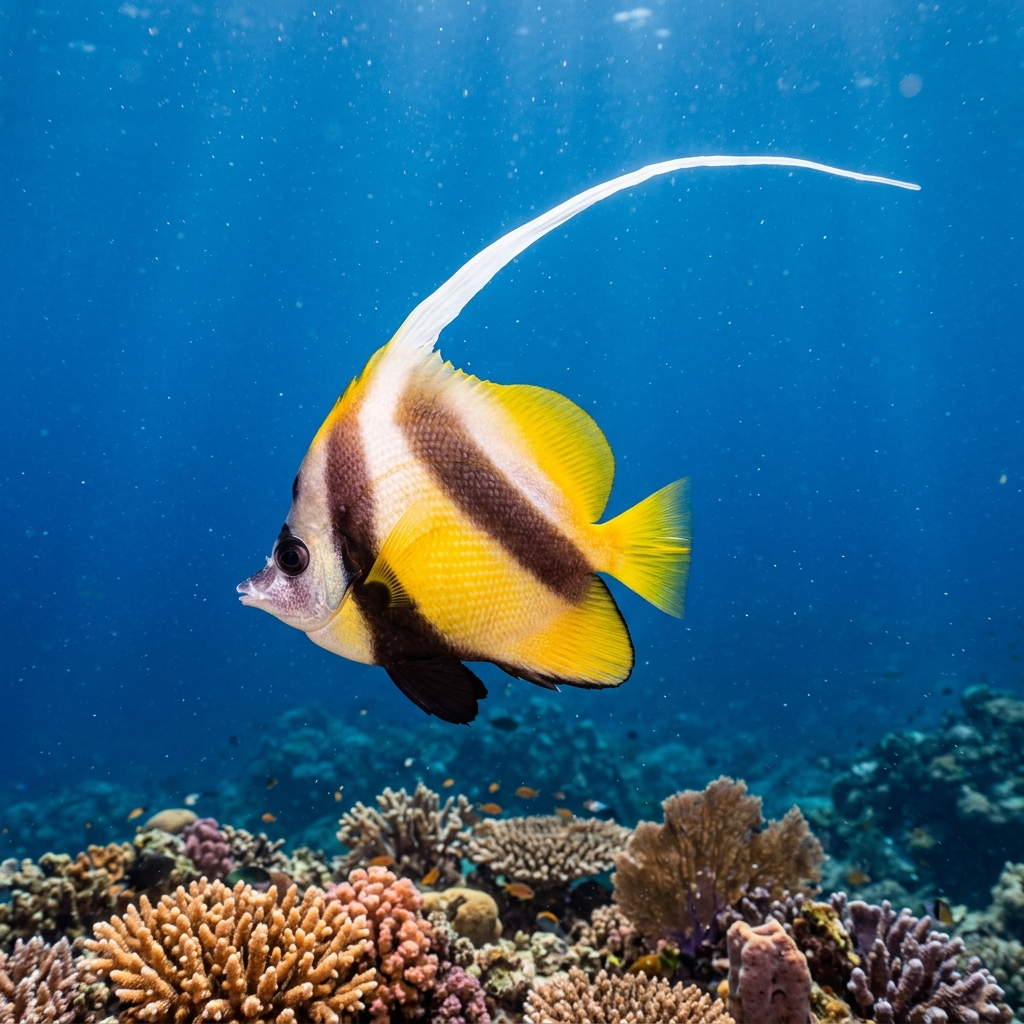
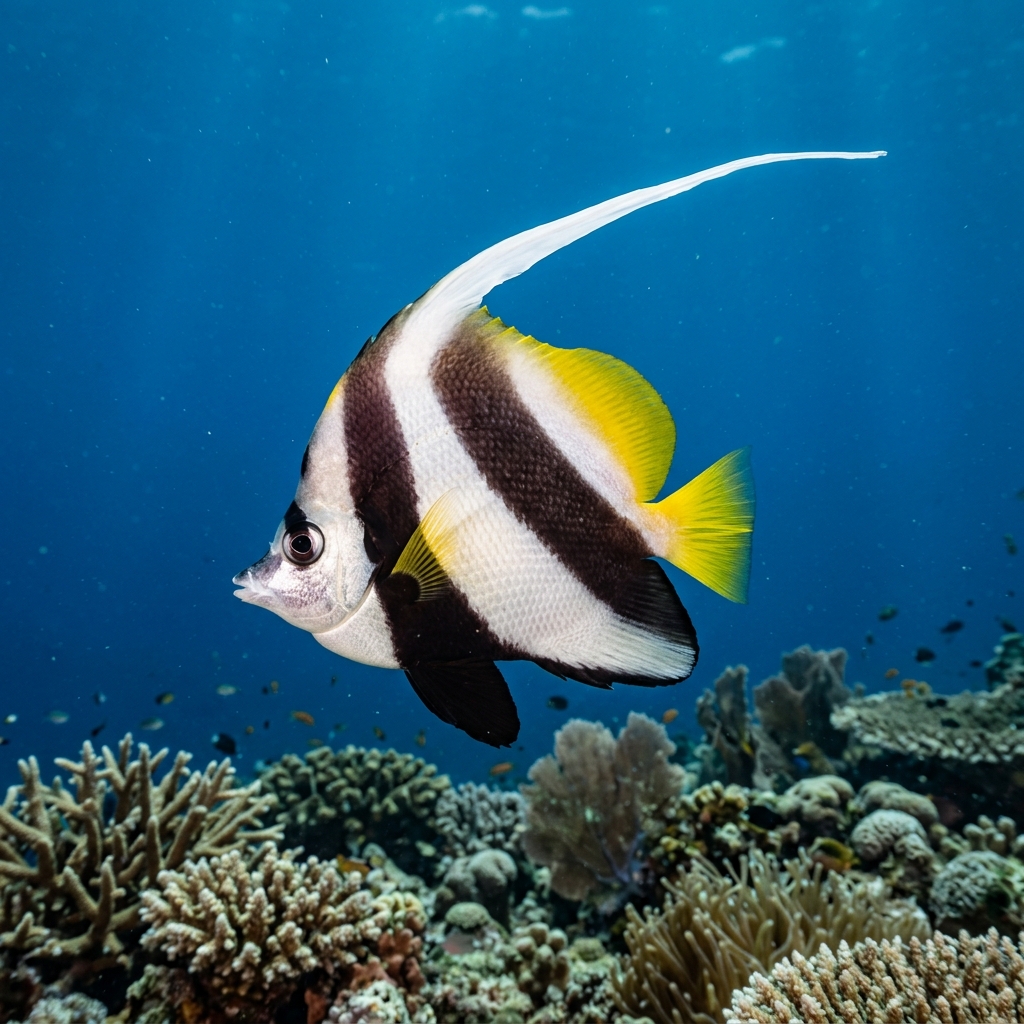
Bold black-and-white vertical bands are the instant giveaway: two wide black patches bracket a broad white mid-body, and a long, white filament trails from the dorsal fin like a pennant. At around 17 cm it is a mid-sized butterflyfish, flattened side-on as the family always is, with a small protruding snout. The yellow tinge on the tail and rear body is a useful secondary mark. Juveniles look almost identical to adults, which is unusual in butterflyfishes.
Typically spotted hovering calmly near coral formations or drifting in small loose groups mid-water, picking at zooplankton and small invertebrates with that pointed snout. It is active throughout the day and shows little alarm at divers, generally holding its position long enough for a good look as long as you approach slowly. Watching a small group interact around a coral head, periodically darting to snatch prey, is one of the more relaxed reef-watching experiences.
Longfin Bannerfish are one of the few butterflyfish species known to feed heavily on zooplankton in the water column, not just on coral polyps and benthic invertebrates, which is why you often find them hovering slightly off the reef rather than pressed against it.
In Northern Hemisphere sites the sightings concentrate between October and March, so plan Maldives or Red Sea trips accordingly. Southern Hemisphere sites such as Queensland, Australia peak January through July.
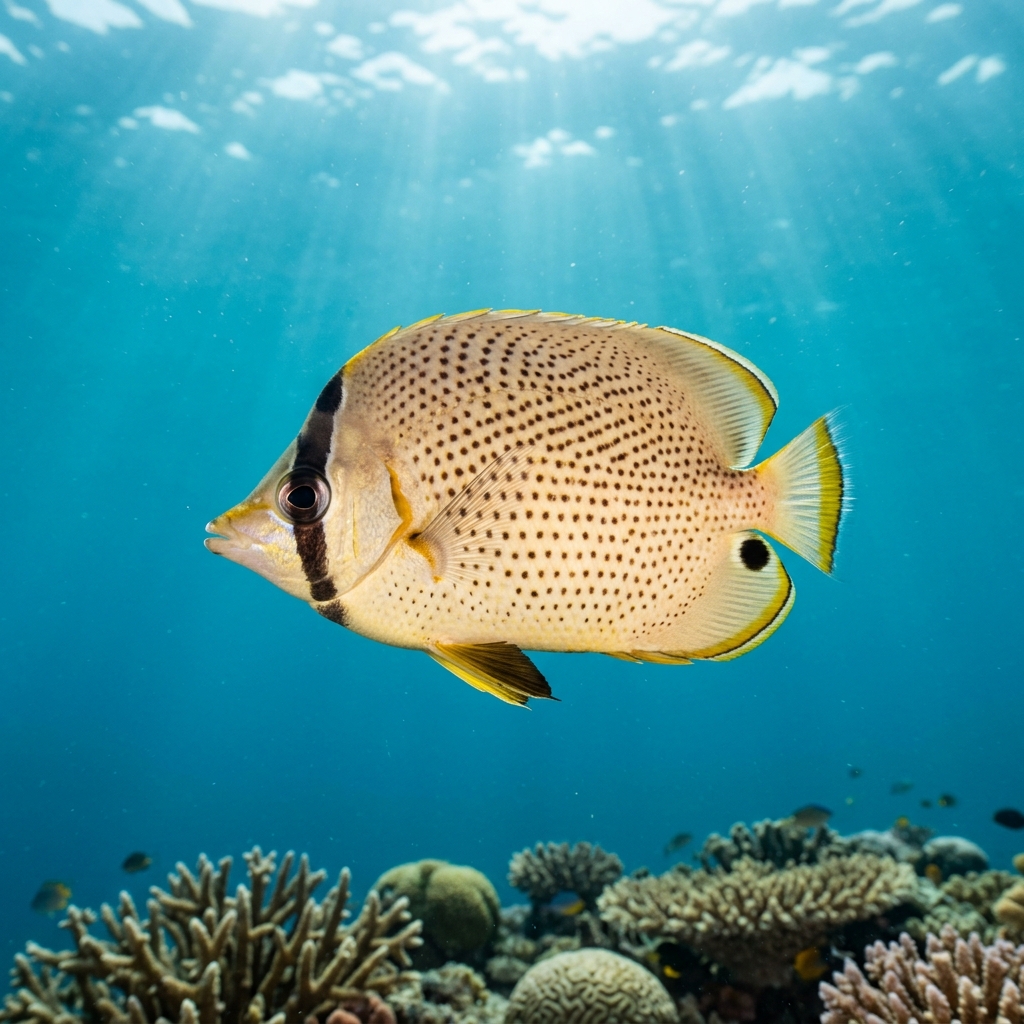
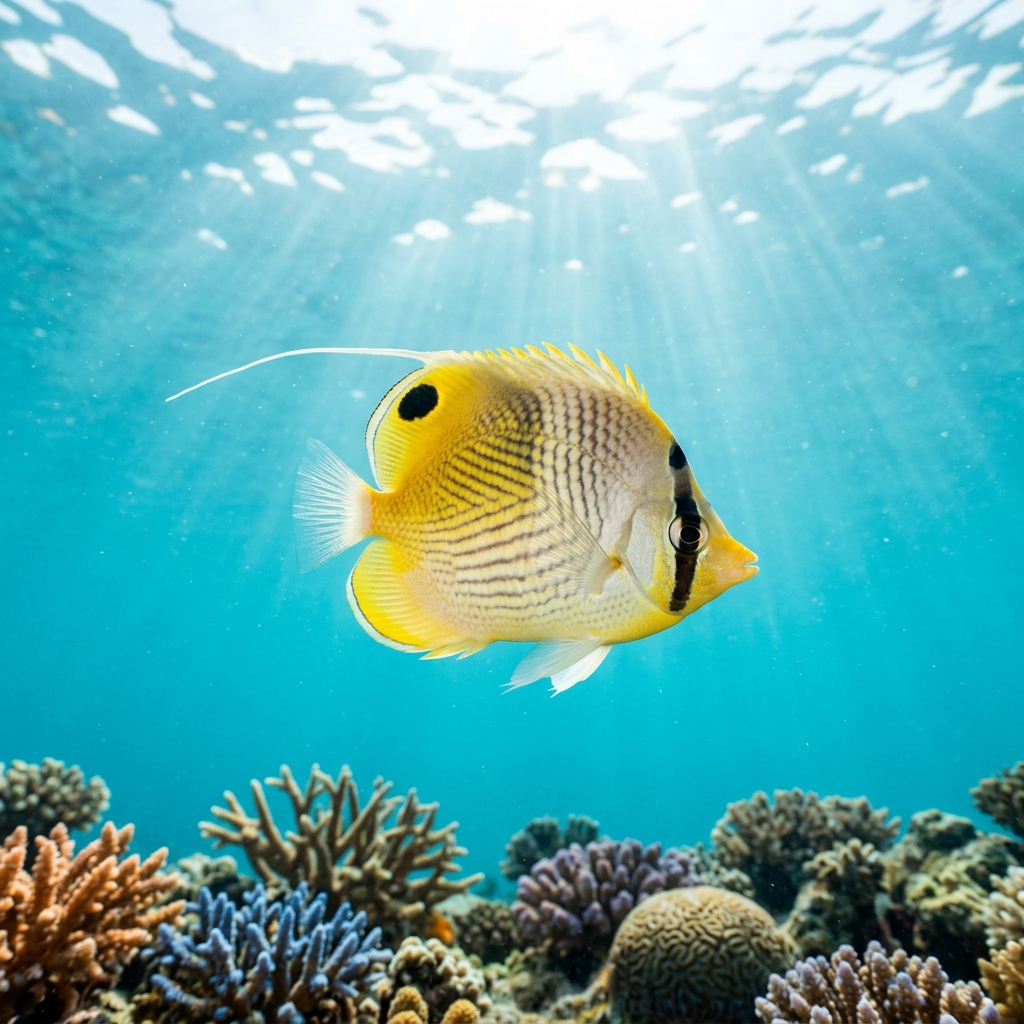
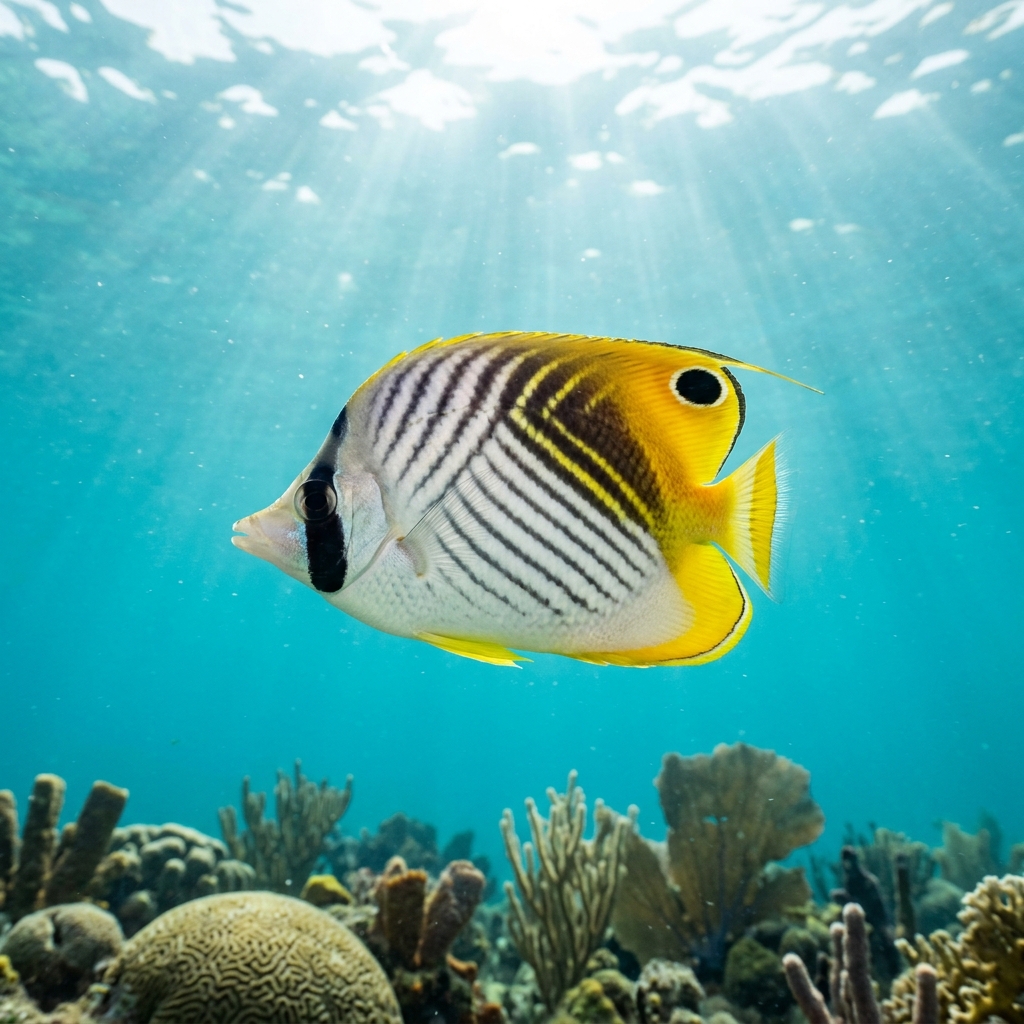
Reef neighbours a diver could mistake it for. Use the identification notes above to tell them apart.
Most consistently logged across the Maldives, particularly the Male and Ari Atolls and the northern atolls, making that archipelago the standout destination. Strong populations are also recorded throughout the Philippines, Indonesia, and Thailand, with the Gulf of Thailand South and Palawan among the reliable regions. The Egyptian Red Sea and Oman round out the spread for divers heading to the Indo-Pacific's northwestern edge.
Mapping where Longfin Bannerfish is logged…
The Maldives is the top destination, with strong sightings across both the Male and Ari Atolls and the northern atolls. The Philippines, Indonesia, and Thailand also have a wide spread of sites, and the Egyptian Red Sea and Oman offer reliable encounters for those diving the northwest Indo-Pacific.
On Northern Hemisphere reefs such as the Maldives and Red Sea, sightings peak from October through March. Divers heading to Queensland and other Southern Hemisphere sites have the best luck from January to July. The species tolerates water temperatures from roughly 24 to 29 °C, so it is present on tropical reefs throughout the year, just less frequently logged outside those windows.
Look for two wide black body patches on a white disc-shaped fish with a long trailing dorsal filament. A yellow wash on the rear body and tail seals the ID. At about 17 cm it is a manageable size to observe, and the pennant-like dorsal extension is visible from several metres away.
Typical adults reach around 17 cm in length. They are mid-sized for a butterflyfish, with a strongly flattened, disc-like body that can make them look larger face-on than they actually are.
No. They are entirely peaceful fish that pose no threat to divers or snorkellers. Their small, pointed mouths are adapted for picking tiny invertebrates, and they have no venom or defensive spines of concern.
Site and sighting data is aggregated from diver logs, iNaturalist and GBIF. For taxonomy and conservation status: