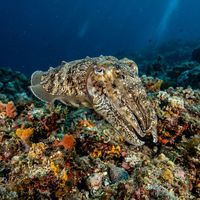
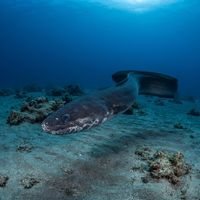
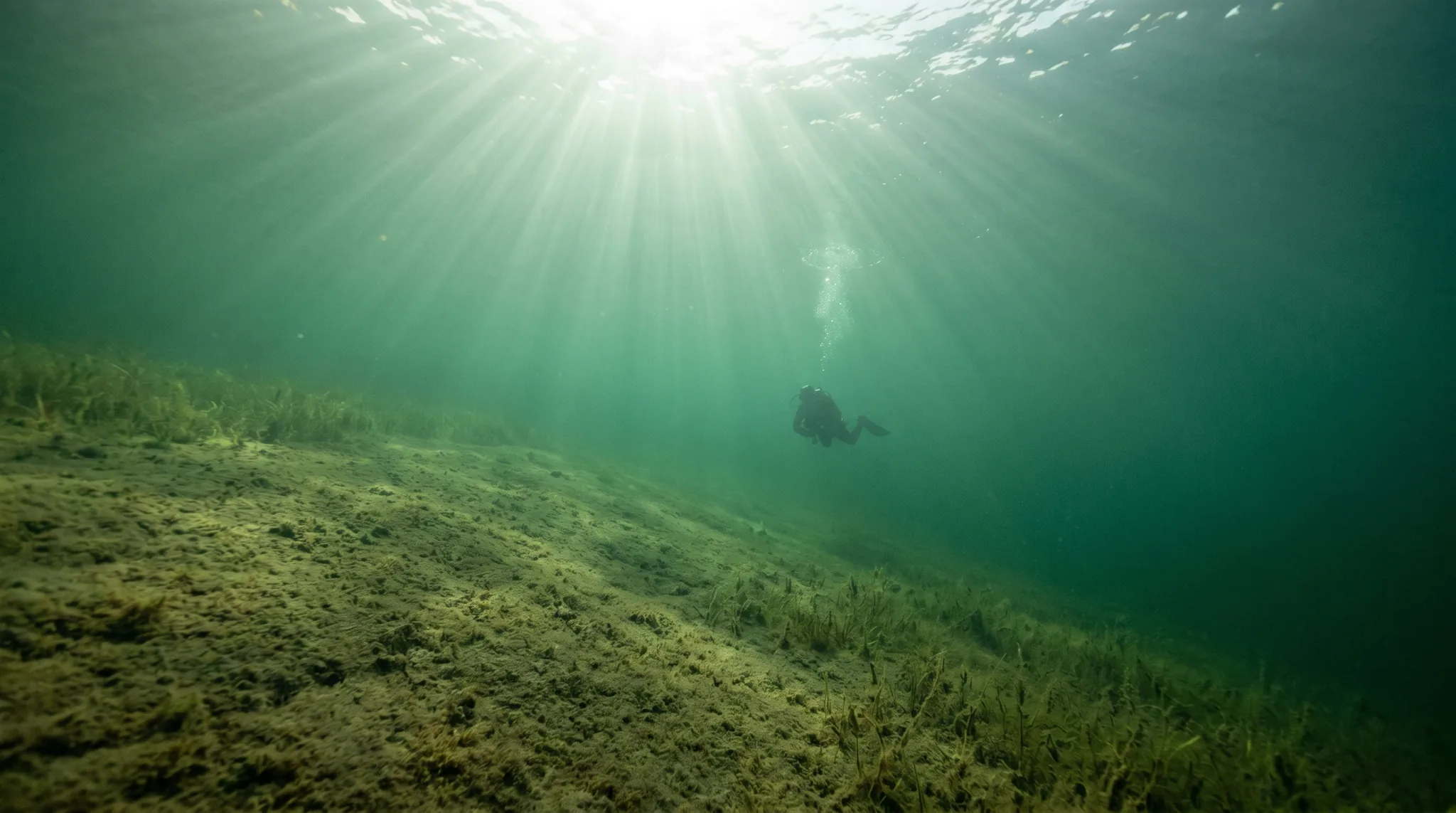
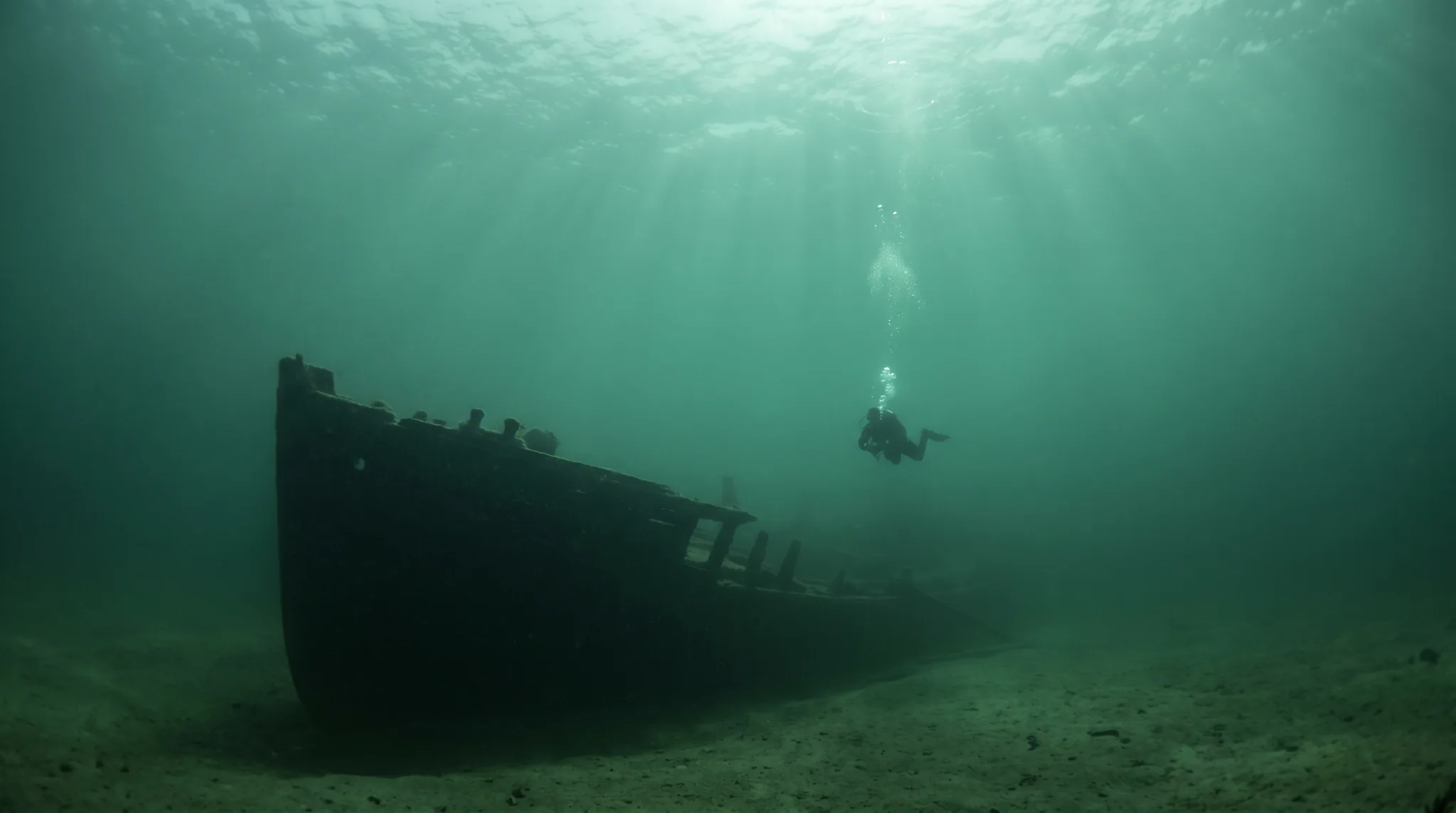
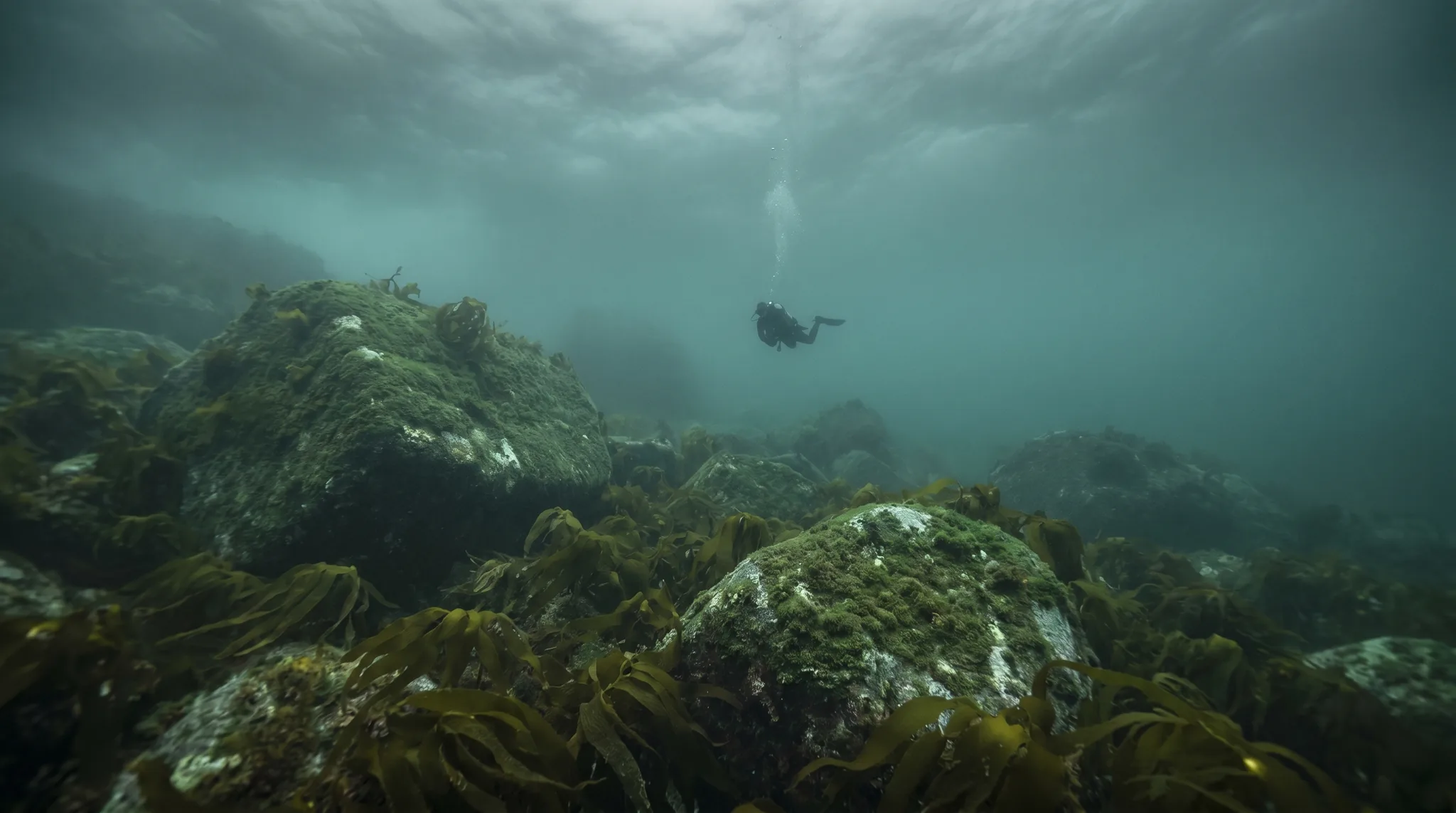
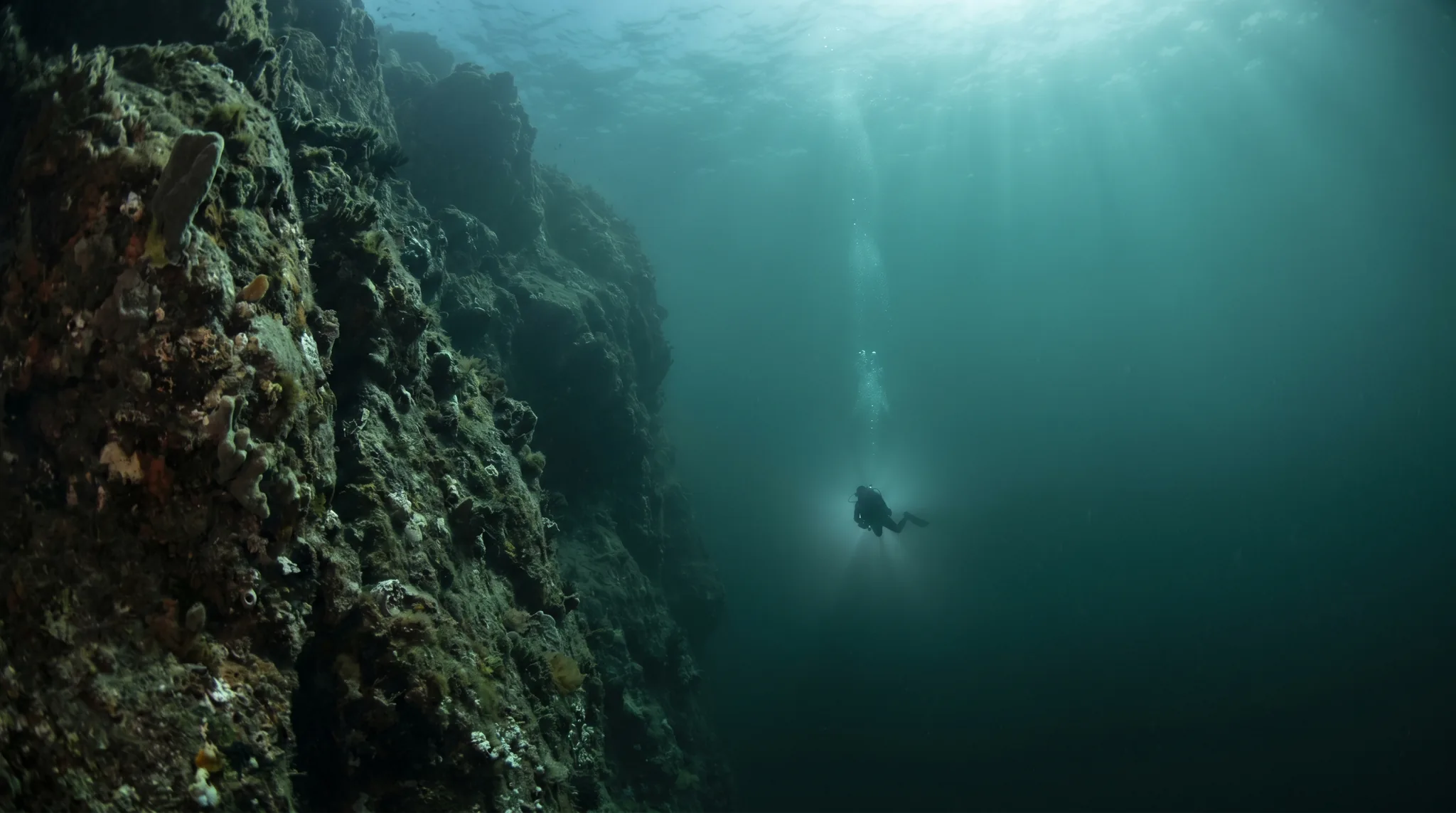
Rías Baixas offers a varied diving landscape built around rocky reefs, walls, kelp forests, and a strong wreck contingent. The sheltered ría inlets produce calmer conditions suited to beginners, while exposed headlands such as Cabo Udra and sites like Pecio Isurus challenge more experienced divers with depth and current. Cephalopods define the marine character here: Common Octopus and European Common Cuttlefish are observed across almost every site, alongside Conger Eel, Cod, Catshark, and a rich spread of invertebrates.
Monthly water temperature across Rías Baixas's sites, from satellite sea-surface data corrected for depth. The band shows the site-to-site spread.
Water temperatures remain cool throughout the year, dipping lowest in winter and peaking slightly in autumn. The warmest, clearest conditions align with the summer and early autumn months, when calm weather also improves surface conditions in the rías. Winter diving is possible but calls for more thermal protection and tolerance for reduced visibility.
24 operators
Cangas, Spain
Boiro, Spain
Nigran, Spain
Vigo, Spain
Vilagarcia de Arousa, Spain
24 more sites to explore
Water temperature around Rías Baixas ranges from about 14°C in January to 17°C in October, based on satellite sea-temperature data for its dive sites.
With water around 14–17°C, a 7mm or semi-dry suit works in Rías Baixas year-round.
Fin maps 36 sites in Rías Baixas (34 scuba diving sites and 3 snorkelling spots, with some suited to both).
Across Rías Baixas's dive sites, June, July, August and September are most often reported as the best months to visit.
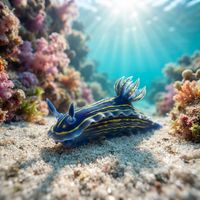
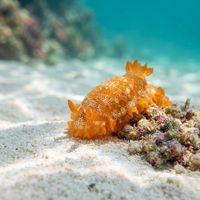
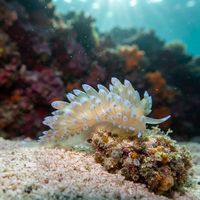
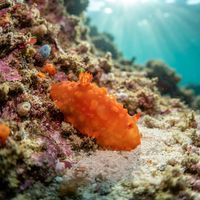
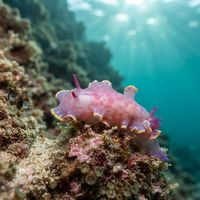
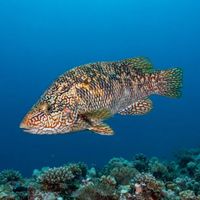
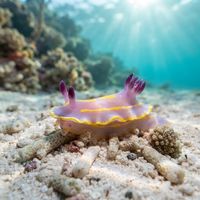
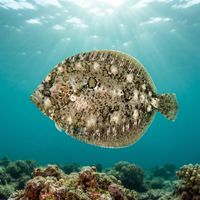
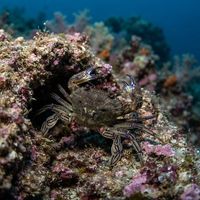
Common Octopus and European Common Cuttlefish are observed at nearly every site, making them the defining encounters of the region. Conger Eel, Cod, Wrasses and Bream are frequently recorded on the reefs, while Catshark, Skate and Gurnard appear across many sites. Invertebrate life is rich, with Spiny Spider Crab, Squat Lobster, Slipper Lobster, Brittle Star and the nudibranch Felimare villafranca all confirmed by divers.
A good proportion of sites in Rías Baixas are rated for beginners, including shallow reef dives such as Dr. P. Alonso, Praia das Pipas and Pedra do Farol, as well as the cave and wall site Gruta del Ruso. The sheltered inlets tend to produce milder currents than exposed headland sites. Intermediate and advanced divers are also well served by deeper wrecks and more challenging wall dives.
The rías themselves contain calmer, shallower reef and wall dives well suited to less experienced divers, along with the distinctive mussel-farming structures at Bateas that create unusual drift conditions. The outer islands and headlands, including Islas Cíes and Cabo Udra, offer deeper walls, kelp forests and more current. Wrecks range from the shallower Aries Wreck to the deeper, well-preserved Pecio Isurus.
The majority of sites require boat access, and there are numerous local operators serving the region, including Buceo Rías Baixas, Bahia-Sub, Náutica Medusa and Buceo Atlantis Cies among others. A handful of sites, including Gruta del Ruso, O Cabalo in Bueu and Pedra do Farol, can be reached from shore, giving independent divers some flexibility.