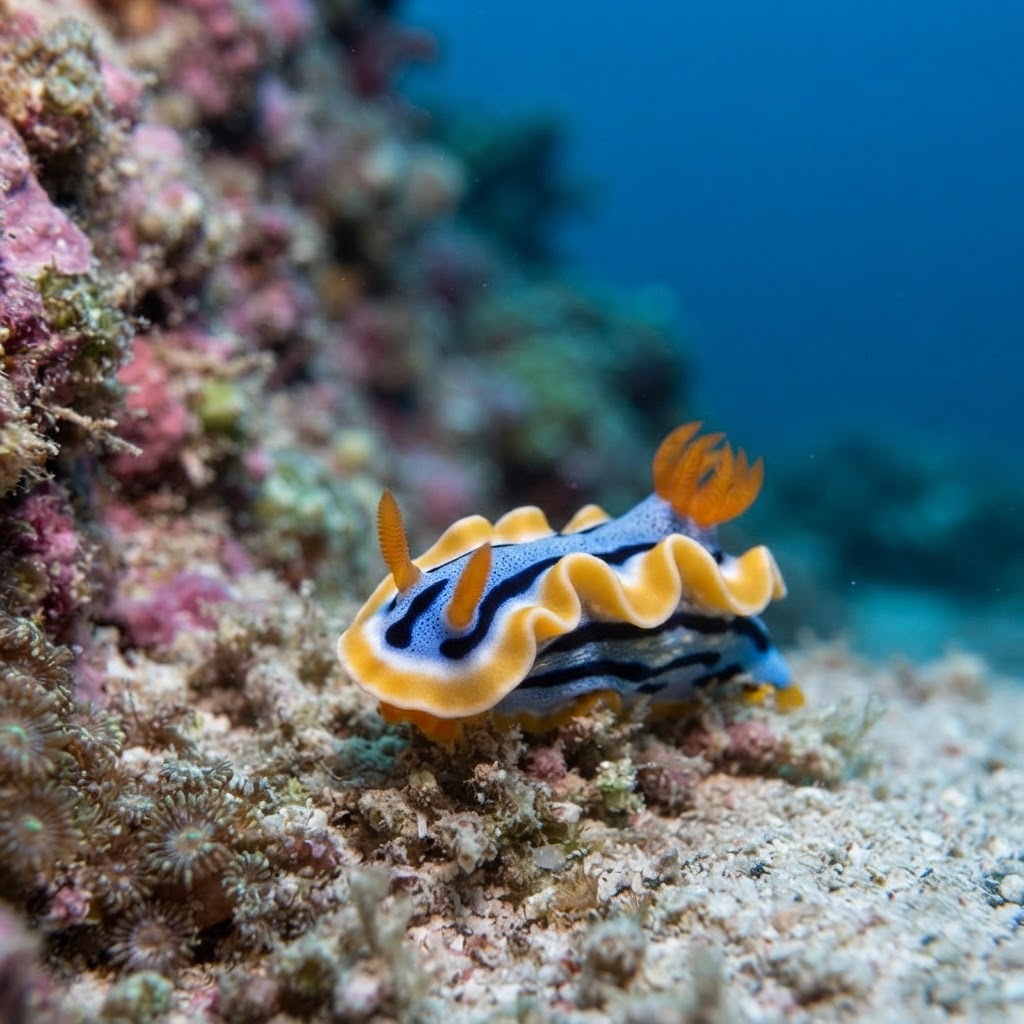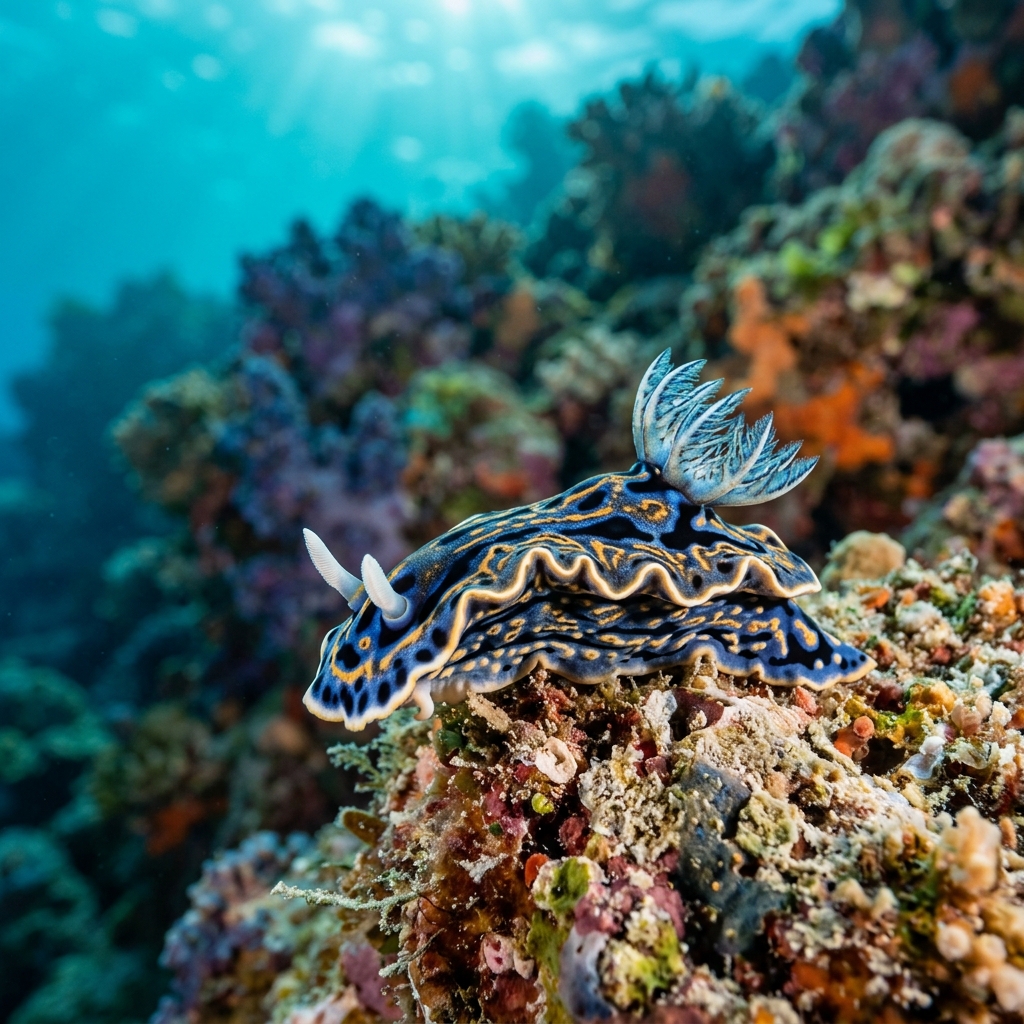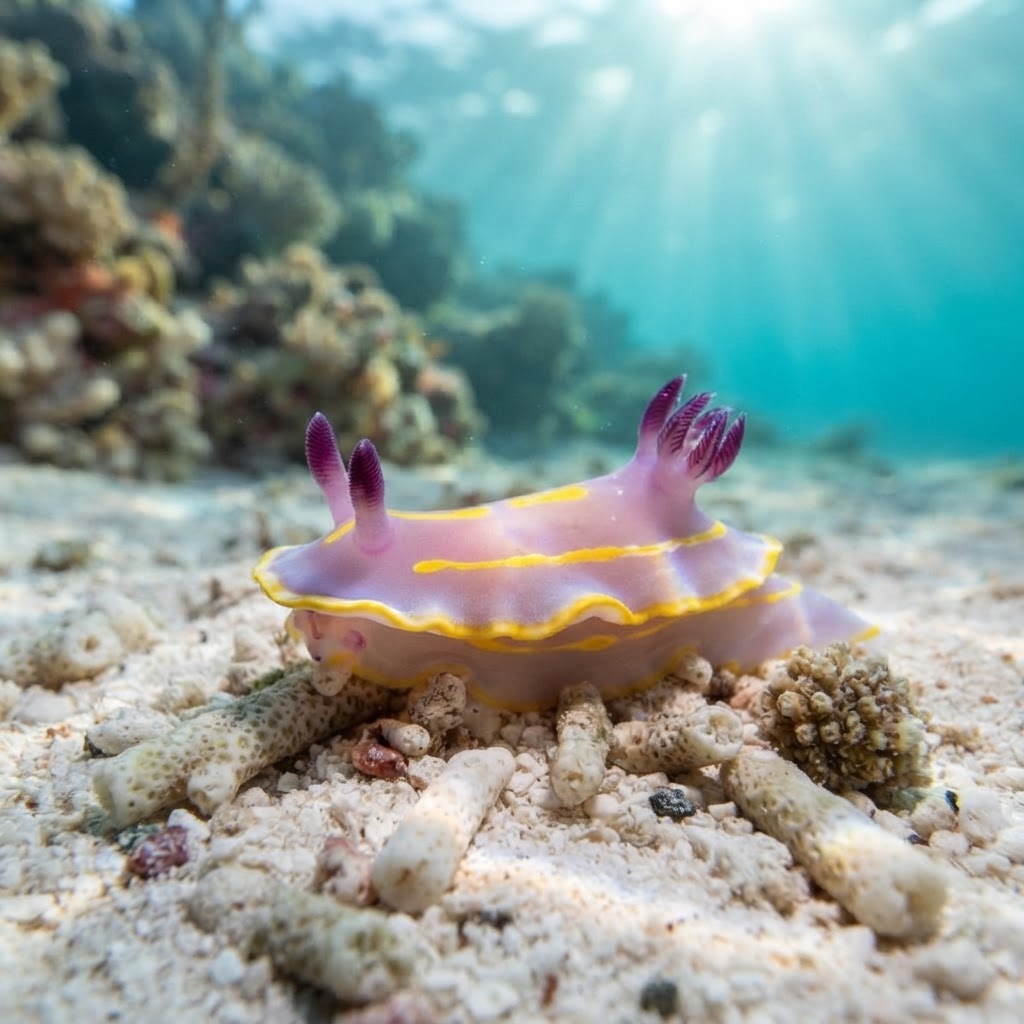
Rudmania krohni
Uncommon sea slug logged across Lisbon Coast and Algarve dive sites, thriving in cool 14.5-20.5C Atlantic and Mediterranean waters year-round.
A small sea slug found on rocky and sandy reef bottoms, typically spotted moving slowly across substrate rather than swimming. Look for its patterned mantle against cooler-water reef backdrops in the Atlantic and Mediterranean. Size in the water is modest, so divers tend to find it by scanning rock crevices and sponge-covered surfaces closely rather than spotting it from a distance.
Divers typically find this nudibranch grazing slowly across rock and sediment, moving at the unhurried pace typical of the group. It shows no reaction to divers beyond continuing its crawl, making it an easy subject for close-focus photography once located. Most logs describe it as an uncommon to rare find, so patient searching along ledges and under overhangs pays off more than casual scanning.
Like other dorid nudibranchs, it likely feeds on sponges and can sequester chemical compounds from its prey as a defence against predators, a trait common across the Chromodorididae family.
Sightings show no detectable seasonal pattern, so this is a year-round find wherever it occurs. Its comfort range of 14.5 to 20.5C spans the cooler Atlantic coasts and Mediterranean waters through most of the year, which likely explains the lack of a tight season.
Reef neighbours a diver could mistake it for. Use the identification notes above to tell them apart.
Most commonly logged in Spain and Portugal, with the Lisbon Coast and Algarve standing out as the strongest regions, followed by Andalusia and Catalonia. France is also a reliable spot, particularly along the French Riviera, Provence, and Brittany, with a smaller but real presence in Croatia and Italy.
Mapping where Krohn's Dorid is logged…
It is most reliably found in Spain and Portugal, especially along the Lisbon Coast and Algarve, with good numbers also reported in Andalusia, Catalonia, and the French Riviera.
There is no strong seasonal pattern in the sightings data, so it can be found year-round in the cooler Atlantic and Mediterranean waters it favours.
Look for a small, slow-moving sea slug on rocky or sandy substrate with a patterned mantle, usually found tucked near crevices or sponge-covered surfaces rather than out in the open.
No, this nudibranch poses no threat to divers and can be observed and photographed safely at close range.
Like related dorid nudibranchs, it likely grazes on sponges and may store defensive chemical compounds from its prey in its own tissue, a common survival trick in this family.
Site and sighting data is aggregated from diver logs, iNaturalist and GBIF. For taxonomy and conservation status:
Light-spotted Aegires
3,168 sites