Doriopsilla pelseneeri
A soft-bodied yellow dorid found on the Lisbon Coast and in Galicia, sitting in cool 14 to 20 C Atlantic water year-round.
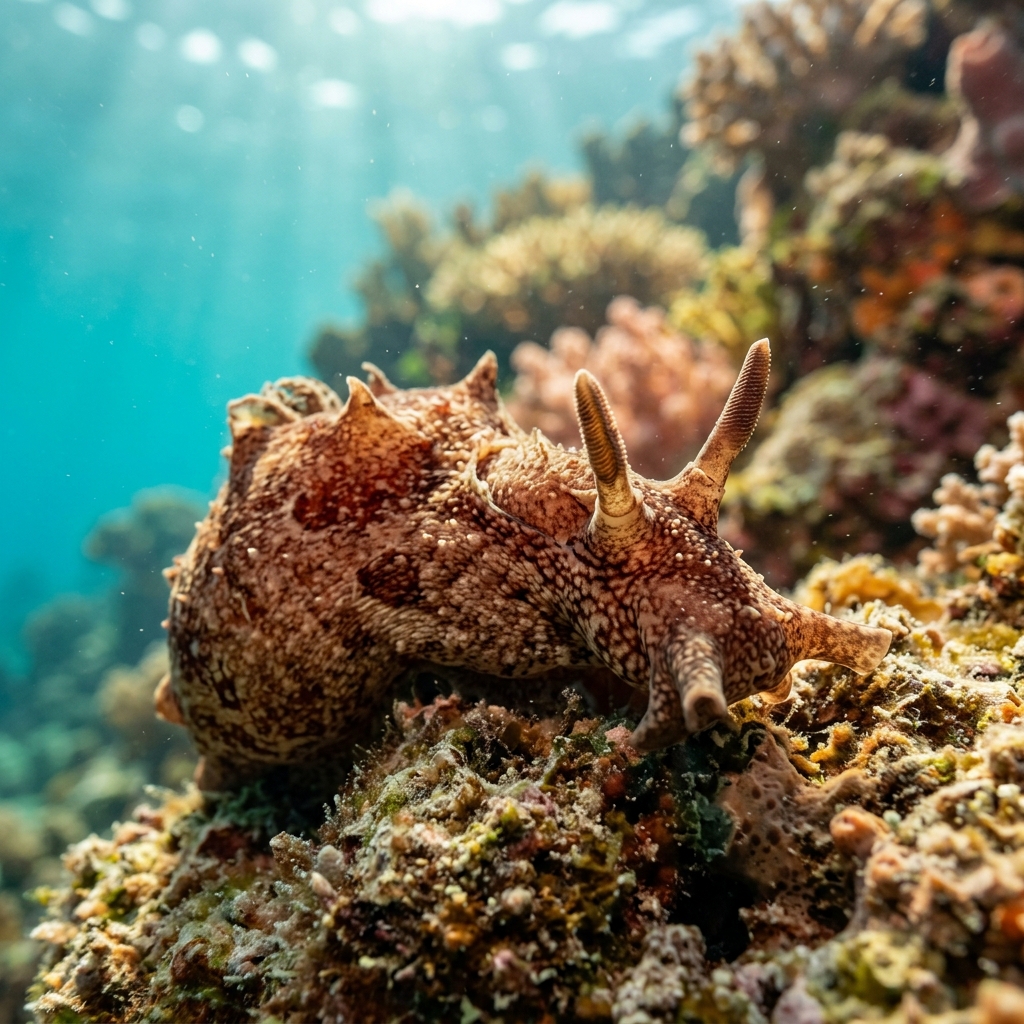
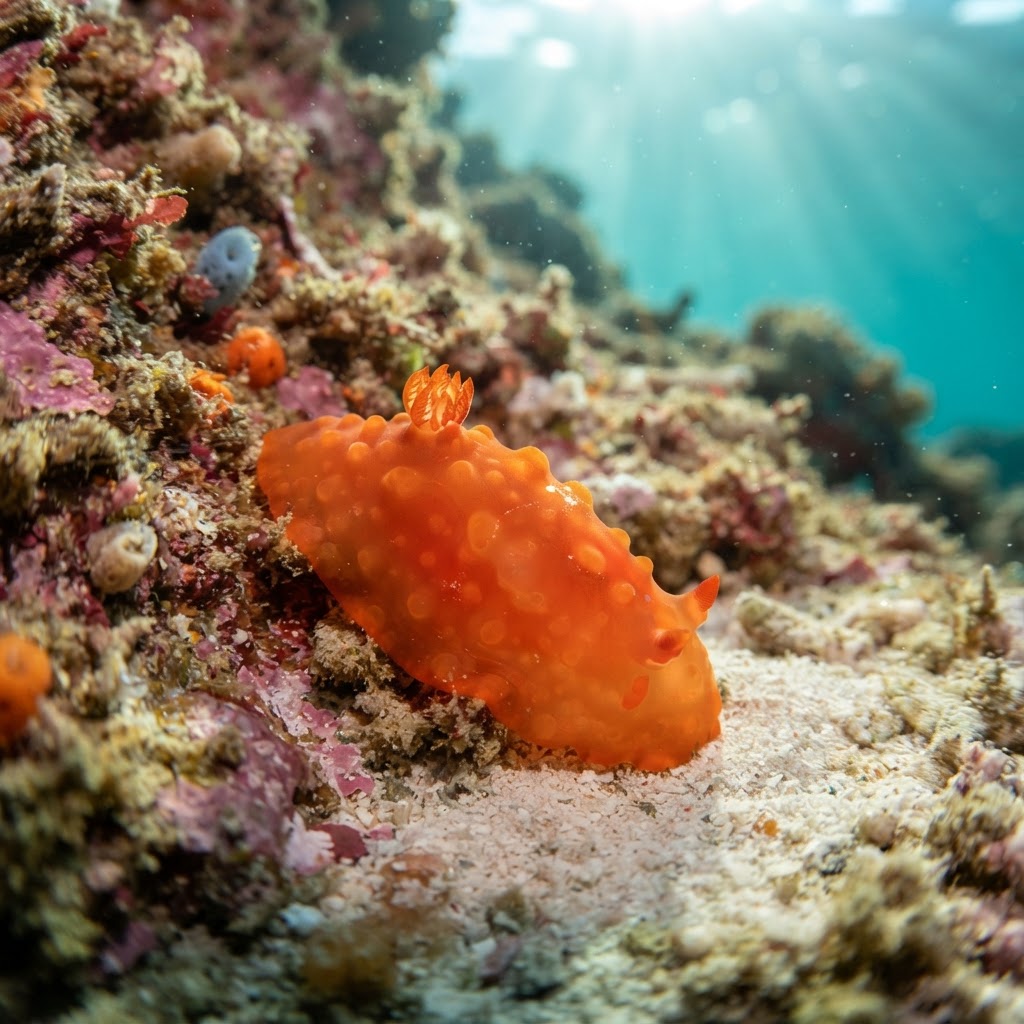
A small, soft-bodied dorid nudibranch with a smooth, warty-free mantle in muted yellow to tan tones, quite different from the frilly, gaudy nudibranchs many divers expect. It lacks the raised tubercles seen in many dorids, giving it a slick, almost slug-simple look, with the gills clustered at the rear and rhinophores (the pair of sensory stalks on the head) held upright at the front. Look closely along rock and rubble rather than open sand, since its low-contrast colouring blends easily into the substrate.
Divers typically find it moving slowly over rock and rubble, grazing rather than swimming, and it shows no reaction to divers beyond continuing its slow crawl. It turns up most often as a solitary animal tucked among rocky reef structure rather than out on open sand.
Like other dendrodorid nudibranchs, it likely feeds on sponges, using the fact that dendrodorids lack the true radula (feeding structure) found in many other sea slugs and instead rasp sponge tissue with a specialised jaw.
There is no detected seasonal pattern, so treat it as a year-round find. Sightings span a water-temperature range of roughly 13.9 to 19.9 C, which matches the cool Atlantic conditions off Portugal and Spain through most of the year.
This species is most consistently logged along Portugal's Lisbon Coast, which accounts for the bulk of sightings, with a second strong population in Galicia, Spain. Outside these two regions there is little other logged presence, so cool Atlantic Iberian coastlines are the place to look.
Mapping where Pelseneer's Doriopsilla is logged…
It is most reliably found along Portugal's Lisbon Coast and in Galicia, Spain, both cool Atlantic Iberian coastlines with rocky reef habitat.
There's no clear seasonal peak in the data, so it's considered a year-round sighting in the 14 to 20 C water typical of Iberian Atlantic dive sites.
Look for a small, smooth-bodied dorid in muted yellow to tan tones without the warty texture common in other nudibranchs, crawling slowly over rock and rubble.
It's logged as uncommon at most sites where it's found, with only a handful of locations reporting it as a common sighting.
No, it poses no danger to divers and can be observed safely at close range without disturbing it.
Site and sighting data is aggregated from diver logs, iNaturalist and GBIF. For taxonomy and conservation status:
Light-spotted Aegires
3,168 sites