Zeugopterus punctatus
Flat, mottled and rock-clinging: topknot turns up on cool rocky reefs from Brittany to the Lisbon Coast, most often as an uncommon find at 8.7-12.5C.
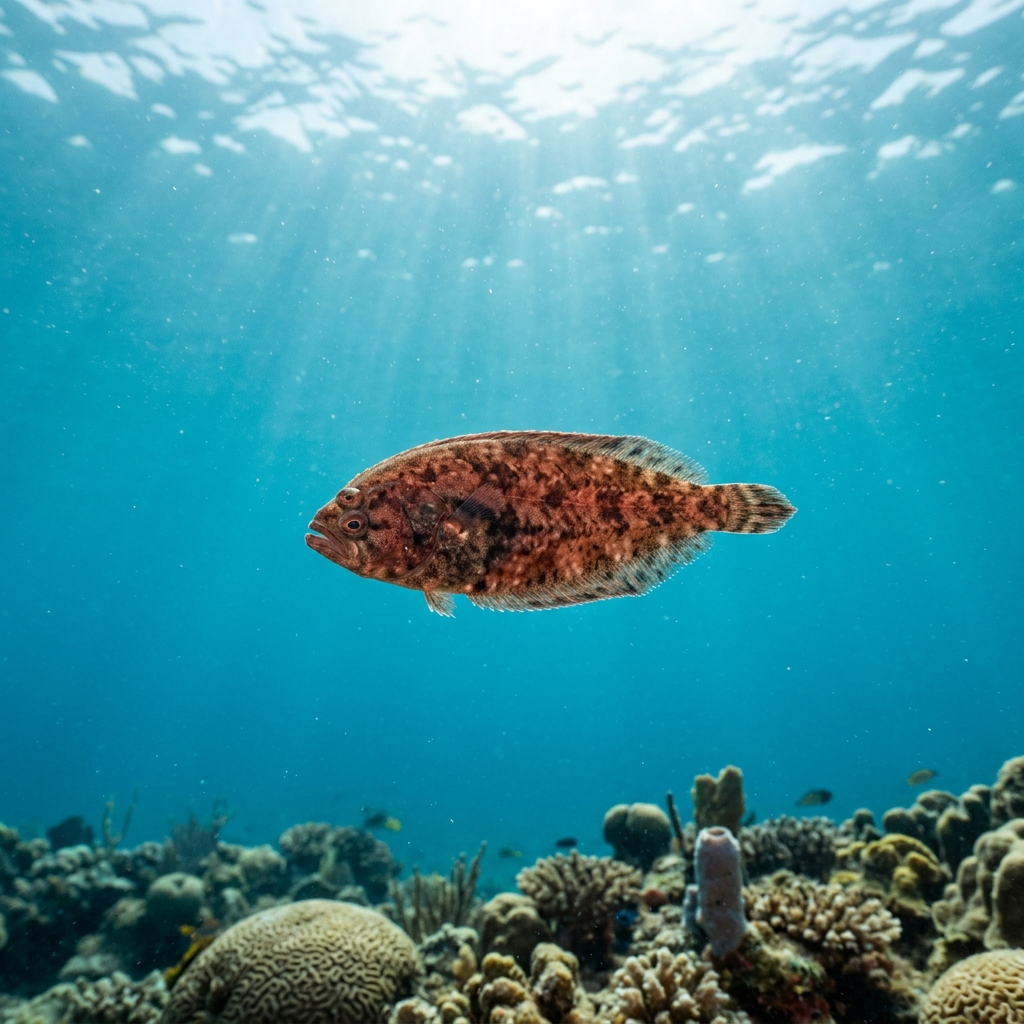
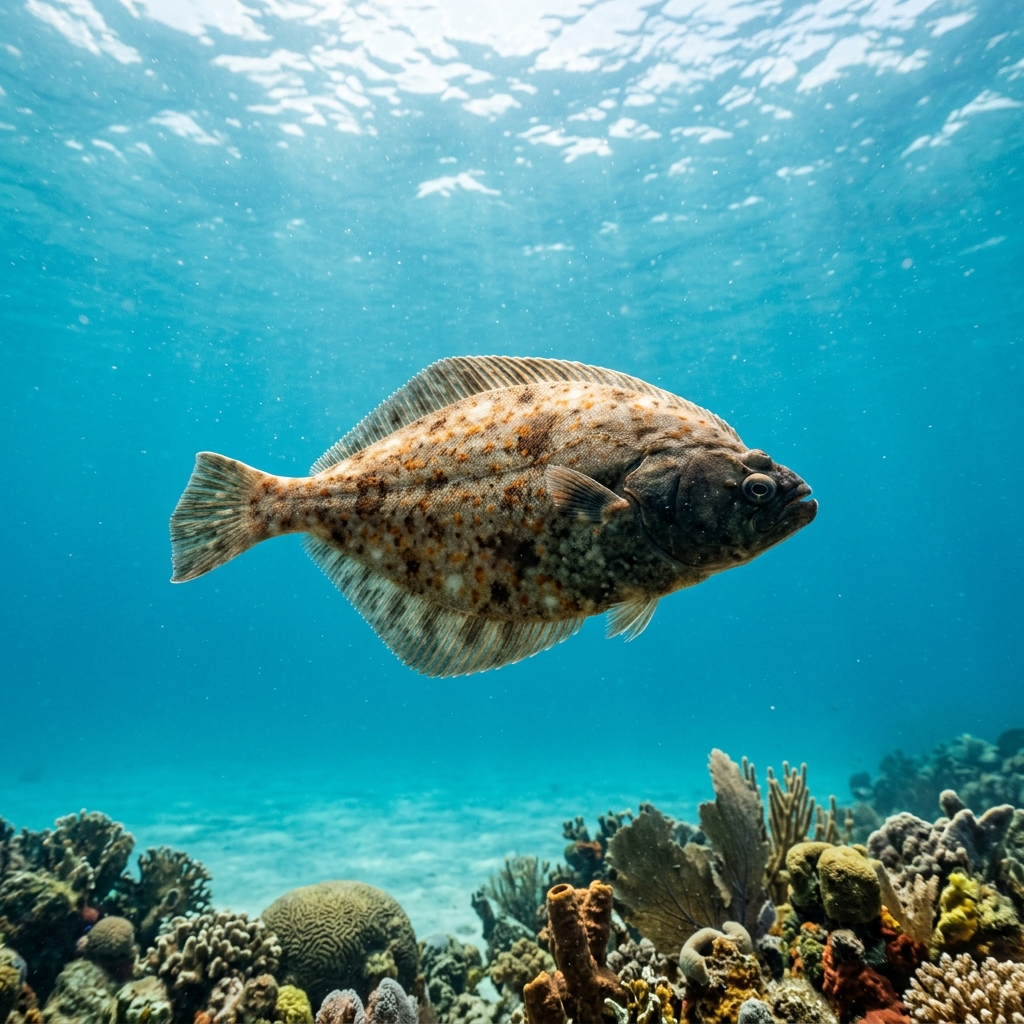
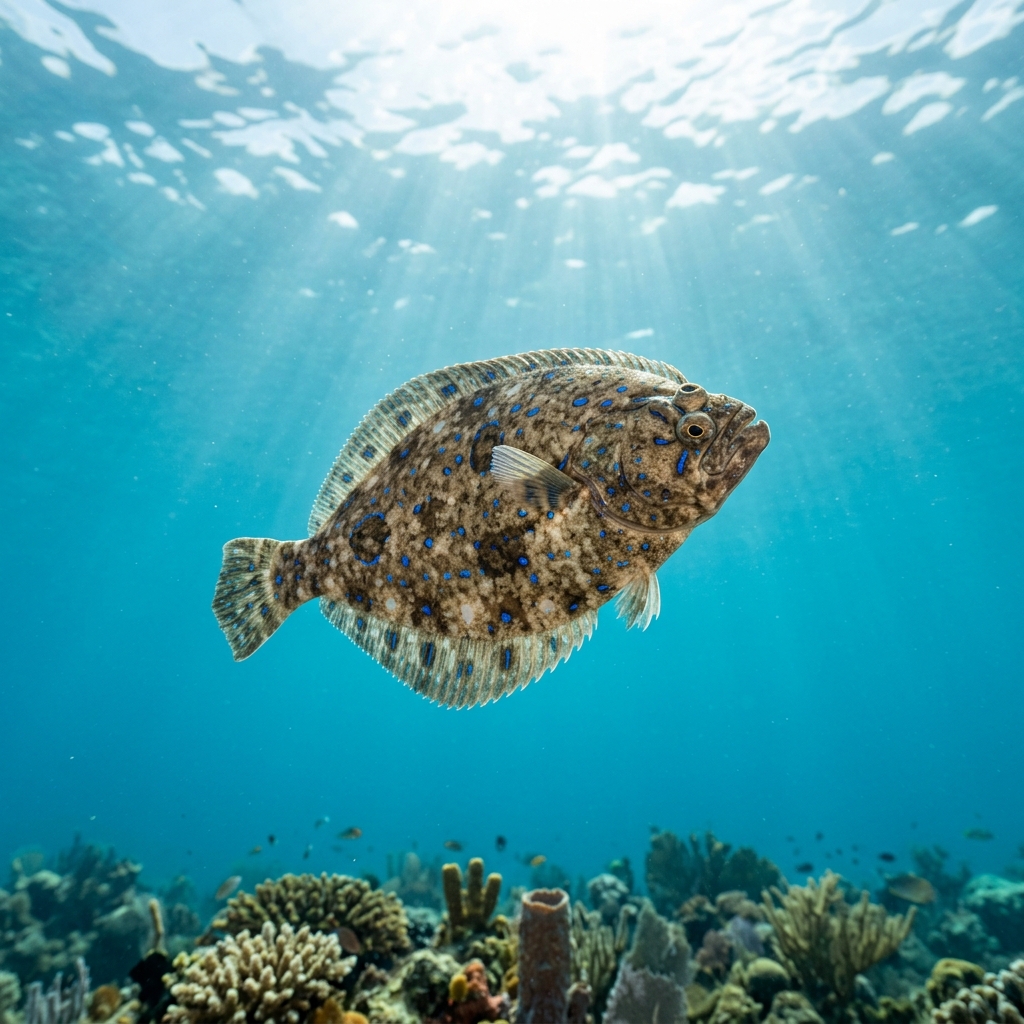
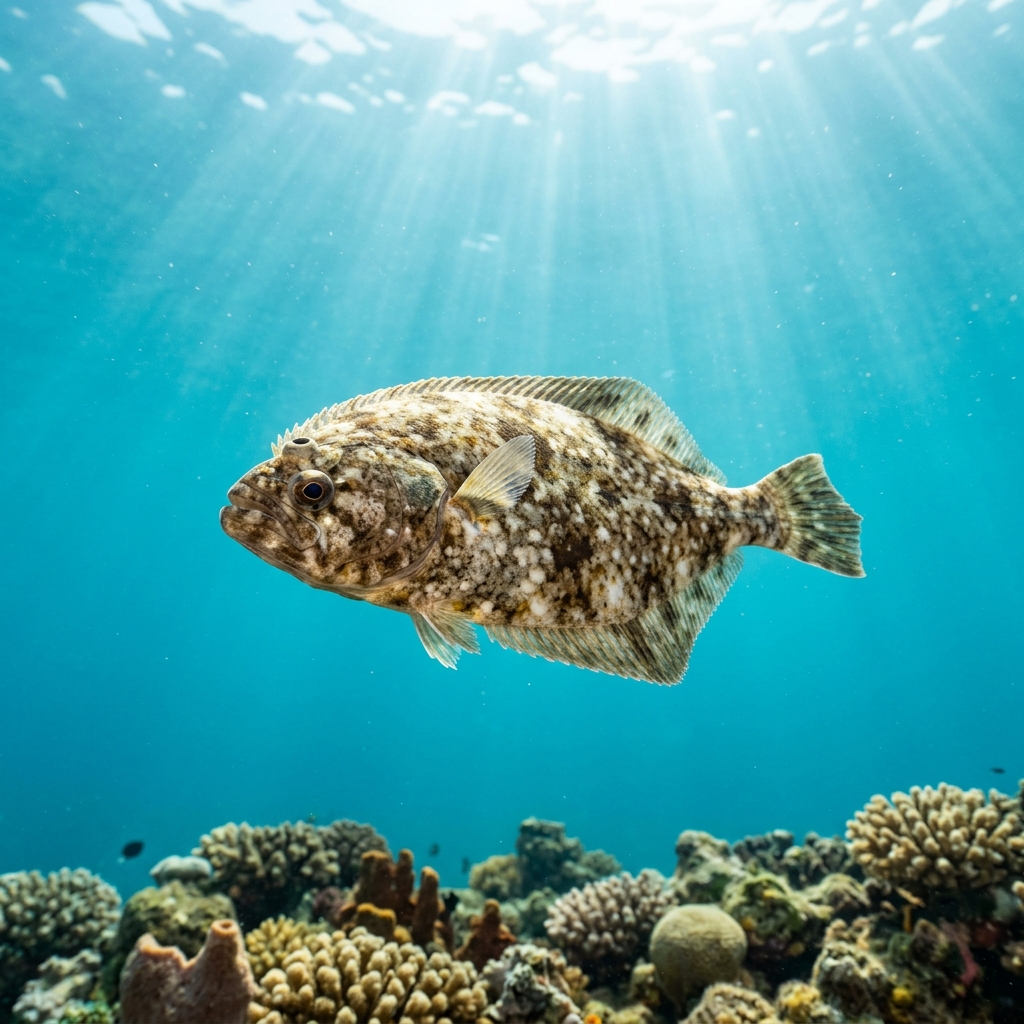
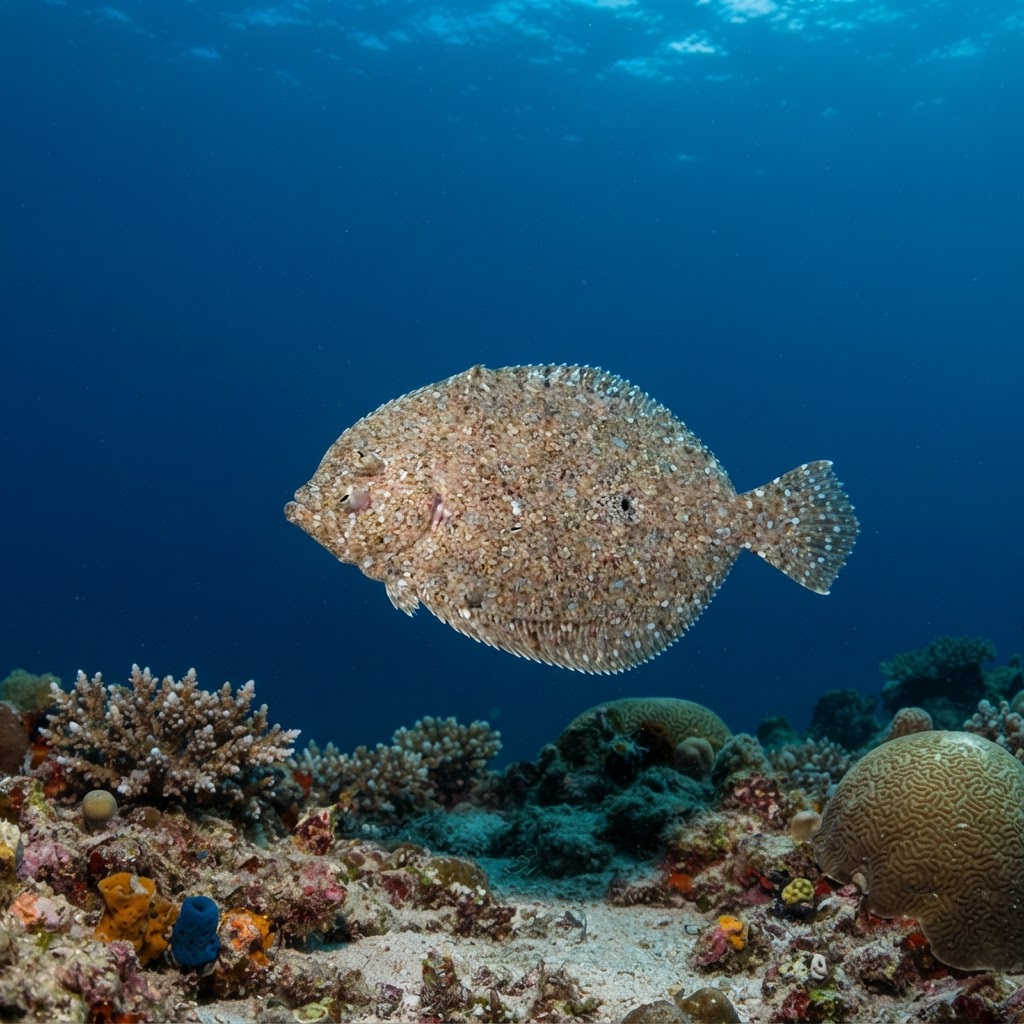
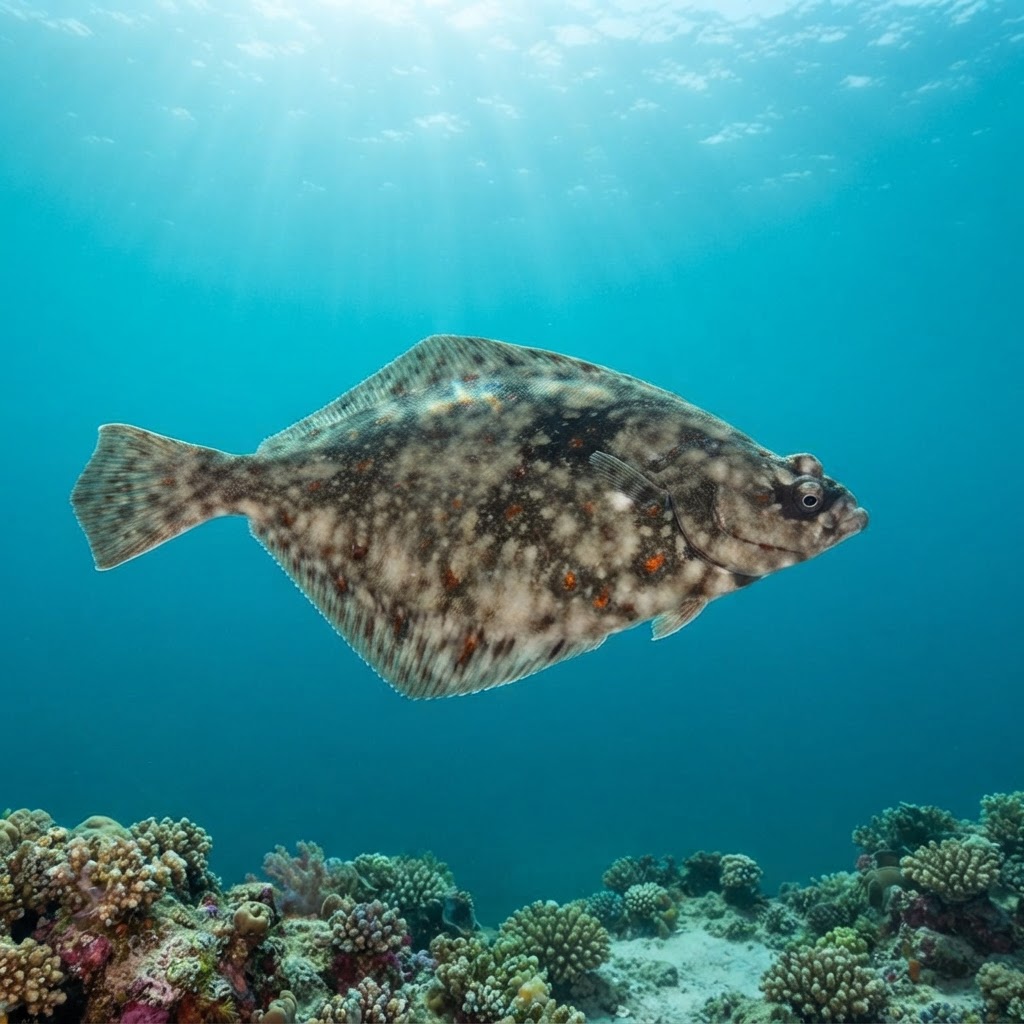
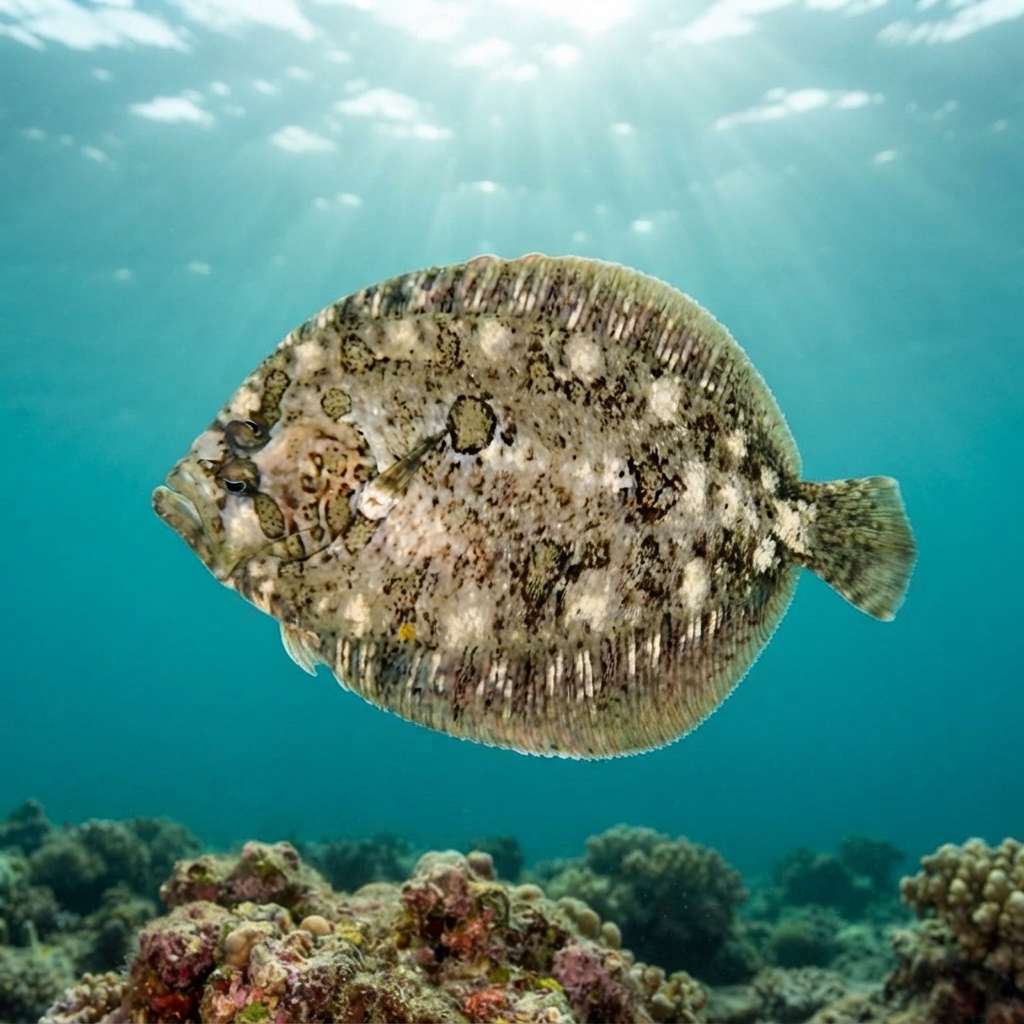
Flattened, almost circular body about 18 cm long, lying pressed flat against rock rather than sand. Skin is mottled brown and grey with a rough, blotchy texture that breaks up its outline against encrusted rock. Both eyes sit on the left side of the head, and unlike most flatfishes it clings to vertical or overhanging rock faces rather than resting on open seabed. Look for a slightly frilly, uneven body edge that helps it disappear against weed-covered stone.
Divers find it lying motionless flat against rock, often tucked into a crevice or under a ledge where its mottled skin blends into encrusted stone. It relies on stillness and camouflage rather than fleeing, so it is easy to swim straight past without noticing. Most logs describe single fish found while scanning rock walls closely rather than mid-water encounters.
Its habit of clinging to vertical rock rather than lying on flat sediment is unusual among flatfishes, which typically rest on open seabed.
Sightings show no clear seasonal pattern, so treat it as a year-round possibility wherever it occurs. Its recorded range of 8.7 to 12.5 C matches cool temperate Atlantic water for most of the year, which likely explains the lack of a strong season.
Most reliably logged along the Lisbon Coast in Portugal and in Brittany, France, with a solid presence around England in the UK and Galicia in Spain. It favours rocky reef habitat over sand or rubble, so target sites with exposed rock faces, gullies and overhangs rather than open sedimentary ground.
Mapping where Topknot is logged…
It turns up most often along the Lisbon Coast in Portugal and in Brittany, France, with regular sightings around England and Galicia in Spain. Look for rocky reef with crevices and overhangs rather than sandy or muddy seabed.
There is no strong season in the data, so it is considered a year-round sighting. It sits in cool water between roughly 8.7 and 12.5 C, which is typical of Atlantic temperate reefs for much of the year.
Look for a flat, roughly oval fish around 18 cm long with mottled brown and grey skin, lying pressed against rock rather than sand. Both eyes are on the left side of the head, and it often clings to vertical rock faces or ledges, which is unusual for a flatfish.
They typically reach about 18 cm in length, making them a small, easily overlooked flatfish on rocky reefs.
Unlike most flatfishes that rest flat on open sand or mud, topknot presses itself against vertical and overhanging rock surfaces, using its mottled skin to blend into encrusted stone.
Site and sighting data is aggregated from diver logs, iNaturalist and GBIF. For taxonomy and conservation status:
Wide Eyed Flounder
1,624 sites