Conger conger
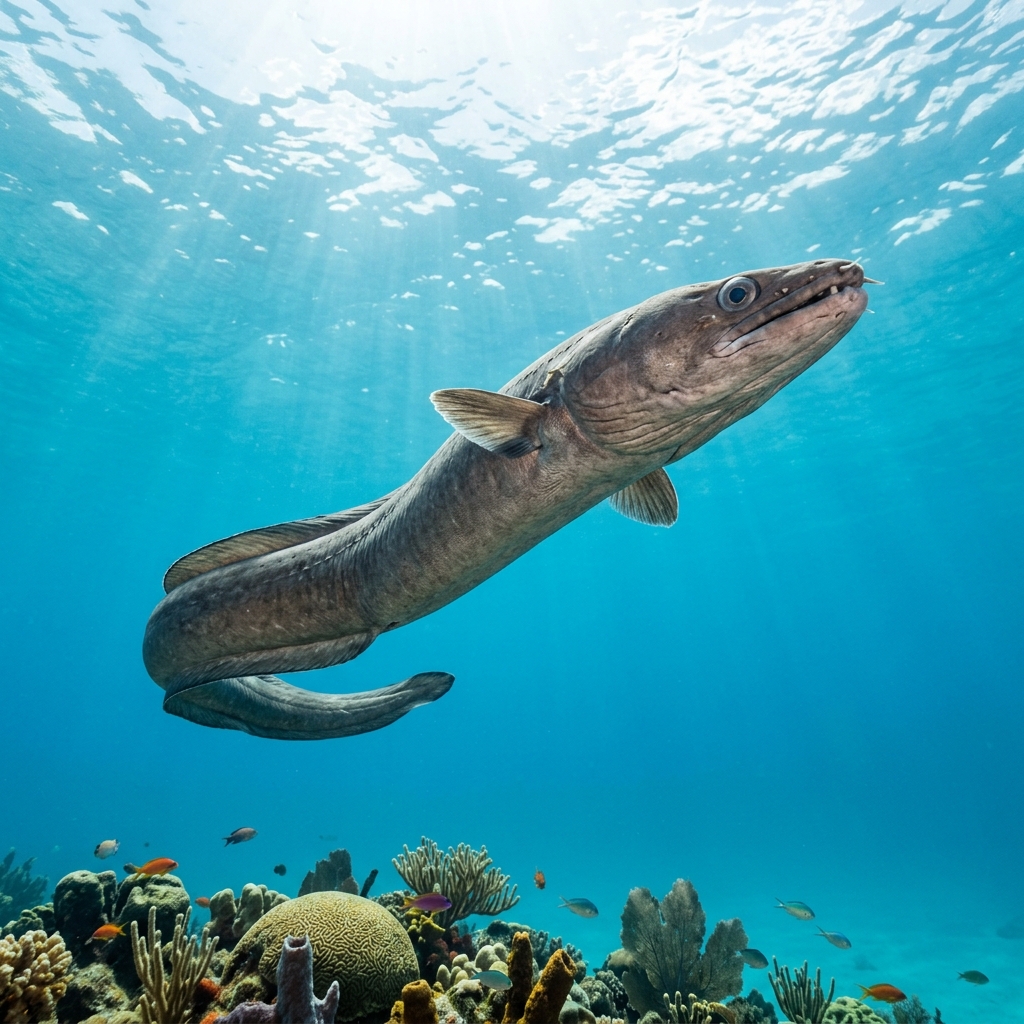
Grey-brown and thick as your leg, conger eels lurk in wrecks off Brittany and the French Riviera year-round in cool Atlantic and Med water.
Safety warning
A conger's bite is powerful and its jaws can clamp down hard if it feels cornered, so don't reach into wreck holes or crevices where one might be hiding. Most incidents happen when divers or spearfishers try to handle or extract one; left alone, it will simply hold its position or retreat deeper into its hole.
If you're bitten
BiteGeneral first-aid guidance, not a substitute for professional medical care. In an emergency, call your local emergency number.
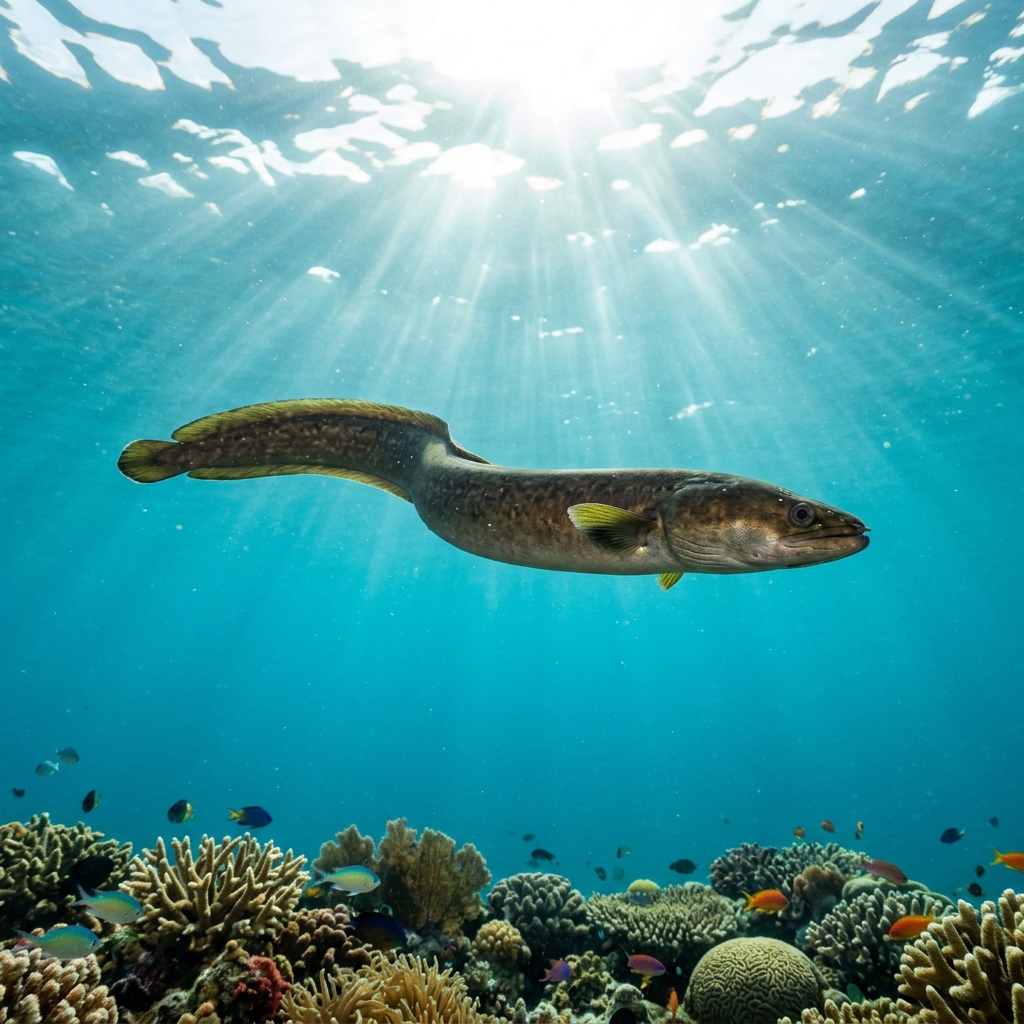
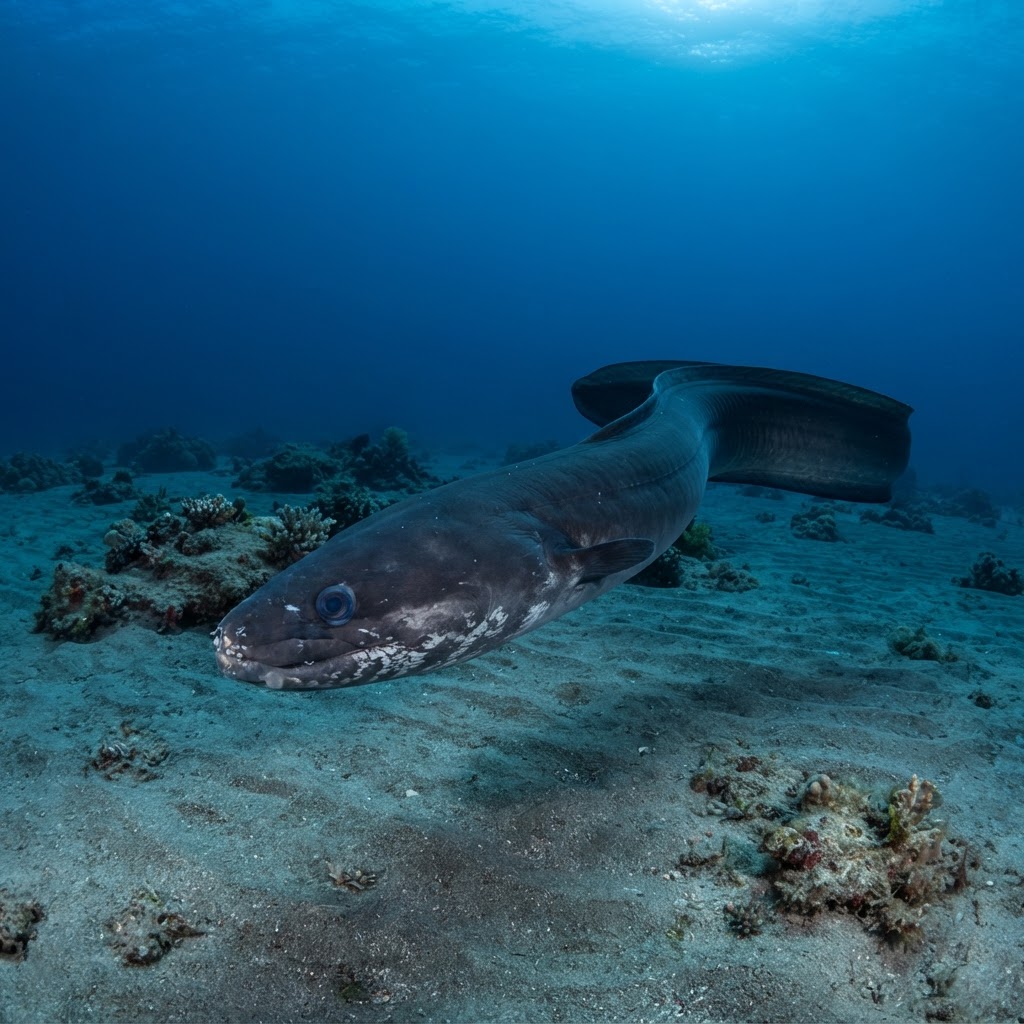
A heavy-bodied eel that can push past 2 metres, with grey-brown to olive skin, a pale belly, and a continuous dorsal fin running most of its length with no scales visible. The head is blunt with thick lips and small eyes, and it usually shows only its head and part of its body poking from a crevice, wreck hole, or under a rock ledge. Unlike morays it lacks bold patterning, so look for the plain, uniform colouring and the large mouth rather than any spots or lines.
Divers typically find it wedged into a wreck opening, a rocky overhang, or a gap under a boulder, often with just the head visible watching the reef. It's a slow, low-energy encounter by day, most active in dimmer light or after dark when it hunts, and it tends to hold its ground rather than bolt when a diver approaches slowly. Sites with wreckage or rubble tend to produce more sightings than open reef, since it needs a snug hiding hole roughly its own girth.
Conger eels can grow well over 2 metres and are thought to breed only once in their lives, migrating to deep water to spawn before dying, similar to the strategy used by freshwater eels.
Sightings run year-round with no strong seasonal pattern in the data, which fits a species comfortable across a wide temperature range from around 4 to 14°C. Expect it on any dive in its range rather than planning around a particular month.
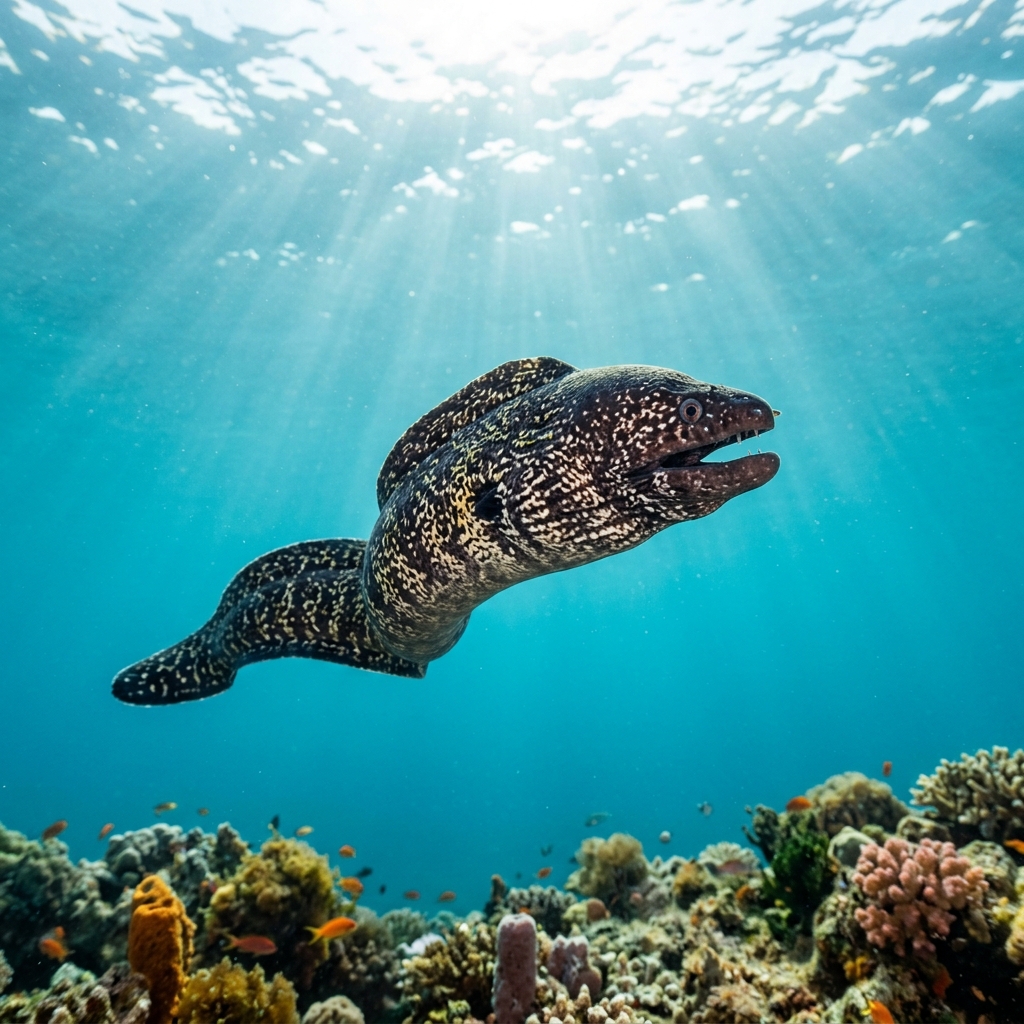
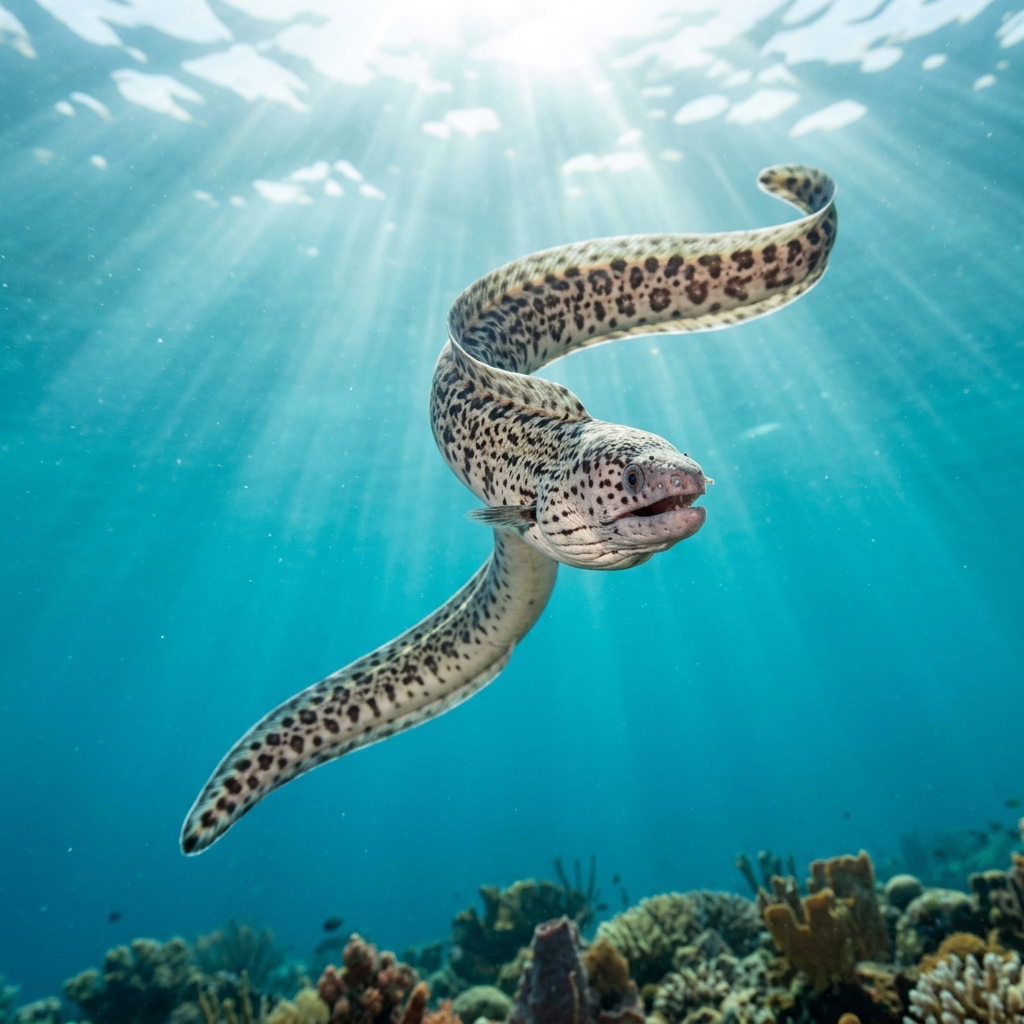
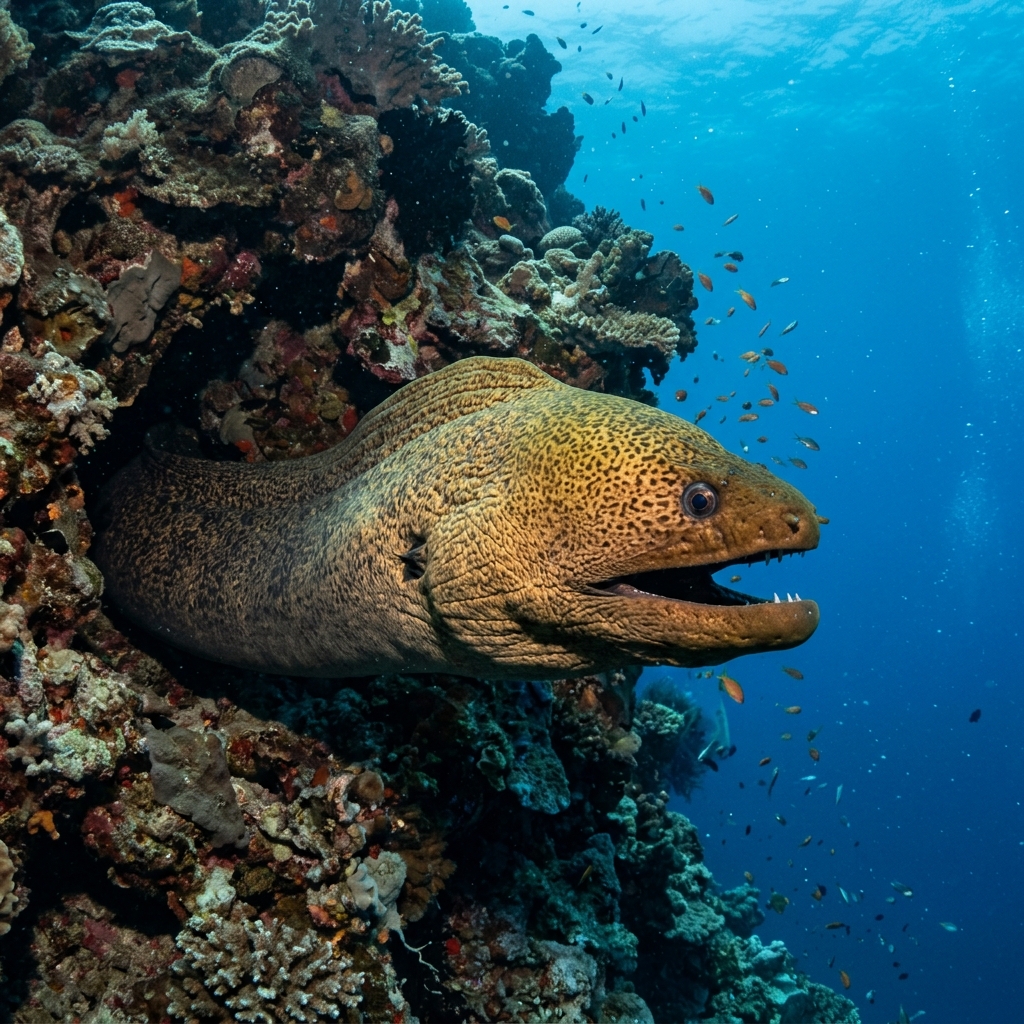
Reef neighbours a diver could mistake it for. Use the identification notes above to tell them apart.
Most commonly logged in France, particularly the French Riviera and Provence and in Brittany, with strong numbers also from Catalonia, Andalusia, and Valencia in Spain. It's a reliable find around Portugal's Lisbon Coast, Italy, the UK, Istria in Croatia, and further offshore at the Canary Islands and the Azores, generally tucked into wrecks, rocky reefs, and harbour walls rather than open sand.
Mapping where European Conger is logged…
France is the strongest area, especially the French Riviera, Provence, and Brittany, with good numbers also in Catalonia, Andalusia, and Valencia in Spain. It also turns up around Portugal's Lisbon Coast, Italy, the UK, Croatia's Istria, and the Canary Islands and Azores.
There's no clear seasonal spike in sightings, so it's effectively a year-round find wherever it occurs. Its comfort across a cool range of roughly 4 to 14°C means it doesn't need to migrate with the seasons the way many species do.
They can bite hard if provoked or cornered, so treat any crevice or wreck hole with care rather than reaching in blind. Left undisturbed, a conger will usually just watch from its hole or retreat further inside.
Look for a thick, plain grey-brown eel with a pale belly and a long, unbroken dorsal fin, usually seen with just its head or forebody sticking out of a crevice or wreck opening. It lacks the bold spots or patterns of moray eels, which is the easiest way to tell them apart at a glance.
They're one of the largest eels a diver will encounter, with a typical length around 2.1 metres and some individuals growing noticeably larger. The body is proportionally heavy and muscular, not just long.
They're believed to spawn only once in their lifetime, undertaking a long migration into deep water to breed before dying, a strategy that echoes what freshwater eels do. Most of the individuals divers see on shallow reefs and wrecks haven't yet made that final journey.
Site and sighting data is aggregated from diver logs, iNaturalist and GBIF. For taxonomy and conservation status:
Garden Eel
2,448 sites