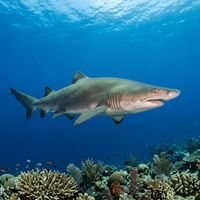
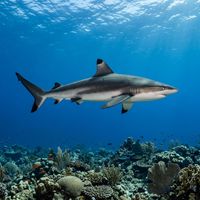
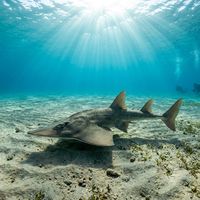
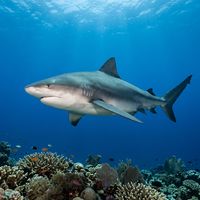
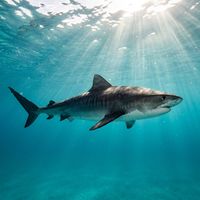
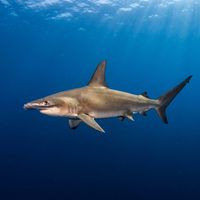
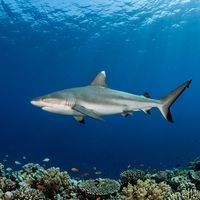
The Hibiscus Coast is defined by its offshore reef system at Protea Banks, where deep drift dives draw advanced divers seeking sharks. Observed species include Grey Nurse Shark, Common Blacktip Shark, Guitarfish, Bull Shark, Tiger Shark, and Scalloped Hammerhead. The region blends boat-access drift and cave dives with shallower snorkel sites closer to shore. Water stays warm through the summer months and cools slightly in winter, with conditions at Protea Banks strongly influenced by currents.
1 areas
Monthly water temperature across Hibiscus Coast's sites, from satellite sea-surface data corrected for depth. The band shows the site-to-site spread.
Water is at its warmest from late spring through autumn, then cools to its lowest across the middle of the year before recovering from November onward. The best-months data points to May and the summer months around December as particularly favoured by local divers. Protea Banks sites are fully boat-access drift dives with strong currents, so conditions vary considerably and are not suitable for beginners.
4 operators
South Africa
South Africa
9 more sites to explore
Water temperature around Hibiscus Coast ranges from about 22°C in July to 26°C in January, based on satellite sea-temperature data for its dive sites.
With water around 22–26°C, a 3mm full suit works in Hibiscus Coast year-round.
Fin maps 12 sites in Hibiscus Coast (7 scuba diving sites and 6 snorkelling spots, with some suited to both).
Across Hibiscus Coast's dive sites, May are most often reported as the best months to visit.
Protea Banks has observation-backed records for Grey Nurse Shark, Common Blacktip Shark, Guitarfish, Bull Shark, Tiger Shark, and Scalloped Hammerhead. Grey Nurse Shark and Common Blacktip Shark are rated very common across the sites. Bull Shark, Tiger Shark, and Scalloped Hammerhead appear occasionally, making each dive unpredictable in the best sense.
The headline dive sites, including Protea Banks, Northern Caves, and Southern Shark Arena, are all rated advanced and require boat access in strong currents at considerable depth. Beginners are not suited to these offshore sites. The region does include shallower snorkel sites that are more accessible, but anyone aiming to dive Protea Banks should have solid drift-diving experience.
All of the top dive sites, including those within the Protea Banks sub-area, are reached by boat. There is one operator listed in the region, Offshore Africa Port St Johns, who can facilitate access. Shore entry is not an option for the deeper reef and drift sites.
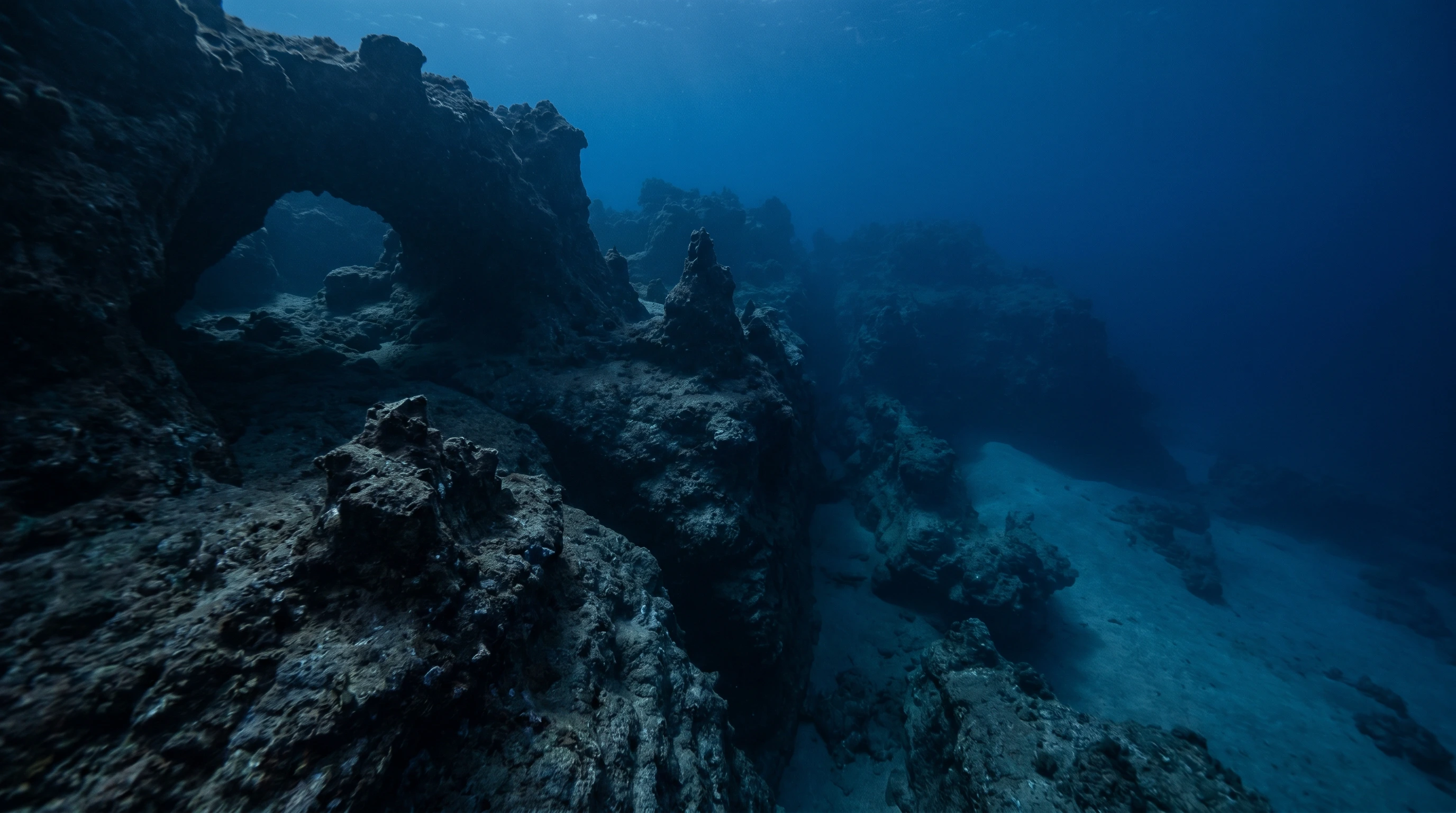
Protea Banks encompasses several distinct dives with different characters. Northern Caves follows a route through large caverns and a swim-through, while Southern Shark Arena is a reef and drop-off site known for strong currents and shark activity. All sites within the sub-area share the same boat-access, advanced-level requirement and sit at similar depths, but each offers a different structural environment underwater.