Carcharhinus limbatus
Spot common blacktip sharks in Florida, the Maldives, and Australia. Tips on ID, behaviour, and how to tell them from the blacktip reef shark.
Safety warning
This species is responsible for a meaningful proportion of non-fatal shark bites on humans, most often in shallow water where it feeds. Keep your hands close to your body, avoid dangling gear, and never enter the water near active baitfish schools where blacktips may be feeding. During normal reef dives the risk is low provided divers stay calm and do not corner or crowd the animal.
If you're bitten
BiteGeneral first-aid guidance, not a substitute for professional medical care. In an emergency, call your local emergency number.
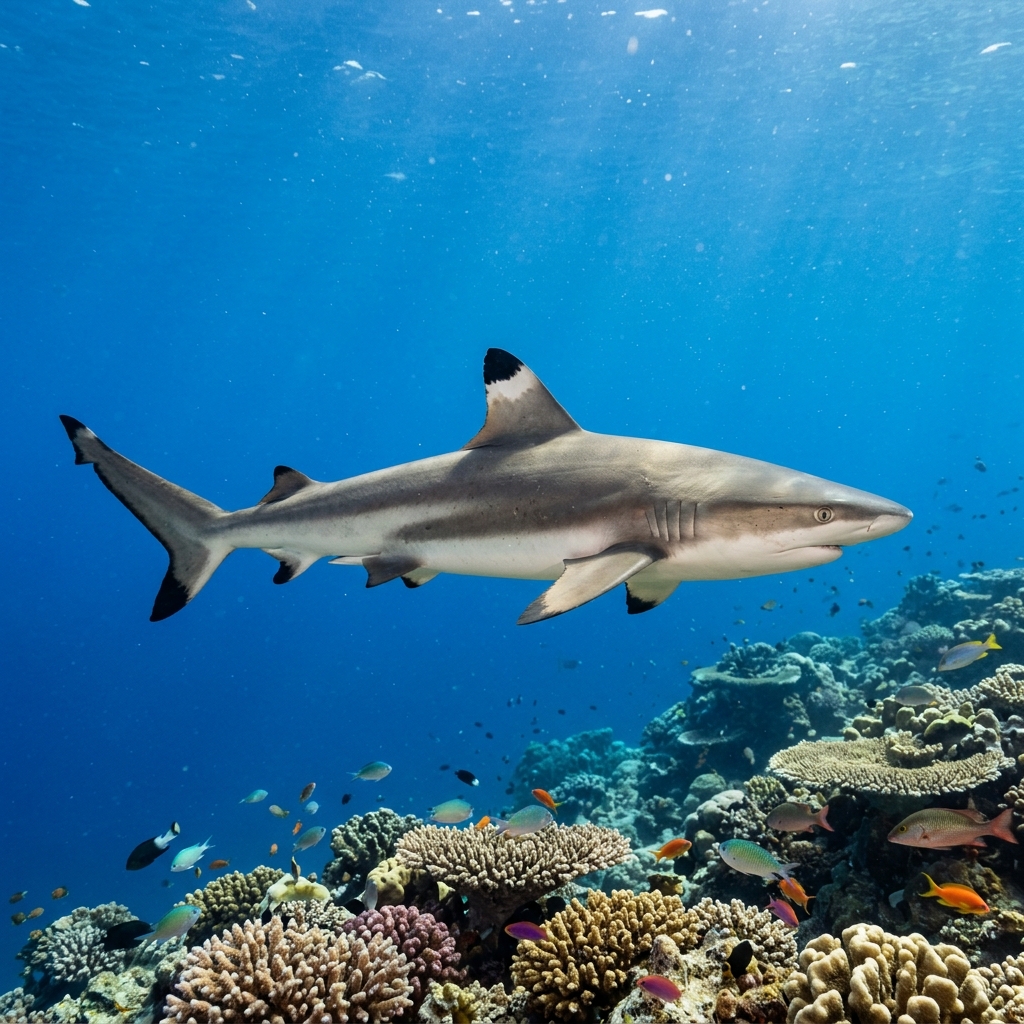
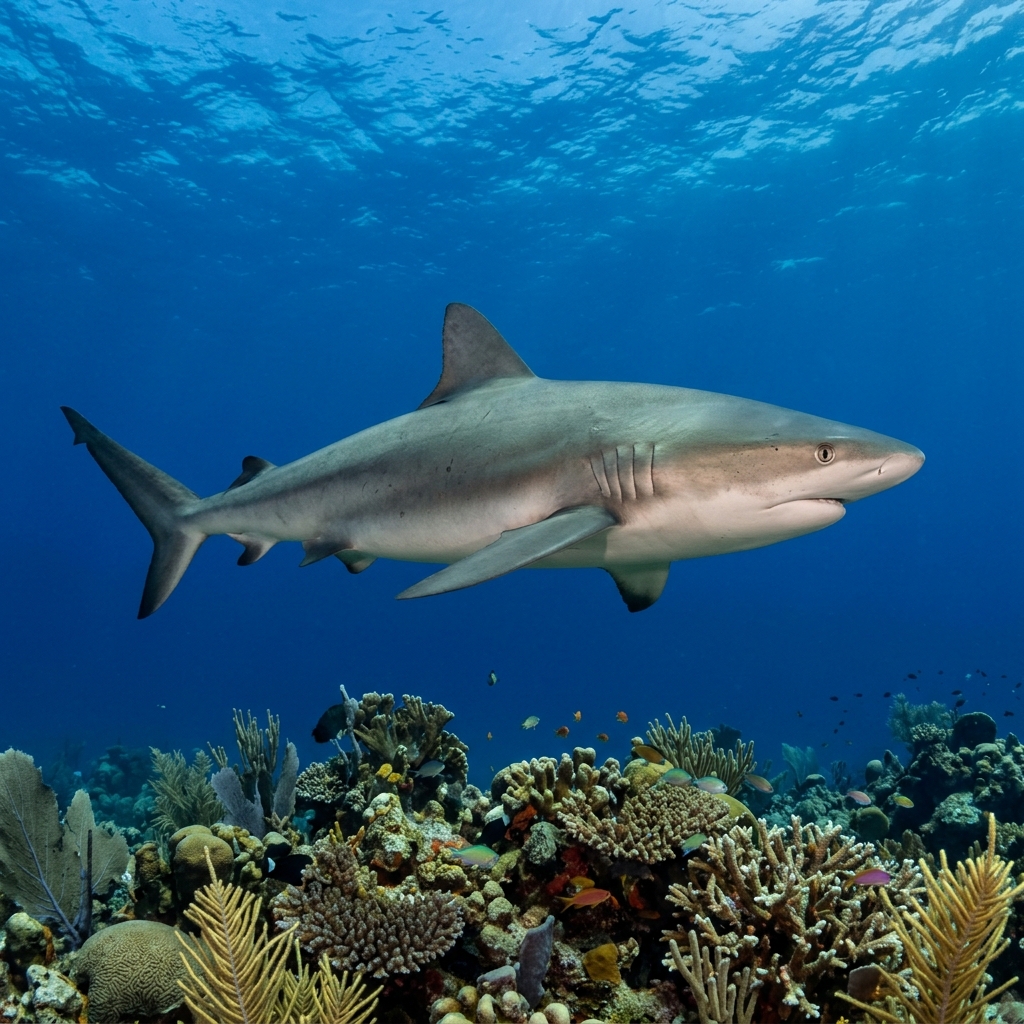
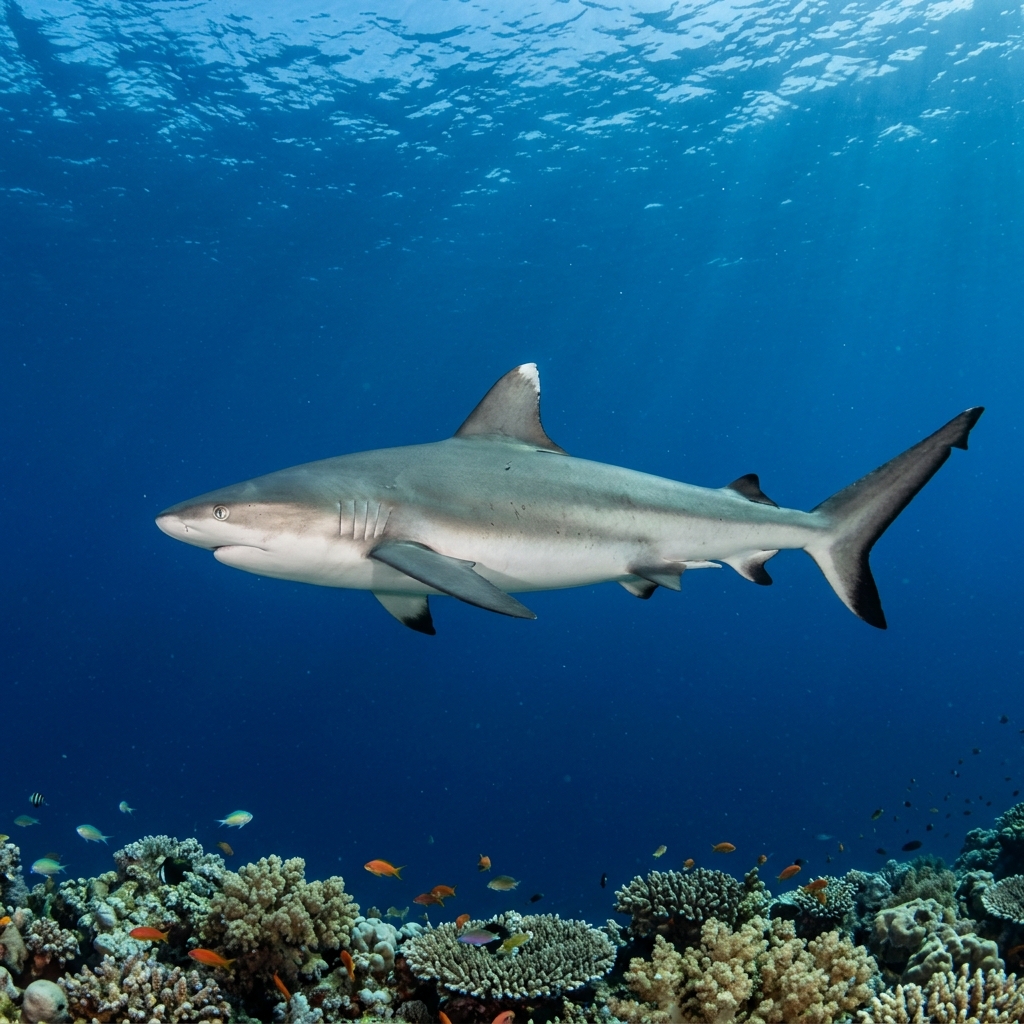
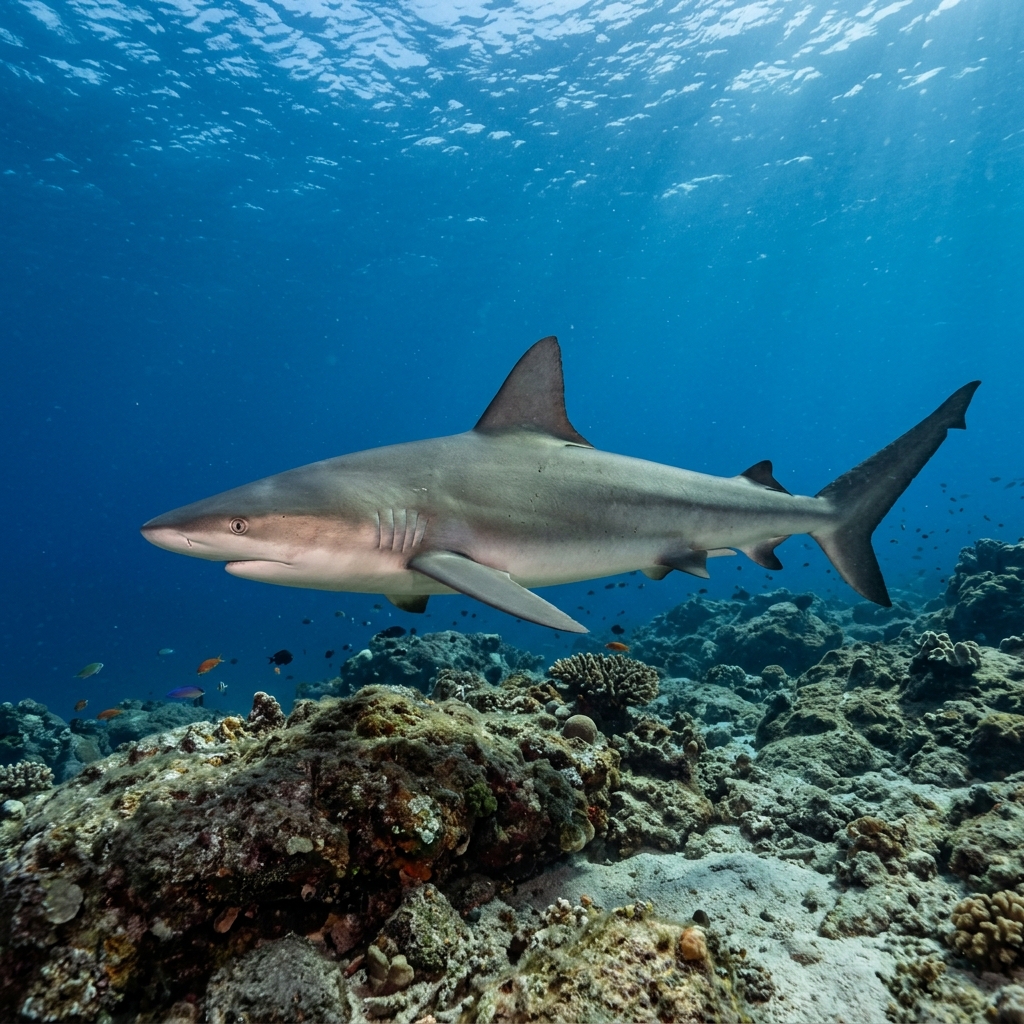
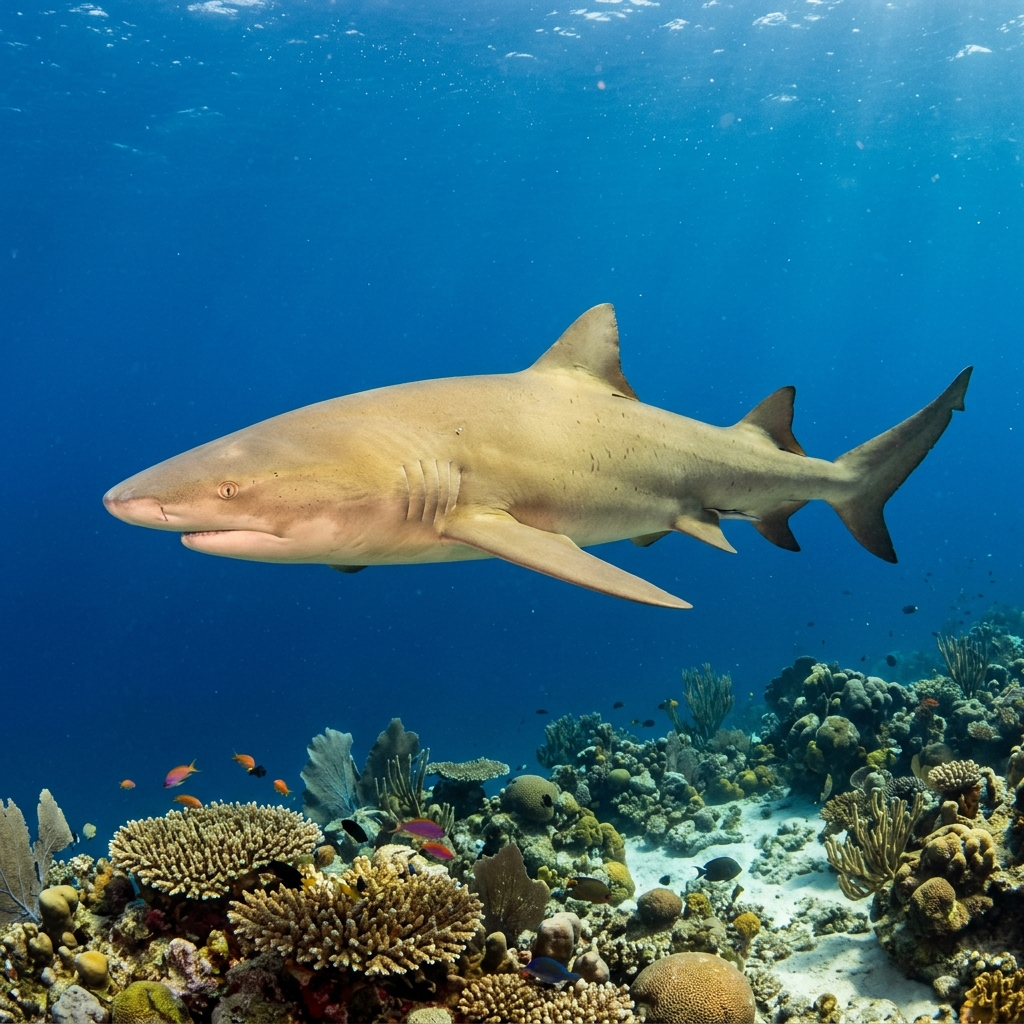
A mid-sized, streamlined shark reaching around two metres, with a pointed snout and distinctly black-tipped fins on the first dorsal, pectoral, pelvic, and lower caudal fins. The black tips are more muted than on a blacktip reef shark and often have a faint pale border. Body colouration is grey-bronze above with a white underside and a pale flank stripe running from pectoral to pelvic fin. Look for that black tip on the first dorsal fin above the waterline when they breach, a behaviour unique to this species.
Expect an active, curious shark that circles at a respectful distance rather than approaching directly. During the day it patrols shallower reef edges and sandy flats, often in small groups, hunting fish and cephalopods with quick, slashing strikes. Around divers it usually remains cautious unless food is in the water, at which point it can become noticeably bolder and faster-moving.
Common blacktip sharks are one of the few shark species known to breach completely clear of the water while attacking schooling fish near the surface, spinning and landing on their backs, a behaviour sometimes called spinning.
No concentrated season has emerged from the data, so this species is best treated as year-round wherever it occurs. It tolerates water temperatures from around 20 to 29 degrees Celsius, keeping it present on tropical and warm-temperate reefs through all months.
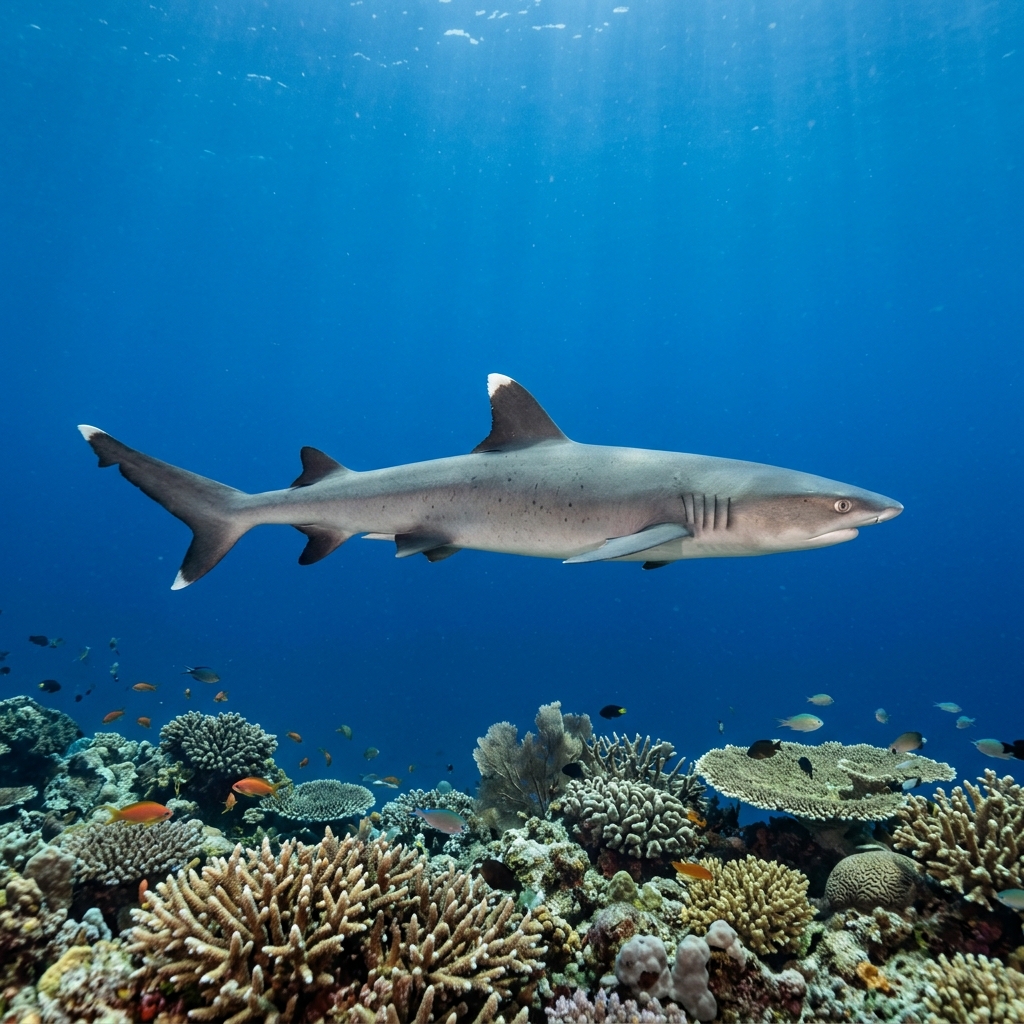
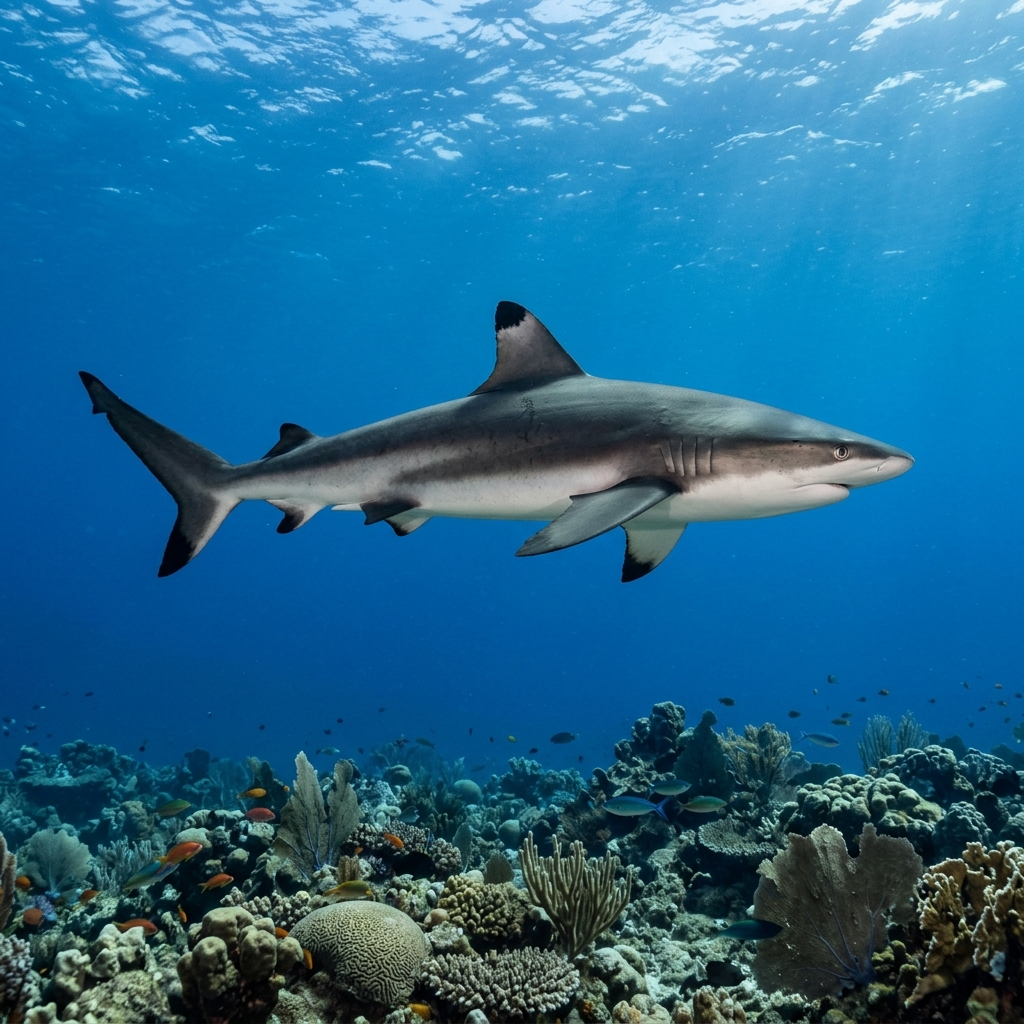
Reef neighbours a diver could mistake it for. Use the identification notes above to tell them apart.
Most commonly logged in the United States, particularly across Florida and the southeast coast, where sightings are most frequent. Strong records also come from the Maldives, especially the North and Central Atolls and the Felidhoo and Mulaku region, as well as Queensland and Western Australia in Australia. The Caribbean, including Cuba, Colombia, and the Bahamas, adds further coverage.
Mapping where Common Blacktip Shark is logged…
The strongest records come from Florida and the US southeast coast, the Maldives (particularly the North and Central Atolls), and Queensland and Western Australia in Australia. Good populations are also reported across the Caribbean, including Cuba, Colombia, and the Bahamas.
No clear seasonal peak has been recorded across the species' range, so diving for them is viable year-round in tropical destinations. They are comfortable in water from roughly 20 to 29 degrees Celsius, which covers most tropical reefs throughout all seasons.
The blacktip reef shark has a much more vivid, sharply defined black tip on the first dorsal fin and is typically smaller, rarely exceeding 180 cm. The common blacktip is larger, has less intense black markings with a faint white border, and its black tips appear on more fins including the pectorals. Habitat overlaps in shallow reef zones, so fin colour intensity and overall body size are the quickest clues.
They are responsible for a notable number of shallow-water bites on humans, though fatalities are extremely rare. The risk rises near feeding activity or when baitfish are present. On a standard reef dive, maintain a calm distance and avoid sudden movements and the encounter is usually uneventful.
Adults typically reach around 150 to 180 cm, with a maximum of roughly 200 cm and weights up to about 65 kg. Females tend to be slightly larger than males. In the water they look slender and fast rather than bulky.
Yes, they are classified as Vulnerable by the IUCN. Fishing pressure, both targeted and as bycatch, has reduced populations across much of their range. Slow reproductive rates mean recovery is gradual, making encounter data from divers useful for conservation monitoring.
The Common Blacktip Shark is listed as vulnerable by the IUCN. Observe from a distance, avoid touching or feeding it, and report sightings to local marine research organisations.
Listed as Vulnerable on the IUCN Red List, driven by pressure from targeted and bycatch fishing across its range. When diving with this species, support operators that follow no-feed, no-touch guidelines and consider reporting sightings to citizen science platforms to help track population trends.
Site and sighting data is aggregated from diver logs, iNaturalist and GBIF. For taxonomy and conservation status:
Blacktip Reef Shark
1,235 sites