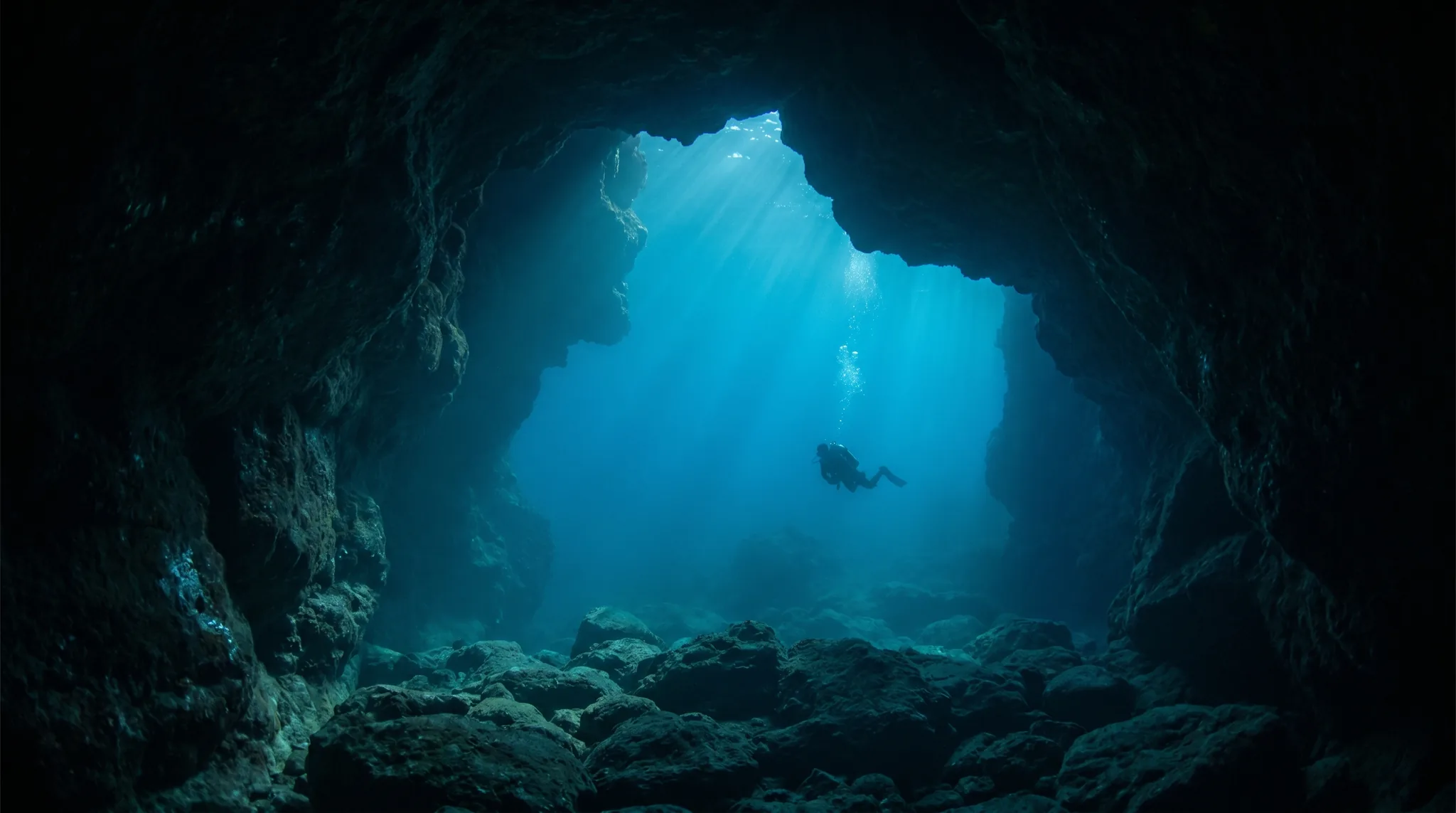
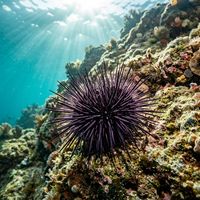
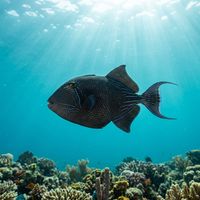
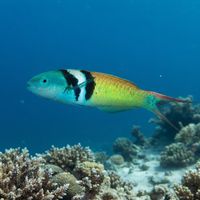
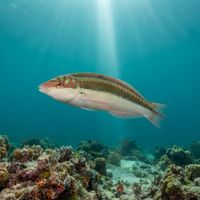
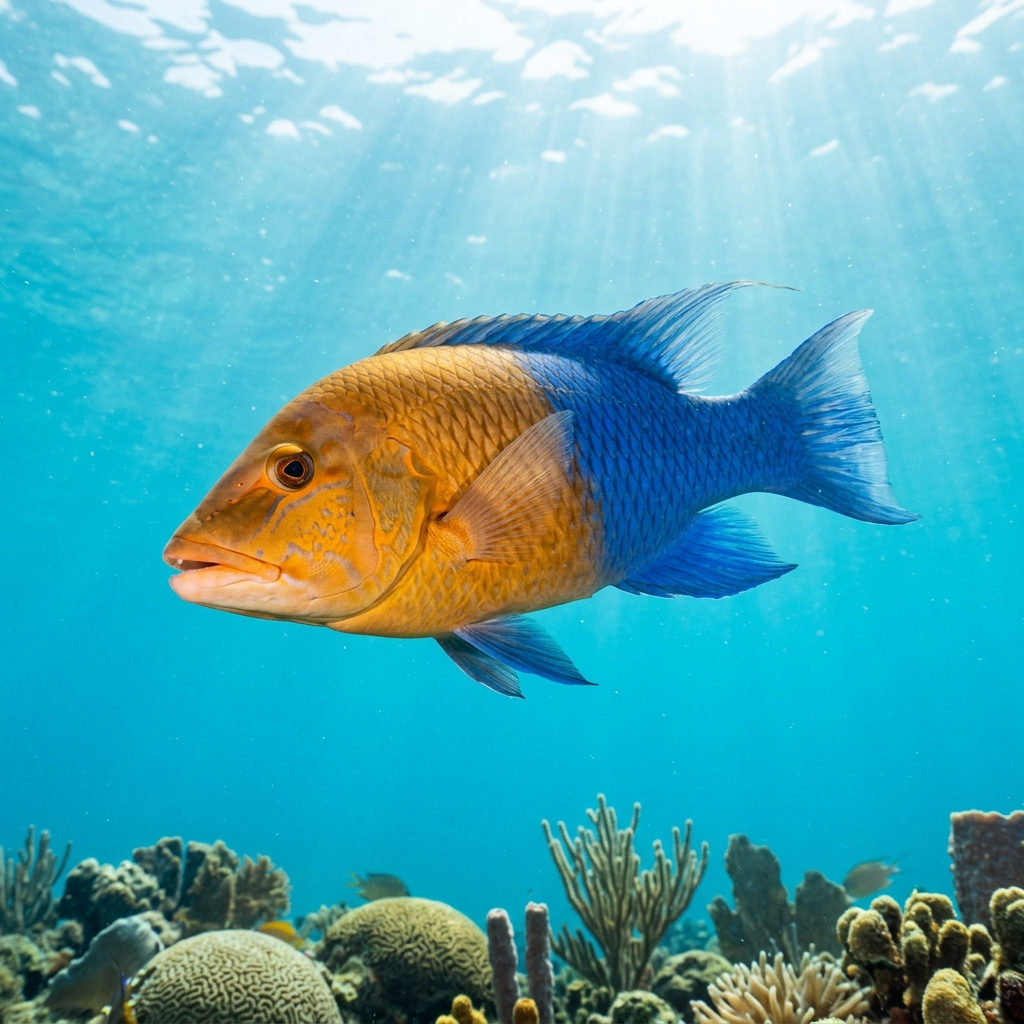
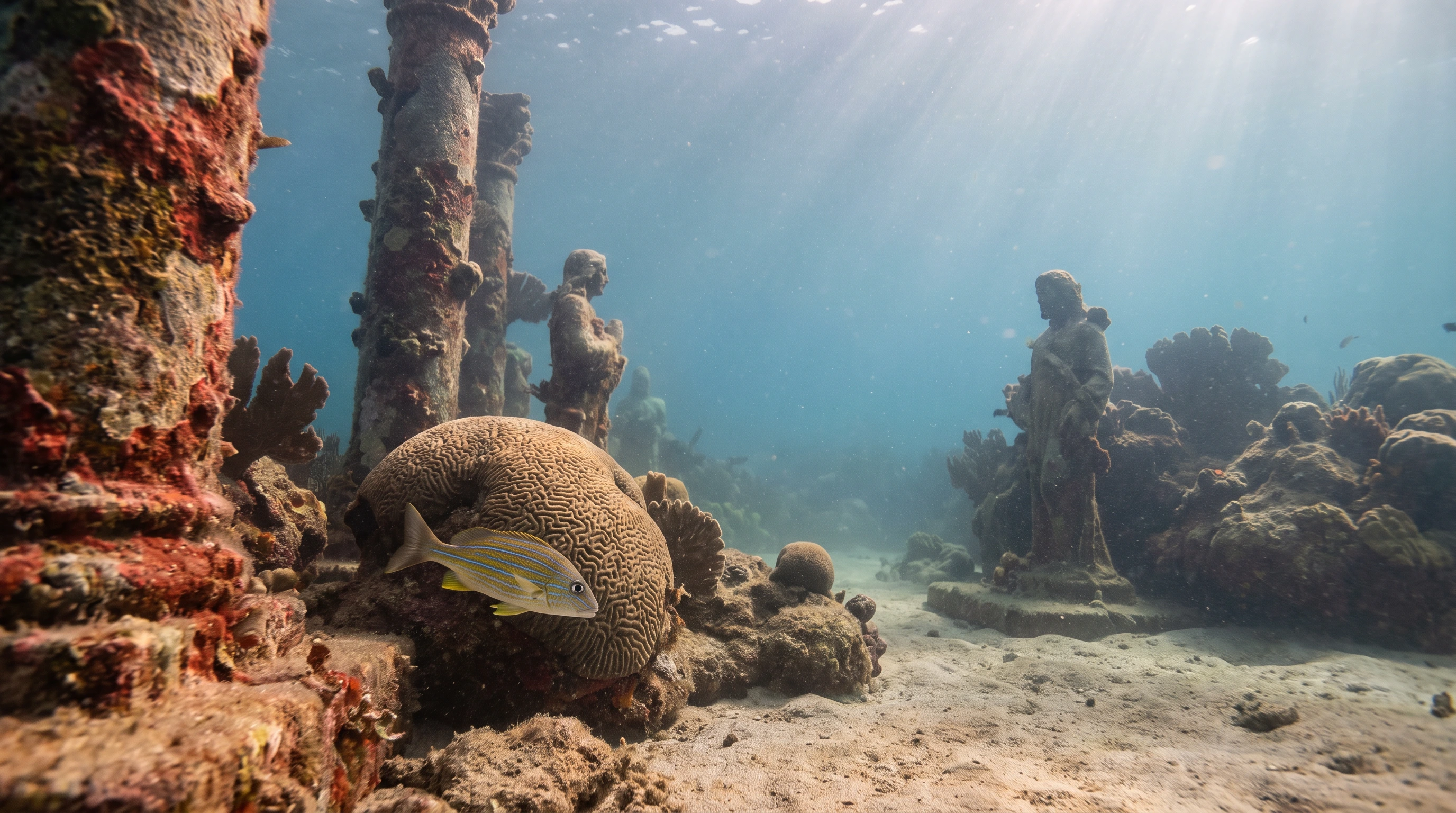
The North Coast faces the Atlantic Ocean and is shaped by northerly swells that can make conditions rough and limit diving opportunities. Sites range from shallow rocky reefs and sea caves to a deeper drift site, with depths across the area spanning from very shallow rock pools to around thirty-five metres. Shore entry is the norm, though entries often require navigating a surf break or sharp reef. Marine life recorded here includes groupers, parrotfish, surgeonfish, soldierfish, and sea stars. Drift experience is useful for some sites, while others suit beginners willing to manage the shore break.
Monthly water temperature across North Coast's sites, from satellite sea-surface data corrected for depth. The band shows the site-to-site spread.
Water temperatures stay warm year-round, rising through late summer and peaking in autumn before easing in winter. Northerly swells are the main seasonal variable: conditions tend to be calmer in summer, which is the easier time to plan a dive here.
Water temperature around North Coast ranges from about 27°C in January to 30°C in September, based on satellite sea-temperature data for its dive sites.
With water around 27–30°C, a rash guard or 3mm shorty works in North Coast year-round.
Fin maps 6 sites in North Coast (6 scuba diving sites and 2 snorkelling spots, with some suited to both).
1 more site to explore