Bodianus rufus
Spot Spanish Hogfish across Caribbean reefs from Florida to Roatán. Warm waters, year-round presence, and a bold two-tone colour scheme make it unmistakable.
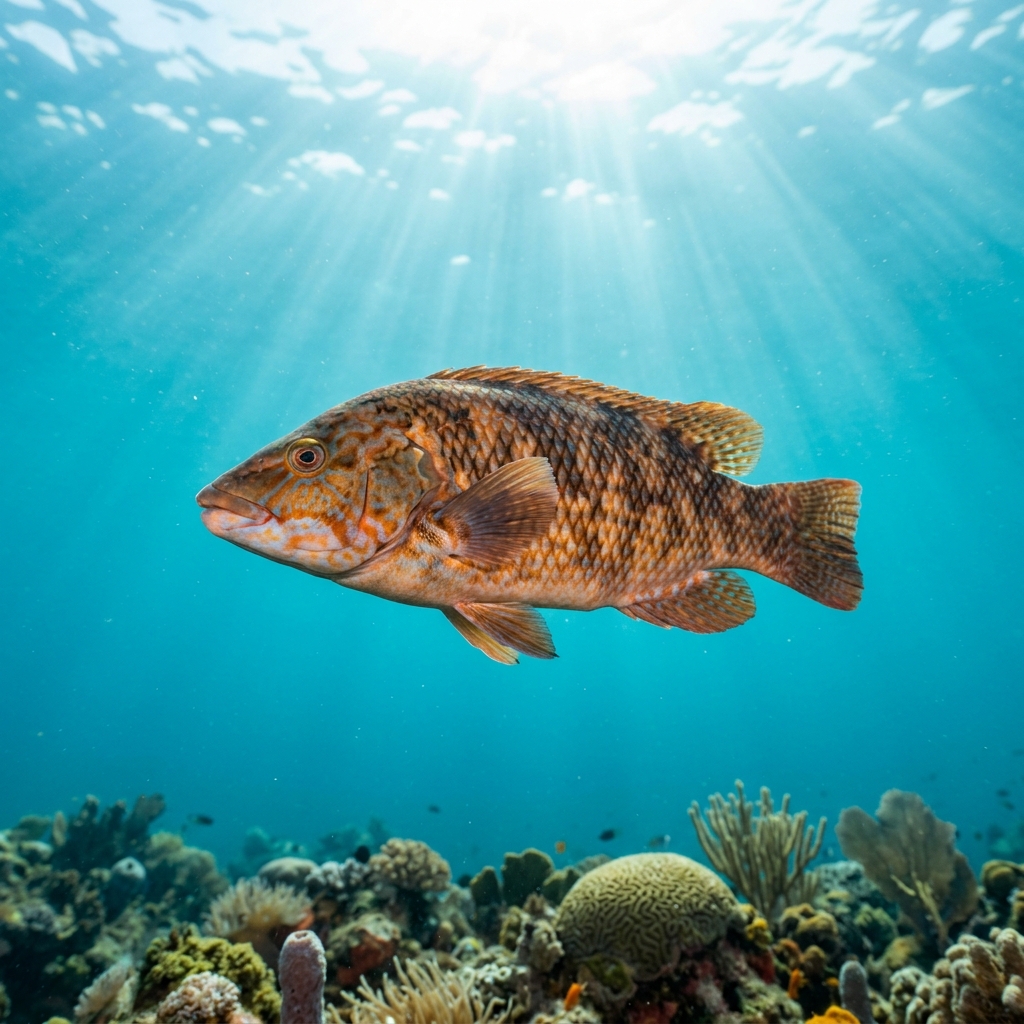
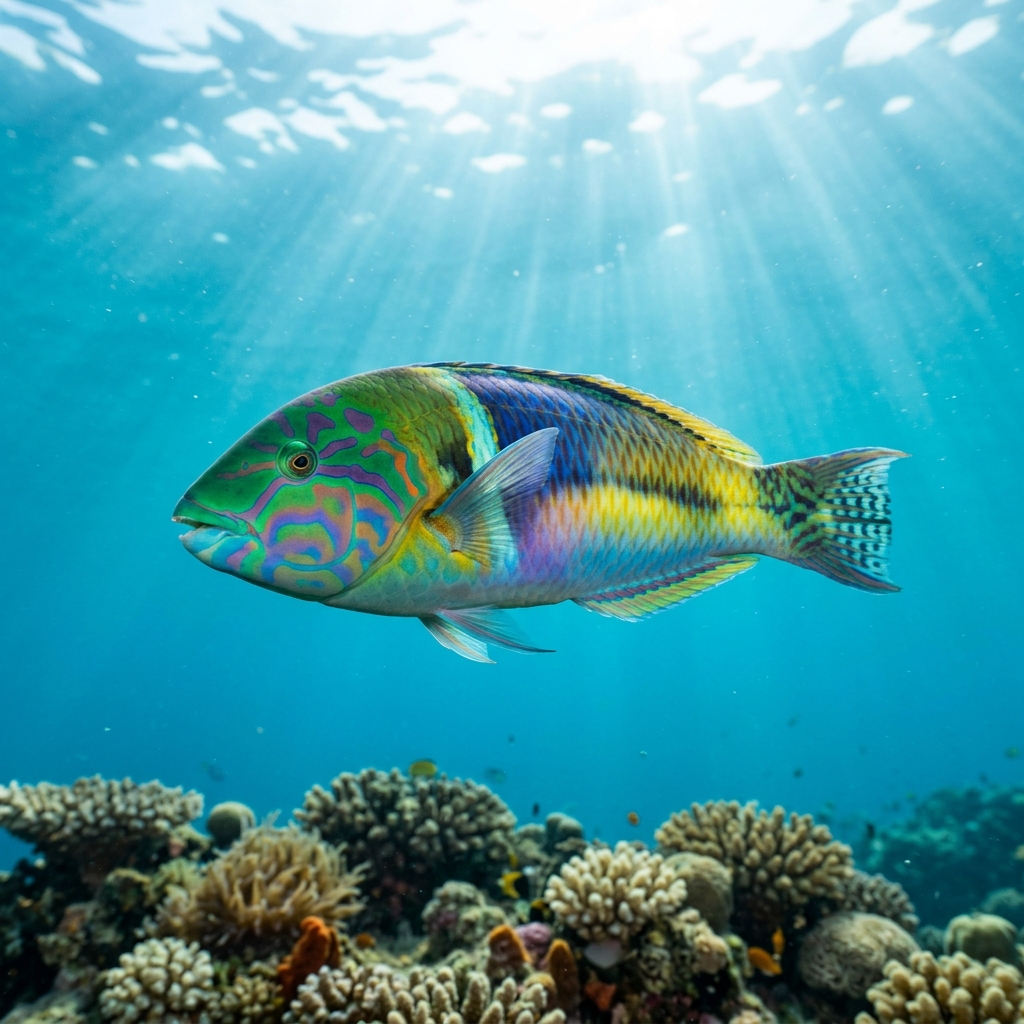
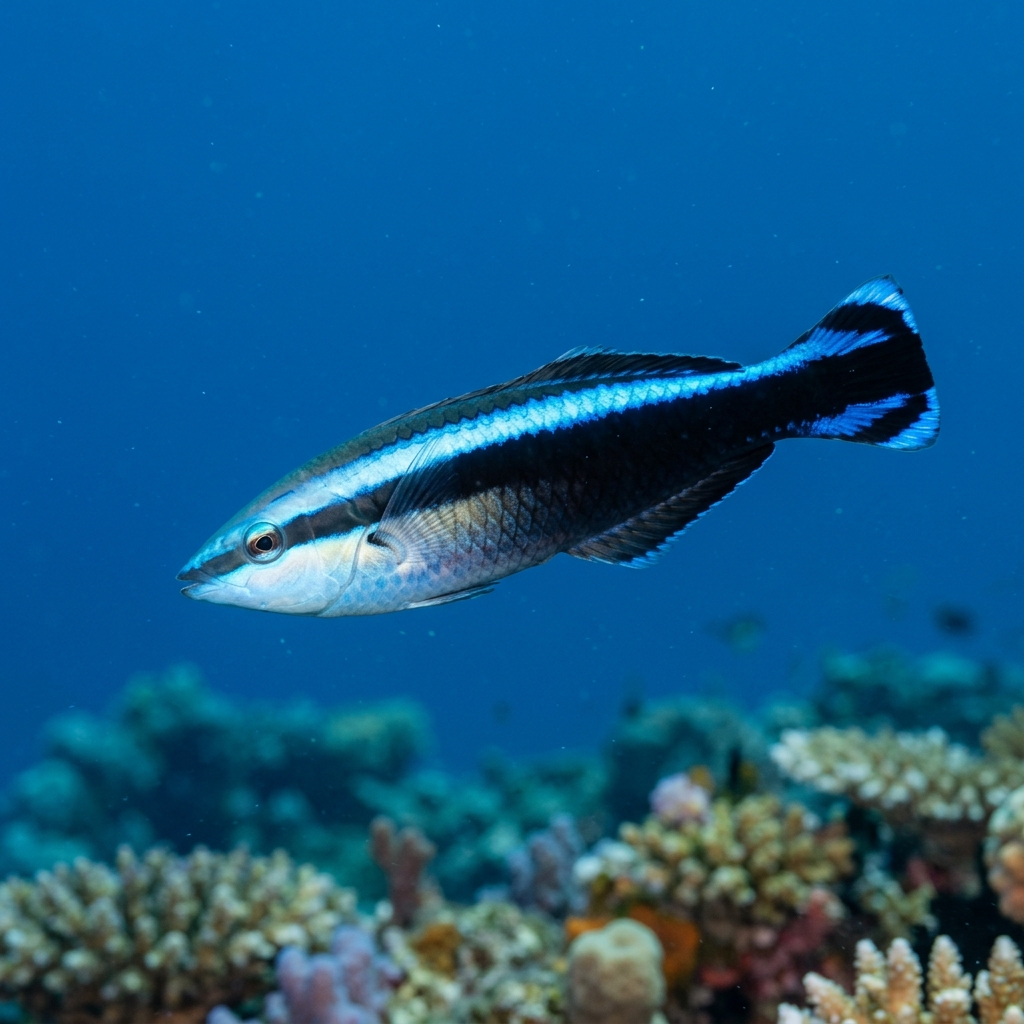
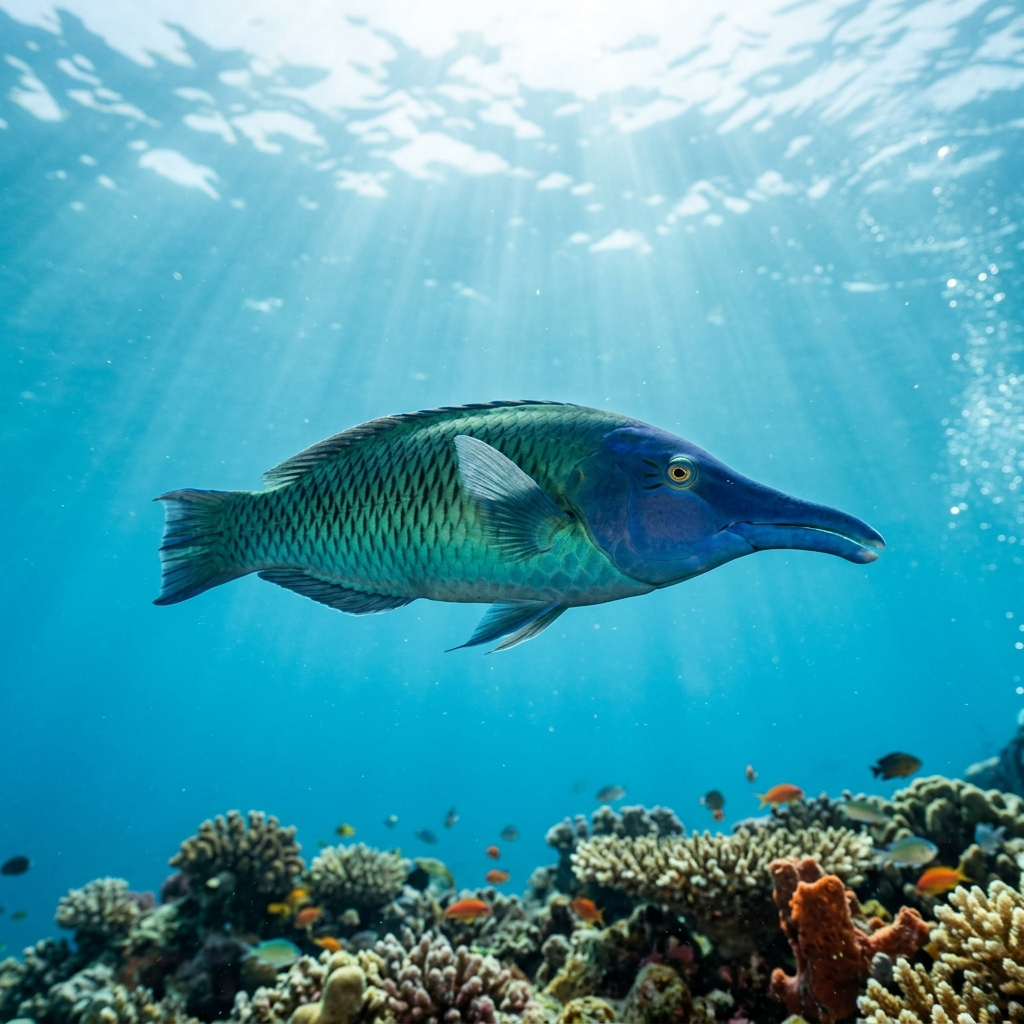
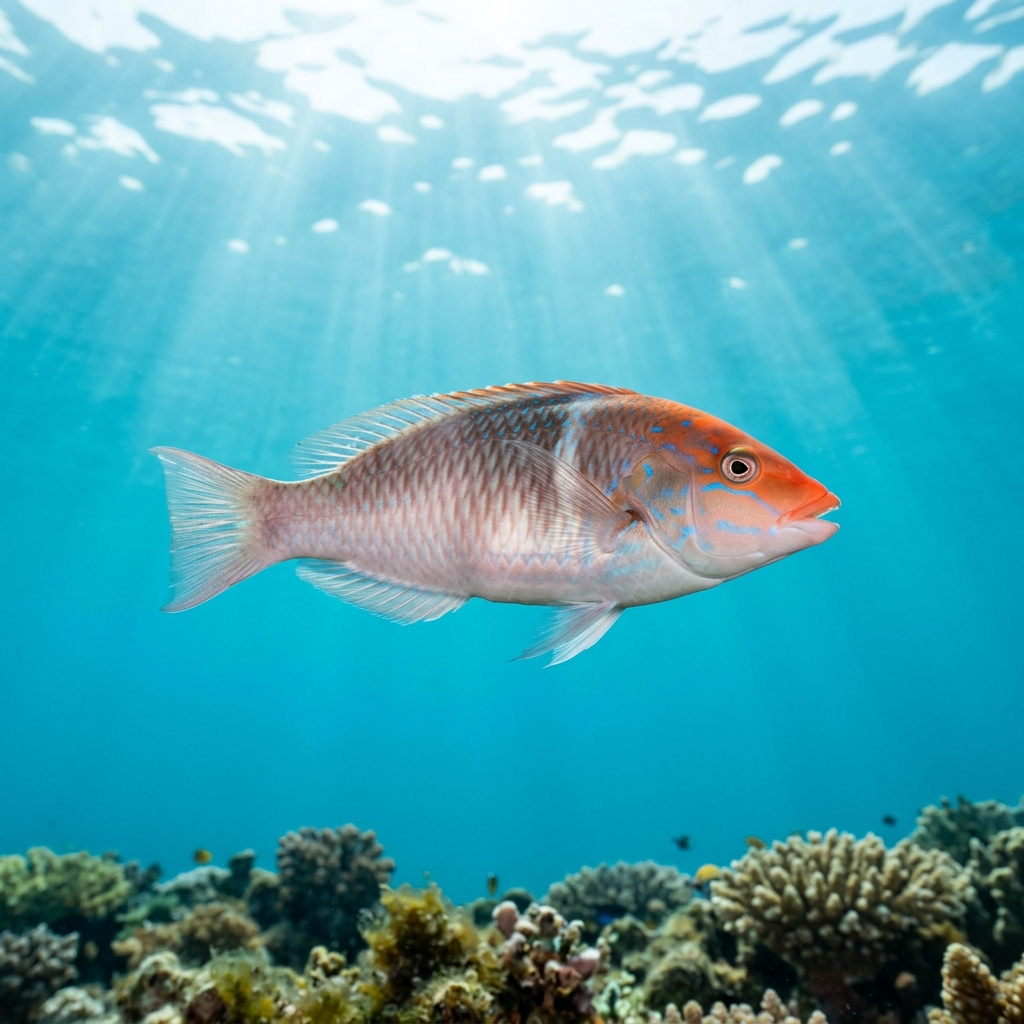
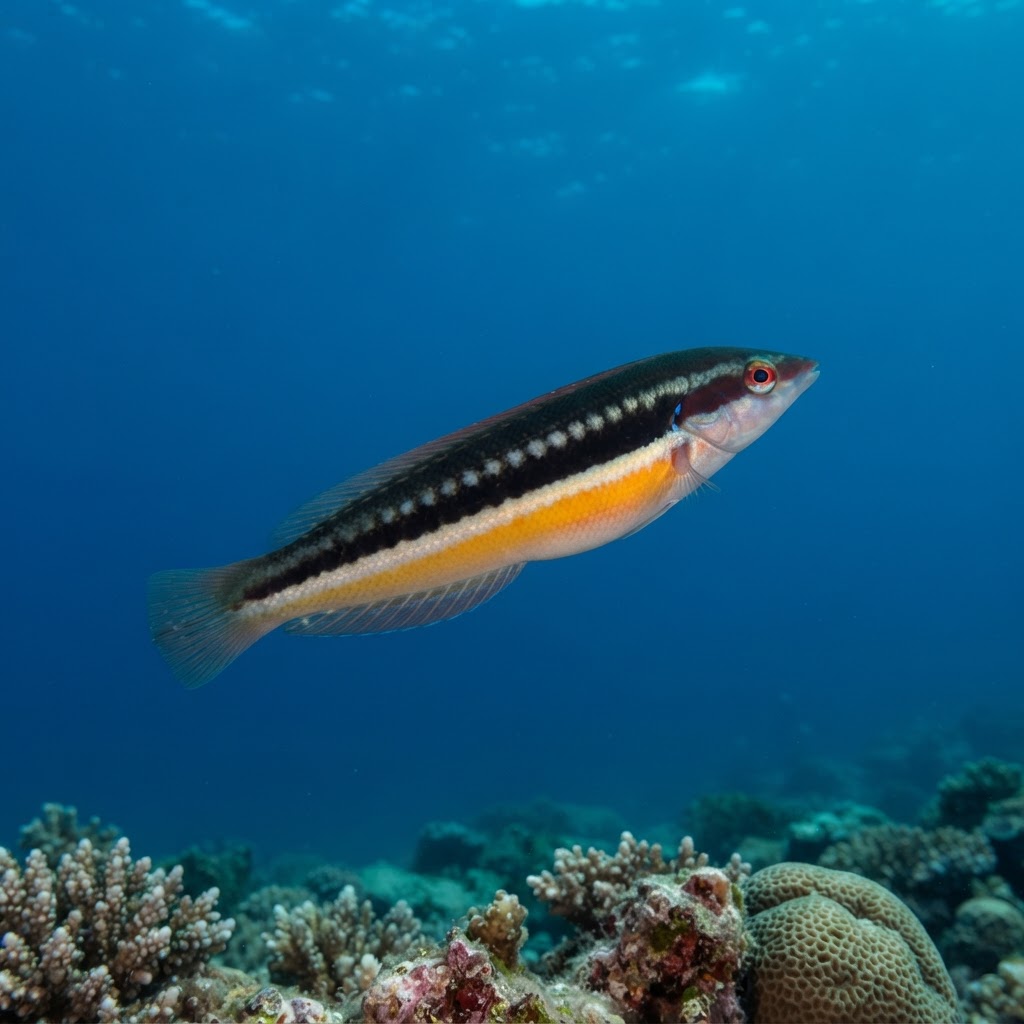
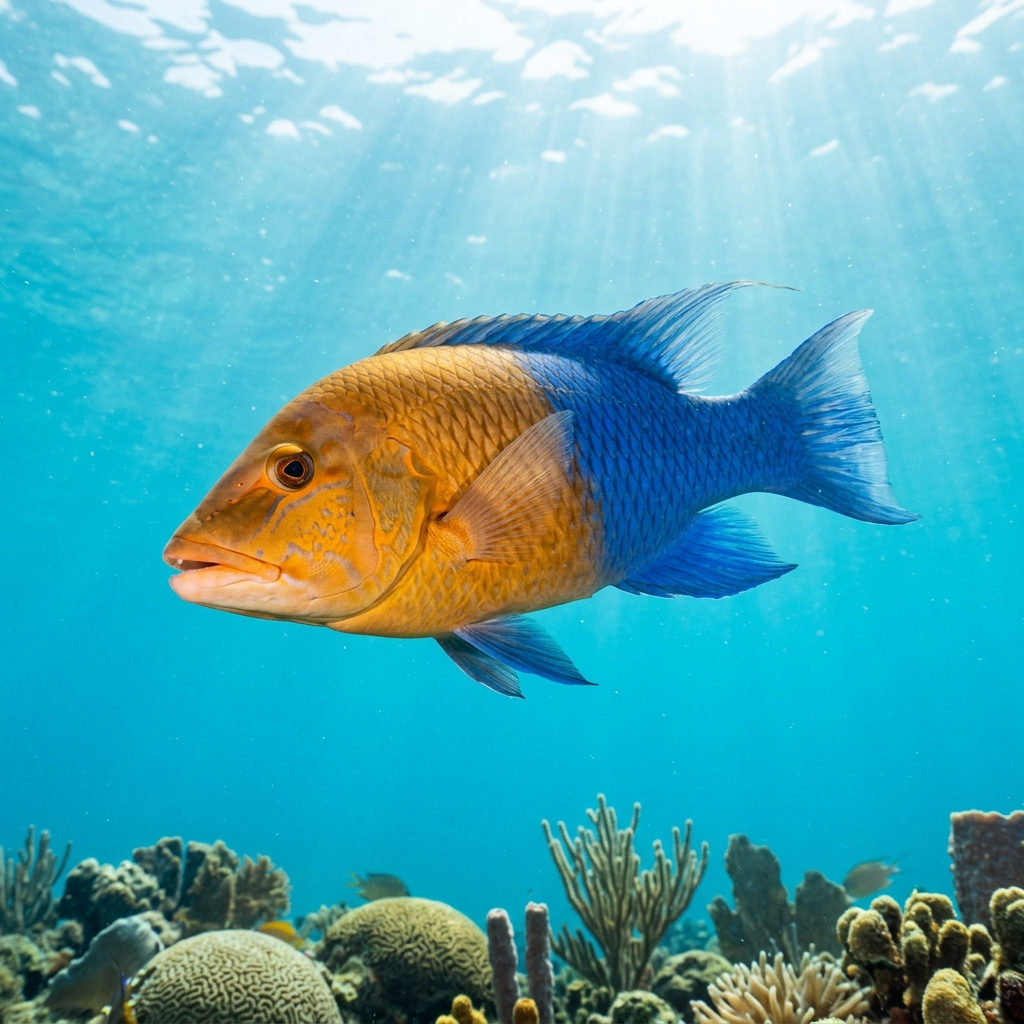
A bold two-tone pattern makes this one of the easier Caribbean wrasses to nail: the upper body and nape are a deep violet-blue to purple, while the lower half and tail are vivid yellow-orange. It is a medium-sized, chunky-bodied wrasse with a slightly pointed snout. Juveniles are notably different, showing bright yellow and blue colouring and often hovering near cleaning stations where they pick parasites off other fish.
You will usually find Spanish Hogfish moving actively over coral and rubble, nosing around for small invertebrates. Juveniles are well known for setting up cleaning stations, hovering almost motionless while larger fish queue up and hold still to be picked clean of parasites. Adults tend to be curious rather than wary and will often circle back to investigate a stationary diver.
Juveniles are obligate cleaner fish, one of only a handful of Caribbean species that run dedicated cleaning stations where they remove parasites from visiting fish. This role gives them a degree of protection, as even predatory fish that would normally eat a small wrasse refrain from doing so at the cleaning station.
Sightings concentrate from September through July across Caribbean sites, suggesting a slight dip in August but broadly year-round presence, which fits the species' preference for the warm 26 to 29 °C water found on Caribbean reefs throughout the year.
Most commonly logged across the wider Caribbean, with the strongest sighting records in Florida and the US Southeast, the Yucatán Peninsula in Mexico, and Roatán in Honduras. Bonaire, Grand Cayman, and the US and British Virgin Islands are also reliable spots, and sightings extend south through Colombia and Grenada.
Mapping where Spanish Hogfish is logged…
Spanish Hogfish are a Caribbean and subtropical Atlantic species logged across a wide range of dive sites. The strongest presences are in Florida, the Yucatán Peninsula, Roatán in Honduras, Grand Cayman, and Bonaire. The US and British Virgin Islands, Colombia's Caribbean coast, and Grenada are also dependable locations.
They can be encountered year-round on Caribbean reefs, which matches their preference for warm water in the 26 to 29 °C range. Sighting records from logged dive sites show a slight trough in August, with the strongest concentration of sightings running from September through July.
Look for the sharp two-tone split: the upper body, head, and nape are deep violet-purple, while the belly, flanks below the midline, and tail are warm yellow-orange. The chunky body and pointed snout are typical of the hogfish group. No other common Caribbean reef fish shares this exact colour combination.
Adults typically reach around 35 to 40 cm in length, though larger individuals have been recorded. In the water they have a sturdy, robust build that makes them look substantial even at the smaller end of that range.
Yes. Juveniles are one of the Caribbean's recognised cleaner fish, setting up stations on the reef where they remove parasites and dead tissue from visiting fish. Even species that would normally prey on a small wrasse will hold still and allow the juvenile to work. Adults largely abandon this behaviour as they grow.
Site and sighting data is aggregated from diver logs, iNaturalist and GBIF. For taxonomy and conservation status:
Bird Wrasses
3,632 sites