Anisotremus virginicus
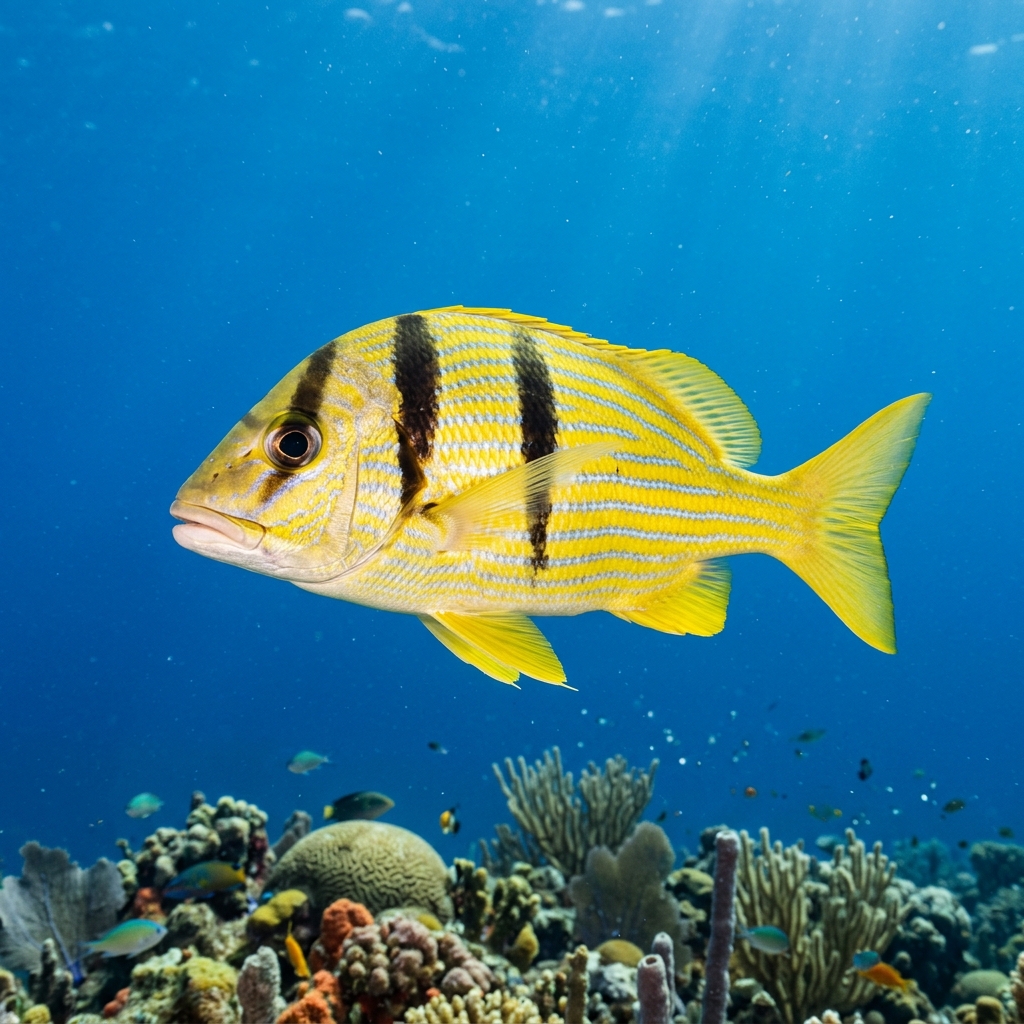
Bold black-and-yellow stripes make porkfish one of the easiest Caribbean reef fish to recognise. Most commonly logged in Florida, Mexico and the Bahamas.
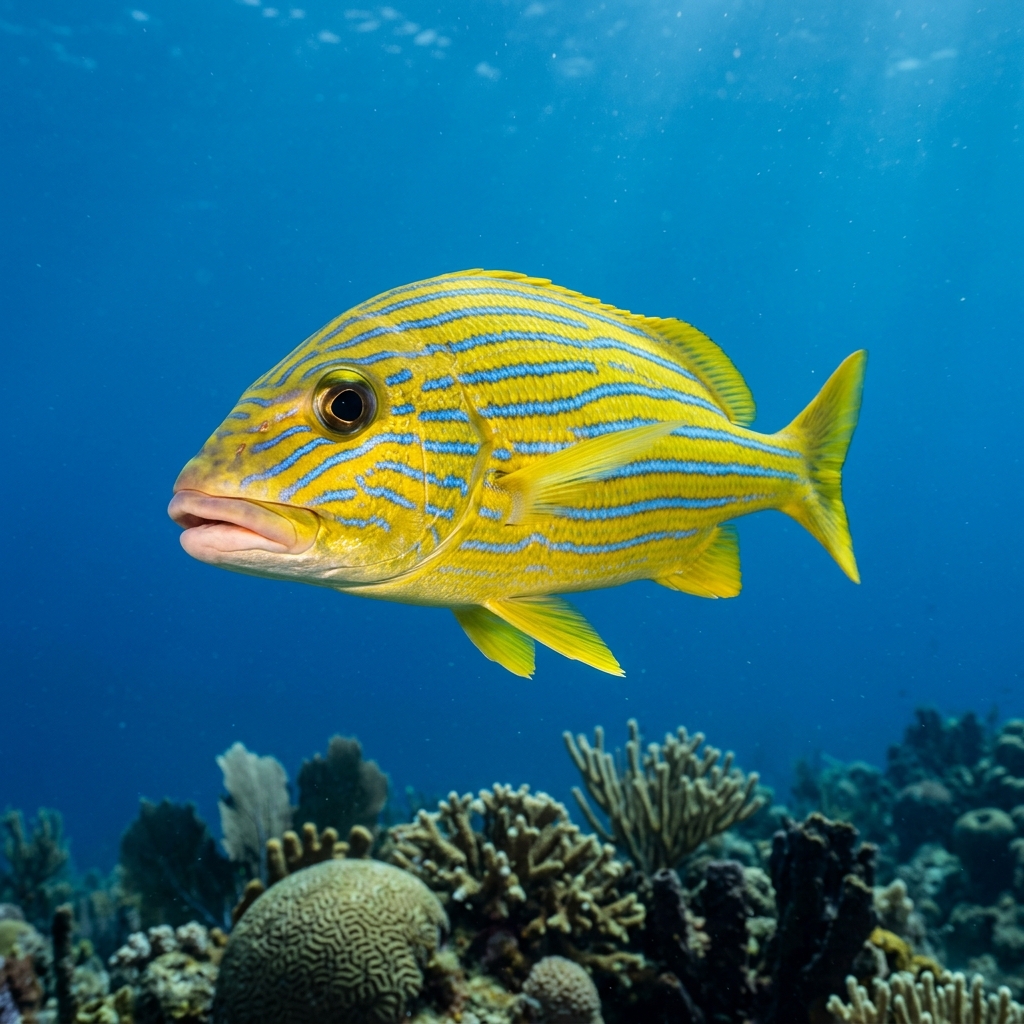
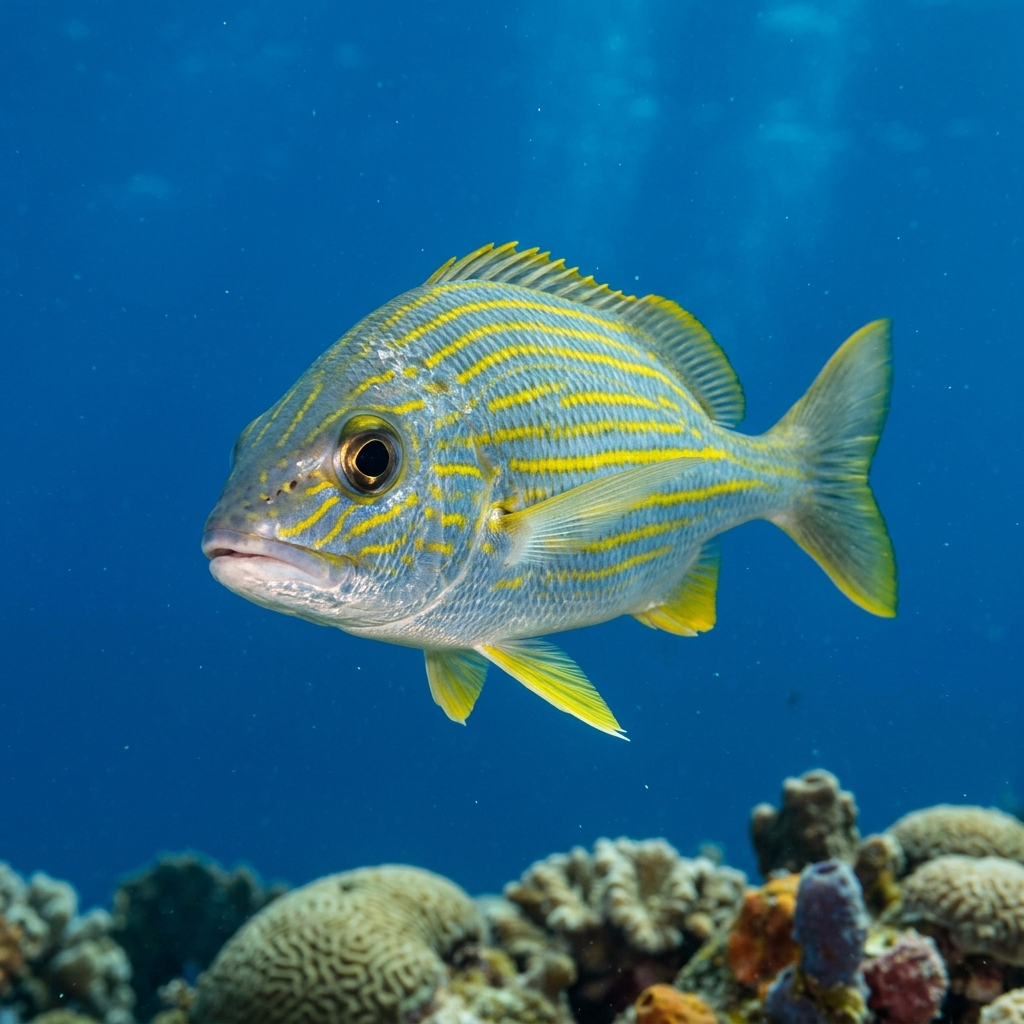
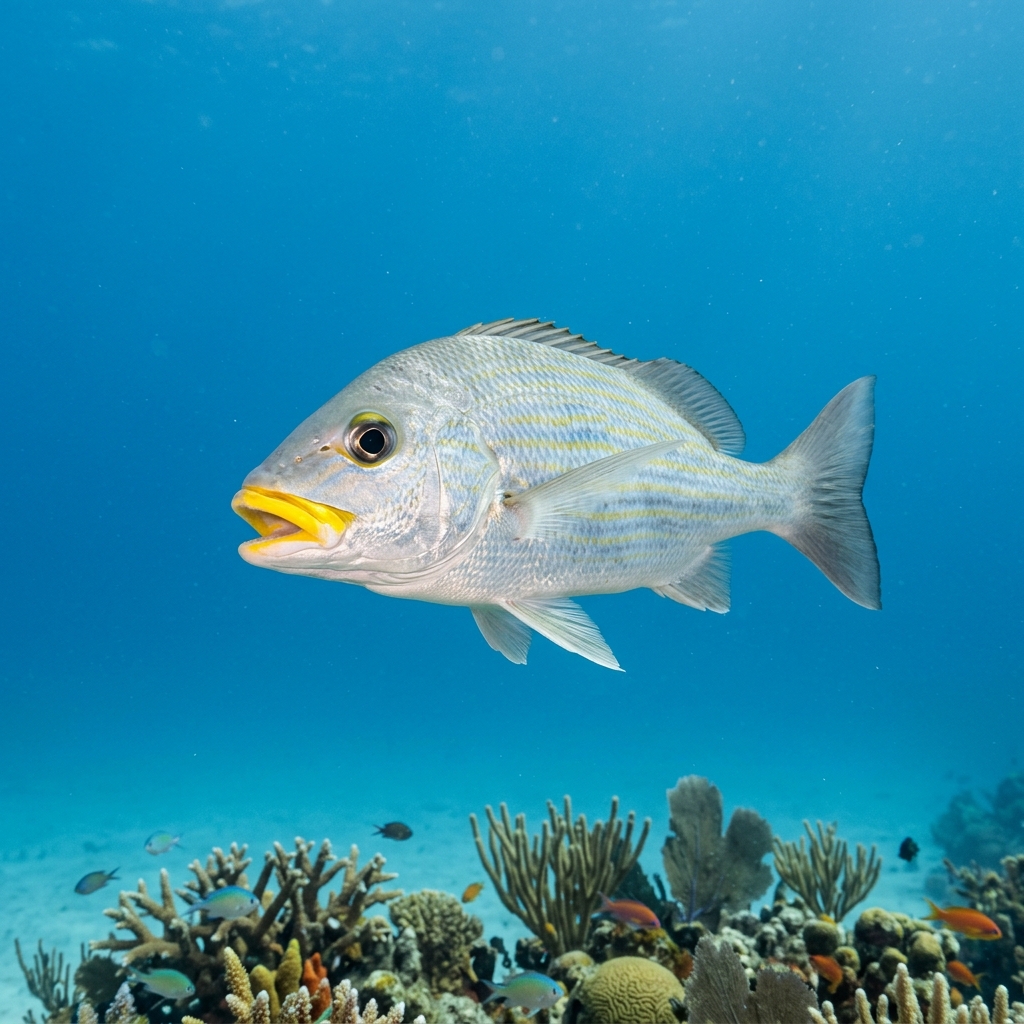
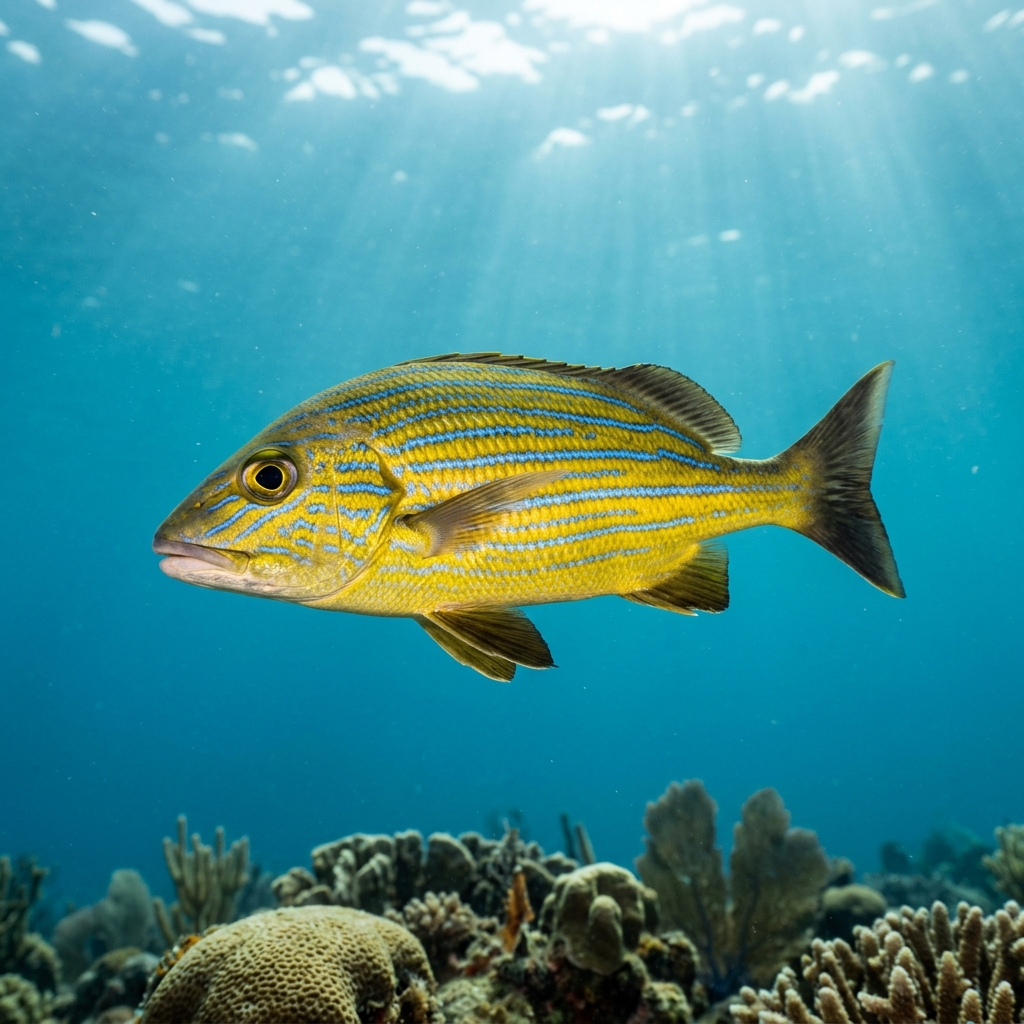
Two thick black vertical bars are the instant giveaway: one runs through the eye, the other just behind the pectoral fin. Behind those bars, bright yellow and white horizontal stripes run to the tail, giving the body a vivid striped pattern unique among Caribbean grunts. At roughly 28 cm, it is a chunky, deep-bodied fish easy to spot against the reef. Juveniles look completely different and are described separately below.
You will most often find porkfish hovering in loose groups or tightly packed schools close to coral heads and rocky ledges during daylight hours, when they actively forage across the reef for small invertebrates. They are relaxed around divers and will sometimes drift towards you out of apparent curiosity rather than bolting. When startled, a school will bunch together tightly, so a sudden movement on your part can trigger a satisfying collective swirl.
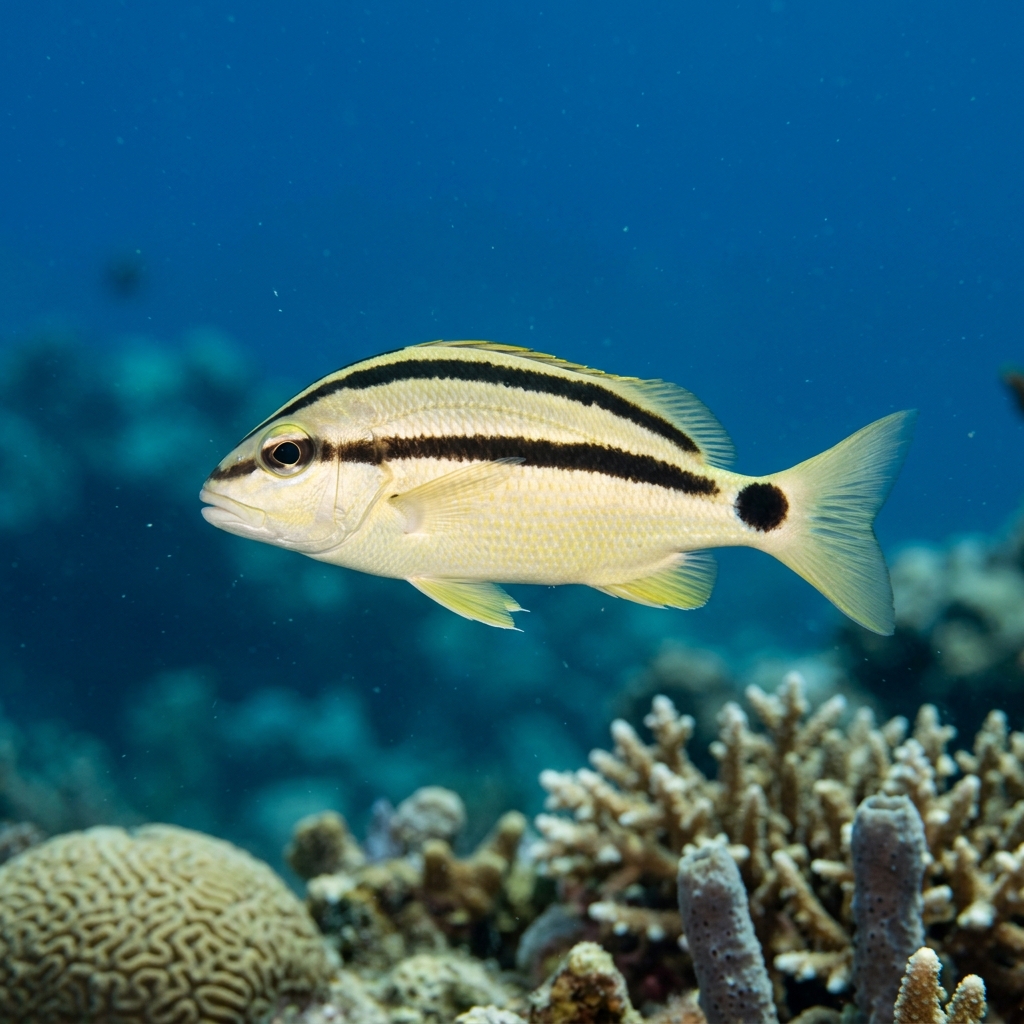
Juveniles act as cleaner fish, picking parasites and dead tissue from larger reef fish at informal cleaning stations. This role disappears as they mature, making it one of the few cases where a grunt's life-history stage directly shapes reef ecosystem dynamics.
Across Northern Hemisphere sites the porkfish is sighted throughout most of the year, with records concentrated from December through to October. Its preferred temperature window of roughly 25 to 28 °C means it is at home on tropical reefs year-round wherever those temperatures hold.
Reef neighbours a diver could mistake it for. Use the identification notes above to tell them apart.
Porkfish are most consistently logged across the wider Caribbean and the Gulf of Mexico, with particularly strong records in Florida and the Southeast United States, the Yucatán Peninsula in Mexico, and the Bahamas and Cuba. Brazil's northeast coast adds a meaningful South Atlantic population, while Roatán, Belize and Curaçao round out reliable Caribbean hotspots.
Mapping where Porkfish is logged…
Porkfish are a Caribbean and Gulf of Mexico species, most reliably encountered in Florida, the Yucatán Peninsula of Mexico, the Bahamas, Cuba, and along the reefs of Roatán in Honduras. Brazil's northeast coast holds a solid South Atlantic population as well.
On Northern Hemisphere reefs, porkfish are recorded across most of the year with sightings concentrated from December through October. Because they favour water temperatures of around 25 to 28 °C, they are present on Caribbean reefs year-round wherever those conditions persist.
Look for two thick black vertical bars on an otherwise yellow-and-white striped body. One bar crosses the eye, the other sits just behind the gill cover. No other common Caribbean grunt shares this combination of vertical and horizontal banding.
Adults typically reach around 28 cm in length, making them a medium-sized reef fish. In the water they appear robust and deep-bodied, which helps distinguish them from the slimmer-looking French or bluestriped grunt.
Not at all. Juveniles are pale whitish-yellow with two bold black horizontal stripes and a black spot near the tail base, looking very different from the barred, yellow-striped adult. Young porkfish also act as cleaner fish, picking parasites off larger reef species, a behaviour adults abandon entirely.
Site and sighting data is aggregated from diver logs, iNaturalist and GBIF. For taxonomy and conservation status:
Bluestriped Grunt
1,907 sites