Halichoeres maculipinna
Small, quick-moving reef wrasse logged widely across Florida, Guadeloupe and Curacao in warm 25.5-28.2C water, year-round.
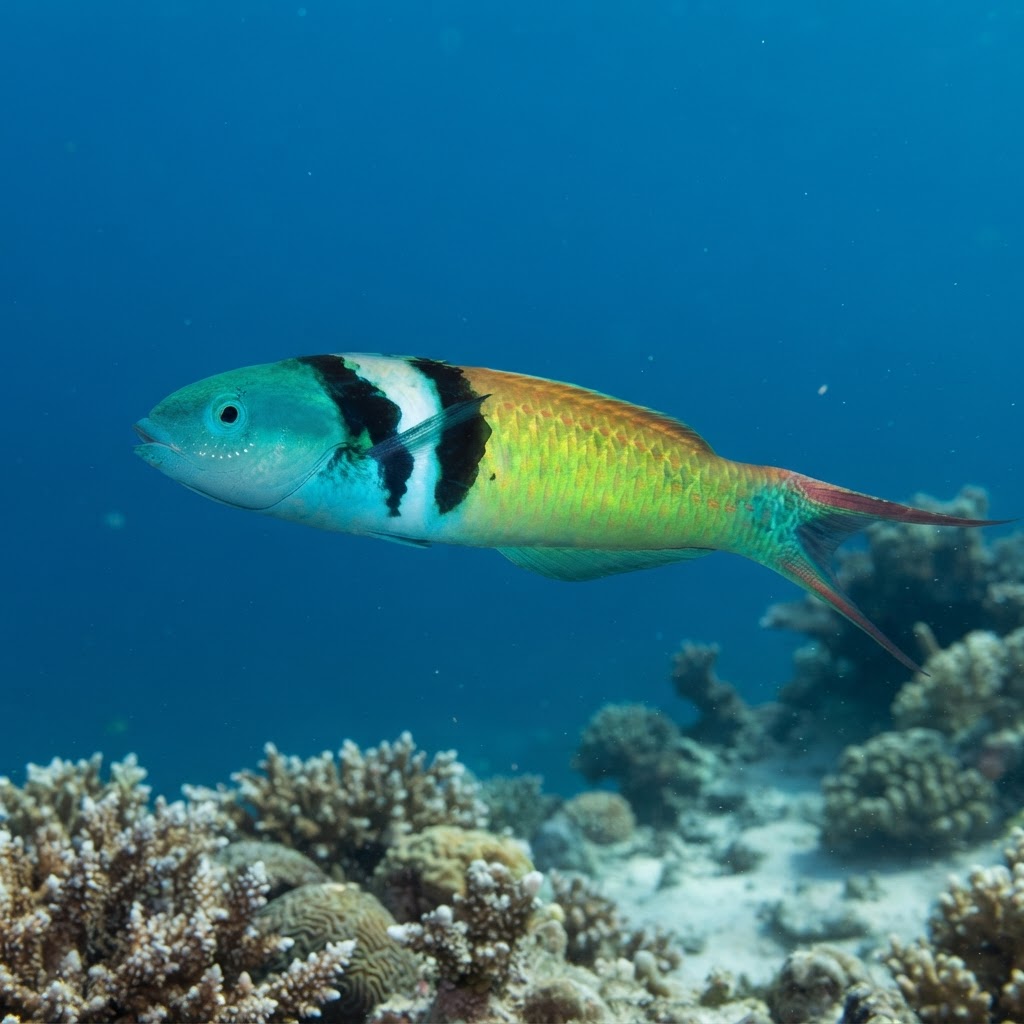
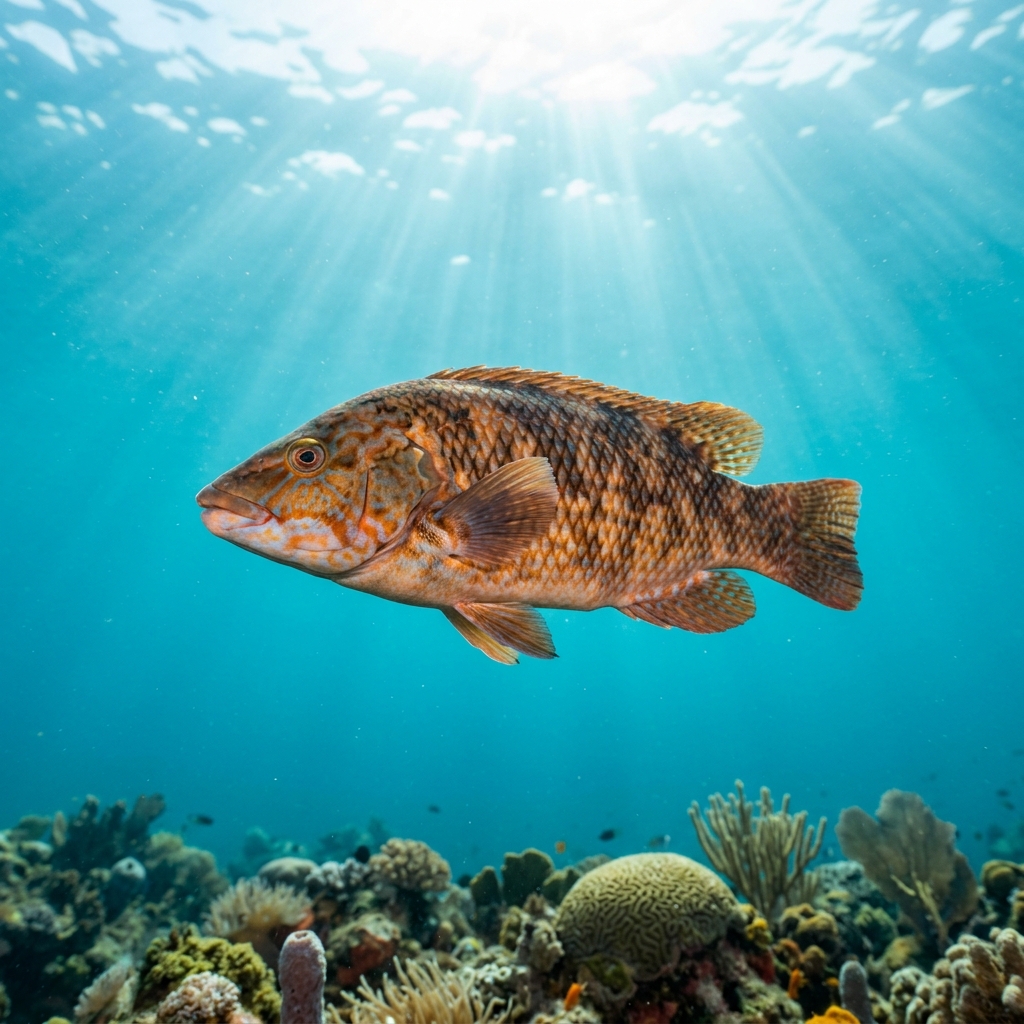
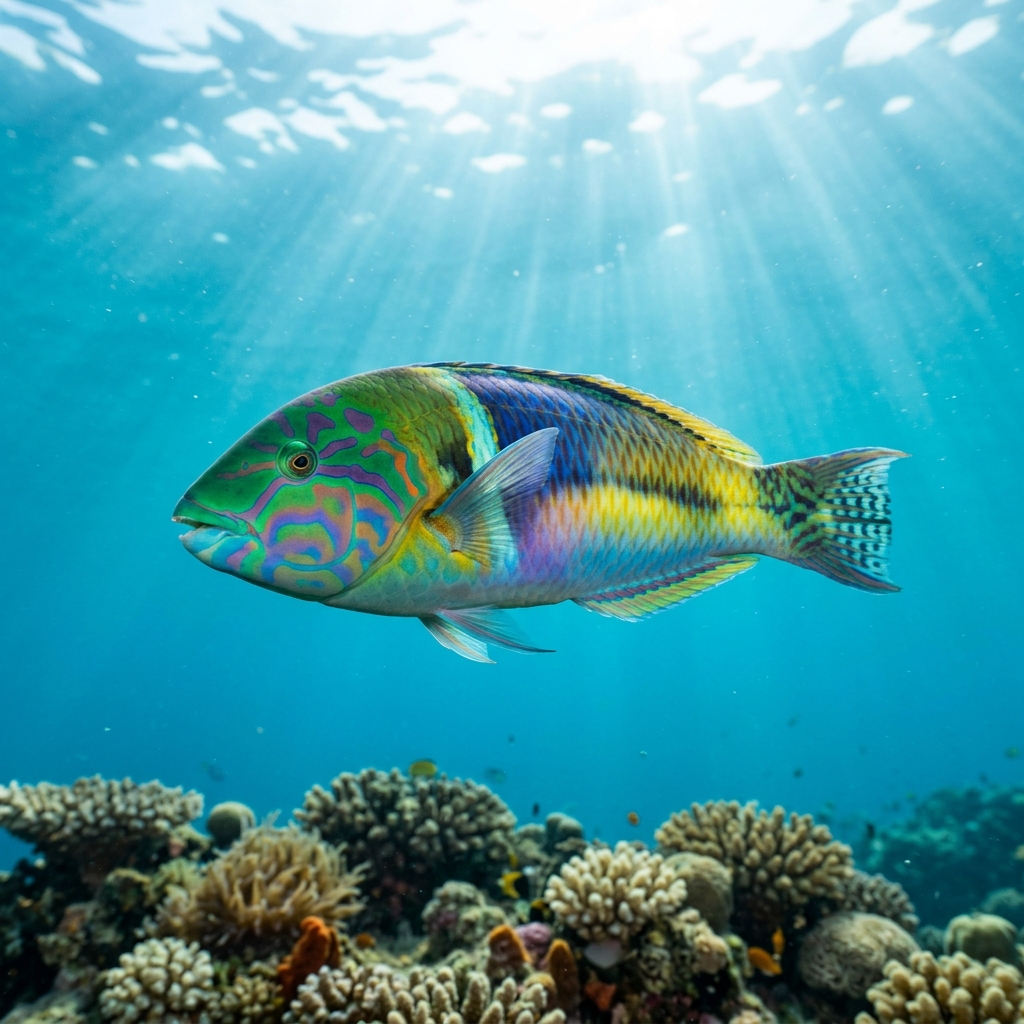
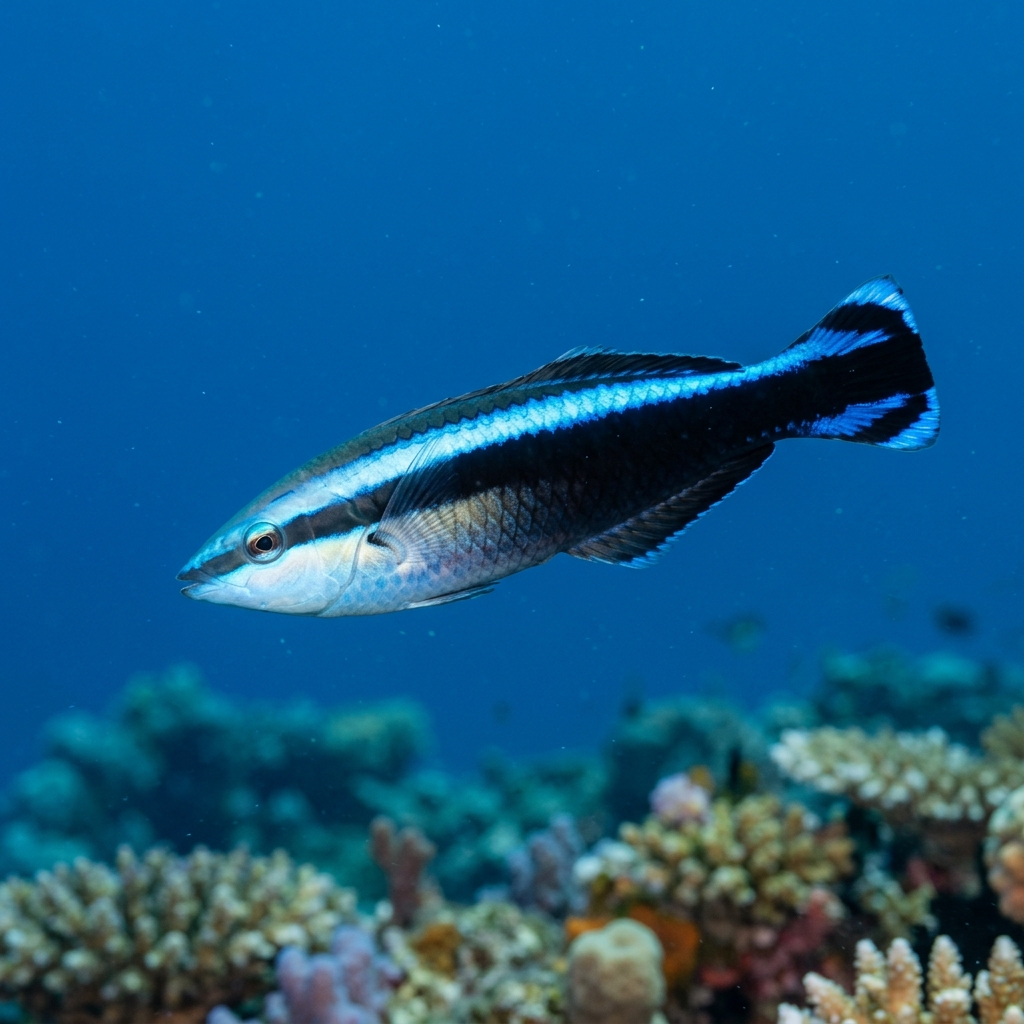
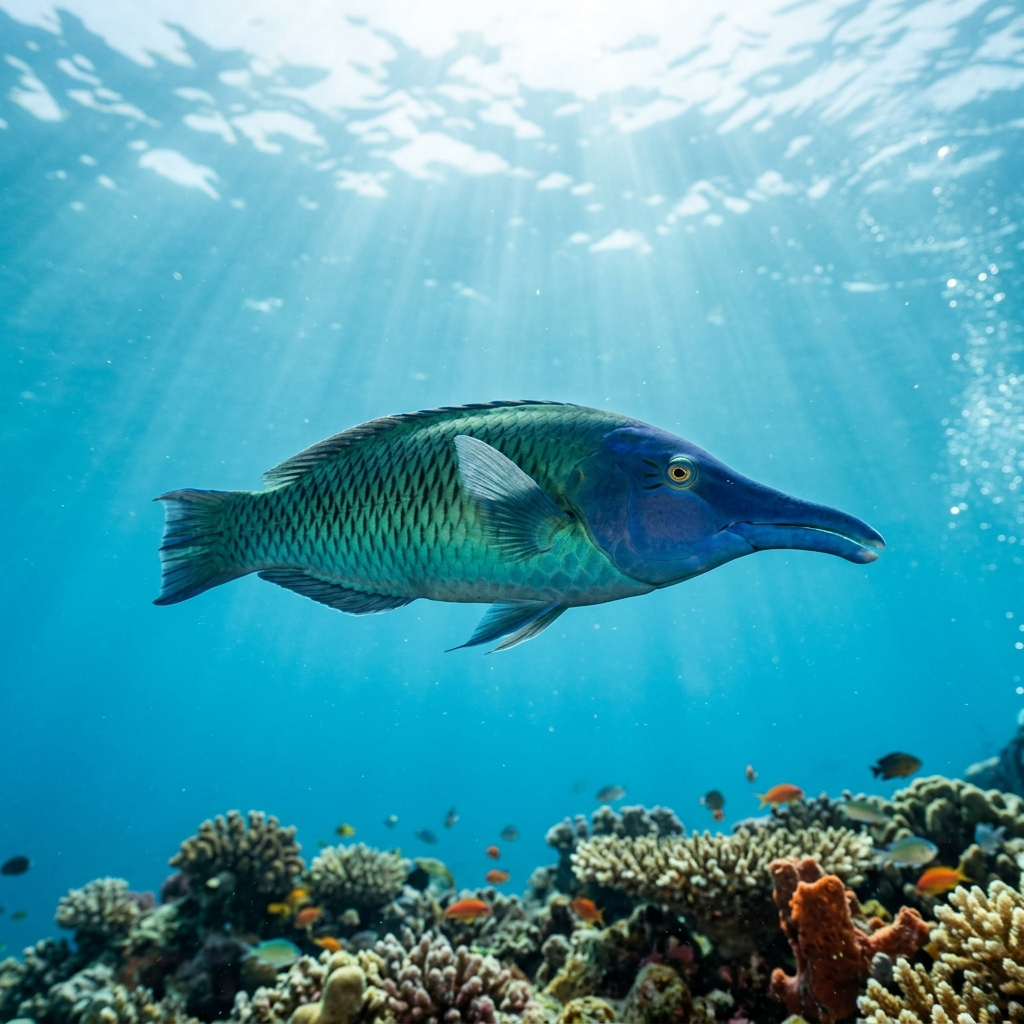
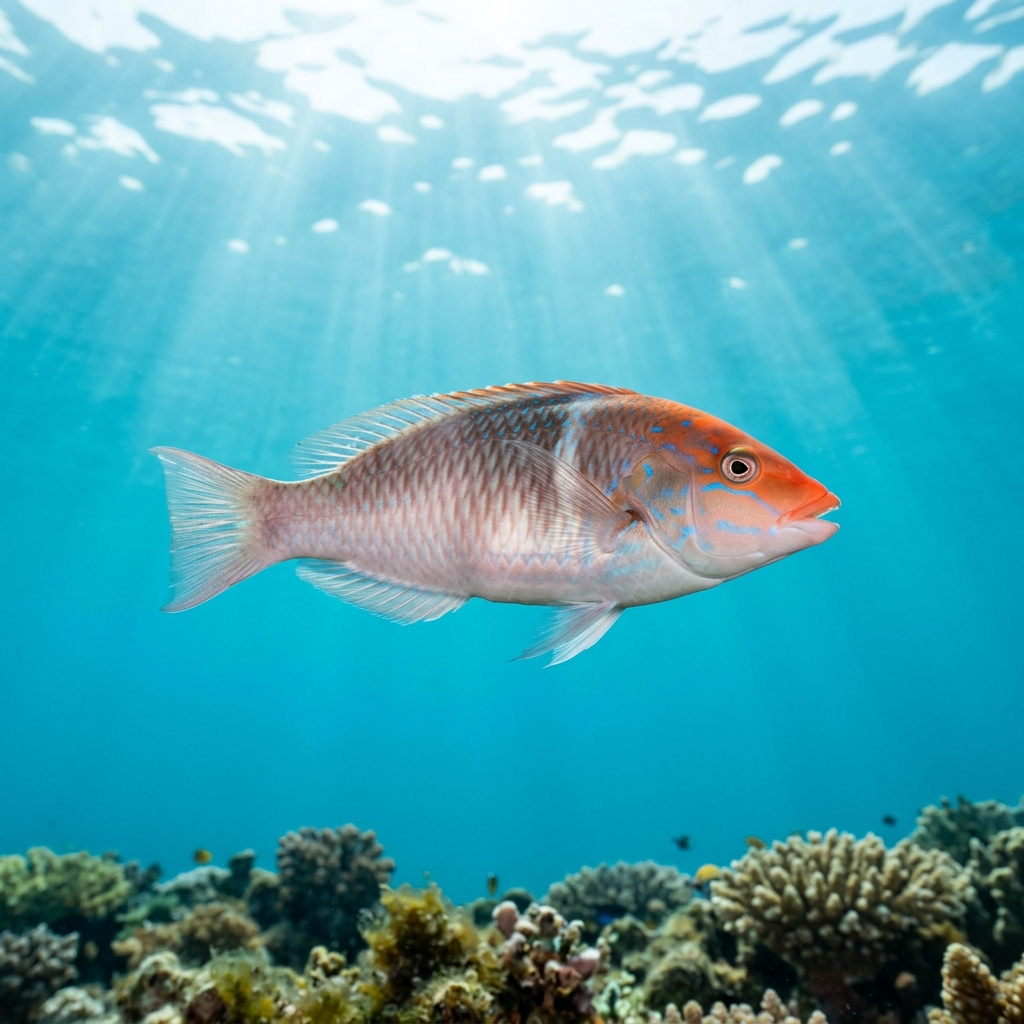
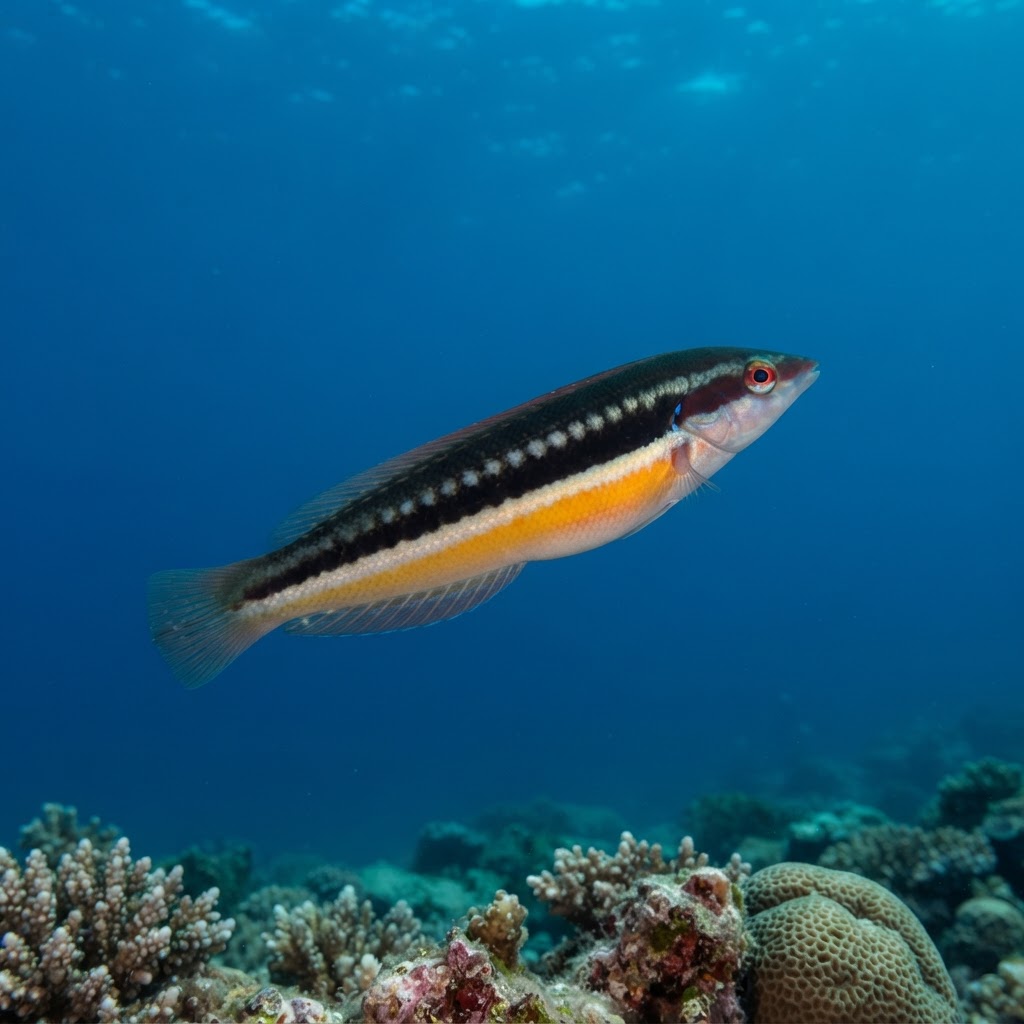
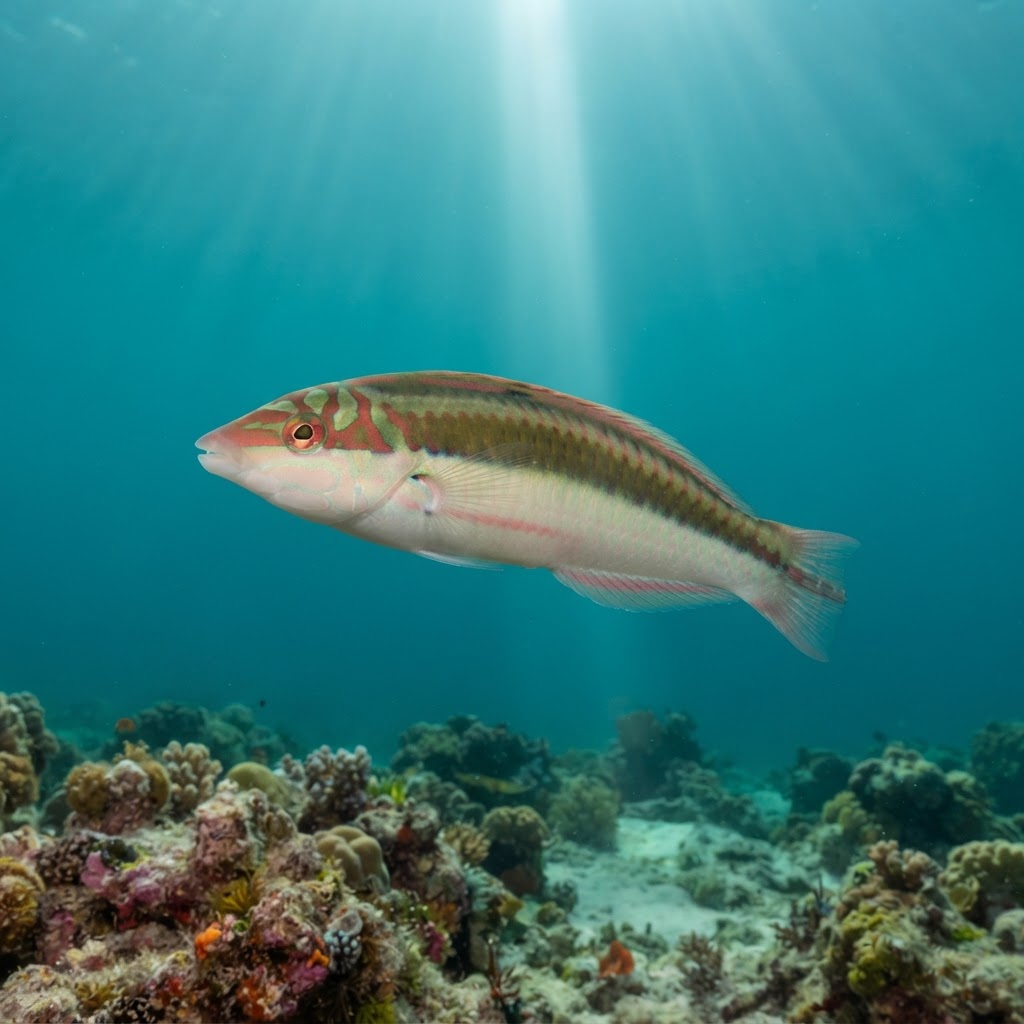
A slim, torpedo-shaped little fish, topping out around 12 cm, so it reads as a quick streak of colour rather than a fish you get a long look at. Adults show a greenish body with a dark horizontal stripe running through the mid-body toward the tail, often with a scatter of yellow or orange on the head and fins. It moves in short, darting bursts rather than a steady cruise, which is often the first thing that gives it away over open reef and rubble patches.
Expect to see it picking around low reef structure, rubble and sandy patches close to the bottom, hunting small invertebrates rather than holding station in open water. It's not shy exactly, but it doesn't linger for divers either, tending to dart off into cover if you approach directly rather than hold a pose for photos. Most sightings are logged as uncommon rather than common, so it's more of a nice find on a reef scan than a fish you'll see on every dive.
Like many wrasses it's a protogynous hermaphrodite, meaning individuals can start life as female and later change into males, which is part of why colour and pattern can vary between fish on the same reef.
No clear season shows up in the sightings data, and its comfort range of roughly 25.5 to 28.2C matches warm Caribbean reef water for most of the year, so it's a fair bet on any dive in range. Treat it as a year-round sighting rather than something to plan a trip around.
Reef neighbours a diver could mistake it for. Use the identification notes above to tell them apart.
Most reliably logged in Florida, with strong numbers also coming out of Guadeloupe, Martinique and Curacao. It also turns up consistently in the British Virgin Islands, Bonaire, the Cayman Islands and Puerto Rico, making it a fixture of Caribbean and western Atlantic reef diving generally rather than a specialty of any one site.
Mapping where Clown Wrasse is logged…
Florida logs the most sightings by far, with solid numbers also in Guadeloupe, Martinique, Curacao, the British Virgin Islands, Bonaire, the Cayman Islands and Puerto Rico. It's a widespread Caribbean and western Atlantic reef species rather than tied to one destination.
There's no strong seasonal pattern in the sightings, and it favours warm reef water in the 25.5 to 28.2C range, so it's present on tropical reefs across the year. Any dive trip to its range should have a fair shot at logging one.
Look for a small, slender fish around 12 cm with a greenish body and a dark stripe along the mid-body, often flecked with yellow or orange near the head. It moves in quick darting bursts low over reef and rubble rather than cruising steadily.
They're small reef fish, typically reaching around 12 cm, so they're easy to overlook against larger reef life.
No, they pose no threat to divers. They're small, food-focused reef fish that tend to move away from divers rather than approach.
Site and sighting data is aggregated from diver logs, iNaturalist and GBIF. For taxonomy and conservation status:
Bird Wrasse
3,632 sites