Sparisoma rubripinne
Spot the vivid yellow tail in Florida, Roatán, and across the Caribbean. Here's how to ID yellowtail parrotfish and when to find them.
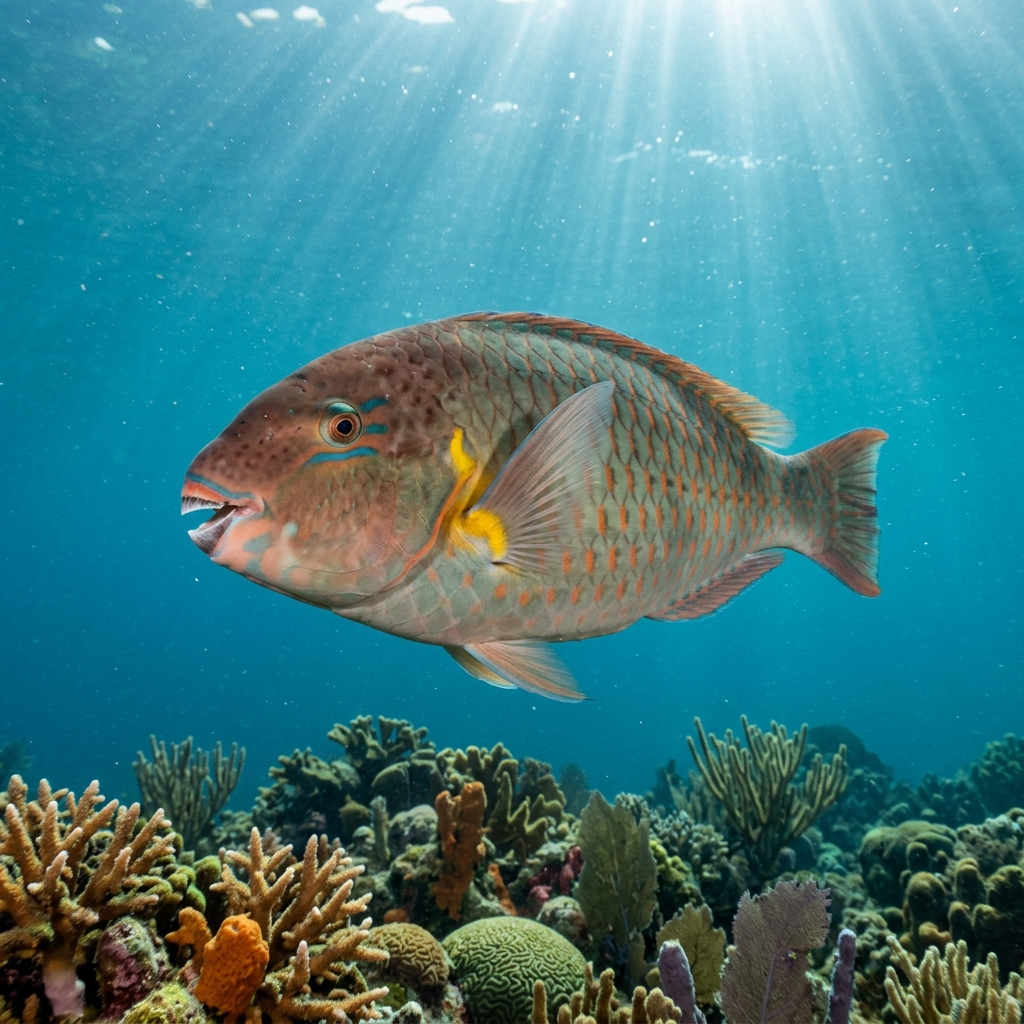
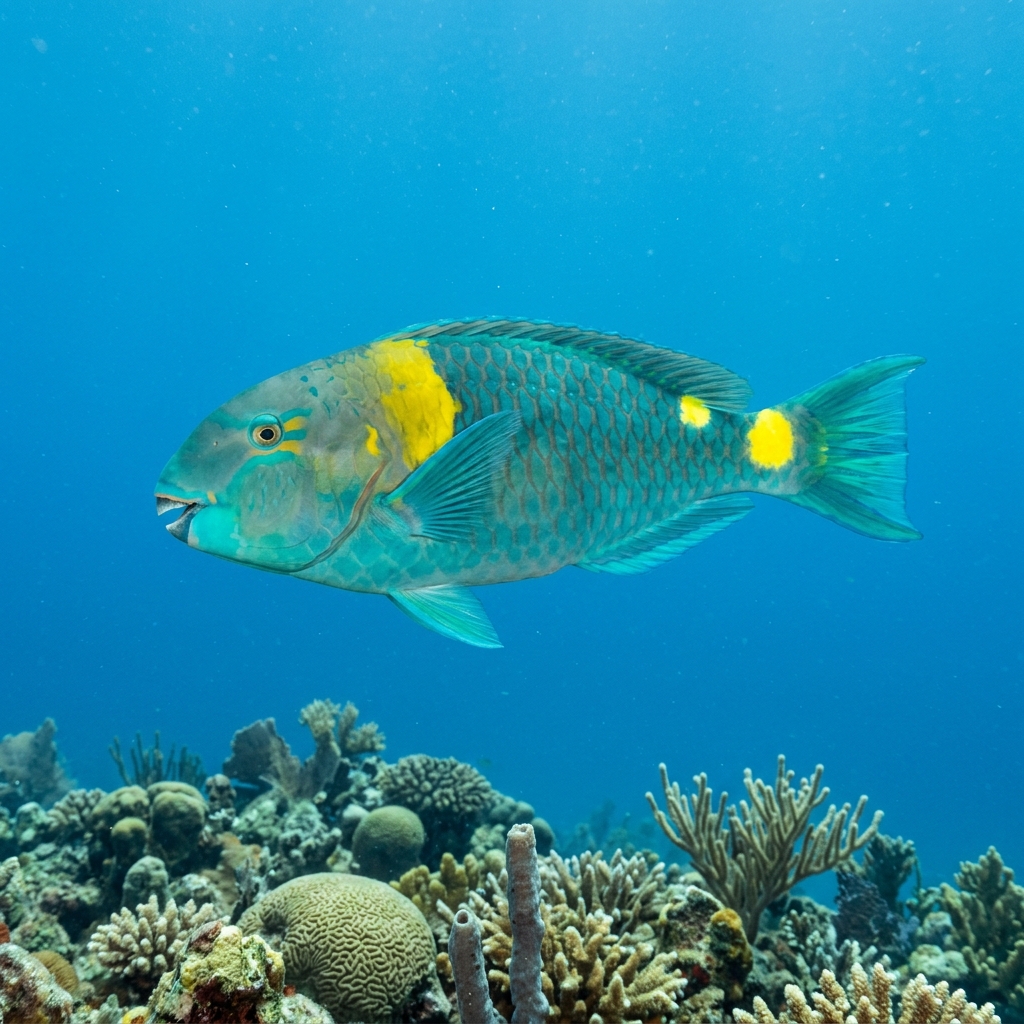
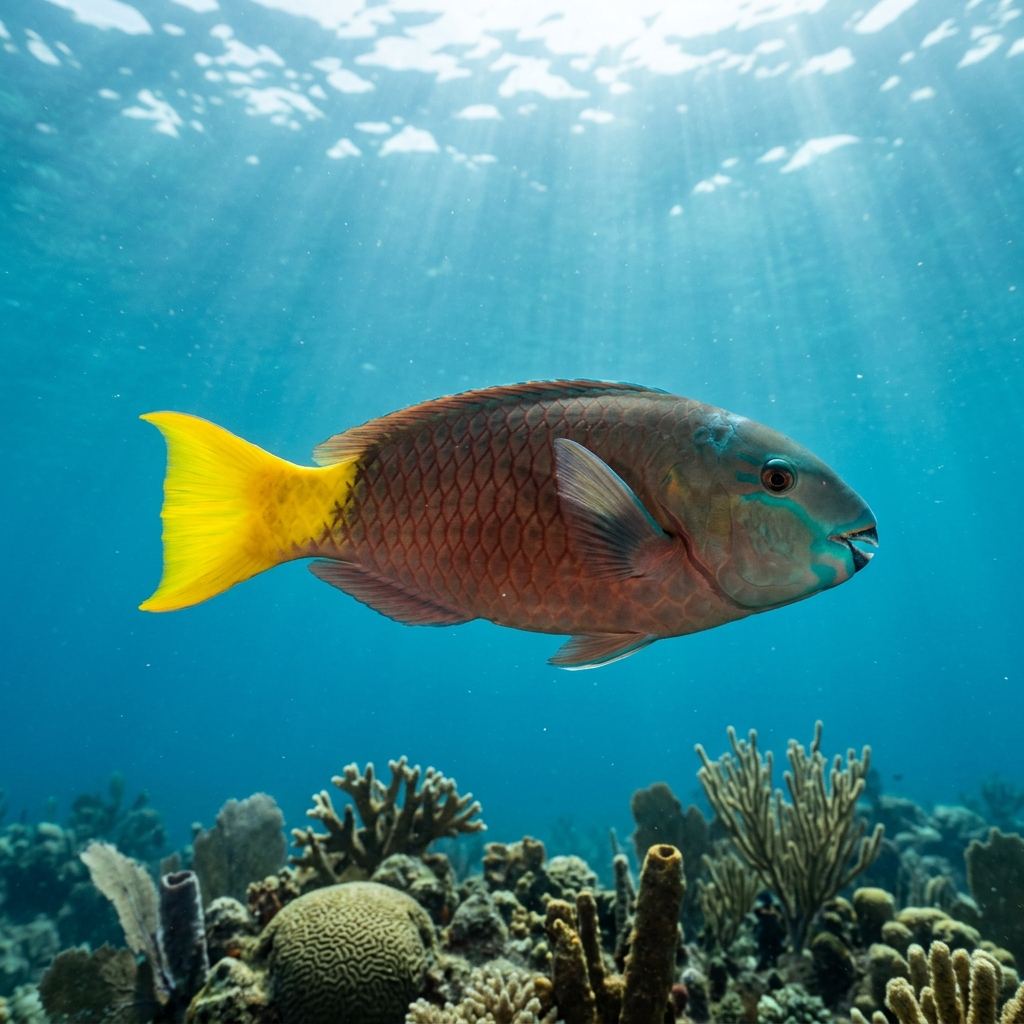
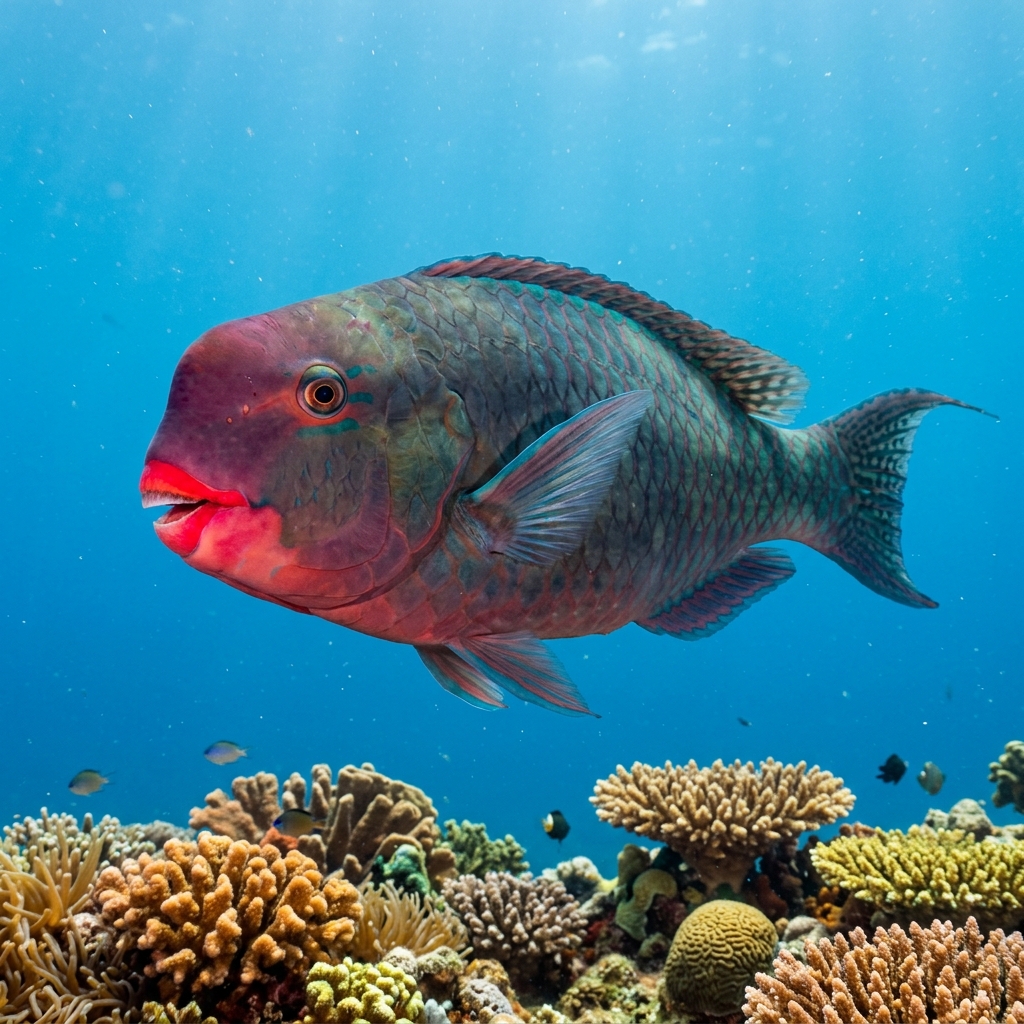
The yellow tail is the single best field mark: every phase, from drab brown females to blue-green males, carries that vivid lemon-yellow caudal fin. Terminal-phase males are striking, with blue-green scales edged in pink or orange, while females and initial-phase fish are plain brown to grey with a pale underside. Around 32 cm in the water, they have the chunky, blunt-nosed silhouette typical of parrotfish. If sex or phase is unclear, the tail colour alone clinches the ID.
You will almost always find them grazing, scraping algae from hard substrate on the reef flat or along rocky rubble in one to fifteen metres of water. They tend to ignore divers and carry on feeding even when approached closely, so patient observation is easy. Small loose groups are common, and it is not unusual to watch individuals interact or briefly chase one another across the reef.
Like other parrotfish, yellowtail parrotfish produce significant quantities of sand. The coral or rock they scrape is ground up in their digestive tract and excreted as fine white sediment, directly contributing to the sandy seafloor around Caribbean reefs.
In the northern hemisphere, sightings concentrate between December and July, making winter through early summer the most productive window across Florida and the Caribbean. Water temperatures in the 24 to 28 °C range suit it well, which describes shallow reef conditions throughout that period.
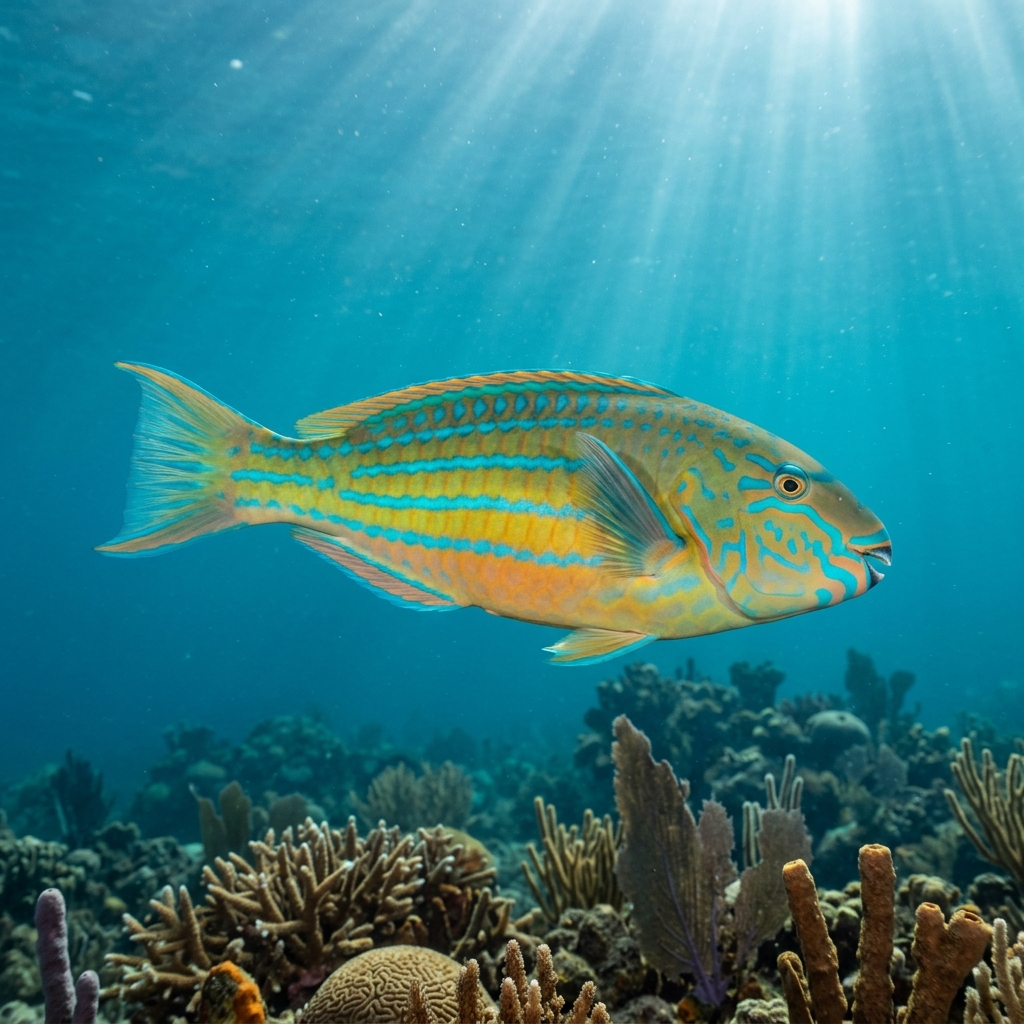
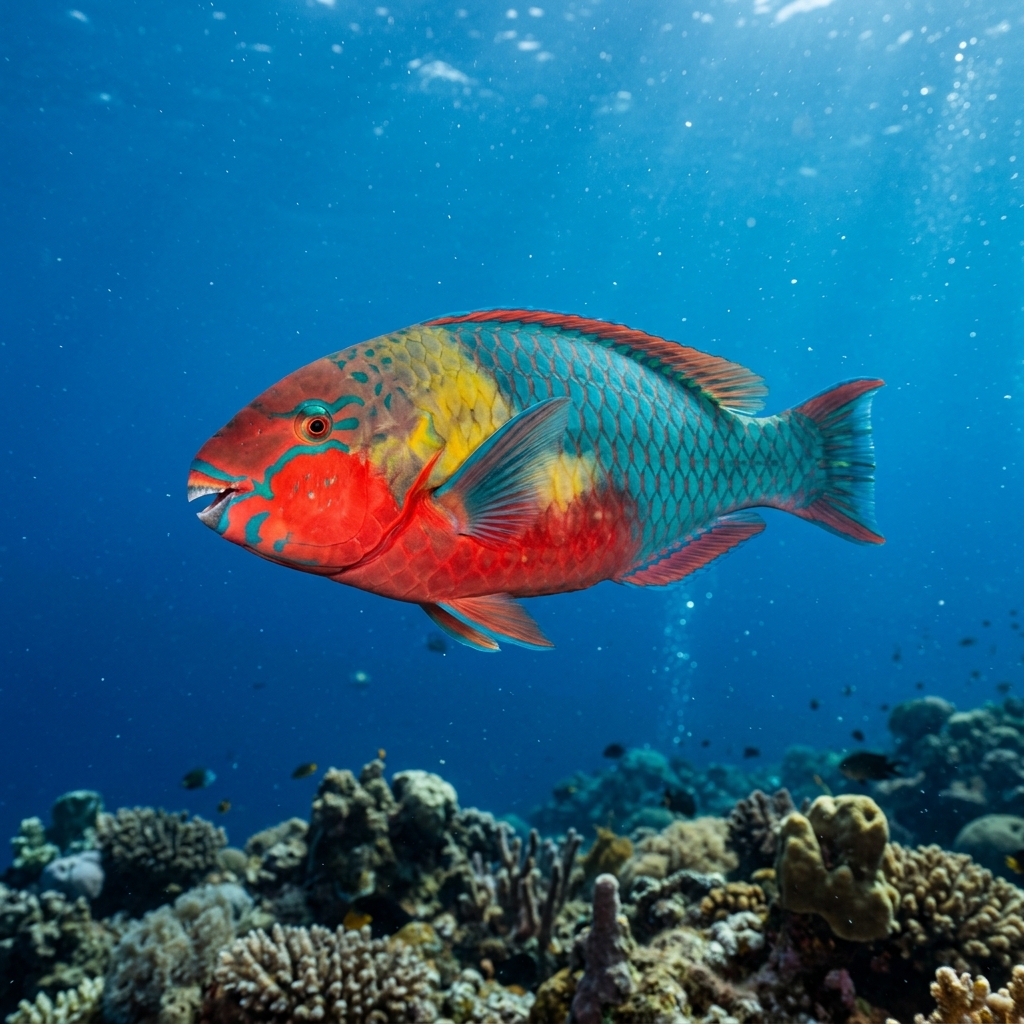
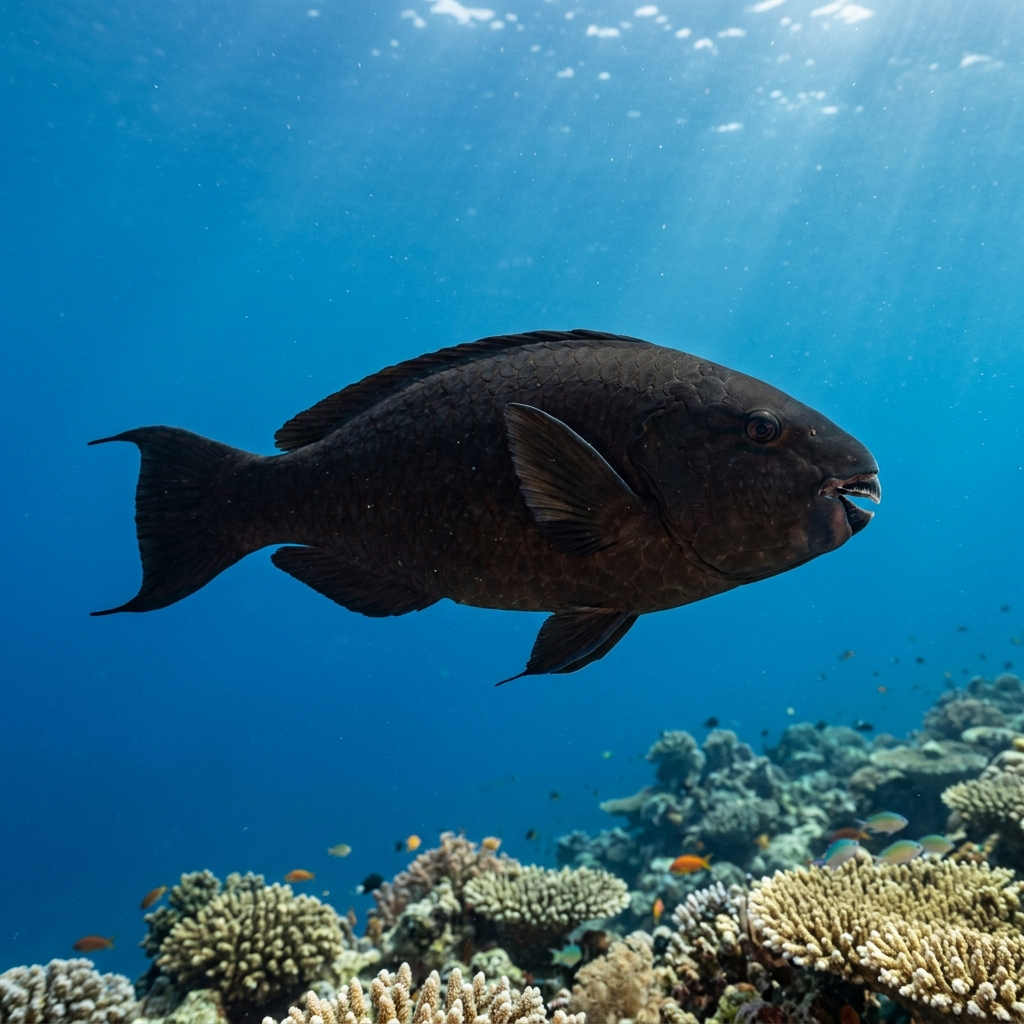
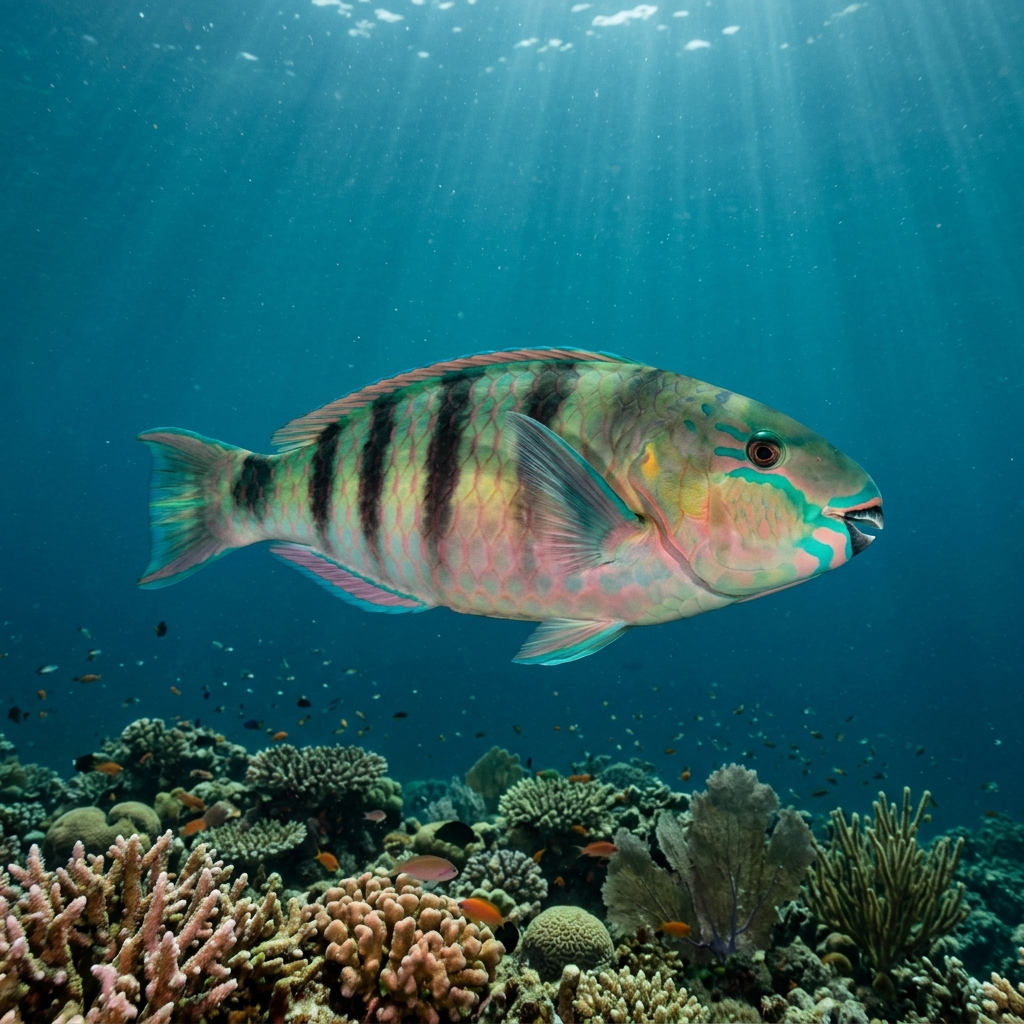
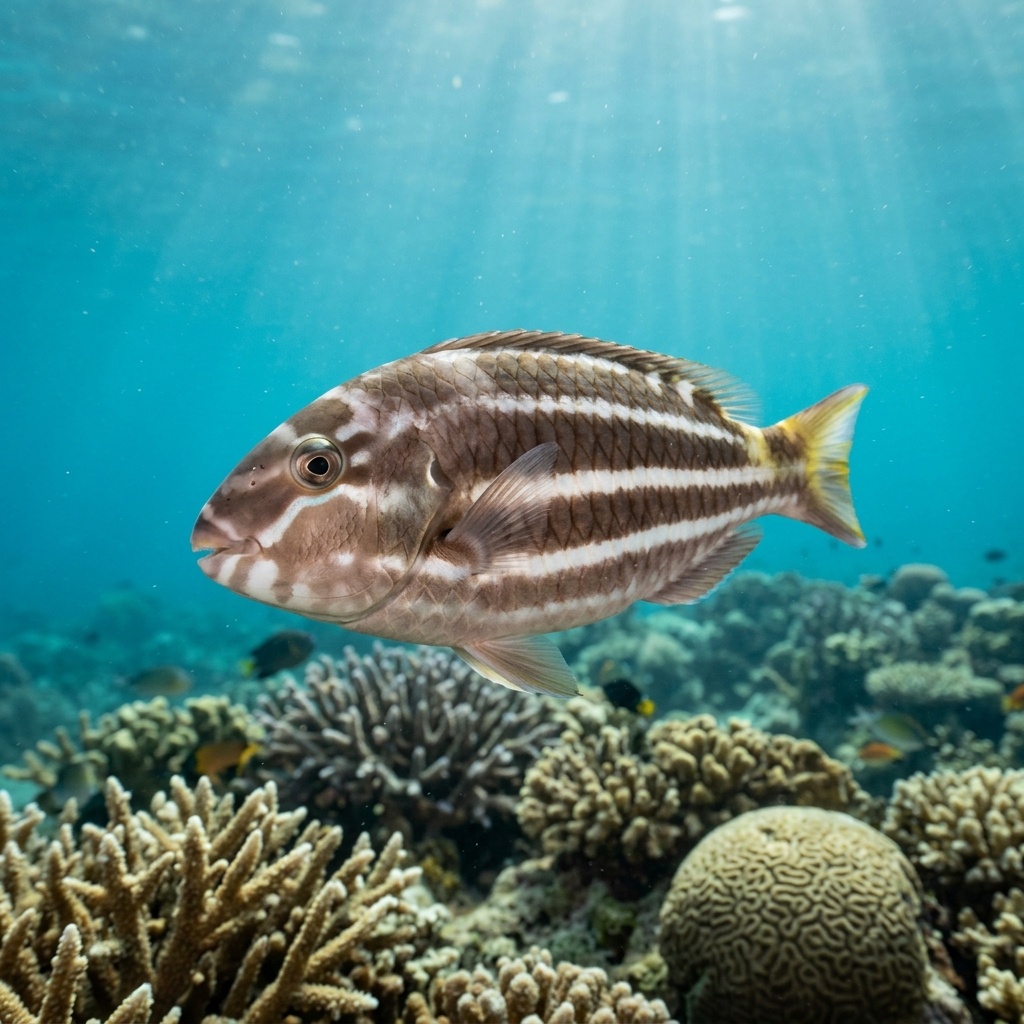
Reef neighbours a diver could mistake it for. Use the identification notes above to tell them apart.
Most commonly logged across the wider Caribbean and the western Atlantic, with the strongest presence in Florida and the US Southeast, Roatán in Honduras, and the northeast coast of Brazil. Cuba, the Bahamas, Grenada, Curaçao, the British Virgin Islands, and Colombia's Caribbean coast all contribute solid records. Venezuela and Brazil extend its range into South American waters.
Mapping where Yellowtail Parrotfish is logged…
They are most reliably encountered across the Caribbean and western Atlantic. Florida and the US Southeast, Roatán in Honduras, and the northeast coast of Brazil lead the records, with strong sightings also in Cuba, the Bahamas, Grenada, Curaçao, Colombia, and the British Virgin Islands.
In the northern hemisphere, sightings concentrate from December through July. This winter-to-early-summer window aligns well with popular dive seasons in Florida and the wider Caribbean.
Look for the yellow tail first, every individual, regardless of sex or phase, has it. Males add blue-green scales with pink or orange edges; females are plain brown to grey. At around 32 cm, the chunky parrotfish body shape and that tail make identification straightforward.
They typically reach around 32 cm in length. On the reef they look like a medium-sized parrotfish, noticeably smaller than species such as the rainbow parrotfish but comparable in bulk to redband and striped parrotfish.
They are herbivores that scrape algae from hard reef surfaces using their fused beak-like teeth. This grazing keeps algae in check, which helps corals compete for space. The rock and coral fragments they accidentally ingest are ground up and excreted as fine sand.
Site and sighting data is aggregated from diver logs, iNaturalist and GBIF. For taxonomy and conservation status:
Redlip Parrotfish
2,789 sites