Grapsus grapsus
Vivid red and orange against black lava rock, spot Sally Lightfoot Crabs across the Yucatán, Galápagos and Caribbean, most reliably from September to May.
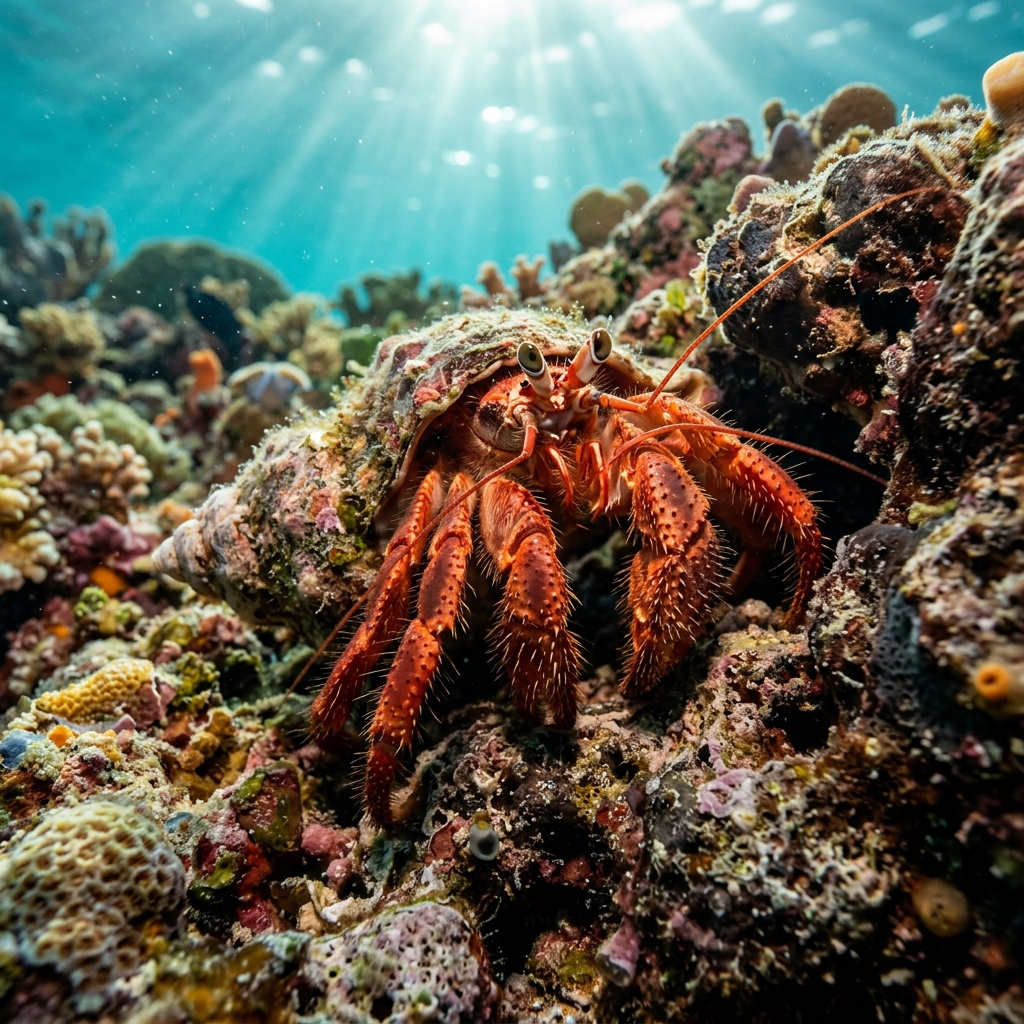
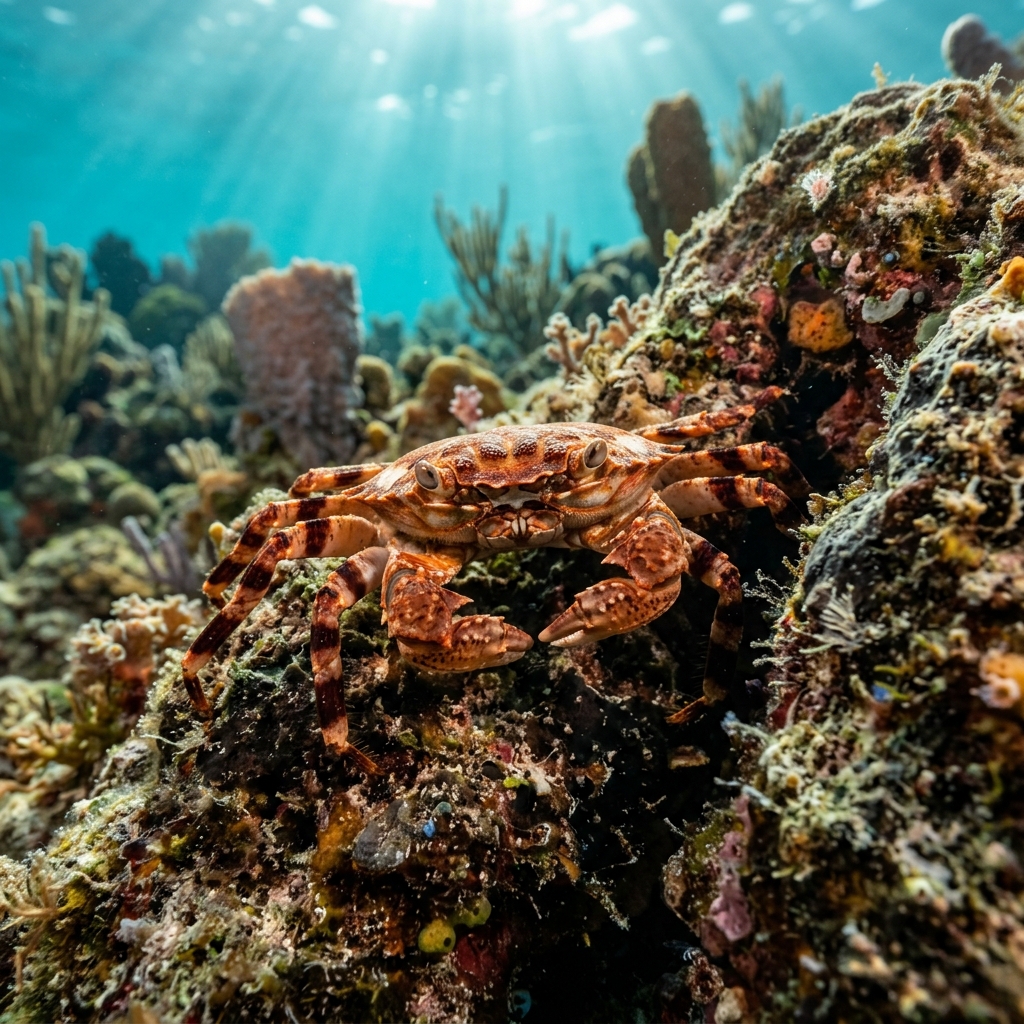
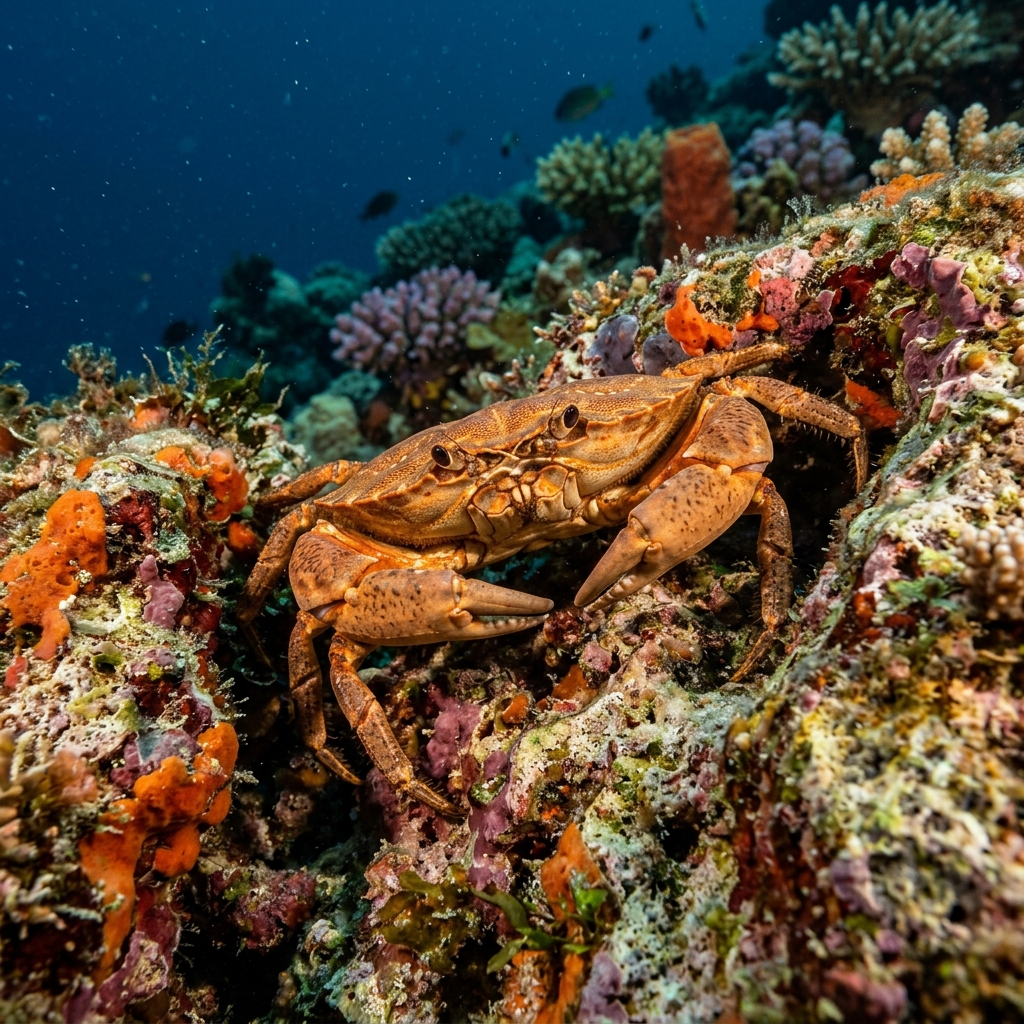
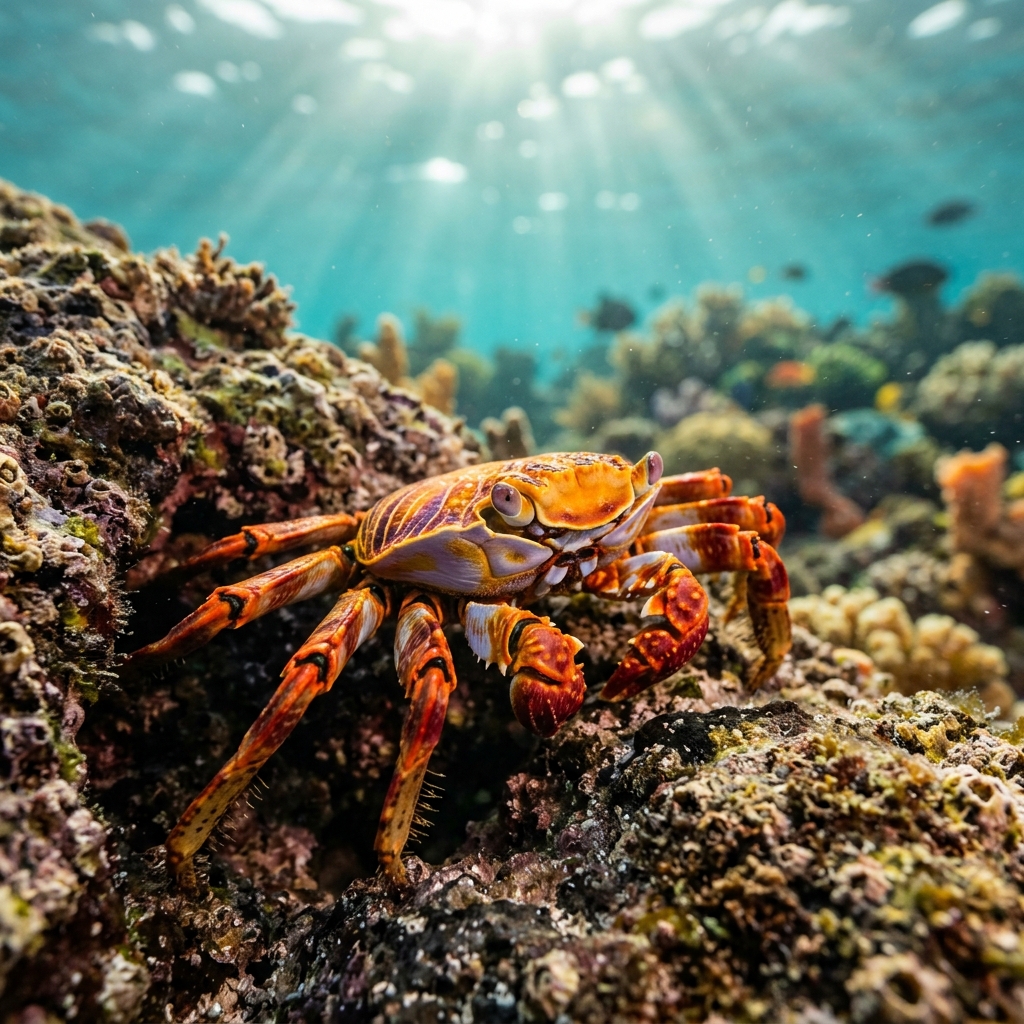
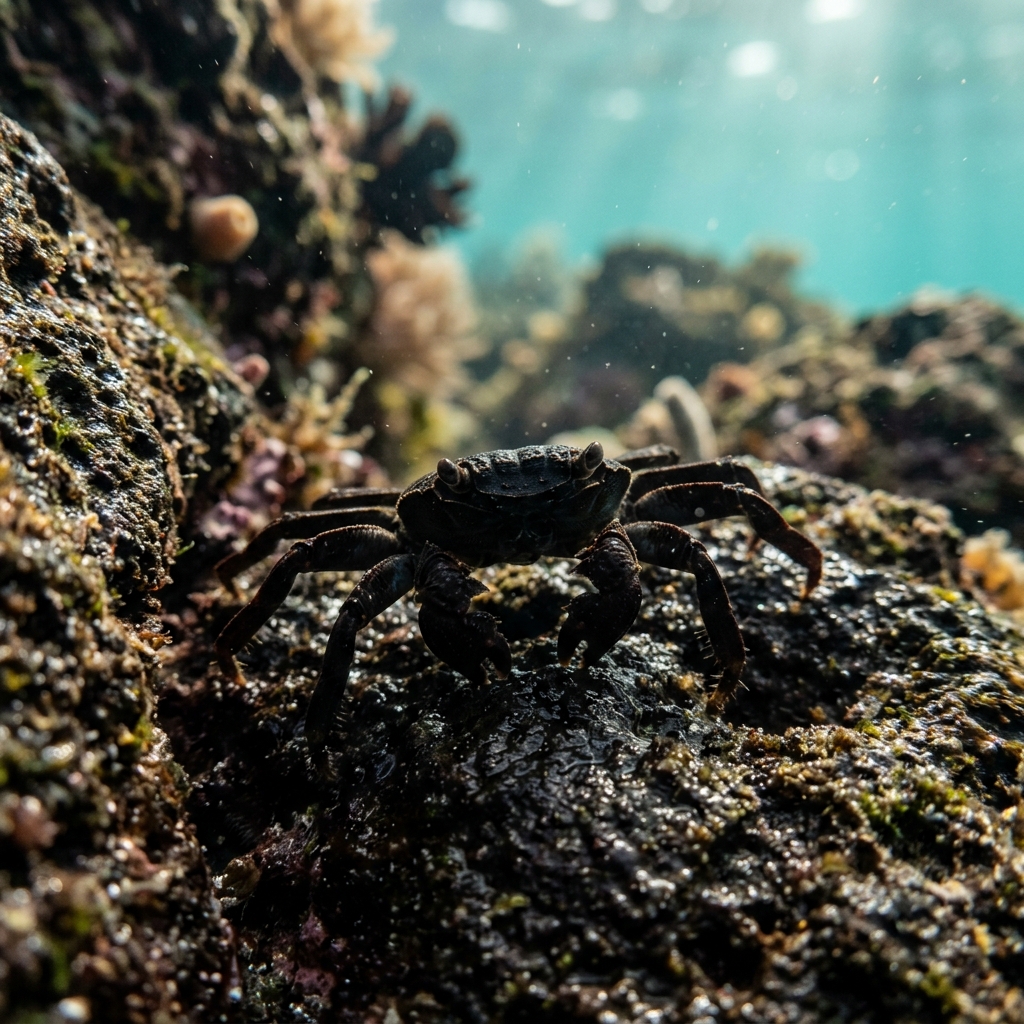
Adults are hard to miss: a broad, flattened carapace (shell) blazing in red, orange, and yellow, speckled with white or blue spots, sitting on vivid red-and-white banded legs. They rarely exceed about 4 cm across the shell, so you are looking for something roughly the size of a large coin pressed flat against the rock. Juveniles are nearly entirely black or very dark brown and blend seamlessly with volcanic rock, easy to overlook until they move.
Sally Lightfoots are a shoreline and surge-zone crab, most active during the day as they scuttle across exposed rock and very shallow reef, scraping algae and picking at small invertebrates with their compact claws. They are notoriously skittish, approach too quickly and they vanish into crevices in an instant. Move slowly, give them space, and you will often catch them feeding or squaring off against rival crabs in brief dominance displays.
The jet-black juveniles are not a different species; the vivid adult colouring only develops gradually as they moult and grow, meaning a single stretch of lava rock can host animals that look nothing alike.
In the Northern Hemisphere, sightings concentrate from September through May, making the cooler months the most productive window for places like the Yucatán and Baja California. The species tolerates water temperatures from around 19°C up to 28.5°C, so it is present year-round wherever conditions stay in that range.
Most commonly logged across the wider Caribbean and tropical eastern Pacific, with the heaviest concentration of sightings along the Yucatán Peninsula and Baja California in Mexico. The Galápagos Islands are arguably the most famous location to see them, while strong records also come from Roatán in Honduras, Grand Cayman, the Caribbean Coast of Colombia, and Florida. Brazil and the Bahamas round out the Atlantic spread.
Mapping where Sally Lightfoot Crab is logged…
They are logged across a wide stretch of the tropical western Atlantic and eastern Pacific. Top spots include the Yucatán Peninsula, Baja California, Roatán, Grand Cayman, the Galápagos Islands, and the Caribbean Coast of Colombia. Brazil and the Bahamas also have strong records.
In the Northern Hemisphere, sightings peak between September and May. The species tolerates a broad temperature range (roughly 19°C to 28.5°C), so in reliably warm locations like the Galápagos or Caribbean it can be spotted throughout the year.
Adults are unmistakable: a flat, roughly coin-sized shell in vivid red, orange, and yellow with pale spots, and distinctly banded legs. They hug rock surfaces in very shallow water, rarely deeper than 5 m. The only real ID challenge is spotting juveniles, which are almost entirely black.
Their carapace typically reaches about 4 cm across, roughly the diameter of a large coin. They look small on the rock but their long, agile legs make them appear larger when they are running.
The name refers to their famously nimble footwork. They move with remarkable speed across wet rock and can even skip across the water surface briefly when escaping a threat, which is where the 'light foot' part of the name comes from.
Site and sighting data is aggregated from diver logs, iNaturalist and GBIF. For taxonomy and conservation status:
European Green Crab
2,469 sites