Zoantharia spp.
Spotted across reefs from the Yucatán to the French Riviera, zoanthids carpet hard substrate in vivid colour. Find the best sites and seasons here.
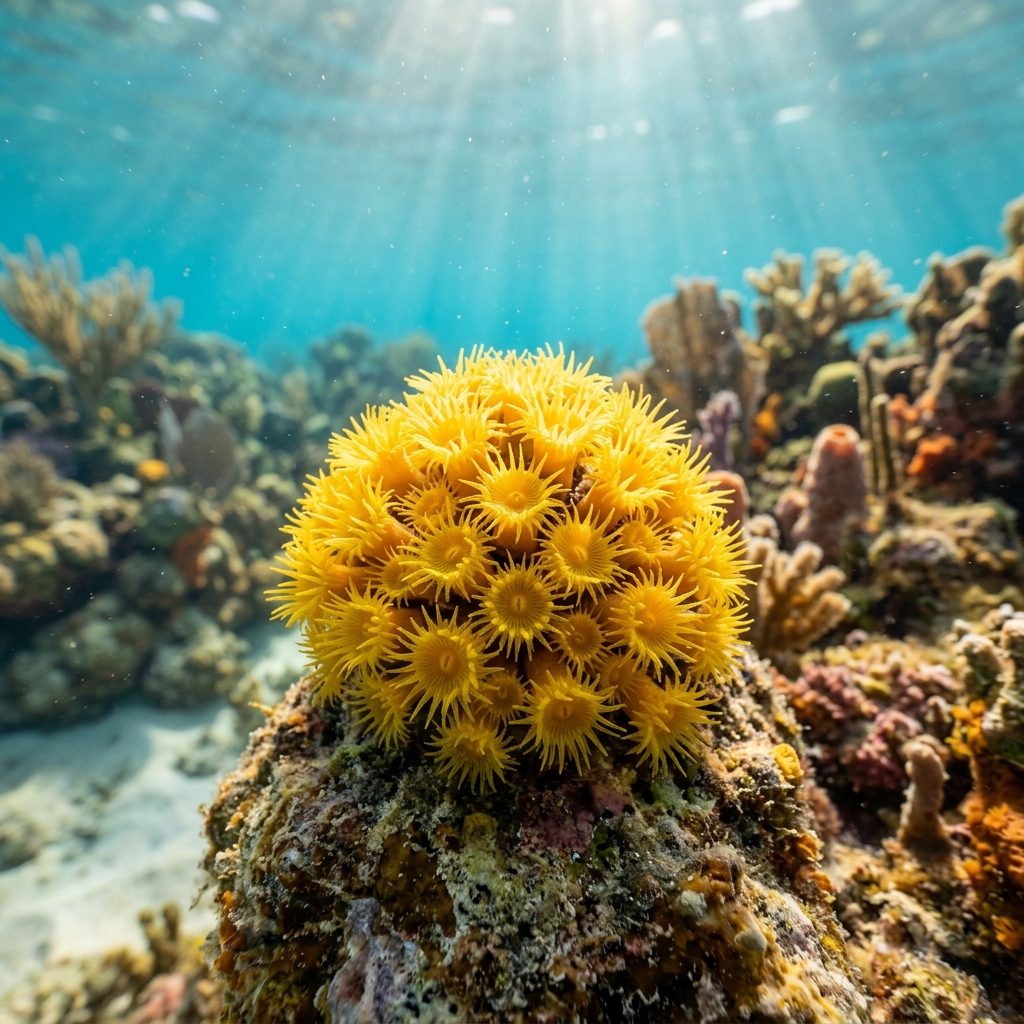
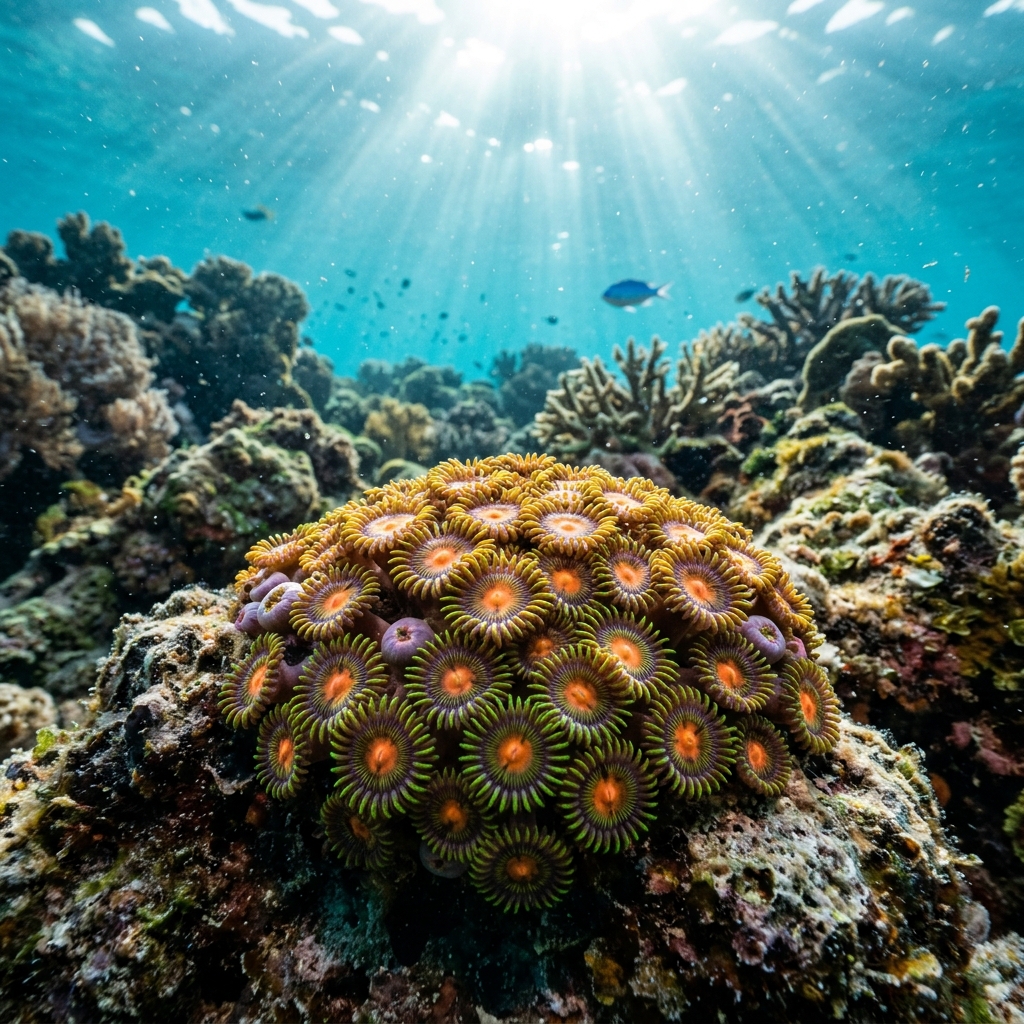
Zoanthids form low, mat-like colonies of small polyps, each typically 5 to 20 mm across, arranged tightly side by side on rock, rubble, or dead coral. Each polyp has a flat oral disc (the mouth-bearing top) ringed by two rows of short tentacles, giving the colony a flower-bed appearance when fully expanded. Colouration varies enormously across the group, running from electric green, yellow, and orange through to brown, purple, and two-tone combinations, often with contrasting disc centres. When disturbed, individual polyps retract into rubbery stalks, flattening the mat almost completely.
Zoanthids are sessile (fixed to the substrate) and spend their lives filter-feeding and capturing tiny particles with their tentacles when expanded. On most dives you will find them fully open during daylight hours, carpeting hard surfaces in sheltered spots such as reef walls, rubble slopes, and the undersides of ledges. They do not react to approaching divers, but physical contact causes individual polyps to retract within seconds.
Several zoanthid species contain palytoxin, one of the most potent naturally occurring toxins known, concentrated in their tissues. While this poses no risk to divers who look and do not touch, it is worth knowing if you ever handle live rock or rubble colonised by them outside the water.
In the Northern Hemisphere, zoanthids are present year-round with no concentrated season, consistent with their broad temperature tolerance of 13.5 to 28.7 °C spanning both cool-temperate and tropical reefs. Southern Hemisphere sightings concentrate from October through August, with fewer records in the cooler mid-winter months.
Zoanthids are logged across a wide spread of countries, with the United States, Mexico, and Australia among the most frequently recorded, followed closely by the Cayman Islands, Canary Islands, Bonaire, Brazil, and France. At the regional level, the Yucatán Peninsula and Florida lead in sighting records, while Hawaii, Grand Cayman, and Western Australia also offer strong populations. They turn up on reefs as far apart as Sipadan in Malaysia and the French Riviera, making them one of the most globally widespread colonial invertebrates a diver will encounter.
Mapping where Zoanthid is logged…
Zoanthids are logged at dive sites across more than 60 countries. The strongest records come from the United States (especially Florida and Hawaii), Mexico's Yucatán Peninsula, Australia, the Cayman Islands, the Canary Islands, Bonaire, Brazil, and France. They are also well recorded in Malaysia's Sipadan region and along Colombia's Caribbean coast.
In the Northern Hemisphere they are present year-round on suitable reefs, so there is no single best season. In the Southern Hemisphere, sightings peak between October and August, with fewer records during the coldest winter months. Their wide temperature range, from about 13 °C to nearly 29 °C, means they thrive on both tropical and cool-temperate reefs.
Look for low, carpet-like colonies of small polyps growing directly on rock or dead coral. Each polyp has a flat disc ringed by short tentacles, and the colony comes in a wide range of colours including green, yellow, orange, purple, and brown, often with contrasting disc centres. When disturbed, the polyps retract quickly, leaving a rubbery-looking mat.
Individual zoanthid polyps are small, typically 5 to 20 mm across, but colonies can spread across large areas of substrate. The overall colony patch can range from a few centimetres to over a metre wide depending on species and available surface.
They are not considered dangerous to divers in the water. However, some species produce palytoxin, an extremely potent toxin held in their tissues. Risks arise mainly when handling colonised rock outside the water, not during a normal dive. The standard advice is simple: look, don't touch.
Zoanthids are important space-holders on coral reefs, colonising bare rock, rubble, and dead coral that might otherwise go unused. They filter small particles and dissolved organic matter from the water, and many host symbiotic algae called zooxanthellae that supplement their nutrition through photosynthesis, similar to hard corals.
Site and sighting data is aggregated from diver logs, iNaturalist and GBIF. For taxonomy and conservation status: