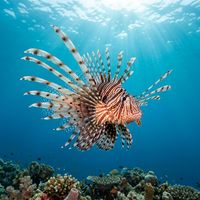
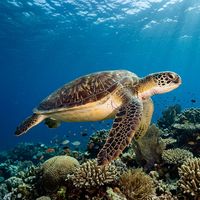
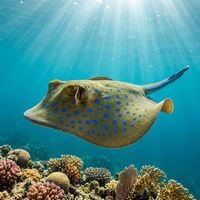
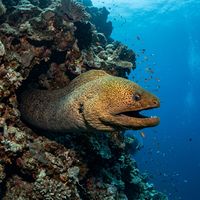
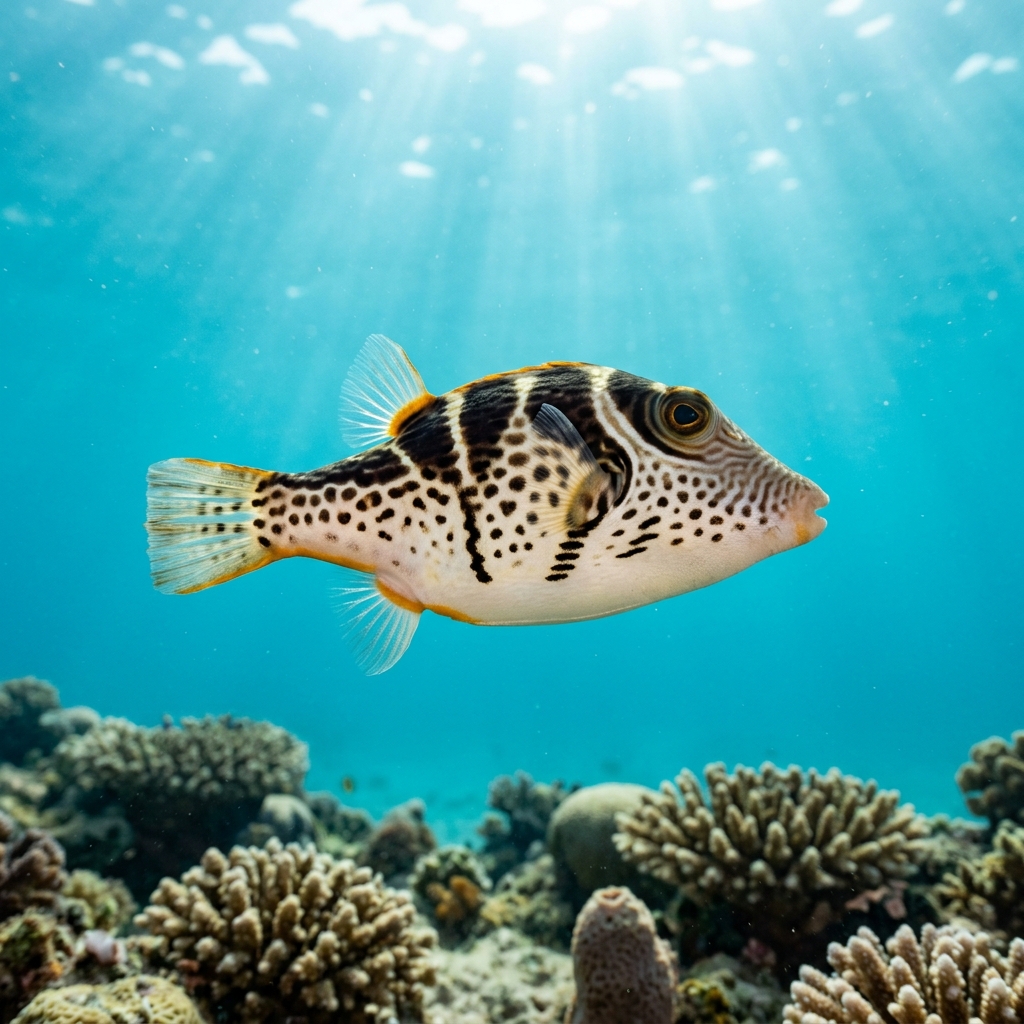
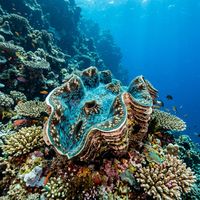
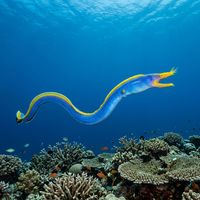
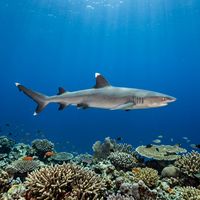
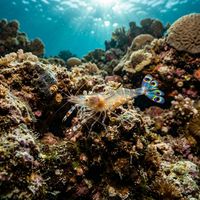
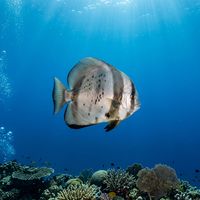
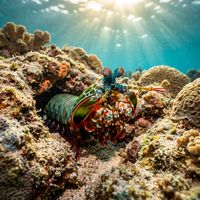
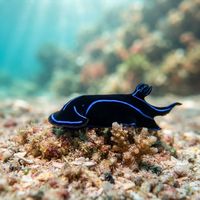
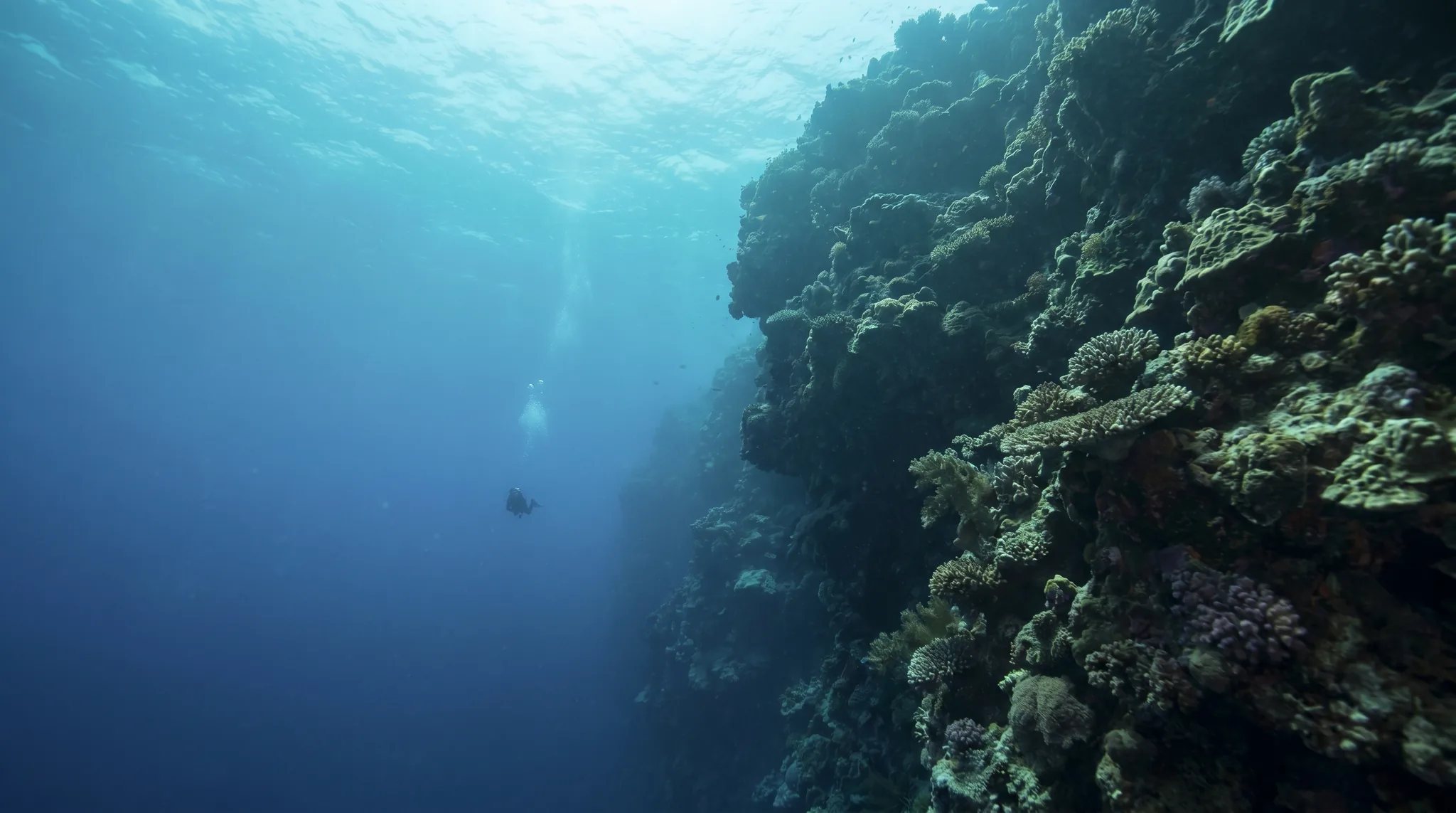
Puerto Princesa's dive sites are reef-dominated and almost entirely boat-accessed, spread across a range of skill levels from gentle beginner slopes to deep drift dives. Signature encounters include the Green Sea Turtle, Spotfin Lionfish, Giant Moray, Ribbon Eel and Giant Clam, with Whitetip Reef Shark and occasional Whale Shark sightings adding larger pelagic interest. Red Cliff stands out for combining wall and artificial reef structure, while The Lighthouse suits advanced divers seeking drift conditions at depth.

Monthly water temperature across Puerto Princesa's sites, from satellite sea-surface data corrected for depth. The band shows the site-to-site spread.
Water stays warm throughout the year, running slightly cooler early in the year and peaking from late spring through autumn. The clearest, calmest conditions fall between March and June, making that window the most productive for visibility and reef exploration. July through October sees reduced diver activity, likely reflecting wetter, more unsettled weather across the region.
5 operators
Philippines
Philippines
13 more sites to explore
Water temperature around Puerto Princesa ranges from about 28°C in January to 30°C in April, based on satellite sea-temperature data for its dive sites.
With water around 28–30°C, a rash guard or 3mm shorty works in Puerto Princesa year-round.
Fin maps 21 sites in Puerto Princesa (16 scuba diving sites and 6 snorkelling spots, with some suited to both).
Across Puerto Princesa's dive sites, March, April, May and June are most often reported as the best months to visit.
The reefs here are reliably productive for Green Sea Turtle, Giant Moray, White Eyed Moray, Ribbon Eel and Bluespotted Fantail Ray. Spotfin Lionfish and Blackspotted Pufferfish are observed across virtually all sites. Whitetip Reef Shark and Blacktip Reef Shark appear regularly, and Whale Shark has been recorded at a handful of sites on an occasional basis.
A good portion of the listed sites are rated for beginners, including Silica Reef, Finger Lock, Reyes Reef and Red Cliff, all of which start at shallow depths and offer gentle reef topography. Intermediate divers are well catered for at sites like Crossing, Mares Rock and Constancia Reef. The Lighthouse is the clear exception, running deep with drift conditions and suited only to advanced divers.
All listed dive sites in Puerto Princesa require boat access. There are no shore-entry dive sites in the data. Dive Puerto Princesa Dive Center is the operator serving the area and can arrange boat transfers to the various reef sites.
Most sites follow a classic reef-slope format, beginning at a shallow entry point and descending gradually to sandy bottom. Red Cliff is the exception, adding wall and artificial reef sections to the topography. The Lighthouse introduces drift diving along a reef aligned with the bay headland, which demands more experience. Sites around Roxas, such as Constancia Reef, sit in slightly deeper water and suit divers looking to extend their range.