Stomatopoda spp.
Spot mantis shrimp across the Indo-Pacific and beyond, from Florida to the Philippines. Know what to look for and when to go.
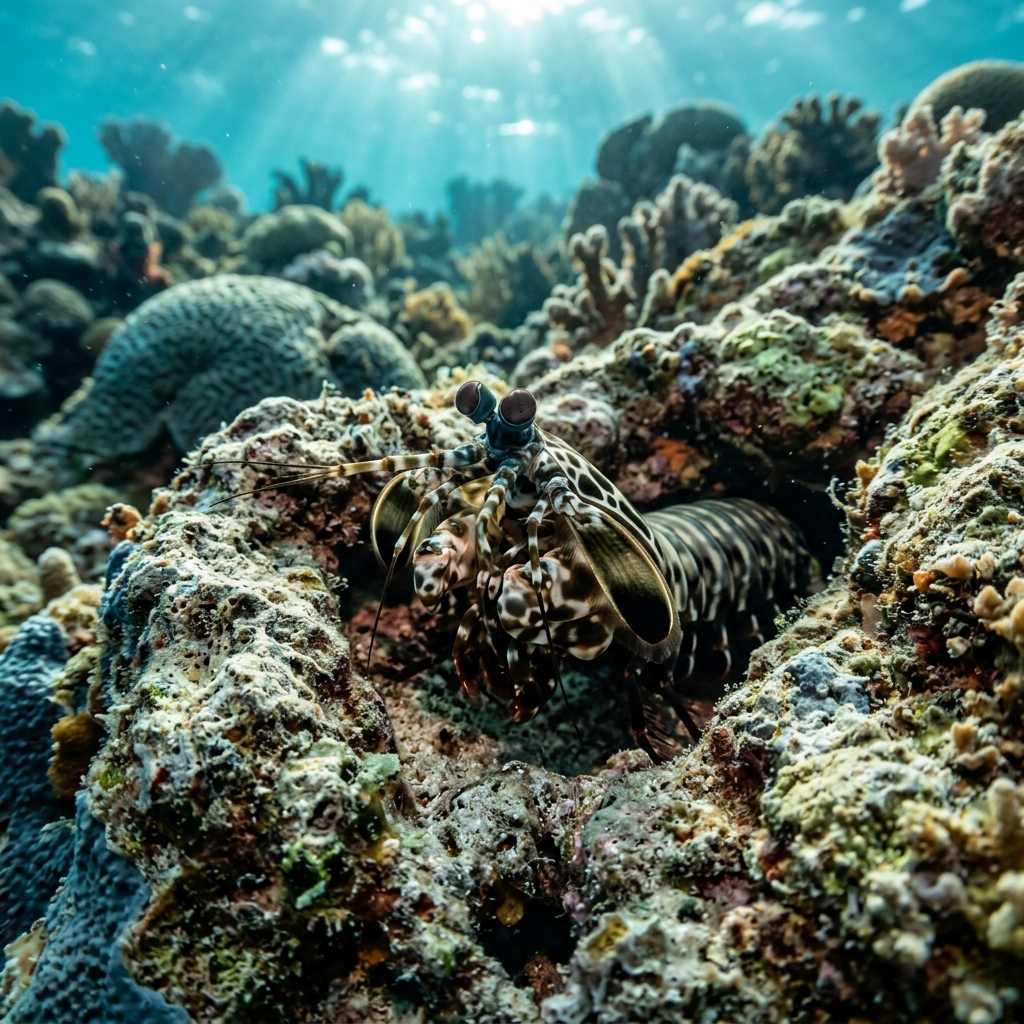
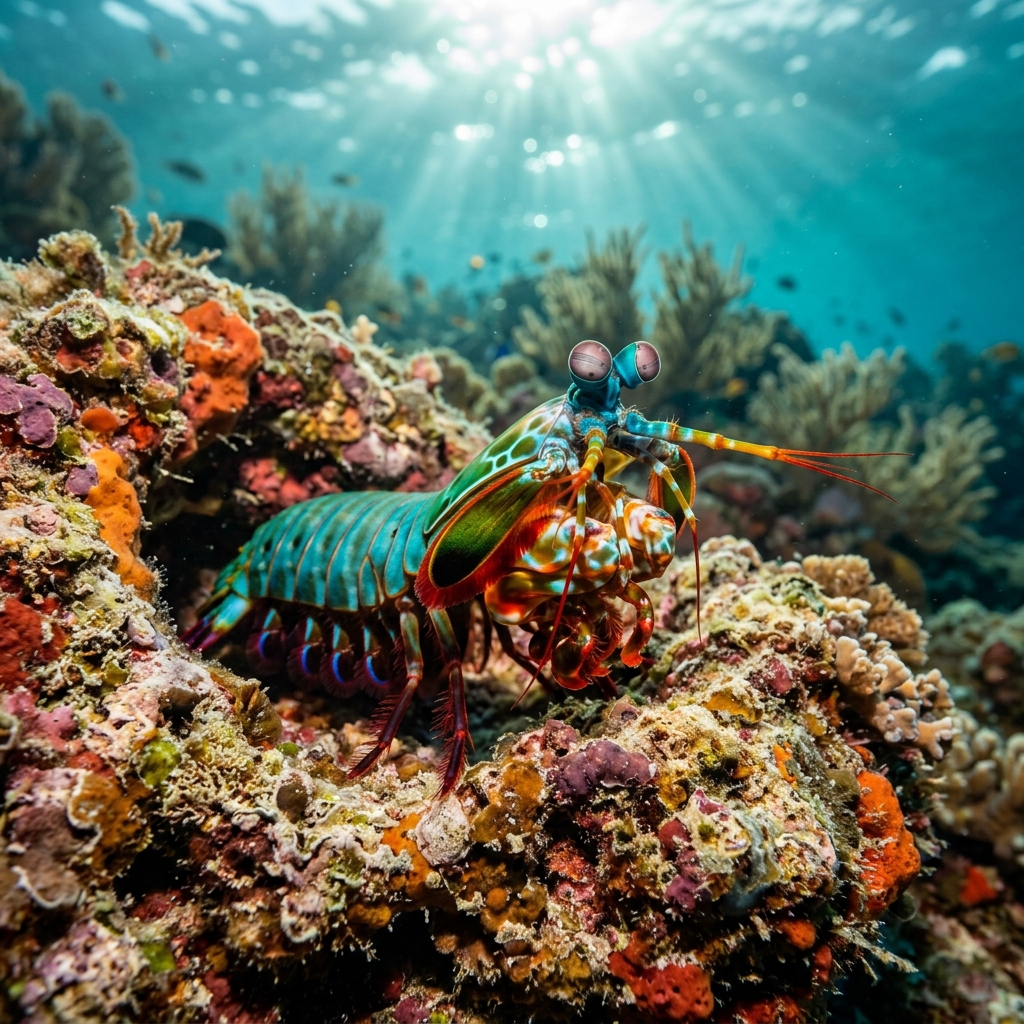
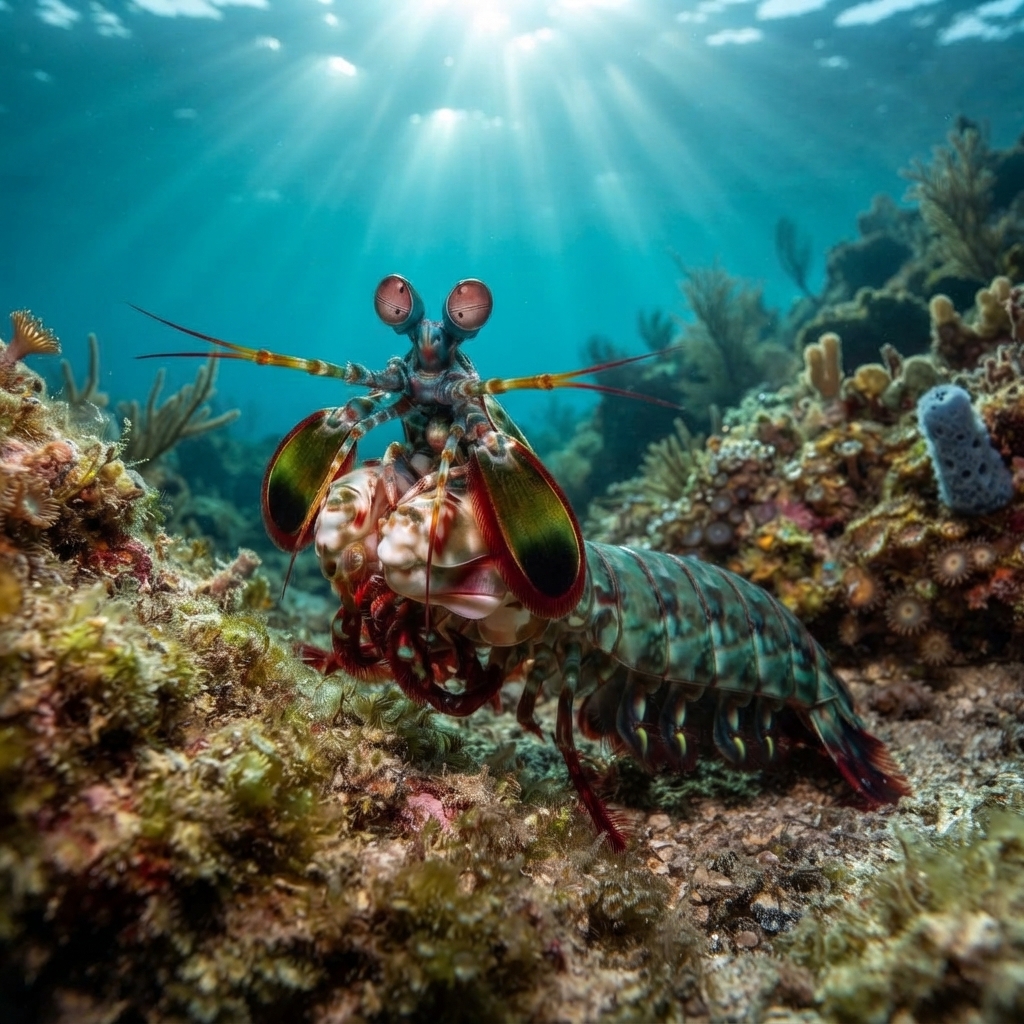
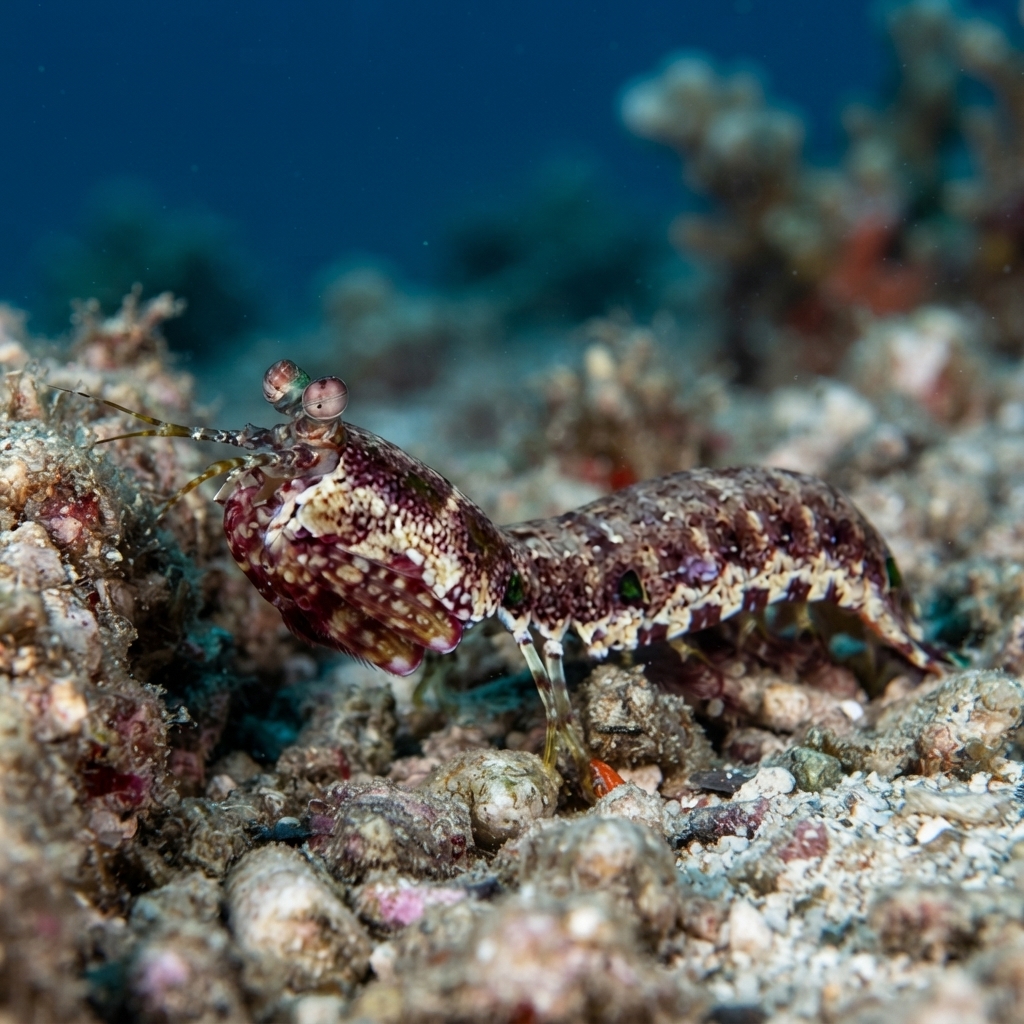
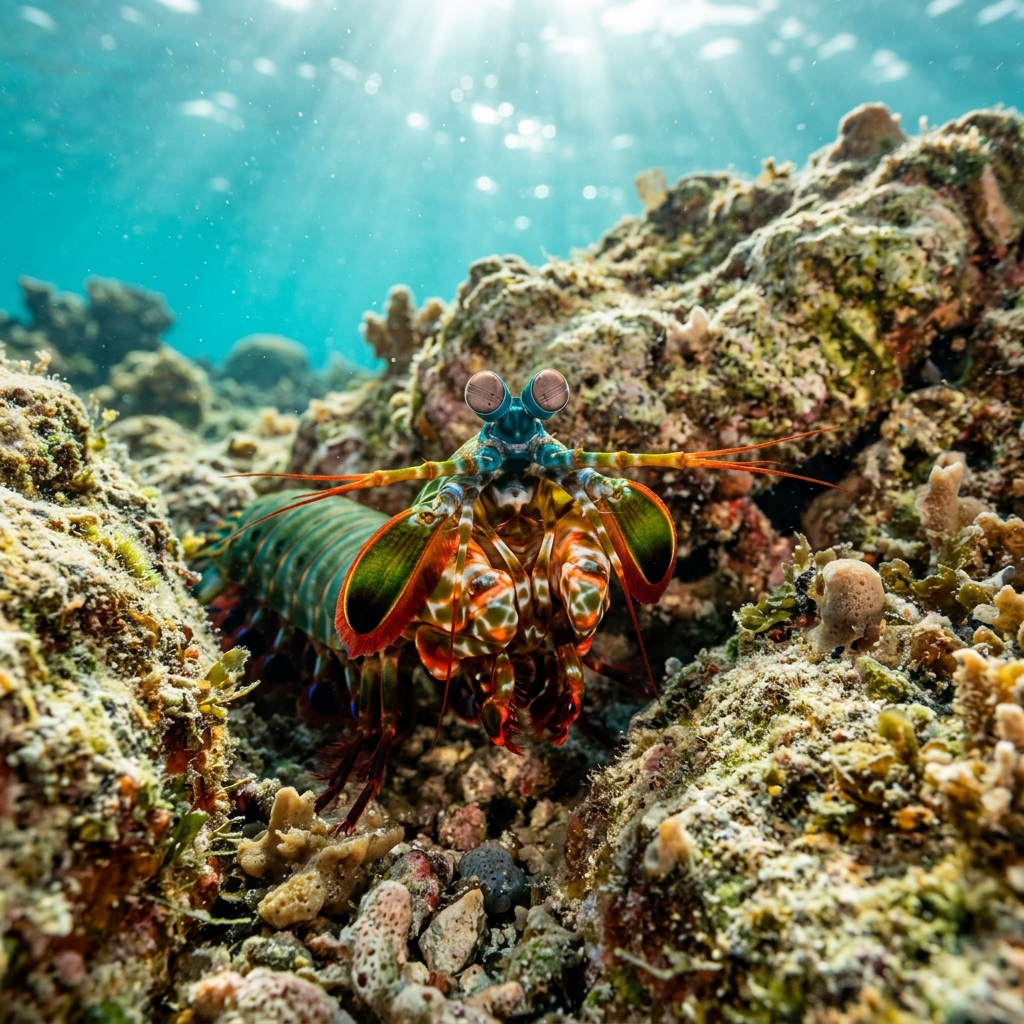
Most mantis shrimp you'll encounter are recognisable by their elongated, flattened body, segmented abdomen, and the pair of enlarged raptorial appendages (modified front limbs used for striking) folded beneath the head. Colouration varies enormously across the order, from muted sandy browns and greens in burrowing species to vivid reds, oranges, and purples in species like the peacock mantis shrimp, but the distinctive folded striking claws and large, stalked eyes are consistent across the group. Most adults you'll spot underwater are 8 to 20 cm long, though some species run larger. They're typically seen at the entrance to a burrow or crevice in sand, rubble, or reef.
Mantis shrimp spend most of their time in burrows or sheltered crevices, and what you typically see underwater is a head and claws poking out from a hole in sand or rubble, watching you carefully. They are cautious and will retreat fully into their burrow if approached too quickly, so slow, patient hovering at a distance is the best tactic. Some individuals can be found hunting across open sand at dusk, moving with a rapid, darting gait between shelters.
Mantis shrimp have arguably the most complex eyes in the animal kingdom, with up to 16 types of photoreceptor cells compared to our three, allowing them to detect polarised light and wavelengths invisible to humans.
In the Northern Hemisphere, sightings concentrate from June through March, suggesting a broad active season that avoids the coldest months in temperate regions. Across tropical Indo-Pacific destinations the group is present year-round, reflecting the observed water-temperature range of 16 to 29 °C.
Reef neighbours a diver could mistake it for. Use the identification notes above to tell them apart.
Mantis shrimp are logged across a huge spread of dive destinations, with the strongest records coming from the United States (particularly Florida and the South-East), the Philippines (especially the Visayas and Luzon), Indonesia, Australia, and the Maldives. Italy and Greece represent solid sighting records in the Mediterranean, and Japan's Izu Peninsula is another reliable area. The Indo-Pacific is broadly where the group is most diverse and most frequently encountered.
Mapping where Mantis Shrimp is logged…
Mantis shrimp are logged across a wide range of destinations. The strongest concentrations of sightings come from Florida and the South-East United States, the Philippine Visayas, Indonesia, Queensland in Australia, and the Maldives. They also appear regularly in the Mediterranean, particularly Italy and Greece, and along Japan's Izu Peninsula.
In Northern Hemisphere destinations, sightings concentrate between June and March. On tropical Indo-Pacific reefs they can be found year-round, as the group tolerates water temperatures from about 16 to 29 °C, covering both temperate and tropical dive sites.
Look for a flattened, segmented crustacean with large stalked eyes and a distinctive pair of folded raptorial claws held beneath the head. Most species sit at the entrance to a burrow in sand or rubble. Colouration varies widely by species, from drab browns to vivid multicolour patterns, so body shape and those prominent claws are the most reliable field marks.
Most species encountered by divers are 8 to 20 cm in length, though some larger species can reach 30 cm or more. Despite their modest size, their striking speed and force is proportionally extraordinary.
Mantis shrimp have the most complex visual system of any known animal, with up to 16 types of colour-receptor cells and the ability to detect polarised light. They are also divided into two groups by hunting style: smashers, which use club-like limbs to batter hard-shelled prey, and spearers, which use sharp appendages to impale soft-bodied prey like fish.
Site and sighting data is aggregated from diver logs, iNaturalist and GBIF. For taxonomy and conservation status:
Dotted Mantis Shrimp
26 sites