Chelidonura varians
Tiny black-and-blue headshield slug, most reliably found on muck dives across the Visayas, Philippines, year-round in warm 25-31C water.
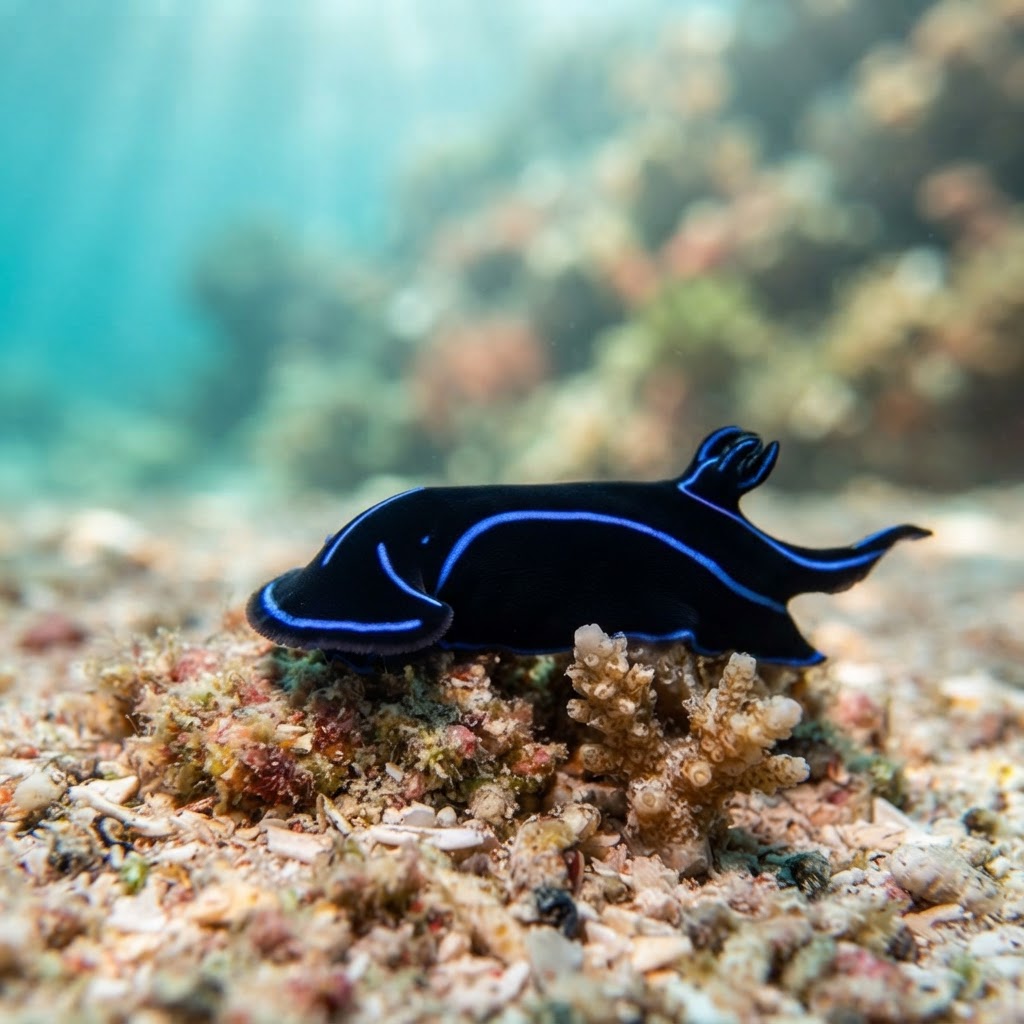
Just 2cm long, this headshield slug has a jet-black body traced with iridescent blue lines running lengthwise, and bright orange-yellow tips on its head shield and tail. The body is smooth, slug-shaped, and slightly flattened, with no visible shell. Look for it moving slowly across sand or silt rather than on hard coral, where its dark colour and thin blue pinstripes stand out against the substrate.
Divers find it cruising slowly over sand, silt, or rubble patches, usually on muck dives rather than coral reef, often at night or during dedicated slow-paced sand searches. It does not react much to divers and will simply keep gliding across the substrate, hunting for other small slugs and worms buried just under the surface.
Like other headshield slugs, it is a predator that hunts smaller slugs and worms, engulfing prey whole with its muscular, shield-shaped head rather than biting or rasping.
Sightings are spread year-round with no clear seasonal pattern, which fits its comfort range of roughly 25 to 31C, warm tropical water that holds steady through the year across its Southeast Asian range.
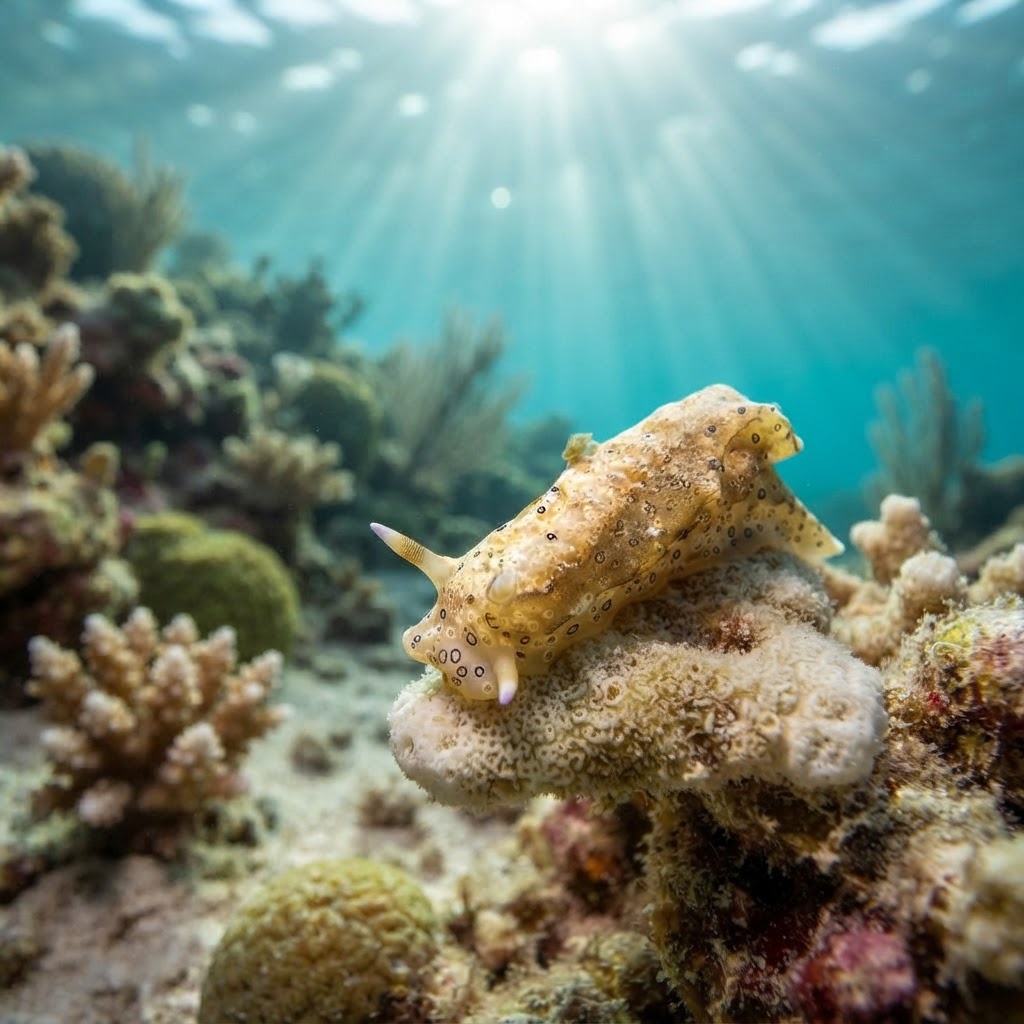
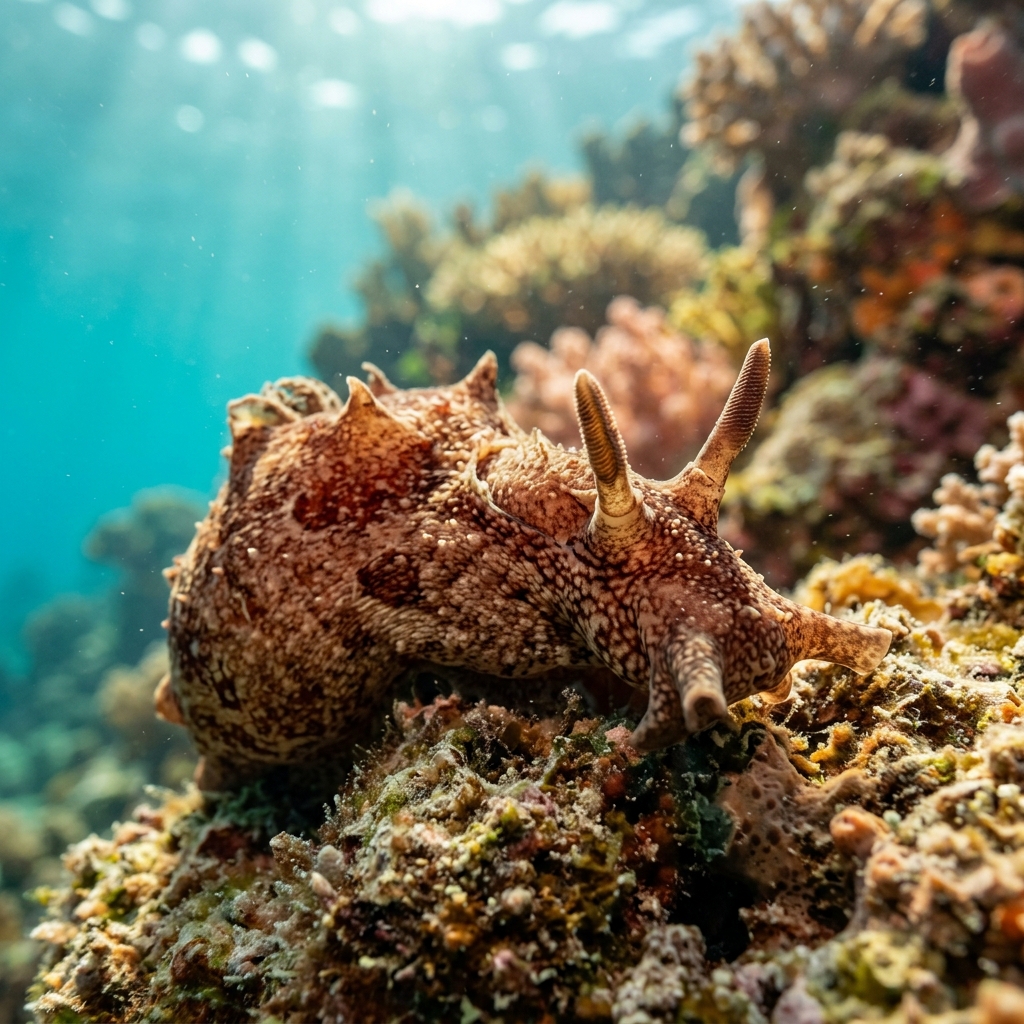
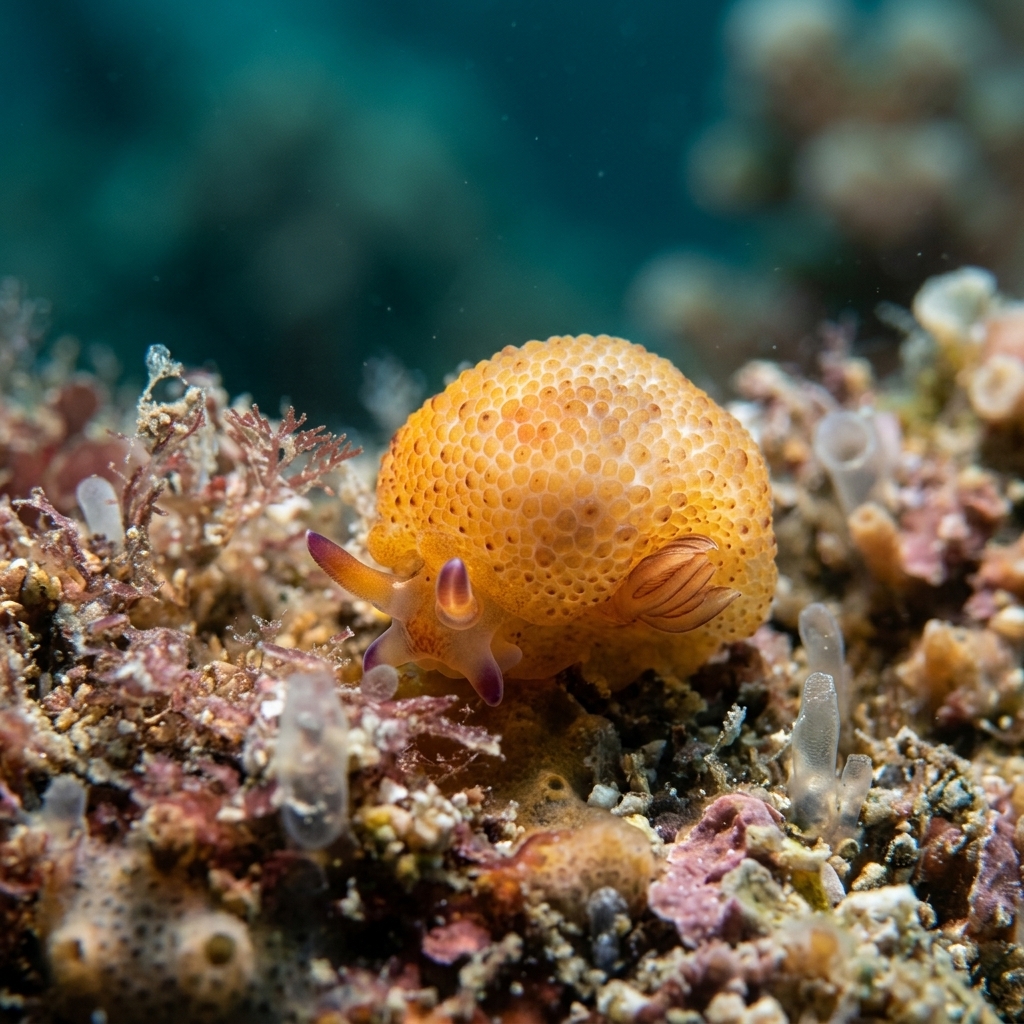
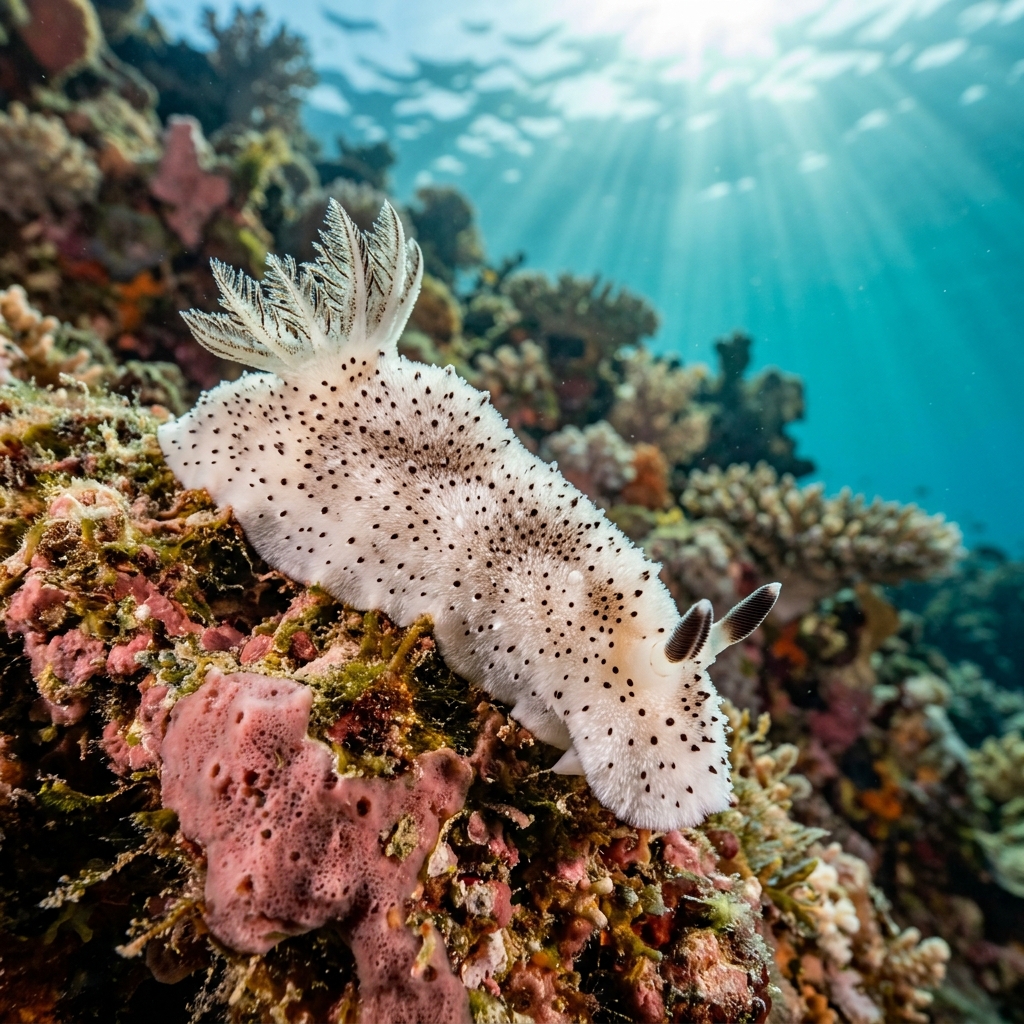
Reef neighbours a diver could mistake it for. Use the identification notes above to tell them apart.
This one is a Philippines specialty, most commonly logged across the Visayas and Luzon, with more sightings in Palawan. Outside the Philippines it turns up on muck and sand dives in Bali and Sulawesi in Indonesia, and around Kenting in Taiwan.
Mapping where Blue Velvet Headshield Slug is logged…
It is most reliably seen on muck and sand dive sites in the Visayas and Luzon regions of the Philippines, with additional sightings in Palawan, Bali, Sulawesi, and around Kenting in Taiwan.
There is no strong season for this species. It lives in warm water year-round, so muck-diving trips to the Philippines or Indonesia at any time of year have a fair chance of turning one up.
Look for a small black slug, about 2cm long, with thin electric-blue lines running down its body and orange-yellow tips on its head shield and tail. It moves slowly across sand or silt rather than sitting on coral.
They stay small, typically around 2cm long, making them an easy species to miss without a careful eye or a guide pointing them out on the sand.
Its head shield doubles as a hunting tool, letting it engulf smaller slugs and worms whole while ploughing slowly across sand and silt.
Site and sighting data is aggregated from diver logs, iNaturalist and GBIF. For taxonomy and conservation status:
Light-spotted Aegires
3,168 sites