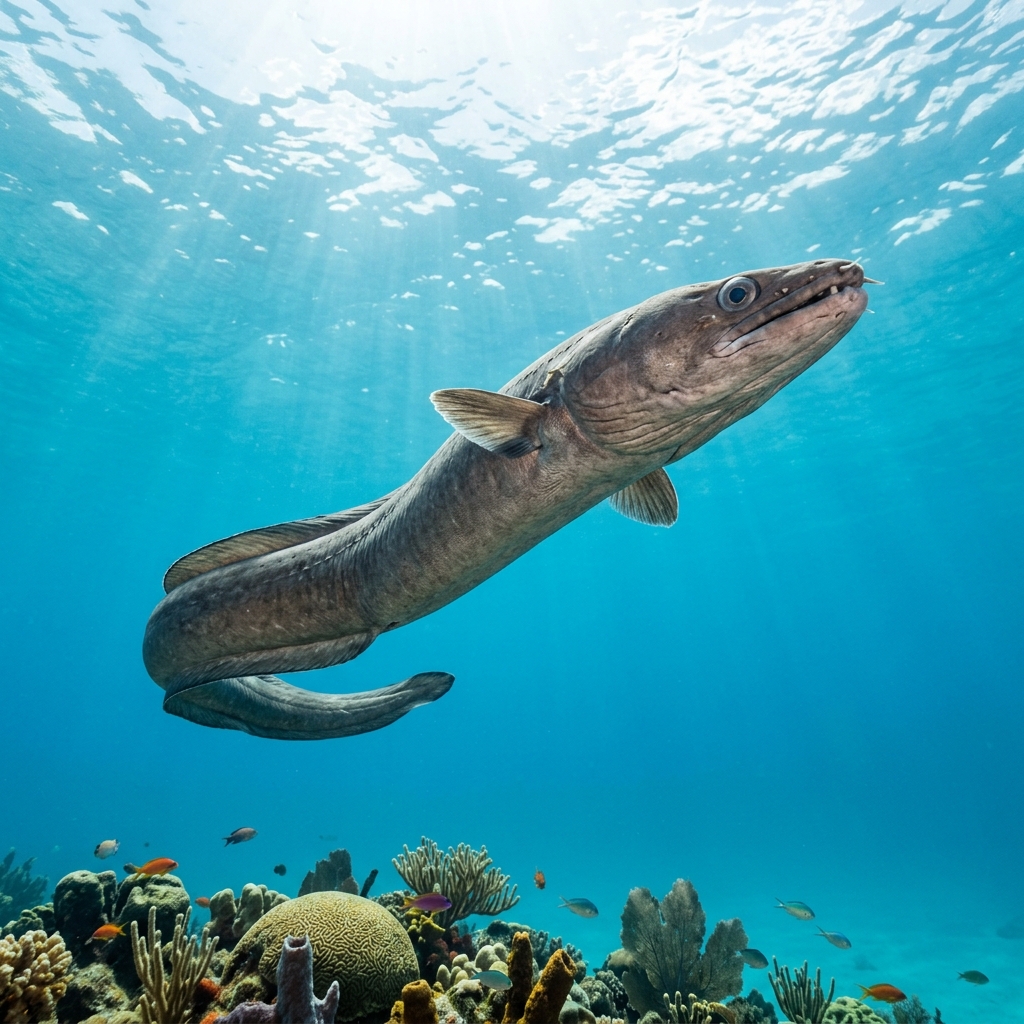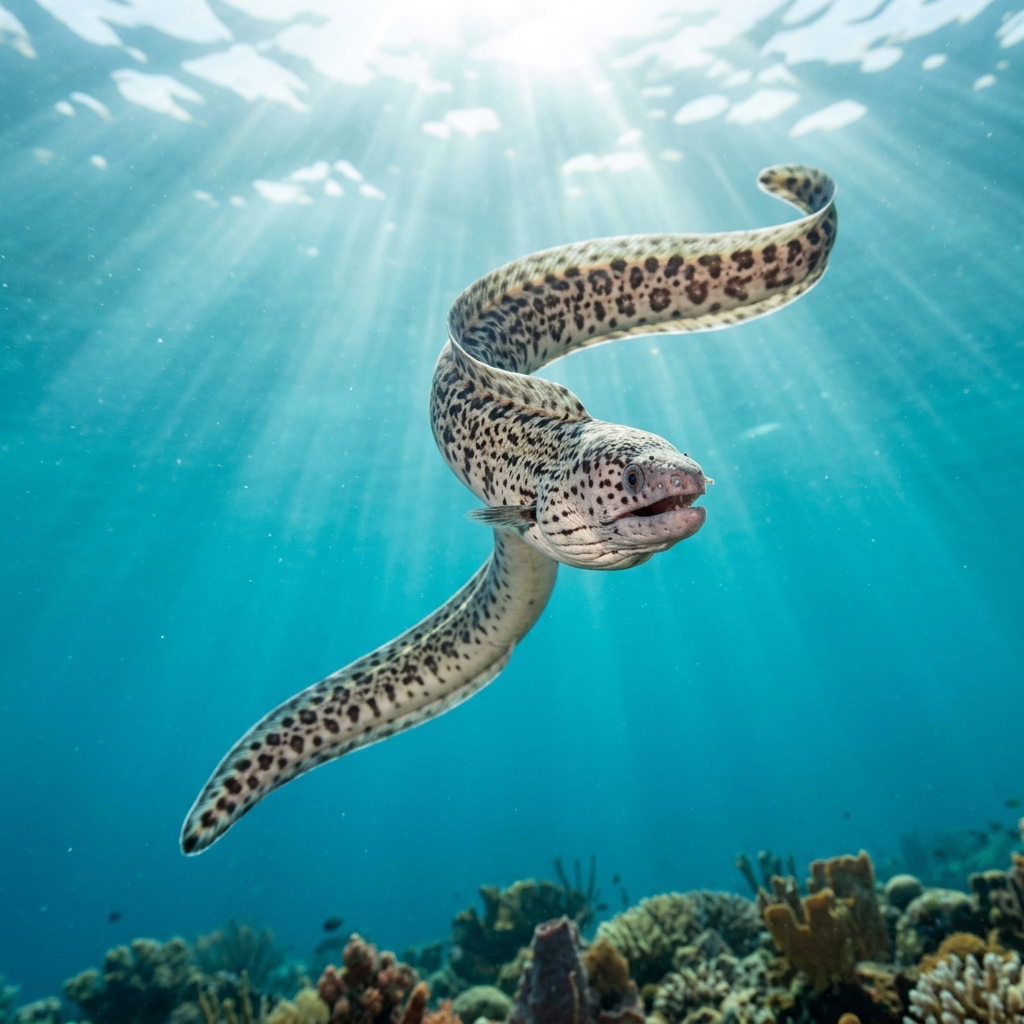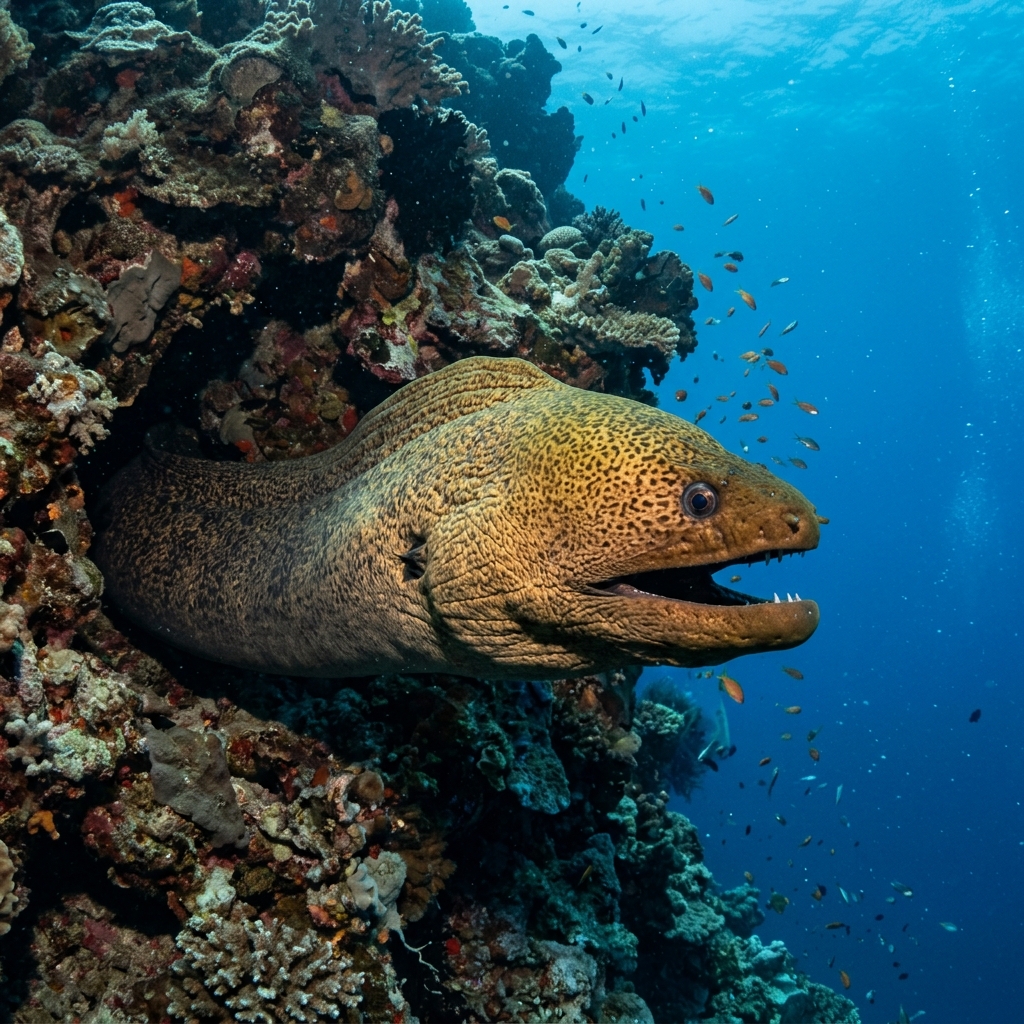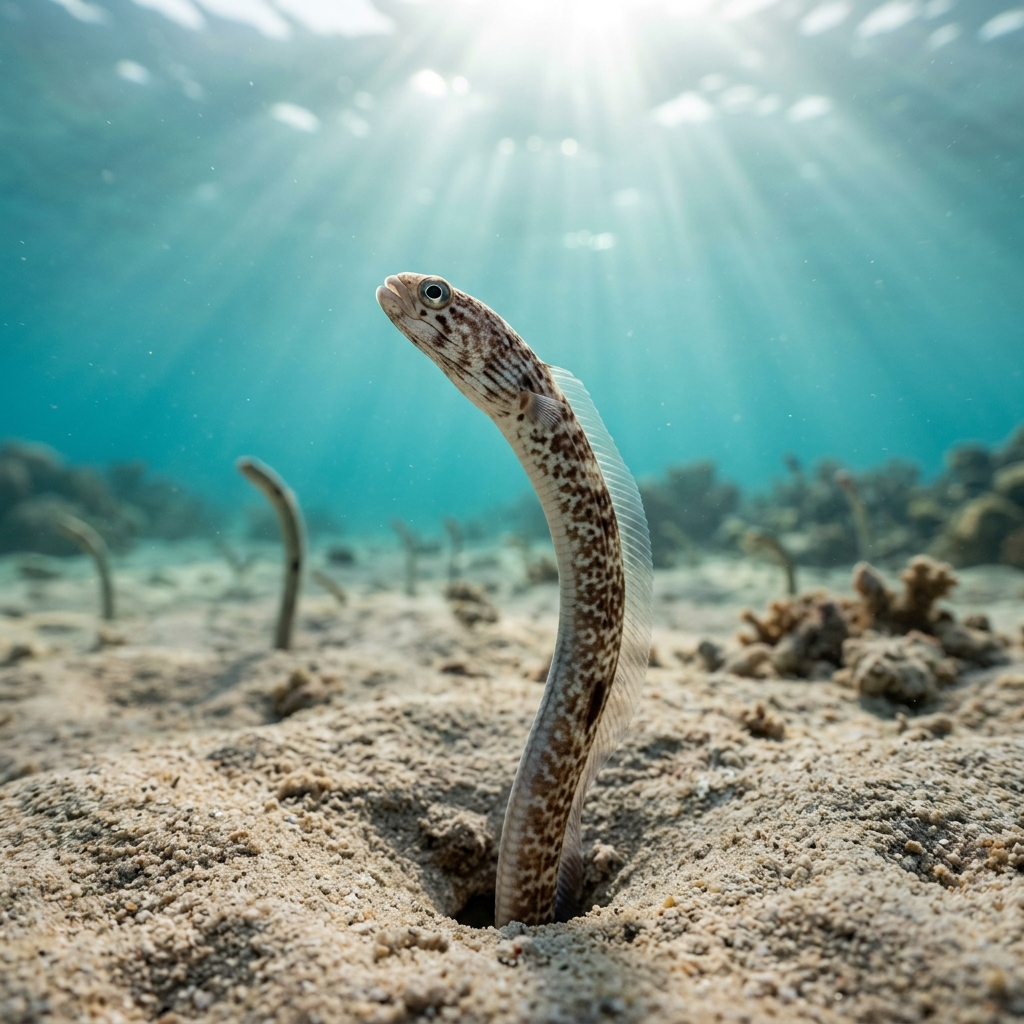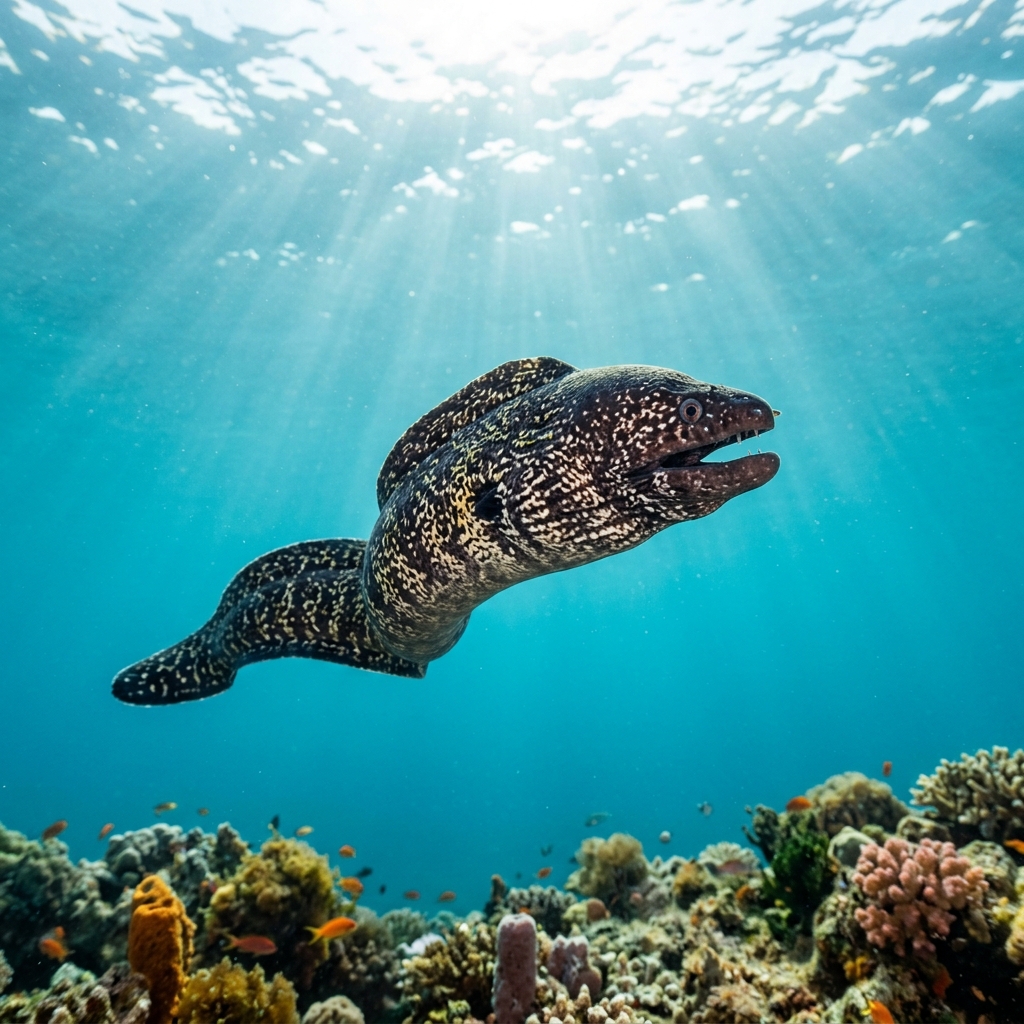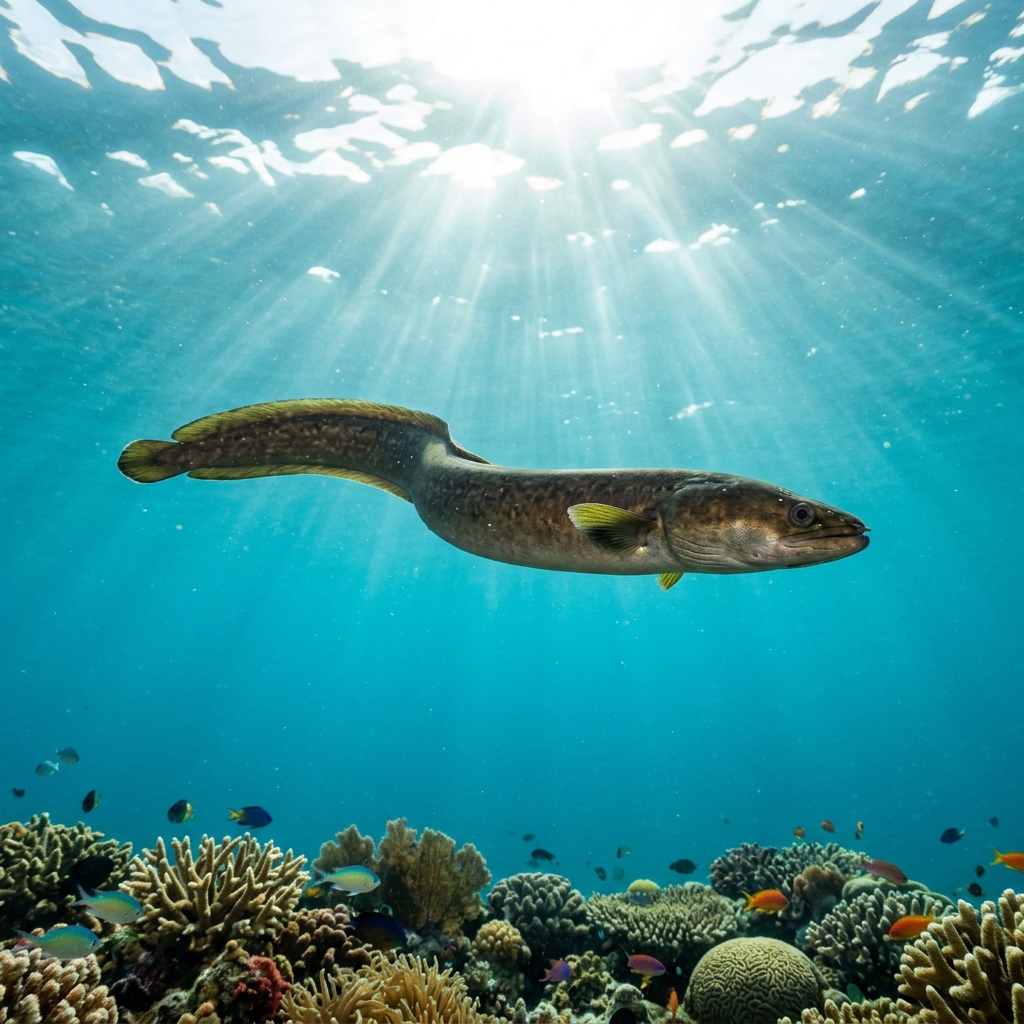
Rhinomuraena quaesita
Electric blue males, jet-black juveniles, and a warm 25-29 °C range make the ribbon eel a top find across the Visayas and Bali.
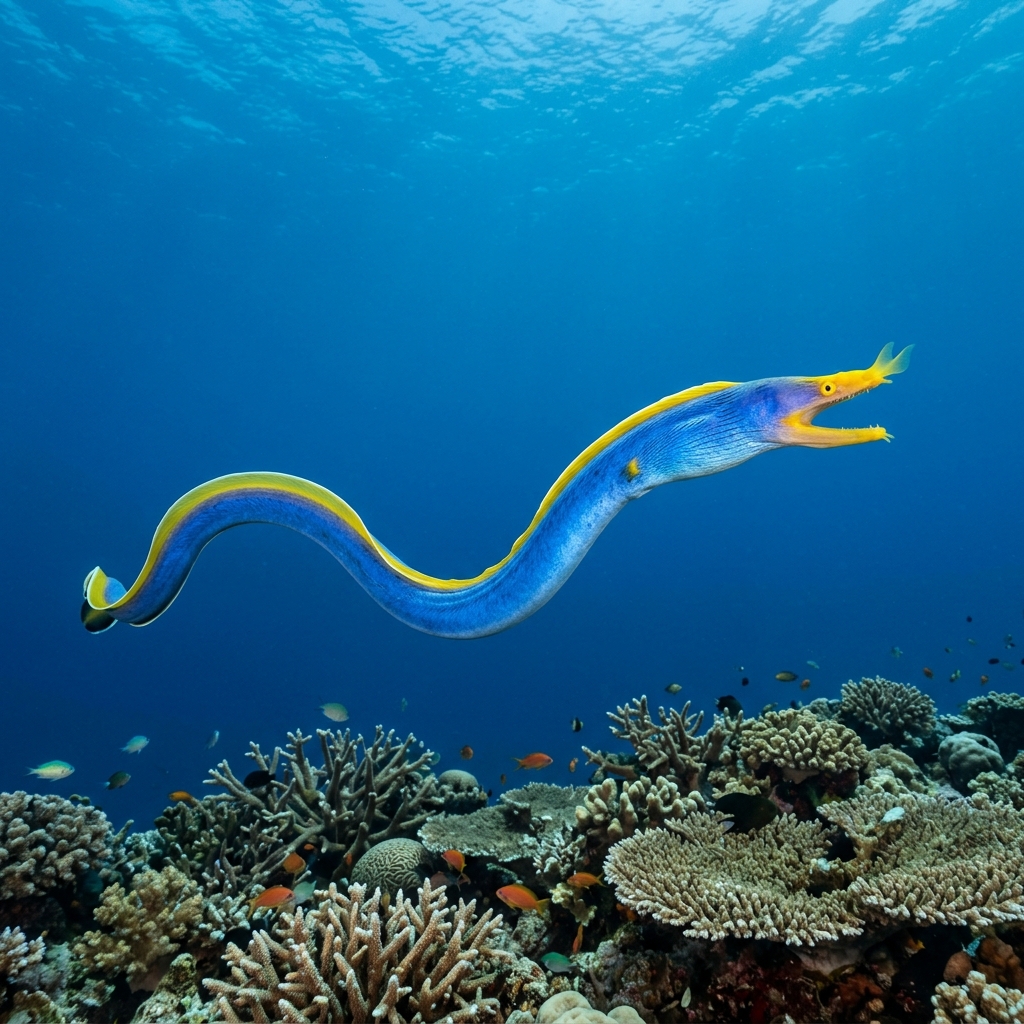
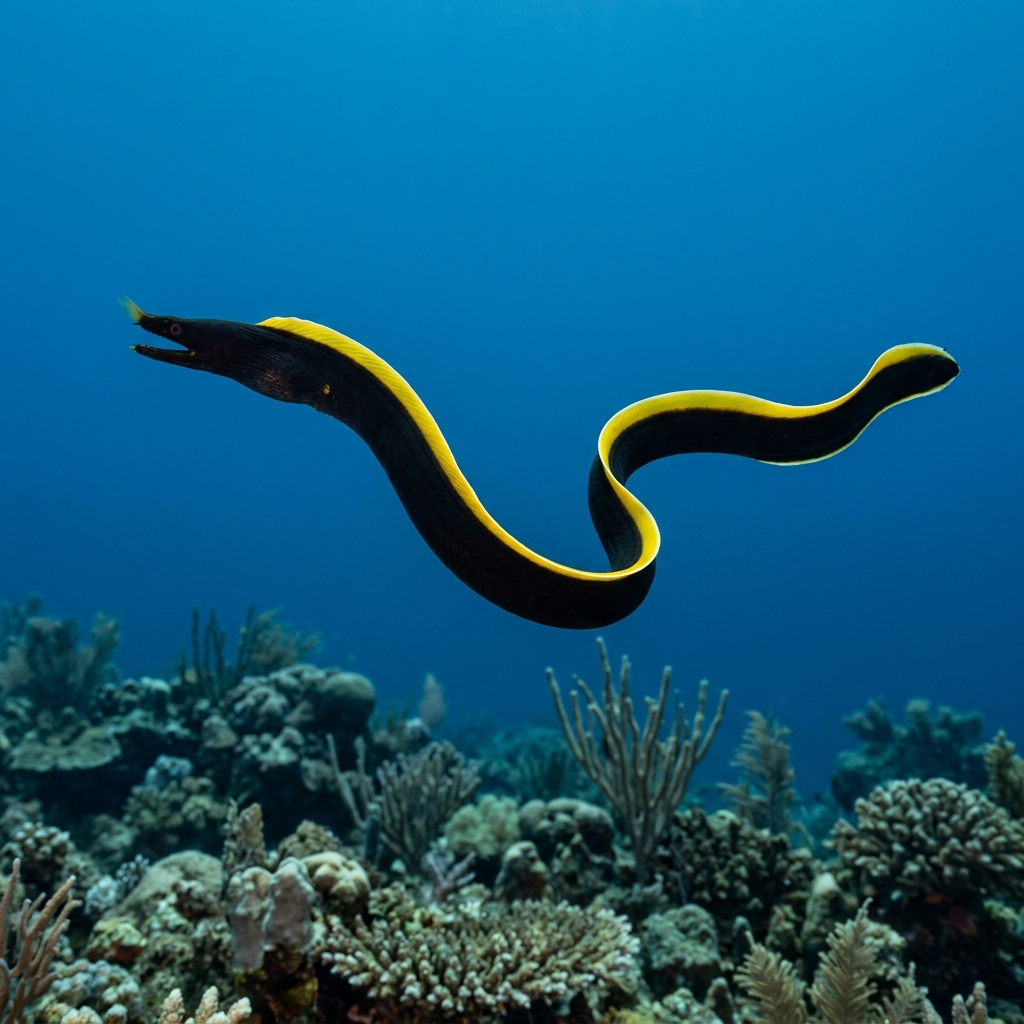
Few reef fish stop divers in their tracks quite like this one. Adults reach around 90 cm but are typically seen with only the head and upper body waving from a burrow, which means you're looking for that iconic flared, leaf-like nostril tube projecting from the snout. Males are electric blue with a yellow dorsal fin and bright yellow face; females are entirely yellow with a black-edged anal fin. Juveniles are jet black with a vivid yellow dorsal fin running from just behind the head to the tail tip.
Almost always seen with the body tucked inside a sand or rubble burrow, the head and chest swaying gently in the current with its mouth periodically gaping open. That gaping is simply how it breathes, not aggression. It is a diurnal (daytime) ambush predator, waiting patiently for small fish to wander within striking range before lunging at speed. Approach slowly and stay low; hovering directly above the burrow will almost always send it retreating underground.
Ribbon eels are protandric sequential hermaphrodites: they begin life as juveniles, transition into reproductive males, and some individuals later change sex entirely to become yellow females. This means the three dramatically different colour forms you see on the reef are actually different life stages of the same animal.
In the Northern Hemisphere (Philippines, Japan, Malaysia) sightings concentrate in May to June and August to December. In the Southern Hemisphere (Indonesia, Fiji, Mozambique) the peak runs October through April, aligning with warm water above 24 °C.
The ribbon eel is most consistently logged in the Philippines and Indonesia, with the Visayas, Luzon, Bali, and Sulawesi accounting for the bulk of sightings. Malaysia's Sipadan and East Sabah sites are also strong, and it turns up regularly in Japan, Fiji, Mauritius, and across East Africa from Mozambique to South Africa.
Mapping where Ribbon Eel is logged…
The strongest populations are in the Philippines (especially the Visayas and Luzon) and Indonesia (Bali, Sulawesi). They are also reliably spotted at Sipadan in Malaysia, across Fiji, and along the East African coast from Mozambique to South Africa.
In the Philippines and Japan, sightings peak from May to June and again August through December. For Indonesia, Fiji, and East Africa, October to April is the most productive window. Both patterns track warm tropical water above 24 °C.
Look for the distinctive flared, tubular nostrils projecting from the snout and the long, ribbon-like body emerging from a burrow. Males are unmistakably electric blue with a yellow face and dorsal fin; females are all yellow; juveniles are jet black with a yellow dorsal stripe. Nothing else on the reef looks remotely similar.
They reach around 90 cm in total length, though divers rarely see the full body as the tail is usually hidden inside a burrow. The visible portion is typically the head and the front 20 to 30 cm.
Yes, and dramatically so. They start life jet black with a yellow dorsal fin, become electric blue males, and some individuals later transition into fully yellow females. These are not different species but different life stages of the one animal, a process called protandric sequential hermaphroditism.
No. They are not aggressive and will almost always retreat into their burrow when a diver approaches too closely. The open-mouthed gaping that looks threatening is simply how they pass water over their gills to breathe, not a threat display. Keep a respectful distance and they will usually hold their position.
Site and sighting data is aggregated from diver logs, iNaturalist and GBIF. For taxonomy and conservation status:
Garden Eel
2,448 sites