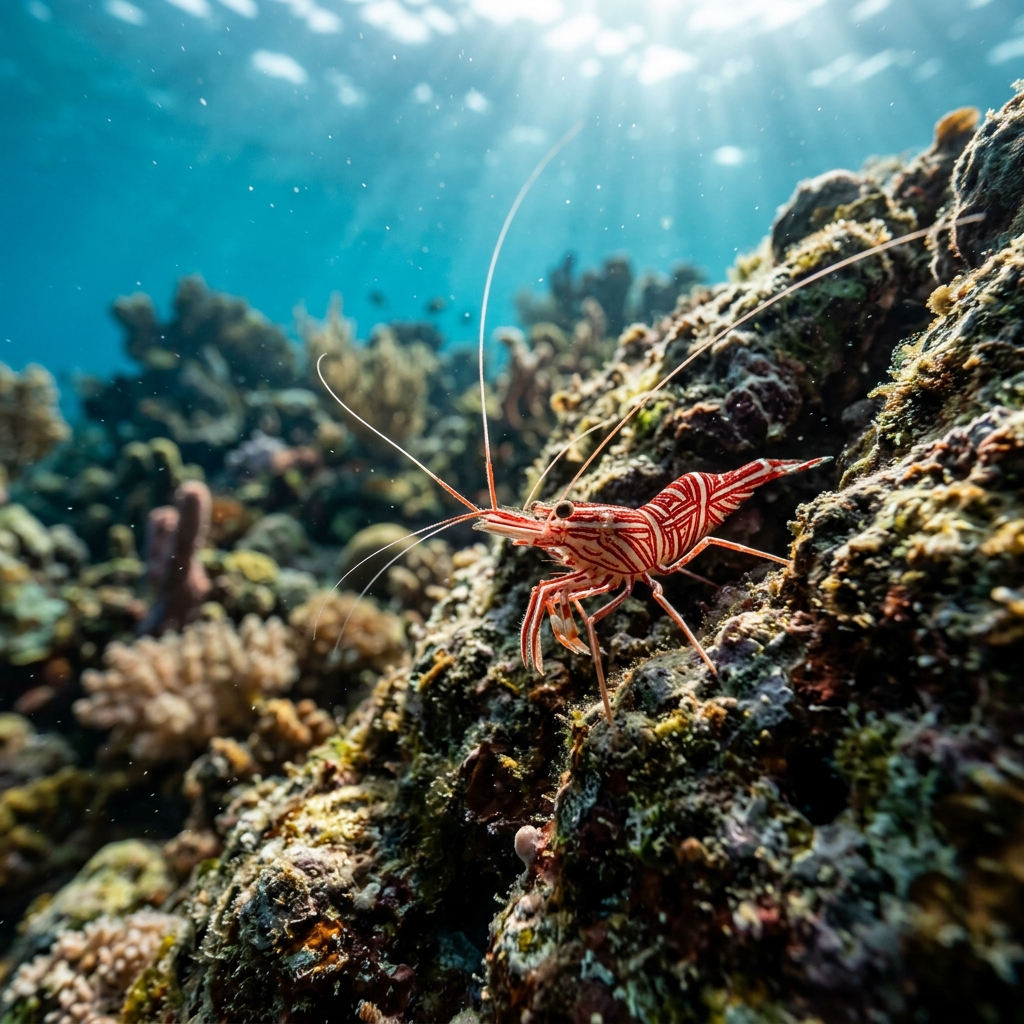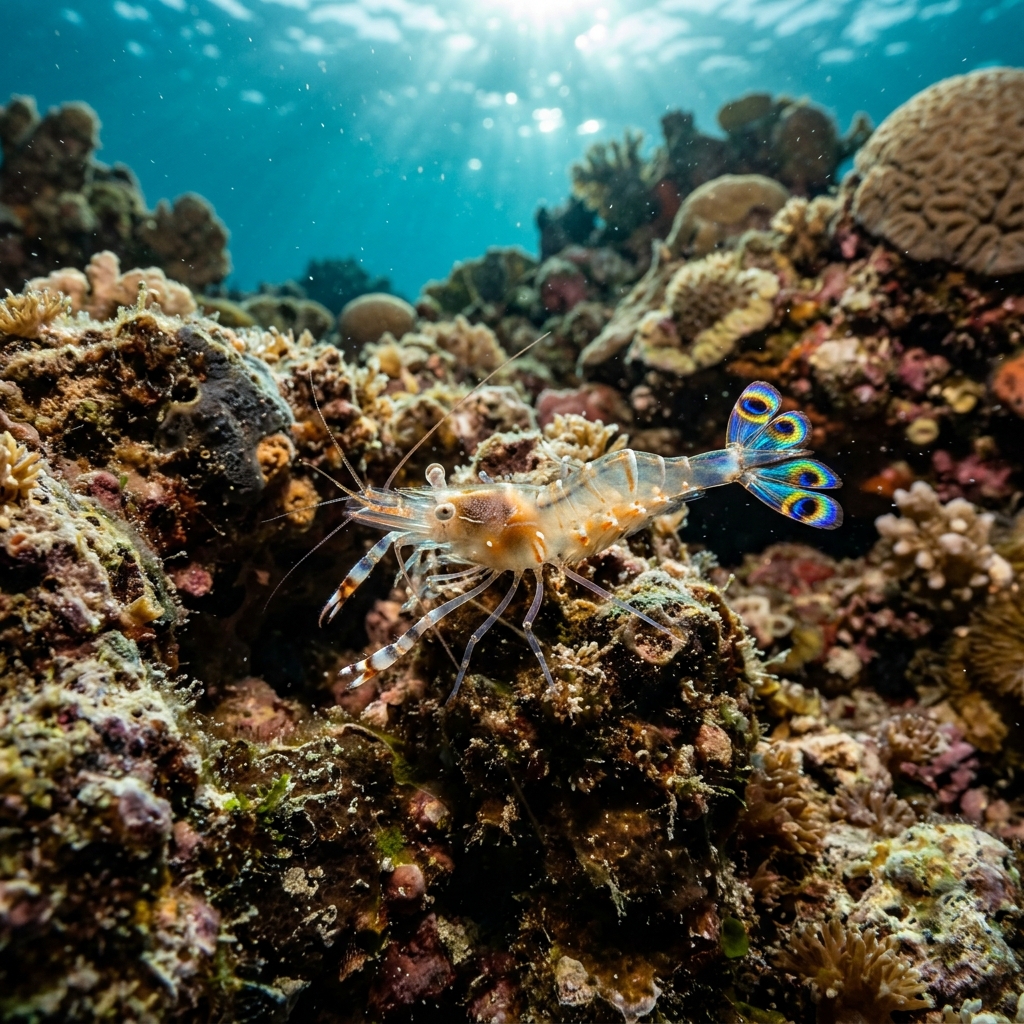
Ancylocaris brevicarpalis
Spot the Peacock-tail Anemone Shrimp in the Visayas and across the Indo-Pacific. Warm waters 23-29 °C, most sightings Nov, Aug in the north.
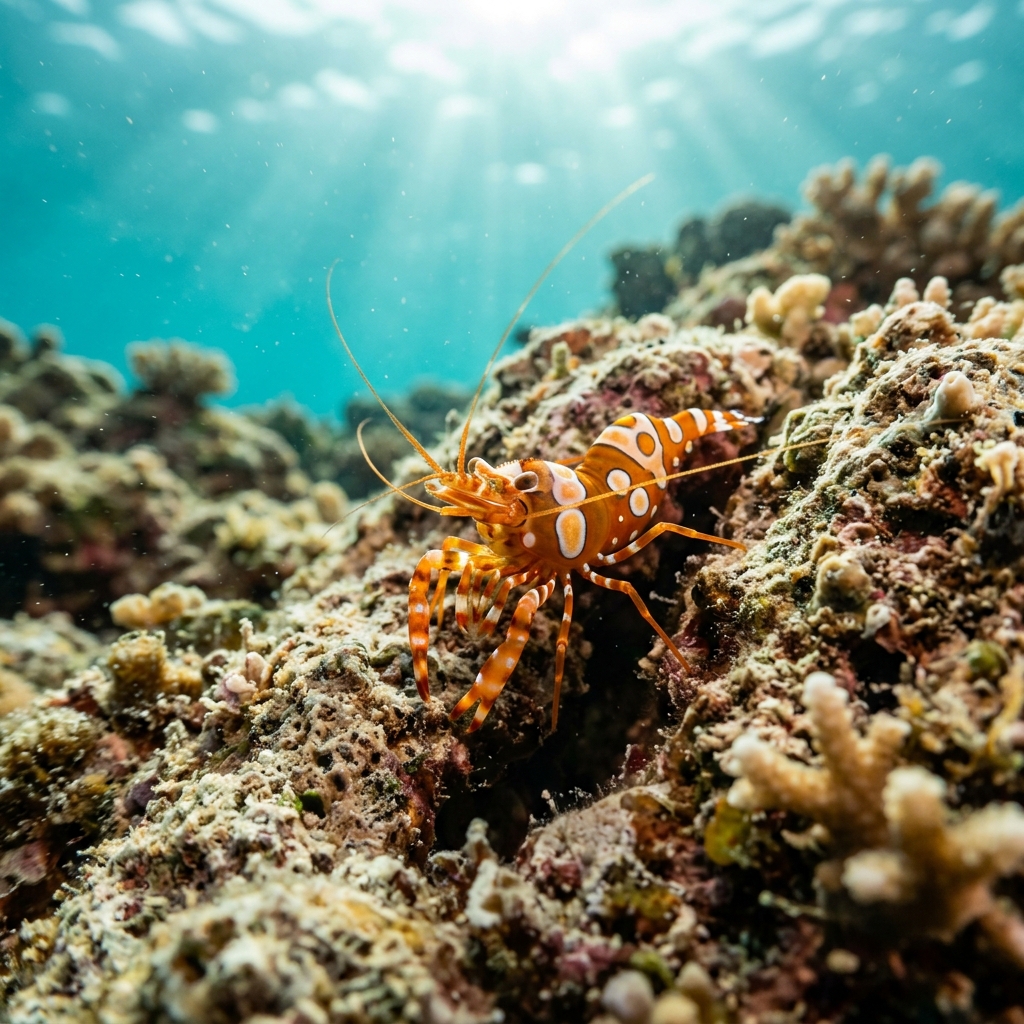
White to translucent body peppered with large, dark-edged white spots gives this shrimp a polka-dot appearance that stands out against an anemone's tentacles. The tail fan (uropods) is the clincher: it bears vivid eye-spot markings reminiscent of a peacock's feathers, which is what sets it apart from most other anemone-associated shrimps. It tends to sit openly on or beside its host, moving with deliberate, slow steps rather than hiding deep within the tentacles.
On the reef you will almost always find it right on or beside its host anemone, picking at the tentacles and sifting through mucus and debris in what looks like meticulous housekeeping. It is active during the day and not particularly shy, but one abrupt fin kick or hand movement will send it darting between the tentacles for cover, so slow, controlled approaches pay off. Spend a moment watching and it will usually resume its cleaning routine once it settles.
The host anemone is not just shelter but also a foraging table: the shrimp picks parasites, dead tissue, and food particles directly from the tentacles, making it a functional cleaner that benefits the anemone in return.
In the northern hemisphere, sightings concentrate from November through August, making it a good target on winter and spring liveaboards in the Philippines and Indonesia. Southern-hemisphere observers in Queensland report most encounters in October and November.
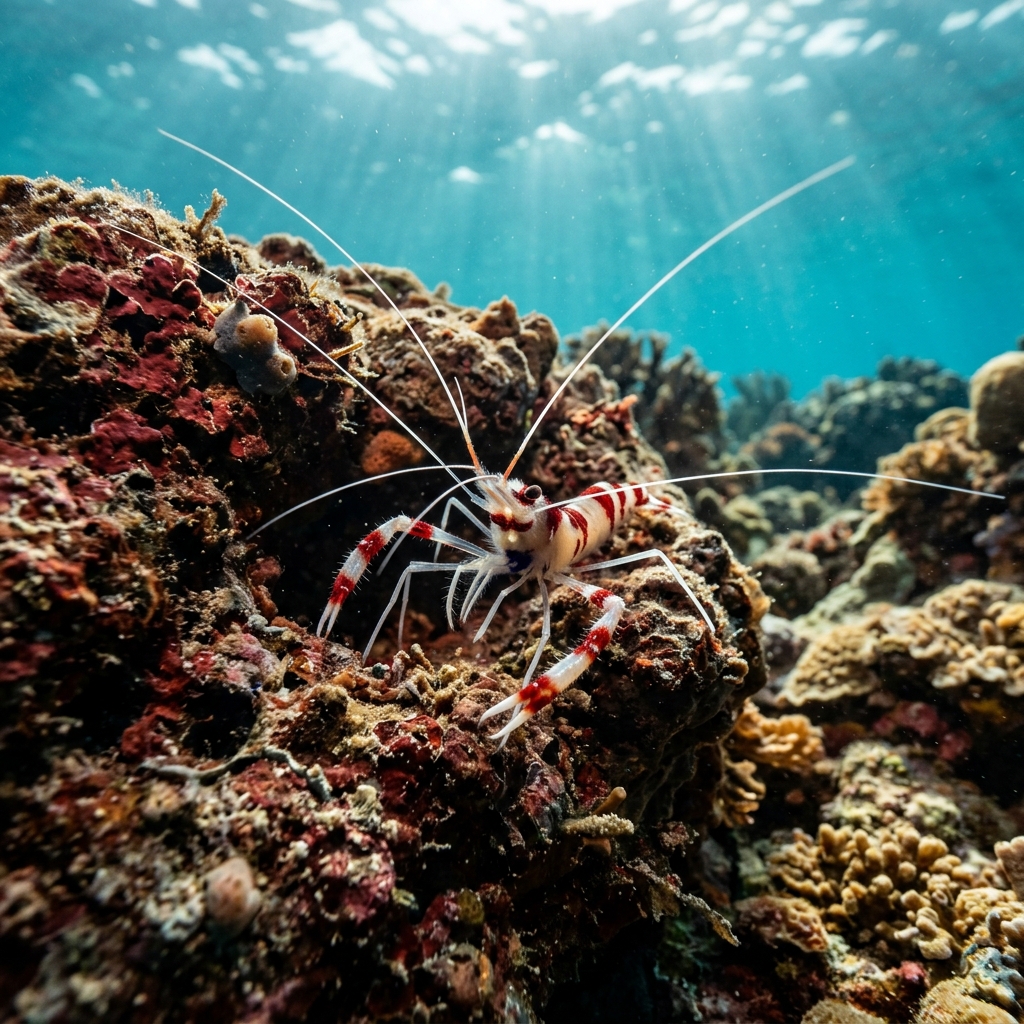
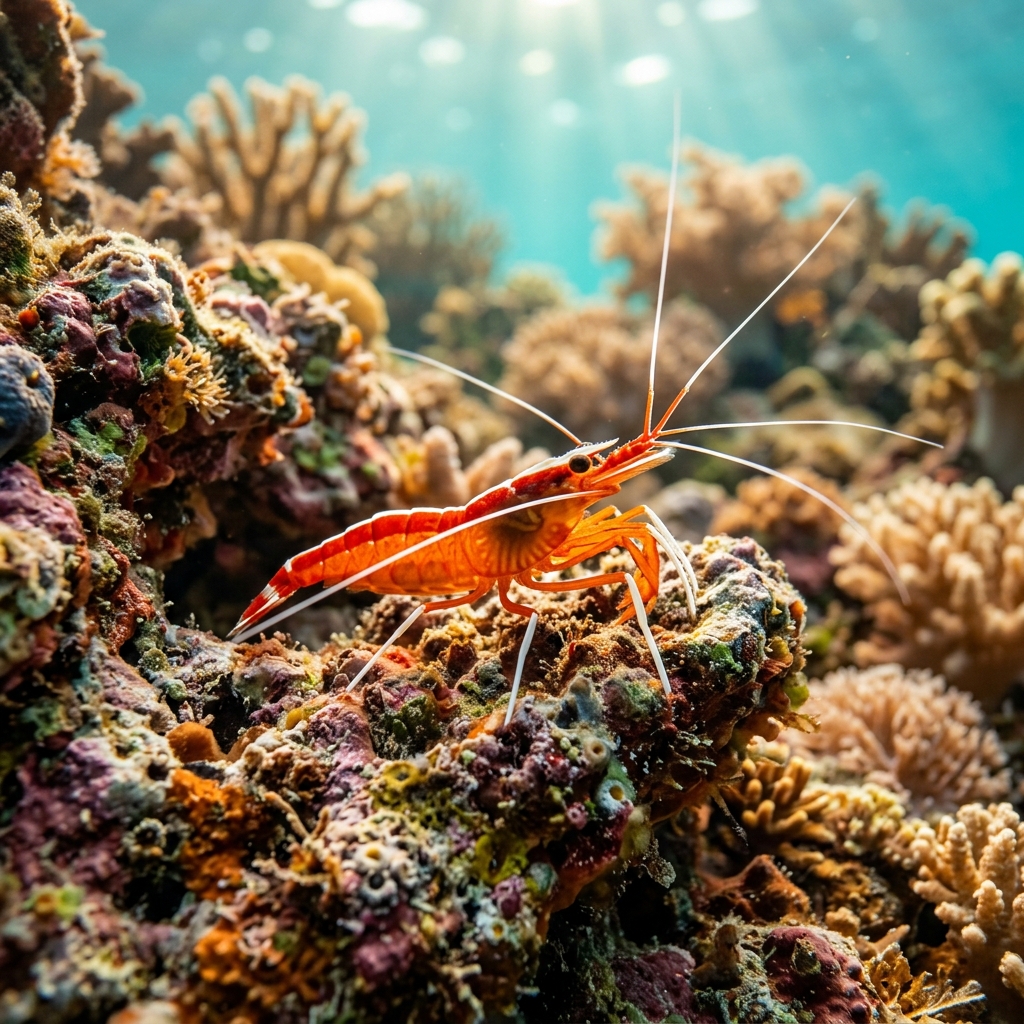
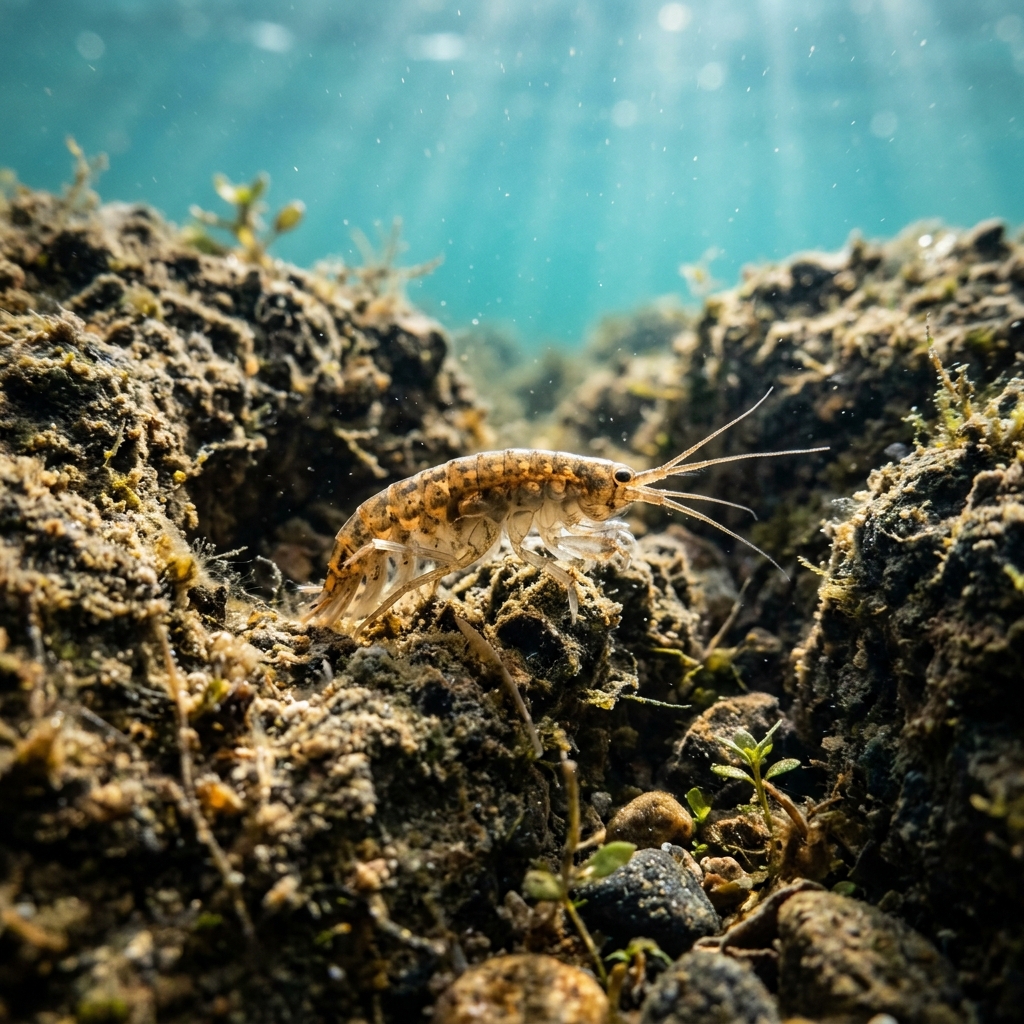
Reef neighbours a diver could mistake it for. Use the identification notes above to tell them apart.
Most commonly logged across the Philippines, with the Visayas regions and Palawan & Apo Reef being the standout areas. Indonesia follows closely, particularly Sulawesi and Maluku & Papua, while Queensland, Australia represents the strongest southern-hemisphere presence. It also turns up regularly in Malaysia, Japan, Tanzania, and Mozambique, reflecting a wide Indo-Pacific range.
Mapping where Peacock-tail Anemone Shrimp is logged…
The Philippines is the top destination, especially the Visayas regions and Palawan. Indonesia, particularly Sulawesi and Maluku, is a strong second choice. Queensland, Australia is the best option in the southern hemisphere, and Malaysia, Japan, Tanzania, and Mozambique also hold reliable populations.
In the Philippines, Indonesia, and other northern-hemisphere sites, November through August covers the bulk of recorded sightings. If you are diving in Queensland, Australia, aim for October and November when southern-hemisphere records peak.
Look for a white, spotted shrimp sitting openly on an anemone. The give-away is the tail fan, which carries peacock-eye markings not seen on other small anemone shrimps. The bold dark-edged spots on the body are also distinctive against the anemone's pale tentacles.
Most divers rate them as uncommon rather than rare, meaning you may spot one or two per dive if you search anemones carefully, but you cannot count on a sighting every time. They are only classed as common at a small proportion of logged sites, mostly in the Philippines and Indonesia.
No. They pose no threat whatsoever to divers. The only risk is the reverse: a startled shrimp will retreat into the anemone, so an overly close approach costs you the sighting.
Site and sighting data is aggregated from diver logs, iNaturalist and GBIF. For taxonomy and conservation status:
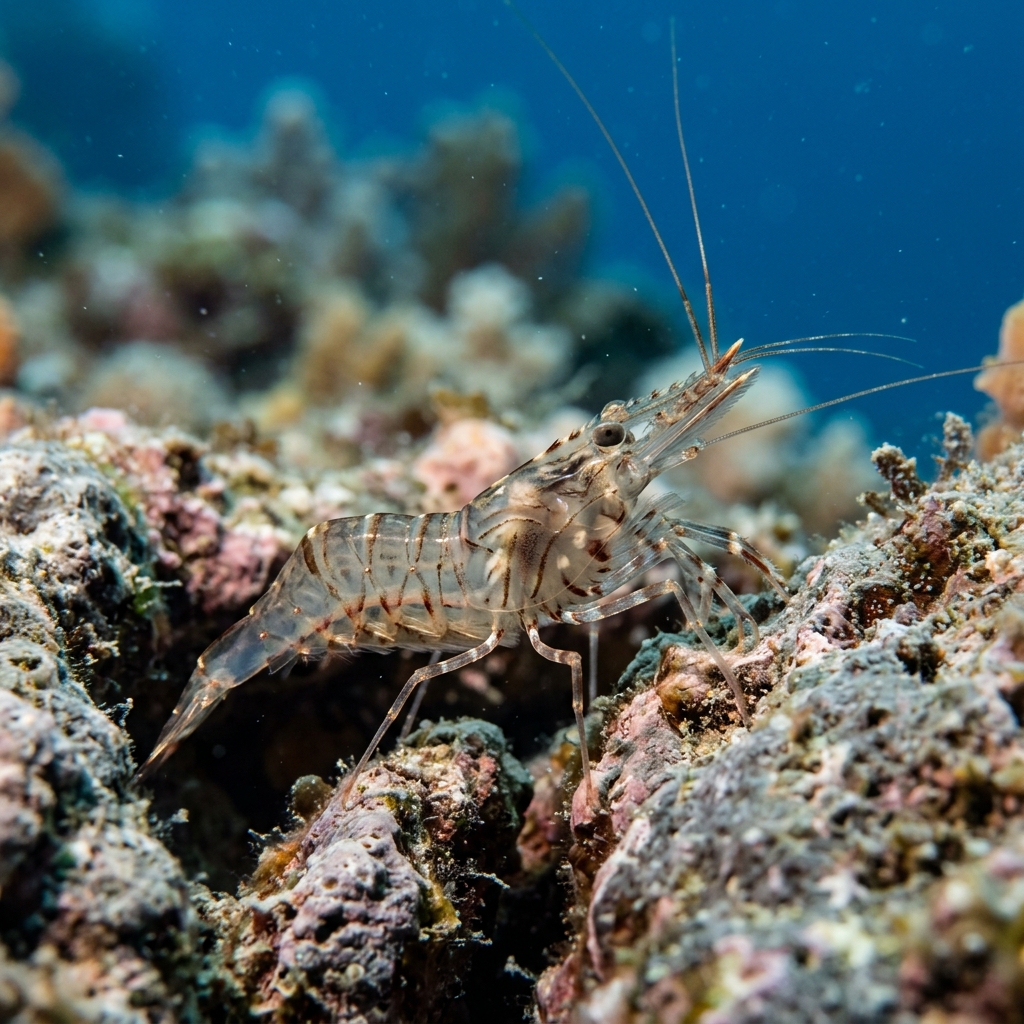
Rockpool Prawn
2,179 sites