Tridacna gigas
Spot giant clams on reefs across the Philippines, Indonesia and Australia. Rare but unmistakable, their vivid mantles glow in warm 26-29 °C Indo-Pacific waters.
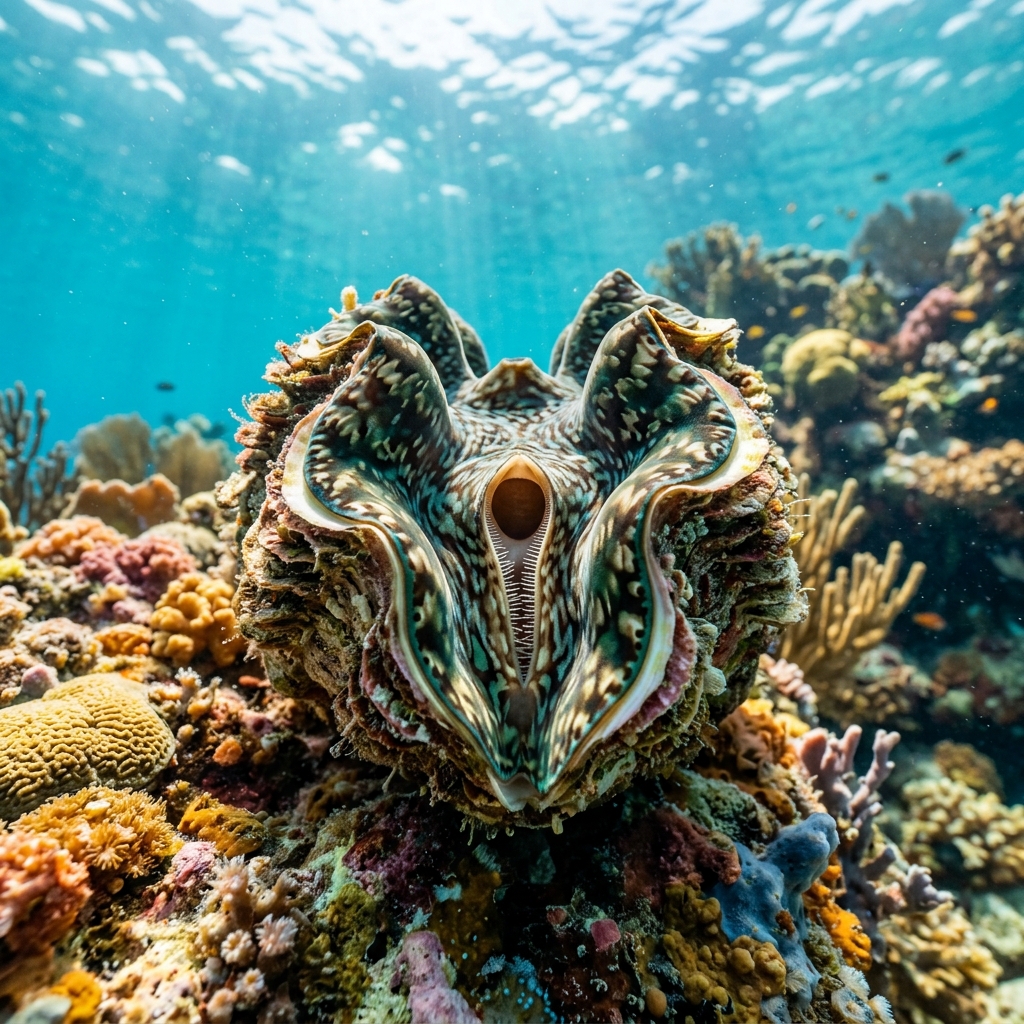
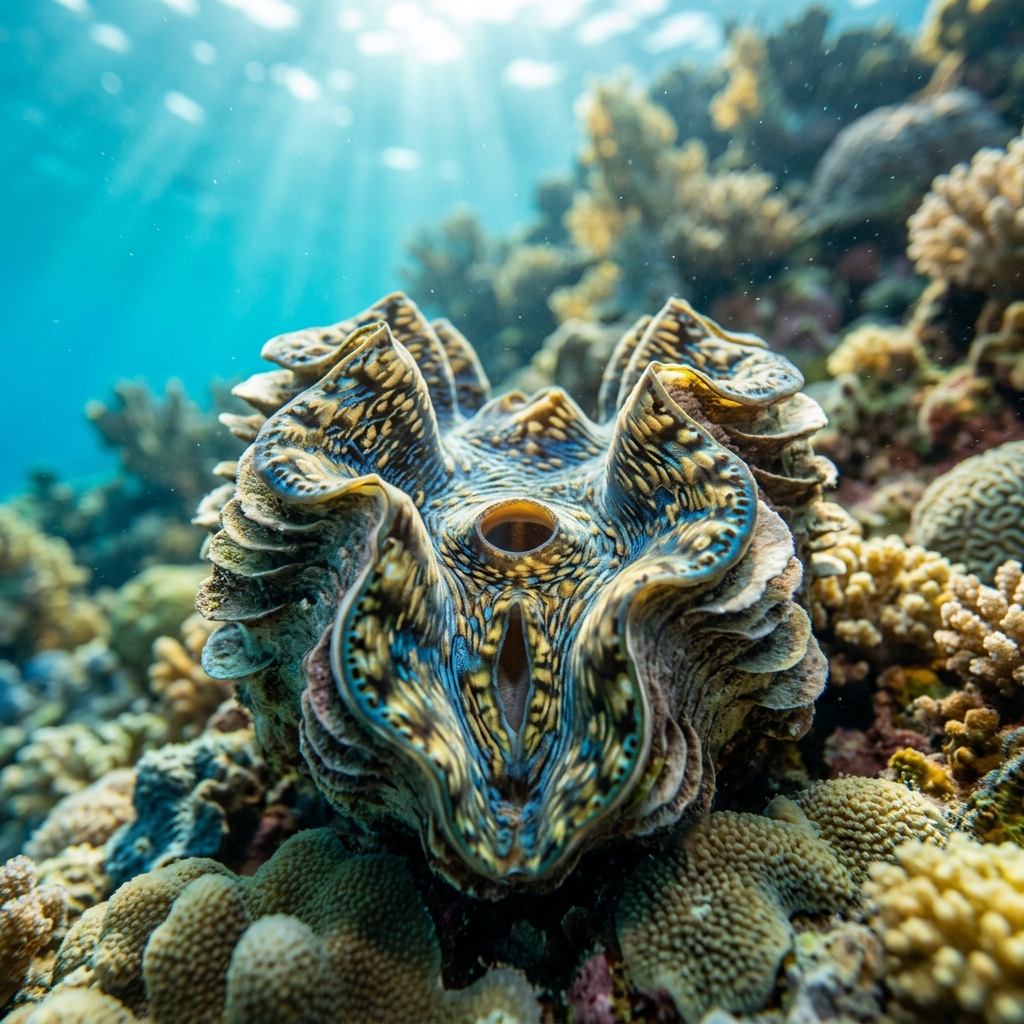
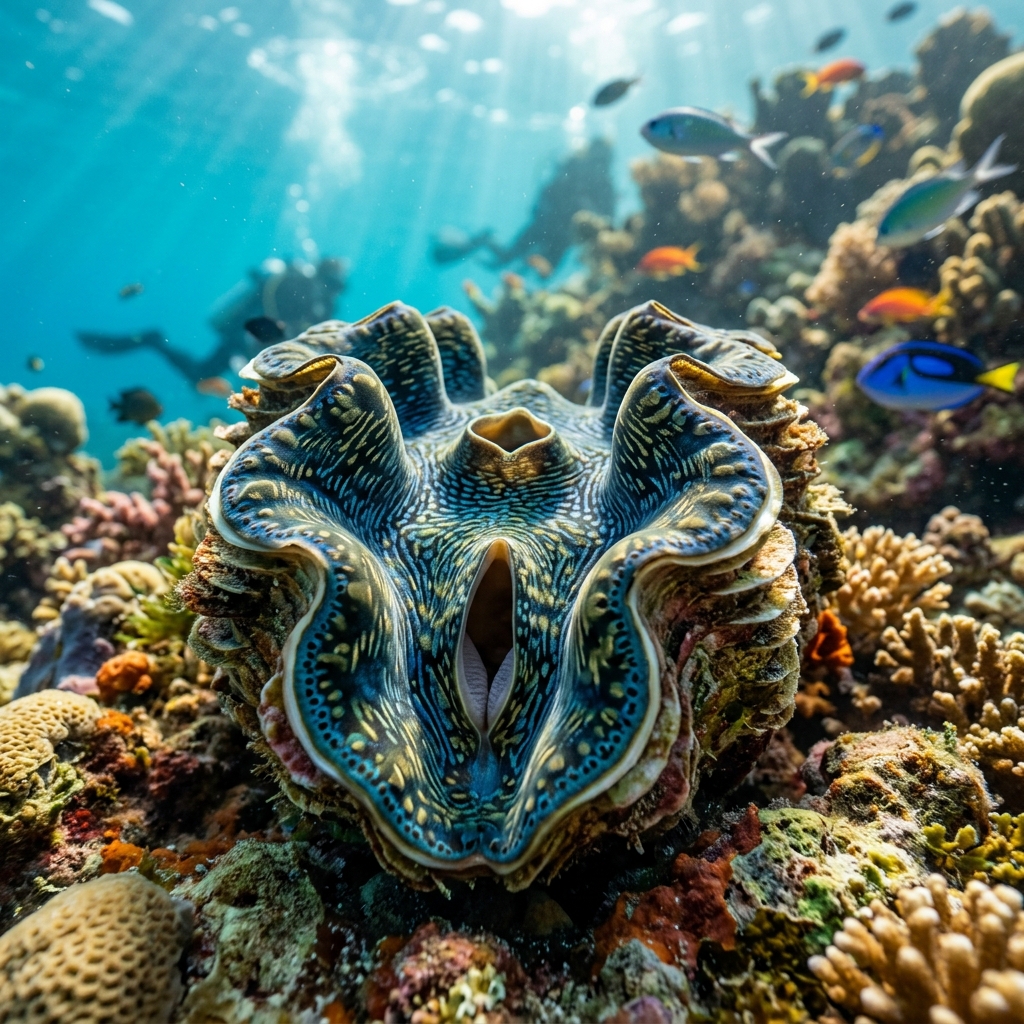
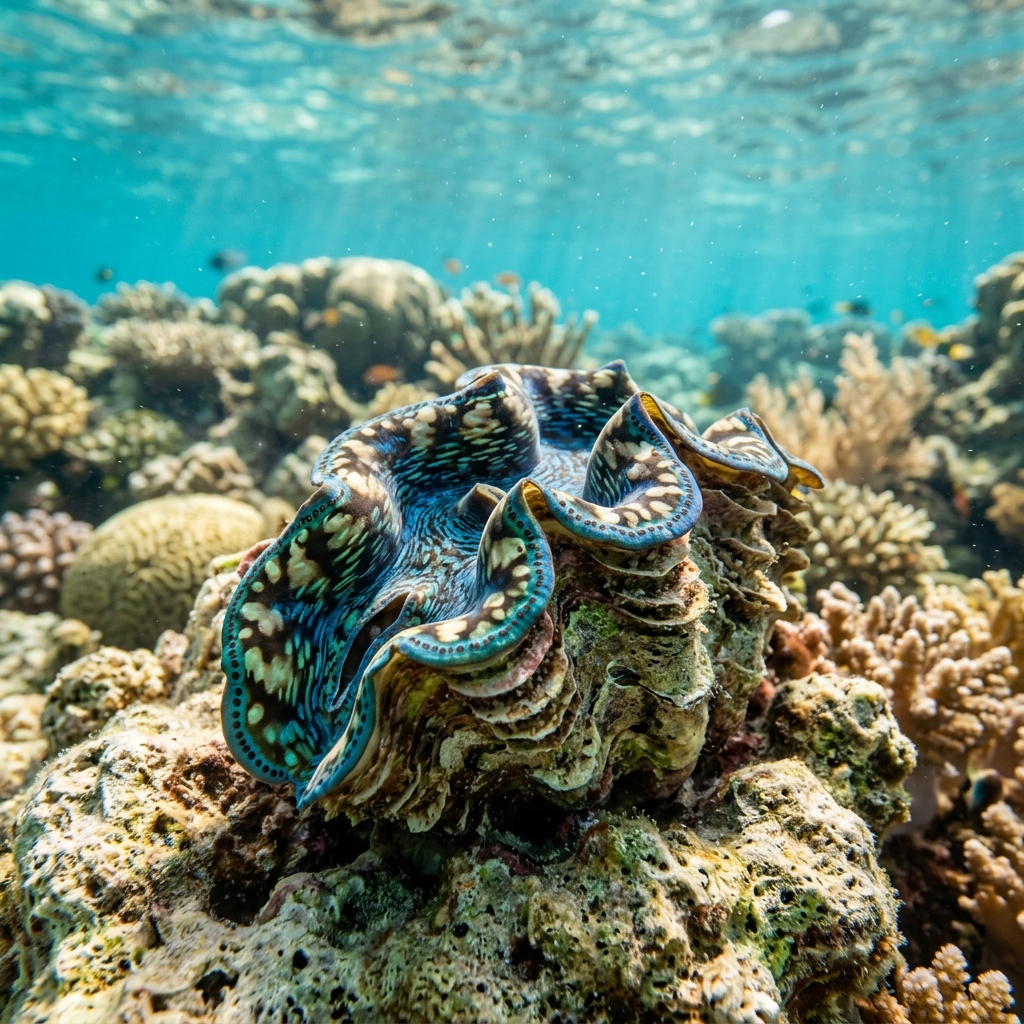
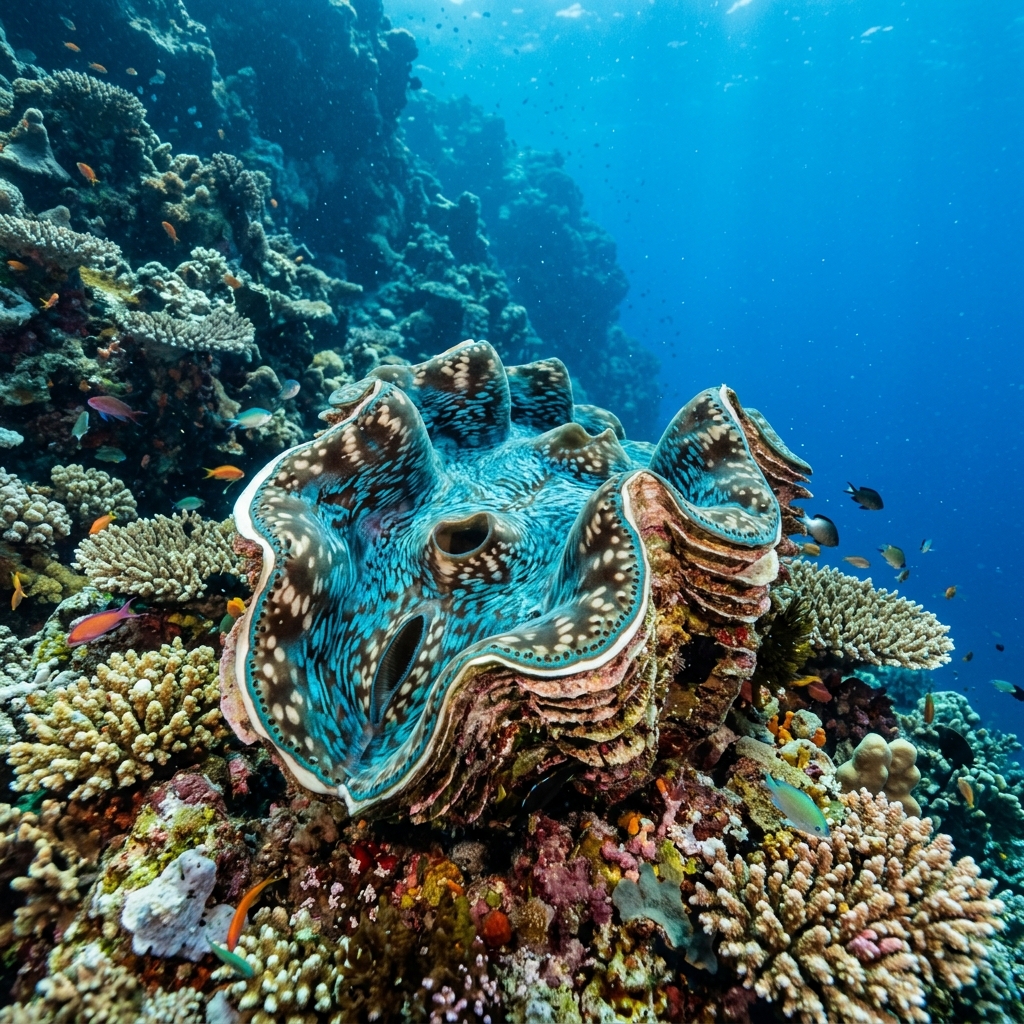
Few reef animals are harder to misidentify once you know what you're looking at. A fully grown specimen can reach nearly a metre across, with a thick, heavily ridged shell and a mantle (the soft fleshy lip visible between the shell valves) patterned in electric blues, greens, browns, or purples. That mantle colour comes from millions of symbiotic algae living in the tissue, and no two individuals share exactly the same pattern. Look for the scalloped shell edges and the broad, parted opening facing upward when the clam is actively feeding.
You'll usually find them sitting motionless on the reef or rubble, mantle spread wide and open toward the light during daytime hours when their symbiotic algae are photosynthesising. They react slowly to a diver's approach, but if you pass directly overhead and cast a sudden shadow, the valves will close with a deliberate, unhurried clench. Keep your movements smooth, avoid hovering directly above, and you can watch the mantle stay fully extended for extended periods.
Giant clams are simultaneous hermaphrodites that release both eggs and sperm into the water column during spawning events, yet they cannot self-fertilise, so healthy populations need multiple individuals living within spawning distance of one another.
No clear season has emerged from the data, so giant clams are treated as year-round residents. They thrive in consistently warm tropical water between about 26 and 30 °C, which describes Indo-Pacific reef conditions throughout the year.
Reef neighbours a diver could mistake it for. Use the identification notes above to tell them apart.
Most sightings come from the Indo-Pacific triangle: the Philippines leads, with particularly strong records across the Visayas, Palawan and Apo Reef, and Luzon, followed closely by Indonesian waters around Sulawesi and Maluku. Australian sites in Queensland and the Northern Territory also hold solid populations, and Micronesia, Malaysia, and Fiji all feature regularly in diver logs.
Mapping where Giant Clam is logged…
The Philippines and Indonesia are the strongest bets, with well-documented sightings in the Visayas, Palawan, Sulawesi, and Maluku. Australia's Queensland reefs and Micronesia also feature regularly in diver records. Sightings are rated rare even at known sites, so treat any encounter as a reward.
They are present year-round on Indo-Pacific reefs, as no seasonal pattern has been detected in the data. The species favours consistently warm water around 26-29 °C, which is available in its core range throughout the year.
Tridacna gigas is the largest living bivalve on Earth. Typical individuals seen on reefs measure around 60-80 cm across the shell, and the species can reach close to a metre. Growth is slow, so a large specimen represents decades of life on that reef.
Look for the sheer size, the deeply ridged and scalloped shell, and the colourful mantle visible between the open valves. The mantle's iridescent blues, greens, and purples are diagnostic. Fluted and smooth giant clams look similar but are noticeably smaller, and the fluted clam has a more elongated, less rounded shell profile.
No. Giant clams close their valves slowly and cannot trap a limb. The old idea of a diver being caught is a myth. They pose no threat, but divers should still avoid touching them to protect the animal and its delicate mantle tissue.
Yes, Tridacna gigas is listed as Critically Endangered globally. Populations have been severely reduced by collection for the shell and live trade, combined with coral reef degradation. Several countries now have legal protections in place, and some reefs run active restocking programmes.
The Giant Clam is listed as critically endangered by the IUCN. Observe from a distance, avoid touching or feeding it, and report sightings to local marine research organisations.
Giant clam is listed as Critically Endangered on the IUCN Red List, driven by decades of over-collection and habitat loss across its range. Divers should never touch, handle, or anchor near individuals, and should report any collection activity to local marine authorities.
Site and sighting data is aggregated from diver logs, iNaturalist and GBIF. For taxonomy and conservation status:
Elongate Clam
2,091 sites