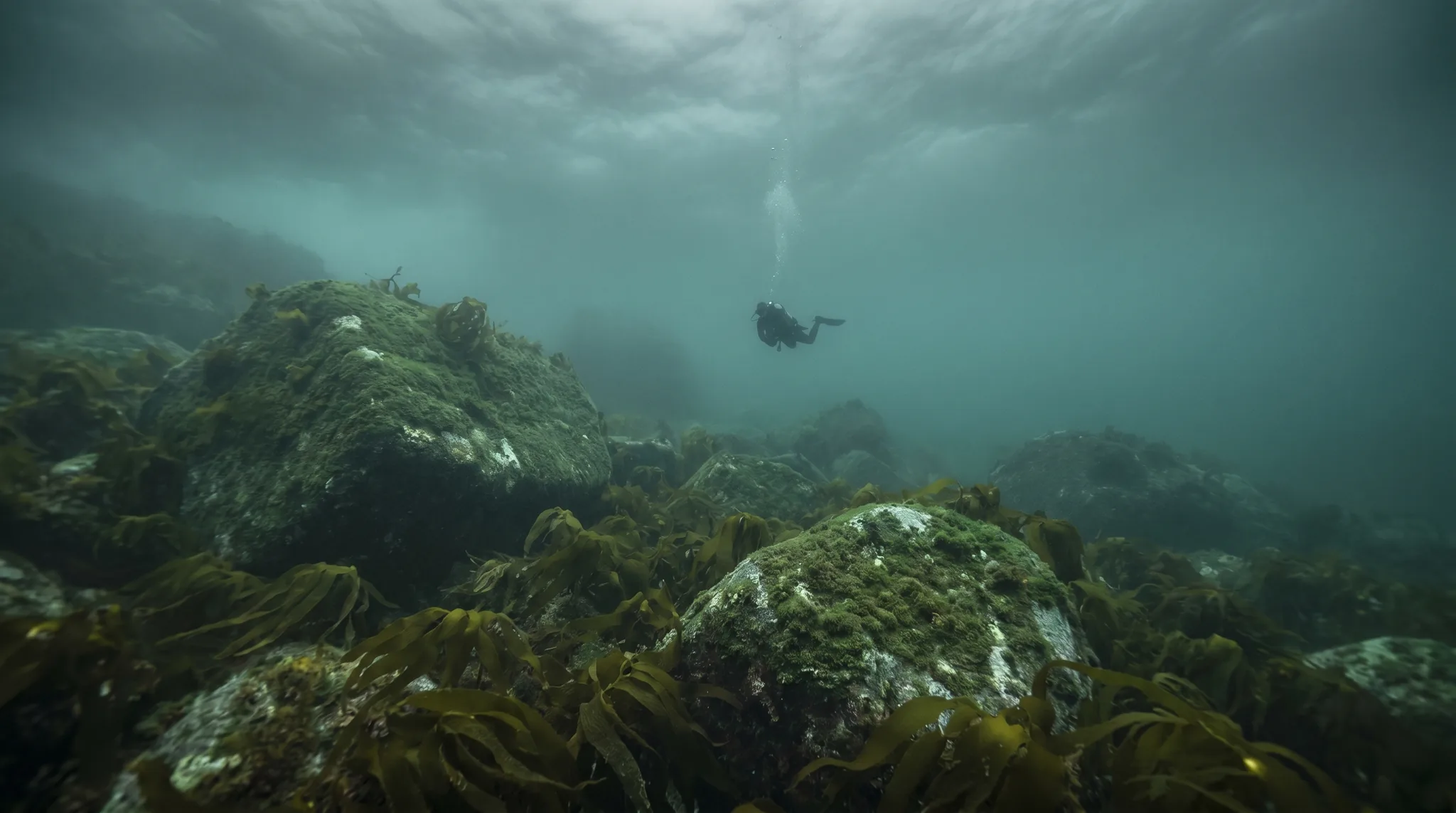
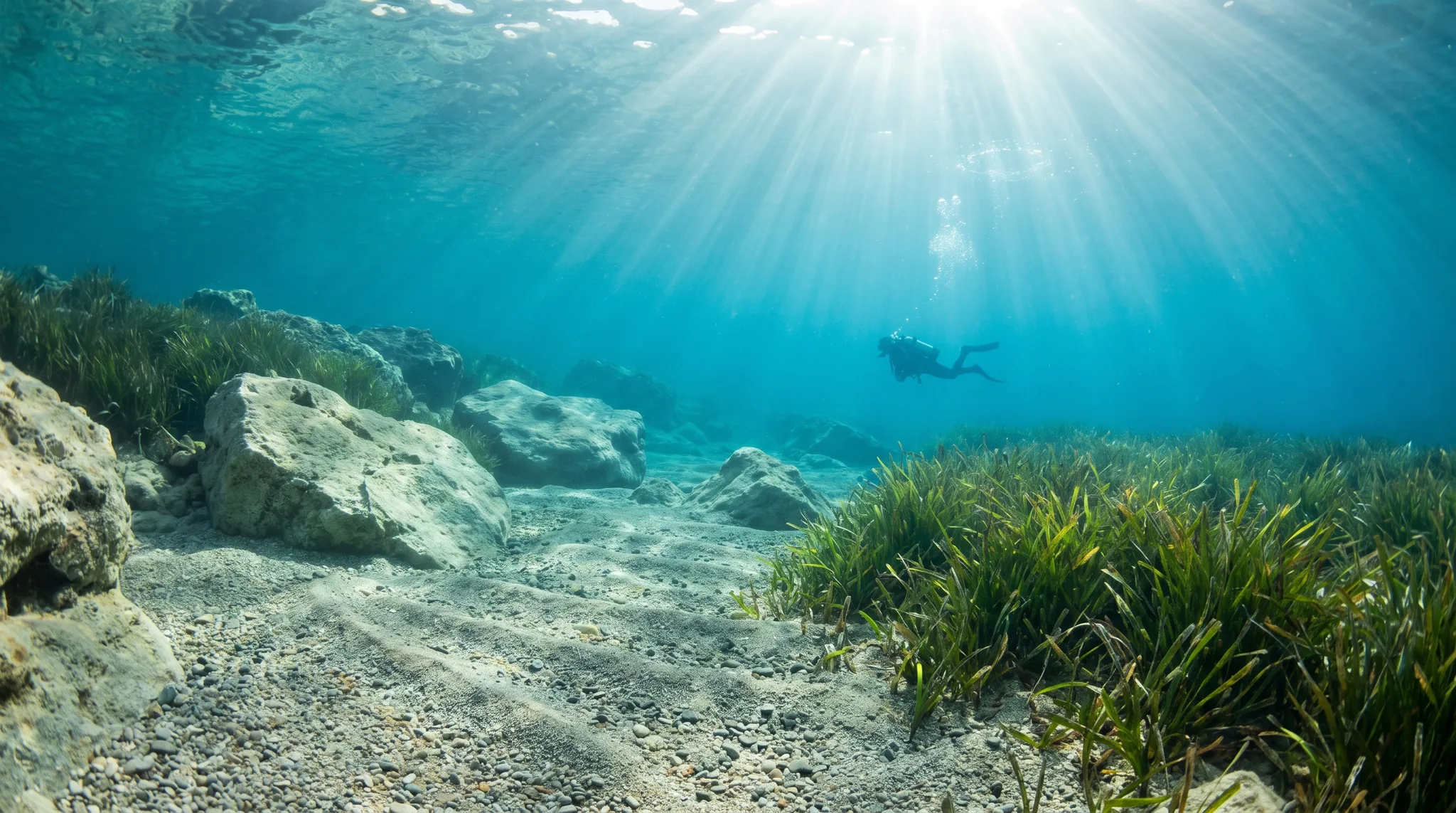
Budva sits on the Adriatic Sea and offers a varied mix of site types along the Budva Riviera and around Sveti Nikola Island, including reefs, walls, caves, caverns, drift dives, and an artificial reef. Sites suit beginners through to intermediate divers, with depths ranging from very shallow to thirty metres. The season runs from May to October, when water temperatures rise from the mid-teens into the mid-twenties. Notable features include a World War Two aircraft bomb resting on the reef at Galiola and brackish conditions at Ada Bojana, where freshwater influence affects visibility and salinity. Species recorded here include common octopus, European spiny lobster, marbled electric ray, flying gurnard, gorgonian, and green sea turtle.
Monthly water temperature across Budva's sites, from satellite sea-surface data corrected for depth. The band shows the site-to-site spread.
Water stays cool at around fourteen degrees from winter through to mid-spring, so a wetsuit is needed even at the shoulder months. Temperatures climb through June and peak in late summer, making July through October the most comfortable period for longer dives. Visibility at most sites ranges from ten to thirty-five metres but can drop sharply at Ada Bojana, where river influence creates variable conditions.
Water temperature around Budva ranges from about 14°C in February to 21°C in September, based on satellite sea-temperature data for its dive sites.
In the warm season (about 21°C) a 5mm suit is comfortable in Budva; in the coldest months (about 14°C) step up to a 7mm or semi-dry suit.
Fin maps 6 sites in Budva (6 scuba diving sites).
Across Budva's dive sites, June, July and August are most often reported as the best months to visit.
4 more sites to explore