Prionace glauca
Spot blue sharks in open water off Florida, the UK, and the Azores. Learn their colouring, curious behaviour, and what temp range they prefer.
Safety warning
Blue sharks are classified as dangerous to divers and should be treated with respect, despite their generally measured behaviour. Keep movements calm and deliberate, avoid dangling equipment or hands at your sides when they are circling close, and never attempt to touch or block their path. On chum-assisted dives, follow the operator's briefing closely; feeding dynamics can shift behaviour quickly and unpredictably.
If you're bitten
BiteGeneral first-aid guidance, not a substitute for professional medical care. In an emergency, call your local emergency number.
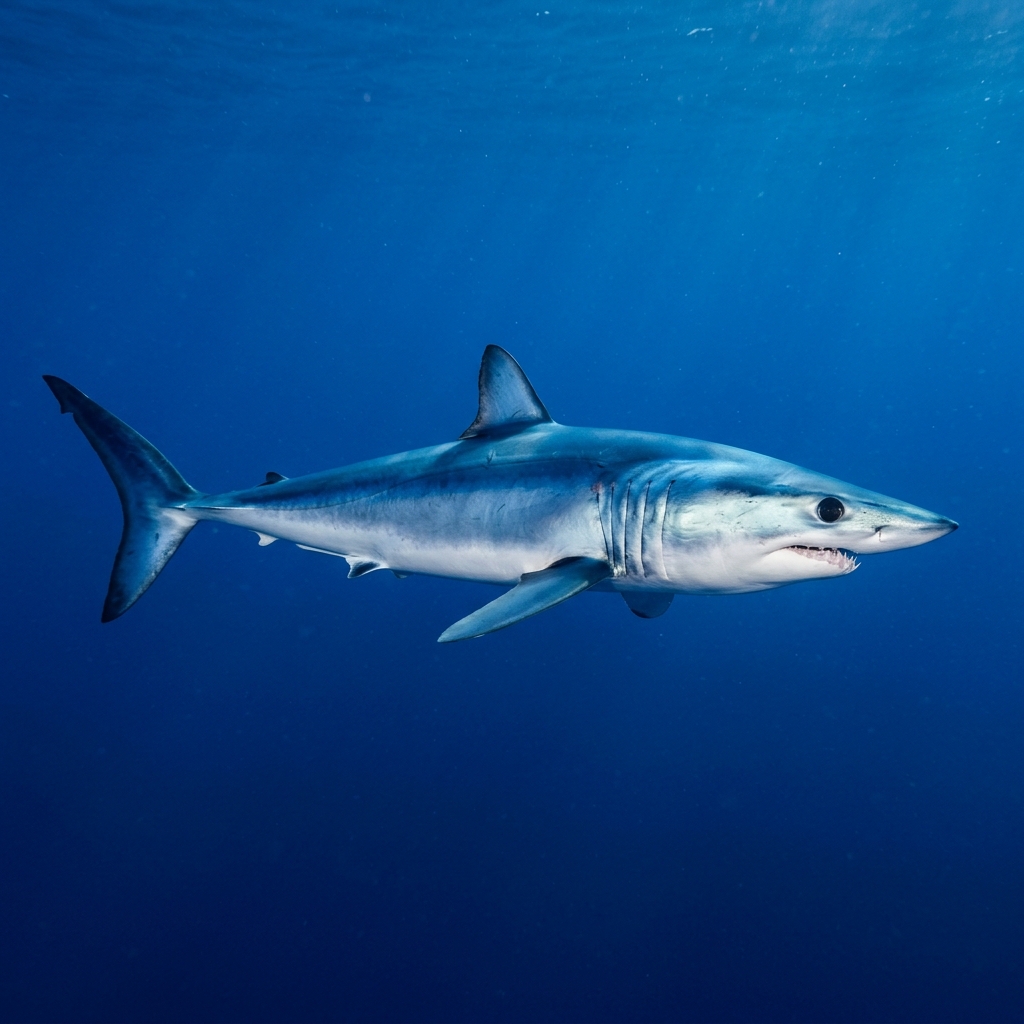
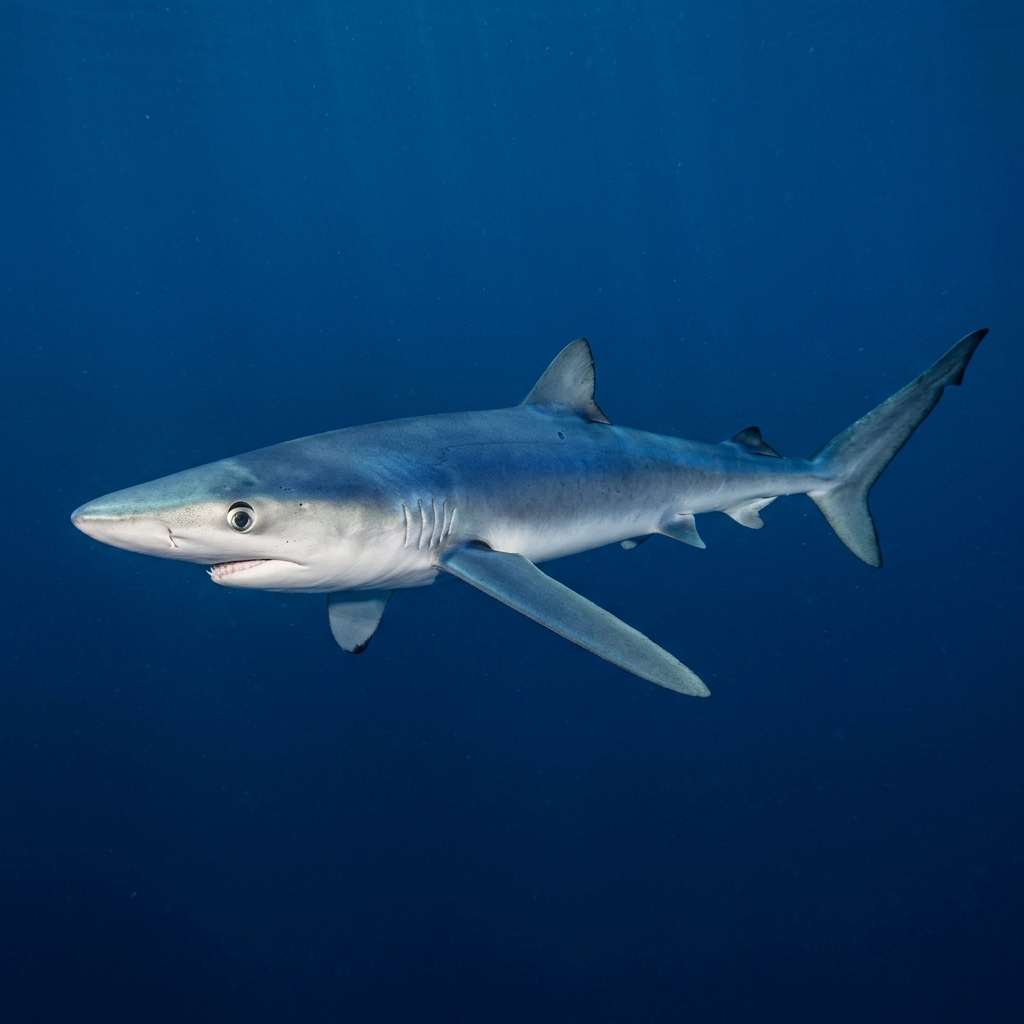
That deep indigo-blue across the back, fading sharply to a bright white belly, is the single strongest field mark underwater. The body is notably slender and elongated compared to most sharks you will encounter, with disproportionately long, narrow pectoral fins that give it an almost graceful, gliding silhouette. At up to roughly 2.8 metres, it is a large animal, but its slim build makes it look lighter than its size suggests. Females carry visible scarring on the flanks and back from mating bites, and are noticeably bulkier and thicker-skinned than the more streamlined males.
Blue sharks are among the more curious sharks a diver is likely to meet in the open ocean; they will often circle at a distance before closing in for a closer look, especially when attracted by chum (fish oils and pieces used to draw wildlife). They are social by nature and are sometimes encountered in loose groups, with aggregations more likely during the mating season when male-female interactions become particularly visible. Encounters are typically unhurried, with the shark making slow, confident passes rather than erratic or aggressive movements.
Blue sharks are highly migratory and follow a clockwise transatlantic circuit in the North Atlantic, meaning the same individuals tagged off the UK coast can later turn up off the eastern United States, one of the longest documented migration loops of any shark species.
There is not enough monthly sighting data to point to a concentrated season, so blue sharks should be treated as year-round targets where the right pelagic conditions exist. Their observed temperature range of roughly 6 to 25 °C covers a broad span, meaning they can be encountered from temperate northern waters in summer through to subtropical zones across different times of year.
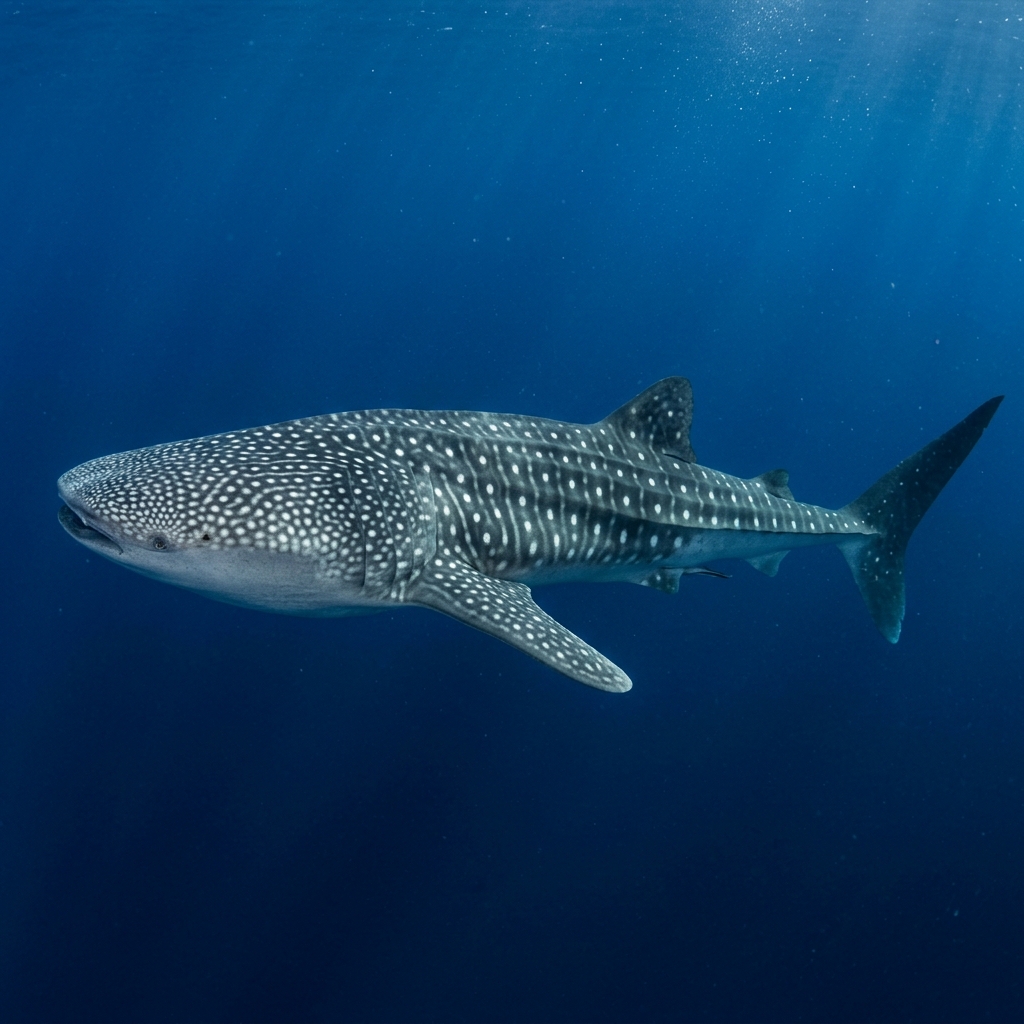
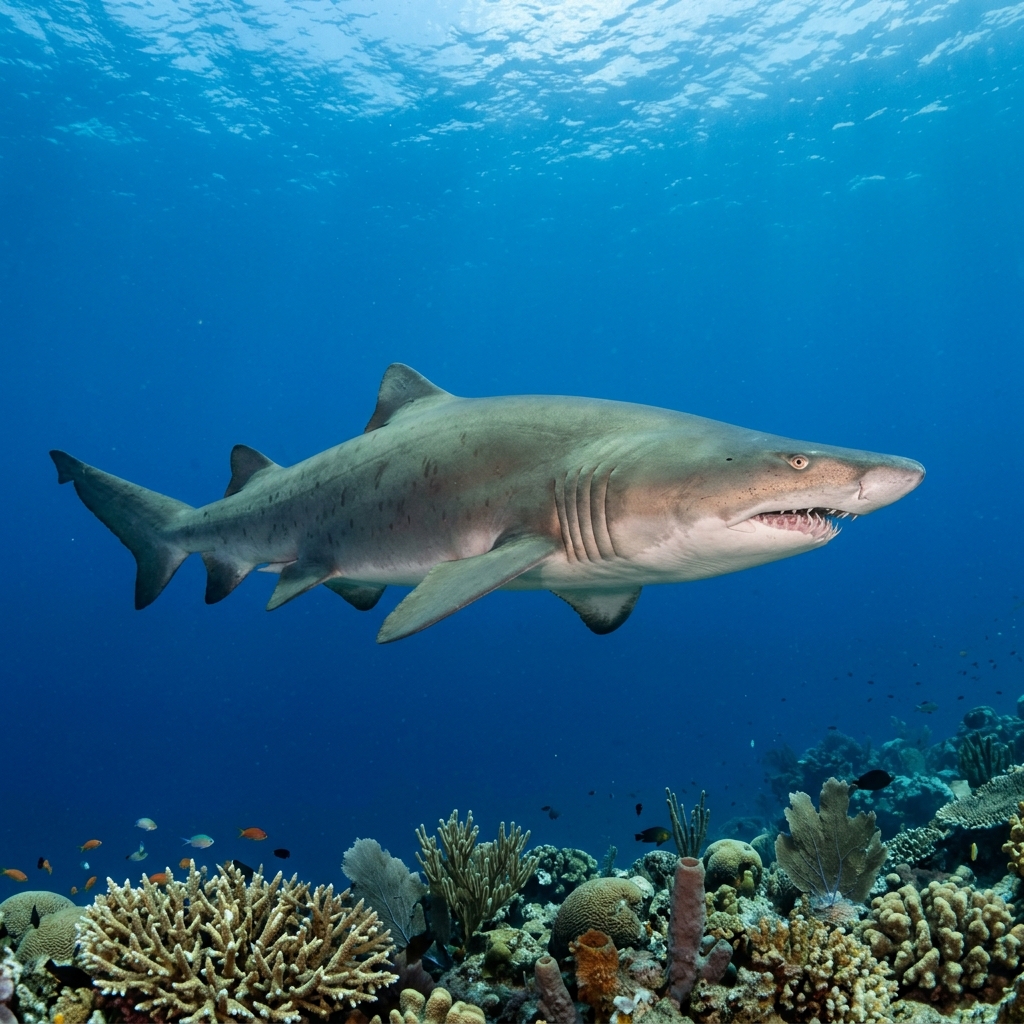
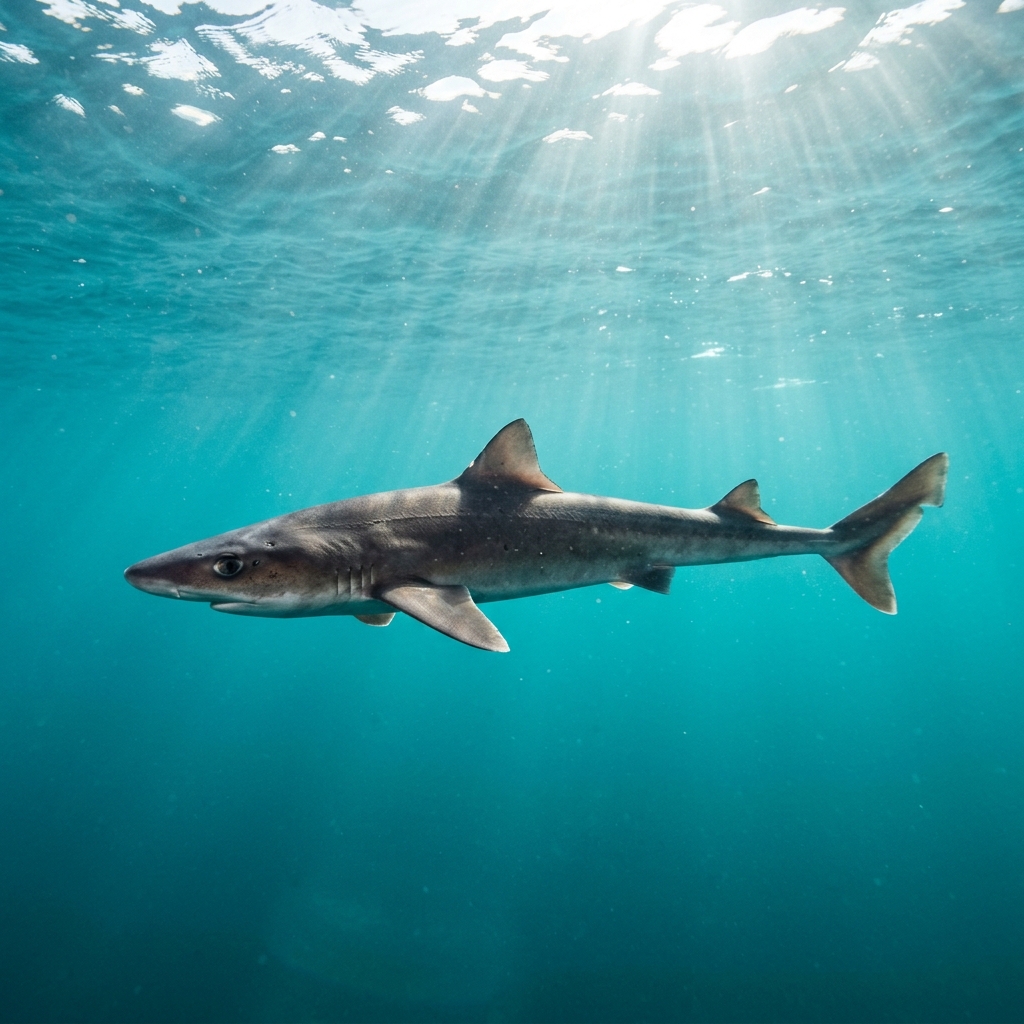
Reef neighbours a diver could mistake it for. Use the identification notes above to tell them apart.
Blue sharks turn up across a wide spread of coastlines, but the most consistently logged sightings come from the United States, particularly off Florida and the northeast Atlantic seaboard. European waters also feature strongly, with records from the United Kingdom, France, and the Mediterranean coasts of Italy, Croatia, and Greece. Open-water pelagic trips run specifically to find them are the most reliable approach, as this is an oceanic species that rarely comes close to shore reefs.
Mapping where Blue Shark is logged…
Pelagic trips off the United States are among the most commonly logged encounters, especially off Florida and the northeast coast. In Europe, the UK runs dedicated bluewater shark dives, and blue sharks also appear in the Mediterranean around Italy, Croatia, and Greece. These are open-ocean animals, so dedicated offshore trips give you the best chance rather than reef dives.
No single peak month stands out from the available sighting data, and their wide temperature tolerance of roughly 6 to 25 °C means they can be present across different seasons depending on the region. In UK waters, summer pelagic trips are the traditional approach; off Florida, encounters are recorded across multiple seasons. Check with local operators for the most current conditions.
They are listed as dangerous, though unprovoked aggression is uncommon. Their typical behaviour is curious circling rather than aggression, but any large shark deserves calm, deliberate conduct in the water. On guided chum dives, follow the operator briefing closely, keep hands close to your body, and avoid erratic movements.
The vivid indigo-blue back contrasting with a crisp white belly is the key mark. Combined with a slender body and unusually long, narrow pectoral fins, the silhouette is quite distinct from most other sharks. The shortfin mako is the most likely mix-up, but makos are stockier, have a more pointed snout, and lack that deep, even blue colouration across the dorsum.
Adults typically reach around 2.8 metres in length. Despite that size, their slim, elongated build means they look lighter and more graceful in the water than a similarly-sized reef shark. Females tend to be bulkier than males.
Blue sharks are currently listed as Near Threatened on the IUCN Red List. They are one of the most heavily fished sharks in the world through bycatch in longline fisheries, and their populations warrant ongoing monitoring. Reporting sightings to citizen-science platforms helps researchers track population trends.
Site and sighting data is aggregated from diver logs, iNaturalist and GBIF. For taxonomy and conservation status:
Tiger Shark
1,616 sites