Diplodus annularis
A small silvery bream with a black tail ring, logged across Catalonia, the French Riviera and Kvarner, mostly as an uncommon find.
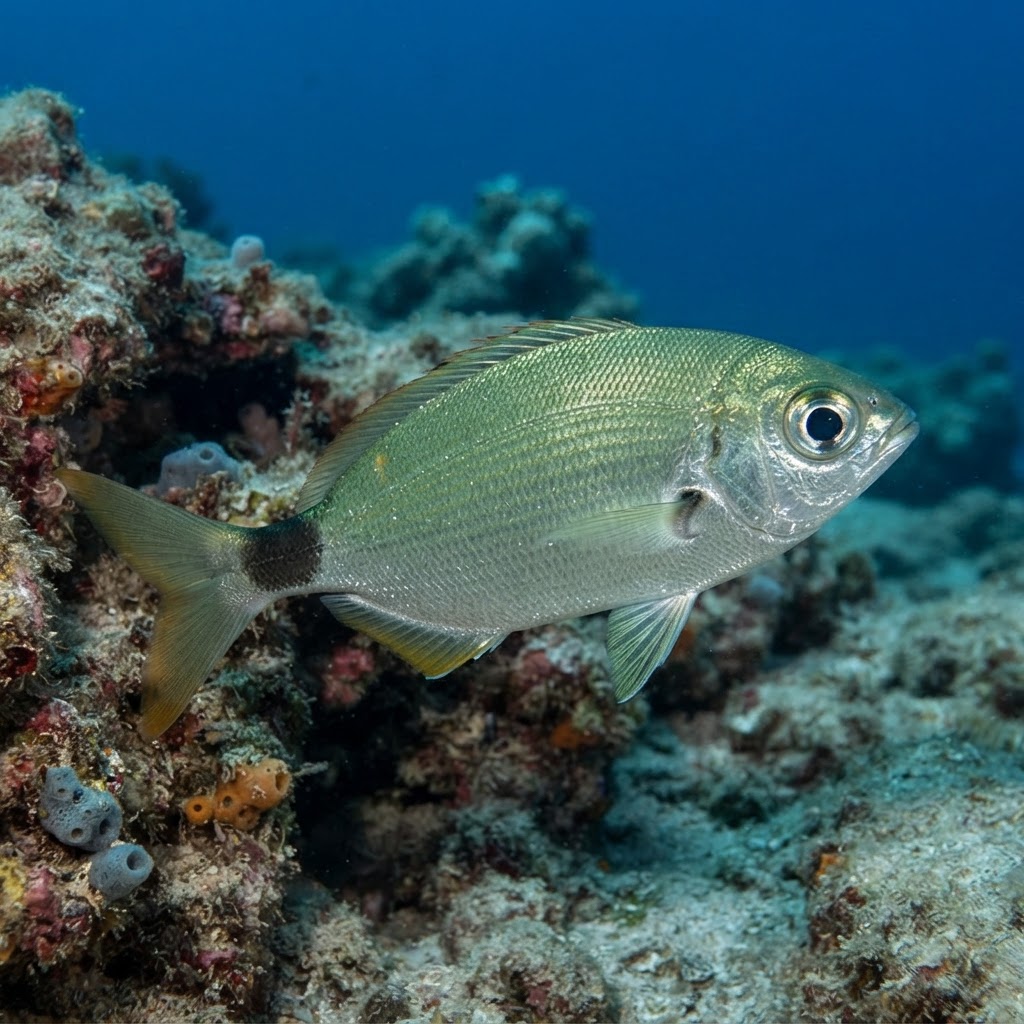
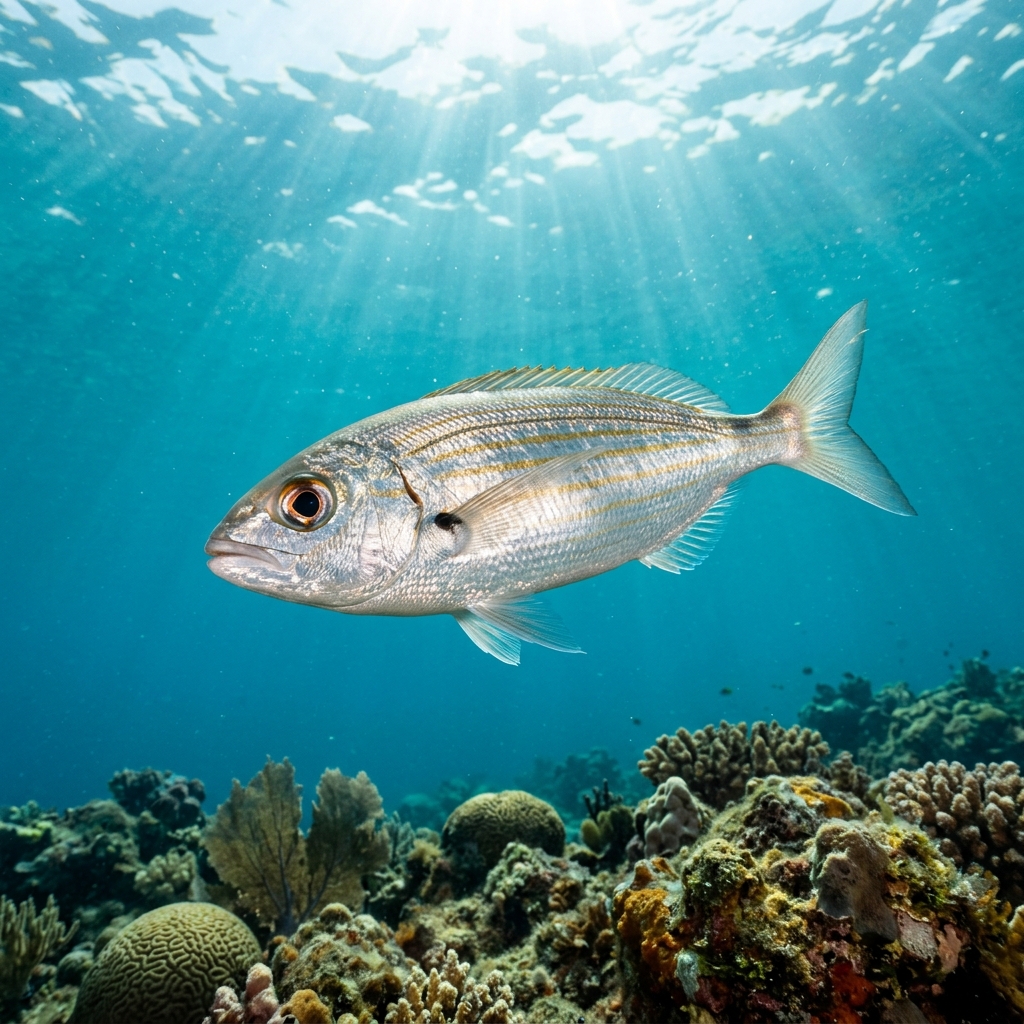
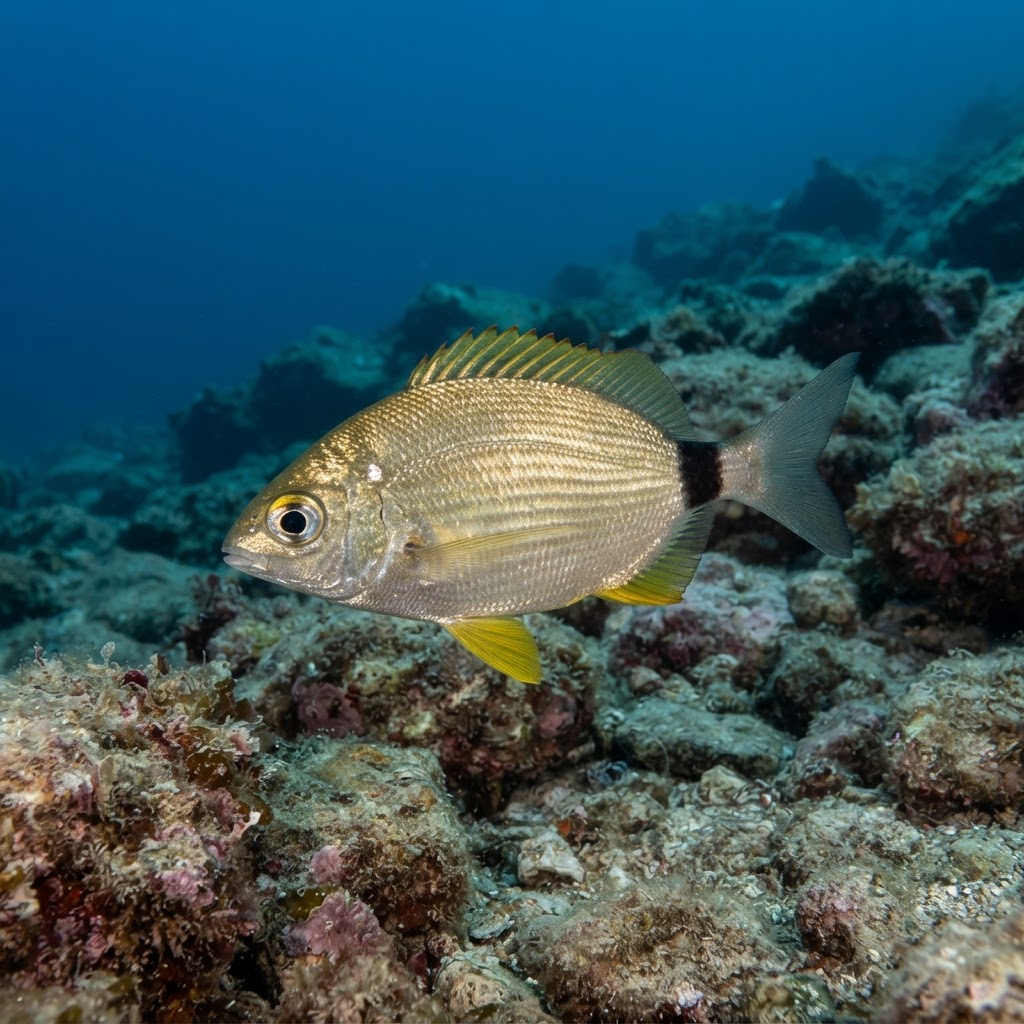
Look for a slim, silvery fish around 19 cm with a faint yellowish tinge and no bold stripes down the flanks. The single clearest mark is a dark, well-defined ring encircling the base of the tail, which is where the common name comes from. Fins are pale and unremarkable, and the body shape is a fairly standard bream oval, so that tail ring is the feature to check before moving on.
Divers typically find small numbers hanging around rocky reefs, seagrass edges and harbour walls rather than in open water, moving in loose, unhurried groups close to the bottom. It doesn't school tightly like some sparids and isn't particularly shy, often continuing to forage over sand or weed patches while divers pass nearby. Most sightings describe it as an uncommon rather than common find, so seeing one usually means a single fish or a small scattered handful rather than a crowd.
It's a protogynous hermaphrodite, meaning individuals typically start life as females and some later switch to male, a trait shared with several other Diplodus seabreams.
There's no strong seasonal signal in the sightings, and the water-temperature range it tolerates (roughly 15 to 21 C) spans much of the Mediterranean diving calendar, so it's reasonable to treat this as a year-round sighting rather than a seasonal one.
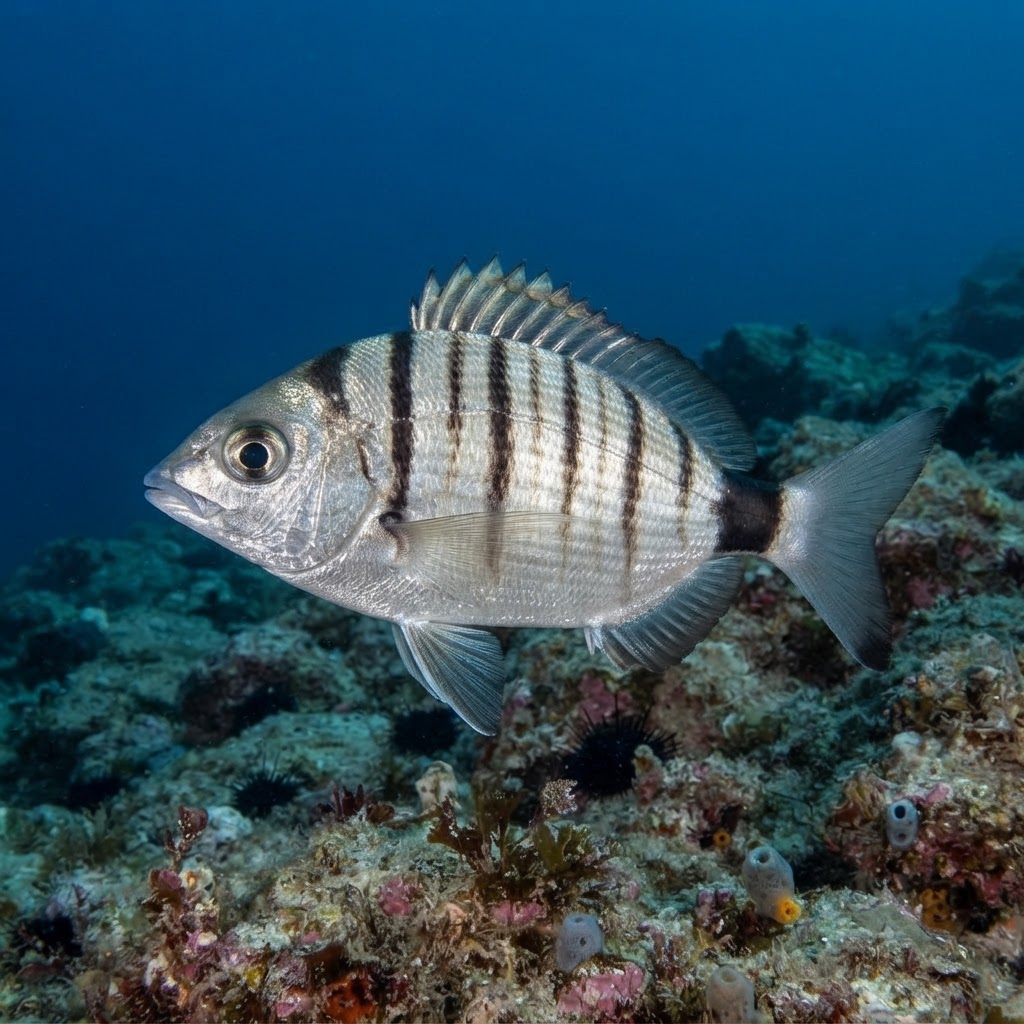
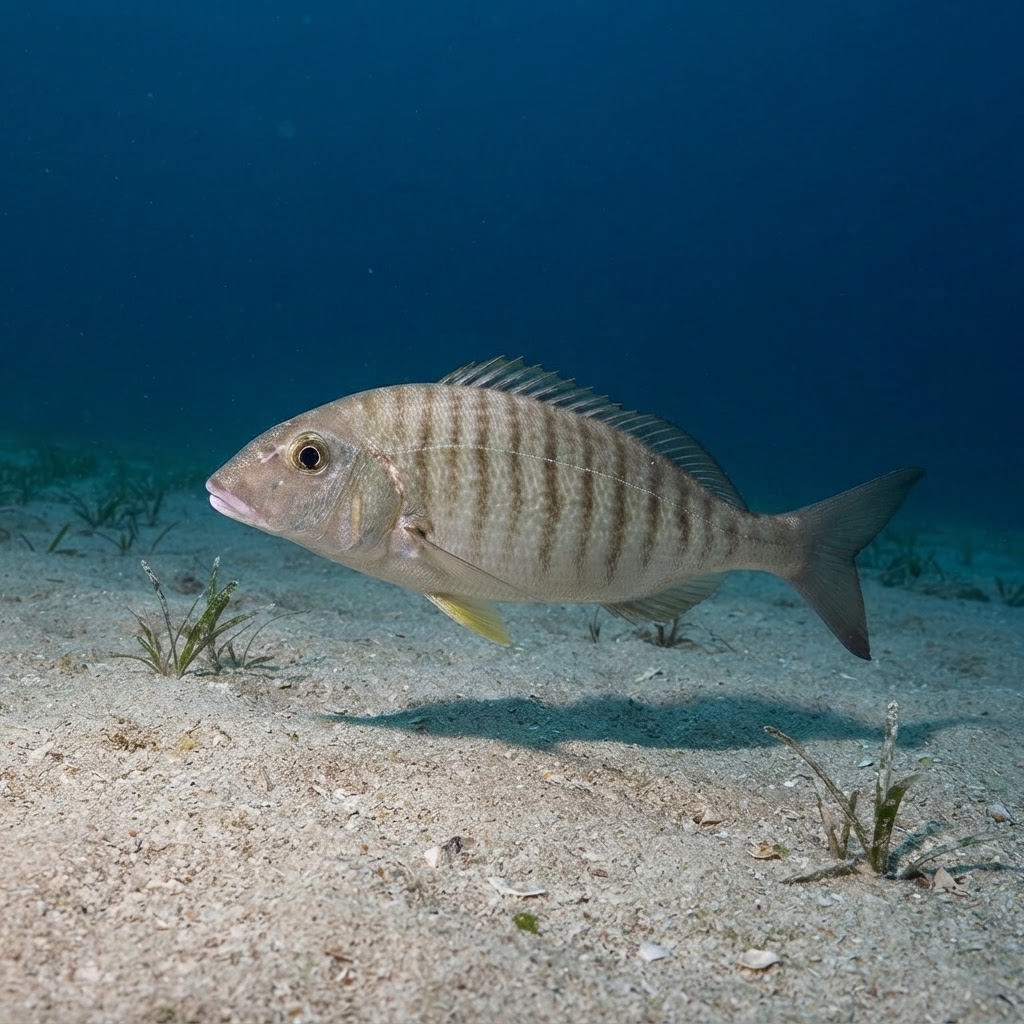
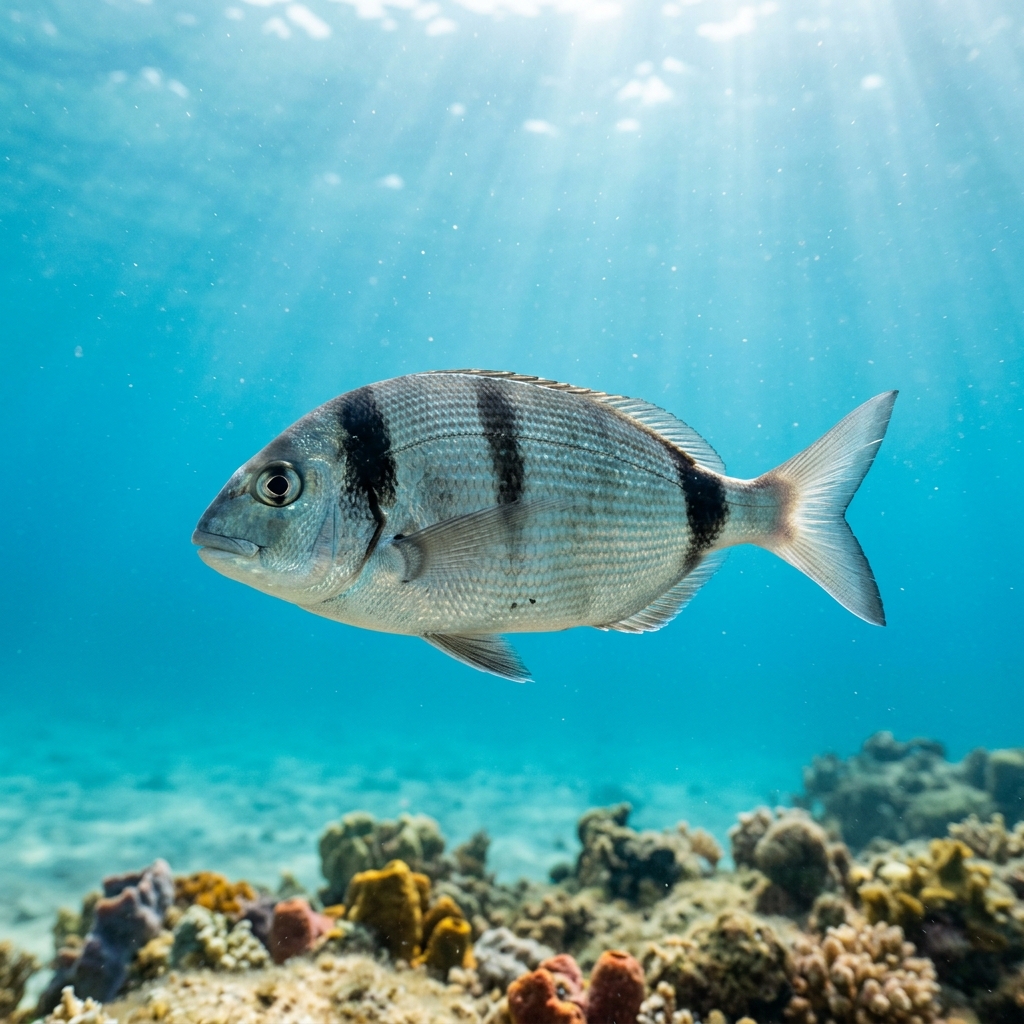
Reef neighbours a diver could mistake it for. Use the identification notes above to tell them apart.
This is a Mediterranean regular, most often logged in Spain and France, with Catalonia and Murcia on the Spanish side and the French Riviera and Provence and Corsica on the French side standing out as strongholds. It also turns up reliably in Croatia's Kvarner region, the Ionian Islands in Greece, Liguria in Italy and around Malta, usually over rocky or mixed sandy-rocky bottoms in shallow to moderate depths.
Mapping where Annular Seabream is logged…
It's most reliably seen in the western and central Mediterranean, particularly Catalonia and Murcia in Spain and the French Riviera, Provence and Corsica in France. Croatia's Kvarner region, Greece's Ionian Islands, Liguria in Italy and Malta also produce regular sightings.
There isn't a clear seasonal pattern in the sighting data, and its comfortable temperature range covers most of the Mediterranean dive season, so it can turn up on any dive there year-round.
Check for a small, slim, silvery bream around 19 cm with a distinct dark ring circling the base of the tail. It lacks the bold vertical stripes of some relatives, which helps rule out lookalikes quickly.
They're a small sparid, typically reaching around 19 cm in length, noticeably smaller than many of their bream relatives on the same reefs.
It's a protogynous hermaphrodite, starting life as female with some individuals later changing sex to male, a reproductive strategy it shares with several close relatives in the Diplodus genus.
Site and sighting data is aggregated from diver logs, iNaturalist and GBIF. For taxonomy and conservation status:
Saddled Bream
3,846 sites