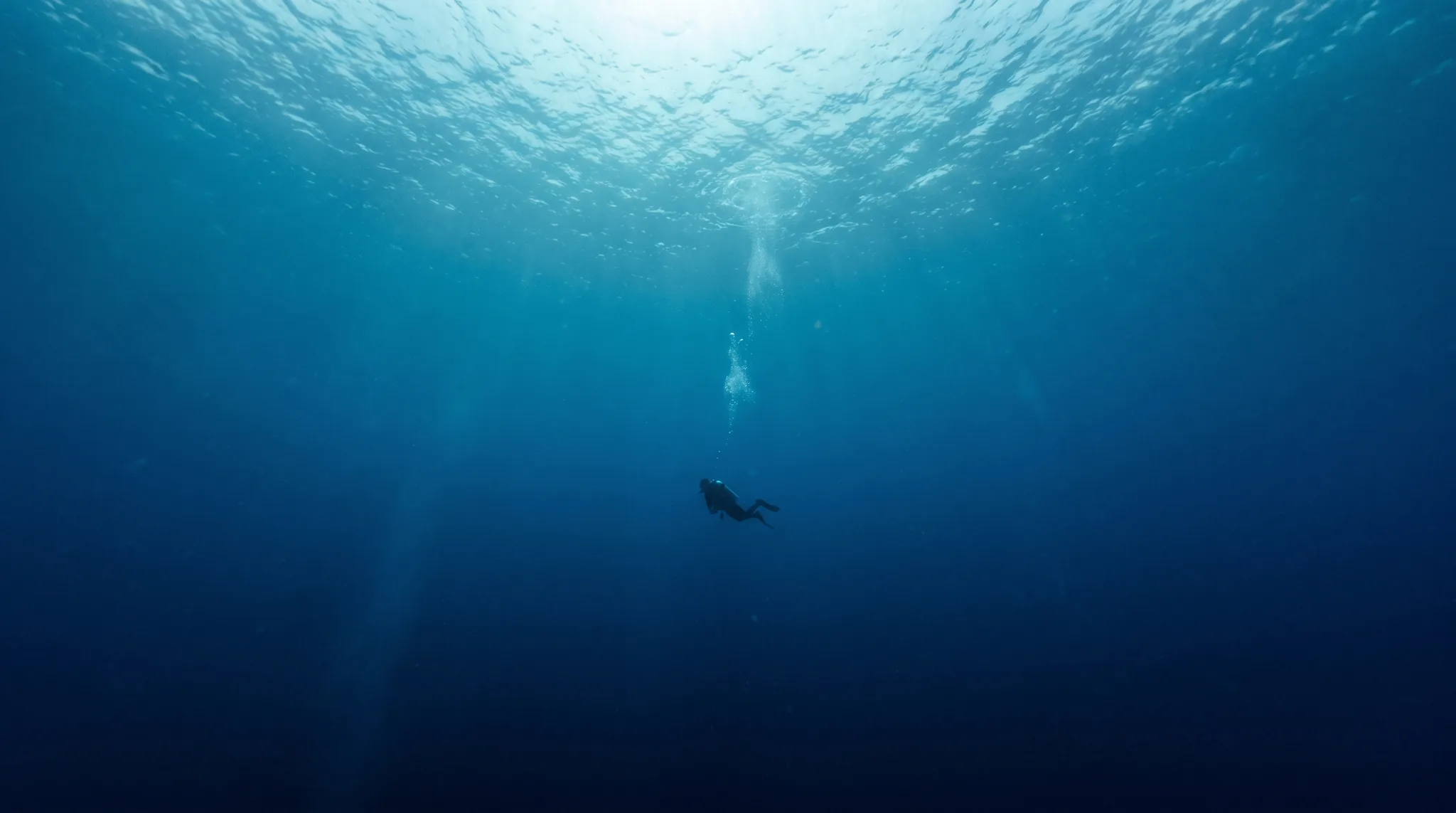
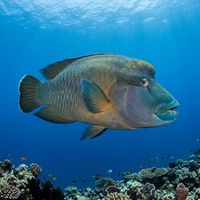
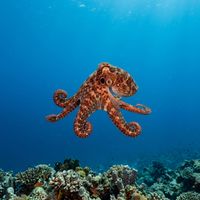
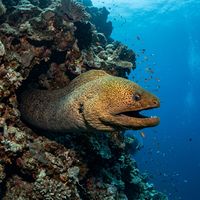
Baa Atoll is defined by its concentration of thilas, those submerged pinnacles and reef structures that generate the strong currents most sites here are built around. Dhigali Haa anchors the largest cluster of sites, offering drop-offs and canyons at depth. Dharavandhoo Channels and Hanifaru Bay each draw divers for distinct reasons: channelled drift conditions on one hand, and aggregation events on the other. Marine life runs to Napoleon Wrasse, Giant Moray, Day Octopus, and occasional Whale Shark encounters. Nearly all sites are boat-accessed.
5 areas

Monthly water temperature across Baa Atoll's sites, from satellite sea-surface data corrected for depth. The band shows the site-to-site spread.
Water temperature stays warm throughout the year, with a slight peak around late spring, making thermal comfort a constant rather than a seasonal concern. The best-months data points clearly toward a long productive window running from late spring through to mid-autumn, when conditions at current-driven thilas tend to be most reliable. Divers planning around aggregation events at Hanifaru Bay should target this period in particular.
17 operators
Open Stage, Maldives
16 more sites to explore
A compact Baa Atoll diving area combining pinnacles, canyons, drift dives, and a blue hole chimney, with reliably rich reef fish life.
Water temperature around Baa Atoll ranges from about 28°C in January to 30°C in April, based on satellite sea-temperature data for its dive sites.
With water around 28–30°C, a rash guard or 3mm shorty works in Baa Atoll year-round.
Fin maps 28 sites in Baa Atoll (27 scuba diving sites and 6 snorkelling spots, with some suited to both), organised into 5 areas.
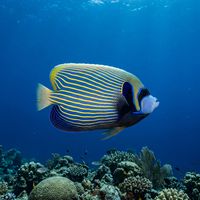
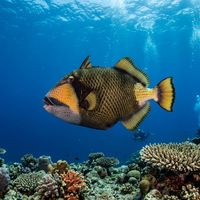
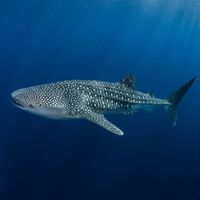
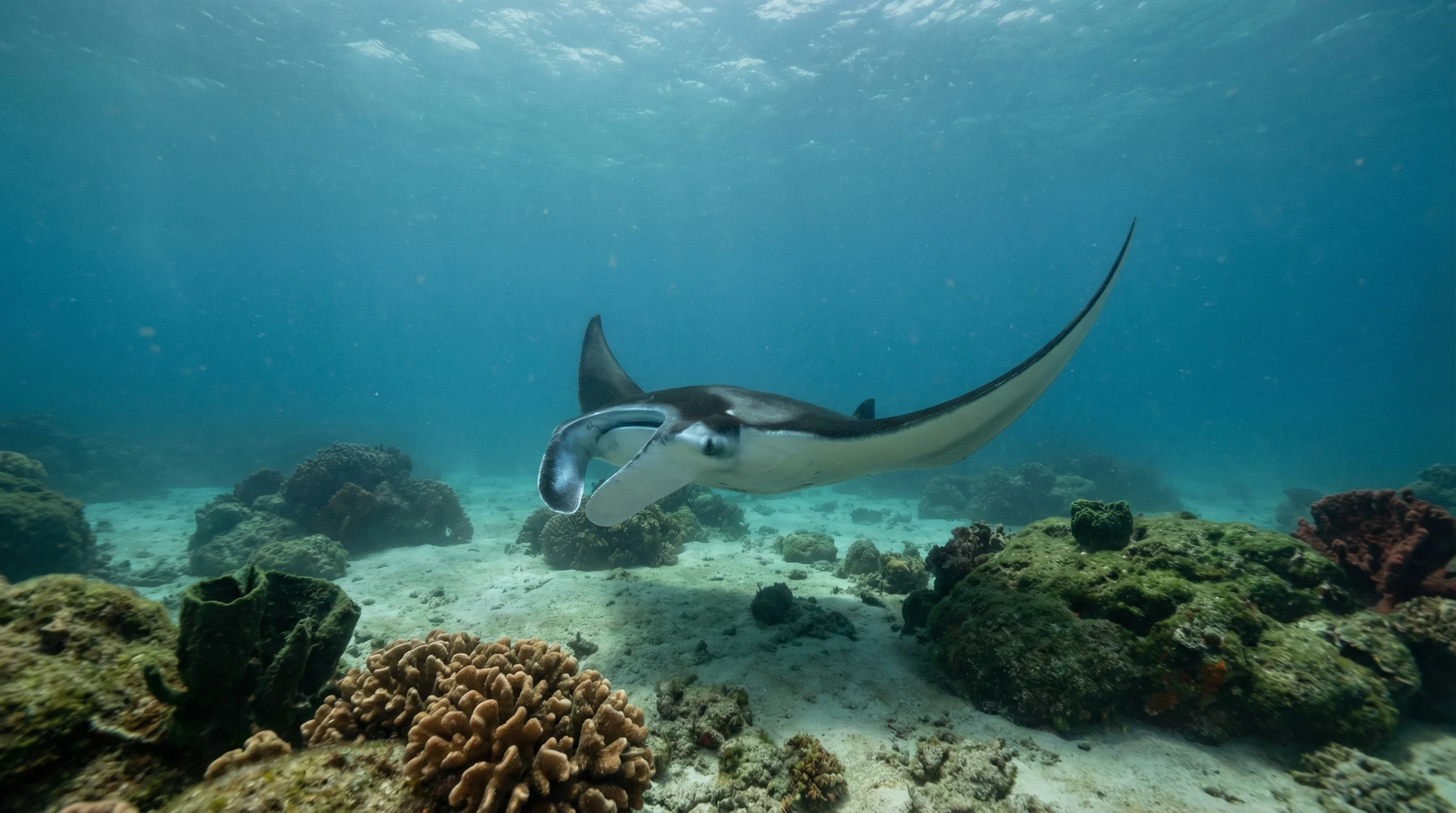
Observation-backed records from across the atoll include Napoleon Wrasse, Spotted Eagle Ray, and Whale Shark, alongside signature species such as Emperor Angelfish and Peacock Mantis Shrimp. Giant Moray and Day Octopus are among the most consistently encountered animals across sites. Green Sea Turtle is also listed as a signature species for the atoll.
Yes, several sites are rated beginner level, including Kumadu, Maalhos Manta Point, and Maalhos House Reef. Maalhos House Reef is notably the only shore-entry site in the top-site list, offering a sheltered introduction to atoll diving. The majority of sites, however, are rated intermediate and involve drift conditions or deeper terrain.
Dhigali Haa has the highest concentration of sites and is characterised by deep pinnacles, drop-offs, and canyons. Dharavandhoo Channels focuses on current-driven channel diving, while Goidhoo and Nelivaru and Maalhos each offer a smaller cluster of reef and pinnacle sites. Hanifaru Bay stands apart as a single, specialist site associated with aggregation diving.
Almost all diving in Baa Atoll is boat-accessed, which is typical of atoll diving where sites are spread across open water between reef structures. Maalhos House Reef is the exception, accessible directly from shore. Operators including Manta Tribe Maldives, Dharavandhoo Divers, and Manta Nomad Divers are based in the atoll and run regular boat trips to the main sites.