Scarus rubroviolaceus
Spot Redlip Parrotfish on reefs across the Maldives, Philippines and Hawaii. Learn the red-tinged beak and lip markings that set it apart.
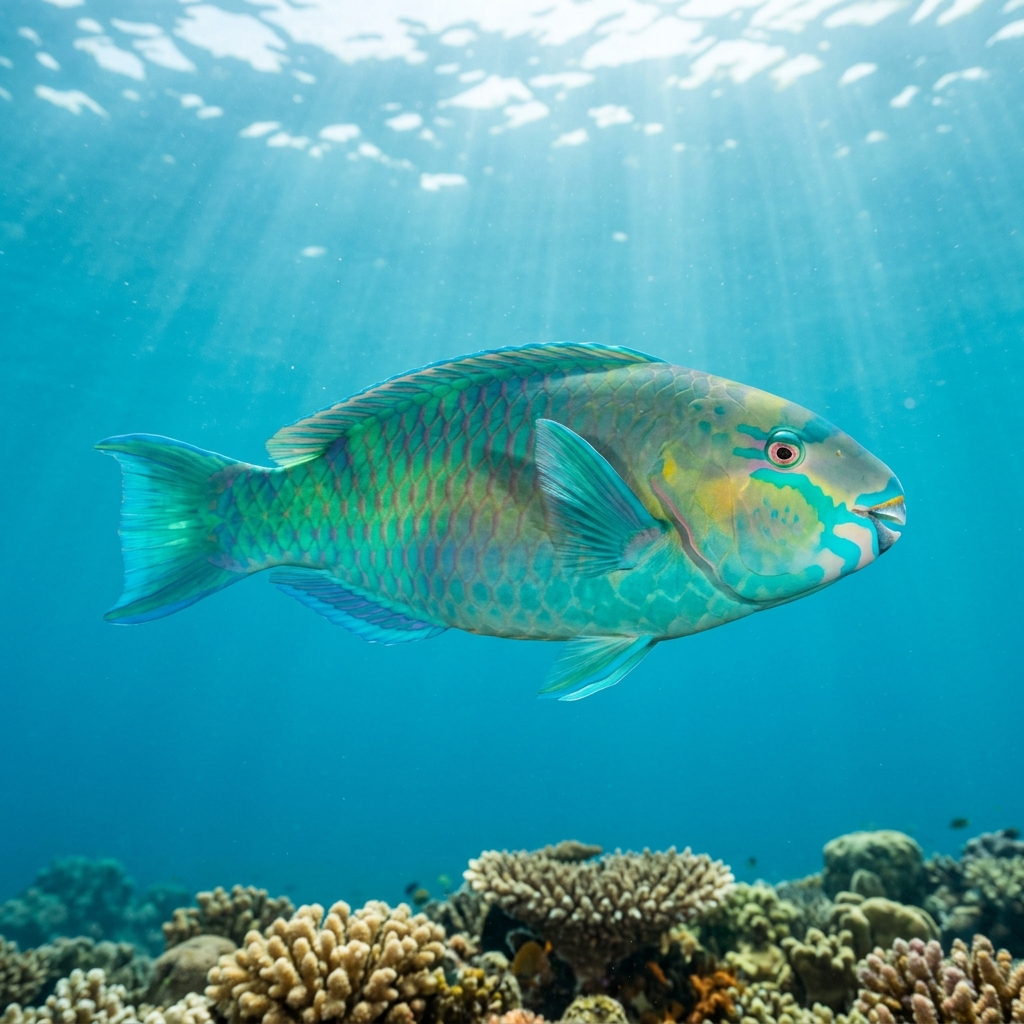
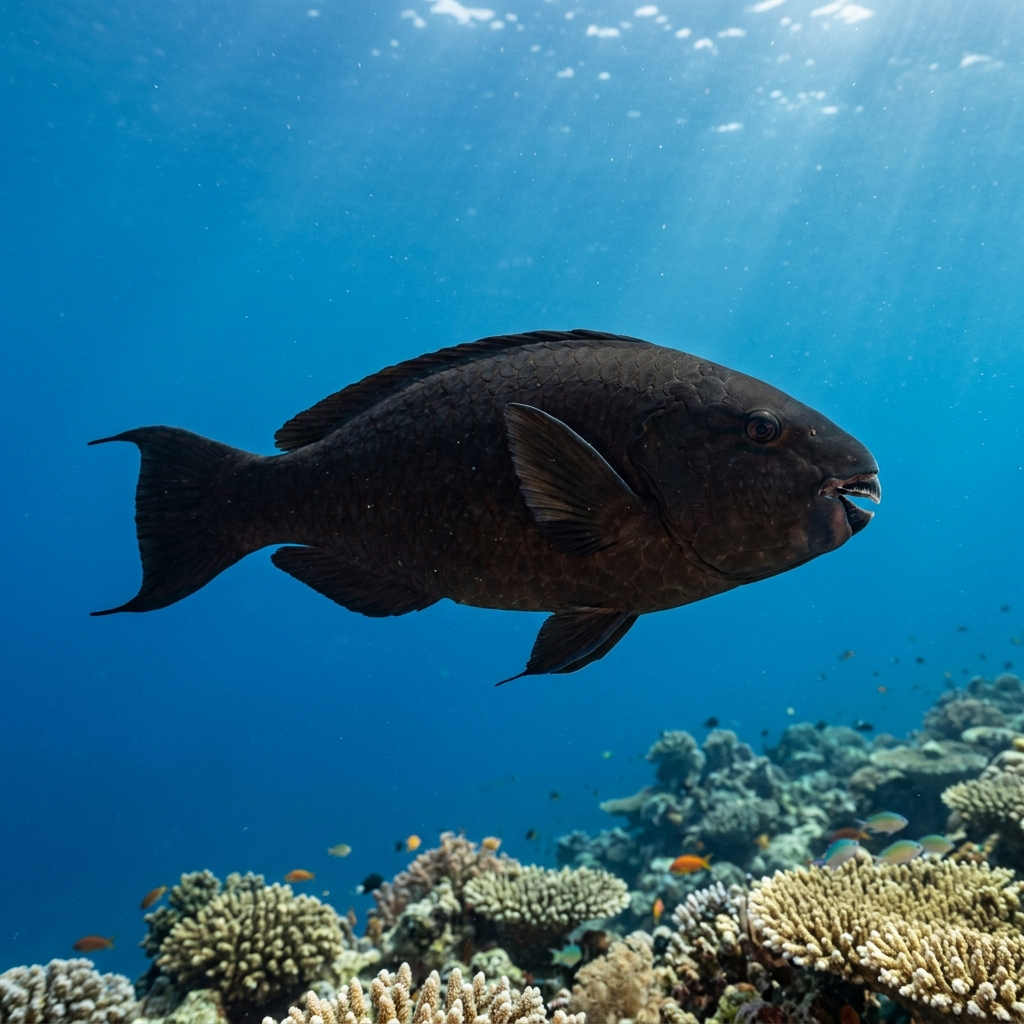
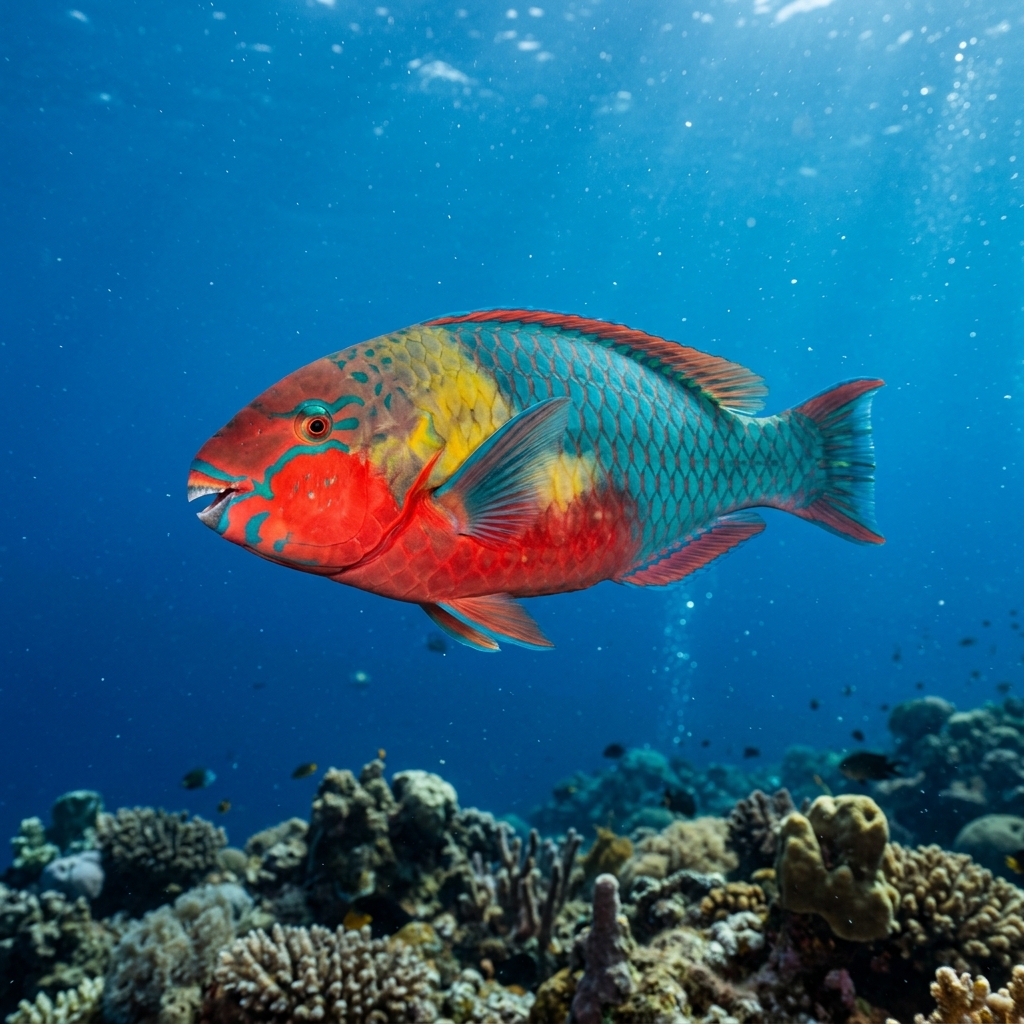
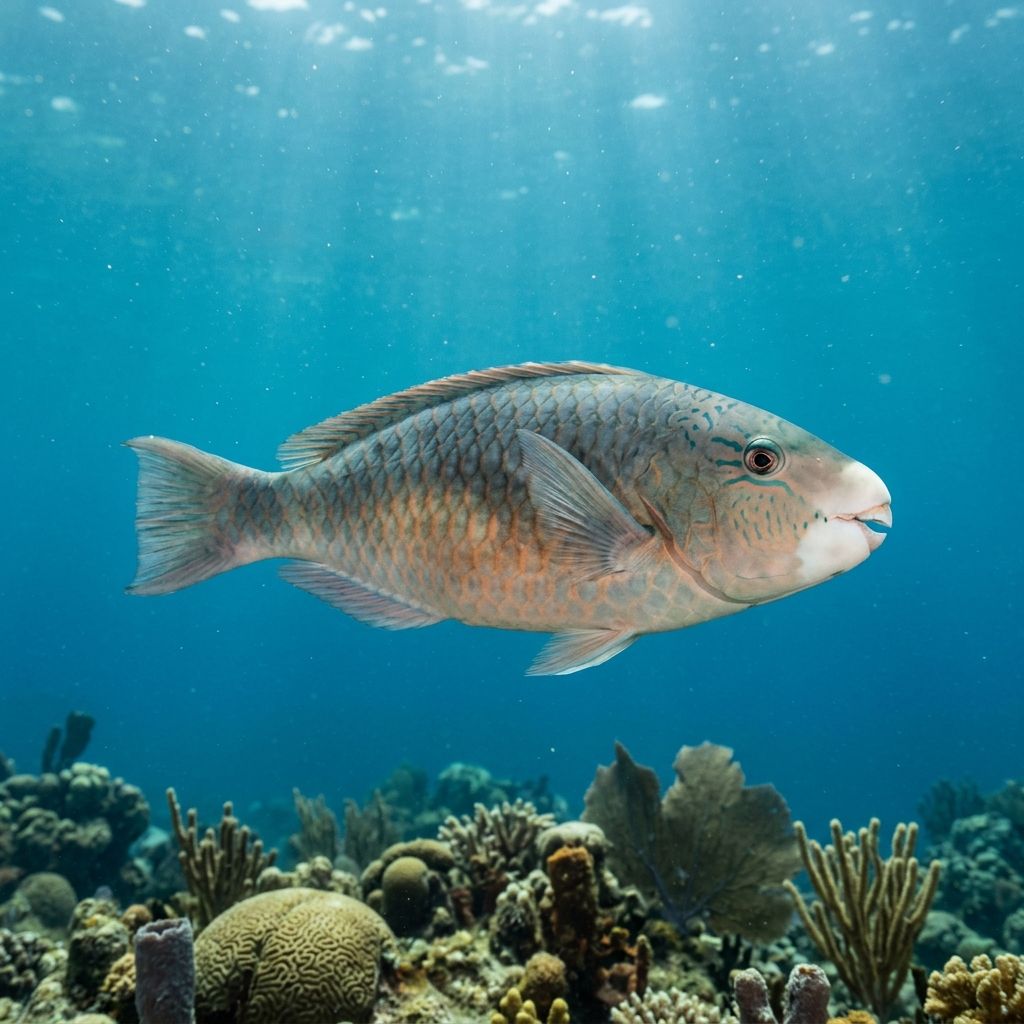
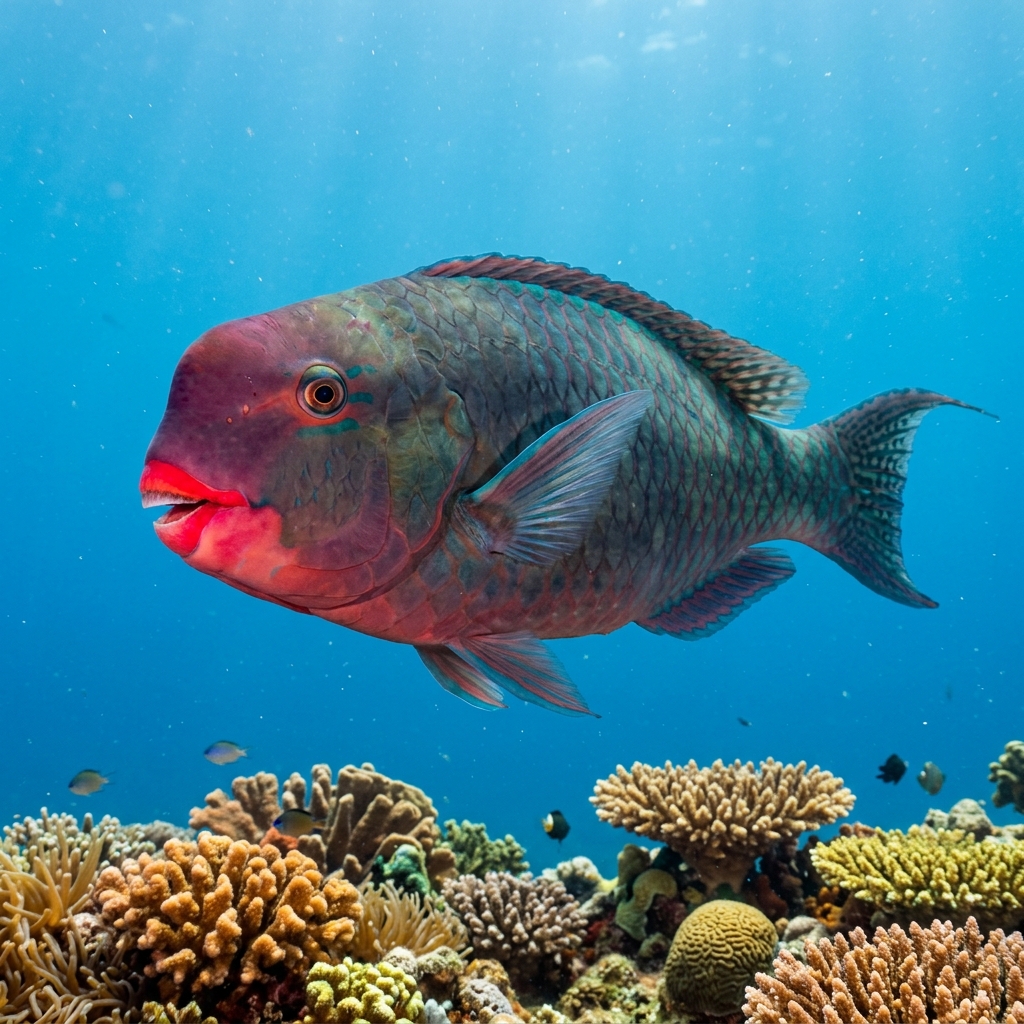
Look for a mid-sized parrotfish, around 50 cm, with the key field mark that earns its name: reddish or pinkish colouration around the beak and lips, visible even from a few metres away. Terminal-phase (dominant) males are blue-green with prominent scale edging, while initial-phase fish, including females, run a duller brownish-red. The fused beak, shared with all parrotfish, is plain-coloured rather than patterned, which helps separate it from some relatives.
Redlip Parrotfish are active grazers throughout daylight hours, scraping algae from reef surfaces with their fused beaks, a habit that produces a clearly audible crunching sound underwater and is one of the most satisfying things to witness close up. They are relaxed around divers and snorkellers, typically carrying on feeding even when approached at close range. Look for them in shallower sections of the reef where algal growth is dense, and watch for the small clouds of sediment they spit out as they process coral rubble.
All that scraping adds up: parrotfish like this species are among the most significant producers of reef sand, breaking down coral rock as they feed and excreting fine white sediment. A single large parrotfish can produce hundreds of kilograms of sand per year.
Northern Hemisphere sightings concentrate between October and June, so the cooler, calmer season across Indo-Pacific destinations is your best bet. The species sits comfortably in water from around 25 to 29 °C, meaning tropical reef sites hold it for much of the year.
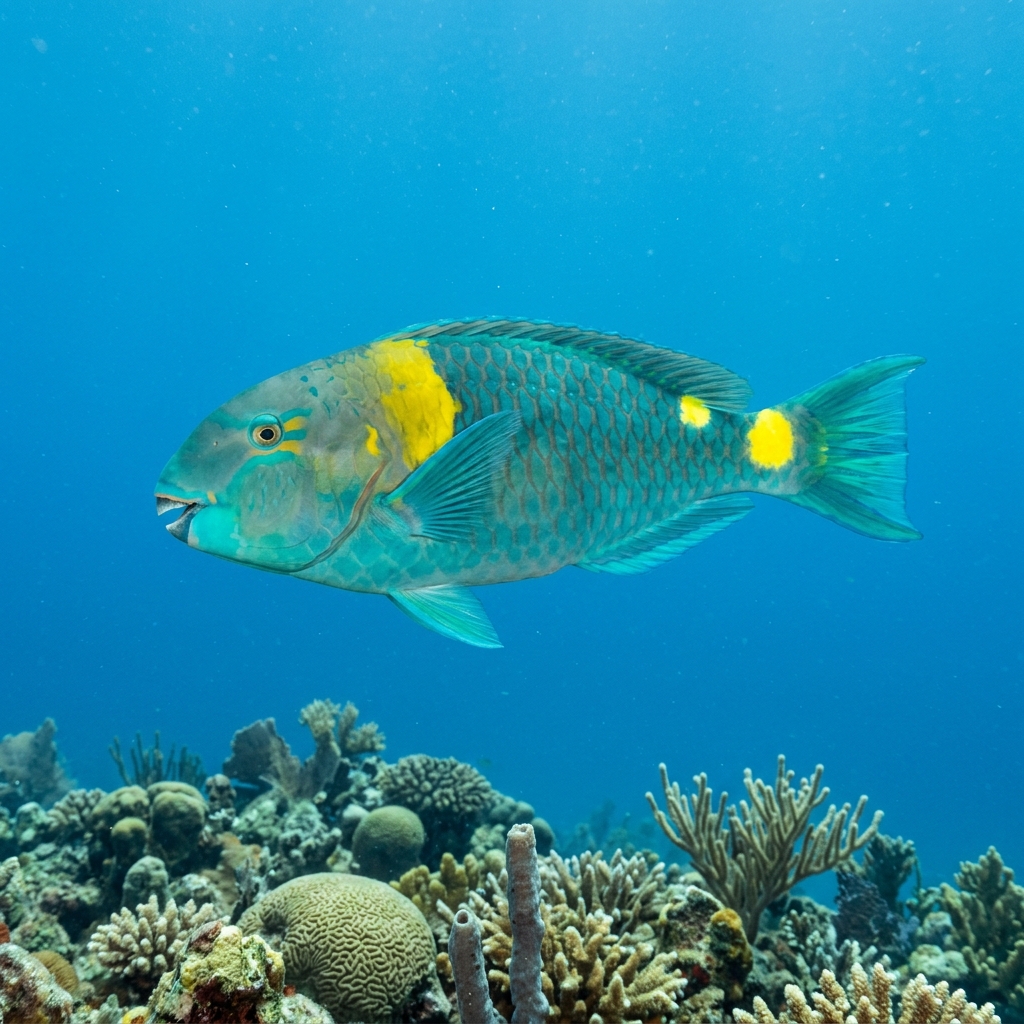
Reef neighbours a diver could mistake it for. Use the identification notes above to tell them apart.
Redlip Parrotfish are most commonly logged in the Maldives, where sightings are spread across the Male and Ari Atolls, North and Central Atolls, and Felidhoo regions. Indonesia, the Philippines, and Thailand are also strong destinations, with Phuket and Phi Phi and the Andaman North coast both well-represented. Further afield, Hawaiian reefs and Queensland's waters round out the best-documented locations.
Mapping where Redlip Parrotfish is logged…
The Maldives, particularly the Male and Ari Atolls, is by far the most commonly logged destination. Strong sightings are also recorded in Indonesia, the Philippines, Thailand's Andaman coast, Hawaii, and Queensland, Australia.
In Northern Hemisphere destinations, October through June captures the peak of sightings. The species favours water temperatures of roughly 25 to 29 °C, so it is present on tropical reefs for much of the year, with the calmer dry seasons often producing the clearest viewing conditions.
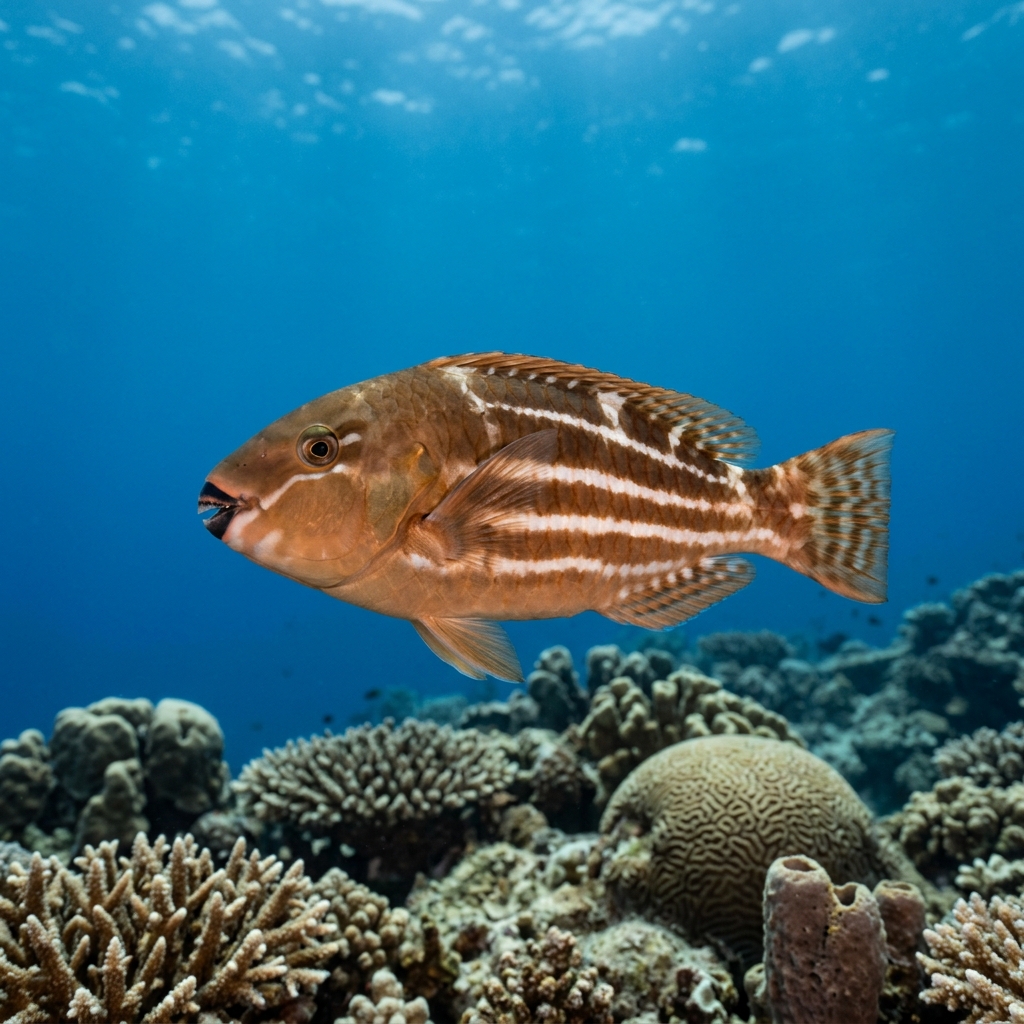
Focus on the reddish or pinkish colouration around the beak and lips, that mark is the quickest field clue. Males are blue-green with defined scale edging; females and initial-phase males run brownish-red. Juveniles look completely different, being brown with white horizontal stripes.
Adults typically reach around 49 to 50 cm in length. That puts them in the mid-size range for parrotfish, noticeably smaller than giants like the Bumphead Parrotfish but a solid, chunky fish that is easy to spot on the reef.
They are herbivores that graze algae directly off rock and coral surfaces using their fused, beak-like teeth. In doing so they also ingest coral skeleton, which they grind up and excrete as fine sand, making them a key contributor to the sediment you find on tropical reef flats.
No. They are not aggressive towards divers or snorkellers and are not considered dangerous. Their strong beaks are built for scraping rock, not for defence, and they will almost always ignore you and carry on feeding.
Site and sighting data is aggregated from diver logs, iNaturalist and GBIF. For taxonomy and conservation status:
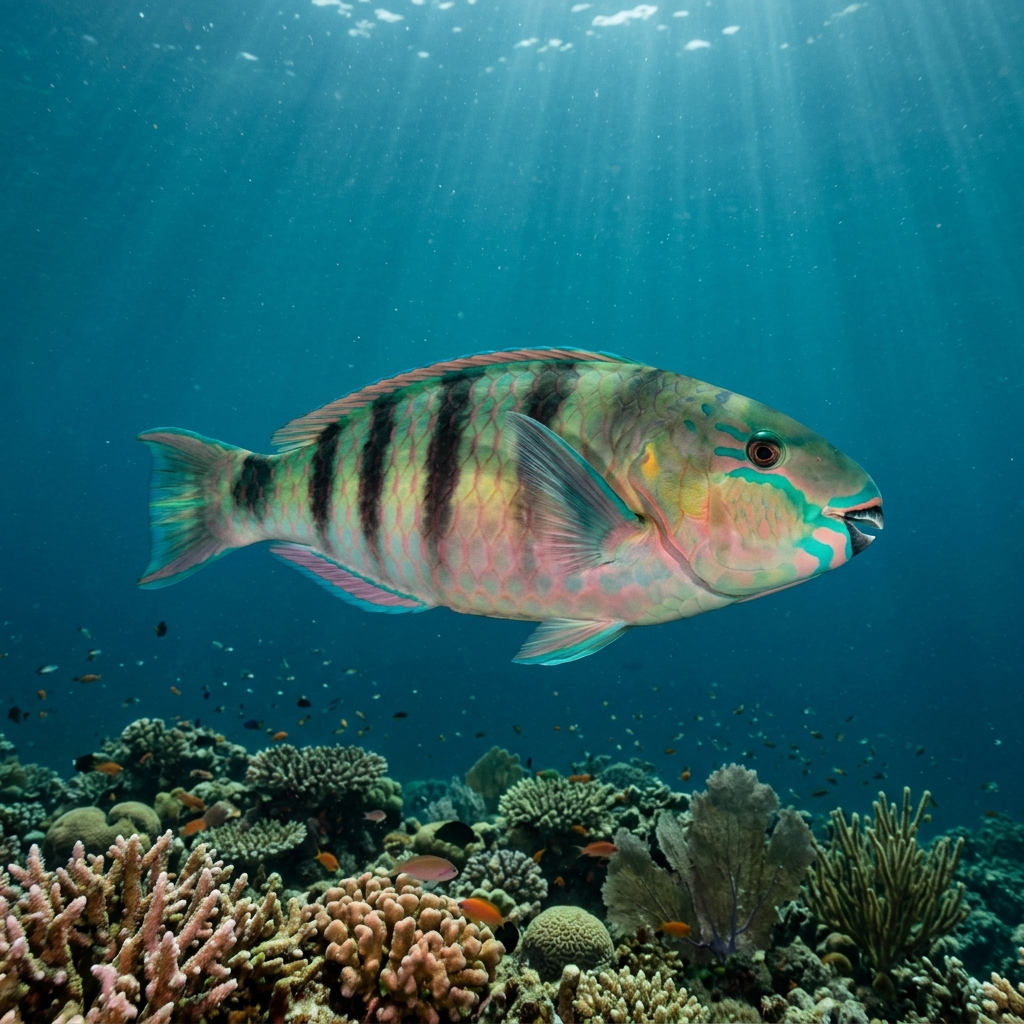
Sixband Parrotfish
2,380 sites