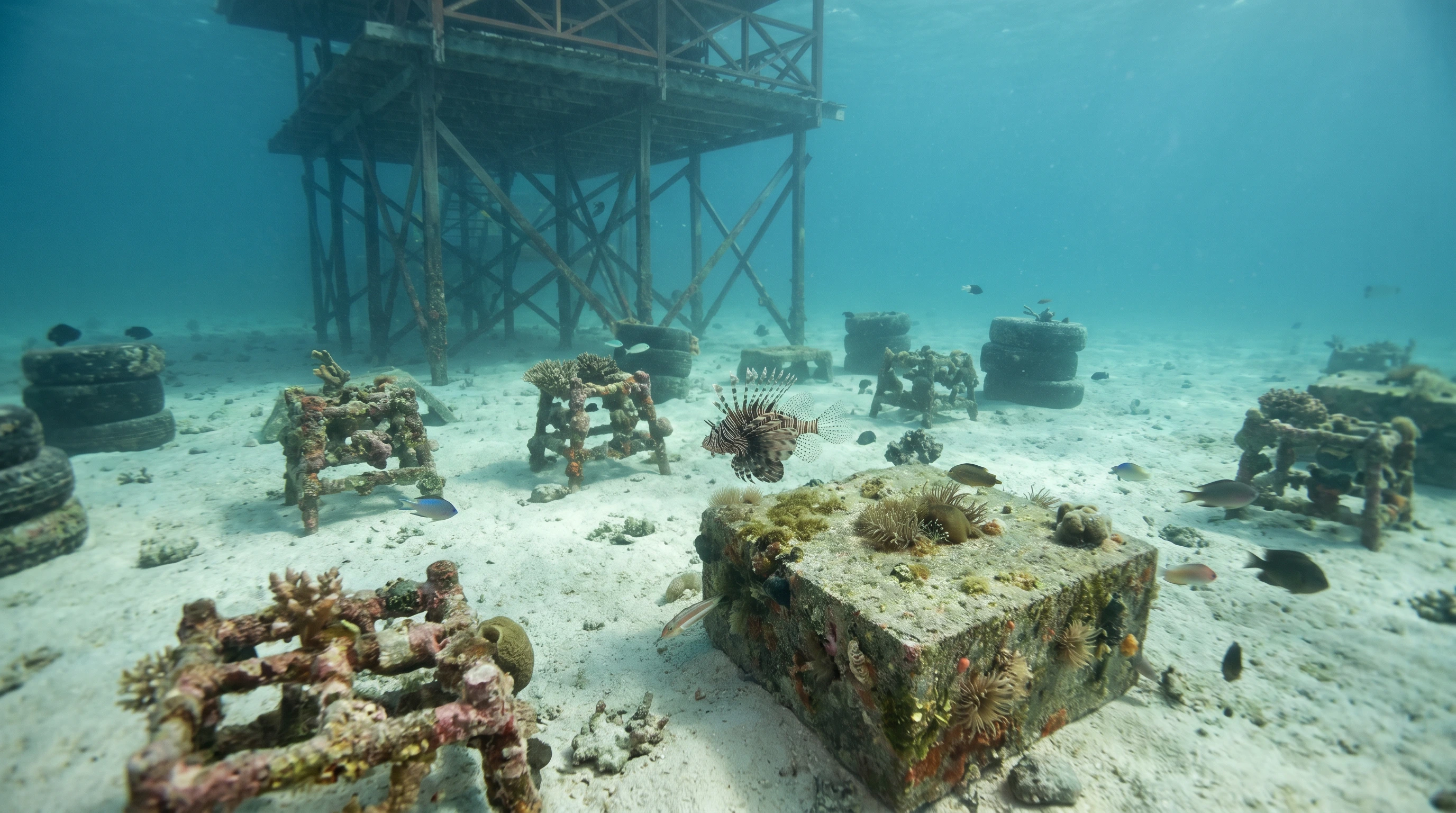
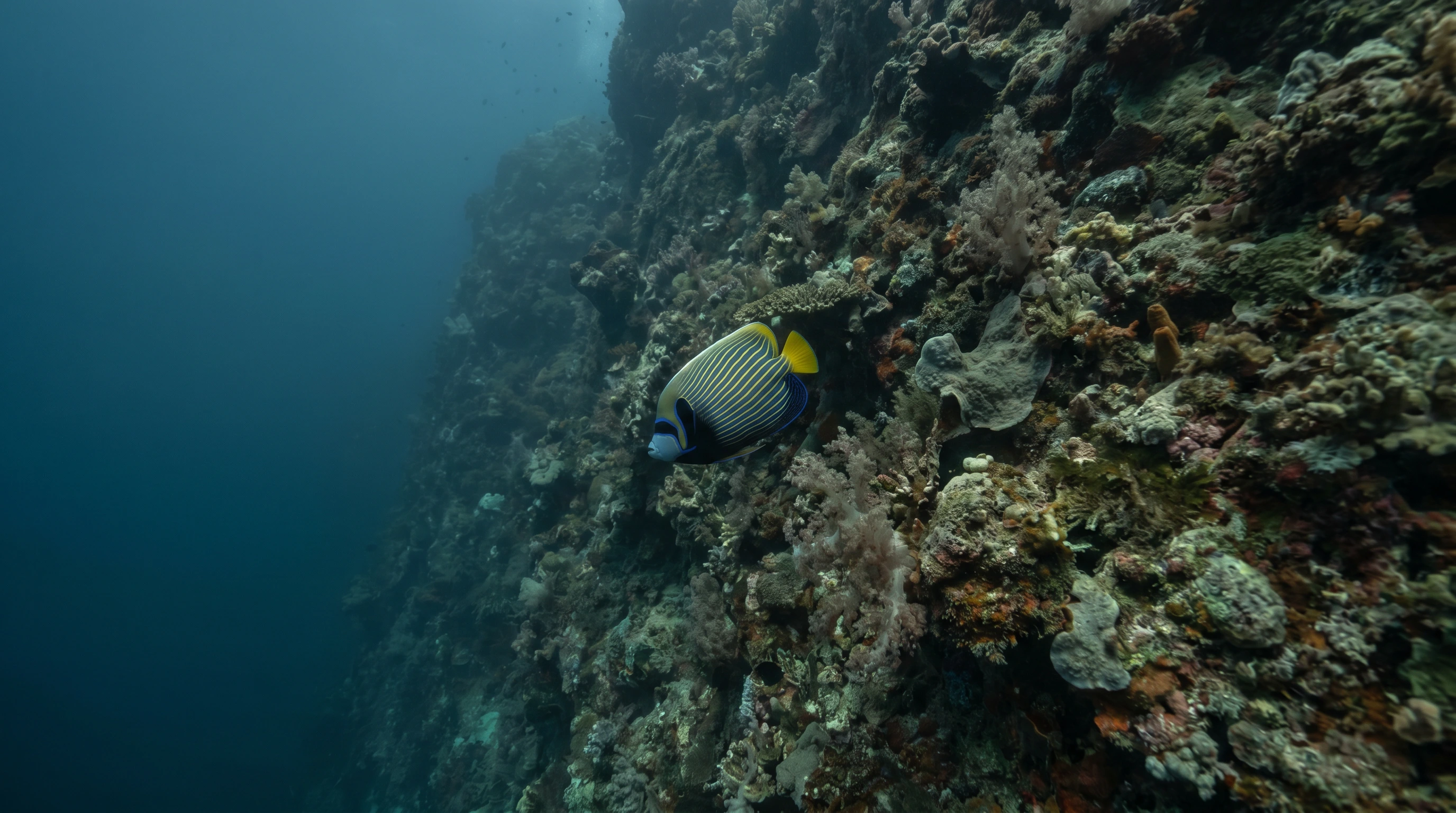
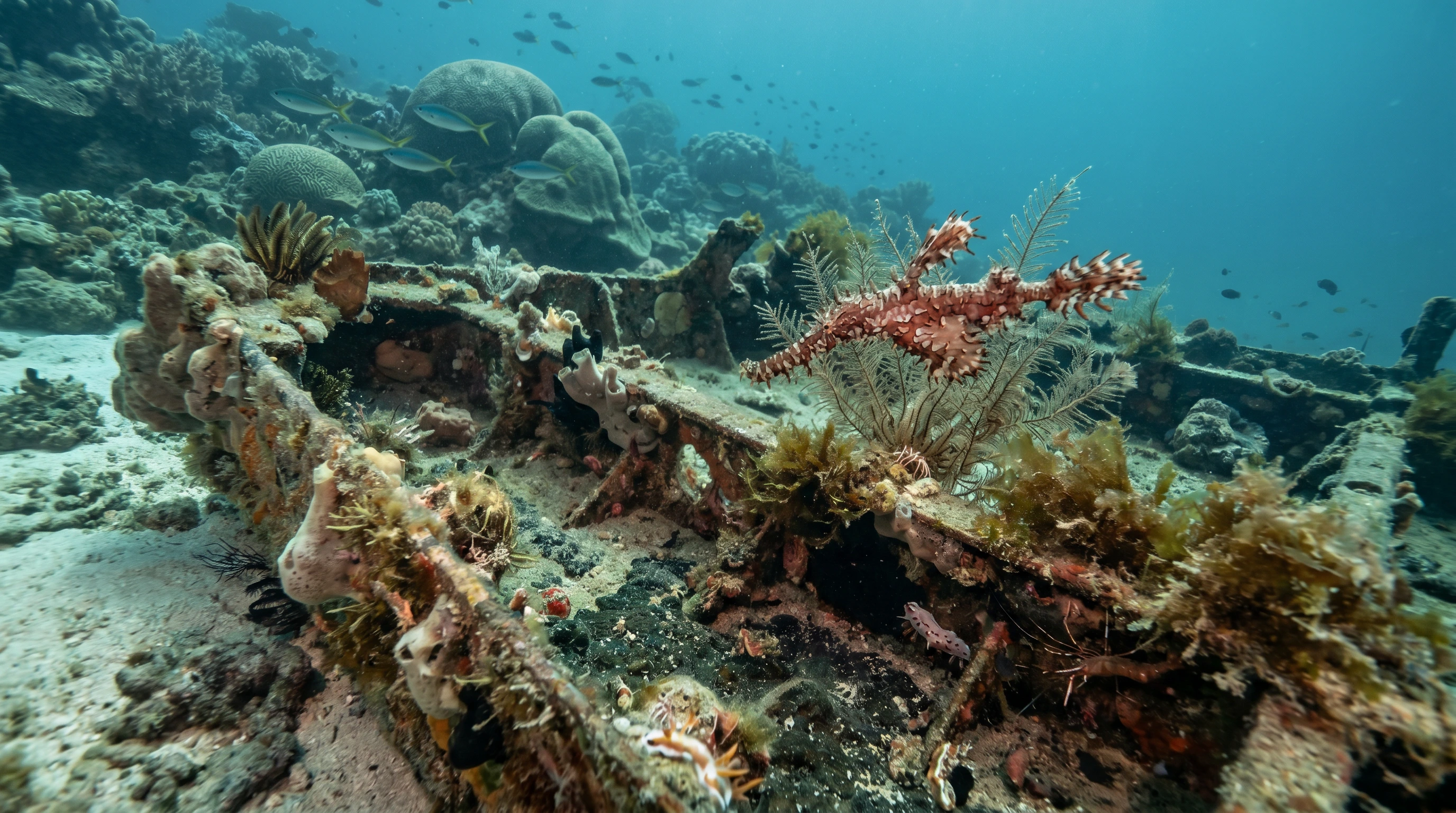
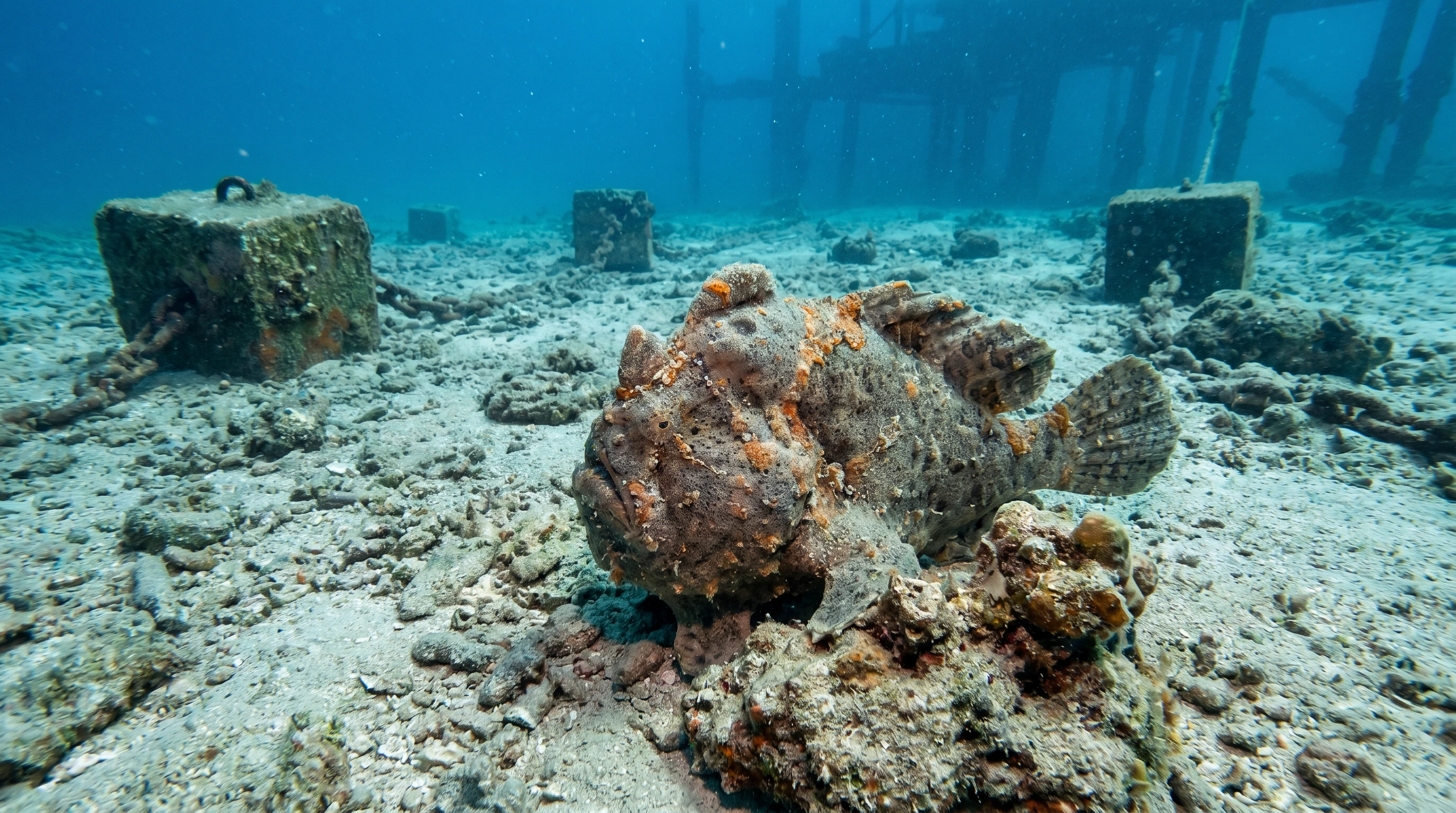
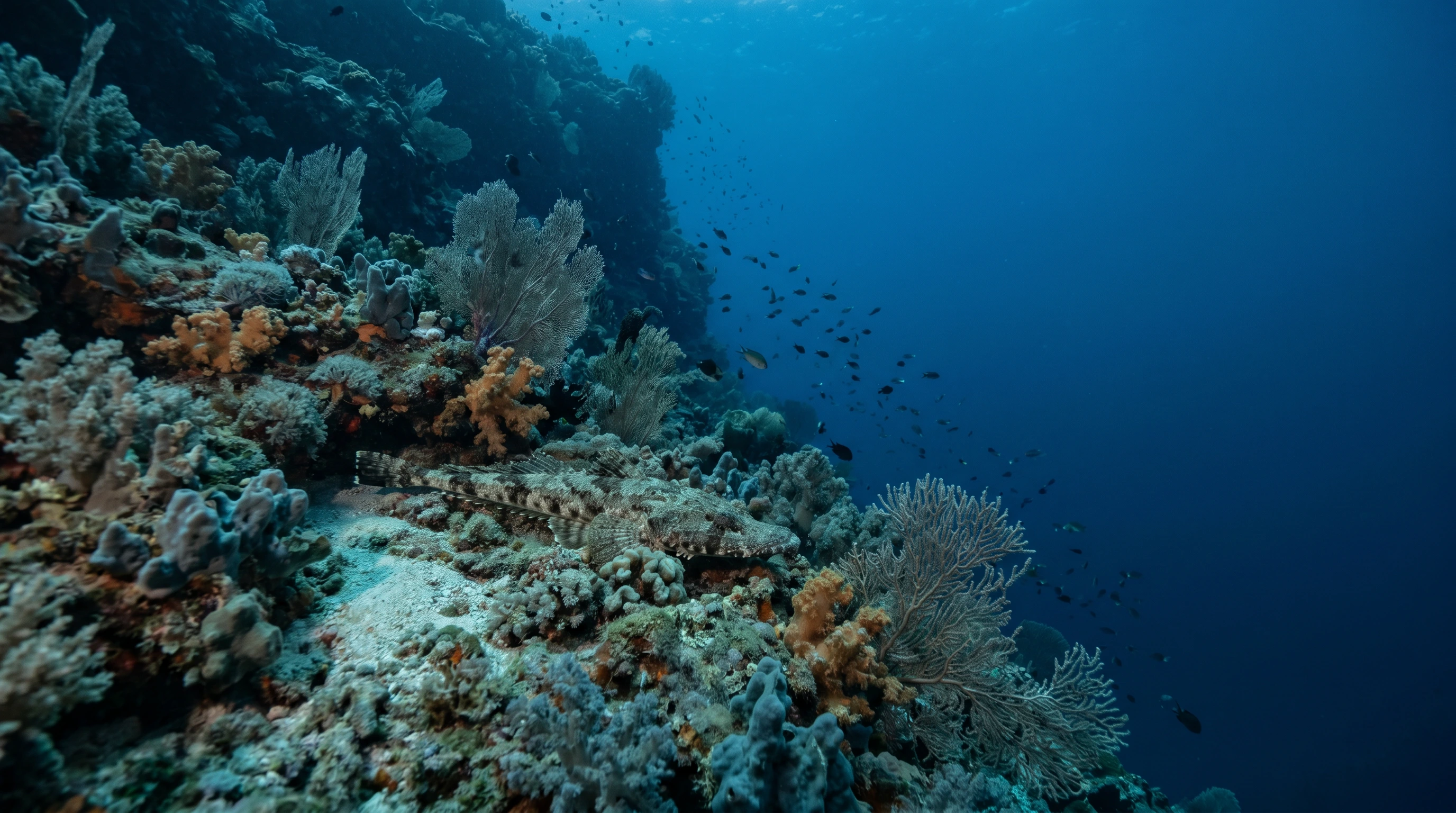
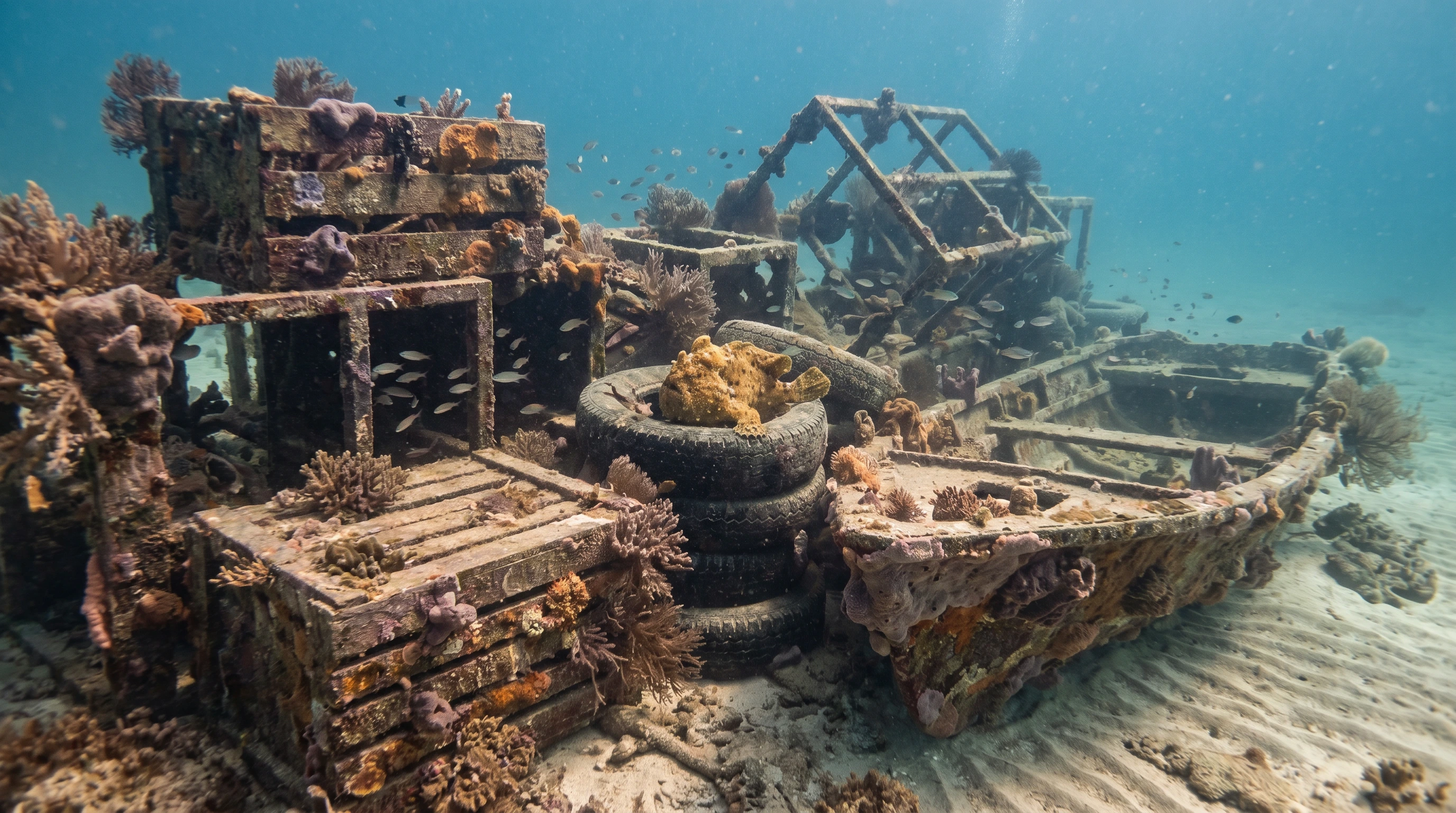
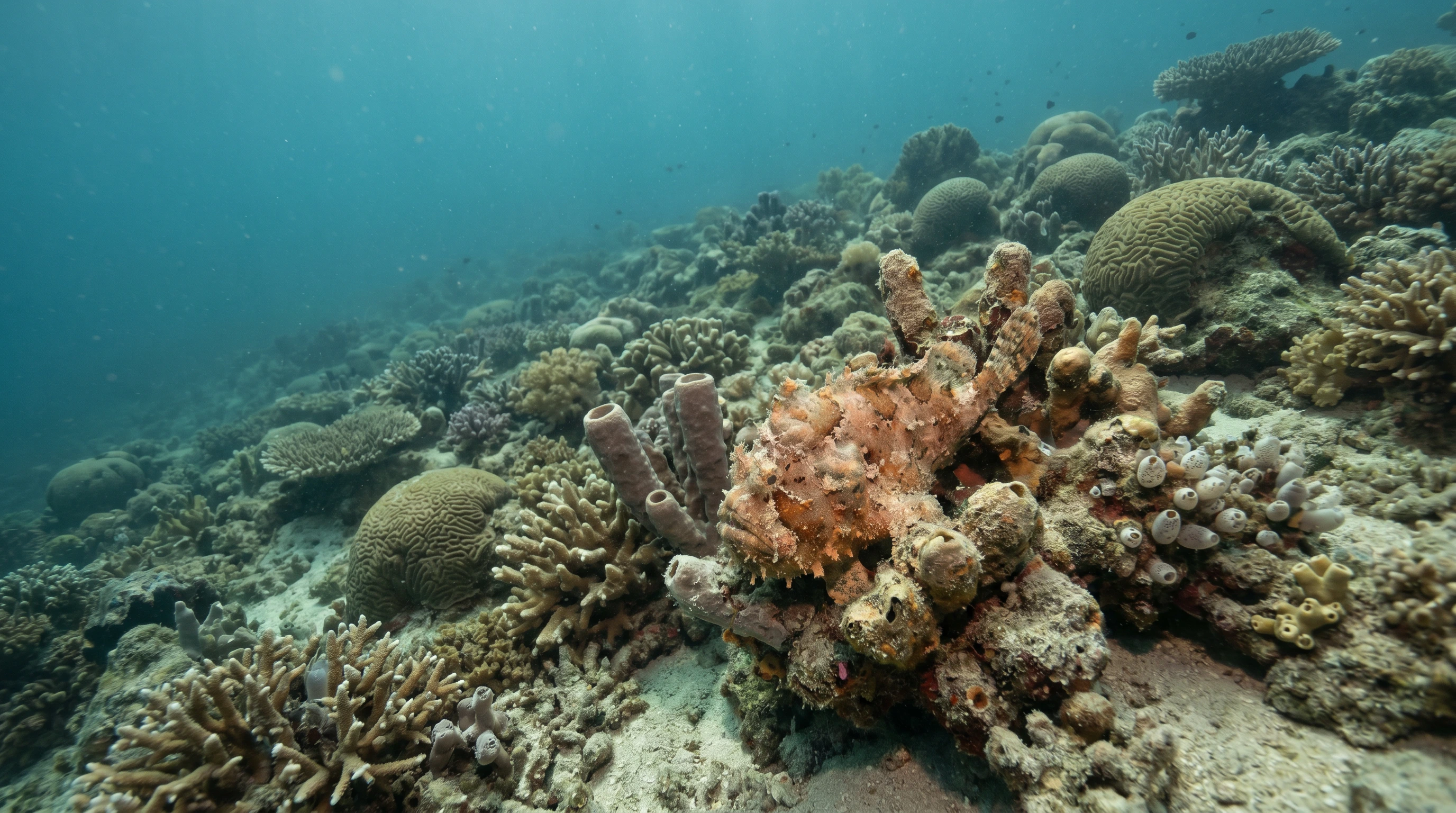
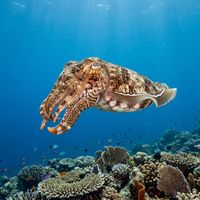
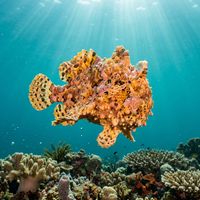
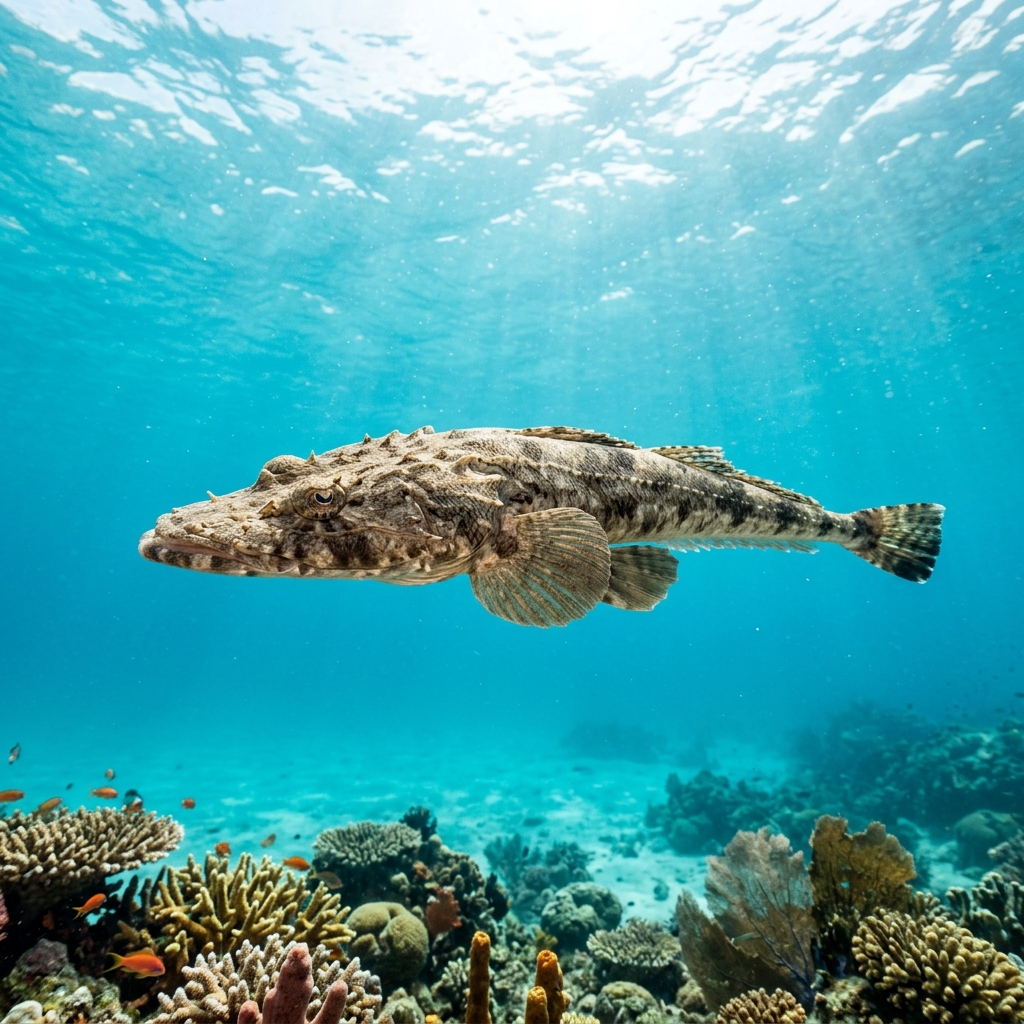
Mabul Island is defined by muck diving. Sandy slopes, artificial structures and patchy reef combine to produce exceptional critter density, with Giant Frogfish, Ornate Ghostpipefish, Broadclub Cuttlefish and Crocodile Fish among the most frequently observed residents. Most sites suit beginners, though Lobster Wall and Great Wall push into advanced territory with deep walls and drop-offs. Conditions are warm year-round, and the calmer months from April through August draw the highest diver activity.

Monthly water temperature across Mabul Island's sites, from satellite sea-surface data corrected for depth. The band shows the site-to-site spread.
Water temperature stays consistently warm throughout the year with almost no seasonal variation, making any month viable. Visibility can fluctuate depending on conditions, with calmer periods from April through August generally offering the clearest water and the most settled seas. The wetter months toward the end of the year can bring reduced visibility and choppier surface conditions.
9 operators
Malaysia
11 more sites to explore
Water around Mabul Island stays near 30°C all year, based on satellite sea-temperature data for its dive sites.
With water around 29–30°C, a rash guard or 3mm shorty works in Mabul Island year-round.
Fin maps 20 sites in Mabul Island (20 scuba diving sites).
Across Mabul Island's dive sites, April, May, June, July, August and September are most often reported as the best months to visit.
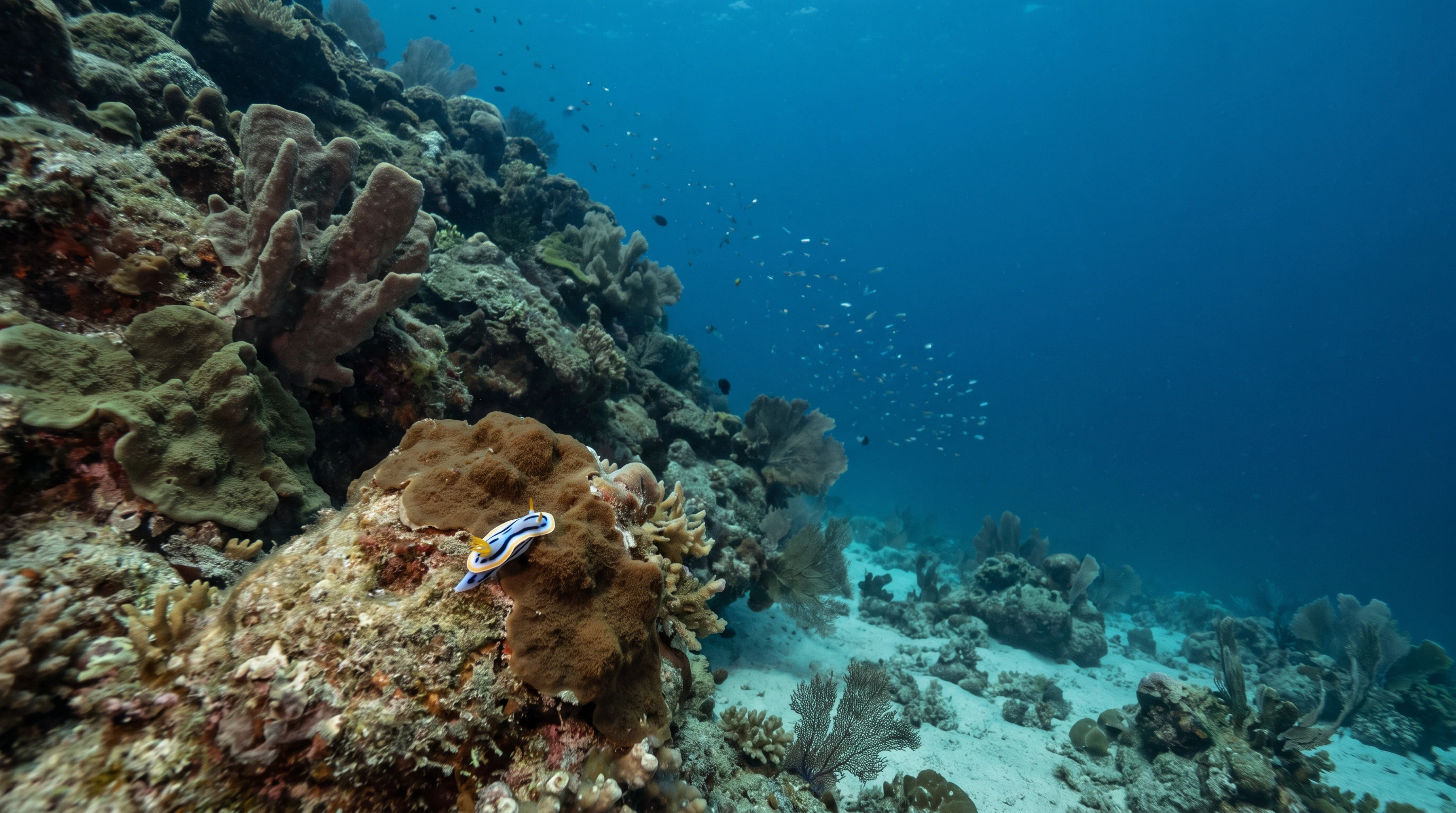
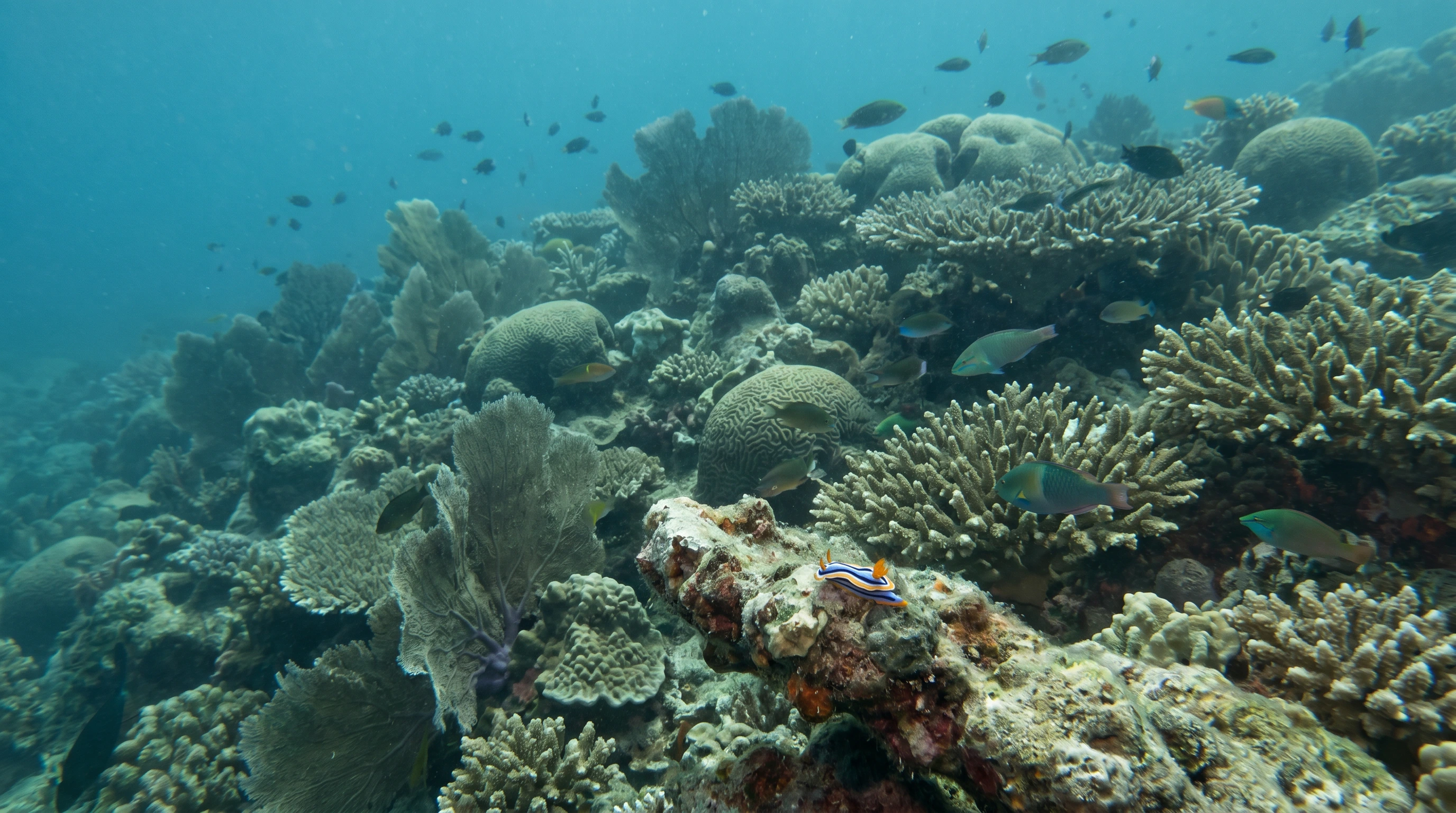
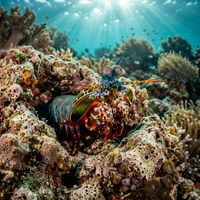
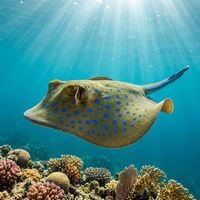
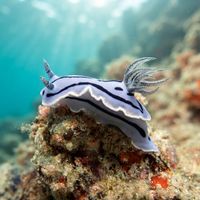
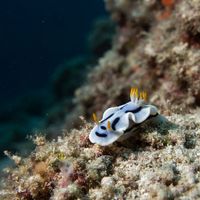
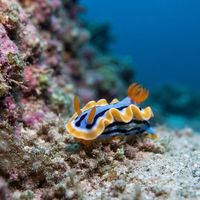
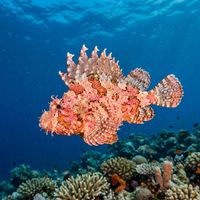
Mabul Island is particularly strong for cryptic and slow-moving species. Giant Frogfish and Warty Anglerfish are frequently sighted, alongside Ornate Ghostpipefish, Broadclub Cuttlefish, Peacock Mantis Shrimp and Bluespotted Fantail Ray. Nudibranch diversity is also notable, with multiple Chromodoris species observed regularly across many sites.
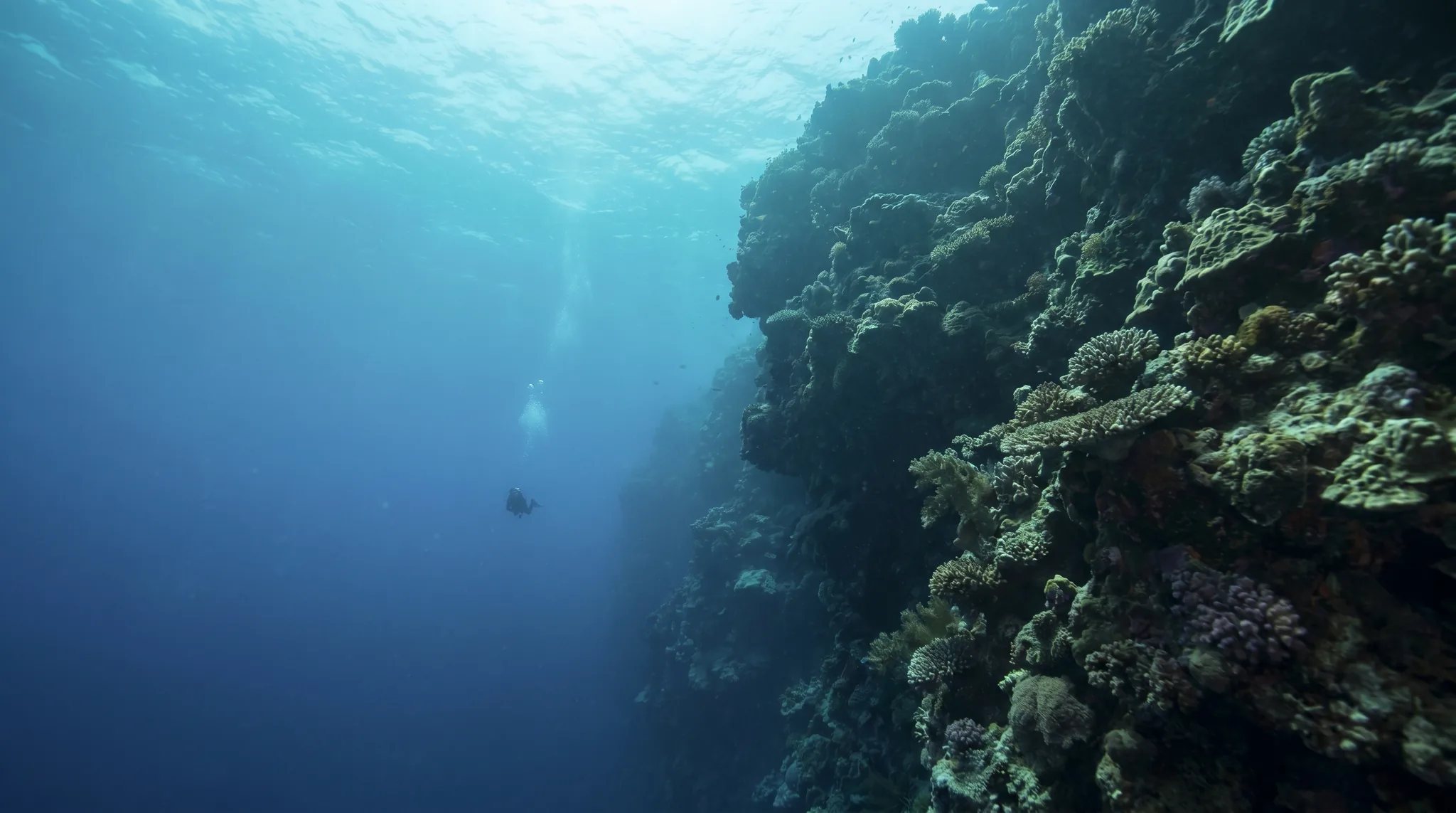
The majority of sites on Mabul Island are rated for beginner divers, including popular muck and reef sites such as Crocodile Avenue, Panglima Reef and Stingray City. Shore and boat entry options are available at several sites. Lobster Wall and Great Wall are the exceptions, suited only to experienced divers comfortable with deep walls.
Most sites are reached by boat, but a handful including Seaventures House Reef and Awas Reef also offer shore entry. Seaventures House Reef is a particularly convenient option, combining wreck elements, artificial structures and muck terrain in a single accessible site. Several dive operators based on the island run regular boat trips to the full range of sites.
Mabul Island is primarily a muck diving destination, with many sites featuring sandy or silty substrates, man-made structures and artificial reef frameworks that attract critters. Natural reef is also present at several sites, and the western edge of the island offers wall diving for those seeking a different underwater landscape. Drift conditions appear at a small number of sites.